
Ask what Miami is famous for eating, and you get one answer first, then a short list behind it. The Cuban sandwich is the city's signature dish.
Around it sits a small group of foods locals recognize instantly and visitors come looking for: stone crab claws, the frita cubana, croquetas, guava-and-cheese pastelitos, Cuban coffee, and key lime pie.
Most of these entered Miami's food identity through two channels: the Cuban community that reshaped the city after 1959 and the seafood that comes out of South Florida waters; key lime pie comes from the broader Florida Keys story.
Direct answer
The most famous food in Miami is the Cuban sandwich.
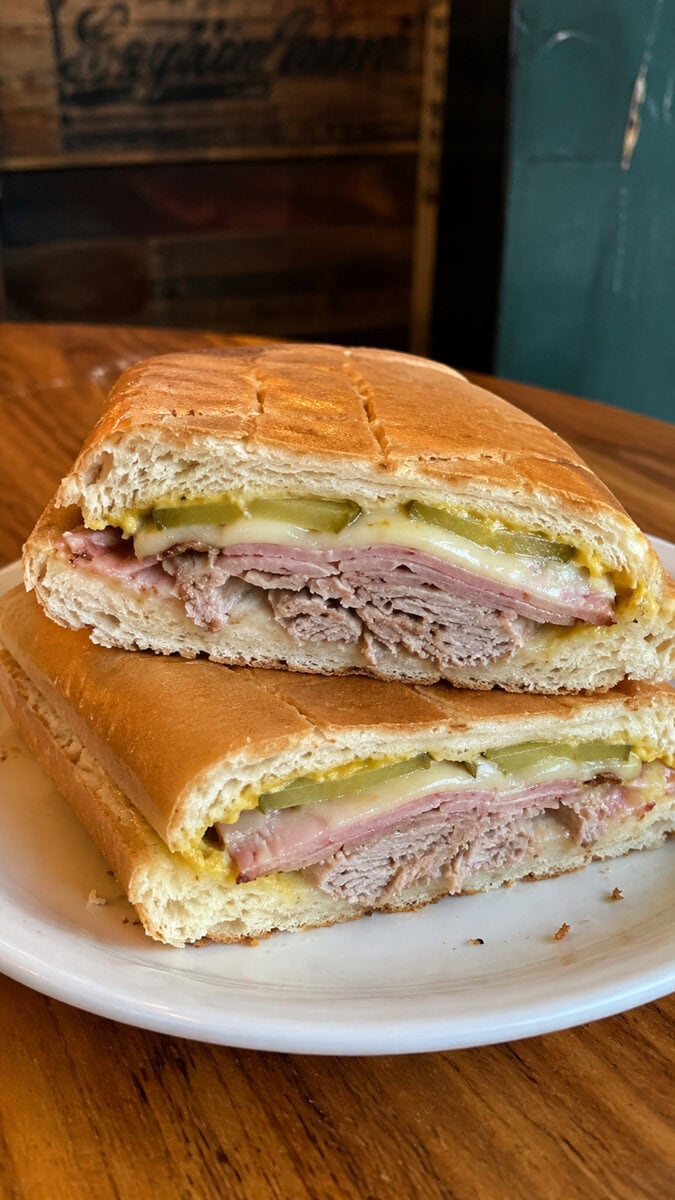
It's pressed Cuban bread filled with ham, mojo-roasted pork, Swiss cheese, pickles, and yellow mustard, buttered on the outside, flattened on a hot sandwich press, and usually cut on the diagonal.
The Miami version keeps to those ingredients and leaves out the salami that Tampa adds.
If you want the single thing that says "Miami food," it's this sandwich.
That said, the question often means "what should I eat here," so the rest of this covers the foods Miami is genuinely known for, what they are, and where the famous versions come from.
The Cuban sandwich
The sandwich grew out of a Cuban street food called the sandwich mixto, made of roast pork, ham, pickles, cheese, and mustard on Cuban bread.
Cuban immigrants brought it to Florida, where it took hold in both Tampa's Ybor City and Miami.
The two cities have argued for years over who does it right and who had it first.
The argument usually comes down to salami: Tampa includes it, a nod to the Italian immigrants in Ybor City, while Miami leaves it out.
Miami's association with the sandwich grew stronger as the city's Cuban population grew.
After the Cuban Revolution, large numbers of exiles settled in Miami, and the sandwich became a fixture of daily life in Little Havana and beyond.
The best-known place to eat one is Versailles, on Calle Ocho (Southwest 8th Street) in Little Havana.
The restaurant opened in 1971 and calls itself "the world's most famous Cuban restaurant."
It draws long lines of tourists and serves as a gathering spot for Miami's Cuban American community, especially around major news from Cuba.
Newer spots like Sanguich de Miami get named in many "best Cuban sandwich" lists for the version they're making now.
There are also Versailles counters inside Miami International Airport if you're short on time.
Stone crabs
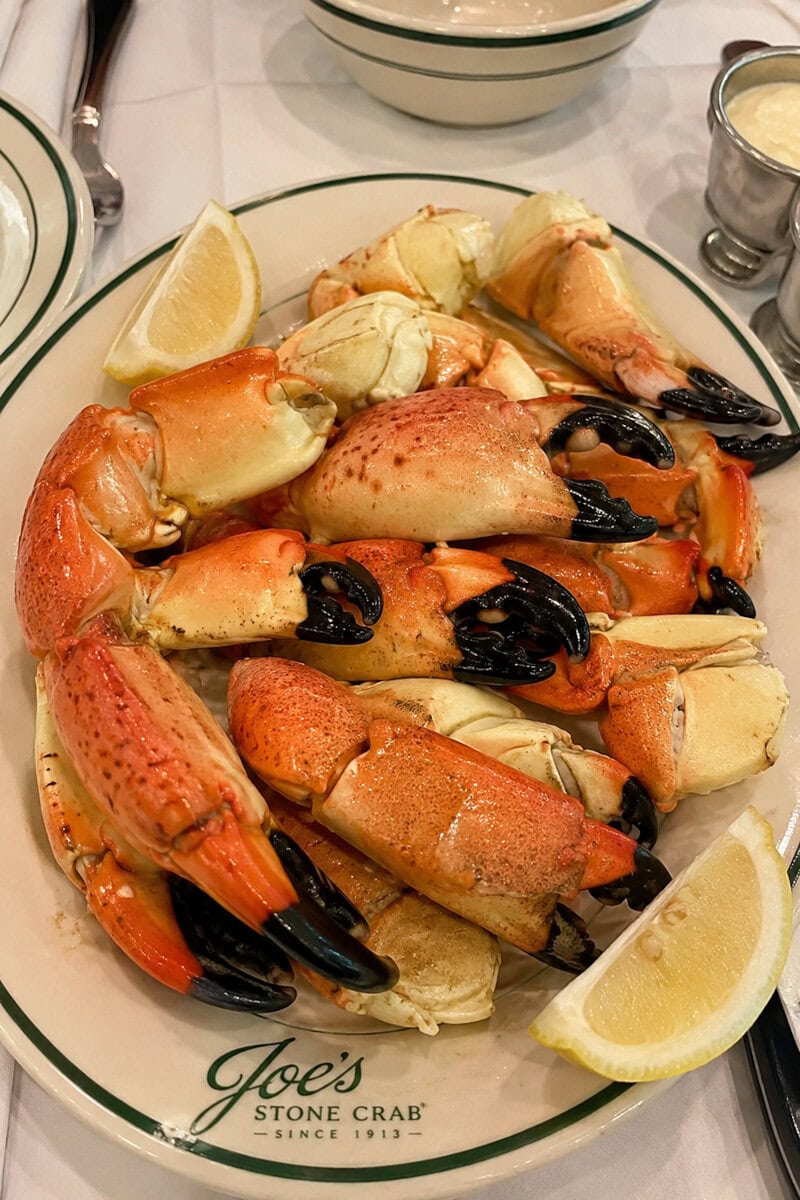
Stone crab claws are Miami's most famous seafood, and the name attached to them is Joe's Stone Crab on Miami Beach, open since 1913.
The claws have firm, sweet meat and are usually served chilled with a mustard sauce, plus sides like hash browns, creamed spinach, and fried chicken at Joe's.
Stone crab is seasonal, which is part of why it feels like an event.
The Florida harvest season runs from October 15 to May 1 each year, set by the state to protect the population.
For the 2025 to 2026 season, harvest opened October 15, 2025, and closed May 1, 2026.
Only the claws are taken; harvesters remove legal-size claws (at least 2 7/8 inches) and return the crab to the water, where it can regrow them.
Most of the commercial catch comes from Florida waters, including the Keys and the area off South Florida.
If you visit outside the season, restaurants may still serve flash-frozen claws, but fresh is a fall-through-spring thing.
The frita cubana
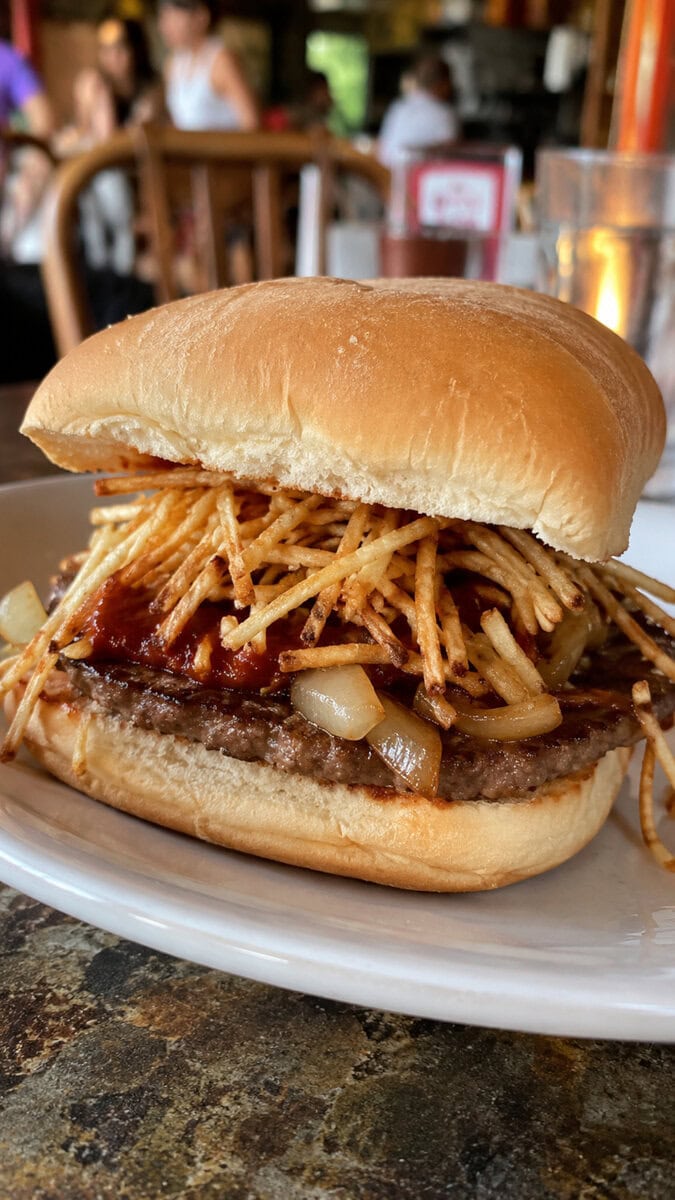
The frita is Miami's Cuban hamburger, and it has a devoted local following.
It's a seasoned beef patty (sometimes mixed with chorizo) smashed on the griddle, topped with a tangle of crispy shoestring potatoes, often with onions, and served on a soft roll or Cuban bread with a slightly spiced, vinegary tomato sauce.
It started as Cuban street food and moved to Miami with exiles.
One of the earliest frita restaurants in the country, Fritas Domino, opened in Little Havana in 1961.
The names most tied to the dish today are El Rey de las Fritas, founded in 1979 by Victoriano "Benito" Gonzalez and his wife Angelina, and El Mago de las Fritas, opened on Calle Ocho in 1984 by Ortelio and Eva Cardenas.
Both families made fritas in Cuba before coming to Miami.
A common way to order it is the "frita a caballo," topped with a fried egg.
Croquetas, pastelitos, and Cuban coffee
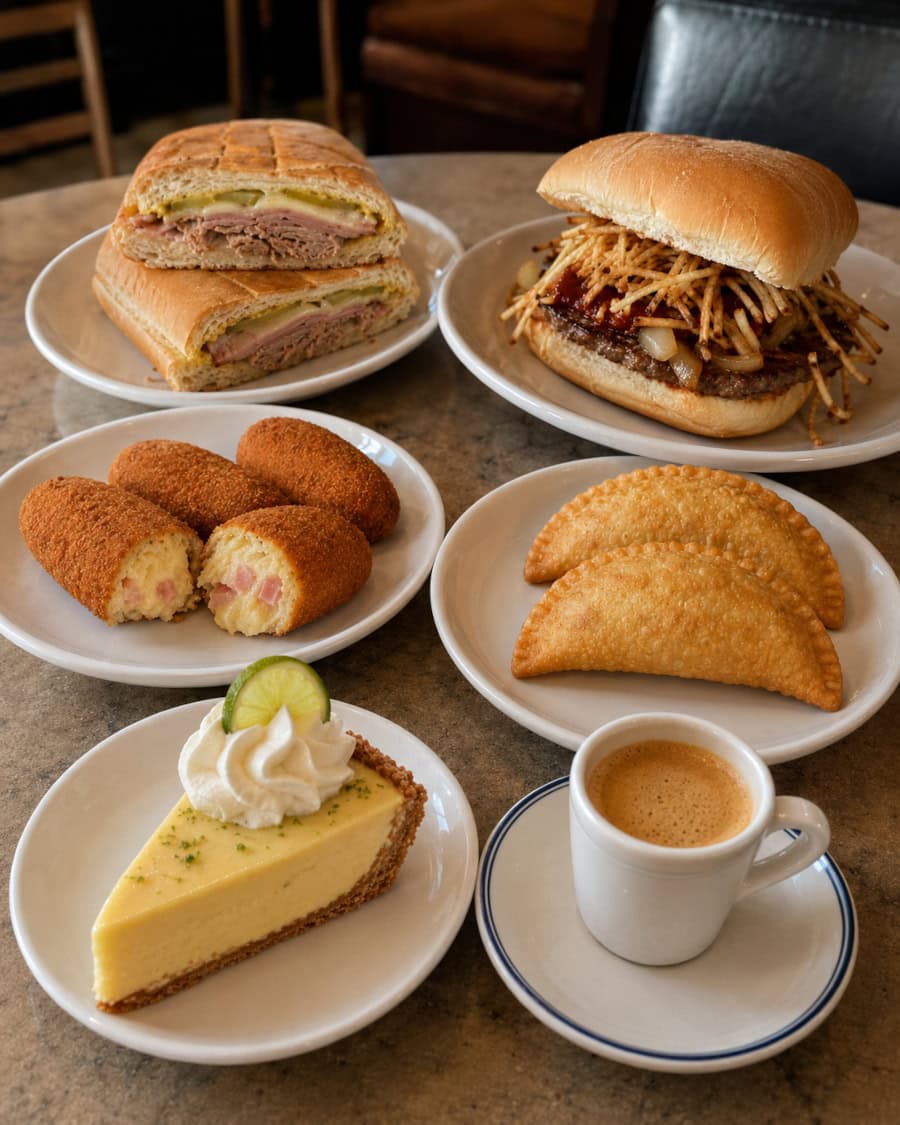
These three go together because they live at the ventanita, the walk-up window on the side of Cuban cafés and bakeries.
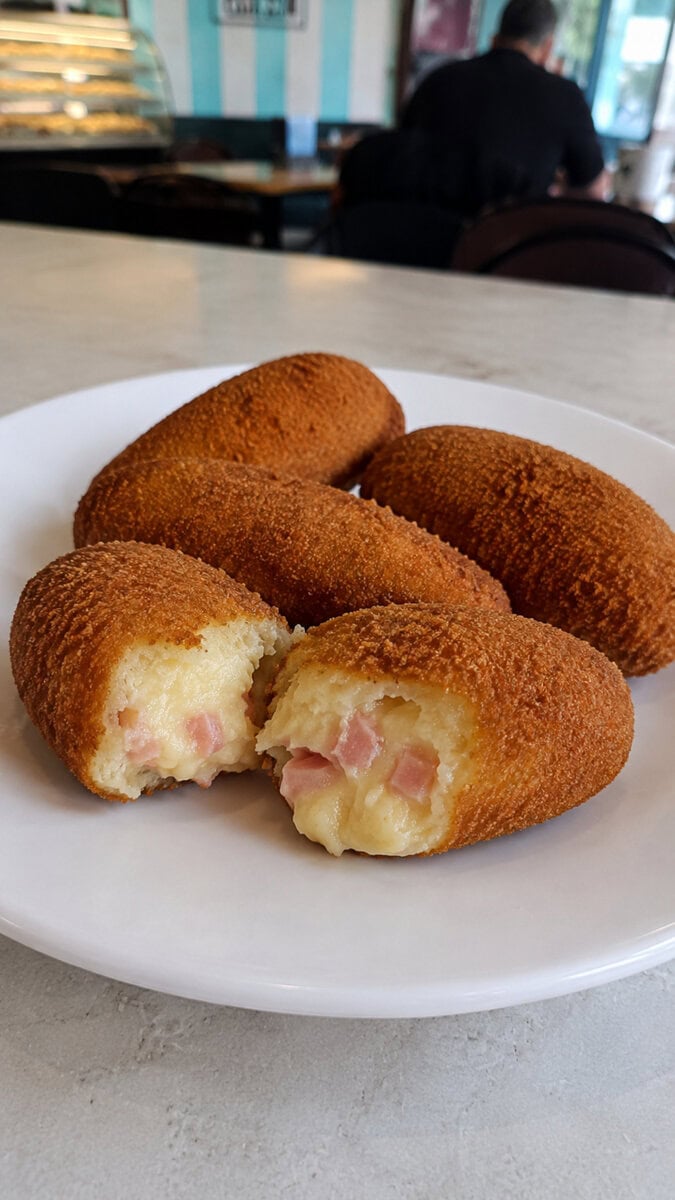
Croquetas are small fried cylinders with a creamy béchamel-based filling, usually ham or chicken, in a crisp breaded shell.
Miamians eat them daily, often for a couple of dollars or less, sometimes with a squeeze of lime, sometimes pressed into a sandwich.
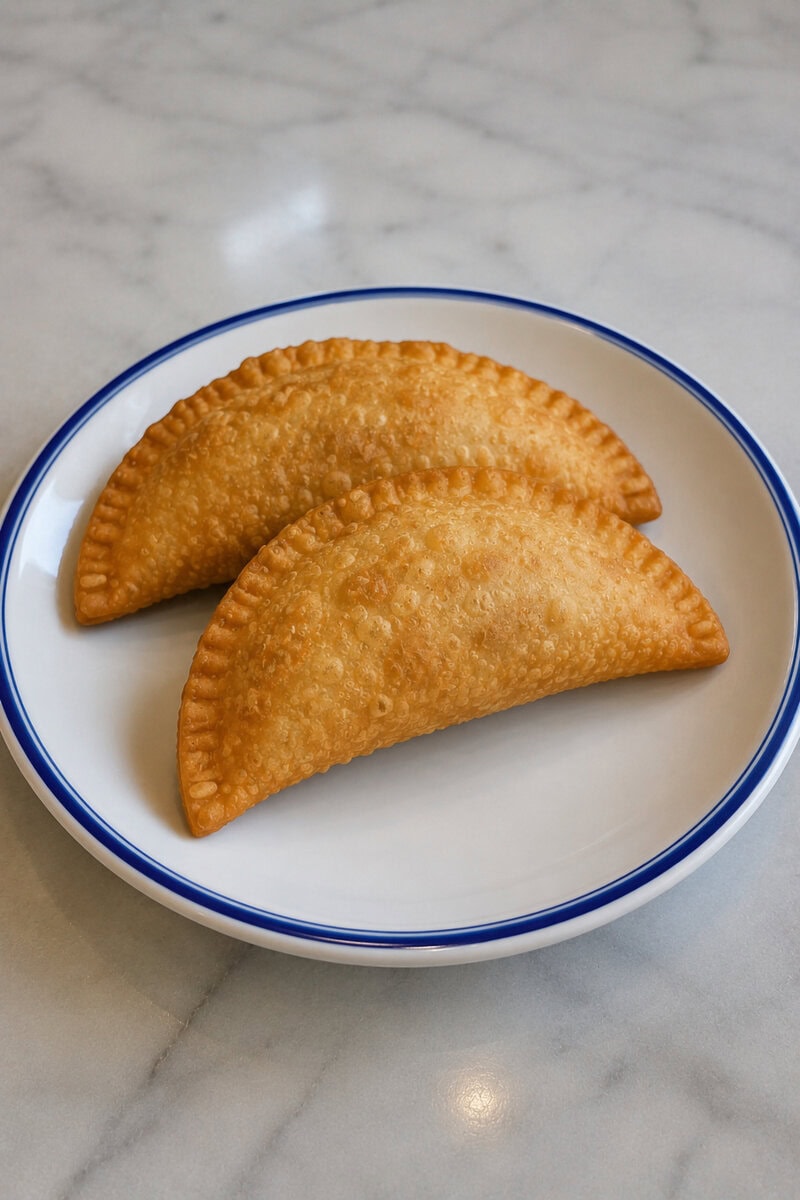
Pastelitos are flaky pastries, most famously filled with guava or guava and cream cheese.
They're a standard ventanita order and a big part of Cuban American morning routine in the city.
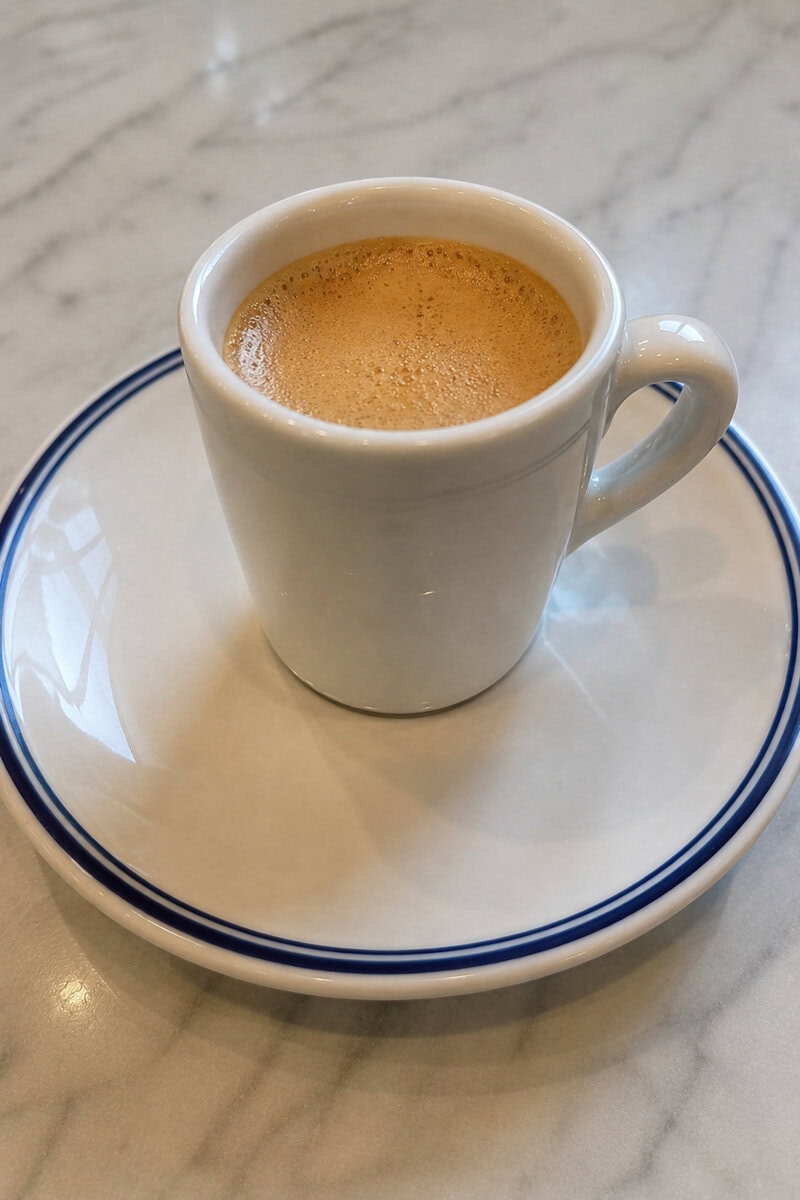
Cafecito is strong, sweet Cuban espresso served in small cups, often shared.
Order a café con leche if you want it with steamed milk.
The pairing of a cafecito and a guava pastelito is about as Miami a breakfast as exists.
Key lime pie
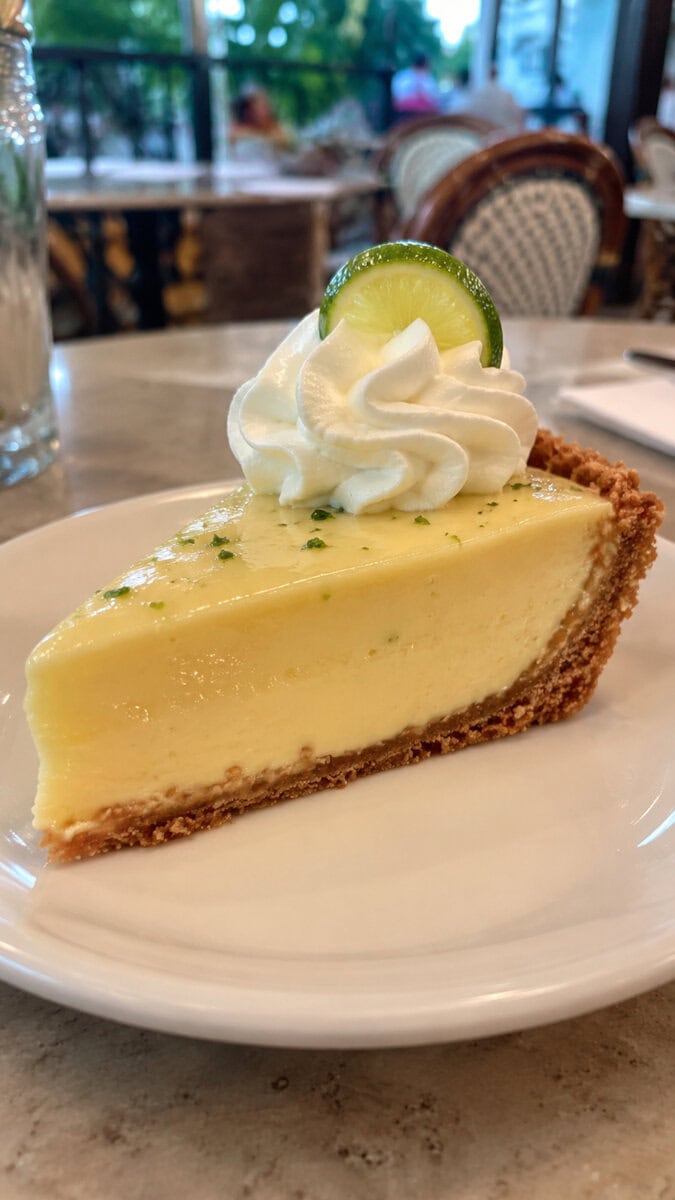
Key lime pie shows up on menus across Miami and is one of the foods most closely associated with Florida overall.
The filling is simple: key lime juice, sweetened condensed milk, and egg yolks, set in a graham-cracker or pastry crust and topped with meringue or whipped cream.
The dessert is tied to the Florida Keys, not Miami proper, and most popular accounts place its origin in Key West in the late 19th century, even though food historians still argue over the exact story.
Sweetened condensed milk was central to the recipe because fresh milk and refrigeration were hard to get in the isolated Keys before the 1930s.
Key limes themselves are now rarely grown commercially in the region after hurricanes wiped out much of the old crop and citrus disease later battered South Florida's lime industry, so many pies use bottled juice, imported limes, or Persian limes.
Florida named it the official state pie in 2006.
You'll find it everywhere in Miami, even though its roots are about 160 miles south.
Why Miami food looks like this
Two forces shaped the list.
The first is the Cuban exile community, which turned Cuban home and street food - the sandwich, frita, croqueta, pastelito, and cafecito - into everyday Miami food after 1959.
The second is the coastline, which gives the city its stone crab and a wider seafood culture built around fresh fish; ceviche comes through Miami's Peruvian and broader Latin American food scene.
There's a third layer worth knowing about for a longer trip.
Miami has one of the largest Peruvian populations in the U.S., so ceviche and other Peruvian dishes are common, and the city's broader food scene runs through Colombian and Venezuelan arepas, Cuban classics like ropa vieja and picadillo, and Caribbean cooking.
People sometimes group the local blend under the term Floribbean.



Practical notes for a visitor
A few things that affect what you can get and when:
- Stone crab is seasonal. If stone crab is the reason you're going, time the trip between mid-October and the start of May. Outside that window, you may only find frozen claws, and prices are high either way.
- Little Havana is the easiest center of Cuban food for visitors. Calle Ocho (Southwest 8th Street) is where many famous sandwich, frita, and ventanita spots cluster.
- Croquetas and pastelitos are cheap and easy to find at Cuban cafés and bakeries. They're a good low-cost way to taste the city, often around $2 each at a café window.
- Key lime pie is a Keys dish you'll find all over Miami. If you also drive down to the Florida Keys, that's where it is most closely tied, and where many consider it best, even though food historians still argue over the exact origin story.
Common misconceptions
A few points that come up often:
The Cuban sandwich is not a simple Miami invention.
A Cuban mixto existed in Cuba, and Florida shaped the pressed sandwich people argue over today, especially in Tampa and Miami.
The "who invented it" debate between the two cities is partly about history and partly about civic pride.
The Miami Cuban does not include salami.
That's the Tampa version. Adding salami to a Miami Cuban is the kind of thing locals will correct you on.
Key lime pie is Floridian, but it's tied to the Keys, not Miami.
It's served across Miami and tied to the state's identity, so visitors sometimes treat it like a Miami original.
The dish is traditionally associated with Key West and the surrounding islands, though its exact origin is debated.
The frita is not just a burger with fries on top.
The shoestring potatoes go on the patty inside the sandwich, and the seasoned beef and tomato-based sauce make it its own thing.
Current status
As of June 2026, all of the foods above are widely available in Miami year-round, with one exception.
Fresh stone crab is limited to the October 15 to May 1 harvest season; the most recent season ran October 15, 2025 to May 1, 2026, and the next opens October 15, 2026.
Versailles (opened 1971), Joe's Stone Crab (opened 1913), El Rey de las Fritas (opened 1979), and El Mago de las Fritas (opened 1984) are all still operating.



References
- Greater Miami & Miami Beach, official tourism body, "Food You Must Try in Miami": https://www.miamiandbeaches.com/restaurants/miami-restaurant-delicacies
- Florida Fish and Wildlife Conservation Commission, "Stone crab season starts October 15": https://myfwc.com/news/all-news/stone-crab-1025/
- El Rey de las Fritas, official site, "About Us": https://www.elreydelasfritas.com/about
- El Mago de las Fritas, official site: https://elmagodelasfritas.com/
- Encyclopedia Britannica, "Key lime pie": https://www.britannica.com/topic/key-lime-pie

Independent Publisher Notice
BestAttractions is an independent editorial publisher. We are not affiliated with, endorsed by, or acting on behalf of any location, business, property owner, manager, government agency, or organization described in this article.
Comments posted on this page are not forwarded to, reviewed by, or acted upon by any entity mentioned in the article.
For official inquiries, complaints, applications, bookings, or other requests, please contact the relevant entity directly through its official website or other verified channels.