
Yes, you can drive around much of the Big Island of Hawaii in one day, but the trip only works if you treat it as a circle-island sampler, not a full sightseeing day at every stop.
From Kailua-Kona, a practical loop uses Highway 19 around the north and east sides, then Highway 11 through Hawaiʻi Volcanoes National Park and the Kaʻū and South Kona districts back to Kona.
Plan on roughly 6.5 to 7 hours of driving before stops for the route below.
In a 12-hour day, that leaves about five hours for viewpoints, food, restrooms, short walks, and delays.
That is enough time for a quick Waipiʻo Valley Lookout stop, ʻAkaka Falls, a short break in Hilo, about two hours at the Kīlauea summit area, and Punaluʻu Black Sand Beach.
It is not enough time to add long hikes, North Kohala, South Point, Papakōlea Green Sand Beach, a full Chain of Craters Road drive, and a coffee-farm tour.
August 2026 road warning: do not follow the full loop yet
As of August 20, 2026, this full route is not a good sightseeing plan because Hawaiʻi Island is still recovering from Hurricane Lala.
The Hawaiʻi Department of Transportation currently lists Route 11 as open, but says the section from Pāhala to Discovery Harbour is recommended for first responders and residents only while crews continue clearing mud and debris.
That section is part of the normal southern return route to Kona. Hawaiʻi Volcanoes National Park is also still in partial recovery.
The National Park Service's August 19 update says Crater Rim Drive West has reopened to Uēkahuna and the Welcome Center is open, but many other park areas remain closed because of fallen trees and other storm damage.
For a trip in the next few days, do not use the itinerary below until HDOT and the National Park Service remove the current restrictions.
The timetable that follows is the normal one-day route to use once the main roads and park areas are back to ordinary visitor operation.
Punaluʻu also has a separate 2026 issue: Hawaiʻi County's lease for the public beach-park area was extended only through September 1, 2026 while the county and landowner continued negotiations.
If your trip is after that date, verify public access before building the route around the beach.
The best one-day route from Kona
When normal access resumes, I recommend driving clockwise from Kona:
Kailua-Kona -> Waimea -> Waipiʻo Valley Lookout -> ʻAkaka Falls -> Hilo -> Hawaiʻi Volcanoes National Park -> Punaluʻu Black Sand Beach -> Kailua-Kona
The reason for going north first is simple.
ʻAkaka Falls State Park has fixed daytime hours, currently 8:30 a.m. to 5 p.m. Hawaiʻi Volcanoes National Park normally has much broader access, so putting the waterfall side of the island first reduces the chance that a slow morning causes you to miss a gated attraction.
A clockwise loop also puts your longest sightseeing block, the volcano, after the short north-side stops.
If you fall behind, you can shorten the national-park visit rather than racing toward a closing state-park gate.
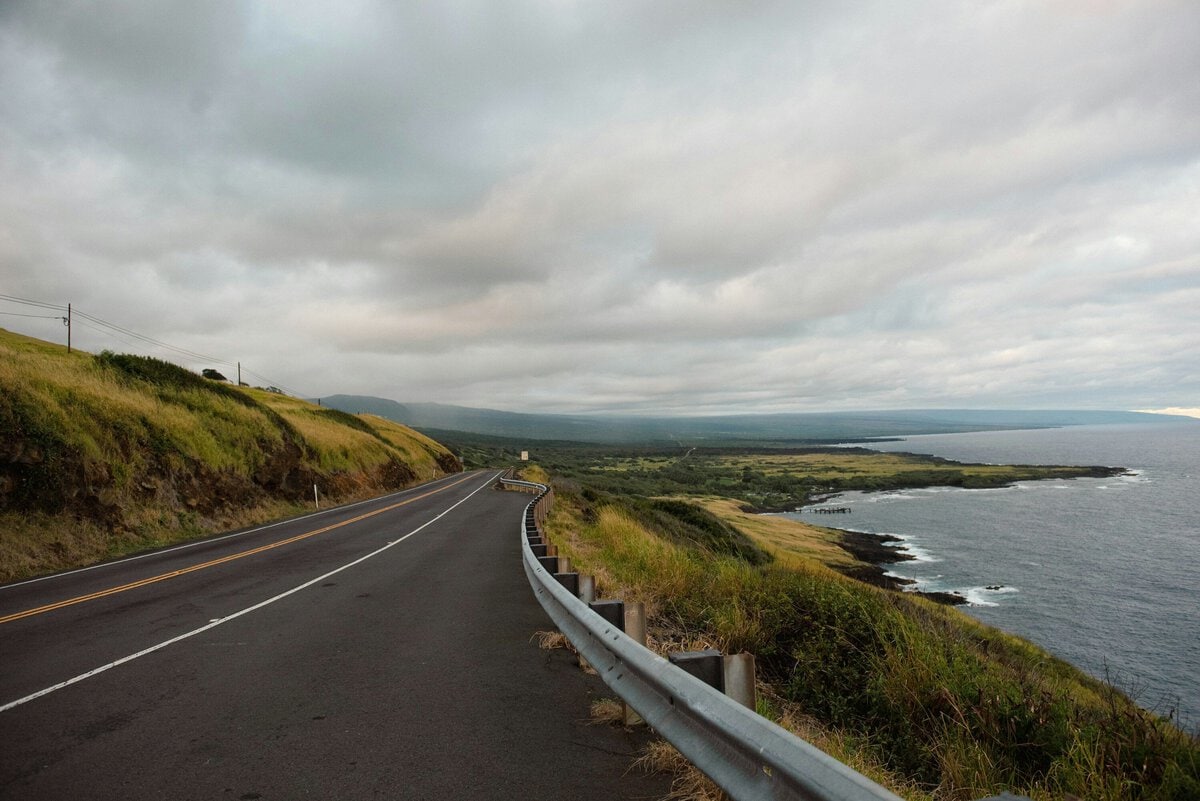
One-day Big Island driving schedule
This schedule assumes you start and finish in Kailua-Kona, the roads are operating normally, and you are comfortable with a long driving day.
| Time | Stop | What to do | Time cap |
|---|---|---|---|
| 5:30-5:45 a.m. | Leave Kailua-Kona | Start with a full tank and food in the car | - |
| 7:20-7:45 a.m. | Waipiʻo Valley Lookout | Rim view only | 20-25 min |
| 8:50-9:40 a.m. | ʻAkaka Falls State Park | Walk the 0.4-mile loop | 40-50 min |
| 10:10-10:45 a.m. | Hilo | Restroom, fuel, early lunch or takeout | 30-35 min |
| 11:30 a.m.-1:30 p.m. | Hawaiʻi Volcanoes National Park | Summit-area stops only | About 2 hr |
| 2:15-2:45 p.m. | Punaluʻu Black Sand Beach | Beach view and short walk | 20-30 min |
| 4:30-5:30 p.m. | Return to Kailua-Kona | Allow traffic and weather margin | - |
The exact clock will move with traffic, weather, parking, construction, and how far south of central Kona you are staying.
The important part is the time cap at each stop. If a 30-minute stop turns into 90 minutes, something later has to disappear.
Stop 1: Waipiʻo Valley Lookout
Leave Kona before sunrise or around first light and head north on Highway 19 toward Waimea, then continue toward Honokaʻa and the Waipiʻo Valley Lookout.
For a one-day circle drive, the lookout is the stop. Do not plan to walk or drive down Waipiʻo Valley Road.
Hawaiʻi County's July 2026 emergency rule closes the road to all pedestrians and limits vehicle access to narrow exceptions, including Hawaiʻi County residents, permitted tour operators, and certain Native Hawaiian traditional or customary access.
The rule also requires qualifying vehicles to use low-range four-wheel drive.
That means a normal rental car does not belong on the descent road.
Spend 20 to 30 minutes at the rim, then leave.
The point of adding Waipiʻo is to see the valley and Hāmākua coast without turning the morning into a separate half-day tour.
If you are already running late
Skip Waipiʻo first.
It is a worthwhile view, but it is also the stop that adds the most backtracking from the direct Waimea-to-Hilo route.
Dropping it protects your time at ʻAkaka Falls and Hawaiʻi Volcanoes National Park.
Stop 2: ʻAkaka Falls State Park
Continue south along the Hāmākua Coast to ʻAkaka Falls State Park.
The park is open daily from 8:30 a.m. to 5 p.m. The self-guided loop is about 0.4 mile, and ʻAkaka Falls drops 442 feet into the gorge.
For non-Hawaiʻi residents over age three, the current state fee is $5 per person, plus $10 to park a non-commercial vehicle. Payment is by credit card.
Forty to 50 minutes is a sensible one-day limit.
That gives you time to park, walk the loop, see the falls, and get back on the road without turning the waterfall into a long rainforest hike.
This is also why the clockwise route works well. You arrive after the gate opens instead of trying to squeeze the falls into the late afternoon.
Stop 3: Hilo is your reset point, not another full sightseeing block
From ʻAkaka Falls, continue into Hilo.
A full Hilo visit deserves its own day, but on a circle-island drive its best function is practical: fuel, food, restroom, and a short break before the volcano.
Keep this stop to 30 or 45 minutes. Buy lunch to take with you or eat something quick.
If everyone is tired, this is also the place to reassess the plan.
From Hilo, the National Park Service lists Hawaiʻi Volcanoes National Park at about 30 miles and 45 minutes southwest on Highway 11.
If you have already lost an hour by Hilo, do not try to "make it up" by driving faster. Cut a stop instead.
Stop 4: Hawaiʻi Volcanoes National Park - keep it to the summit area
Hawaiʻi Volcanoes National Park is the one attraction that can easily destroy a one-day circle schedule because it is large enough for several full days on its own.
Under normal operating conditions, give it about two hours on this itinerary.
A good short visit is:
- Check current conditions at the Welcome Center or on the park website.
- Drive to an open Kīlauea summit overlook, such as Uēkahuna or another ranger-recommended viewing area.
- Add one short summit-area stop if time and access allow.
- Leave before the visit expands into a long hike or coastal drive.
The private-vehicle entrance fee is currently $30, and the pass covers the occupants of one private non-commercial vehicle.
Do not promise yourself visible lava
Kīlauea has been erupting intermittently, but the activity is episodic.
The National Park Service specifically tells visitors to check current webcams and USGS updates because eruptive episodes can pause for days or weeks.
If lava is visible during your visit, expect more traffic and tighter parking.
If it is not visible, the caldera, steam vents, volcanic deposits, and summit geology are still the reason to make the stop.
Why you should skip Chain of Craters Road on this loop
Chain of Craters Road is one of the park's best scenic drives, but it does not fit comfortably into a full-island one-day itinerary.
The National Park Service lists the road at about 18.7 miles one way from the Devastation Trailhead area to the coastal end.
NPS says Crater Rim Drive and Chain of Craters Road together take about two hours roundtrip even without meaningful stops, and recommends substantially more time to experience them properly.
That two-hour detour would consume most of the free time in your entire circle-island schedule.
If Chain of Craters Road is a priority, make Hawaiʻi Volcanoes National Park your main day trip instead of trying to circle the island.
Stop 5: Punaluʻu Black Sand Beach
After the park, continue southwest on Highway 11 toward Punaluʻu.
Punaluʻu is a useful circle-drive stop because it sits close to the main southern route.
You do not need a long side trip to see black sand, palms, and the Kaʻū coast.
Keep the visit to 20 or 30 minutes.
Walk the beach, take in the setting, and leave enough daylight for the remaining drive toward South Kona and Kailua-Kona.
Hawaiian green sea turtles use the beach area.
Give wildlife plenty of room and follow posted rules rather than walking toward a resting turtle for a closer photo.
Check access if your trip is after September 1, 2026
This point matters for late-2026 planning.
In June, Hawaiʻi County and the private landowner extended the county lease for Punaluʻu Black Sand Beach Park only through September 1, 2026 while they continued discussing the site's future.
That does not mean the beach will necessarily close on September 2.
It means you should not assume today's public-park arrangement will be unchanged after the lease date.
Check Hawaiʻi County Parks and Recreation or county news before you go.
Finish the loop through South Kona
From Punaluʻu, continue on Highway 11 through the southern part of the island and back toward Kona.
This final segment is where one-day itineraries often fall apart.
The map is full of tempting detours, but late afternoon is the wrong time to start adding them.
Stay on the main route unless you are well ahead of schedule.
The goal is to finish the loop in daylight or early evening without turning the final two hours into a tired drive on unfamiliar roads.
If you reach Kona early, consider that a successful itinerary rather than an invitation to add another distant stop.
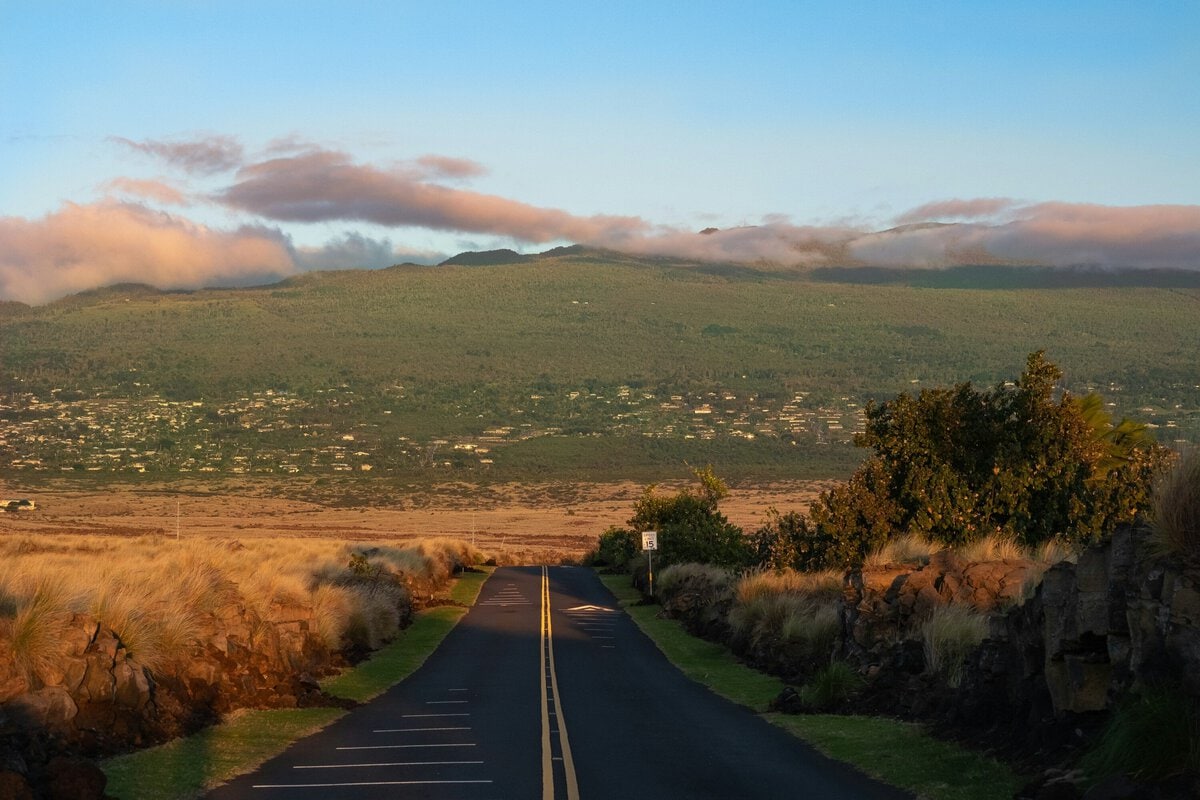
The arithmetic that makes the route work
A one-day circle sounds easier until you account for the non-driving minutes.
Assume roughly 6.5 to 7 hours behind the wheel.
Then add:
- 25 minutes at Waipiʻo
- 45 minutes at ʻAkaka Falls
- 40 minutes in Hilo
- 2 hours at Hawaiʻi Volcanoes National Park
- 25 minutes at Punaluʻu
- 30 to 60 minutes of total parking, restroom, fuel, traffic, and schedule slippage
That adds another 4.5 to 5.5 hours.
Your "6.5-to-7-hour drive" has now become an 11- to 12-hour day, and that is before a sit-down lunch, a substantial hike, roadwork, heavy rain, or eruption traffic.
This is why the one-day loop works only when every attraction has a job and a time limit.
What not to add to a one-day Big Island loop
The hardest part of this itinerary is saying no to good places.
Skip South Point and Papakōlea Green Sand Beach
South Point requires a separate detour from Highway 11, and Papakōlea adds even more time on foot.
They belong on a South Kona and Kaʻū day, not inside an already full circle drive.
Skip North Kohala and Pololū Valley
The drive toward Hawi, Kapaʻau, and Pololū is north of the basic circle route.
It is a good regional trip, but it takes you away from Hilo and the volcano.
If North Kohala is one of your main interests, do that instead of Waipiʻo, ʻAkaka, and the southern loop.
Skip a full coffee-farm tour
You pass through coffee country on the return to Kona, but an actual farm tour takes time and usually works best with a reservation.
A bag of coffee is a quick stop. A farm tour is a separate activity.
Skip long volcano hikes
Kīlauea Iki, crater trails, petroglyph hikes, and the coastal section of the park deserve more than a rushed walk between two long drives.
Pick the circle drive or a deep national-park day. Trying to do both makes each worse.
Skip Maunakea summit as an "extra"
Maunakea is not a casual roadside add-on. High elevation, access rules, weather, darkness, and acclimatization all make it a separate plan.
The central Daniel K. Inouye Highway can be useful for crossing the island on another day, but it is not part of this coastal circle itinerary.
Do you need a four-wheel-drive vehicle?
Not for the main loop described here.
The principal route uses paved state highways, and the main visitor roads at Hawaiʻi Volcanoes National Park are paved.
NPS says Crater Rim Drive and Chain of Craters Road do not require four-wheel drive.
A standard rental car is normally adequate for the circle route when roads are open and weather is normal.
The exception is not "upgrade the rental and drive anywhere." Waipiʻo Valley Road is a legal-access issue as well as a vehicle issue.
The current county emergency rule does not allow ordinary visitor DIY access simply because a vehicle has four-wheel drive.
Always follow the rental agreement as well as road closures and posted restrictions.
Fuel, food, and weather planning
Start with a full tank.
You will pass services in Waimea, Hilo, Volcano-area communities, Kaʻū towns, and South Kona, but a one-day loop is easier when you are not watching the fuel gauge between stops.
Bring:
- water for everyone in the car
- snacks or a packed breakfast
- a light rain layer
- a warmer layer for the Kīlauea summit
- sun protection
- a phone charger
- an offline map or downloaded route
- any park pass you plan to use
The change in weather can be striking. Kona may be dry and hot while the Hāmākua Coast and Hilo are wet.
The Kīlauea summit is around 4,000 feet in elevation, and NPS says temperatures there can be 12 to 15 degrees F cooler than at sea level.
A short rainstorm is not a reason to panic. Flooding, fallen trees, a closure notice, or a county emergency warning is a reason to change the plan.
If you start in Waikoloa instead of Kona
A Waikoloa or Kohala Coast start can make the northern half easier.
Join Highway 19 toward Waimea and follow the same clockwise order:
Waikoloa -> Waimea -> Waipiʻo -> ʻAkaka Falls -> Hilo -> Volcano -> Punaluʻu -> South Kona -> Waikoloa
Because your hotel is already north of Kailua-Kona, you avoid driving through central Kona at the beginning of the day.
The final return is longer than finishing in Kona, so keep the same strict stop limits.
If your resort is far up the Kohala Coast, check the full return time before committing.
An itinerary that looks comfortable from Kailua-Kona may finish an hour later at a northern resort.
If you start in Hilo
From Hilo, the most efficient version is different.
You can go north first to ʻAkaka Falls and Waipiʻo, cross through Waimea toward Kona, then continue south on Highway 11 to Punaluʻu and Hawaiʻi Volcanoes National Park before returning to Hilo.
However, if the national park is your main reason for visiting the Big Island, skip the circle.
Hilo is only about 45 minutes from the park entrance, so you gain far more by giving Kīlauea most of the day.
Is driving around the Big Island in one day actually worth it?
It can be, for the right traveler.
A one-day circle is a good choice if:
- you only have one free day with a car
- you enjoy road trips
- you want to understand how different the island's regions feel
- you are satisfied with short stops
- everyone in the group can handle a 10- to 12-hour day
It is a poor choice if:
- Hawaiʻi Volcanoes National Park is your top priority
- you want to hike
- you are traveling with someone who dislikes long car days
- you want beach or snorkeling time
- you want a full coffee farm tour
- you need a relaxed lunch and flexible afternoon
- weather or road recovery has already made the south route uncertain
For most visitors, two days are better.
Once the south route is back to normal, one day can cover the Hāmākua Coast and Hilo side; the second can cover Hawaiʻi Volcanoes National Park, Punaluʻu, and the southern route.
That turns the same map into actual experiences instead of timed exits from parking lots.
Before you leave: five checks
- Check HDOT road status. A loop is only a loop if Highways 19 and 11 are open for ordinary travel.
- Check Hawaiʻi Volcanoes National Park alerts. Storm damage and volcanic activity can change road and trail access.
- Check Punaluʻu status if traveling after September 1, 2026.
- Check the weather on both sides of the island. Kona weather does not tell you what Hilo or Kīlauea will be like.
- Set a turnaround rule. If you are more than an hour behind by Hilo, cut a stop rather than rushing the rest of the island.
Bottom line
You can drive around the Big Island of Hawaii in one day, but a good one-day loop is built around restraint.
From Kona, go clockwise through Waimea and the Hāmākua Coast, keep Waipiʻo to the lookout, visit ʻAkaka Falls after its 8:30 a.m. opening, use Hilo as a short reset, give the Kīlauea summit about two hours, stop briefly at Punaluʻu, and return through South Kona.
Do not add every famous detour.
And if you are traveling in August 2026, wait for the current Hurricane Lala recovery restrictions to clear before attempting the full southern loop.
Right now, road recovery and partial park closures matter more than the ideal itinerary.
Sources and further reading
- Hawaiʻi Department of Transportation - Weather-related traffic alerts
- Hawaiʻi Volcanoes National Park - Hurricane Lala recovery update
- Hawaiʻi Volcanoes National Park - Directions and driving times
- Hawaiʻi Volcanoes National Park - Crater Rim Drive and Chain of Craters Road
- Hawaiʻi Volcanoes National Park - Kīlauea eruption viewing
- Hawaiʻi Volcanoes National Park - Weather and climate
- Hawaiʻi DLNR - ʻAkaka Falls State Park
- Hawaiʻi County - July 2026 Waipiʻo Valley Road emergency rule
- Hawaiʻi County - June 2026 Punaluʻu Black Sand Beach Park update
- Hawaiʻi County - Kaʻū shoreline access and Punaluʻu visitor information
Independent Publisher Notice
BestAttractions is an independent editorial publisher. We are not affiliated with, endorsed by, or acting on behalf of any location, business, property owner, manager, government agency, or organization described in this article. Comments posted on this page are not forwarded to, reviewed by, or acted upon by any entity mentioned in the article. For official inquiries, complaints, applications, bookings, or other requests, please contact the relevant entity directly through its official website or other verified channels.