
Yes. Maui is visible from parts of the Big Island when the air is clear enough.
The easiest feature to recognize is usually Haleakala, Maui's massive 10,023-foot volcano, rising above the ocean horizon.
The best chances are from the northern and northwestern side of Hawaii Island, especially the Kohala region.
Maui and the Big Island are separated by the Alenuihaha Channel, and the closest measured gap between the two islands is only 29.6 miles.
That does not mean Maui is visible every day. Clouds around Haleakala, marine haze, humidity, and vog can turn a normally obvious mountain into a faint blue shape or hide it completely.
Maui and the Big Island are closer than they look on a map
The State of Hawaii's Data Book measures the Alenuihaha Channel at 29.6 statute miles (47.6 kilometers) between Upolu Point on Hawaii Island and Puhilele Point on Maui.
That is the shortest island-to-island measurement, not the distance from every resort or beach.
If you are farther south around Kailua-Kona, for example, your line of sight to Maui is much longer.
Still, the narrow channel explains why Maui can appear surprisingly large from North Kohala.
You are not looking across hundreds of miles of open Pacific.
You are looking across a gap comparable to a drive between neighboring towns on the mainland, except the entire distance is ocean.
What part of Maui can you actually see?
Most travelers are not going to make out streets, hotels, or beaches with the naked eye. What stands out is Haleakala and its broad upper slopes.
Haleakala reaches 10,023 feet above sea level. From the Big Island, it can look like a long blue-gray mountain mass sitting beyond the channel.
Low cloud can make the view stranger: sometimes the summit and upper slopes remain visible while the lower part of Maui disappears behind clouds and haze, making the mountain seem to float above the ocean.
That is a more realistic expectation than imagining a detailed view of Maui's coastline.
Binoculars can make the outline easier to study, but they cannot create visibility when haze or clouds are blocking the island.
Why Haleakala is visible despite Earth's curvature
The line of sight works because Haleakala is extremely tall compared with the distance across the channel.
A standard geometric horizon approximation puts the horizon from a 10,023-foot elevation at roughly 123 miles, before accounting for atmospheric refraction.
The closest Hawaii-Maui channel width is 29.6 miles.
In other words, Earth's curvature is not what normally prevents you from seeing Haleakala from the northern Big Island.
The mountain is tall enough to rise well above the geometric horizon from northern Big Island.
The lower parts of Maui are a different matter. Near sea level, the horizon is only a few miles away for a person standing at beach height.
That is why a distant mountain can be plainly visible while a low shoreline is difficult or impossible to distinguish.
This is the useful way to think about the view:
You are mainly seeing upward to Haleakala, not straight across to Maui's beaches.
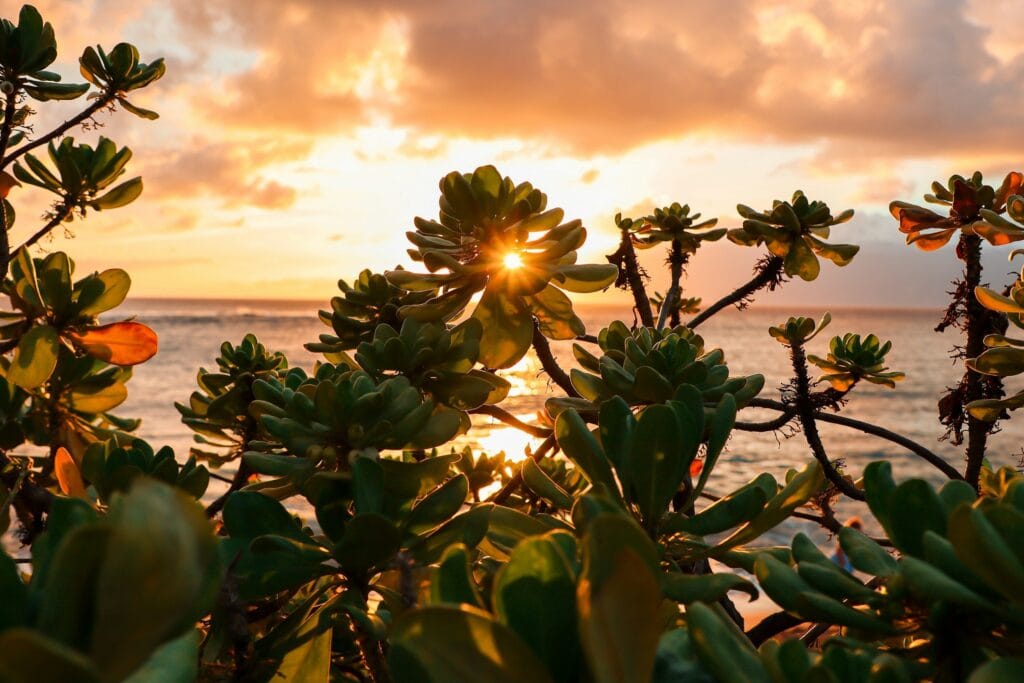
Where is the best place to see Maui from the Big Island?
North Kohala gives you the shortest line of sight
North Kohala is the most favorable part of Hawaii Island because it points toward Maui across the Alenuihaha Channel and includes the Big Island side of the channel's shortest measured crossing.
Open coastal viewpoints and legal public-access areas in this region can give you a clean ocean horizon.
The farther north you are, the less unnecessary distance you add to the view.
Do not drive onto private land or stop on narrow road shoulders just to chase a clearer angle.
A safe public viewpoint with an open horizon is better than being a few miles closer.
South Kohala can also produce Maui views
South Kohala is another practical area to watch for Maui.
The coastline around Kawaihae and the broader Kohala Coast faces the correct side of the island, and National Park Service planning material for the western Hawaii Island trail corridor documents long-distance views of Maui when haze clears.
The view is more distant than from the closest point in North Kohala, so conditions matter more.
An open ocean horizon helps, but there is no public viewpoint where Maui is guaranteed to appear every day.
Higher elevation can help
Moving uphill can improve your geometric line of sight and sometimes place you above low coastal haze.
Elevated areas around Kohala and parts of North Kona can therefore offer a clearer silhouette than a beach at sea level.
Elevation does not solve every problem, though.
If Haleakala itself is wrapped in cloud, gaining a few hundred feet on the Big Island will not reveal the summit.
What weather gives you the best chance?
There is no guaranteed "Maui visibility season." The important factor is air clarity along the entire line between the islands.
The National Park Service's planning material for the Ala Kahakai National Historic Trail notes that vog can obscure long-distance views from Hawaii Island and that when prevailing winds clear the haze, Maui, Kahoolawe, and Molokai can be visible at great distance.
For a traveler, that translates into a few practical signs.
Look after a stretch of clean trade-wind weather
If the horizon looks sharp and distant landforms on Hawaii Island are unusually crisp, your odds are better.
Persistent trade winds can help move haze away from some viewing areas.
Watch Haleakala's cloud cover
A perfectly blue sky over your Big Island hotel does not guarantee a Maui view. Haleakala can have its own cloud layer.
The National Park Service describes weather at Haleakala as unpredictable, with conditions that can change rapidly across its large elevation range.
If a bank of clouds sits on the horizon in Maui's direction, the island may be hidden even while your side of the channel is sunny.
Vog matters
Volcanic haze can reduce long-range visibility. The effect varies with volcanic emissions, wind direction, and atmospheric conditions.
A day that looks merely "a little hazy" nearby can erase the contrast needed to see an island dozens of miles away.
Do not assume that every volcanic eruption automatically blocks Maui or that every non-eruptive day will be clear. Check the actual horizon.
Morning can be worth trying, but do not treat it as a rule
Distant mountain outlines can be easier to pick out when the air is visually clean and before clouds thicken around high terrain.
Still, Maui can be visible at other times of day, and local weather matters more than the clock.
A practical approach is simply to look whenever the horizon opens. The view can appear after being absent earlier the same day.
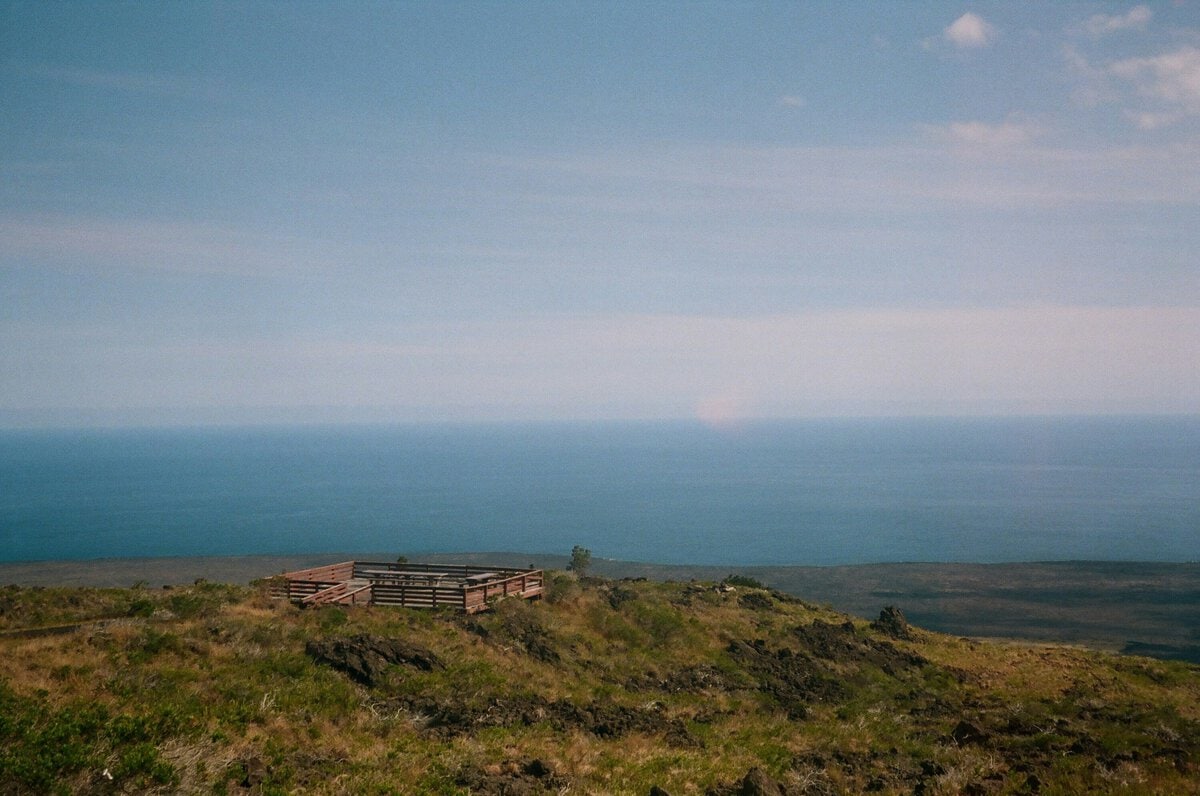
How to recognize Maui when you see it
If you are not familiar with the islands, a distant landmass can be easy to misidentify.
Haleakala is the key. It is not shaped like a sharp alpine peak. It is a huge shield volcano with a broad, gently sloping profile.
From Hawaii Island it may appear as a long, muted silhouette rather than one obvious pointed summit.
Clouds can hide the lower slopes, so the visible portion may look disconnected from the ocean.
If you are in Kohala and see a substantial mountain mass across the channel, Maui is the likely answer.
If you are unsure, compare the view with a map before assuming that every small offshore shape is another island.
Can you see other Hawaiian islands from the Big Island?
Under unusually clear conditions, yes.
National Park Service planning documents for the Ala Kahakai National Historic Trail state that Maui, Kahoolawe, and Molokai can be seen at great distance when haze clears.
That does not mean all three will be visible from the same roadside viewpoint on a normal day.
Terrain, direction, atmospheric clarity, and observer elevation all matter.
Haleakala is easier to identify at long range than a low coastline because so much of the volcano rises above sea level.
Can you see the Big Island from Maui?
Yes, the same line-of-sight principle works in reverse.
Hawaii Island contains even higher mountains than Haleakala. Mauna Loa rises to about 13,681 feet, and Mauna Kea is higher still.
From suitable parts of Maui, especially elevated places with a clear southeastern view, the Big Island can appear on the horizon when the atmosphere cooperates.
The reciprocal view can be especially striking because the Big Island's volcanoes cover such a large area.
Again, "visible" does not mean detailed. At long range, you are mainly seeing the mountain mass and upper slopes.
Can you see Maui from Kona?
Sometimes, yes, but Kona is not the best place to count on it.
Kailua-Kona sits much farther south than the closest Big Island-Maui crossing.
Haleakala is still tall enough to be visible from some west-side locations when the atmosphere is exceptionally clear, and higher viewpoints in North Kona improve the odds.
From central Kailua-Kona, however, Maui can be faint and easy to miss. Haze over the ocean, clouds on Maui, and the longer viewing distance all work against you.
If seeing Maui is a small bonus, watch the northern horizon on a very clear day.
If seeing Maui is an actual goal, spend time in Kohala instead of planning around a Kona waterfront view.
Is the Alenuihaha Channel the water between Maui and the Big Island?
Yes. The Alenuihaha Channel separates Maui from Hawaii Island.
The State of Hawaii Data Book lists the channel's measured width as 29.6 miles between Upolu Point on Hawaii and Puhilele Point on Maui.
It also records water as deep as 6,810 feet at or near that line.
That combination is part of what makes the view feel unusual.
Two enormous volcanic islands rise from very deep water with a relatively narrow strip of ocean between their closest points.
Does seeing Maui mean you can take a ferry there?
No. Visibility and transportation are separate questions.
The Hawaii Tourism Authority describes short interisland flights as the normal way to move among the major islands.
Its current Maui visitor information does not list passenger ferry service from Hawaii Island.
If you want to visit Maui from the Big Island, plan around air travel rather than assuming there is a regular passenger ferry.
Maui's main airport is Kahului Airport (OGG).
Hawaii Island's main commercial airports are Kona International Airport (KOA) and Hilo International Airport (ITO).
A distant view across the channel can make the islands feel close, but airport time and ground transportation turn an island change into a real travel segment.
Is Maui close enough for a day trip from the Big Island?
A day trip is physically possible when flight schedules work, but it is rarely as simple as the short geographic distance suggests.
The islands are close enough to see each other, yet you still need to travel to an airport, check in, clear security, fly, arrange transportation on Maui, and repeat the process to return.
The Hawaii Tourism Authority recommends arriving at least 90 minutes before an interisland flight.
Once airport time is included, a "quick hop" can consume a large part of the day before you have driven anywhere on Maui.
If Haleakala, the Road to Hana, or Maui's beaches are important enough to justify the trip, staying at least one night is usually more sensible than treating Maui like a roadside attraction visible across the channel.
Your best chance of seeing Maui from the Big Island
You do not need a tour or special equipment. You need the right location and unusually good visibility.
- Go north: North Kohala gives you the shortest geographic separation from Maui.
- Choose an open public viewpoint: You need an unobstructed horizon across the channel.
- Look for Haleakala, not beach detail: Expect a broad mountain silhouette.
- Try when the air looks exceptionally clear: Haze and vog reduce contrast over long distances.
- Check Maui's cloud cover: Clouds around Haleakala can hide the mountain even when the Big Island is sunny.
- Use binoculars if you have them: They help with identification, but clear air matters far more than magnification.
- Treat the sighting as a bonus: Cross-channel visibility is weather-dependent, so do not build a whole vacation day around it.
The bottom line
Yes, Maui can be seen from the Big Island.
The strongest opportunities are from North and South Kohala, where you face Maui across the Alenuihaha Channel.
At the channel's narrowest measured point, the islands are only 29.6 miles apart.
What you usually see is not a detailed Maui coastline.
It is the broad upper mass of Haleakala, which rises 10,023 feet above sea level and can stand clearly above the horizon when the atmosphere is clean.
If Maui disappears on a sunny day, that does not mean you are looking in the wrong direction.
Clouds, marine haze, and vog can erase a long-distance island view very quickly.
When those layers clear, the fact that one Hawaiian island can be seen from another becomes obvious.
Sources and further reading
- State of Hawaii Data Book - Width and Depth of Channels
- National Park Service - Haleakala Geology
- National Park Service - Ala Kahakai National Historic Trail planning document
- National Park Service - Haleakala Weather
- Hawaii Tourism Authority - North Kohala and the Kohala Coast
- Hawaii Tourism Authority - Island of Hawaii Travel Information
- Hawaii Tourism Authority - Exploring the Hawaiian Islands
- NOAA - Technical discussion of distance to the horizon
- U.S. Geological Survey - How Big Are the Hawaiian Volcanoes?

Independent Publisher Notice
BestAttractions is an independent editorial publisher. We are not affiliated with, endorsed by, or acting on behalf of any location, business, property owner, manager, government agency, or organization described in this article. Comments posted on this page are not forwarded to, reviewed by, or acted upon by any entity mentioned in the article. For official inquiries, complaints, applications, bookings, or other requests, please contact the relevant entity directly through its official website or other verified channels.