
Bronx Terminal Market sits on the Harlem River in the Bronx, New York, just south of Yankee Stadium. The city built it as a wholesale food market, and the city still owns the ground.
The market opened in 1929 and moved fruit and vegetables into the Bronx for decades. By the 2000s its wholesalers sold tropical produce to small groceries in the South Bronx and Harlem.
In 2006 the city approved a big-box retail center for the site, so the wholesalers had to go. They were out by June. No new market was built for them, though they'd asked to move to one together.
The retail center opened in 2009 and kept the market's name. Food is sold on the site again, at retail this time, in two grocery stores and a food hall that have opened since January 2020.
Bronx Terminal Market's money-losing start
In 1924 the city began a six-story brick cold-storage building on the Harlem River, just south of Yankee Stadium.
A two-story red-brick power house followed in 1925, with arched windows and tower-like details on its roof, and inside it the city made ice and ran the refrigeration for the market to come.
The idea dated from 1913, when a city commission recommended a terminal market in every borough.
The Bronx got this stretch of riverfront because rail and water both reached it, so produce could come into the borough without first passing through Manhattan's crowded wholesale markets.
The market opened officially in 1929, and it lost money from the start. Keeping it running cost the city more than $160,000 a year.
Rent brought in about $26,000, which covered less than a sixth of the bill.
La Guardia's expansion and the Prow Building
Five years later, the city built more.
Mayor Fiorello La Guardia's administration wanted pushcart trade off congested streets and the city's food distribution reorganized.
Between October 1, 1934, and May 1, 1935, the city spent $570,000 on Building B, more than 20 years of the first market's rent.
The two-story reinforced-concrete structure divided into 19 wholesale spaces.
Rail sidings ran along its east side, broad upper-floor windows opened across the light-yellow exterior, and canopies sheltered the loading docks.
The same expansion added Building D at the market's southeast end.
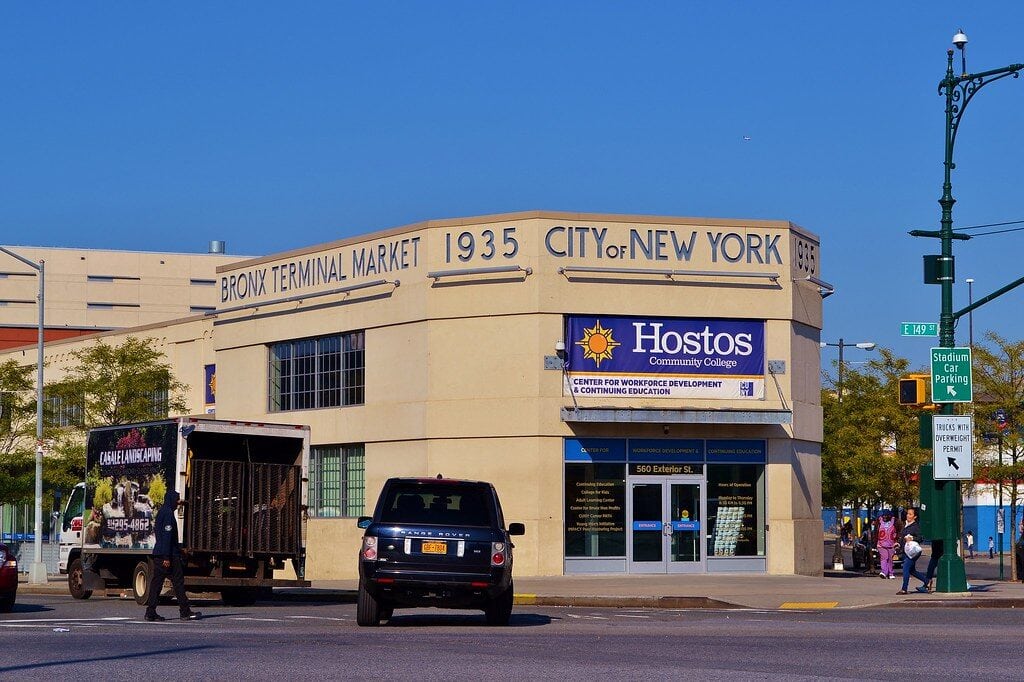
The small two-story stucco structure followed the angle of the streets and is usually called the Prow Building.
Large Art Moderne lettering marked its southern corner: Bronx Terminal Market, City of New York, 1935.
Plans gave the building a bank, a restaurant, and a hotel for farmers.
La Guardia used the new market as a stage. On December 21, 1935, the stunt began at 6:50 a.m. when two police officers sounded trumpets.
La Guardia then announced that city-run public markets would ban the sale, display, and possession of baby artichokes, part of a campaign against racketeers manipulating prices.
The ban never became a permanent rule.
The market itself grew into a major receiving point for fruit and vegetables, and at its strongest it held more than 100 tenants and about 1,000 employees.
The Deegan, the lease, and the last wholesalers
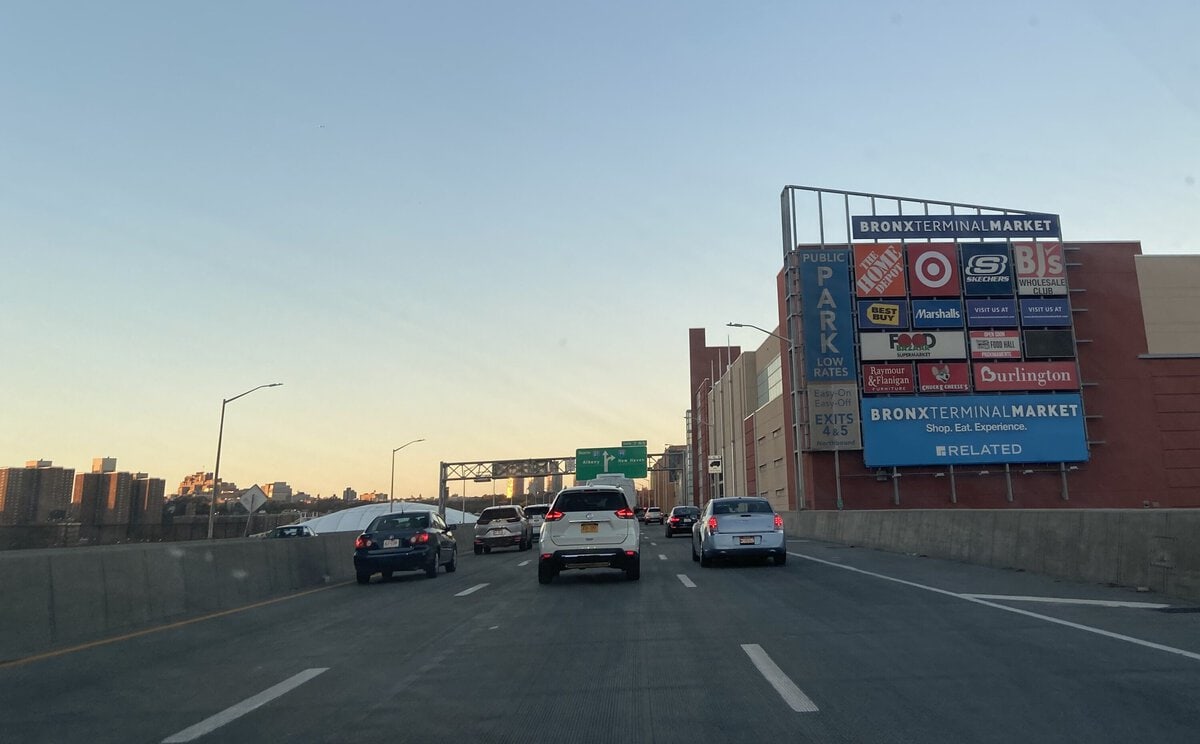
Between 1950 and 1956, the Major Deegan Expressway went up beside the market.
Ramps built later meant tearing down some market structures north of the old cold-storage building and power house.
In 1972 the city leased the market to a private operator for 39 years and kept the land.
The two sides ended up in court, and by the early 2000s they had spent more than a decade fighting over rent, maintenance, development rights, and efforts to end the lease.
The market kept trading through the fight.
Its wholesalers now supplied Hispanic, Caribbean, and West African groceries and restaurants with tropical produce and imported foods that were hard to find through mainstream distributors, and small groceries from the South Bronx, Harlem, and Washington Heights bought there.
Several of the 1930s buildings were still standing, but many of Building B's upper windows and ground-floor openings had been blocked up, and its loading areas were patched or closed in.
By September 2004, 23 businesses were left, with about 297 workers between them.
They sold produce, meat, restaurant equipment, cigarettes and candy, and African, Caribbean, Hispanic, and tropical foods, from firms such as Cuba Tropical, African Market, and Trombetta & Sons.
Five months earlier, the city and Related Companies had signed an agreement that ended the old lease and cleared the way for big-box retail.
The merchants asked to move together to a new wholesale market on a South Bronx site that had been discussed for the 2012 Olympic velodrome.
Some sued, and in January 2006 a court rejected their central claims.
On February 1, 2006, the City Council approved the redevelopment 49 to 1.
The wholesalers took payments from the city's Economic Development Corporation, calculated partly by how much floor each one occupied, and no replacement market was built for them to move into as a group.
One firm, Siegmund Strauss, moved across East 149th Street.
Four months after the vote, on June 1, 2006, their time on the site ran out, 77 years after the market opened.
Gateway Center at Bronx Terminal Market opens
Demolition took most of the remaining market buildings and the Bronx House of Detention for Men, which stood on part of the site.
Their concrete and masonry were crushed there and reused as aggregate.
The Prow Building stayed, restored with its 1935 lettering, and stonework and ornament from the demolished structures, the detention building among them, were set into the new construction.
The 1925 power house survived too, west of the retail buildings, and since November 2022 it has been the Bronx Children's Museum.
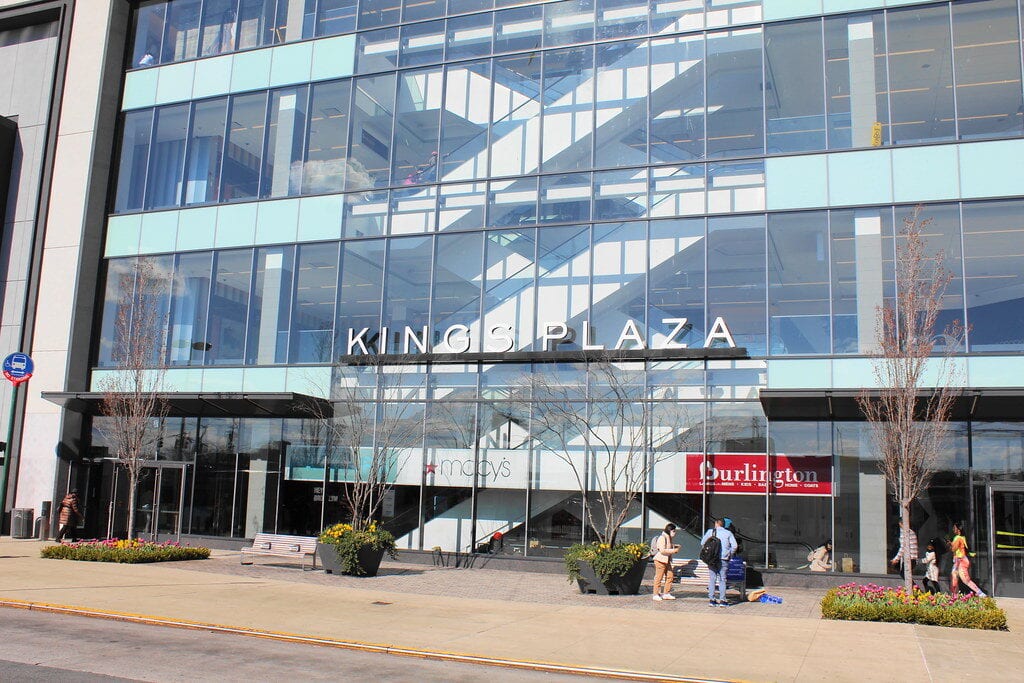
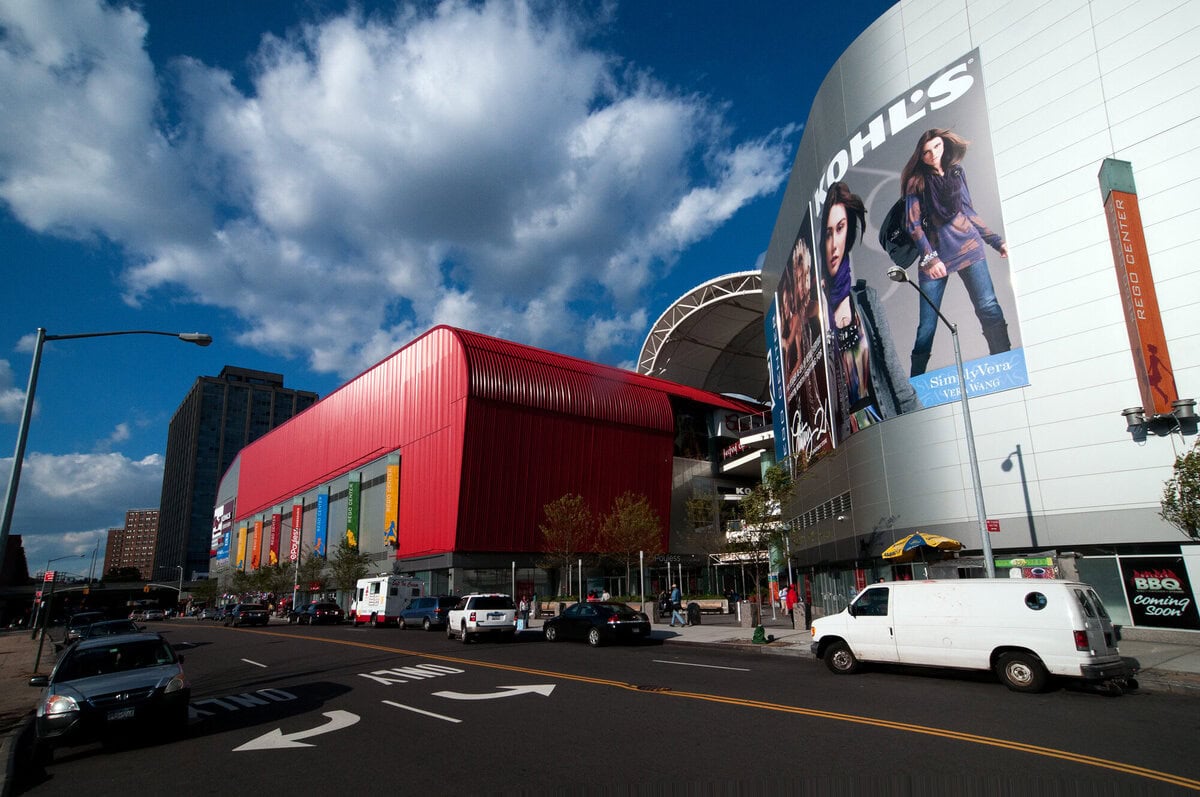
In their place went up two large multi-story retail blocks with a six-level garage between them, so shoppers could drive in and park near the floor of the store they came for.
Home Depot opened first, on April 23, 2009. Target followed in July, and BJ's brought the Bronx its first warehouse club.
The ribbon-cutting came on September 17, 2009.
Bronx Terminal Market, at 610 Exterior Street in the Bronx, New York, had opened in 1929 as the city's wholesale food terminal.
From that day it was Gateway Center at Bronx Terminal Market, a multi-level retail center on land the city still owns.
By that day about 1,100 Bronx residents had been hired, nearly four times as many people as worked in the old market in 2004.
The approved plan had also called for a 250-room hotel, and it has never been built.
Food Bazaar, Lidl, and the DMV move in
Toys "R" Us and Babies "R" Us shared one of the large opening-era spaces until the chain's liquidation closed both stores in 2018.
Food Bazaar leased the space and opened a supermarket there in January 2020, with plans for an attached food hall.
The hall stalled in the spring 2020 pandemic and was delayed for years, and the Boogie Down Food Hall finally opened on the fourth level on March 27, 2025.
Other chains left too.
Around 2014 the center had been about 99% occupied, and by April 19, 2024, it was 90.2% leased, with Marshalls gone at the end of its lease that January.
On October 23, 2024, Lidl opened a grocery store at 700 Exterior Street, in space that had been split among non-grocery shops, and filled part of that vacancy.
Target, BJ's, and Home Depot are still in the spaces they took in 2009.
On December 1, 2025, the New York State Department of Motor Vehicles held a grand opening for its office on the sixth level, next to Best Buy.
It replaced the Bronx office on East Fordham Road, which had closed that September and had limited parking.
Customers at the new one use the center's six-level garage, and on weekdays the office opens at 7:30 a.m., after Food Bazaar.
Independent Publisher Notice
BestAttractions is an independent editorial publisher. We are not affiliated with, endorsed by, or acting on behalf of any location, business, property owner, manager, government agency, or organization described in this article. Comments posted on this page are not forwarded to, reviewed by, or acted upon by any entity mentioned in the article. For official inquiries, complaints, applications, bookings, or other requests, please contact the relevant entity directly through its official website or other verified channels.