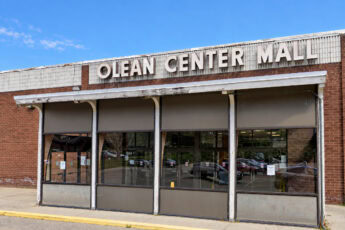
An enclosed mall rises beside Marshall Street
By September 1978, Bazaar Hill, Inc. still had not started work at 710-720 University Avenue. The project mixed shops with food tenants, including Nathan's, an ice cream parlor, and another restaurant, and the developer was still aiming to begin construction that fall.
The block lay on Syracuse's University Hill, where the building of Interstate 81 and decades of urban renewal had cleared much of the old 15th Ward.
A 1974 market study for the Hill had marked this ground for new stores. Marshall Street, the bookshop strip just north of campus, had little room left for more storefronts.
In 1979 the city's urban renewal agency sold the block to four local investors for $237,400.
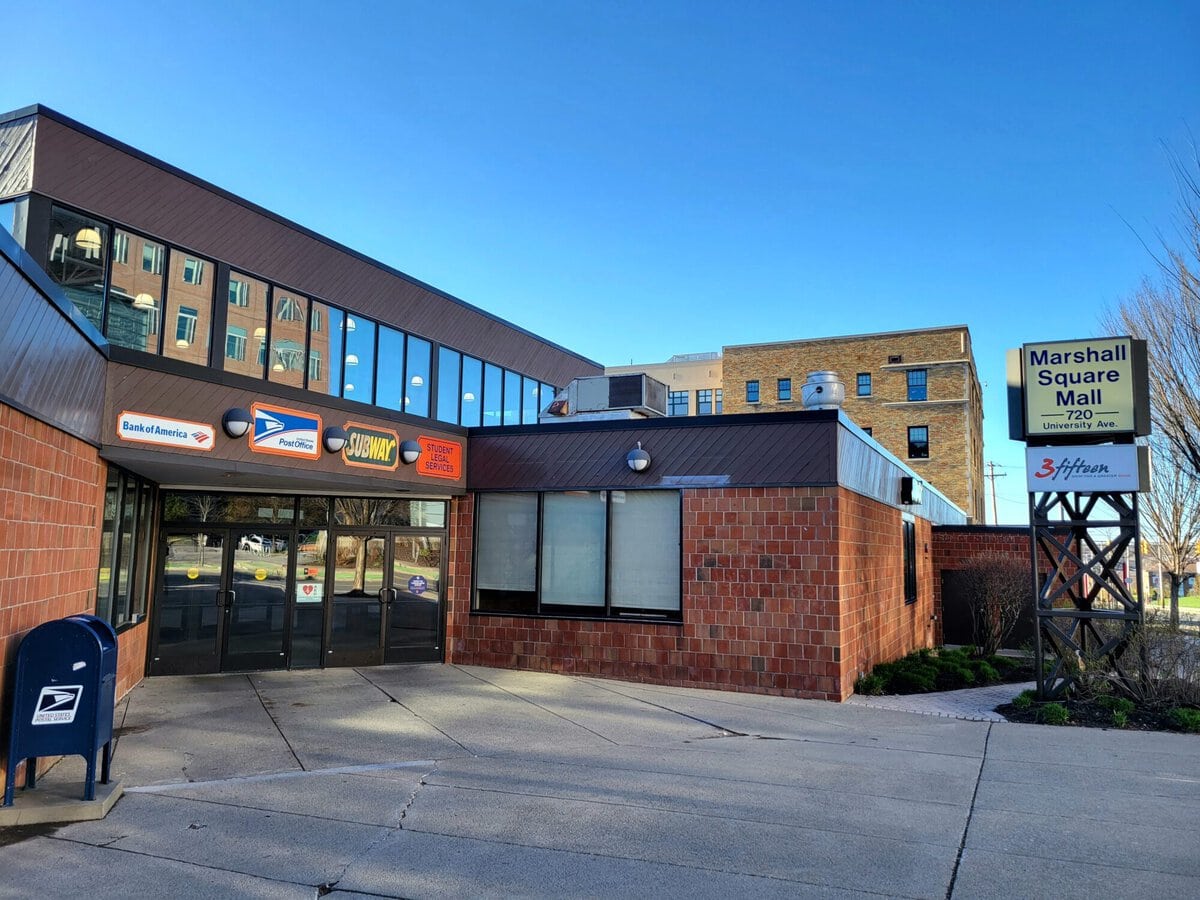
Marshall Square Mall opened on it in 1981: a two-story enclosed mall at 720 University Avenue in Syracuse, New York, filling the block between Marshall Street and East Adams Street and named for the street beside it.
Its indoor shopping street ran the full length of the block, close enough that shoppers could walk between its stores and the storefronts outside.
The tenants were small businesses.
Record Theatre sold records there to students who came over on foot from campus, and when the chain opened a 16,000-square-foot store out in DeWitt in December 1988, it kept the University Hill branch, which was still trading in 1993.
An art exhibition was held at the mall in August 1984.
In August 1989 the campus radio station WJPZ hid 891 prize envelopes in its stores for a contest called Amok In the Mall.
Business swung with the academic year, and in the summer months, with most students gone, the mall leaned on nearby workers and the people who lived on the Hill.
The mall gets a new landlord
By the summer of 1998 some of the mall's storefronts had no tenant.
Way Cool Corner had shut within two years of its debut, and Westcott Florist had left, at the end of a decade of turnover.
The shops still open that August included the Orange Bookstore, Le Vie Boutique, and the Bean Bag Cafe, which had opened in March with coffee, desserts, and salads, and a shelf of books customers could read at the tables.
The building's private owner offered it to Syracuse University.
Late in July 1998, after negotiations, the university bought the mall for about $4 million, paid from its endowment.
The building came with a tenant that competed with its buyer: the independently run Orange Bookstore was the main local rival of the university's own bookstore.
The university pledged to honor the existing leases, to find businesses for the empty units, and keep the Orange Bookstore in place, and it announced no plan to convert the building.
The purchase also gave the university a choice it could make one unit at a time.
Any storefront that emptied could become office or classroom space for the campus instead of going to another shop.
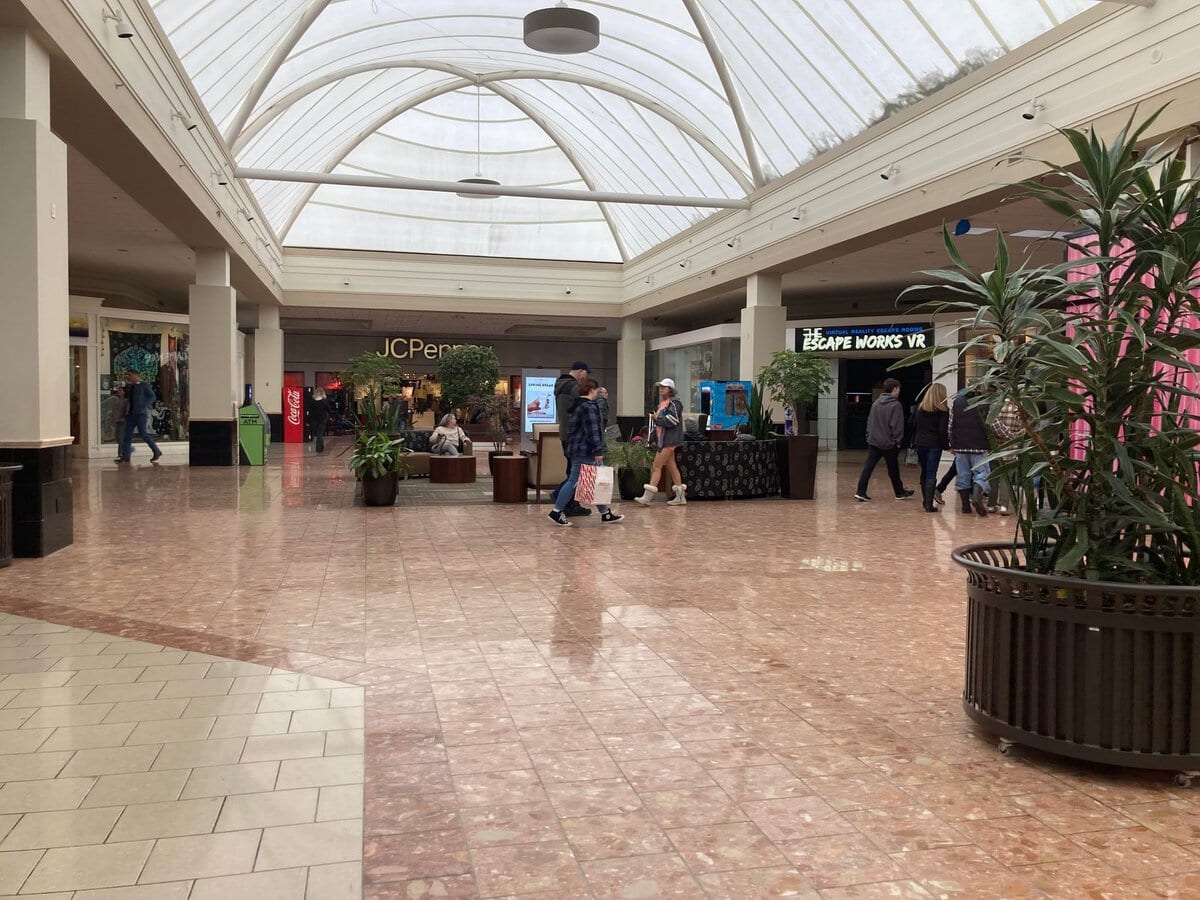
Shop space becomes a fitness center
The new owner started with the building itself.
In 2000 and 2001 the university put on a new roof, improved access for people with disabilities, and updated the fire detection system.
By spring 2007 the course schedule listed Marshall Square Mall as a teaching building under the code MSQ.
Around the classes, Subway and the Syra-Juice juice bar were selling quick meals by 2004, and a post office was open in the building by 2006.
The largest change came in 2007.
In fall 2006 the university set up a committee to find more exercise space, because its recreation buildings were crowded.
An advisory group chose part of the mall, and the central administration paid $530,000 to renovate it.
The fitness center opened on Monday, August 27, 2007, the day fall classes began.
The room held about 50 people at a time, and 338 students used it that first day.
The university's committee on accessibility helped plan the layout.
A ramp joined the gym's two levels, and orange aisles between its 44 machines left room for a wheelchair to pass from one to the next.
A raised stretching area let users move onto mats without getting down to the floor.
Half the lockers were set within reach of someone seated, and each of the three private changing rooms was open to anyone, whatever their gender or mobility.
Students with classes at the north end of campus had a gym closer than Archbold Gymnasium.
Follett's Orange Bookstore leaves the corner
The Follett-run Orange Bookstore held the mall's most visible spot, the glass corner facing the intersection of Marshall Street and University Avenue, under a dark sign with the Follett name and an orange emblem.
Course syllabi in 2006 and 2007 sent students there for their assigned books.
Farther along University Avenue, Campus Copy produced course readers.
In July 2007 the university's Printing Services office instructed faculty to send course readers through the university-run bookstore.
The office gave two reasons, copyright permissions and NCAA compliance.
The order came from the building's owner and covered a trade in which two of its tenants had a stake.
Campus Copy kept going.
In November 2008 it advertised a dollar off passport photos taken without an appointment, and in May 2013 its windows on University Avenue were crowded with giant cutout portraits, sports banners, and samples of business cards, resumes, and binding.
The Follett store lasted into 2012.
Its closing was public by that January, and it shut in February 2012.
From then on, the university's own store was the only bookstore on campus where students could buy course materials on the spot.
3fifteen and Cafe Kubal take the corner
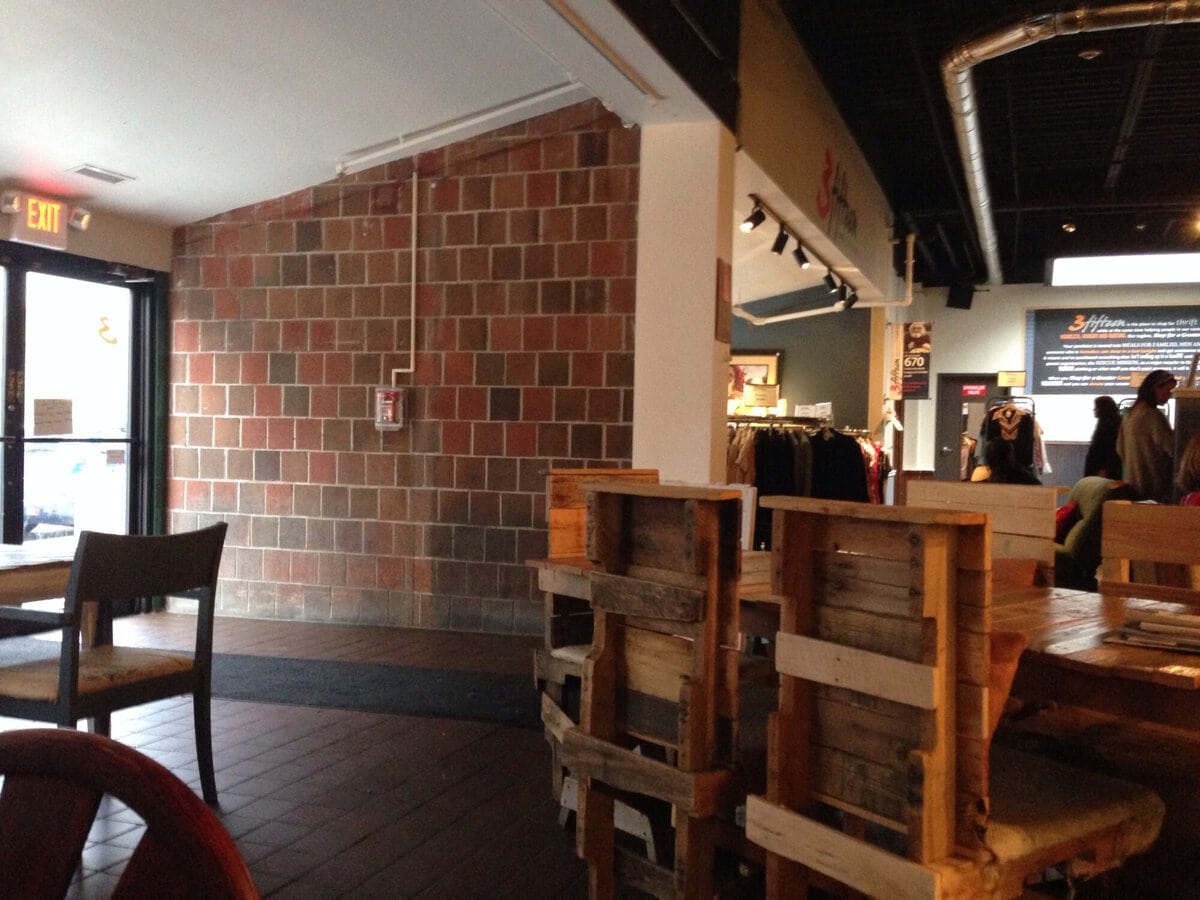
In August 2012 the Rescue Mission, a Syracuse charity, opened a secondhand store called 3fifteen in the mall.
Students from the university's Whitman School of Management had worked out the idea with the charity, and one of them wrote the business plan and helped secure the space.
The shop was smaller than the charity's Thrifty Shopper outlets.
It sold clothing, furniture, accessories, and housewares, with vintage and better-quality donations routed to it from the Liverpool sorting center.
Its sales supported the Rescue Mission's food, shelter, and housing programs.
By October 2013 Cafe Kubal had opened beside it on the old bookstore corner, with its signs hung above windows that wrapped the intersection and a passage through to the thrift racks.
Inside 3fifteen the floor stepped between levels, and the racks were sorted by type of garment.
By April 2017 it kept a rack of vintage Syracuse University clothes for game days, where a sweatshirt cost $9.99 and a T-shirt $6.99.
The food counters changed in the same years.
Syra-Juice sold fresh fruit smoothies and discounted its soups after 5 p.m. Above the counter, artificial fruit spelled out the shop's name over a large chalkboard menu.
It closed in late 2013.
By 2014 a vegan restaurant, Strong Hearts on the Hill, was trading in the mall, selling a kale salad with beets, walnuts, and sweet potatoes, vegan chicken wings, and milkshakes made without dairy.
Salt City Coffee replaces Cafe Kubal
Syracuse University stopped in-person classes in March 2020, and Cafe Kubal closed its corner café that spring.
In July 2020 the company made the closing permanent, shutting its Hotel Syracuse café as well while it changed how it did business.
The empty café sat within the Rescue Mission's leased space beside 3fifteen.
By August 2020, after looking for a new operator, the charity contacted Salt City Coffee, a local company.
Salt City took the corner and opened it as its third location in early March 2021, with tables behind the big windows, its own logo in Kubal's old place, and a lit sign over the counter.
The vegan restaurant in the mall had no such second act.
Strong Hearts on the Hill had its operations interrupted during the pandemic and closed for good in 2021.
The parking lot and the old gym get new uses
University permit holders were not exempt when paid parking began at the mall on August 29, 2022.
A week earlier, Syracuse University Parking and Transportation Services had assumed management of the East Adams Street lot, previously owned by the city; it stayed free through Syracuse Welcome and move-in, then switched to 24-hour mobile payment in four-hour increments.
In April 2024 the university announced changes to the lot alongside a new loading dock on the north side of the residence hall next door at 727 South Crouse Avenue, a former apartment building it had bought in 2021.
After the fitness center inside closed, the university's IT department announced in December 2024 that its MakerSpace would leave Kimmel Hall for the old gym, calling the new home temporary.
The lab reopened on the mall's first floor in January 2025, in nearly 3,000 square feet. Entry required a valid SU ID.
Its tools ranged from vinyl cutting and textile equipment to 3D printing and laser engraving, while a separate music room held guitars, a keyboard, and an electronic drum kit.
By early March, it had completed more than 550 projects in 2025.
What Marshall Square Mall holds now
Syracuse University owns the mall and oversees it through its real estate office, while a commercial management company leases the shops and offices.
The shops are open to the public.
Salt City Coffee and 3fifteen share the corner, Subway sells sandwiches as it has since at least 2004, and the post office takes passport applications on weekdays and Saturday mornings.
Point of View Optical gives eye exams.
A threading salon works out of a smaller unit, and the commercial manager leases office space in the building as well.
The rest of the building serves the campus.
Student Legal Services, which moved in before its old house on Ostrom Avenue came down in 2019, sees Syracuse University and SUNY ESF students by appointment and gives them legal advice without charging for the attorney.
The MakerSpace that arrived as a temporary tenant is still in the old gym, with more than 20 machines for printing, cutting, and sewing, open to students and staff who carry an SU card, who use it for class assignments and for projects of their own.
In January 2024 the university's Graduate School also named the mall's public spaces among the places where international students in its English Conversation Partners program could meet their partners for a weekly hour of practice.
The university bought the building in 1998 promising to fill its empty storefronts with new businesses.
The mall still trades under its own name, and its coffee counter and thrift racks now share the building with 11 classrooms and a university lab.
Independent Publisher Notice
BestAttractions is an independent editorial publisher. We are not affiliated with, endorsed by, or acting on behalf of any location, business, property owner, manager, government agency, or organization described in this article. Comments posted on this page are not forwarded to, reviewed by, or acted upon by any entity mentioned in the article. For official inquiries, complaints, applications, bookings, or other requests, please contact the relevant entity directly through its official website or other verified channels.