
The Mall at 163rd Street is a shopping mall on Northeast 163rd Street in North Miami Beach, Florida. It opened in 1956 as the 163rd Street Shopping Center and took its current name in 1982.
For decades the mall ran on department stores, with Burdines as its main one. Then Aventura Mall opened a few miles north in 1983, and JCPenney moved out of the mall and into Aventura.
Burdines stayed another 16 years. It closed its store at the mall in 1999 and relocated to Aventura. By then the mall had lost much of the department-store lineup it was built around.
Today the mall is partly leased, and many of its units are listed as available. Walmart and Home Depot run next door on land the mall's owners once held. Neither store belongs to the mall.
Food Fair opens the 163rd Street Shopping Center
On November 1, 1956, Food Fair Properties opened the 163rd Street Shopping Center on a road that had been finished only a few years earlier.
The plan copied a downtown shopping street and left the traffic out.
About 50 stores faced inward onto a landscaped walkway lined with covered walks, and about 4,000 parking spaces wrapped around the outside, roughly 80 for every shop.
Burdines was the main department store, with a Food Fair supermarket, a Walgreens, and a Woolworth among the opening tenants.
On April 12, 1957, Richard's added a two-story store of about 80,000 square feet, and the center had its second anchor.
The center was also a day out.
Arnold's Kiddyland, across from Burdines, ran a miniature train and an air-conditioned Birthday House for children's parties.
Behind the stores, Wometco's 163rd Street Theatre opened in 1960, and the separate Patio Theatre followed in 1970.
Go-karts ran on a track in the north parking lot until Hurricane Cleo wrecked it in 1964. The go-kart track was never rebuilt.
Richard's closes and the street gets a roof
Jordan Marsh built a three-story department store at the east end in February 1971.
By the end of that decade Arnold's Kiddyland had been taken down, and in January 1980 Richard's closed along with the rest of its chain, leaving its store empty.
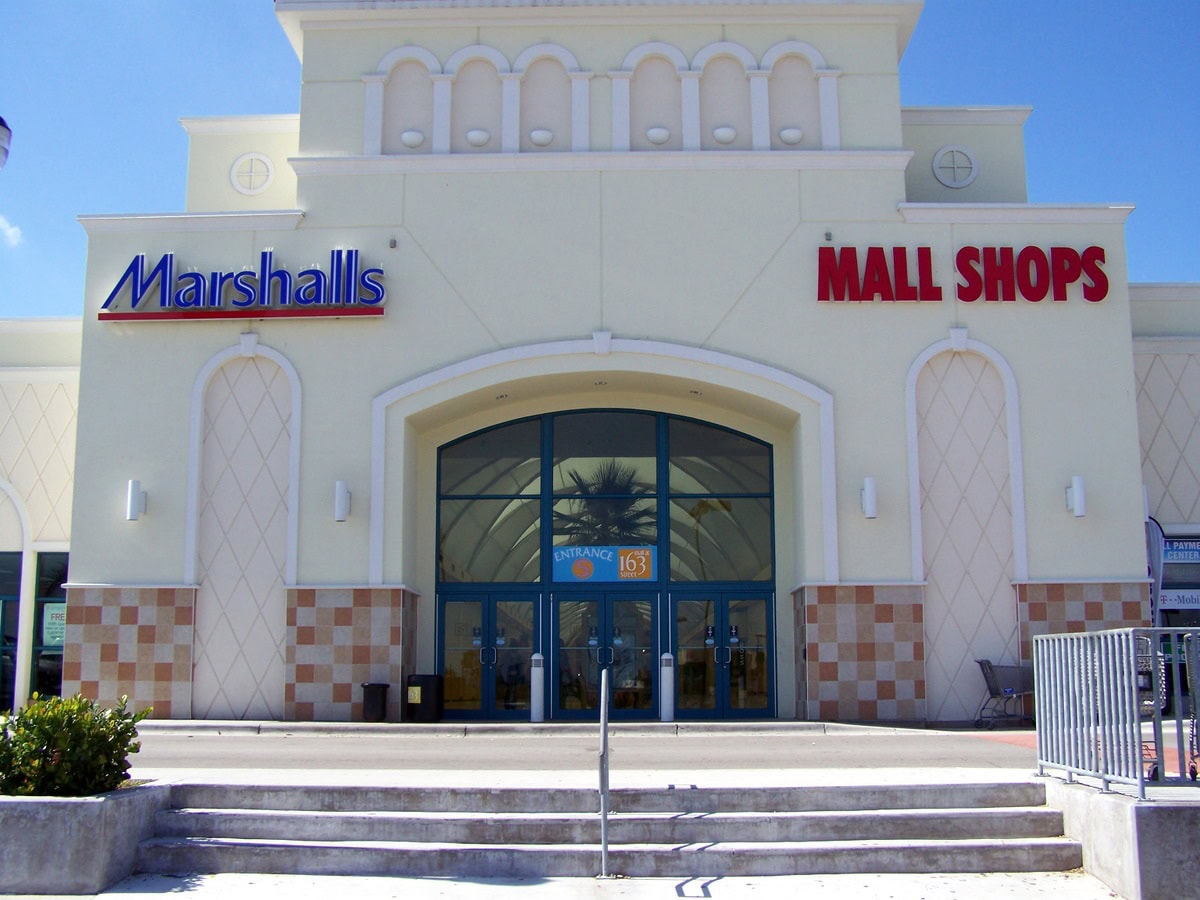
The owners built the next version of the center around that empty store. The enclosure work ran from 1980 into October 1982.
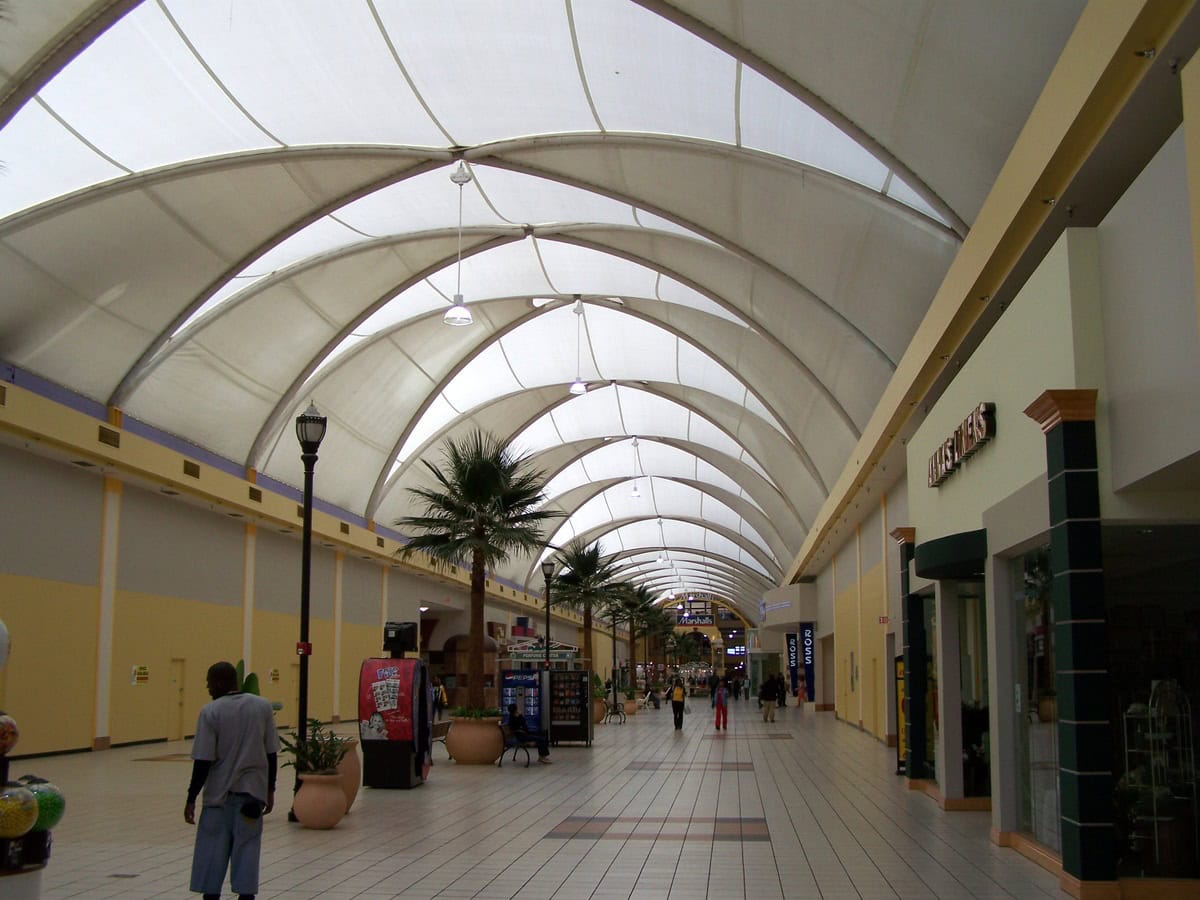
They air-conditioned the old walkway and stretched a translucent fiberglass canopy coated with Teflon over large metal arches.
Daylight still filtered through, but the street that had been outdoors for 26 years was now indoors.
Inside the former Richard's, the building was reworked into a multi-story atrium.
The original food court occupied the top floor, while Spec's Music took ground-floor space. The work cost $39.7 million.
When it was done, the complex had room for about 145 stores, nearly three times the number that opened in 1956.
The center reopened as The Mall at 163rd Street.
In November 1982, about 300 people paid $50 each to attend the gala that opened it, called Miracle on 163rd Street.
Aventura opens and the anchors leave
The roof was barely finished when Aventura Mall opened a few miles north in 1983, and JCPenney left 163rd Street to go there.
The supermarket went next. Food Fair had become Pantry Pride, which closed later that year.
Service Merchandise moved into the old supermarket and opened a new mall entrance through it.
JCPenney's old space, meanwhile, was split into smaller stores, with sporting goods on part of the lower level.
At the east end, Jordan Marsh closed its store in 1991, and Mervyn's moved into the lower two floors.
Spec's Music expanded its ground-floor store to more than five times its old size in 1995.
Mervyn's left in 1997, and the three-story building sat underused at the end of the mall.
Behind the mall, the old theater was torn down in the mid-1990s, and Home Depot built a store on the site.
In 1998 the mall and two big outparcels sold for $20 million, about half of what the 1982 makeover had cost 16 years earlier.
Burdines, the main department store since opening day, closed its 163rd Street store in 1999 and relocated to Aventura.
A third of the mall comes down for Walmart
The underused east end went first.
A 2003 city study of the 163rd Street corridor floated an open-air, mixed-use rebuild of the whole mall, and the owners never committed to it.
That year they sold roughly 21.5 acres to Walmart and started demolition.
Making room for Walmart stripped away roughly one-third of the enclosed mall.
The losses included the old Jordan Marsh building and its parking garage. The Supercenter opened on the east side in 2005.
The smaller mall that remained was rebuilt around larger stores. Ross, Marshalls, and Office Depot served as its anchors.
Walmart now stood at the east end and Home Depot out back, and the mall that had filled the whole site shared it with two stores it didn't own.
Brixmor's $60 million plan stays on paper
The big spaces in the smaller mall kept turning over.
Steve & Barry's opened on the upper level in 2007 and was gone by 2009, when the chain liquidated.
Office Depot closed in 2015. Halloween City used one of the large spaces in 2017, and Closeouts World followed in 2019.
Marshalls later moved to another store on the 163rd Street corridor, leaving its old space here behind.
In 2017 Brixmor, which by then owned the mall, put a price on taking it apart: about $60 million.
The plan made room for grocery, fitness, and entertainment uses, pushed more stores toward 163rd Street, and gave restaurants a bigger presence along the road.
It stayed in the company's pipeline for years. None of it was built before Brixmor sold the mall on March 11, 2024, for $46 million.
The Mall at 163rd Street in 2026
68 years after the 163rd Street Shopping Center opened on Northeast 163rd Street in North Miami Beach, the roughly 24-acre property changed hands.
Five firms bought it with a much larger reset in mind: new retail, medical uses, a revived food court, and courts for pickleball or padel.
They put the redevelopment at about $150 million and roughly two years, but financing for the full amount was not yet in place.
After the sale, Miami-Dade's unsafe-structures board took up one of the buildings.
In January 2025, it listed a two-story concrete-block commercial building at 1421 NE 163rd Street to be repaired or demolished, and the case came back before the board in May 2026 on a request for more time.
The county's approval, issued in June 2026, covers something smaller than the $150 million plan.
It lets the owners reactivate the commercial property, remodel the parking structures, and add two retail buildings totaling 8,250 square feet.
It covers no housing.
Today the property is partly leased, with many units listed as available.
Walmart and Home Depot still run next door, and the leasing plans mark both as not part of the mall.
Citi Trends, Foot Locker, and Panda Express are still trading.
Ross, the one anchor left from the Walmart rebuild, still opens its own doors to shoppers.
Independent Publisher Notice
BestAttractions is an independent editorial publisher. We are not affiliated with, endorsed by, or acting on behalf of any location, business, property owner, manager, government agency, or organization described in this article. Comments posted on this page are not forwarded to, reviewed by, or acted upon by any entity mentioned in the article. For official inquiries, complaints, applications, bookings, or other requests, please contact the relevant entity directly through its official website or other verified channels.