
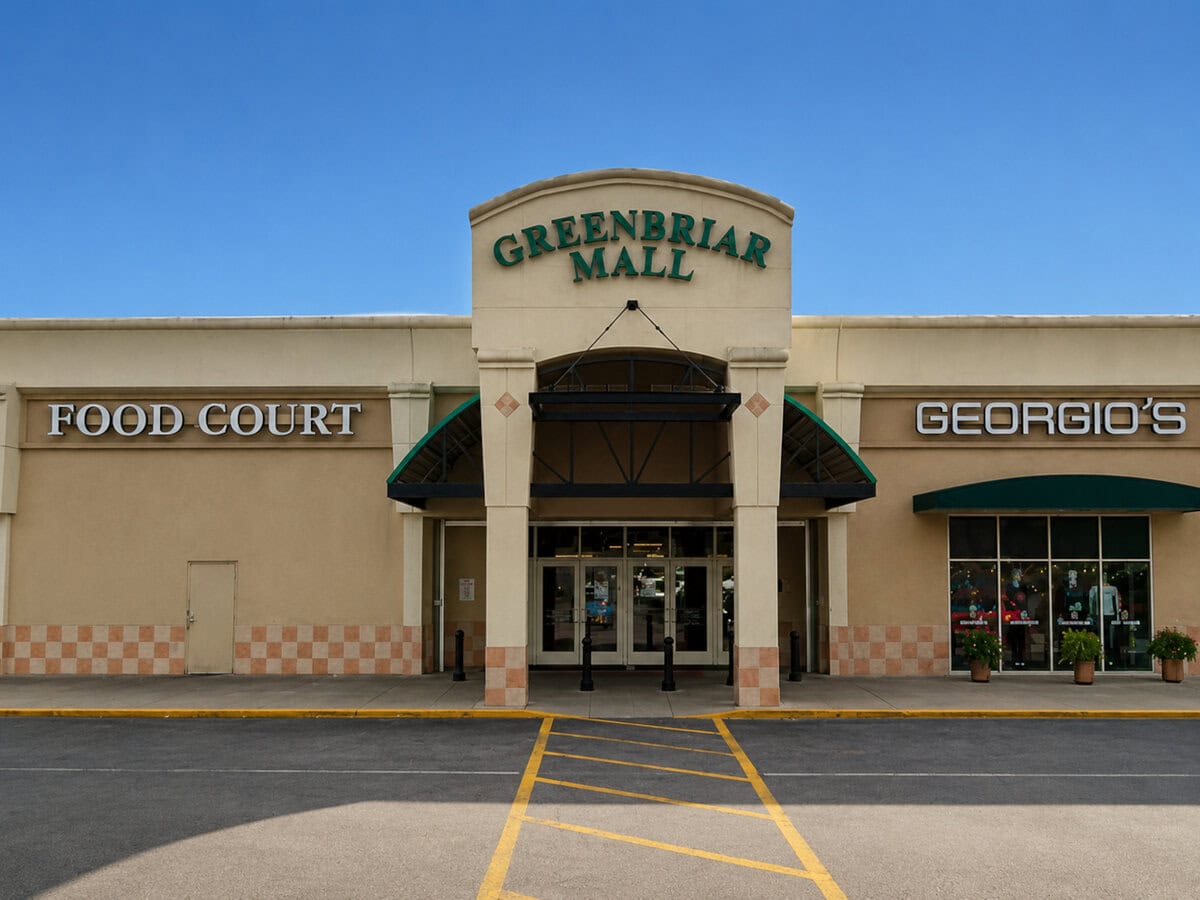
Greenbriar Mall is an enclosed shopping center at 2841 Greenbriar Parkway SW in southwest Atlanta, Georgia, off Interstate 285 and Langford Parkway.
It opened in September 1965 as Greenbriar Center, with Rich's at one end of a 952-foot concourse and J.C. Penney at the other.
Penney closed in 1985, drawing protests from residents and Black leaders, including Mayor Andrew Young. Upton's took the box, then closed.
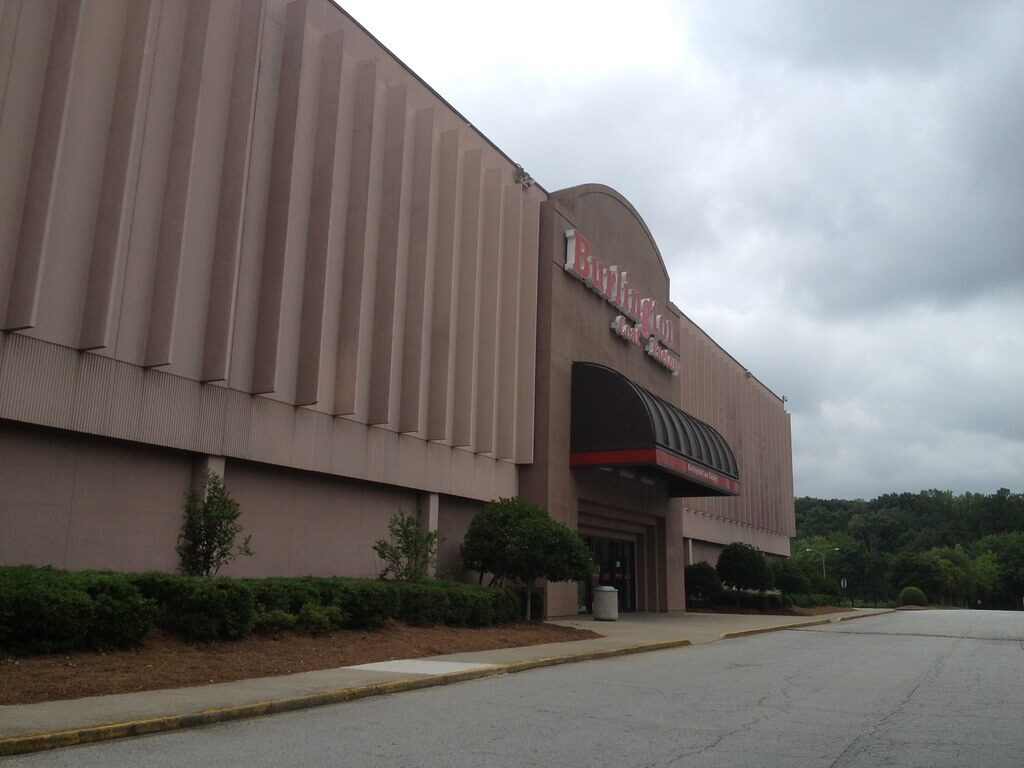
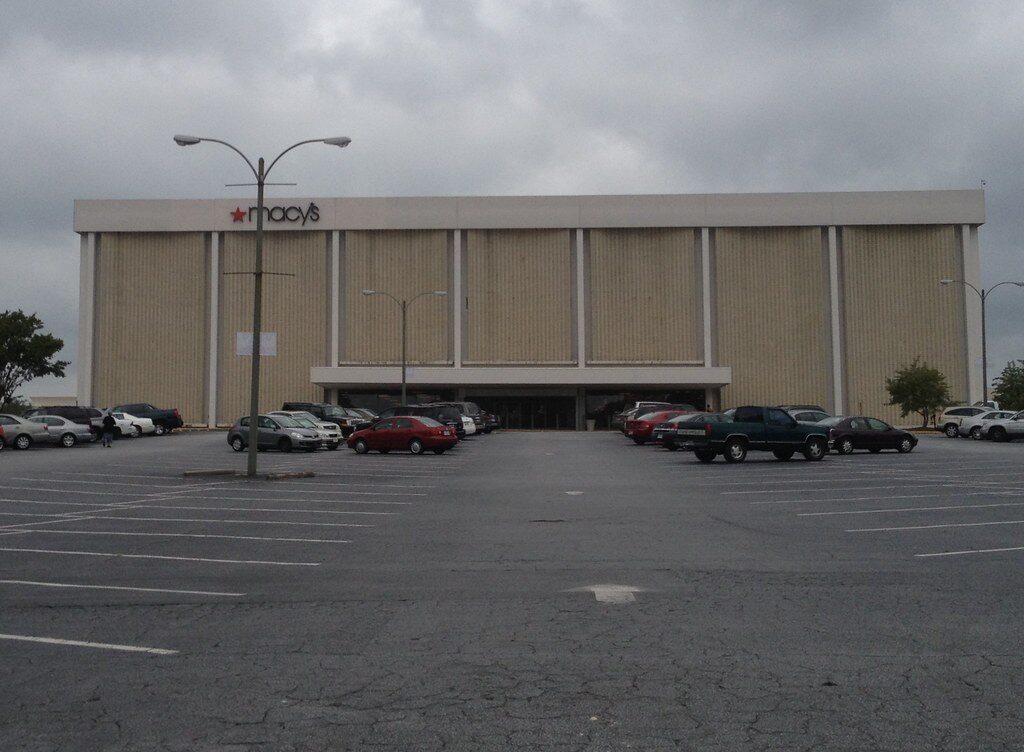
Burlington took it, then left for Camp Creek in 2019. Macy's, the last of the Rich's line, shut in April 2021.
Both anchor buildings, 130,000 square feet on the west and 180,000 on the east, are still empty, and the mall opens seven days a week anyway. Piccadilly Cafeteria opened there with the mall in 1965 and is still serving customers.
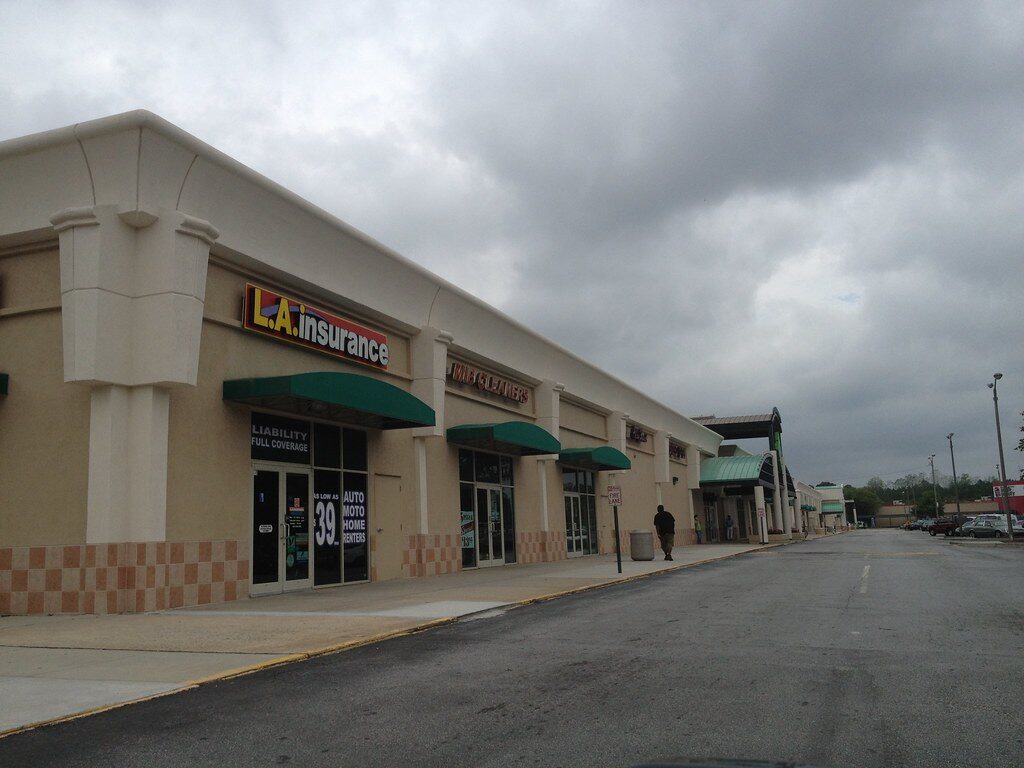
Greenbriar's tenant list now runs to a post office, a county tax office, a police mini-precinct and a public charter school, alongside the shoe stores.
That's the question worth 60 years of history: what keeps a mall running after the department stores quit on it?
Greenbriar Center opens with 47 stores
In February 1964, plans went public for a $9.5 million enclosed shopping center on the southwest side of Atlanta, Georgia, on the old Black Rock Country Club golf course land.
The proposal covered more than a shopping mall.
Early plans called for a 130-acre complex with offices, a bank, a theater, and 800 apartments. The stores came first.
The site sat on Interstate 285, 10 miles from downtown, beside a freeway that didn't exist yet.
The Lakewood Freeway opened late in 1966 and is now Langford Parkway.
Edwards & Portman drew it, years before John Portman's glass hotels went up downtown.
Rich's opened ahead of the mall, on September 9, 1965, three levels and 160,000 square feet.
Greenbriar Center held its formal opening two weeks later, with J.C. Penney at the far west end in a two-level building of roughly 140,000 square feet.
The whole place ran 650,000 square feet and held 47 stores and services, one of metro Atlanta's first fully enclosed malls and the first on this scale for the city's southwest side.
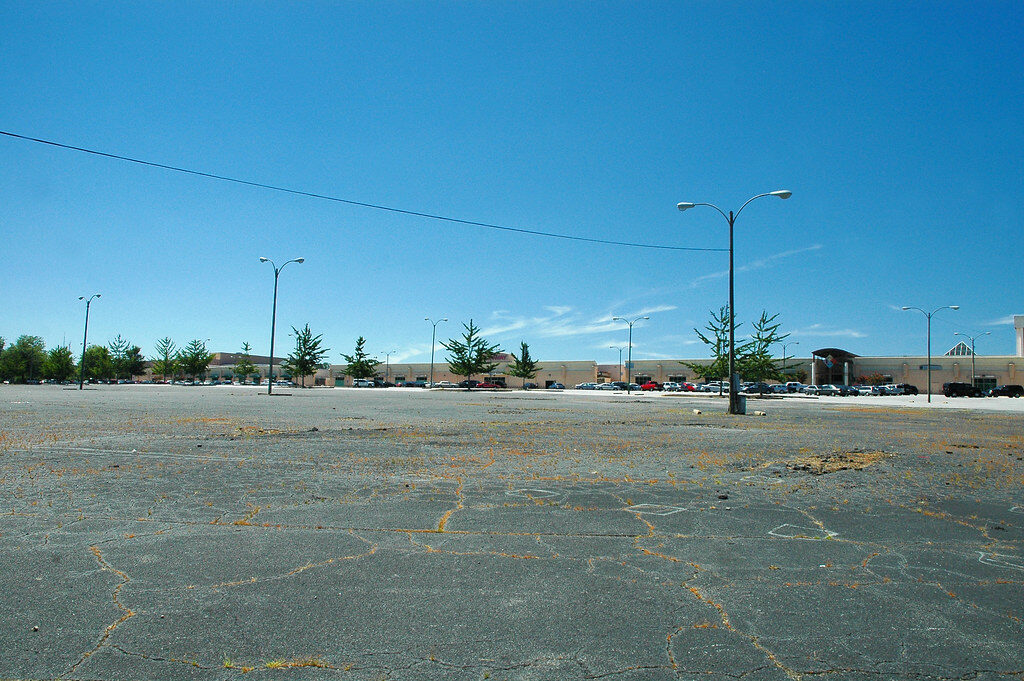
The offices and the 800 apartments mostly never arrived. What surrounded the building was parking.
The aviary, the carillon and a 59-cent sandwich
Inside, the walk ran 952 feet end to end, in a straight line, air-conditioned at a time when Lenox Square and most Atlanta shopping centers were still open to the weather.
Along it: precast stone animals, two fountains and a bird aviary. A 74-bell carillon played Westminster chimes.
Rich's put its Magnolia Room restaurant on the third floor, looking down over the east court.
The store list covered most of what a household needed in one trip. A 52,900-square-foot Woolworth.
A 19,300-square-foot Kroger. Piccadilly Cafeteria, Elson's bookstore, SupeRx Drugs, Jarman Shoes.
The Greenbriar Theatre opened that October, one screen, on a lower level called Hollywood Terrace.
Then, on November 24, 1967, a counter opened along the concourse selling a chicken sandwich for 59 cents.
That was Chick-fil-A's first restaurant under the Chick-fil-A name, and an early model for the modern mall food court.
The founder, S.
Truett Cathy, had worked the sandwich out at his Dwarf Grill over in Hapeville.
The Greenbriar unit occupied about 384 square feet, smaller than a two-car garage.
The day J.C. Penney walked out
Greenbriar opened into a growing part of town.
Nearby Headland Heights added to its early prestige, and the mall's highway location put it within reach of shoppers across south metro Atlanta.
By the early 1970s the property had dropped "Center" and was calling itself Greenbriar Mall.
Then the neighborhood changed around it.
Through the 1970s and 1980s, white households moved out of many southwest Atlanta neighborhoods, and the area's Black middle class grew.
The mall changed with them.
Over time, local fashion, footwear, jewelry and community events became a larger part of Greenbriar's identity.
Newer competition arrived: Southlake Mall in Morrow in 1976, Shannon Mall in Union City in 1980, both with bigger department-store lineups off major highways.
Greenbriar stayed busy enough to survive, but its national tenants were getting less secure.
On September 28, 1985, after 20 years, J.C. Penney closed the west anchor.
People protested.
Mayor Andrew Young argued flatly against the notion that southwest Atlanta didn't have the money to support a department store.
None of it brought Penney back. It left 140,000 square feet dark at the west end of a 20-year-old mall.
The $18 million rebuild that bought 30 years
In January 1987, the Lehndorff Group announced an $18 million renovation.
The work added 19 stores and a small food court, cut skylights into the roof, put in new fountains and ran fiber-optic lighting along the outside.
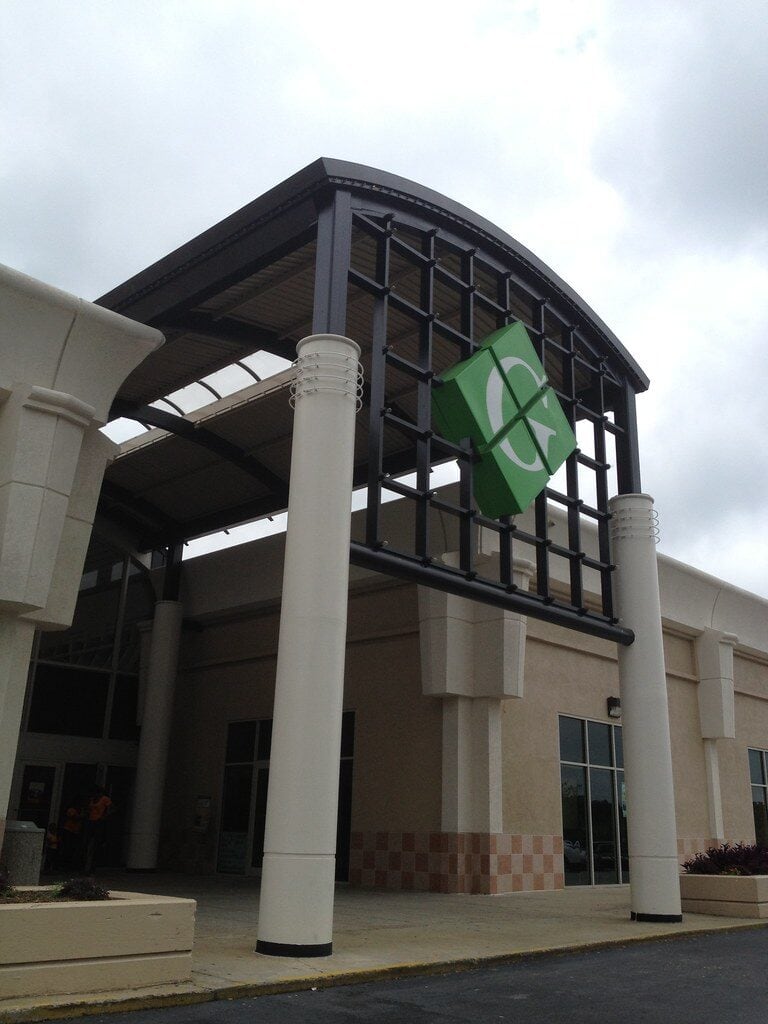
A 35,000-square-foot Circuit City went up on the northwest corner of the property.
Upton's, an Atlanta department-store chain, took the empty Penney building.
The rebuilt mall was rededicated on November 12, 1987. Mayor Andrew Young came. So did Congressman John Lewis.
Greenbriar now had 792,000 square feet of leasable space and more than 100 stores and services.
Upton's lasted five years and closed on December 30, 1992.
Burlington Coat Factory opened in the same building on September 1, 1995, and stayed 24 years, longer than Penney had.
Cub Foods built a freestanding 63,000-square-foot supermarket on the property in 1993, facing the freeway side, and for a while the mall had a full grocery store again.
By then the west end had carried three different names in under 30 years.
12 screens across a parking lot
The late 1990s brought another round of work. Woolworth's old space was cut into five smaller stores, and new entrances went in.
The original theater had closed before the multiplex arrived.
The big addition sat outside the building.
In November 1996, a 12-screen Sony Theatres/Magic Johnson Theatres multiplex opened on a southwest parcel, an $8 million project.
The chain existed to put first-run screens in Black urban neighborhoods that modern multiplexes had largely skipped, including southwest Atlanta.
The multiplex drew its own crowd.
A broad parking lot separated it from the mall doors, and the theater did less to lift the mall than its backers had hoped.
The mall's most famous moment came out of music. Around 1991, an Atlanta producer met two boys inside Greenbriar.
Their single "Jump" was a national hit by 1992. Everybody knew them as Kris Kross.
Other Atlanta rappers name-checked the mall for years after.
Toronto-based Dundee Real Estate Investment Trust bought the property in January 1997.
How the mall almost went to the bank
Camp Creek Marketplace opened near the airport in 2003 with newer, larger space, and it started pulling tenants out of the Greenbriar district.
Circuit City left the corner it had occupied since 1987.
In 2006, Dundee brought in a partner instead of selling out.
Atlanta-based Hendon Properties took an equal share and became managing partner.
The plan was to run Greenbriar as a community mall built on local shoppers and independent merchants.
Then the recession arrived. AMC closed the old Magic Johnson multiplex in October 2009.
By December the mall was on the market at $44 million, and foreclosure notices were coming in.
In February 2010, a foreign investor paid off the mall's bank loan and put up money for improvements.
Dundee left, and the investor bought the mall from Hendon.
The occupancy figure that year looked healthy: 94 percent across 807,700 square feet.
That number counted the small inline shops.
Out on the lot, a vacant supermarket and a vacant multiplex sat uncounted, and any driver could see both.
Both anchors leave, 16 months apart
The empty supermarket got a second life in July 2011, when Everest College opened a campus in it.
Burlington left Greenbriar in December 2019 for the Camp Creek district, which had been pulling commerce away from the mall for 16 years.
That left Macy's.
The east box had operated as a department store without a break since 1965.
Rich's, then Rich's-Macy's from February 2, 2003, then Macy's from March 6, 2005.
In January 2021 the company put Greenbriar on a national closing list, the only Georgia store in that round.
The doors closed in April, ending 56 years.
Two years later the mall lost the tenant it was known for nationwide.
On May 20, 2023, the first Chick-fil-A served its last day, 56 years after that 59-cent sandwich.
By then the sandwich was $5.09, and the chain never opened a replacement in the building.
The west anchor is 130,000 square feet across three levels. The east anchor is 180,000 square feet.
Two large retailers walked through the Macy's space around the time it closed. Neither took it.
What Greenbriar is now
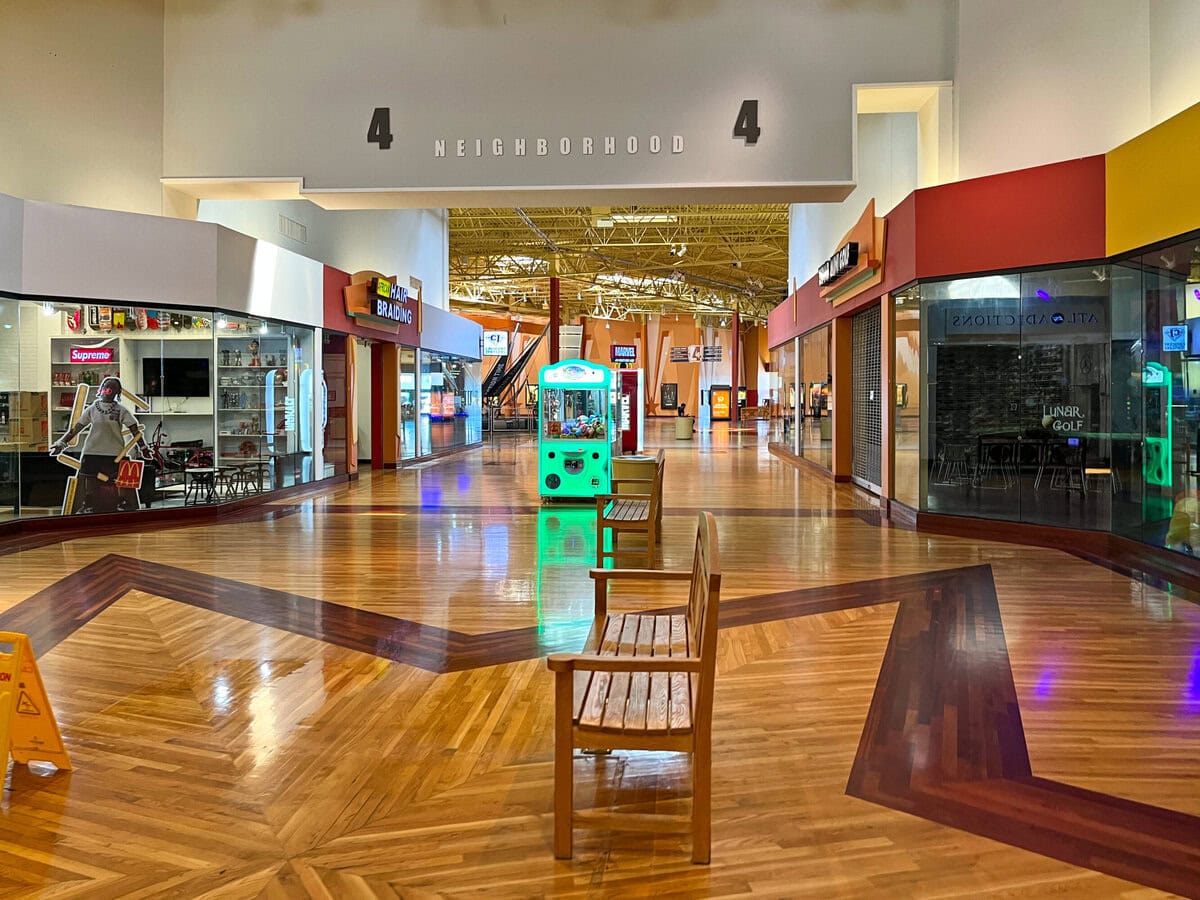
Greenbriar Mall is an enclosed shopping center at 2841 Greenbriar Parkway SW in southwest Atlanta, open 11 a.m. to 7 p.m. most days.
Hendon Properties runs it. The building holds 675,000 square feet and 2,917 parking spaces.
People come for shoes.
Foot Locker's House of Hoops, JD Sports and Snipes line the concourse, and the mall's owner estimated shoe sales at around $20 million a year in 2021.
Rainbow, Citi Trends and Dollar Tree fill much of the rest.
Piccadilly Cafeteria is still in there. It opened with the place in 1965 and has outlasted every anchor that ever backed it up.
A good share of the building isn't retail anymore.
There's a post office, the South Fulton tax office, and SLAM Atlanta Public Charter School in the old Cub Foods building.
The Atlanta Police Department has run a mini-precinct inside since 2009, first rented for $1 a year.
After 6 p.m. on Fridays and Saturdays, anybody under 18 needs a parent or guardian 21 or older with them.
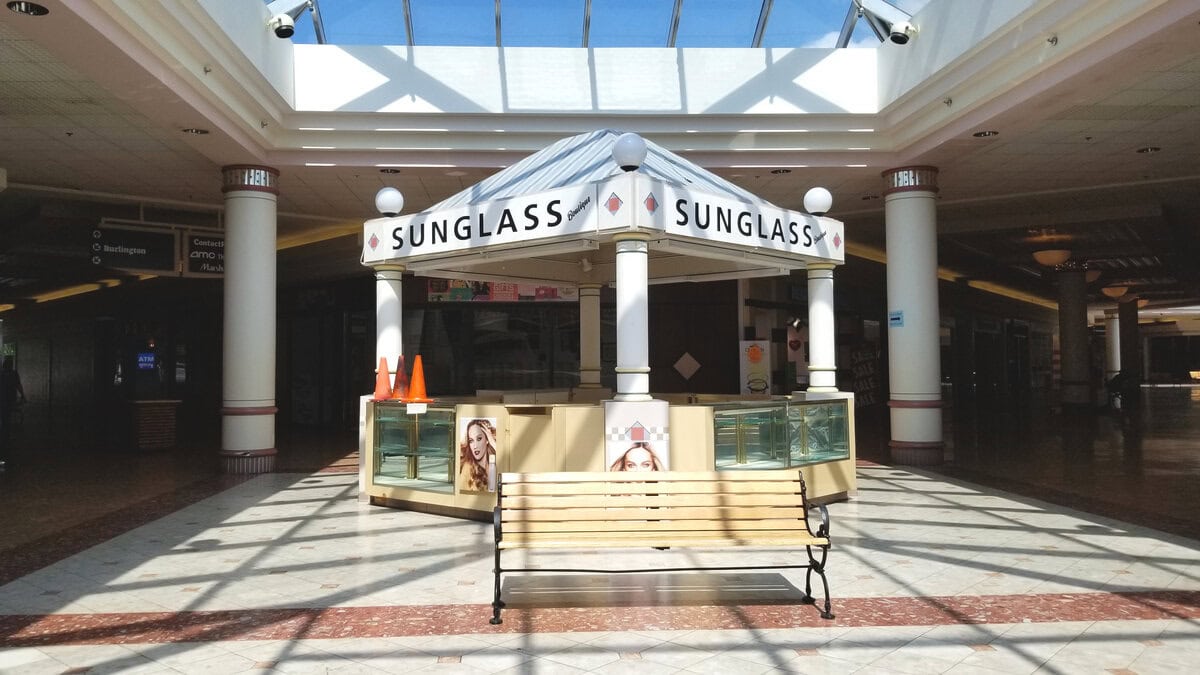
Older residents still walk the enclosed corridors for exercise, out of the weather.
Outside, the multiplex came down, and two apartment communities went up on that ground in 2024: The Paramount, 240 family apartments, and Briar Park, 244 for residents 55 and older, 484 apartments within walking distance of the doors.
The big mixed-use project people keep hearing about, 1,069 apartments from MURAL Real Estate Partners, sits on Headland Drive.
Same name, different property.
As of July 2026 both anchor boxes are empty and listed for lease, with no announced plan to take the mall down.
People still walk in to buy sneakers and settle a county tax bill under the same roof, five days a week.
Sources and further reading
- Greenbriar Mall - Official Website - Greenbriar Mall, current official site. Provides the mall's address, current public hours, contact information, and directory access.
- Greenbriar Mall Boosters Hope for Its Survival - The Atlanta Journal-Constitution, December 21, 2009. Reviews the mall's history, the departure of J.C. Penney, community protests, and Greenbriar's adaptation to local shoppers and independent businesses.
- Where Was Chick-fil-A's First Restaurant? - Chick-fil-A, current corporate history page. Documents the 1967 Greenbriar opening, the original 59-cent sandwich, the 384-square-foot restaurant, and its May 2023 closure.
- Gone But Not Forgotten: Greenbriar Chick-fil-A - Atlanta History Center, August 22, 2023. Provides the November 24, 1967 opening date, the May 20, 2023 final day, and local historical context.
- The State of Greenbriar Mall: Current Affairs - SaportaReport, April 19, 2021. Covers the closure of Macy's after 56 years and the mall's condition following the loss of its final traditional department-store anchor.
- Greenbriar Mall - Retail Space for Lease - Hendon Properties, current property listing. Provides the mall's current size, parking capacity, available anchor spaces, property contacts, and tenant list.
- SLAM Academy of Atlanta - State Charter Schools Commission of Georgia, current school profile. Confirms the school's Greenbriar Parkway location, public charter status, authorized grades, and current contract period.
- Future Development to Bring Affordable Housing and Commercial Space to Greenbriar - Invest Atlanta, July 17, 2025. Identifies the separate MURAL project on Headland Drive and outlines its proposed 1,069 residential units and 250,000 square feet of retail space.
Current information last reviewed: July 28, 2026
Independent Publisher Notice
BestAttractions is an independent editorial publisher. We are not affiliated with, endorsed by, or acting on behalf of any location, business, property owner, manager, government agency, or organization described in this article. Comments posted on this page are not forwarded to, reviewed by, or acted upon by any entity mentioned in the article. For official inquiries, complaints, applications, bookings, or other requests, please contact the relevant entity directly through its official website or other verified channels.
Greenbriar Mall was used as a set for some of the stupidest movies ever produced, including "Invasion USA" starring Chuck Norris as Captain Charles and myself as Fidel "Jaime Santiago" Castro, with terrorists John Bell, Kimio Young, Tony Waters, and Dewey SamSampson. Also, the Blues Brothers!
Thank you for your comment. It's always interesting to discover the unexpected roles Greenbriar Mall has played. It certainly adds a unique layer to its history.
I love the Greenbriar Mall and the neighborhood. Hopefully they will continue redevelopment which includes the Marta hub station. My main concern is they won't develop it like they do other parts of the city that are more gentrified. I already have issue with the fact that the city and Marta have changed it from trains to a dedicated bus lane. Also, hopefully they will have more meeting that include the community so we can have more input on the final decision.
Thanks for your comment. It's clear that you care deeply about the Greenbriar Mall and its surrounding neighborhood. Your call for more community involvement in its redevelopment is indeed essential.