
Living in Dunwoody can mean two noticeably different things. One version starts near Perimeter Center.
MARTA, apartments, offices, restaurants, hotels, major shopping, and newer mixed-use projects such as High Street sit close together.
A weekday can be built around shorter trips, walking inside a mixed-use district, and rail when the destination fits.
The other version starts only a few miles away on a residential street. Here, the car matters more.
Dunwoody Village may be the local dining and errand center. Brook Run Park or another city park may shape recreation.
Perimeter is still close, but it can feel like a place you go to rather than the environment outside your door.
Dunwoody's adopted 2025-2045 Comprehensive Plan separates the city into three basic place types: Perimeter, local centers, and neighborhoods.
The useful question is not simply, "What is living in Dunwoody like?" It is, "Which part of Dunwoody actually organizes an ordinary Tuesday?"
A weekday near Perimeter can compress your trip list
Start near Perimeter Center.
The morning begins inside the city's largest employment and commercial district.
For someone who works nearby, the commute may be short enough to avoid the highway.
If rail fits the destination, Dunwoody's MARTA access can become part of the routine instead of an occasional backup.
Perimeter also concentrates things that are often separated in a conventional suburb: housing, offices, restaurants, shopping, and transit.
High Street makes that contrast sharper.
Its first phase was completed in late 2024 with 600 apartments and 150,000 square feet of retail and restaurant space, along with offices and a park.
A second phase is underway. The city describes the project as a walkable, transit-oriented neighborhood hub near the Dunwoody MARTA station.
For someone already spending the day in that cluster, an evening can stay compact: leave work, walk to dinner, meet someone nearby, or handle a small errand without beginning another long drive.
That is the strongest case for Perimeter as an everyday environment.
The car does not disappear, but several separate trips can collapse into one area.
"Near MARTA" is not the same as a car-light life
A map can still oversell the Perimeter lifestyle.
A station, apartment, office, restaurant, and store may all appear close together.
The better question is whether the actual walking route between them is direct and practical.
Dunwoody's Last Mile Connectivity work focuses specifically on connections between transit stations and final destinations in Perimeter Center, with improvements planned for walking, biking, transit, and short non-auto trips.
That is a useful warning against treating the entire district as uniformly walkable.
High Street can work well on foot internally while a trip beyond it still involves wide roads, large blocks, parking areas, or an awkward crossing.
Someone beside the station with a rail-friendly commute may cut driving substantially. Someone a mile farther away may still drive almost every day.
The practical unit is not distance on a map.
It is the trip chain: where the day begins, where it goes next, and whether those links work without a car often enough to become routine.
Residential Dunwoody starts with different assumptions
Now shift a few miles into one of Dunwoody's established residential areas.
The morning is less likely to begin with a walk into a mixed-use district.
Work, school, groceries, appointments, or dinner often mean getting into the car and using neighborhood roads to reach a larger corridor or local center.
That does not make residential Dunwoody a less convenient version of Perimeter. It organizes life differently.
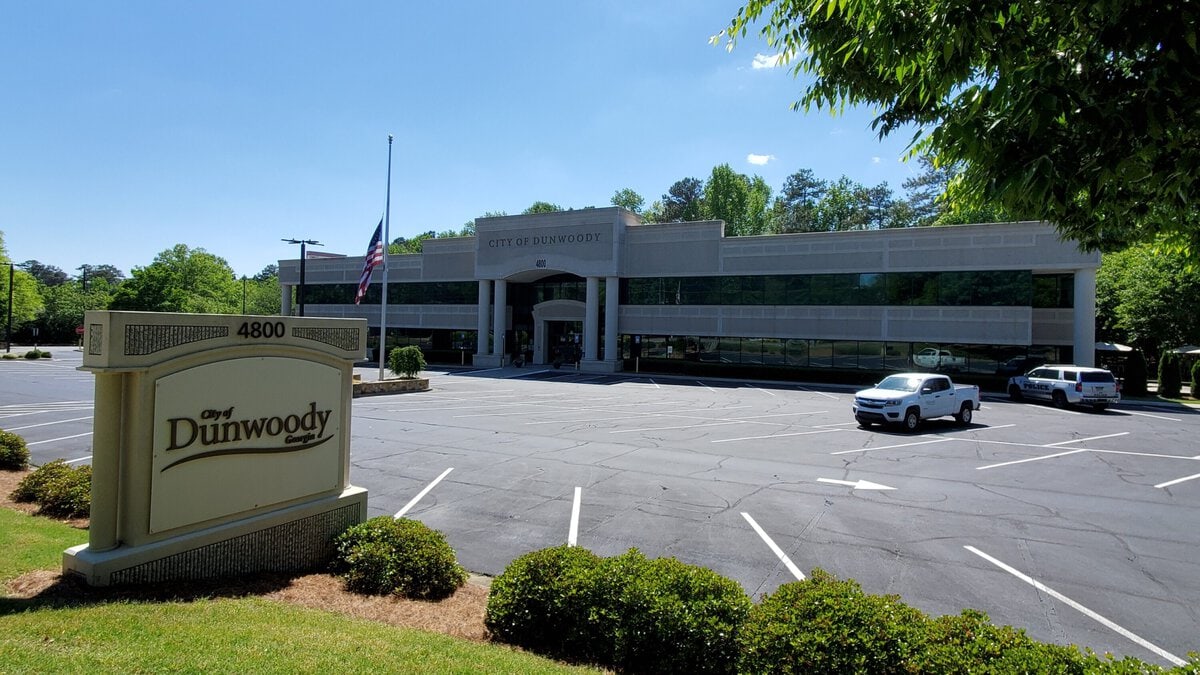
Dunwoody's current plan calls for maintaining neighborhood character while cultivating smaller local centers.
Dunwoody Village is the clearest example.
It serves a neighborhood-scale role with restaurants, services, and outdoor gathering areas closer to the residential fabric.
For someone who works from home or does not need a daily trip into a major employment center, that pattern can produce a very different week: a quiet residential morning, a short drive for lunch or errands, and an evening at a nearby park or restaurant.
The car remains part of the system, but the system is not necessarily built around reaching central Atlanta or Perimeter every day.
Parks can matter more than transit on the residential side
If an ordinary week includes running, playground time, youth sports, a dog park, or simply a large outdoor space used repeatedly, recreation can matter more than rail.
Brook Run Park is a good example.
It is a major city recreation site with a multi-use trail, playground, dog park, athletic fields, skate park, community garden, and event spaces.
For residents who use those amenities several times a week, that part of Dunwoody can exert more pull on daily life than Perimeter does.
This is why "Which side is more convenient?" is too broad. Convenient for what?
A resident who rides MARTA to work and eats out several nights a week may spend far more of the week around Perimeter.
A household whose repeated trips are school, park, local errands, and home may barely need the district except for selected trips, even though it sits only a few miles away.
Does residential Dunwoody need Perimeter every day?
Not necessarily.
Perimeter is the city's major regional job and commercial center, so it remains useful even for people who do not live beside it.
But usefulness is different from dependence.
For a residential routine, Perimeter may appear selectively: a workplace, a bigger shopping trip, a particular restaurant, a hotel for visitors, or the point where someone enters the rail system.
Dunwoody Village and other local centers can handle more neighborhood-scale needs.
This is where the city's internal geography becomes more interesting than a simple suburb-versus-city comparison.
Two residents can live in the same municipality and use Perimeter at completely different frequencies.
One may cross into it twice a day. Another may go there twice a week.
A third may use it mainly for shopping or dining. The district's importance comes from repetition, not just proximity.
Evenings expose the difference better than commute maps
Near Perimeter, the advantage is concentration. Dinner, entertainment, shopping, and home can sit in the same general district.
As High Street adds more housing and street-level activity, more evenings can happen without a cross-city drive.
Residential Dunwoody has a different pattern. Dinner may mean driving to Dunwoody Village, Georgetown, Perimeter, or another nearby center.
Recreation may pull the evening toward a park instead of a mixed-use plaza.
Returning home means returning to a place deliberately separated from the city's largest commercial district.
Neither pattern is inherently better.
What matters is how often the week crosses between them. Someone may work at Perimeter but spend nearly every evening elsewhere.
Another resident may rarely use MARTA but still visit the district several times a week for restaurants and shopping.
A third may pass through Perimeter constantly on weekdays and barely think about it on weekends.
That gap between daytime and evening geography is one of the best ways to understand Dunwoody.
High Street is narrowing the gap, but only locally
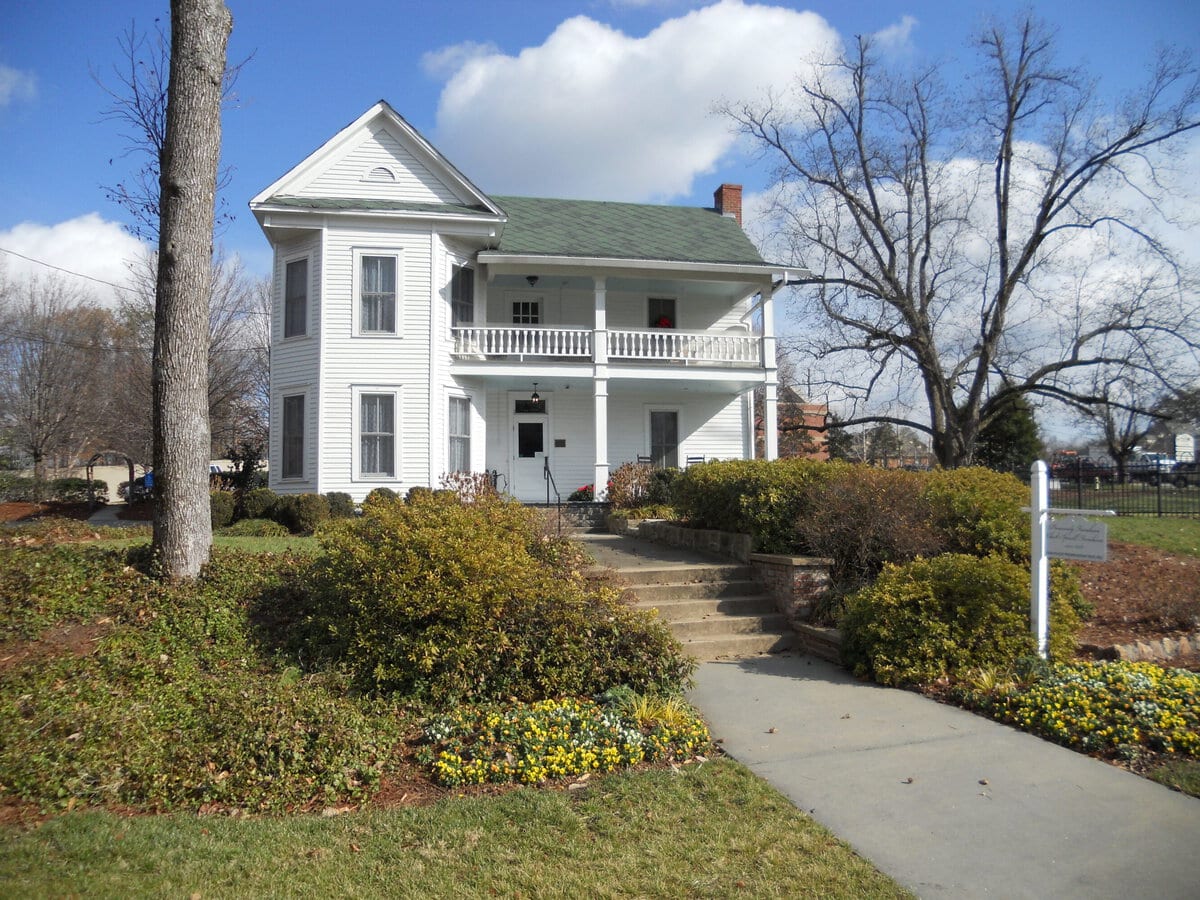
High Street makes the Perimeter side more capable of supporting an all-day routine instead of functioning mainly as an office and shopping district.
But it does not mean residential Dunwoody is becoming the same place.
The city's current planning framework still treats Perimeter, local centers, and neighborhoods as distinct.
It calls for investment in Perimeter while preserving neighborhood character and strengthening smaller centers.
A more accurate picture is that one part of Dunwoody is becoming more complete as an urban-edge district while much of the city continues to run on a traditional suburban pattern.
The result is not one city steadily becoming "more urban."
It is two daily systems becoming clearer: a concentrated Perimeter routine and a distributed neighborhood routine.
Run the Tuesday and Saturday test
A simple way to understand Dunwoody is to compare two ordinary days.
On Tuesday, follow the actual sequence: work, school or daycare if relevant, groceries, exercise, dinner, and MARTA if transit matters.
Notice whether those trips cluster around Perimeter, stay close to a neighborhood center, or scatter across several parts of the city.
Then look at Saturday. Parks, coffee, shopping, restaurants, friends, recreation, and errands may create a completely different map.
For some residents, both days keep returning to Perimeter. For others, Perimeter dominates the workweek and almost disappears on weekends.
In residential Dunwoody, the opposite can happen: neighborhood roads, parks, and local centers organize most of the week, while Perimeter appears only when a specific destination calls for it.
That is the real split in living in Dunwoody.
The city contains an urban-edge routine around Perimeter and a more conventional suburban routine only a few miles away.
The interesting question is not which one someone should choose. It is which one actually takes over the calendar.
Sources and further reading
- City of Dunwoody - 2025-2045 Comprehensive Plan
- Georgia Department of Community Affairs - Dunwoody Comprehensive Plan 2025
- City of Dunwoody - High Street
- City of Dunwoody - Last Mile Connectivity
- City of Dunwoody - Dunwoody Village
- City of Dunwoody - Brook Run Park
Independent Publisher Notice
BestAttractions is an independent editorial publisher. We are not affiliated with, endorsed by, or acting on behalf of any location, business, property owner, manager, government agency, or organization described in this article. Comments posted on this page are not forwarded to, reviewed by, or acted upon by any entity mentioned in the article. For official inquiries, complaints, applications, bookings, or other requests, please contact the relevant entity directly through its official website or other verified channels.