
North DeKalb Mall was an indoor shopping center east of Atlanta.
You parked once and walked to every store along a covered corridor, out of the weather.
When it opened in 1965, it had a Rich's, a supermarket, and a movie theater.
The families it was built for lived in the DeKalb County neighborhoods nearby and had stopped wanting to drive downtown to shop.
It was also first. No other mall in the Atlanta area had been fully enclosed and air-conditioned before it.
The ones that came after copied the idea.
Being first bought it nothing in the end.
That same enclosed format is now being demolished all over the country, and North DeKalb's long decline shows why.
North DeKalb Mall and the First Air-Conditioned Concourse
The air changed at the door.
Outside was Atlanta in late July, heat and humidity and the threat of an afternoon thunderstorm; inside the concourse stayed cool, and a shopper could move from one store to the next without stepping back into the weather.
North DeKalb Center opened on July 29, 1965, at 2050 Lawrenceville Highway near the corner of North Druid Hills Road, and it was the first fully enclosed, air-conditioned shopping mall in the Atlanta area, a format that later became standard across the region.
On opening day, it held 54 stores and services across 447,000 square feet.
Rich's anchored one end with a two-level store of 160,000 square feet, the largest tenant and the main regional draw.
Woolworth held the variety-store role at 39,500 square feet.
A Colonial Stores supermarket of 21,000 square feet and a movie theater meant a household could buy clothes, pick up groceries, and watch a film under one roof.
Stores lined the interior corridors, and the parking spread outward in large surface lots, so customers arrived by car and left the traffic at the door.
Building North DeKalb Center on 65 Suburban Acres
Construction began in June 1964 on a site near Medlock Park, in a county filling fast with postwar subdivisions.
DeKalb had become one of metro Atlanta's main areas for suburban housing, and the developer, Atlanta-based Scott Development, built for households moving outward from the city but still wanting department stores and groceries close to home.
The site ran to 65 acres.
The Atlanta firm Stevens & Wilkinson, known for civic and commercial work across the region, designed it, and the project cost $8.5 million.
The name was North DeKalb Center, not Mall, in the language of an era that promoted such projects as commercial centers.
What set it apart was not the name but the enclosed, climate-controlled interior, a clear departure from the open-air strip plazas that came before.
Rich's, long tied to downtown Atlanta, used the site as a suburban department store, and its presence gave the center immediate standing.
North DeKalb's Weekly Crowd Meets Its First Rivals
For families in North Decatur, Druid Hills, Medlock Park, and Toco Hills, the center cut out the trip downtown.
The supermarket and the theater made it a weekly stop rather than an occasional one.
The North DeKalb Theatre showed its first feature on July 30, 1965, and was reconfigured as the North DeKalb Twin in May 1976.
Older centers like Suburban Plaza had already proved that suburban retail worked in the county, but North DeKalb's enclosed interior, department-store anchor, supermarket, and theater made it the local prototype for the enclosed malls that followed.
The advantage did not last unchallenged.
Columbia Mall opened to the southeast in 1967, and in 1971, Northlake Mall opened a short drive to the northeast, larger and newer, and built to the regional-mall scale of its decade.
The older building, with its smaller footprint and shorter anchor list, began to look like the previous generation of shopping-center design.
The 1986 Market Square Rebuild and the New Food Court
A major rebuild was announced in October 1985, and work started that November.
It was not cosmetic.
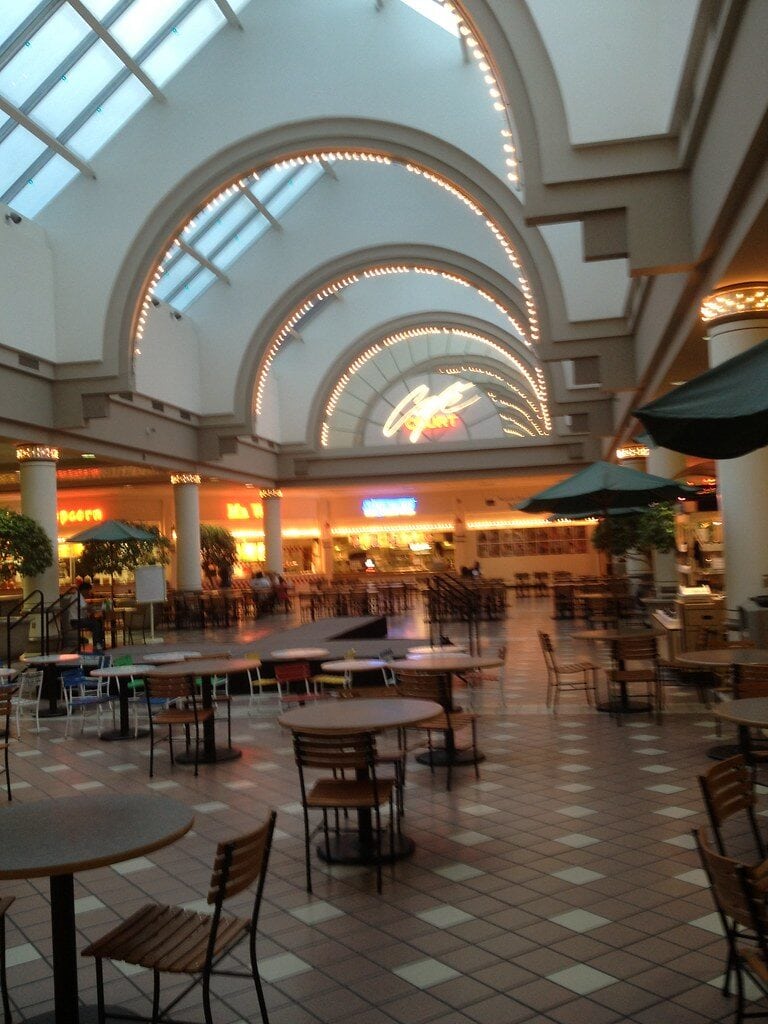
Crews removed the vacant Woolworth space, reworked the internal circulation, added inline shops, and built a nine-bay food court and a central court where shoppers gathered.
The property reopened under a new name, Market Square at North DeKalb, announced in April 1986 and dedicated that October.
The rebuilt center covered 635,000 square feet and held 85 stores and services.
Lechmere, an electronics and appliances seller, opened on August 31, 1986, in 63,300 square feet.
Mervyn's, a department store, was dedicated on October 17, 1986, in 75,200 square feet.
Rich's grew to 196,700 square feet.
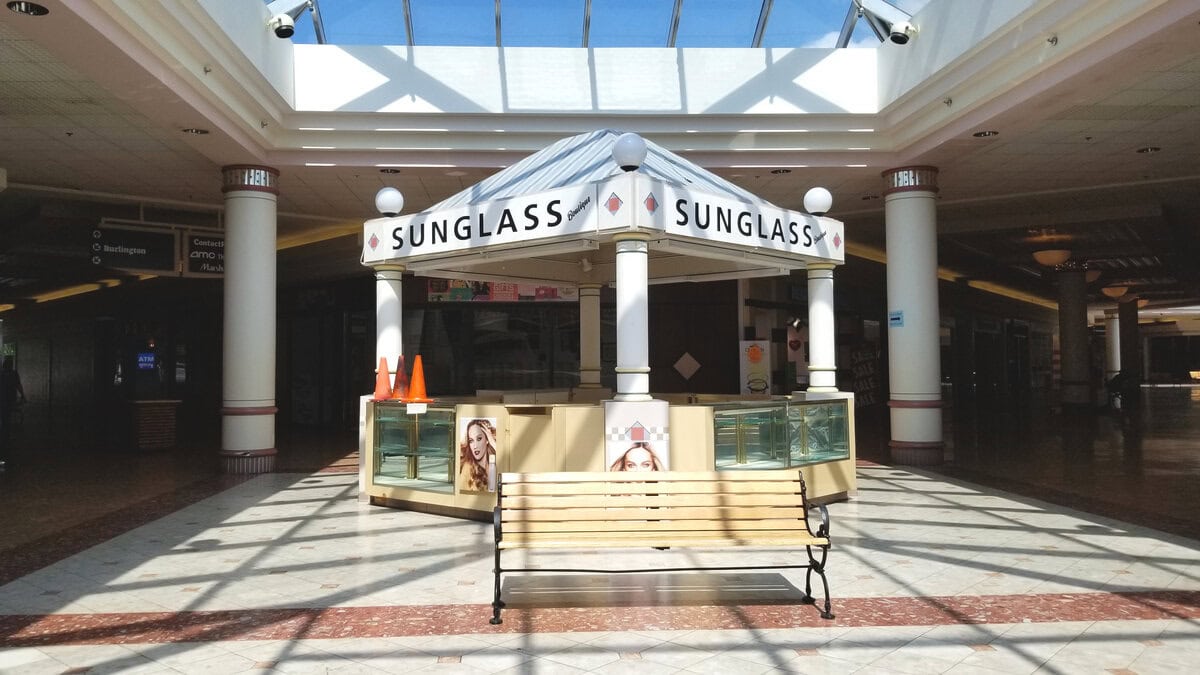
Skylights, brighter finishes, and benches gave the interior the look of a 1980s mall.
The rebuild was meant to position the aging center against larger, newer rivals without moving it or turning it into a super-regional mall, and Toronto-based Cadillac Fairview owned it through the work.
Lechmere to Macy's: Three Decades of Anchor Churn
The new anchors did not hold.
Lechmere's space became Phar-Mor in 1992, and after that closed, part of it was reused for a larger theater and furniture stores.
Mervyn's left the Atlanta market in 1997.
Uptons opened in the empty Mervyn's space that fall and closed by fall 1999.
Burlington Coat Factory took the space in November 2002.
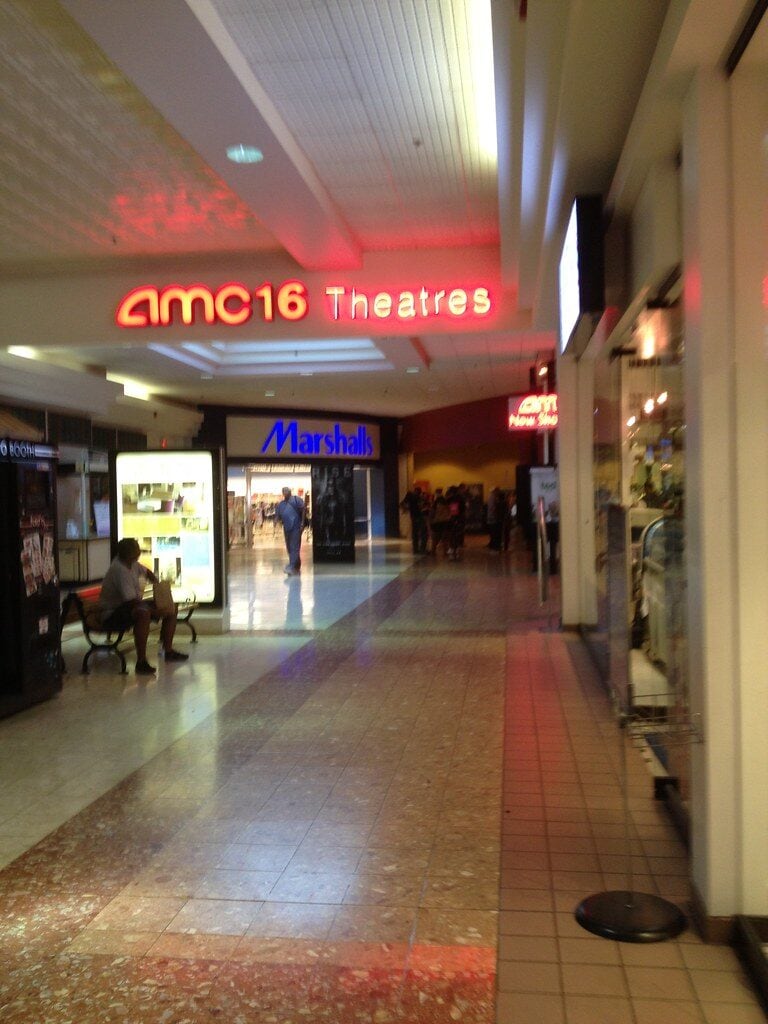
The cinema, by contrast, lasted: AMC North DeKalb 16 showed its first films on December 13, 1996, and became a reason to keep coming long after the inline stores thinned.
A 2000 renovation restored the North DeKalb Mall name and fit Ross Dress for Less into 30,000 square feet of reconfigured space.
Marshalls followed in October 2010 in 28,600 square feet.
Burlington, Ross, Marshalls, and the theater gave the place a value-oriented tenant mix, but they did not refill the concourse as a regional mall.
The biggest loss came last.
Rich's had become Macy's, and Macy's closed in spring 2016, removing the successor to the original anchor and leaving the mall with no traditional department store.
AMC, "Fear Street," and the October 2020 Closure
By then, the parking lot had found a second job.
In 2006, Emory University began reserving 200 spaces near the northeast corner for a Park-n-Ride shuttle, a use that said as much about the empty asphalt as about Emory.
The interior found work too.
In 2019, vacant storefronts were renovated and dressed for the "Fear Street" film trilogy, which needed exactly the kind of intact, aging enclosed mall the property had become.
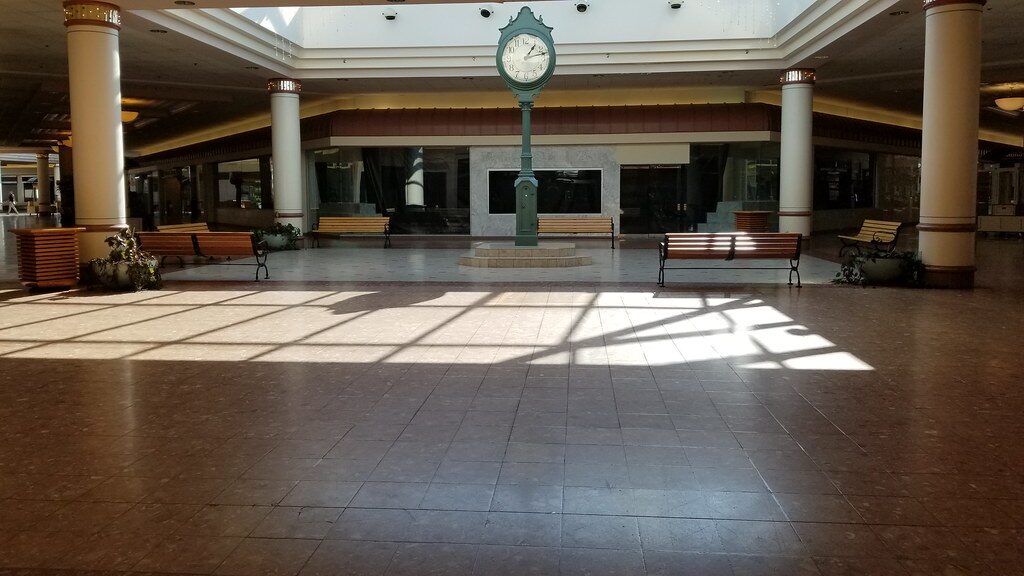
AMC still drew moviegoers, and Marshalls still sold clothes, but the concourse around them was mostly quiet.
The enclosed mall closed on October 1, 2020, after years of falling sales and the disruption of the COVID-19 pandemic.
AMC and Marshalls stayed open on their own.
When the property changed hands the next year, its remaining tenants were AMC, Dollar Tree, Burlington, and Marshalls.
Costco and Decatur Landing: Plans That Never Got Built
The plans to fix the place arrived long before the closure.
Hendon Properties bought the mall in 2003 and proposed turning the inward-facing building into an open-air center anchored by a 152,000-square-foot Costco, with the middle section removed and a new boulevard cut through the site.
Local approval came in 2008, with demolition once expected in 2009 and completion targeted for 2010.
Neighborhood worries about flooding and site impact pushed back, and the plan stalled.
In May 2014, Lennar Commercial Investors and Sterling Organization bought the property, then 622,300 square feet, with AMC, Burlington, Macy's, Marshalls, and Ross as anchors.
Their concept, Decatur Landing, called for 150,000 square feet of retail, 59,500 square feet of restaurants, 500 residences, a 150-room hotel, and another Costco.
It also went nowhere.
A renovation could not solve the underlying problem: too much enclosed space wrapped in too much parking.
Lulah Hills Replaces the Mall With Streets and Homes
EDENS bought the property in 2021 and chose to replace the mall rather than renovate it.
DeKalb County approved rezoning in summer 2022, and in May 2023, the project was renamed Lulah Hills, a nod to an early naming idea tied to Frederick Law Olmsted's plan for Druid Hills.
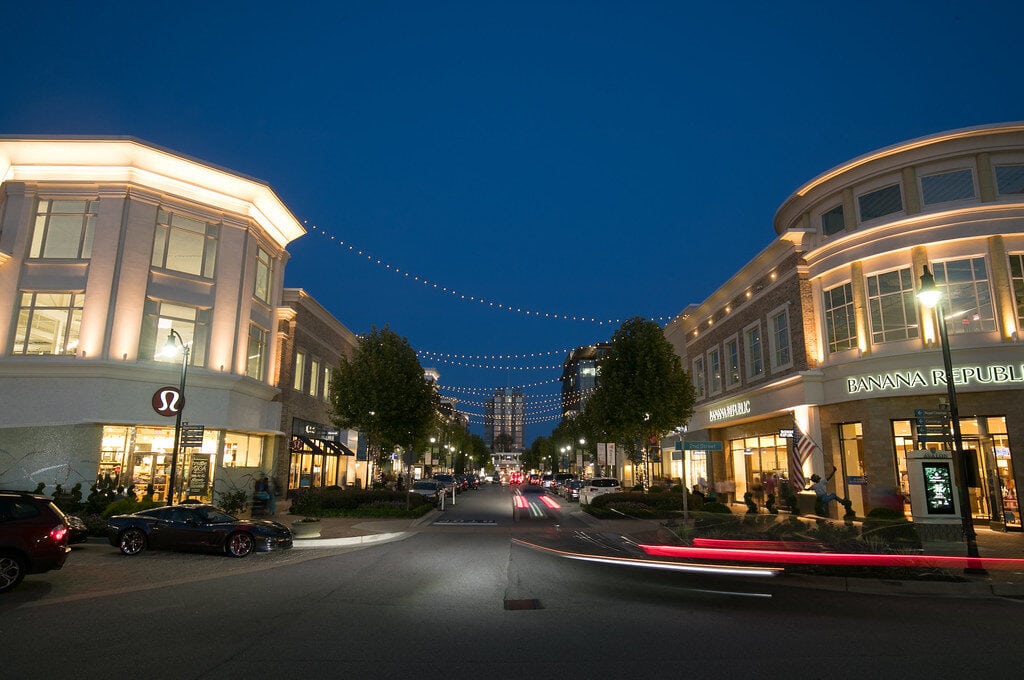
The plan is large: 2.5 million square feet at full buildout, with 320,000 square feet of retail, restaurant, and entertainment space, 1,700 apartments, 100 townhomes, a 150-key hotel, green space, and a PATH trail connection toward Emory.
A 10 percent share of the housing is set aside as workforce and affordable units.
In November 2023, a $70 million tax-allocation program was approved to reimburse eligible costs over 15 years, covering demolition, new streets, utilities, stormwater work, and trails, with the project expected to add $842 million in investment to the tax digest.
Demolition of the 635,000-square-foot mall began in June 2024, with a public event on June 26.
Site work followed in early 2025.
Publix was named as the grocery anchor, 50,000 square feet with a drive-thru pharmacy, due in early 2027.
In March 2026, EDENS named more tenants, among them Anthropologie, Design Within Reach, Herman Miller, Solidcore, Firepit Pizza Tavern, Honeysuckle Gelato, Les Mains Nail Bar, LaserAway, and Refuge Coffee.
The first vertical housing, NOVEL Lulah Hills by Crescent Communities, broke ground on March 23, 2026, with 303 apartments over six stories and more than 39,000 square feet of ground-floor retail; Empire Homes is building 92 for-sale townhomes.
What Remains of North DeKalb Mall in 2026
As of May 2026, North DeKalb Mall no longer exists as a building.
The enclosed concourse is gone, along with Rich's, Macy's, Woolworth, and the food court.
What remains are the two tenants that outlasted everything around them: Marshalls, still open in 28,600 square feet through the construction, and AMC, being rebuilt from 16 screens down to 11.
The site that taught Atlanta to shop in air-conditioned comfort is now a grid of streets, apartments, and a coming grocery store, with the first new retail expected in early 2027 and the first residents later that year.
The cool air that once pulled people in from the July heat is giving way to sidewalks and front doors.
The reason people still drive to the corner of Lawrenceville Highway and North Druid Hills Road is the same as it was in 1996, when the movie house opened: a film and a place to park.
Independent Publisher Notice
BestAttractions is an independent editorial publisher. We are not affiliated with, endorsed by, or acting on behalf of any location, business, property owner, manager, government agency, or organization described in this article. Comments posted on this page are not forwarded to, reviewed by, or acted upon by any entity mentioned in the article. For official inquiries, complaints, applications, bookings, or other requests, please contact the relevant entity directly through its official website or other verified channels.