
Shoppers came to one enclosed building at Rand Road and Elmhurst Road in Mount Prospect, Illinois, for 46 years.
It opened as Randhurst Center in 1962 and was known for most of its run as Randhurst Mall. More than one million people walked through in the first month.
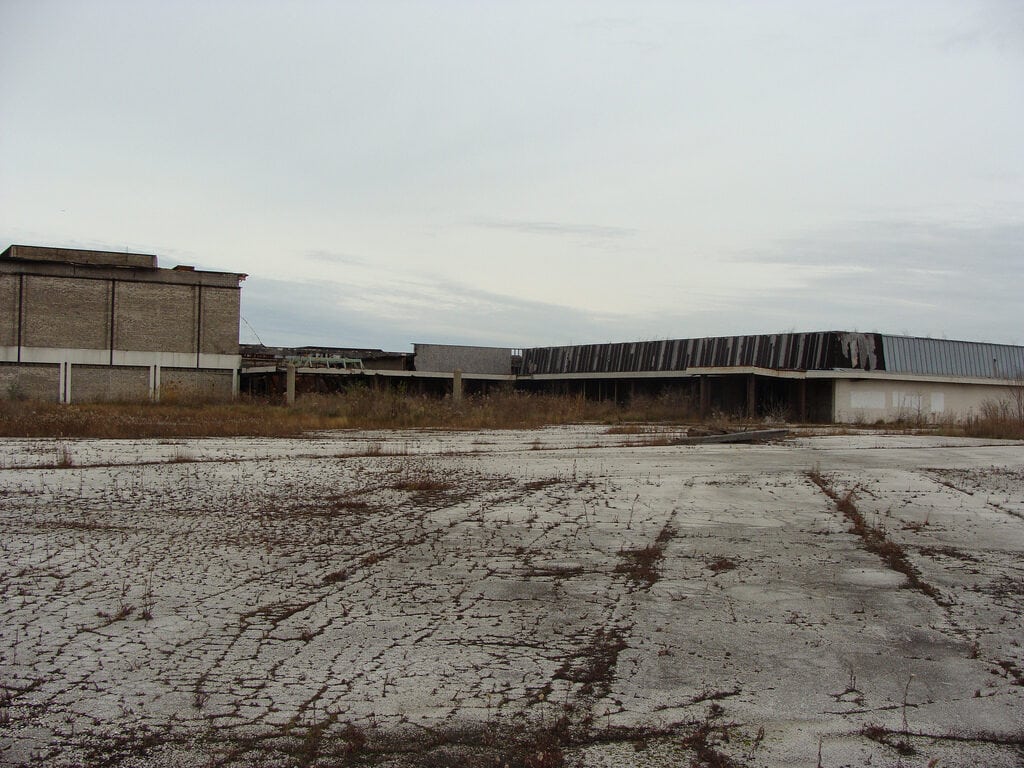
The mall closed on September 30, 2008. Wrecking crews spent 2009 on it. The 200-ton dome came down that August.
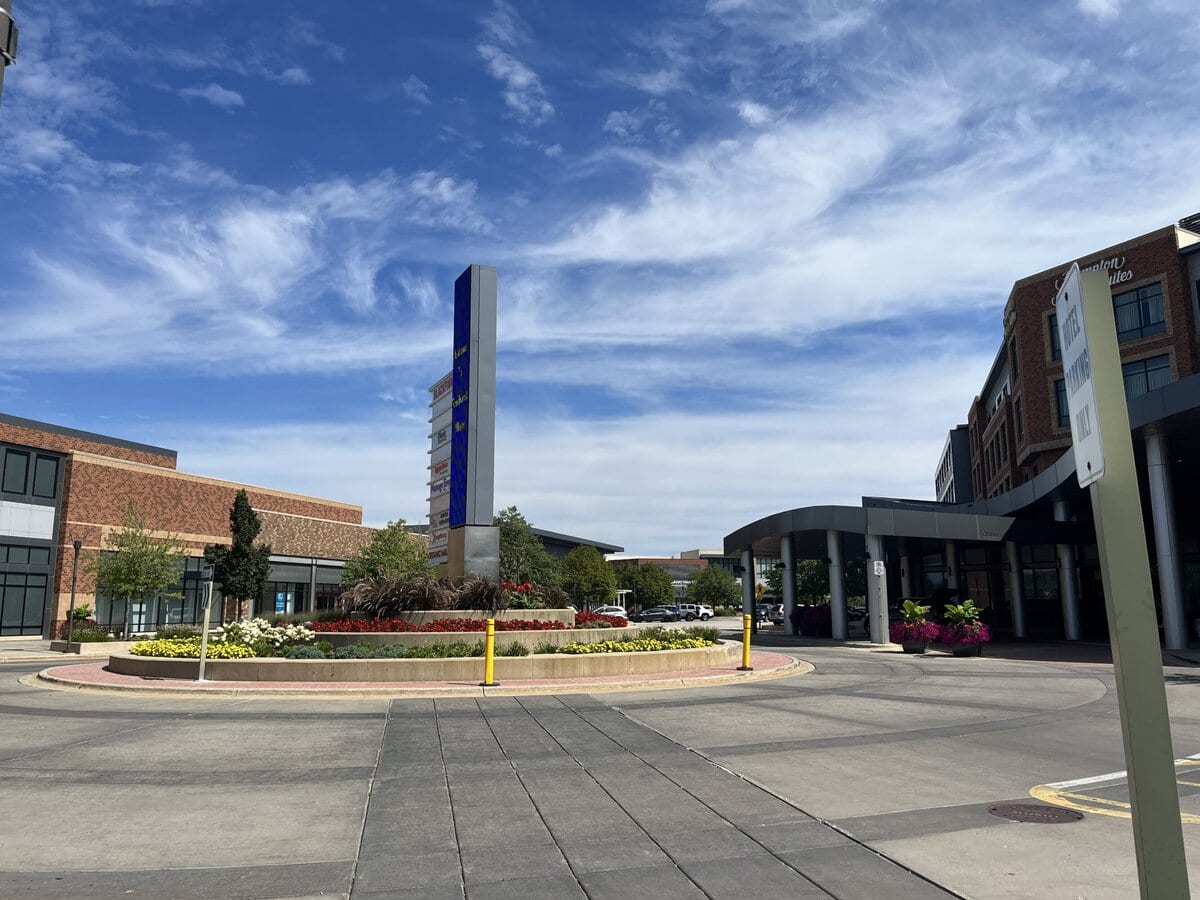
The replacement is Randhurst Village, a set of open-air streets and stores with their own front doors. Carson's closed in 2018, and HomeGoods and Macy's have since taken parts of its ground floor.
The Burmeister barn burned in 1960
Construction started with a fire. In 1960 Randhurst executives burned the Burmeister farm's barn rather than hold a groundbreaking ceremony.
Mount Prospect, Illinois, had been working toward this since 1955.
Residents were spending their money in other towns, and the village board wanted that sales tax at home.
Carson Pirie Scott brought the plan that stuck. In August 1958 the village took up a petition to annex and rezone 80 acres.
The site kept expanding, because the plan called for parking for 10 cars per 1,000 square feet of store space. By March 1959 it covered 100.4 acres.
The name came off two road signs, Rand Road and Elmhurst Road. Victor Gruen Associates got the design job in 1960.
Randhurst was a triangle with a dome in the middle
Gruen drew a triangle. A department store sat at each point, so a shopper in the middle had a direct walk to any of them.
That middle was the Galleria, a four-level court under a dome 64 feet high and weighing 200 tons. Colored glass around its base let daylight in.
Seventy-eight precast figures by Vern H. Walt stood around the court, part of close to $100,000 spent on art.
The whole thing was enclosed and air-conditioned, held at 70 to 72 degrees year-round.
Doctors' and dentists' offices sat above the shops, with meeting rooms and restaurant space.
Half a mile of roadway ran underneath, so delivery trucks never crossed a shopper's path. The basement doubled as a fallout shelter.
Opening day, August 16, 1962
Six ribbons were cut that Thursday, one for each arcade entrance, and 10,000 balloons went up carrying promotional keys.
Diane Hahnfield, 12 years old and a granddaughter of the Burmeister family, cut one of them.
The finished center held roughly 1.2 million square feet and 7,500 parking spaces, and cost $21 million to $21.5 million.
About 50 of a planned 90 stores were ready.
Then the traffic arrived. More than one million shoppers came through in the first month.
On the Sunday after opening, with every store closed, so many people drove out to look at the building that police had to work the roads.
Woodfield in 1971, then a remodel every decade
On September 9, 1971, Woodfield Mall opened in Schaumburg, bigger and newer.
Randhurst stayed busy, and it was no longer the largest mall in the northwest suburbs. From then on the building was reworked again and again.
Montgomery Ward, which had replaced The Fair name in 1963, added roughly 60,000 square feet in the early 1970s.
The ice arena opened in 1974, and full three-ring circuses played inside the mall in 1976 and 1977.
The 1977 renovation covered much of Gruen's interior in white terrazzo and fluorescent light.
In 1984 the Picnic Food Court opened with 13 food bays, built out of the original plan's office space.
The 1989 job added a second level of shops, skylights, escalators, and elevators.
The anchors kept trading buildings
Wieboldt's went bankrupt in 1986, and Bergner's took its point of the triangle.
MainStreet opened near Montgomery Ward in 1987 and became a Kohl's. Joseph Spiess opened in 1988 and closed in January 1992.
In 1990 the Carson's name left the building it had held since opening day, crossed the mall into the old Wieboldt's box, and left its original store to JCPenney.
Outside the walls, the property was turning into something else.
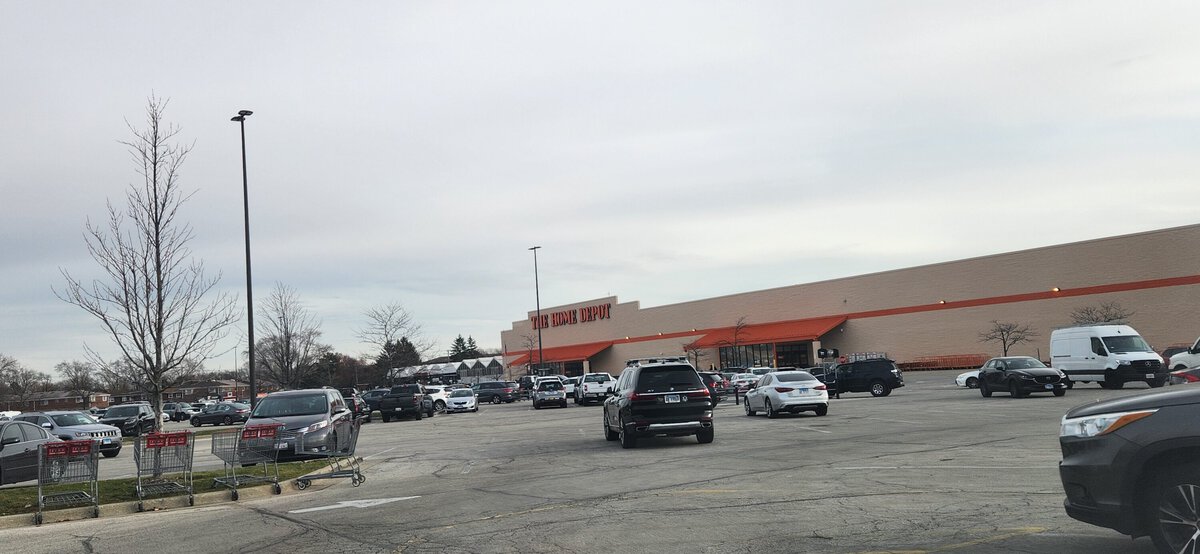
Home Depot opened along Kensington Road in 1995, a 16-screen cinema in November 1996, and Borders in 1999.
Each had its own front door and needed nothing from the enclosed concourse.
Half the interior was empty by 2008
Montgomery Ward closed in 2001 as the chain disappeared, and JCPenney left the same year.
Losing two anchors at once pulled the traffic out from under the small shops.
Costco opened on the property in October 2004, and its crowds had no reason to walk into the mall.
By 2007 the enclosed center was 21.6 percent vacant, or 73,300 square feet. A year later the figure was 56.3 percent, or 191,200 square feet.
On August 19, 2008, the village board approved a redevelopment agreement with the Casto and JPMorgan venture: a $154 million project, with up to $25 million repaid from taxes the new center would generate.
The enclosed mall's last shopping day was Tuesday, September 30, 2008.
Taking Randhurst down took most of 2009
Demolition was staged so Carson's, Costco, and Home Depot could keep trading.
Interior stripping came first, then asbestos removal, which ran to about $800,000 by June 2009.
The basement cost more than anyone likes to spend on a hole.
About 60,000 tons of fill went into the below-grade network that had kept the trucks out of sight. The hotel's enclosed parking still uses part of it.
The dome outlasted everything else. On the morning of August 28, 2009, crews cut its steel supports with torches and pulled it over with cables.
What replaced it faced outward: about 320,000 square feet of anchors stayed, and roughly 500,000 square feet of new shops and restaurants went up along open-air streets.
What's open at Randhurst Village now
Randhurst Village opened in stages through 2011 on the same site.
Carson's renovated and reopened in November 2010, the AMC's 12 screens in April 2011, and the Hampton Inn & Suites in April 2012.
DLC Management bought the open-air center for about $100 million in 2015.
Three years later Bon-Ton Stores liquidated, and Carson's closed on August 29, 2018, emptying the last building in use from 1962.
It has been refilled piece by piece: HomeGoods took 24,000 square feet of the ground floor in 2022, and a 37,600-square-foot Macy's opened on November 9, 2024.
The October 2025 sale listing counted 931,800 square feet at 92 percent leased, with the old Carson's vacancy left out.
People come now for Korean barbecue on the internal street or a movie at the AMC.
In July 2026, with DLC still the owner, Nike signed for 22,600 square feet.

Independent Publisher Notice
BestAttractions is an independent editorial publisher. We are not affiliated with, endorsed by, or acting on behalf of any location, business, property owner, manager, government agency, or organization described in this article. Comments posted on this page are not forwarded to, reviewed by, or acted upon by any entity mentioned in the article. For official inquiries, complaints, applications, bookings, or other requests, please contact the relevant entity directly through its official website or other verified channels.