
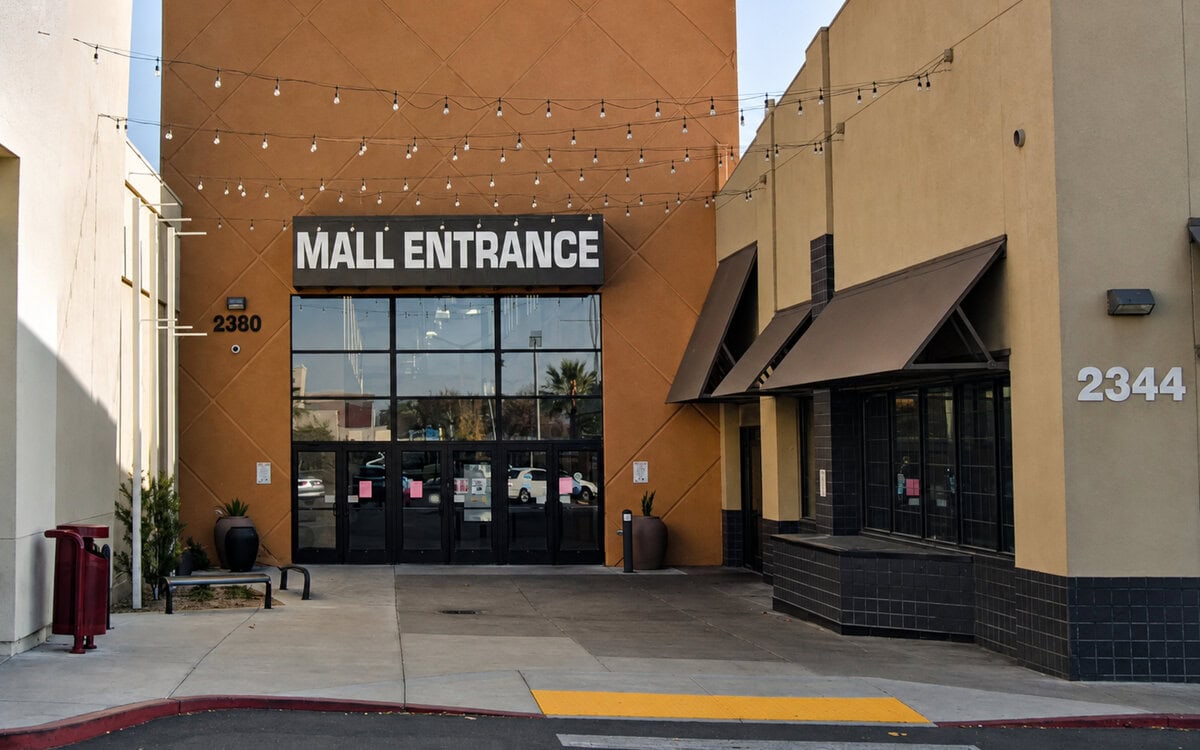
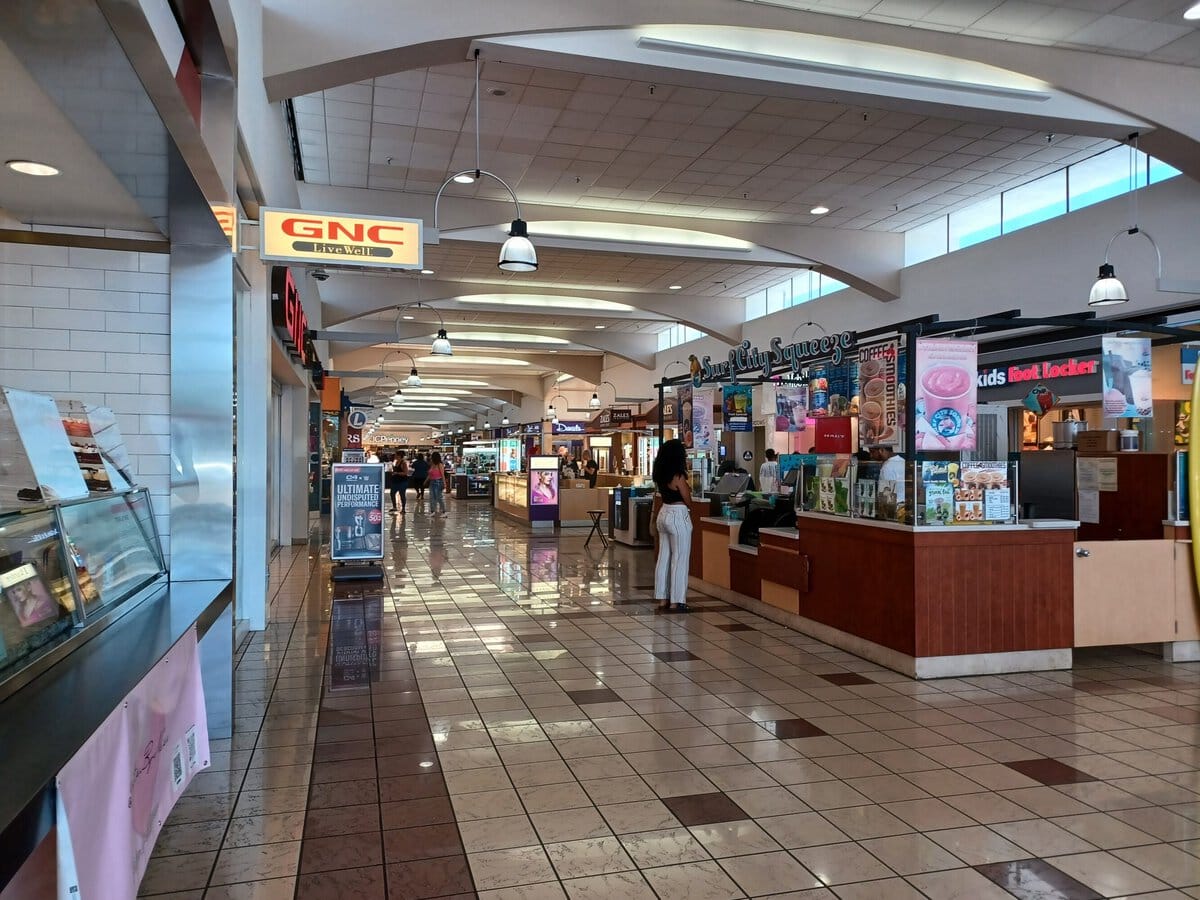
Arden Fair is a two-level enclosed mall at 1689 Arden Way in Sacramento, California, across from Cal Expo. It's the city's largest mall, 1.1 million square feet, more than 150 stores.
But it started in 1957 as a single Sears standing alone on 30 acres of former Swanston ranch land, two years before the first open-air shops arrived next door.
The grocers who ran Stop-N-Shop built the first open-air shops next door in 1959. Hale's came in 1961, became Weinstock's, then Macy's. A roof went on in 1971.
Then a $100 million rebuild in 1989-1990 doubled it, added a second floor, the city's first Nordstrom, and a new Sears, and tore the old one down.
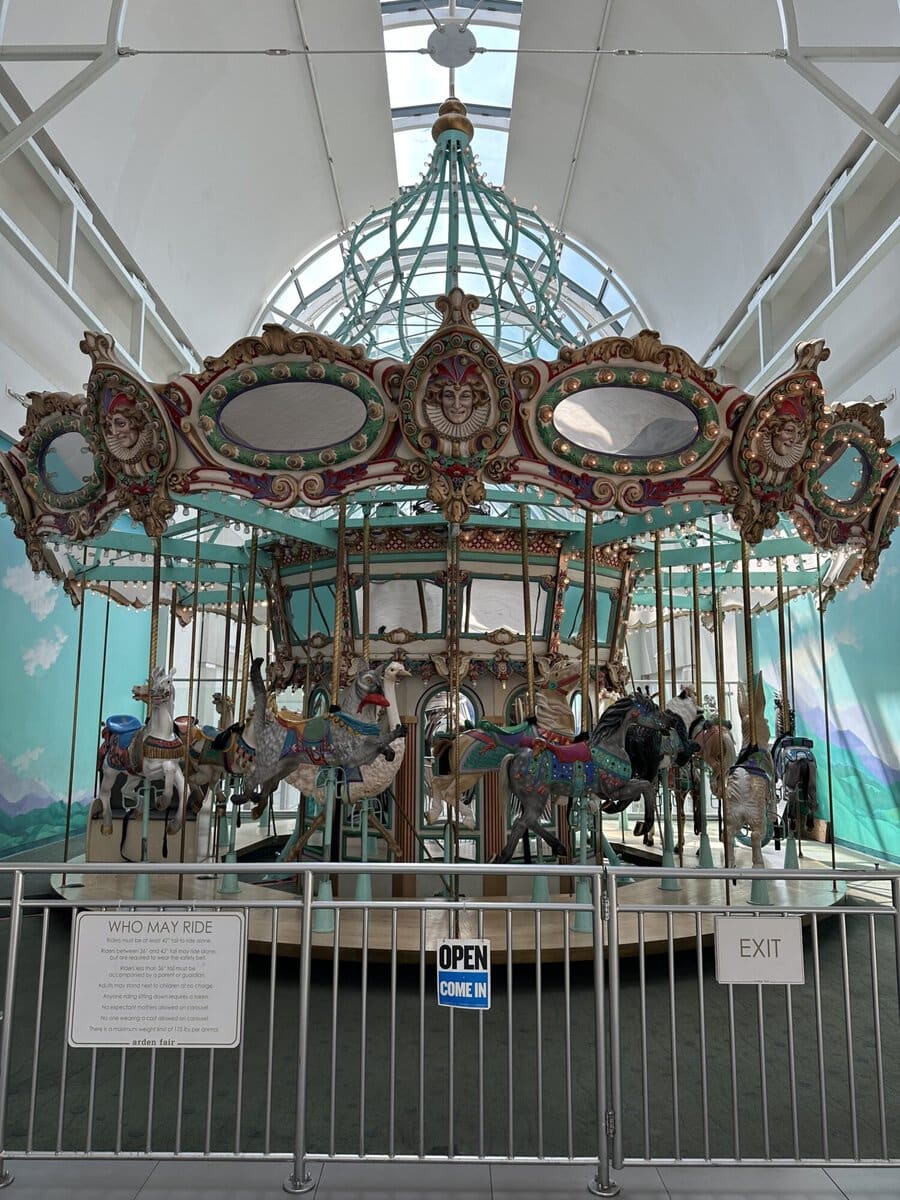
There's a 22,000-pound carousel on the second level that needed the floor reinforced before it could go in.
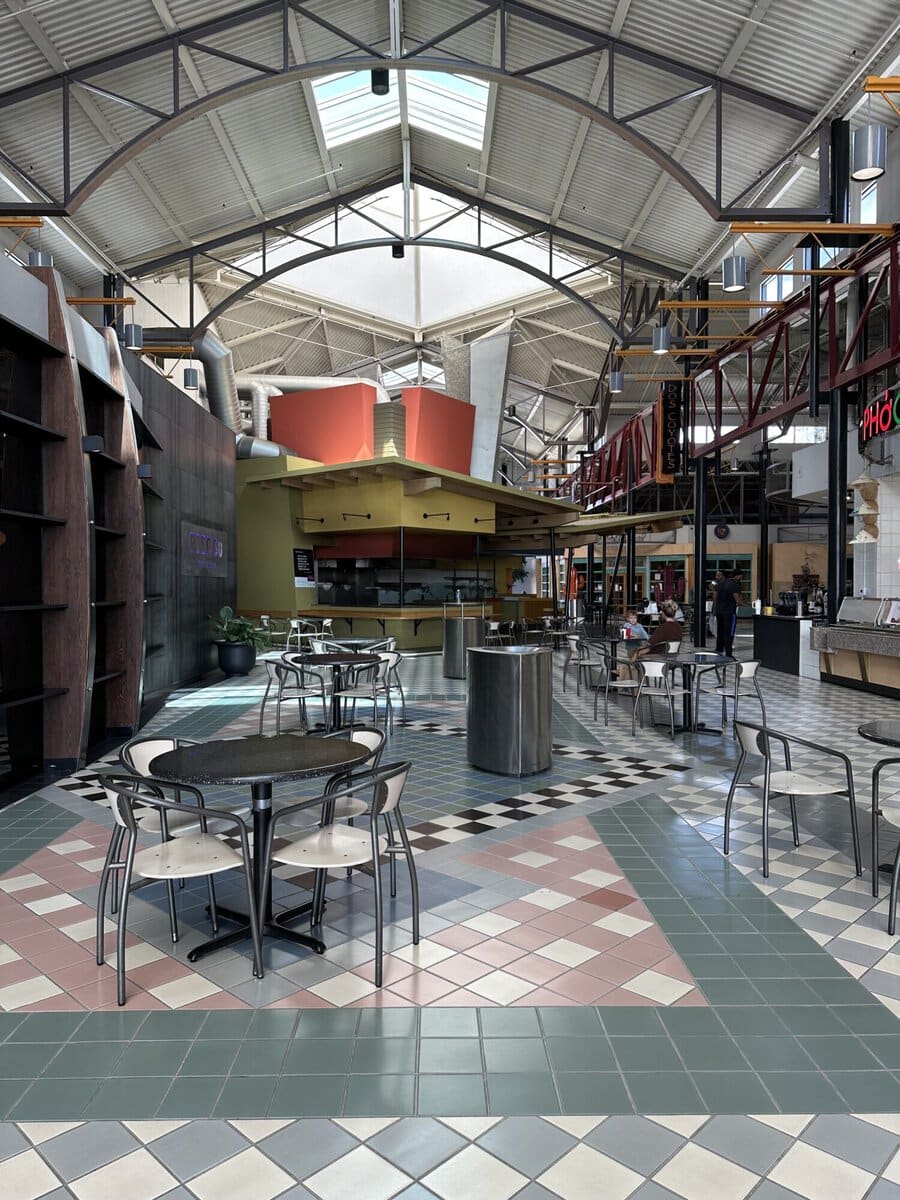
The Food Circus, a 600-seat cafeteria-style dining arcade, opened in 1965, almost a decade before the first successful U.S. mall food court at Paramus Park.
Nordstrom left in 2020 and Sears in 2021.
The owner bought both empty boxes back, then sold the Sears box to DICK'S for the House of Sport buildout.
RH Outlet now fills part of the Nordstrom space, and a DICK'S House of Sport is going into the Sears shell.
Here's how a farm-field Sears became all of that, and what's filling the holes now.
A Sears on 30 acres, two years before the mall
In December 1954, Sears Roebuck picked a 30-acre patch of Swanston Estates land near Arden Way and announced it would build a store there.
The company had spent years hunting for a Sacramento-area site.
It opened in May 1957: a single-story building of reinforced concrete and brick, 185,000 square feet, with a partial second floor holding employee dining and recreation rooms.
It cost $3.5 million. There was no mall yet.
The Sears stood alone on the edge of a planned development called Swanston Estates, where two investors named Heraty and Gannon had bought 234 acres the previous spring for $850,000.
The store sat by itself and waited for the rest of the retail to arrive.
It would grow beside the Sears, not around it.
The grocers who built the first shops
The Kassis family ran Sacramento's Stop-N-Shop grocery chain, and in 1956 they signed a 55-year lease for a shopping strip directly east of the Sears.
Frank, Lewis, Walter, Edward, and John Kassis were behind the first Arden Fair.
It opened in 1959 on 25 acres: a long, low building running 590 feet, 175,000 square feet, packed with more than 36 specialty shops.
Open-air, the standard California form of the era.
Surface parking out front, storefronts you walked up to from your car.
The first tenants included Woolworth's and rows of small shops.
Stop-N-Shop and the drugstore piece came early too, in the next wave.
The whole thing was built along the freeway and easy to drive to.
A second anchor, and a fight over who controlled the ground
In 1961, Broadway-Hale Stores bought 200,000 square feet of land from Heraty and Gannon and put up a Hale's department store on the east side.
That gave the center its second major anchor and a second Sacramento department-store name in the corridor.
The center also sat on contested ground.
The area had ties to North Sacramento, but in 1962 the City of Sacramento annexed the mall grounds after a legal dispute over annexation rights.
From then on, the city's share of Arden Fair's sales tax, and the planning fights it triggered, belonged to Sacramento.
Hale's became Weinstock's in 1967.
The cafeteria that seated 600
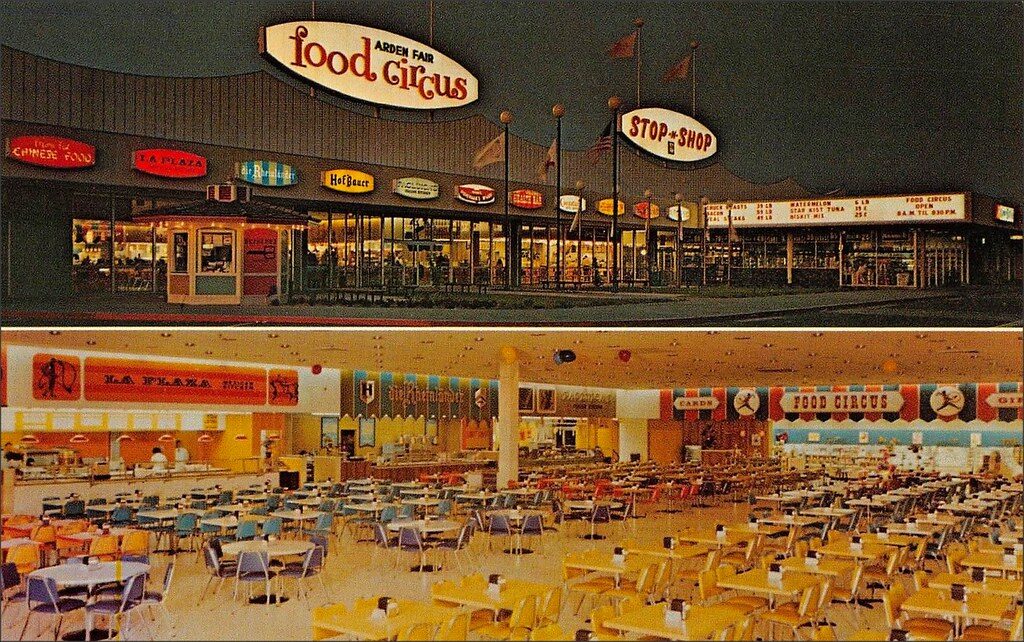
In 1965 the Kassis family opened the Food Circus, and it was the strangest and best thing on the property.
A 35,000-square-foot cafeteria-style dining hall with seating for more than 600, leasing space to 16 separate food stands plus a florist and a gift shop.
You could feed 600 people under one roof.
It ran until 1987, when the Kassis family retired from the business.
The format it helped pioneer, a clutch of small food vendors sharing one big seating area, became the mall food court that later spread across America.
Arden Fair had one almost a decade early.
Building a roof over it
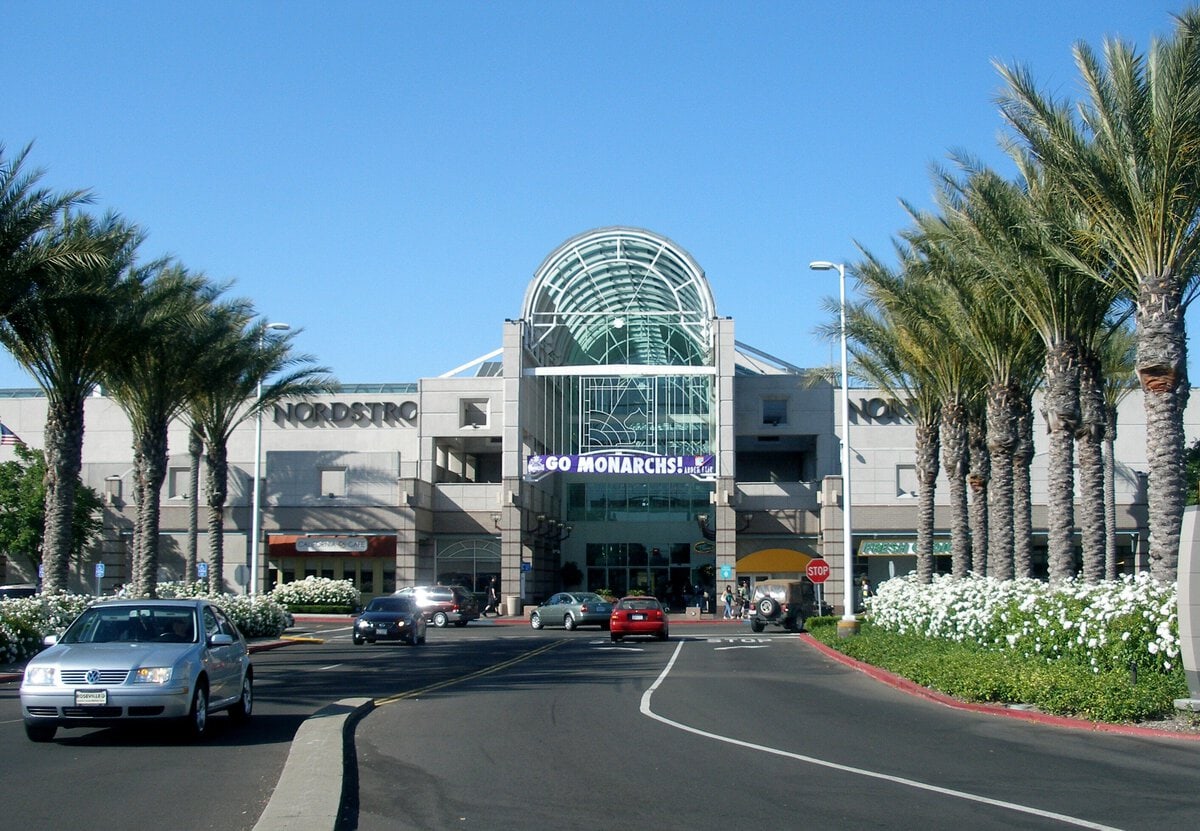
In 1971, Arden Fair reopened with a roof on it.
The stretch between Weinstock's and the Sears was enclosed, heated, and air-conditioned, with 75,000 square feet of new retail added in the process.
The open-air strip became an indoor mall.
That bought it about a decade.
By the mid-1980s the place looked dated next to newer regional malls, and a 1984 renovation tried to fix the surface of the problem: a new entrance, interior landscaping, refaced storefronts, including the ones facing Arden Way.
It looked better.
It still had only two department stores, and it still felt like a 1959 shopping center wearing a 1984 coat.
The owners who kept it local
By then the ownership had moved around.
The Kassis family had built on land controlled by Heraty and Gannon, and in 1968 a New York trust, Kavanau Real Estate Trust, bought the mall portion and the underlying land for a combined $6.1 million.
Then in 1975 it came home. Two Sacramento buyers, Dennis Marks and Morton Friedman, bought the property.
Friedman was a developer, lawyer, and philanthropist, and his family would hold a stake in Arden Fair for decades through what became Fulcrum Property.
That 1975 sale started the local ownership that still defines the place today.
A second floor, and a whole new Arden Fair
The real rebuild came in 1989 and 1990.
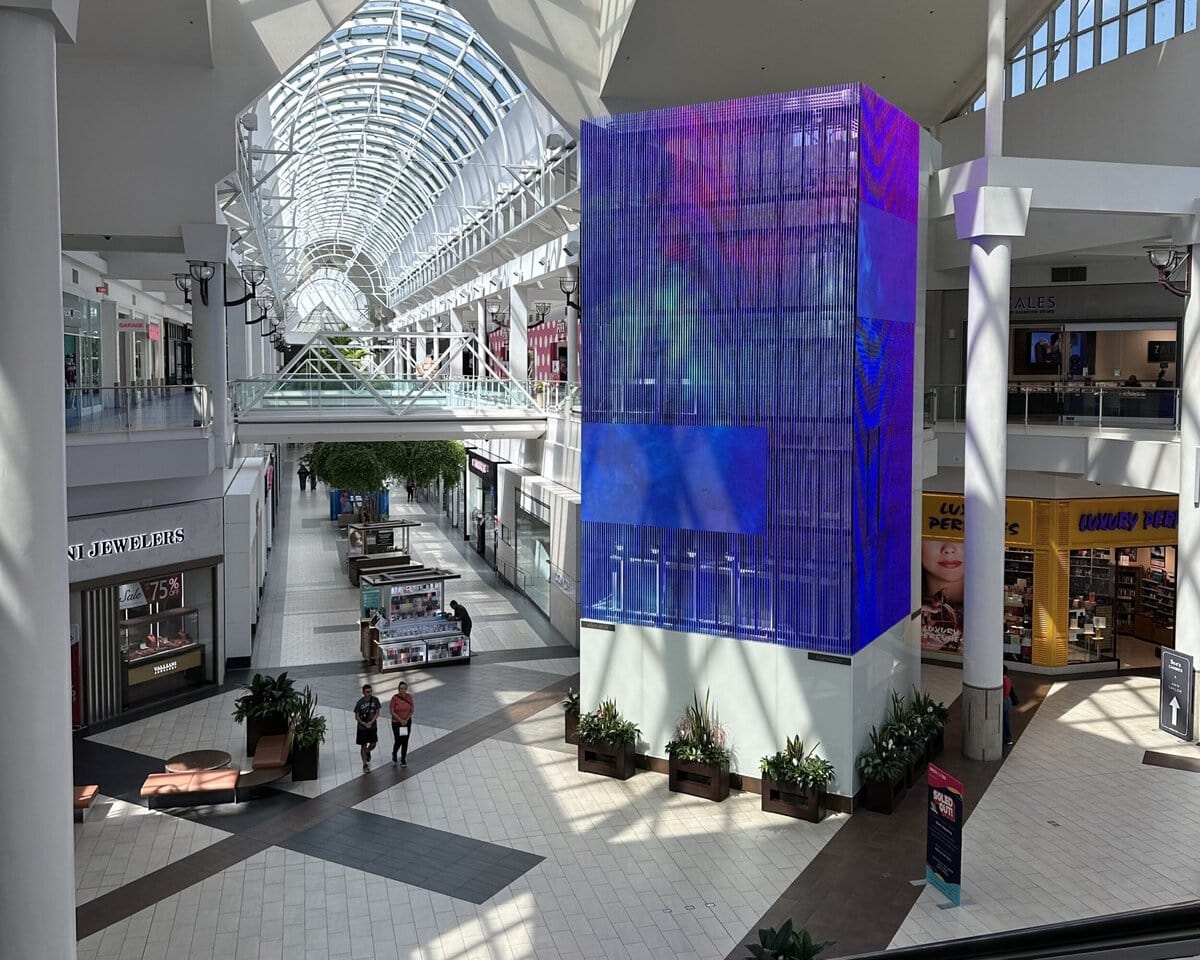
AEW Capital bought a half interest, Homart Development took over as managing partner, and the three-phase rebuild more than doubled Arden Fair, pushing the shopping center to about 1.15 million square feet with Nordstrom, Sears and Weinstock's counted.
The list of what got built is the mall most Sacramentans picture now.
A second level. A food court. A big Center Court. Marble tile underfoot. A remodeled Weinstock's.
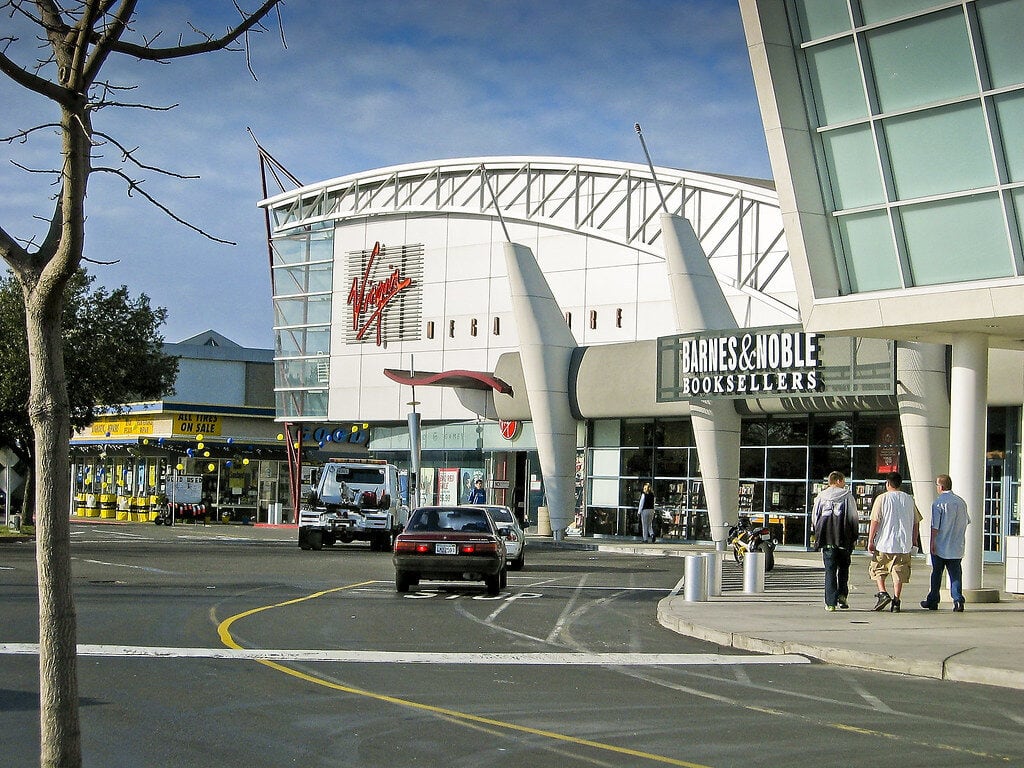
And the city's first Nordstrom, the store that announced Arden Fair was playing in a bigger league.
The old Sears, the one that had stood alone since 1957, was torn down, and a new Sears went up on the west end, finally connected to the enclosed mall instead of sitting beside it.
A three-story parking garage went in.
Altoon + Porter designed it with arched glass skylights over the east and west arcades and a vocabulary borrowed from old public buildings.
Barrel vaults, big court spaces, coordinated railings and stairs.
The carousel that needed the floor reinforced
In 1992 the mall added a carousel on the second level, and before it could go in, the floor had to be reinforced to hold it.
The thing weighs 22,000 pounds, stands 45 feet tall and 30 feet across, and carries 20 moving animals and a stationary chariot.
A carousel maker named John Barrango built it to order.
A year later, in 1993, a two-story garage opened on the north side of what is now the Macy's wing, adding 680 spaces.
Stacked on top of the older garage and the surface lots, Arden Fair's parking climbed past 6,000 spaces.
Penney's, a record store, and a run of Sacramento firsts
JCPenney arrived in 1994, relocating from Country Club Plaza to become the fourth department-store anchor.
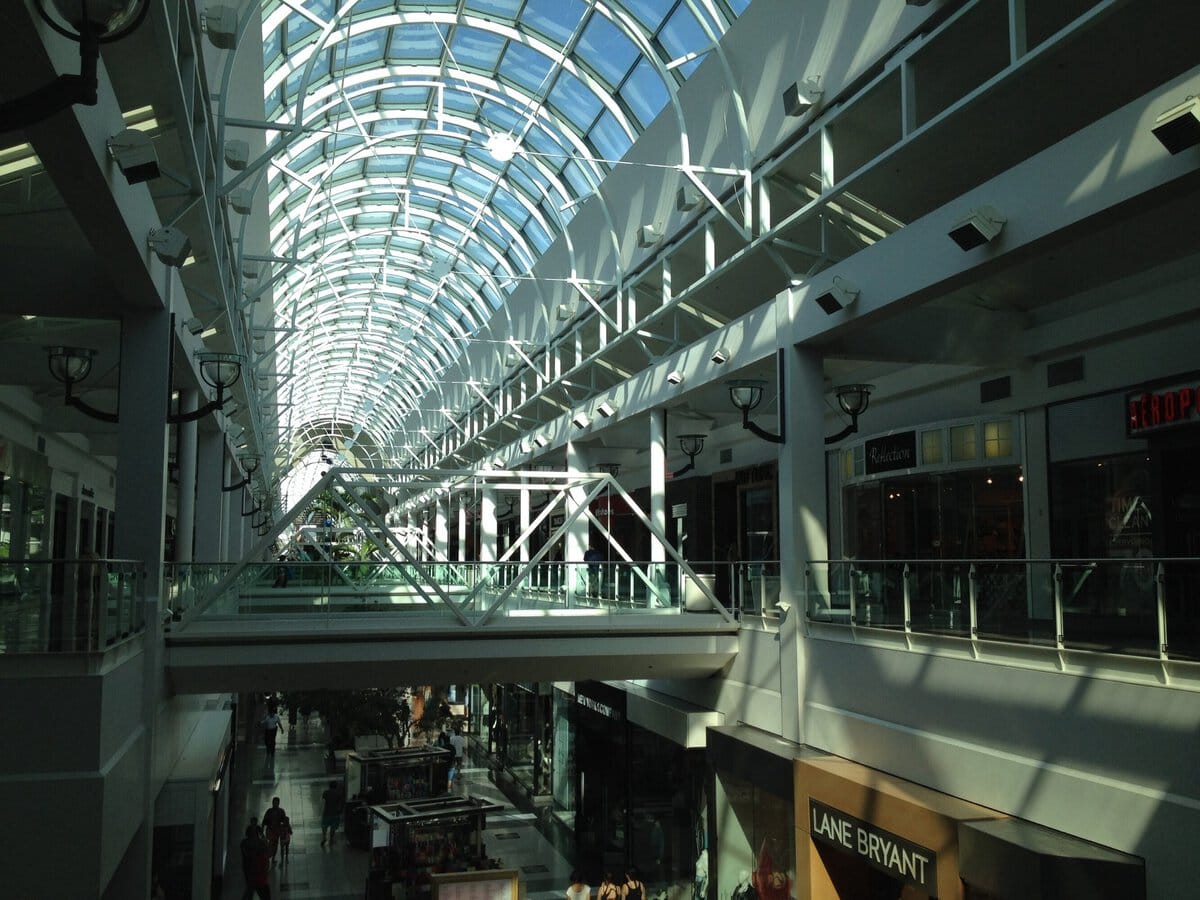
The same year, a Virgin Megastore opened as one of the chain's early U.S. locations, a multilevel music store built for Market Square's new entertainment push.
It closed in 2005.
Arden Fair kept landing Sacramento firsts.
Barnes & Noble opened in the adjacent Market Square as the chain's first store in the area.
Apple came later and became one of the mall's main draws.
By 2000, Arden Fair was the single largest source of sales-tax revenue for the City of Sacramento.
Weinstock's, meanwhile, had become Macy's in 1996 after Federated acquired Broadway Stores.
A Black Friday that changed the conversation
On November 27, 2020, an altercation inside the mall ended with two teenagers, ages 19 and 17, shot.
The 19-year-old died at the mall; the 17-year-old died hours later.
The mall was evacuated, and police described the attack as targeted rather than a threat to the public.
A suspect was arrested days later.
It happened on the busiest shopping day of the year, in a city already dealing with rising gun violence, and it shadowed the mall's public image for a long time after.
Arden Fair later worked with community groups to step into smaller conflicts before they escalated.
Two years on, December 14, 2022, gunfire was reported in a parking garage; police found shell casings but no injured person at the scene, and shopping continued after the response.
When Nordstrom and Sears both walked
Nordstrom announced in May 2020 that it would close the Arden Fair store permanently, keeping its Roseville Galleria location instead.
The store that had headlined the 1990 rebuild went dark, leaving one of the largest, most visible holes in the building.
Sears followed in 2021, closing after more than 60 years on the property.
Two empty anchor boxes at once is the exact problem that has gutted malls all over the country.
Arden Fair's owner answered by buying its way out of the trap.
Fulcrum acquired the former Nordstrom building in 2021.
On July 28, 2023, the owners bought the former Sears building and its parking parcel for $7.9 million, adding about 156,000 square feet of retail and 369,000 square feet of parking land.
After that, the owner controlled everything except the Macy's and JCPenney sections.
Filling the holes the department stores left
The old Nordstrom started coming back to life in December 2025, when RH Outlet opened on its lower level in 45,000 square feet.
The rest of that building gives the owner room to add more.
The old Sears is the bigger project.
Rather than knock it down, the plan turns the 155,500-square-foot building into a DICK'S House of Sport, with a climbing wall, a skylight atrium, and an outdoor area for events and product testing.
The former auto-repair center beside it gets demolished.
Construction was visible at the site by April 2026, with the opening pushed to 2027.
The inline stores changed too.
UNIQLO opened in September 2024 in 11,500 square feet stitched together from old Armani Exchange, Gap, and J.Crew space, its first Sacramento store.
H&M opened later that month in 18,200 square feet carved from the former Lane Bryant, New York & Company, and LOFT spaces.
Lane Bryant had been there since the 1960s.
What still pulls people off the freeway
Walk in today and the carousel is still turning on the second level, 34 years after the floor was braced to hold it.
Macy's and JCPenney still anchor their ends.
Apple, lululemon, Coach, H&M, and UNIQLO line the two levels, Barnes & Noble sits next door in Market Square, and Seasons 52, BJ's, GEN Korean BBQ, and 85°C Bakery handle the food.
The 2026 leasing run kept adding names: Fabletics in June, Taco Bell Cantina and Levi's in July, True Religion in November.
Fulcrum announced in November 2025 it would renovate the neighboring Market Square with new dining and entertainment.
The mall now runs roughly 10 a.m. to 8 p.m. most days, owned by Fulcrum Property and managed by Centennial Real Estate.
Out at the west end, where the original Sears stood alone in 1957 and the second one went up during the 1989-1990 rebuild, crews are turning the shell into the third thing to occupy that corner, this time with a climbing wall.
Independent Publisher Notice
BestAttractions is an independent editorial publisher. We are not affiliated with, endorsed by, or acting on behalf of any location, business, property owner, manager, government agency, or organization described in this article. Comments posted on this page are not forwarded to, reviewed by, or acted upon by any entity mentioned in the article. For official inquiries, complaints, applications, bookings, or other requests, please contact the relevant entity directly through its official website or other verified channels.
As a child, I lived on Middleberry Rd. when the mall was beginning to be built. Sears was the only store at that time. The field behind my house, where the mall and parking lot were soon to be, sometimes had sheep grazing there. When the construction began, and the basements of the Food Circus stores and Hales Department Store were dug out, all of the neighborhood kids would converge and prowl every inch of the site. You could find us dangerously climbing the scaffolding and digging into the sides of the dirt walls. Occasionally, security would chase us out, but we came back the next day. I have so many fun experiences and memories of both the construction of the mall and the mall itself in its early stages.
It sounds like you had some amazing childhood adventures around Arden Fair Mall! Those early memories must be priceless. Thanks for sharing them with us!
the cursive S in Sears
tandy leather
Corti Brothers
where are they in this story?
The article mentions Sears but misses the cursive S you remember. Corti Brothers was listed at Arden Fair as a delicatessen in 1969 and later occupied a 30,000-square-foot market that closed during the 1990 renovation. I have not pinned down Tandy Leather's dates well enough to state them without guessing.