
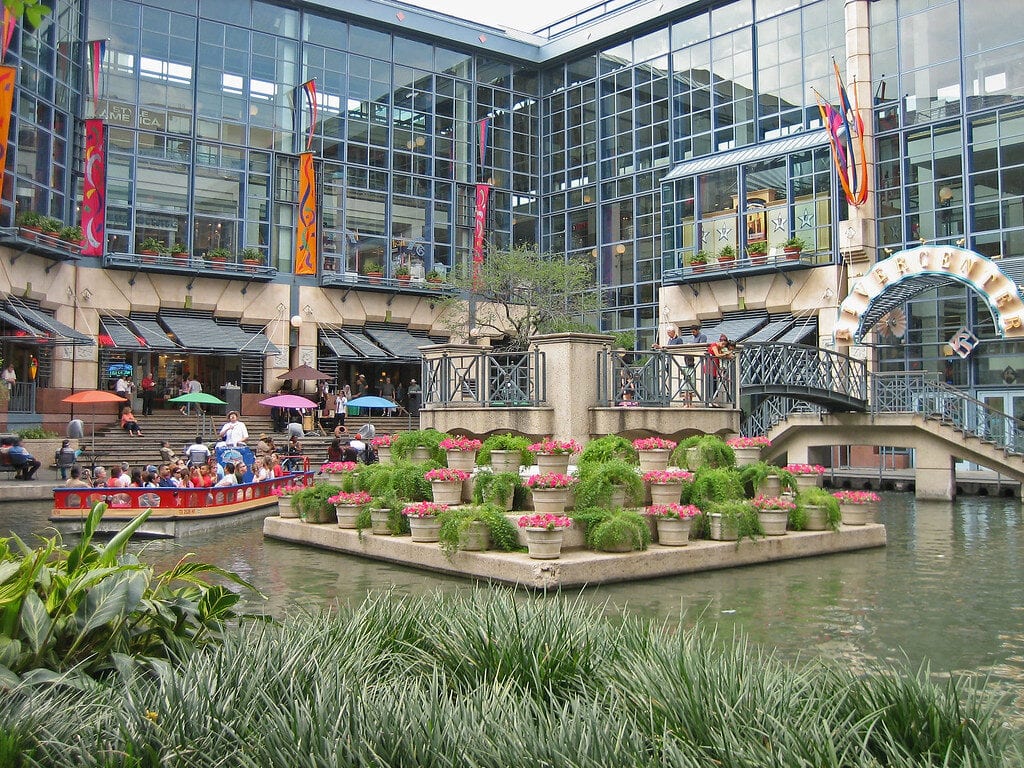
A tour boat enters Rivercenter's lagoon and passes under glass walls, restaurant patios, and bridges.
Around it are buildings from several periods of San Antonio's history. The mall opened in 1988, but parts of the site are much older.
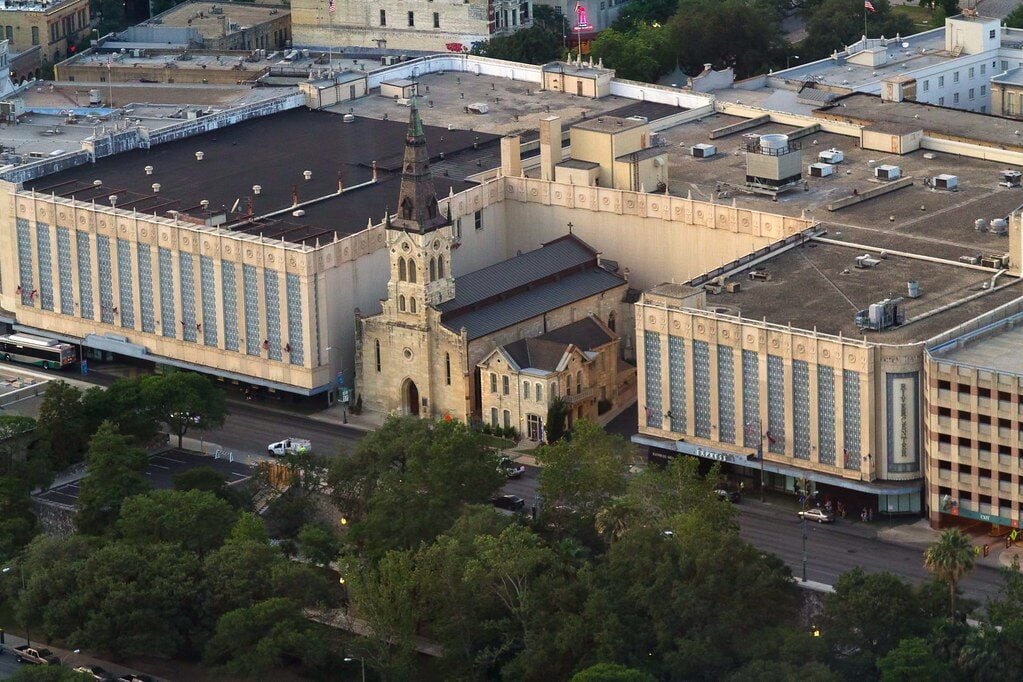
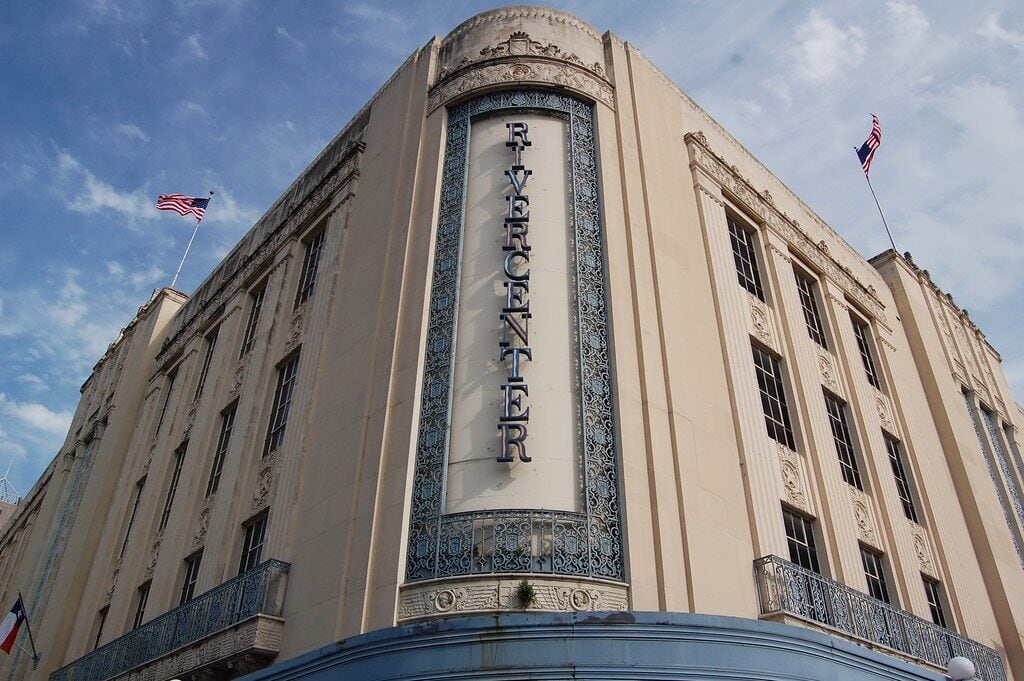
Along Commerce Street, the complex includes the outside walls of Joske's, a department store that moved there in 1887.
Next to it stands St. Joseph Catholic Church, which was started in 1868. The mall building now surrounds much of the church.
Rivercenter's unusual downtown setting helps explain why it has survived while many traditional malls have failed.
Now called the Shops at Rivercenter, it has lost all its original department stores.
However, it has remained active by leaning harder on connections built into the site from the start: the River Walk, hotel and convention traffic, restaurants, cinemas, and attractions.
This change has protected some parts of the site's history while removing others.
Before the Rivercenter Mall
St. Joseph Catholic Church is the oldest surviving building in the Rivercenter complex that is still used for its original purpose.
German Catholic immigrants created the parish and laid the church's cornerstone in 1868.
The parish says the building was completed in 1876, although some other sources give 1871.
Its spire was completed in 1898, and stained-glass windows from Munich were added in 1902.
Joske's department store moved to the corner of Alamo and Commerce streets in 1887.
As downtown San Antonio grew, the store expanded several times.
A major redesign in 1939 gave the store much of its Art Deco appearance.
The design included rounded corners, strong vertical lines, geometric decoration, and details influenced by Spanish Colonial architecture.
In 1945, Joske's tried to buy the church, its priest's house, and the surrounding land so the store could expand again.
Parish members voted together not to sell.
Joske's then built around the church and eventually surrounded it on three sides.
Local people began calling the church "St. Joske's."
By the 1950s, the Joske's complex covered about 551,000 square feet.
It included restaurants, customer services, public rooms, seasonal displays, and Fantasy Land, a large Christmas attraction introduced in 1960.
Old photographs show the Fantasy Land train, fake winter scenes, and crowds visiting the holiday display on an upper floor.
UTSA Libraries preserves these images, and local news organizations continue to publish them.
As a result, public memories of Joske's have survived even though the store itself is gone.
The future Rivercenter site also contained older streets, buildings, and signs of earlier human activity.
Archaeologists studied three planned construction blocks between October 1984 and July 1985.
Their work showed that Rivercenter was built over old city blocks, not empty land.
A Mall Built With Water
The idea for Rivercenter developed while San Antonio was trying to bring business back to the downtown area.
The project combined private shops and a hotel with public improvements to the river.
The Edward J. DeBartolo Corporation developed the shopping complex, while the city extended part of the River Walk into the site.
Reports at the time valued the complete project at about $200 million.
Construction lasted more than two years.
Workers dug the lagoon, built bridges and shopping areas on several levels, changed parts of the Joske's building, and built a hotel tower at the east end.
The project required close cooperation between private buildings and public river space.
That relationship continued after opening, as restaurants, patios, tour boats, events, and walkers all used the water's edge.
Joske's closed for remodeling in 1987, but it never reopened under its old name.
Changes in the company ended the local store chain.
Dillard's used only part of the downtown building.
Other areas became shops, walkways, and cinemas, while large sections of the upper floors remained empty.
Rivercenter began a quiet opening on February 15, 1988.
Its main public celebration followed on February 20.
The event included balloons, music, dancers, river taxis, and a frog character named Ribbons.
About 3,100 people watched the opening show.
The theme was "Just Add Water." It clearly explained the main idea behind the project.
The River Walk was not simply an attraction near the mall.
It became part of the mall itself.
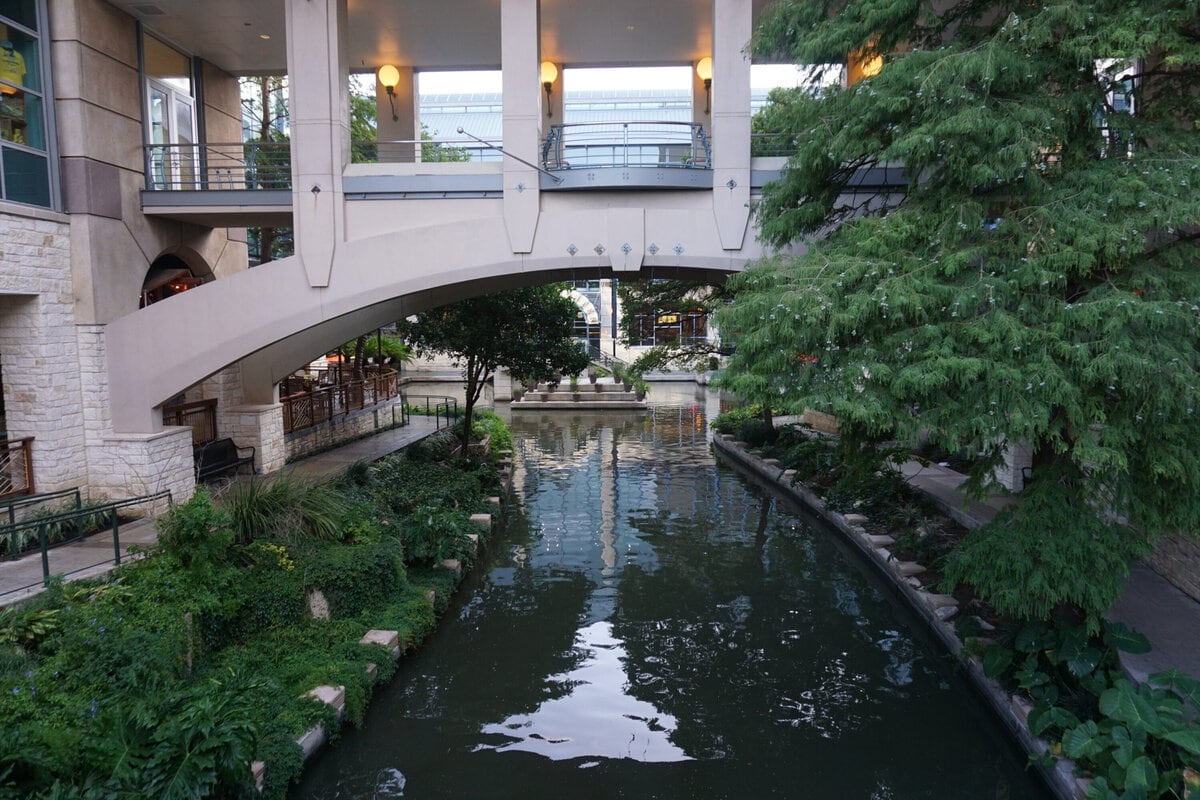
The original mall had a horseshoe shape around the lagoon.
Glass walls offered views of the water.
Bridges and escalators connected the main shopping floors with riverside restaurants and public paths.
Tour boats entered the lagoon, bringing downtown visitors directly into the property.
In its opening months, Rivercenter had about 135 small shops, five full-service restaurants, regular cinemas, and a specially built IMAX theater.
San Antonio's first Lord & Taylor was one of the main stores.
Dillard's opened in part of the former Joske's building in May.
The Marriott Rivercenter, with about 1,000 rooms, opened in October.
Photographs from the late 1980s and early 1990s show visitors filling the food court, families watching activity around the lagoon, and shoppers moving between department stores.
Later recollections describe the mall as a weekend meeting place for teenagers.
River taxis brought tourists into the lagoon, while the nearby convention center supplied another stream of visitors.
Rivercenter worked as several places at once.
It was a shopping center, a hotel passage, a cinema complex, a dining area, and a public route between the convention district and Alamo Plaza.
The Department Store Model Falls Apart
Rivercenter's first major store changed quickly.
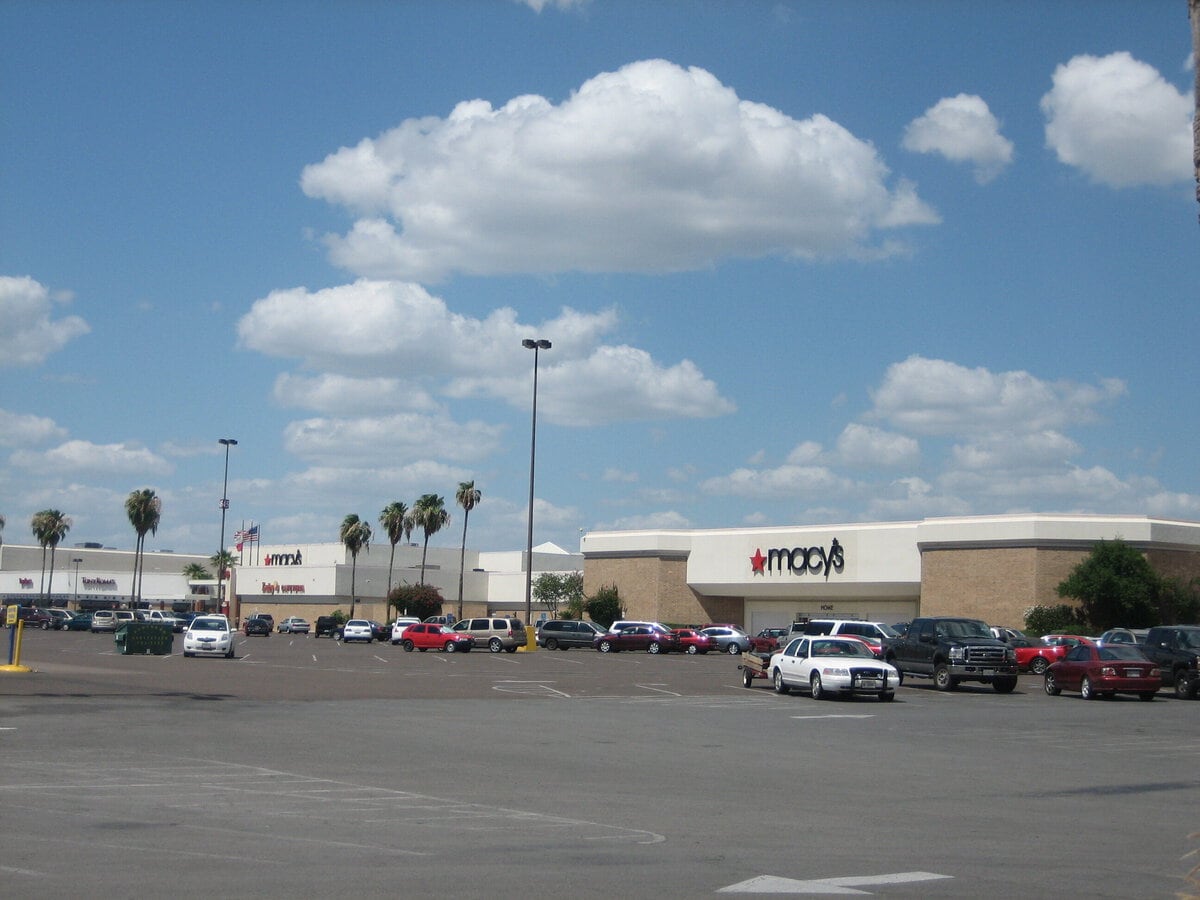
Lord & Taylor became Foley's in 1989.
Foley's remained for more than ten years before becoming Macy's in 2006.
Dillard's had a different problem. It used only about 130,000 square feet of the much larger Joske's building.
The old structure had timber framing, too many columns for modern retail, and large unused areas upstairs.
These features made it difficult to use as a normal modern store.
Dillard's closed in August 2008. The Joske's section then lost its last department store and remained empty for years.
Ashkenazy Acquisition Corporation bought Rivercenter in 2005.
Instead of waiting for another department store, the owner began looking for restaurants, entertainment businesses, attractions, and smaller shops.
Work on the Joske's section began in late 2013.
The project repaired and uncovered important parts of the Commerce Street exterior.
Inside, however, almost nothing from the department store remained.
Workers removed the old interior and added a new steel structure for modern businesses.
Rivercenter therefore protected the public face of Joske's more successfully than its interior.
Visitors could still see the historic outside walls, but they could no longer experience the old sales floors, displays, paths, or holiday spaces.
This result showed the limits of official historic protection.
Rules could protect the visible exterior of the building.
The old interior spaces and store features had much less protection.
The building remained useful, but Joske's could no longer be experienced as a preserved department store.
The rebuilt area opened in stages in early 2016.
Dave & Buster's, H&M, restaurants, and smaller shops moved into the former department store space.
Rivercenter Mall became the Shops at Rivercenter.
The new name matched a property that was already moving toward food, entertainment, and smaller shops.
Preservation, Development, and Conflict
Plans for a new use of the Joske's building did not end arguments about its future.
In 2013, preservation officials rejected a plan to build a hotel tower above it, although the city manager later approved the concept with conditions.
Critics said the tower would be too large for the historic building and would harm views near Alamo Plaza.
The developer dropped the plan. Another hotel idea announced in 2018 was never built.
The disagreement showed two different views of historic preservation.
One side saw the old building as a base for new construction that could earn money and keep the property active.
The other side believed that the building's size and relationship with the Alamo were important parts of its history.
Those qualities could be damaged even if the outside walls remained.
Rivercenter has survived because it has continued to change.
However, not every proposed change has been accepted as suitable for the site.
The COVID-19 pandemic created a different problem.
Downtown tourism and convention business almost disappeared.
Businesses closed, and the mall tried to collect unpaid rent from some tenants.
Macy's announced in January 2021 that it would leave and closed that spring.
This ended Rivercenter's period as a traditional department-store mall.
The crisis showed that the River Walk connection was both a strength and a weakness.
Visitor traffic had helped support the property.
When that traffic suddenly stopped, the whole business system suffered.
From Stores to Experiences
Rivercenter did not become an empty mall after Macy's left.
Cinemas, riverside restaurants, Dave & Buster's, and newer attractions gave people reasons to visit without shopping at a department store.
LEGOLAND Discovery Center opened in 2019. SEA LIFE Aquarium followed in 2021.
LiggettVille Adventure Center later used the mall's tall indoor spaces for rope courses, climbing walls, and a zip rail.
Holey Moley added miniature golf, karaoke, food, and a bar near the River Walk.
These businesses use the building in different ways.
Cinemas and aquariums can operate in deep areas without windows.
A rope course needs height more than a traditional shop window.
Games, bars, and restaurants can stay open in the evening, after many normal stores would close.
The clearest example of the current plan is Mexico Ceaty, which opened in April 2026 after construction delays.
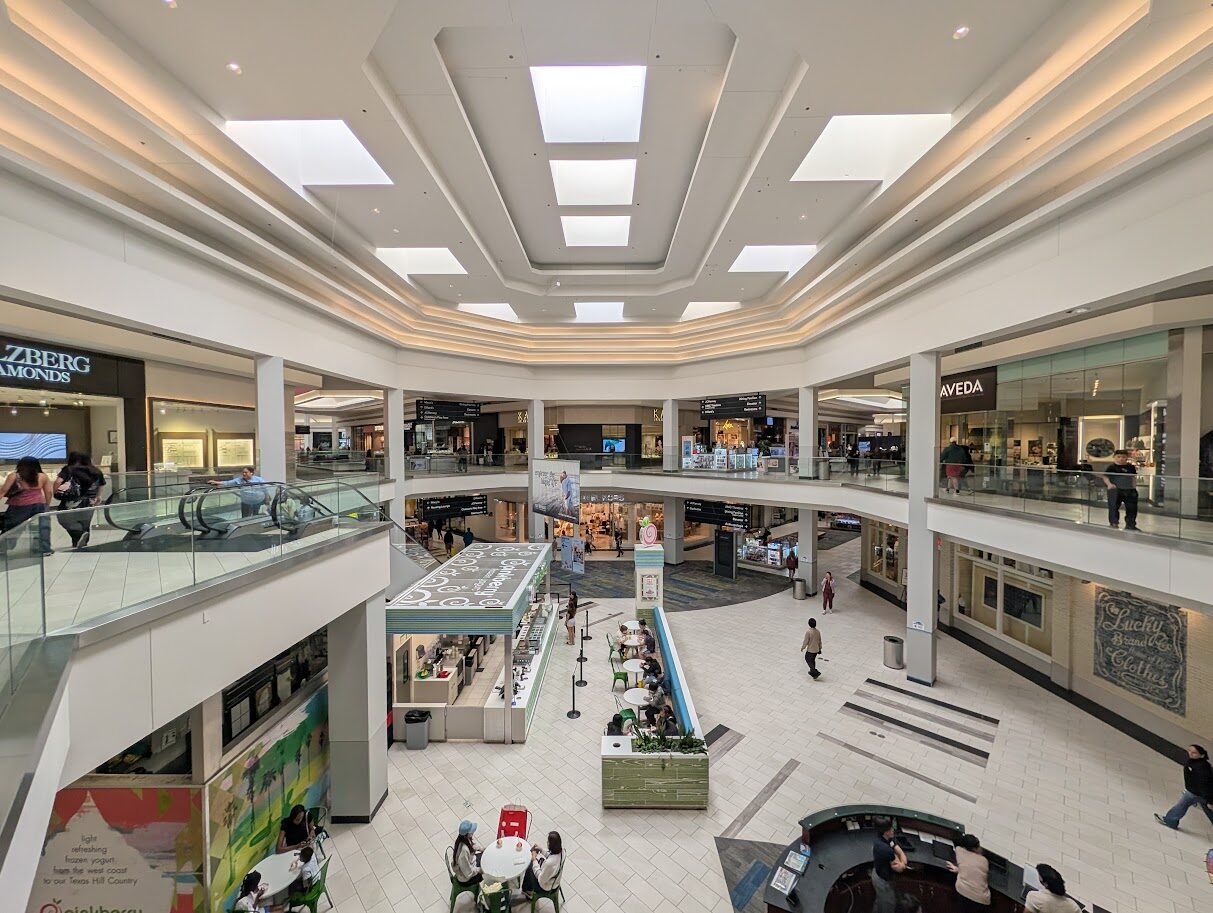
It replaced the traditional food court with more than 20,000 square feet of restaurants, bars, food stands, shops, and shared gathering spaces.
This change turns the old food court idea around.
In the past, food courts served customers who had already come to shop.
Mexico Ceaty is designed to bring visitors into the property by itself.
Food and entertainment now attract people who may later visit the remaining stores.
What Rivercenter Preserves
Rivercenter remains open in 2026.
The property says it has more than 100 shops, food businesses, services, and entertainment operations.
Its main tenants and attractions now include AMC and IMAX, H&M, Dave & Buster's, LEGOLAND, SEA LIFE, restaurants, and other activities.
Parts of the original 1988 design can still be seen in the multi-level walkways, glass walls, lagoon, and river entrance.
The Joske's exterior adds an older architectural layer.
St. Joseph Catholic Church continues to serve its original religious purpose inside the commercial block.
Other parts of the site's history now survive mainly in photographs and public memory.
Images preserve Joske's Fantasy Land and the early crowds at Rivercenter.
The name "St. Joske's" keeps alive the story of a church community that refused to move.
The outside of the Joske's building still shows the store's former size, but it does not show the activity that once filled the interior.
Rivercenter was promoted as a new beginning for downtown San Antonio.
Its appeal also came from things that already had meaning: the river, the church, the old department store building, and its central city location.
It did not preserve every part of the past, and it did not remain the same mall that opened in 1988.
It survived by repeatedly finding new business uses for a place whose history was always about more than shopping.
Independent Publisher Notice
BestAttractions is an independent editorial publisher. We are not affiliated with, endorsed by, or acting on behalf of any location, business, property owner, manager, government agency, or organization described in this article.
Comments posted on this page are not forwarded to, reviewed by, or acted upon by any entity mentioned in the article.
For official inquiries, complaints, applications, bookings, or other requests, please contact the relevant entity directly through its official website or other verified channels.