
By 1997 there was one tenant left in Methuen Mall in Methuen, Massachusetts. It was an Applebee's, and it went to court rather than leave.
The mall had opened in 1973 on the Mann family's apple orchard, with a Sears at one end and a Howlands at the other. Early in 1999 most of the enclosed building came down.
In 2000 an open-air center called The Loop opened on the same ground. That fall the state named the highway beside it the Loop Connector.
In 2026 the land under The Loop ended up in court too. In June the companies holding its ground lease filed for bankruptcy, and in July a trustee for the lender sued to foreclose.
Sears opened first, on orchard ground
Sears opened its doors on Tuesday, September 4, 1973, in a store of roughly 137,000 square feet with more than 50 departments.
Its automotive center stood in a building of its own out on the parking lot. The rest of Methuen Mall was still being finished around it.
The ground under it, at 90 Pleasant Valley Street, had been part of the Mann family's apple orchard, beside the road that links Interstate 93 with Interstate 495.
First Hartford Realty, a Connecticut developer, had announced the project in July 1972 at an estimated $14 million, as an enclosed regional mall for Methuen and the Merrimack Valley.
The second department store was supposed to be Sutherlands, the Lawrence store.
Sutherlands put its money into its downtown Essex Street store and a branch in Andover instead, and Howlands, a chain based in White Plains, New York, took the space.
It opened on September 17 in the largest store the company had.
The enclosed mall opened to the public on November 5, 1973, two months after its anchors were already trading.
It was one long floor, with a department store at each end and room for about 60 to 70 smaller shops in between
Jordan Marsh, Filene's Basement, and a food court
Howlands closed in 1977, and Jordan Marsh moved into its building as the chain's 12th store.
Five years later Filene's Basement opened a store of about 25,000 square feet, which gave shoppers one more reason to drive to Methuen besides the two department stores.
JMB Realty owned the mall after the original developer. MetLife's 1984 purchase also included Auburn Mall in Auburn, Massachusetts, and the Caldor strip next door.
During the 1980s the corridors were renovated and a food court went in.
The mall was close to full, and Sears was still its main draw.
As early as 1990, though, the chance of another Sears in Salem, New Hampshire, was already hanging over leasing at Methuen Mall.
Around 1991 its vacancy rate stood at about four percent.
That was the year a much larger mall opened across the state line.
A bigger mall across the state line
The Mall at Rockingham Park opened in Salem, New Hampshire, in 1991.
It was substantially larger than Methuen Mall, and it sat in a state with no general sales tax.
By 1992 Sears and Filene's Basement had both moved there.
The old Sears store got one more tenant. Ann & Hope opened in it in 1993, and in the fall of 1995 it gave notice that it would close that year.
Jordan Marsh had already left in 1994. By the start of 1996, Methuen Mall had no department store at all.
The smaller shops followed.
MetLife, which held the long-term lease on the mall, was falling behind on its ground rent, its property taxes, and its mortgage payments, and by May 1996 it had decided to get out of the investment.
By July the mall had lost more than a quarter of its roughly 65 tenants.
Trade shows in the old Sears
In 1996 the empty department-store space became the Valley Expo Center, with 150,000 square feet of exhibition floor.
On the weekend of March 9 and 10 it held the Dine' Intertribal Pow Wow and Native American Trade Show.
The program called for a procession around noon, dancing, craft demonstrations, drum groups, and more than 75 traders, with general admission at $5 and children under 12 admitted free.
The food-court vendors in the mall were expected to stay open for the visitors.
The expo hall put paid events into a building that had sold appliances and tires.
No department store followed it, and in 1997 Methuen Mall stopped operating as a mall.
One restaurant held out
A new group of developers wanted the site for something else.
In October 1996 they agreed to buy the mortgage on the mall's lease, and in January 1997 they bought the land itself from the two men who owned it.
In April 1997 they ended MetLife's ground lease over its defaults. That left one tenant.
Applebee's was the last occupied space in Methuen Mall, and its sublease still had about six years to run, with options for two more five-year terms.
In May the developers told the restaurant to leave.
Applebee's refused, and in June it went to Superior Court to keep its lease, claiming that MetLife and the developers had arranged the lease's end to get rid of the restaurant.
The developers filed an eviction case that December, and the two cases were heard together.
The trial court ruled for the developers in June 1998, and in May 1999 the Massachusetts Appeals Court agreed: the restaurant's sublease depended on MetLife's ground lease, and once that lease ended through default, the sublease went with it.
The court did not find the claimed scheme proved.
The enclosed mall was demolished in early 1999, the same year the case ended.
An open-air center and the Loop Connector
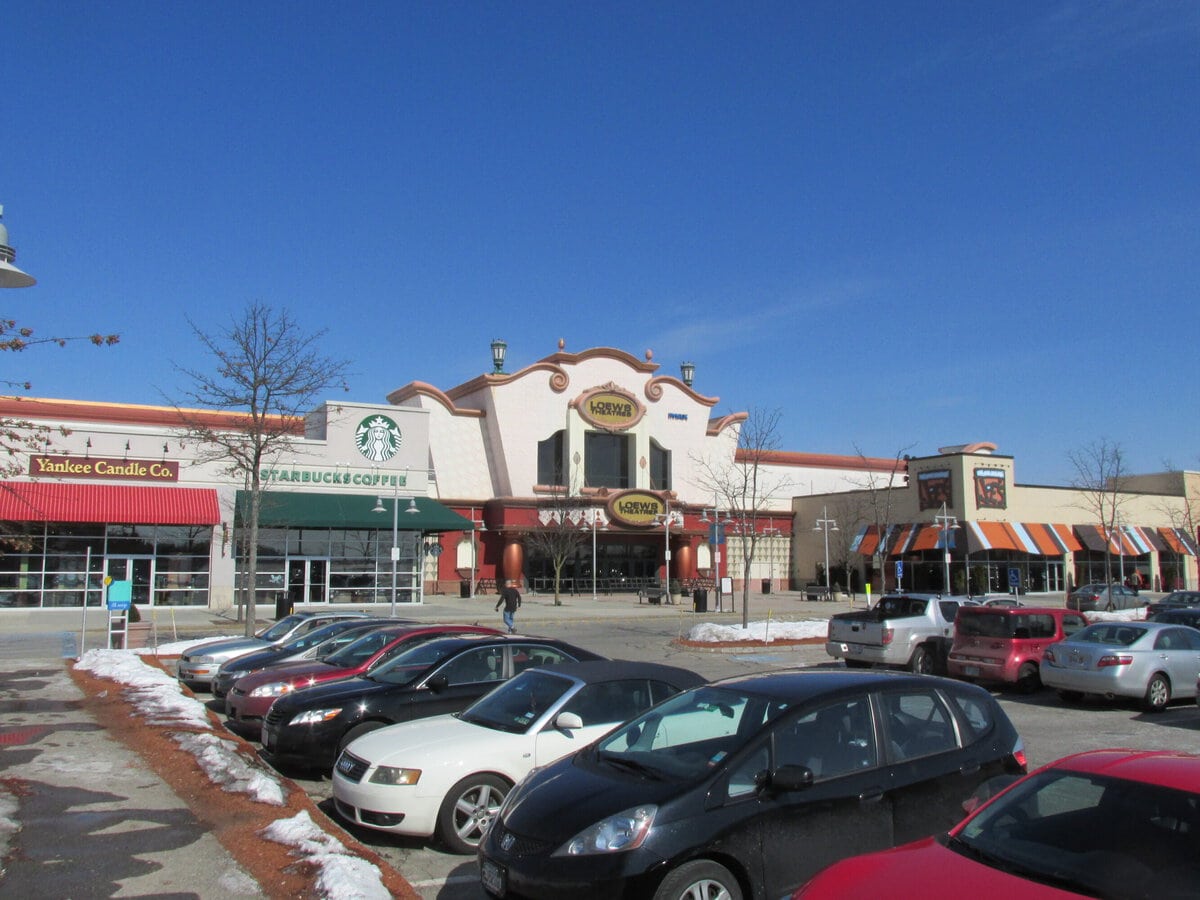
The Loop opened on the site in 2000.
The Wilder Companies and The Brickstone Companies had replaced the single indoor corridor with separate store buildings along outdoor walkways, and a wide promenade with trees and benches ran between them.
The redevelopment was an $80 million investment.
The biggest draw was a 20-screen Loews cinema, with a Stop & Shop of about 65,000 square feet, Marshalls, and Old Navy around it.
In its first decade the shops included Borders, Gap, and Bath & Body Works, and moviegoers could walk to dinner at Bugaboo Creek, TGI Fridays, or Chuck E. Cheese.
One name crossed over from the old building: Pearle Vision, a Methuen Mall tenant, opened again among the new stores.
In October 2000 the state officially named Route 213 the Loop Connector.
The highway that brought shoppers to the site now officially carried the Loop Connector name.
By fiscal 2007 The Loop had brought more than 500 permanent jobs and 300 to 400 part-time ones.
Property taxes from the site came to more than $1 million a year, more than three times what it had paid before the rebuild.
By then Mann Orchards had moved its farm store and bakery nearby, so the family business whose orchard had given up the land was selling in the same retail district.
The supermarket box splits in two
Wilder sold The Loop in April 2002 for $54.5 million, and the center later passed to an Invesco-managed portfolio.
An attempt to sell it failed in 2018.
The next year the owners brought in new managers, who added freestanding buildings for restaurants and cut large suites into smaller ones.
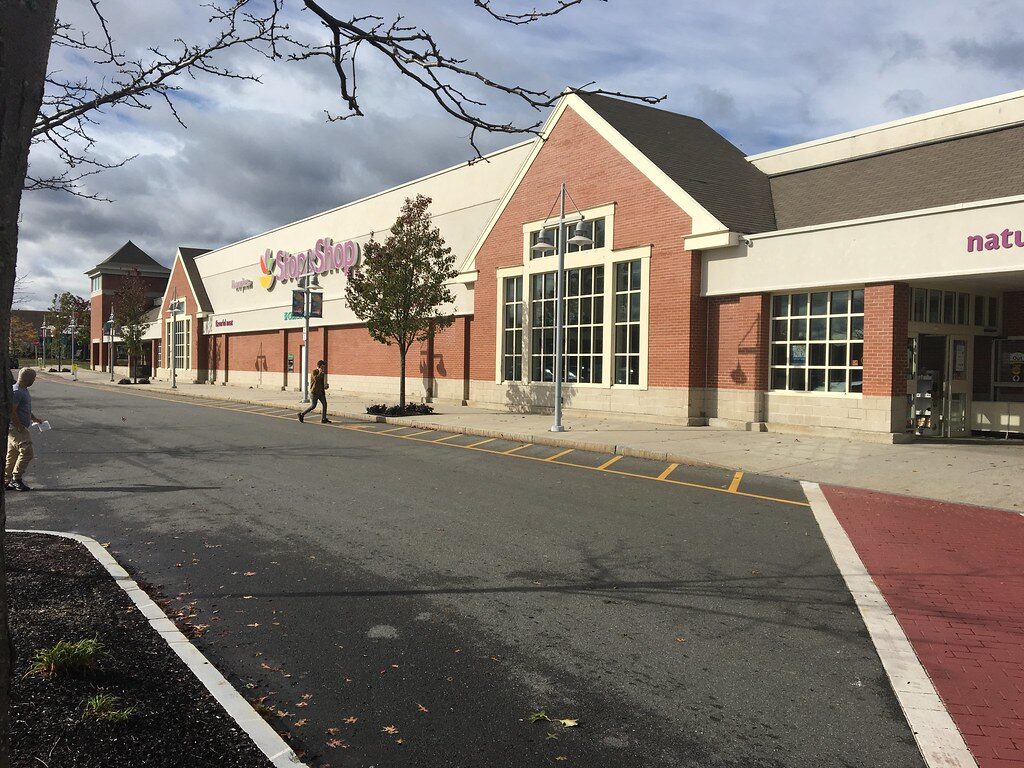
Then the supermarket left. Stop & Shop decided not to renew its lease and closed its 65,000-square-foot store in February 2020.
The building did not stay one store: a liquor store took about 31,000 square feet of it, and BioLife Plasma Services opened a plasma donation center in another part.
Smaller tenants filled in around it.
Planet Fitness and a Crumbl Cookies bakery opened in late 2020, Starbucks moved into a new building of its own, and Raising Cane's opened a drive-through restaurant in 2023.
At the end of 2022 the center was sold to a private investment firm.
The Loop also became a place where the city gathers. By 2025 Methuen was holding its Fourth of July fireworks there.
In April 2026 a new bus route began running between The Loop and Merrimac Plaza, and a separate new route went to Salem, New Hampshire, the town whose mall had drawn Methuen's department stores away.
The land under The Loop goes to court
The trouble in 2026 came through the ground underneath.
The Loop sits on land covered by a ground lease that runs until 2121. In June 2026 two companies tied to that arrangement filed for Chapter 11 in federal bankruptcy court in New Jersey.
In July a trustee for the holders of mortgage-backed securities filed a foreclosure case in federal court in New York.
The case concerns a $34.4 million loan secured by the Methuen land interest and by the land under a shopping plaza in Benton Harbor, Michigan, and the trustee also asked the court to appoint a receiver over that collateral.
Both cases involve the companies that hold the land and the lease, not the retailers.
The stores are open, and only two suites, of about 3,000 and 4,000 square feet, are advertised for lease.
The cinema that opened as a Loews is now AMC Methuen 20, and at 93,000 square feet it is the center's largest tenant.
In 1997 a single Applebee's was all that was left of Methuen Mall. On the same ground today, nearly every storefront is leased.
Independent Publisher Notice
BestAttractions is an independent editorial publisher. We are not affiliated with, endorsed by, or acting on behalf of any location, business, property owner, manager, government agency, or organization described in this article.
Comments posted on this page are not forwarded to, reviewed by, or acted upon by any entity mentioned in the article.
For official inquiries, complaints, applications, bookings, or other requests, please contact the relevant entity directly through its official website or other verified channels.