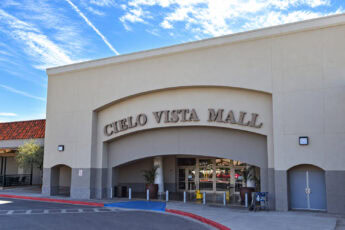
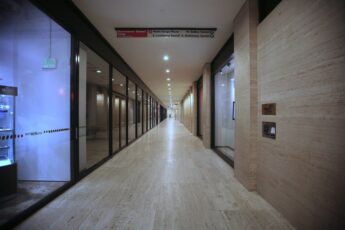
Katy Lake is drained for a shopping center
In January 1959, television news crews in Fort Worth filmed the preparations to empty Katy Lake and, on January 18, the work to breach its dam. The lake was a railroad reservoir.
The Missouri-Kansas-Texas line, known as the Katy, had announced it in July 1907, and by 1908 it held water. Over the decades it also became a place to fish.
Sears wanted the ground under it. In December 1958 the retailer had announced plans for a regional shopping center where the lake was, about six miles south of downtown, where the new South Freeway gave drivers a straight run to the door.
Homart, the Sears real estate arm, took it on as the first shopping center it ever built, and ground was broken on April 5, 1960.
The plan was drawn around the car. Roughly 45 acres of pavement were laid out for 5,000 of them on a site of about 85 acres.
Because the old lakebed sat low, the lower floor of the stores got a parking level of its own, beneath the lots that served the main walks.
Seminary South opens in the snow
Snow came down on Wednesday, March 14, 1962, when Seminary South Shopping Center was dedicated at 4200 South Freeway in Fort Worth, Texas.
It was the city's first regional mall, and 24 stores were open. WBAP-TV filmed the opening.
Boy Scouts raised the flag, the Technical High School band played, Miss Texas appeared, and 33 women from a TCU sorority cut a ribbon that ran about a mile around the center.
Seminary South was open to the weather.
Its two concourses met in an L, lined by storefronts under redwood canopies carried on brick columns.
Trees, planters, and pools filled the space between them.
The main fountain sat between Sears and G. C. Murphy's.
Near Stripling's, another water feature followed the slope down toward the lower parking level.
Sears was the larger of the two department stores.
It held the outer corner of the L with three floors and about 225,000 square feet, a coffee shop, a pharmacy, and its own auto service.
Stripling's, which had sold to Fort Worth from downtown since 1893, put its first branch beyond downtown at the north end, two floors high, with a restaurant and a post office inside.
Murphy's five-and-dime faced Sears across the inner corner and kept a lunch counter of its own.
Dillard's arrives as enclosed rivals open
J.C. Penney made Seminary South a three-department-store center in the fall of 1964, building at the north end beside Stripling's.
On Christmas Day 1969, General Cinema opened a freestanding twin theater out in the northwest parking area, starting with "The Sterile Cuckoo" and "Viva Max."
By 1977 the bowling building west of Murphy's had come down for a bigger store, and on October 4, 1978, Dillard's opened on that ground on three levels.
That made four department stores. Around the center, the market had been moving the whole time.
Northeast Mall opened in Hurst in 1971, Ridgmar Mall in 1976, Hulen Mall in 1977 about four miles to the west, and North Hills Mall in 1979.
All four were enclosed, and they sat nearer the parts of the metro where new houses were going up.
Seminary South reached its fullest lineup in the same years its shoppers gained four roofed alternatives, while its own walks stayed open to the weather.
A roof goes over the open-air walks
Stripling's did not wait for the rebuild.
The store had merged with Cox's in 1983 and traded as Stripling & Cox until January 1986, when it closed, and no single department store took its building.
In April 1986 the owner announced it would put a roof over the walks.
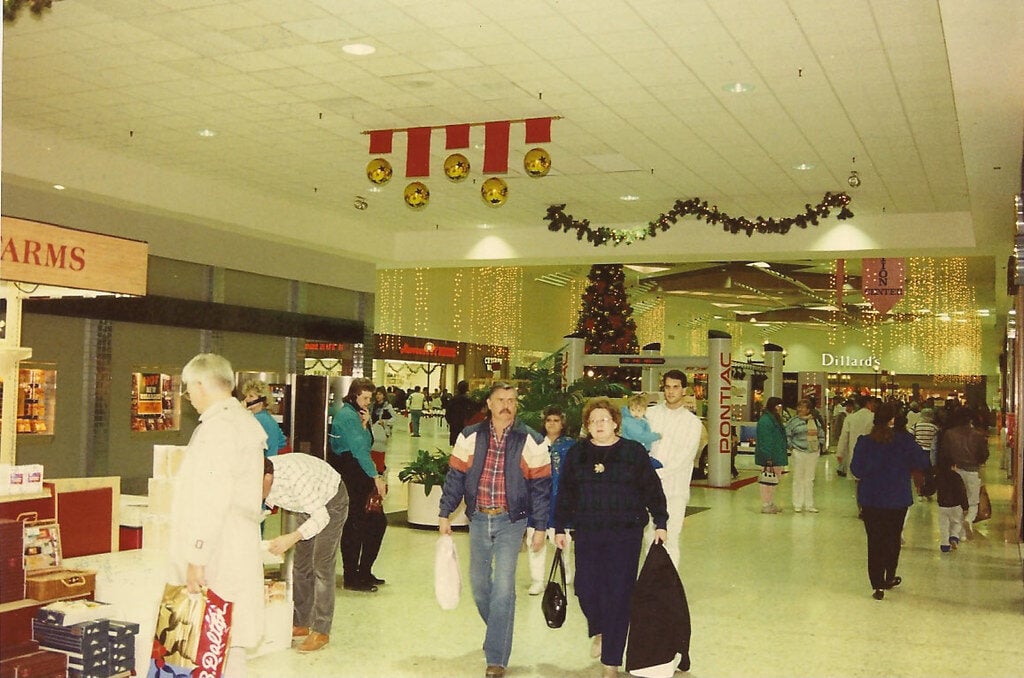
Vaults and domes went up in coated fabric, and the storefronts were pushed forward into what had been open corridors, which gave the center more space to lease.
The fountain courts ended up indoors.
Part of the old Finger Furniture space became an eight-screen cinema.
Murphy's building was opened up from inside.
Its lower floor became the Food Pavilion, with 13 food counters, and part of the floor above was cut away so the upper level looked down into it.
A glass-walled elevator ran between the two.
The center reopened in the late summer of 1987 under a new name, Fort Worth Town Center.
The Limited and Contempo Casuals came in with the new corridors, and the Rox-Z nightclub opened on part of the old Stripling's upper floor, which was split into smaller spaces.
Sears and Dillard's close the same year
The roof did not stop the drift to other malls.
General Cinema left the eight-screen cinema in January 1992, and Trans-Texas Amusements reopened it the next month as the Town Center Dollar Cinema 8.
J.C. Penney closed its store later in the 1990s.
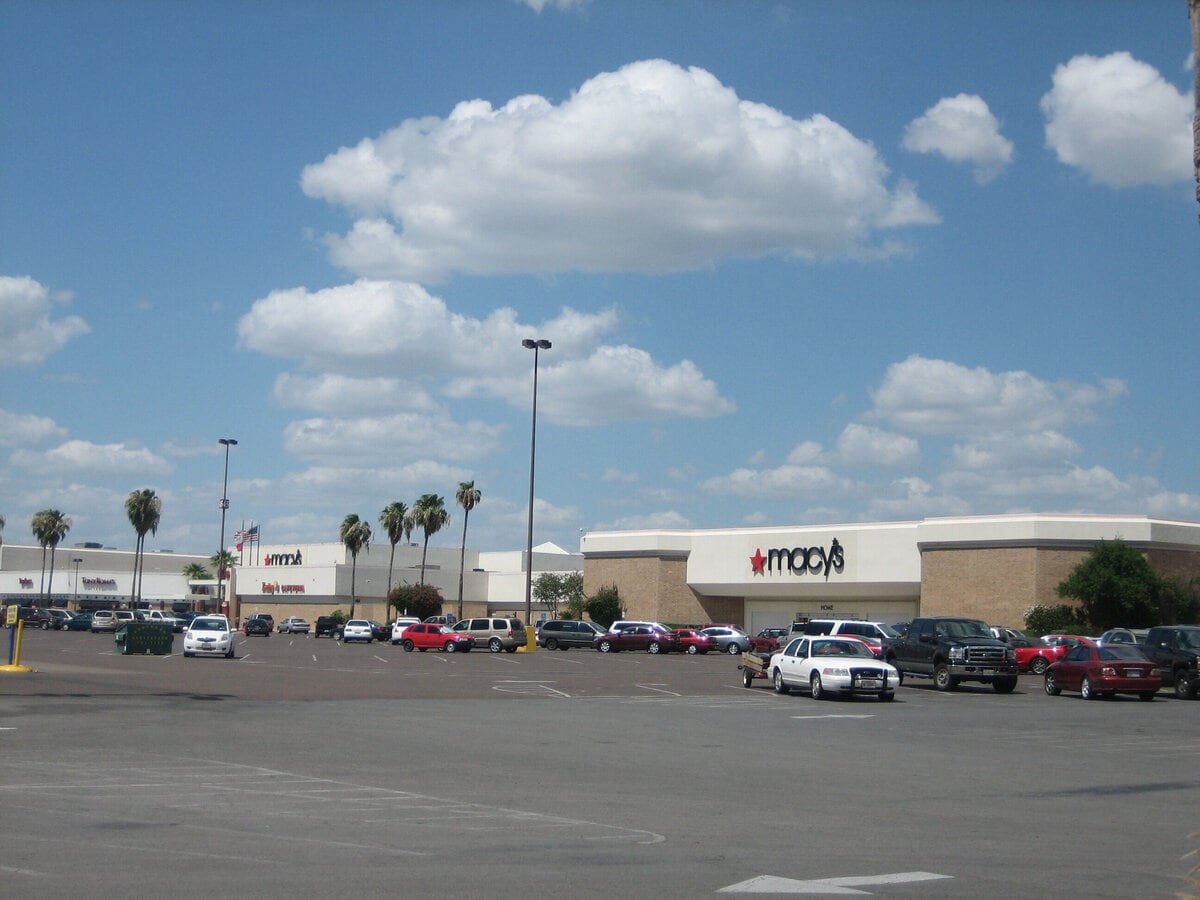
In 2002 Sears and Dillard's both closed, and the mall had no full-size department store left.
The vacant buildings were the hard part.
The three-floor Dillard's was too large for most independent merchants to lease whole, and the storefronts that remained did not fit the businesses serving the Hispanic neighborhoods around the mall.
One tenant changed course first.
On May 1, 2003, the multiplex reopened as Cinema Latino de Fort Worth, run by a Denver-based chain, with films made in Spanish, dubbed Hollywood releases, and movies carrying Spanish subtitles.
El Mercado fills the old Dillard's
In 2005 and 2006, partitions went up on all three floors of the old Dillard's.
They cut the store into stalls, some of them about ten feet square, where a merchant could open a business without leasing a full mall shop.
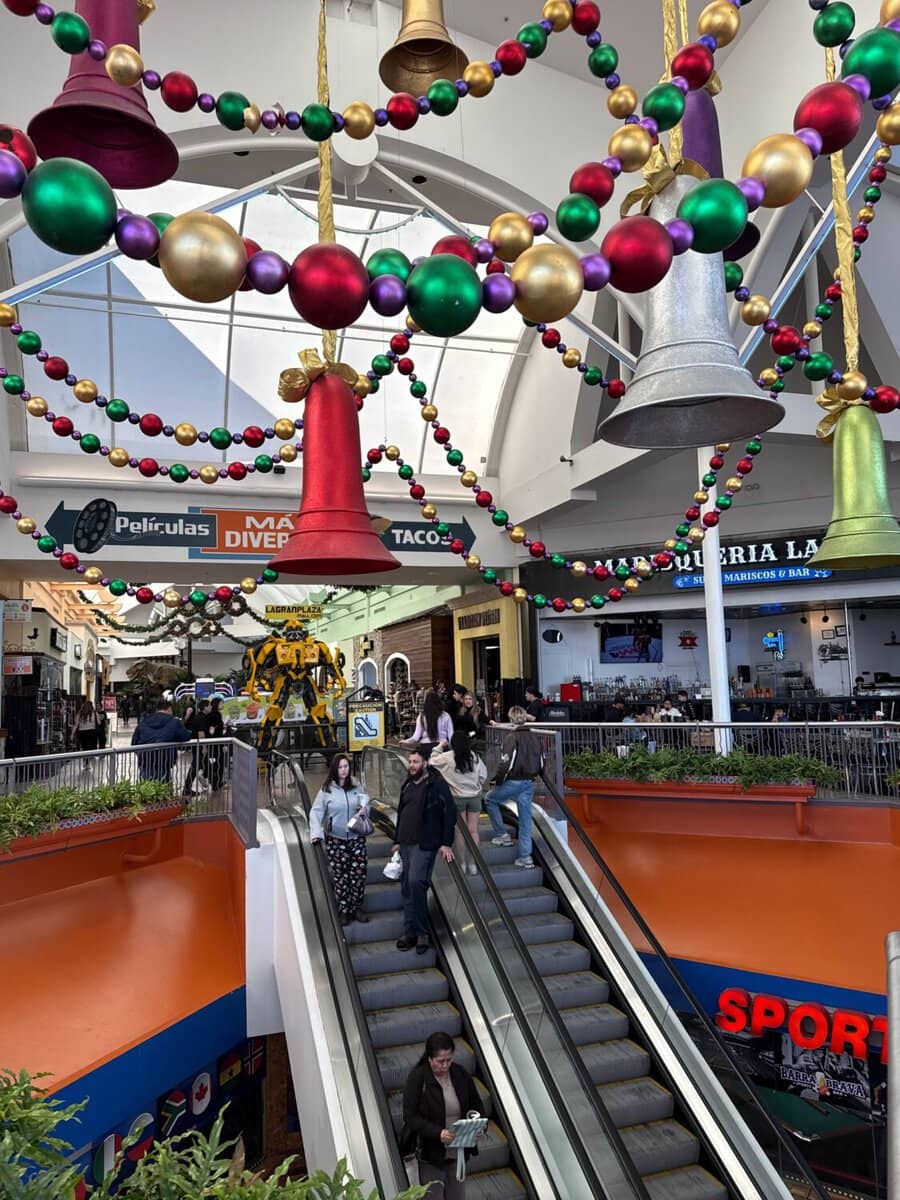
The market that took the building, El Mercado, filled roughly 124,000 square feet with quinceañera gowns, party decorations, Western boots, imported candy, religious goods, electronics, and toys.
The new owners had planned it that way.
In April 2004 a partnership tied to Boxer Property and its retail company, Grupo Zocalo, bought the mall after studying who lived in south Fort Worth and what the neighborhood businesses already sold.
It dropped the old reliance on apparel chains for a regional market aimed at Spanish-speaking shoppers, with space for families and events.
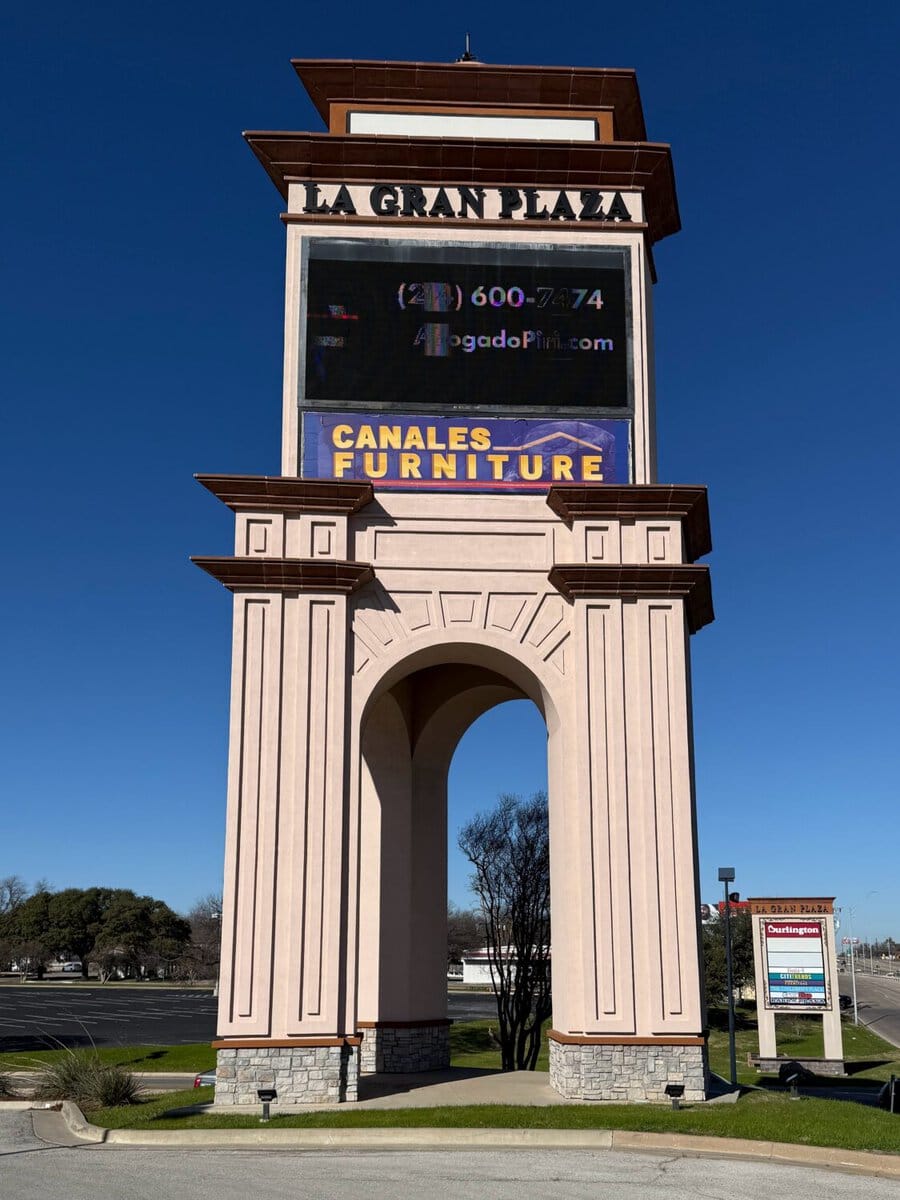
In February 2005 the mall took the name La Gran Plaza de Fort Worth, and that June the city approved an agreement requiring at least $16 million in investment in exchange for partial refunds of property and sales taxes.
The outside changed too.
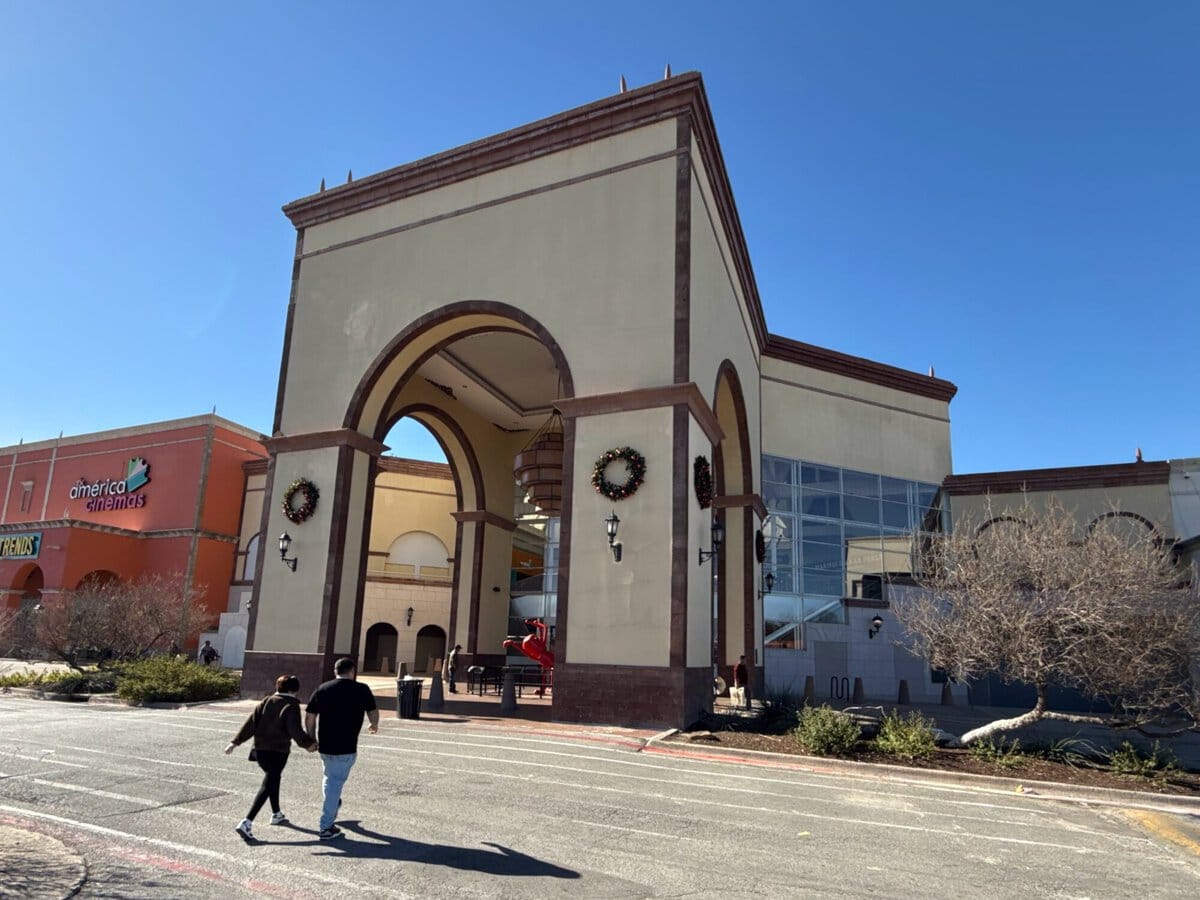
The design drew on the town plazas of northern Mexico, and the plain walls gave way to large painted surfaces, trim, arches, and towers.
Fiesta Mart took the old Winn-Dixie space and, early in 2008, moved into a new freestanding store on the west side of the property.
In the old Sears, offices filled the third floor and discount retailers split the two below.
By 2008 about 90 percent of the space was occupied.
Mariachis in the corridors, a cinema closes
Under the new owners the mall booked its own entertainment.
For the 2014 World Cup, management planned summer screenings.
Mariachi performances, karaoke, and other music programs ran inside the complex.
The mall also observed Day of the Dead and staged Las Posadas before Christmas, moving the procession from one participating business to the next.
In December 2014 the cinema closed.
Cinema Latino's operator and the mall's owner failed to reach terms on a new lease.
The operator had proposed more than $600,000 in work on the theater, including stadium seating, new carpet and finishes, and possibly a kitchen, and none of it was done.
By 2020 the food court and the dining rooms beside it held Restaurante Jalisco, Torito Pupuseria, and Mariscos El Pescador among others, and Ballet Folklorico Azteca and a children's music academy had rooms nearby.
In 2023 an IHOP arrived, and that April the mall opened Dino Plaza, with 10 moving dinosaurs.
A library and a school move into the mall
In February 2022 a public library opened inside La Gran Plaza.
La Gran Biblioteca had books in Spanish and English, a children's collection, public computers, a mural made for the room, bilingual staff, and a 3D printer, with tables that could be pushed aside when a class needed the floor.
It was the first Fort Worth public library inside a retail center.
The City Council had approved the lease in April 2021: 10 years at a base rent of $2 a year.
The library had moved out of a building of its own.
The Seminary South Branch had stood alone on Bolt Street with about 8,000 square feet, and the room at the mall had about 2,500.
The old building became the Fort Worth History Center, home to the city archives.
In August 2023 Worth Heights residents went to City Council over the lost study space and asked for a neighborhood library again.
The city's proposed 2024 budget held no money for a new branch, and that December the council approved about $8 million for improvements split between Worth Heights and Seminary.
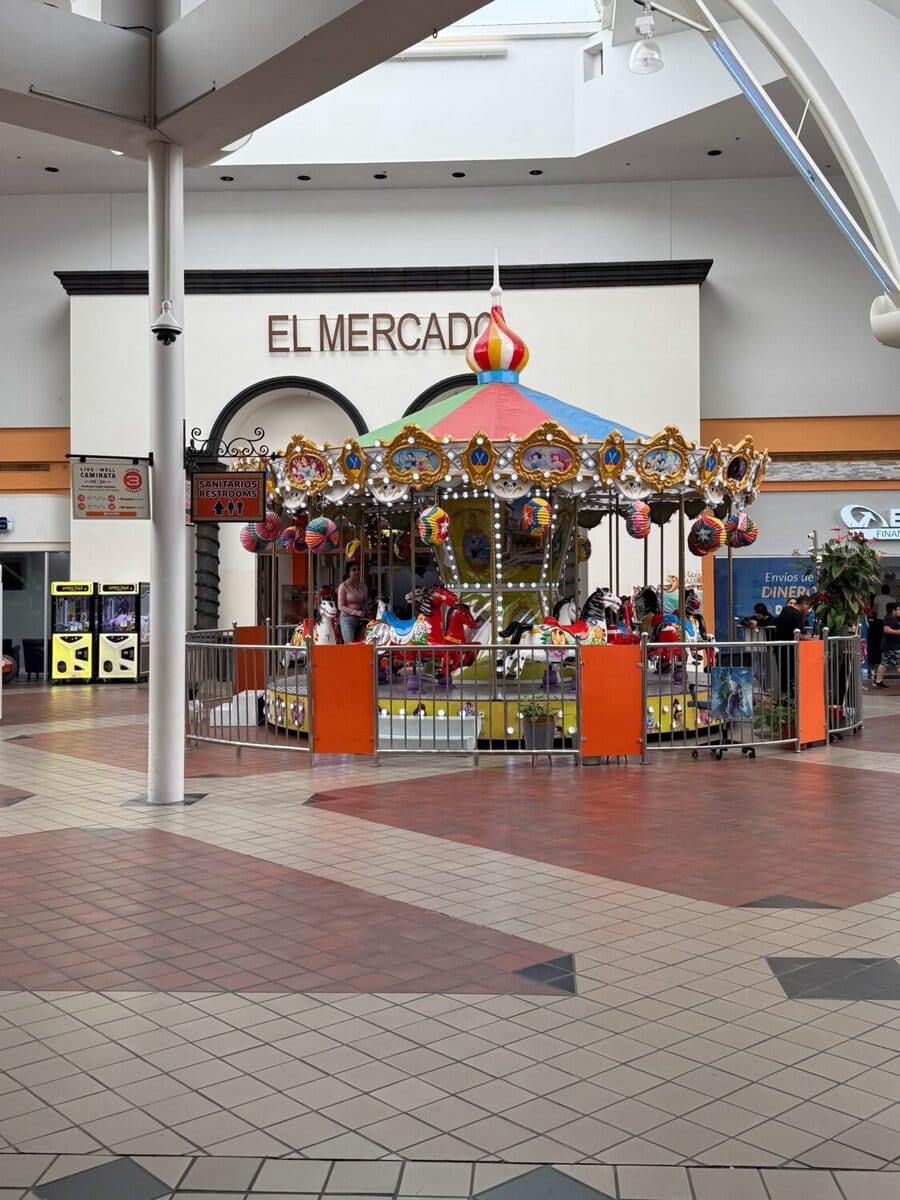
A charter school charging no tuition, the Academy of Visual and Performing Arts, started that same August with sixth and seventh graders, and by November it had classes in the mall.
La Gran Plaza makes room for classrooms
La Gran Plaza is open as a shopping center, managed and leased by Boxer Property.
Fiesta Mart is its grocery, the eight screens show films as America Cinemas with tickets sold in Spanish, and Amped Fitness runs a gym open around the clock.
In September 2026 Trinity Metro relaunched its Route 1 bus from downtown as La Linea Rosa, on pink buses painted for the Southside, and the mall stayed the southern end of the line.
The newer changes are in the mall's larger spaces. The charter school has closed.
In the summer of 2026 the owner stripped about 38,000 square feet of its former space back to a bare shell, ready for a future tenant to build out.
In June 2026 an immigration law practice from Irving leased about 6,400 square feet of offices.
In October 2026 Northbridge University filed plans to turn about 53,000 square feet into classrooms and offices, with work set to start at the end of November and finish in July 2027.
The library is set to leave.
In May 2026 voters approved bond money that includes moving the History Center to the former City Hall downtown, and in August 2026 the city confirmed that the Bolt Street branch will reopen with La Gran Biblioteca's books and furniture once the archives move, a step the city's budget places in late 2027.
For now the mall library keeps its hours, with classes in conversational English, the civics part of the citizenship test, and job searching.
In 2002 the mall lost its last two department stores.
El Mercado's stalls still fill the three floors Dillard's left, and the next big build-out under the roof is a university's classrooms.
Independent Publisher Notice
BestAttractions is an independent editorial publisher. We are not affiliated with, endorsed by, or acting on behalf of any location, business, property owner, manager, government agency, or organization described in this article. Comments posted on this page are not forwarded to, reviewed by, or acted upon by any entity mentioned in the article. For official inquiries, complaints, applications, bookings, or other requests, please contact the relevant entity directly through its official website or other verified channels.