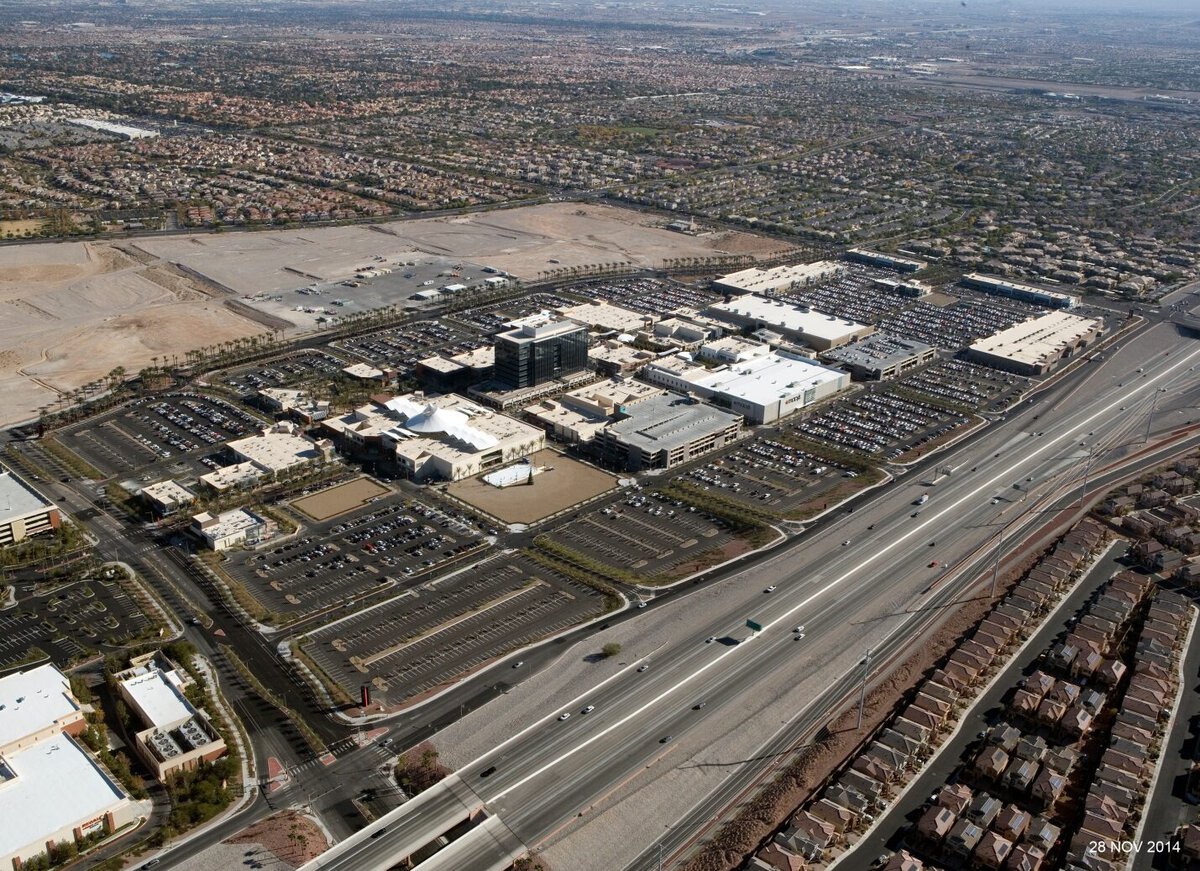
For years, drivers on the 215 Beltway passed a nine-story steel frame above an abandoned construction site. Foundations, open pipes, unfinished stores, and fences covered 106 acres next to Red Rock Resort.
The structure was supposed to become the main office tower of a large shopping center. After construction stopped in 2008, it gained a new meaning.
In a valley filled with unfinished projects, the empty frame became one of the clearest symbols of the Great Recession.
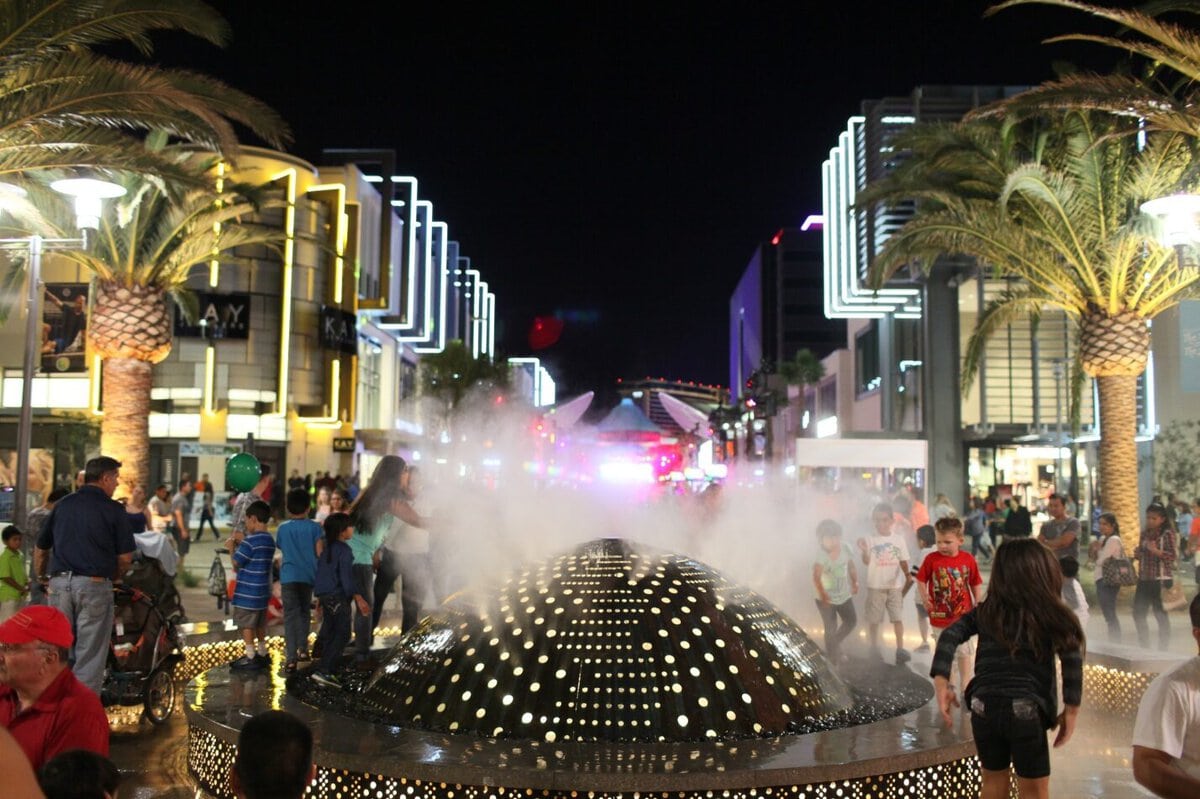
Today, Downtown Summerlin looks very different. Shops stand along attractive sidewalks. Cars move through a network of streets and park beside the curb.
Office workers use the completed tower, while families attend parades, art festivals, farmers markets, and holiday events.
The wider district includes apartments, offices, an ice arena, a baseball stadium, and a newer shopping area with a grocery store.
However, the buildings still contain parts of the project that survived the economic crisis.
A Downtown Planned Before the Mall
The name Downtown Summerlin is used for both the 106-acre shopping center and the wider district around it.
The outdoor shopping center that opened in 2014 covers about 106 acres.
The wider district covers around 400 acres between Sahara Avenue and Charleston Boulevard, near the Beltway.
It also includes Red Rock Resort, apartment buildings, offices, City National Arena, and Las Vegas Ballpark.
Plans for a commercial center in Summerlin existed long before construction began.
A 1990 master plan for the 22,500-acre community included a commercial center.
During the next ten years, planners described a future center with department stores, offices, homes, restaurants, hotels, and entertainment.
Opening dates changed several times during a period of ownership changes and continued population growth.
Changes in company ownership had a major effect on the project.
Summa Corporation became the Howard Hughes Corporation in 1994.
The Rouse Company bought it in 1996, and General Growth Properties bought Rouse in 2004.
General Growth was then one of the largest mall operators in the United States.
It developed a project called The Shops at Summerlin Centre.
Plans announced in 2006 placed a large shopping complex inside a 400-acre district with different uses.
Red Rock Resort opened nearby that same year.
It gave the future downtown a hotel, casino, restaurants, and entertainment before the shopping center was built.
General Growth began construction in 2007.
By 2008, Macy's and Dillard's had joined a planned group of major stores that had also included Nordstrom and Crate & Barrel.
The planned opening date was October 2009.
The Project That Stopped During Construction
Las Vegas entered the recession while the center was being built.
Home prices fell, loans became harder to get, consumer spending dropped, and General Growth struggled with heavy debt.
The company delayed the project in August 2008 and stopped construction on October 31.
At that time, the site was about 40 percent complete.
Workers left behind utilities, foundations, store frames, and the steel frame of the office tower.
General Growth applied for Chapter 11 bankruptcy protection in April 2009.
Contractors later asked for payment for work they had already finished.
General Growth consulted engineers and took steps to preserve structures that remained open to the desert weather.
The site was visible from the Beltway, and thousands of drivers passed the unfinished frame every day.
Its size, visibility, and long construction halt made it one of the clearest symbols of the region's economic collapse.
Large amounts of money had already been spent, work had suddenly stopped, and a promised center remained unfinished.
General Growth's bankruptcy process created a new and independent Howard Hughes Corporation in 2010.
Summerlin and the unfinished mall became part of the new company.
For about two years, Howard Hughes studied the existing construction, store agreements, financing, and design.
In September 2012, the company confirmed that Macy's would join the project and announced a planned opening in fall 2014.
Full construction restarted in 2013.
Reusing the Structure and Changing the Design
The renewed project reused large parts of the earlier construction.
Foundations, utilities, structural steel, and the office tower frame still had value, although they made engineering and planning more difficult.
As a result, the completed property still contains physical parts of the project built during the recession.
The new design also changed how the center worked.
Earlier plans included a traditional regional mall and, later, an outdoor shopping center built around one main street.
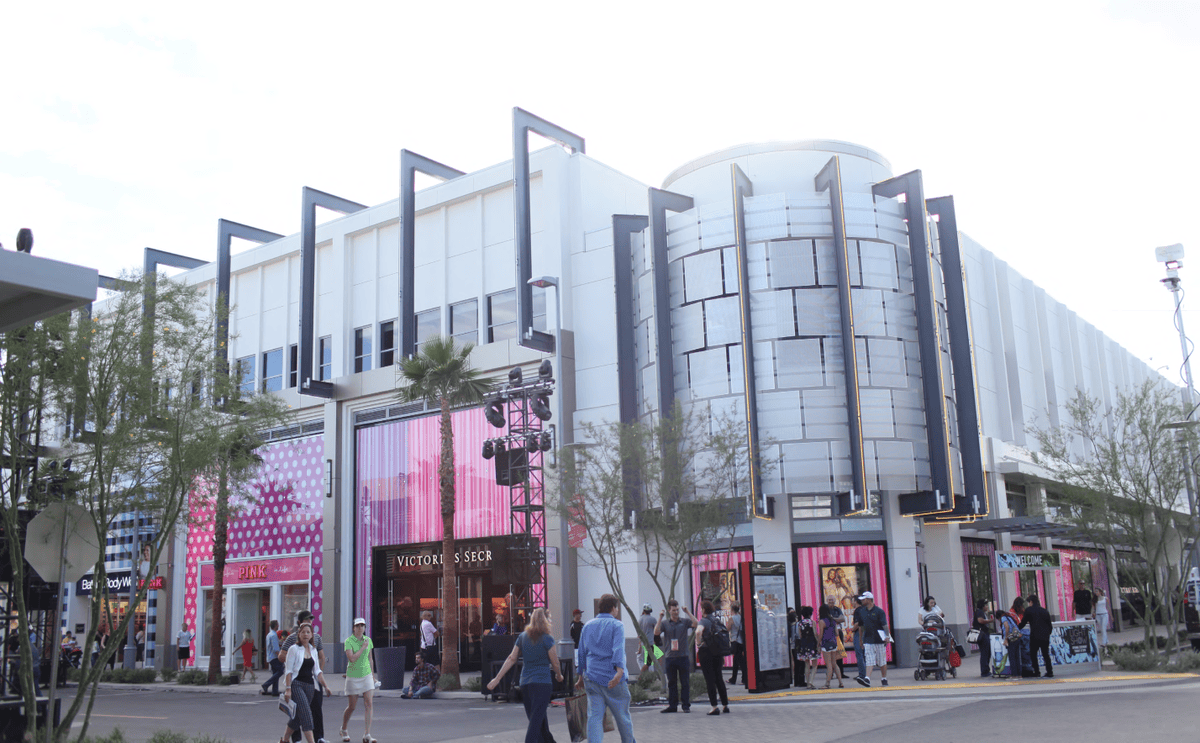
The final design uses outdoor streets and city-style blocks.
Storefronts face sidewalks, some streets have parking beside the curb, and larger parking areas and garages surround the central walking area.
One section contains large stores.
Restaurants, public spaces, shaded areas, and different building styles divide the center into smaller sections.
This design created a place where people can walk, although the development still depends heavily on cars.
After arriving, visitors can walk between shops, restaurants, offices, and event spaces.
However, the Beltway location, large parking areas, and suburban road system make the development heavily car-oriented.
The word "downtown" describes a planning goal and a commercial image.
Downtown Summerlin does not have a city hall or a historic network of public streets.
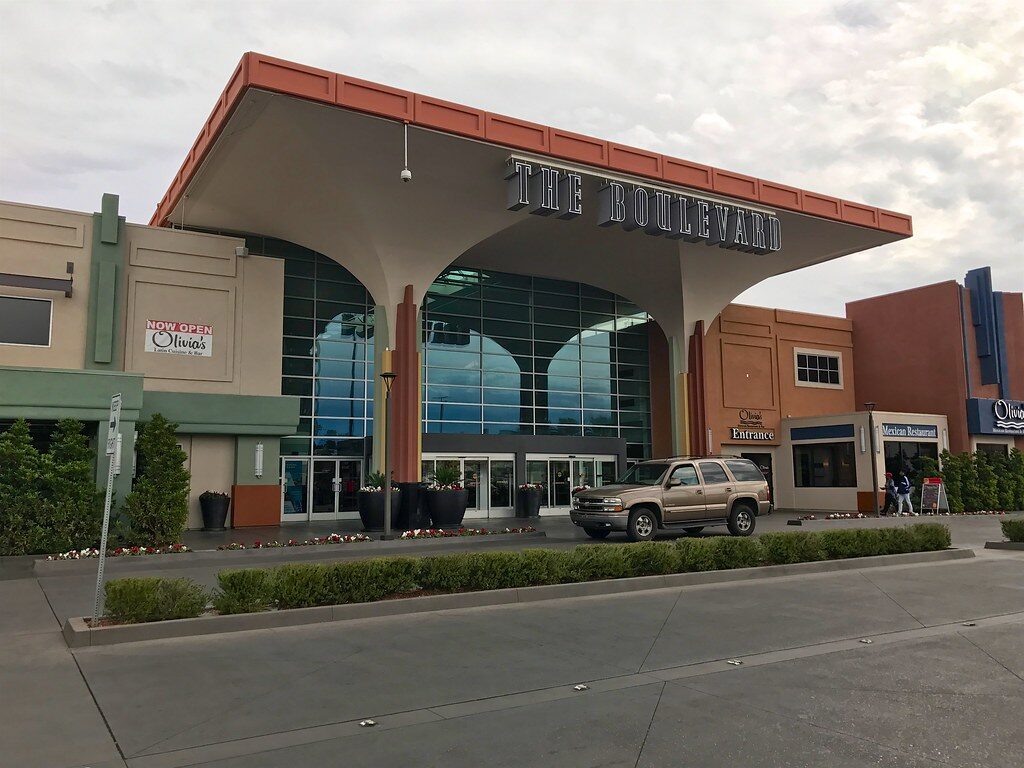
In May 2014, Howard Hughes announced the Downtown Summerlin name and confirmed an opening date of October 9.
The new name connected the shopping center with the larger 400-acre plan.
It also replaced the narrower name, The Shops at Summerlin Centre.
Opening During the Economic Recovery
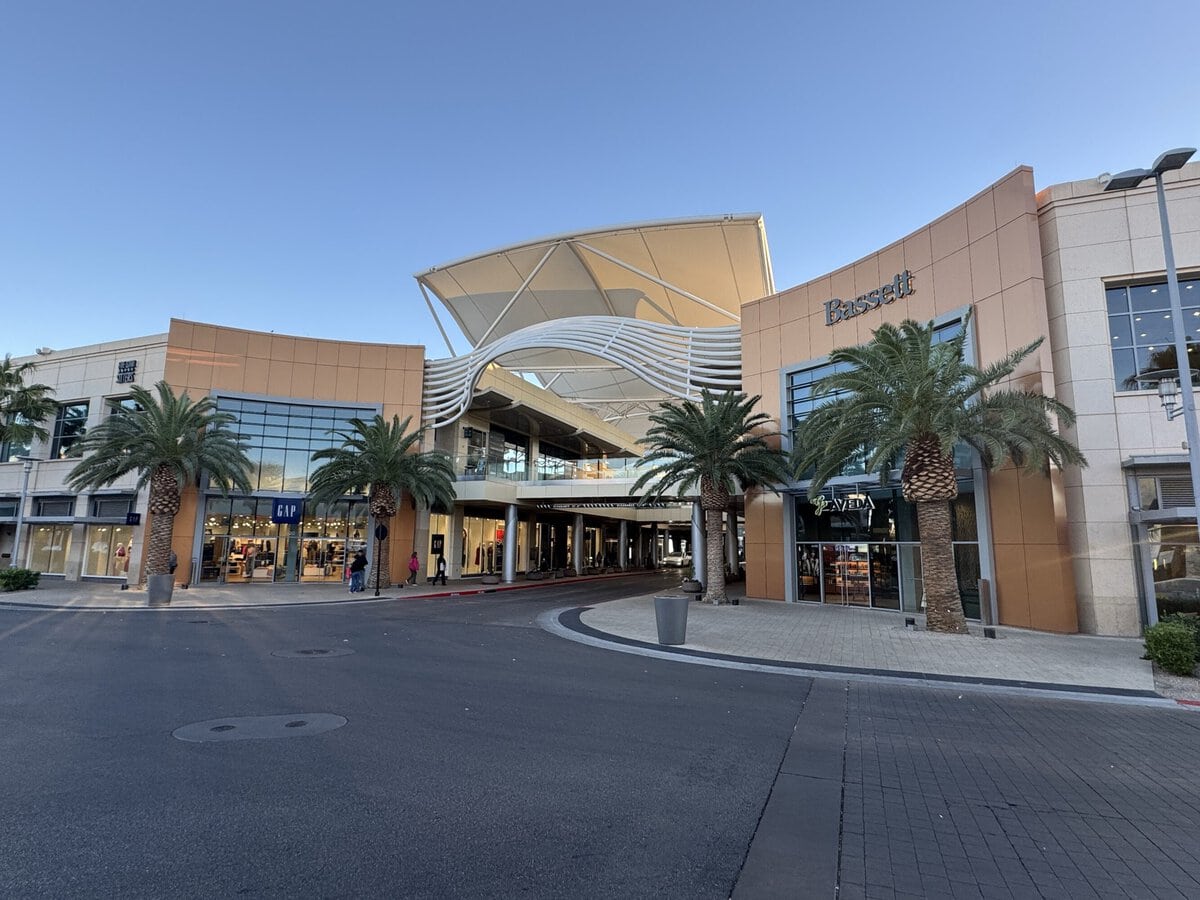
Downtown Summerlin opened at 10 a.m. on October 9, 2014.
Dillard's opened on October 4, and the five-screen Regal cinema began charity screenings shortly before the official opening.
About 85 of the 125 planned shops and restaurants were ready on the first day.
Other businesses opened during the following weeks and months.
Early tenants included Macy's, Dillard's, Nordstrom Rack, Apple, Lululemon, Old Navy, Sephora, and many restaurants and service businesses.
The developer reported more than 250,000 visits during the first four days of opening events.
Crowds filled the streets and parking areas.
Food trucks served visitors because some restaurant spaces were still being built.
News reports estimated that about 2,000 people would work there permanently.
The opening mattered for reasons beyond the number of stores.
A project that had stopped during the recession resumed after a six-year interruption and opened as a major new investment in Southern Nevada.
The steel structure that had once represented a stopped economy now stood behind the glass exterior of a nearly completed office tower.
Published figures for the property's size are different because they measure different areas.
Reports from the opening used 1.6 million square feet for shopping, dining, entertainment, and office space.
Later reports often used 1.4 million square feet.
At the end of 2025, Howard Hughes reported 801,010 square feet available for rent in the main Downtown Summerlin retail property.
That figure did not include 381,767 square feet of anchor space or 39,700 square feet of offices above the retail areas.
From Shopping Center to Social District
The 2014 opening was only the first major stage.
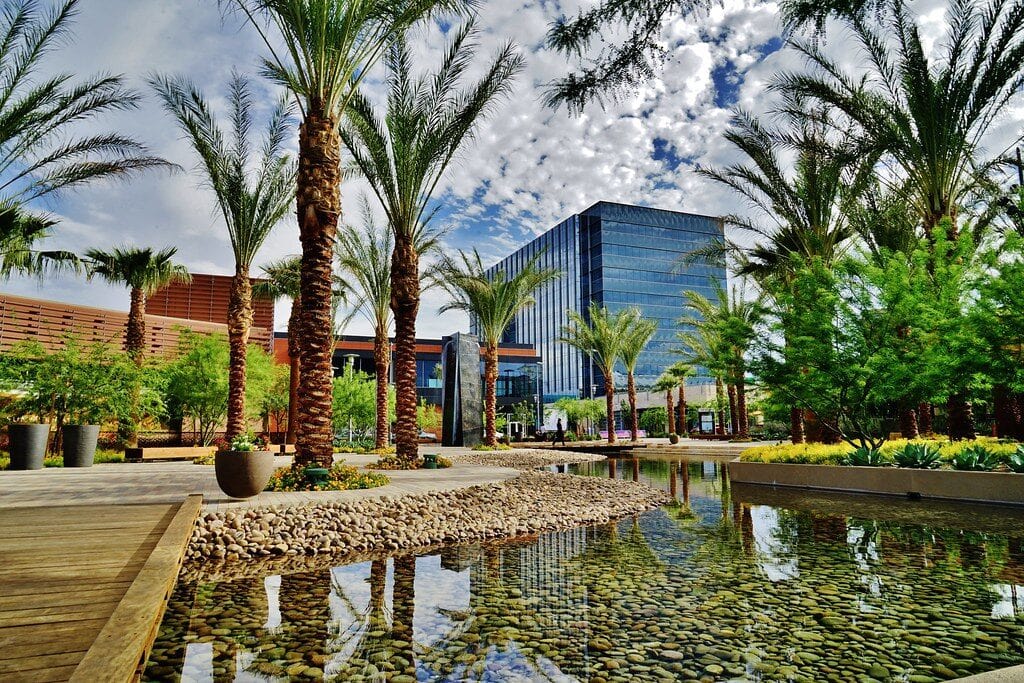
One Summerlin began receiving office tenants in 2015.
The Constellation apartment complex followed.
City National Arena opened in 2017, Two Summerlin in 2018, and Las Vegas Ballpark in 2019.
More apartments and the 1700 Pavilion office tower brought additional workers and residents to the area.
In May 2025, a 67,147-square-foot shopping center opened at Sahara Avenue and Town Center Drive.
Its main tenant was a relocated Whole Foods Market.
Howard Hughes Holdings continued to operate the shopping center after a 2024 company separation moved the Aviators baseball team and Las Vegas Ballpark to Seaport Entertainment Group.
Regular events slowly gave the streets a purpose beyond helping people move between stores.
The Summerlin Festival of Arts moved there in 2015.
Farmers markets, holiday parades, outdoor concerts, Lunar New Year celebrations, and seasonal displays attracted visitors to privately controlled spaces owned and managed by a publicly traded company.
Howard Hughes reported more than 20 million annual visits in 2024.
These events gave the privately owned shopping center a recurring place in local routines, even as its public life continued to depend on commercial leasing, programmed events, and corporate management.
Stores and restaurants continued to open, close, move, and renovate around the center's tenth anniversary.
The main retail property was 94 percent occupied and 100 percent leased on December 31, 2025.
This means that some space was leased but not yet occupied.
Macy's and Dillard's remained major stores.
The Whole Foods development and newer offices and apartments also increased activity beyond the original shopping blocks.
What the District Carries Forward
Downtown Summerlin has a short history compared with traditional city centers, but its buildings connect two important periods in Las Vegas history.
The current property contains foundations, utilities, and steel from the project that stopped during the financial crisis.
Reusing them connects a mall planned before the recession with an outdoor district completed after it.
The result combines real public activity with a commercial system.
People work, shop, eat, attend games, watch parades, and meet at events there.
Howard Hughes controls the shopping center and much of the surrounding development, and continues to change the mix of stores, offices, homes, and entertainment spaces.
The internal streets make the area look like a downtown.
However, the large parking areas and freeway access show its suburban design.
The completed One Summerlin tower remains the clearest physical reminder of the past.
Its steel frame once stood open to the sky beside an abandoned construction site.
Today, glass offices cover the same structure, surrounded by busy streets and newer buildings.
Downtown Summerlin's local meaning comes from this visible change.
A major promise was interrupted, restarted, redesigned, and made part of daily life.
At the same time, the structures still preserve evidence of the economic crisis that once stopped the project.
Independent Publisher Notice
BestAttractions is an independent editorial publisher. We are not affiliated with, endorsed by, or acting on behalf of any location, business, property owner, manager, government agency, or organization described in this article. Comments posted on this page are not forwarded to, reviewed by, or acted upon by any entity mentioned in the article. For official inquiries, complaints, applications, bookings, or other requests, please contact the relevant entity directly through its official website or other verified channels.