
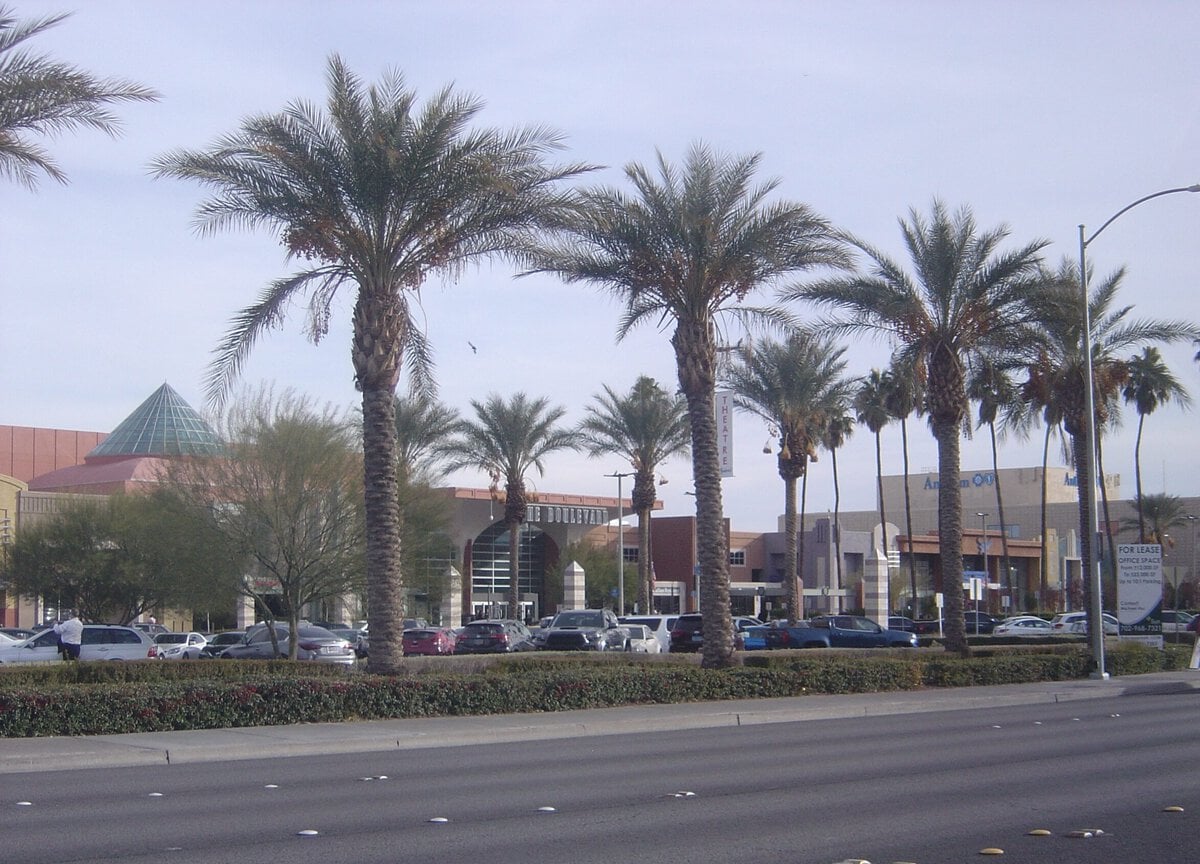
The Boulevard Mall is a large enclosed shopping center on Maryland Parkway in Las Vegas, about two miles east of the Strip. It opened in 1968 as Nevada's first climate-controlled indoor mall and, for a period, was the largest in the city.
Today, the mall combines several distinct functions. It is part traditional mall with national chain stores, part family entertainment center, part community marketplace, and even part school campus.
A free public middle school opened inside the old Macy's space in 2025. A marketplace with over 190 small businesses was started in 2020. The mall bought a failed aquarium for $42,500 and reopened it with a new name. Beneath the property, a time capsule buried in 1966 is sealed until 2066.
How the property got from Nevada's first indoor, climate-controlled mall to this combination of uses is a longer story than the current tenant list suggests.
The Boulevard Mall Opens as Nevada's First Large Climate-Controlled Mall
On March 6, 1968, at 10 a.m., Governor Paul Laxalt and Nevada state senator Floyd Lamb stood at the entrance of a new kind of building in Las Vegas.
Inside were 26 stores and 750,000 square feet of retail space, organized around a European village design theme.
The enclosed, climate-controlled interior was meant to feel like a pedestrian plaza rather than a warehouse.
Outside was the Las Vegas Valley, already growing hard toward the east.
The mall was the first large enclosed, indoor shopping center in Nevada. In a city where summer heat regularly exceeded 100 degrees, that fact defined its appeal from the start.
The interior let people shop, eat, and linger without stepping outside, and it separated the experience from the surrounding parking at a scale that had little local precedent.
For the east side of Las Vegas in 1968, it was the dominant commercial landmark from the day it opened.
Building The Boulevard: Sears, a Time Capsule, and Five Years of Work
The project had been in motion nearly five years before that opening. In September 1963, a proposal called Parkway Mall was announced for a site near Maryland Parkway and Desert Inn Road.
Las Vegas developers Harry Lahr, Irwin Molasky, and Merv Adelson were involved in the original concept, which took shape as Las Vegas was shifting from smaller downtown commercial districts toward large suburban shopping centers with department-store anchors.
By January 1965, Haas and Haynie Investment Corporation had taken over active development, and the total project cost came to $12.5 million.
Sears broke ground first, on June 30, 1964, and opened on November 17, 1965, more than two years before the enclosed mall.
The Broadway followed on October 17, 1966. On April 29, 1966, during the construction of The Broadway, a time capsule was buried at the store site.
Governor Grant Sawyer and future governor Paul Laxalt attended the ceremony.
The capsule held a state flag, newspaper copies, and television news material, sealed with instructions to open it in 2066.
JCPenney construction began in June 1966 after a long design period, and when the enclosed mall opened in March 1968, it had four department-store anchors: Sears, The Broadway, JCPenney, and Ronzone's.
F.W. Woolworth was a major early tenant alongside them.
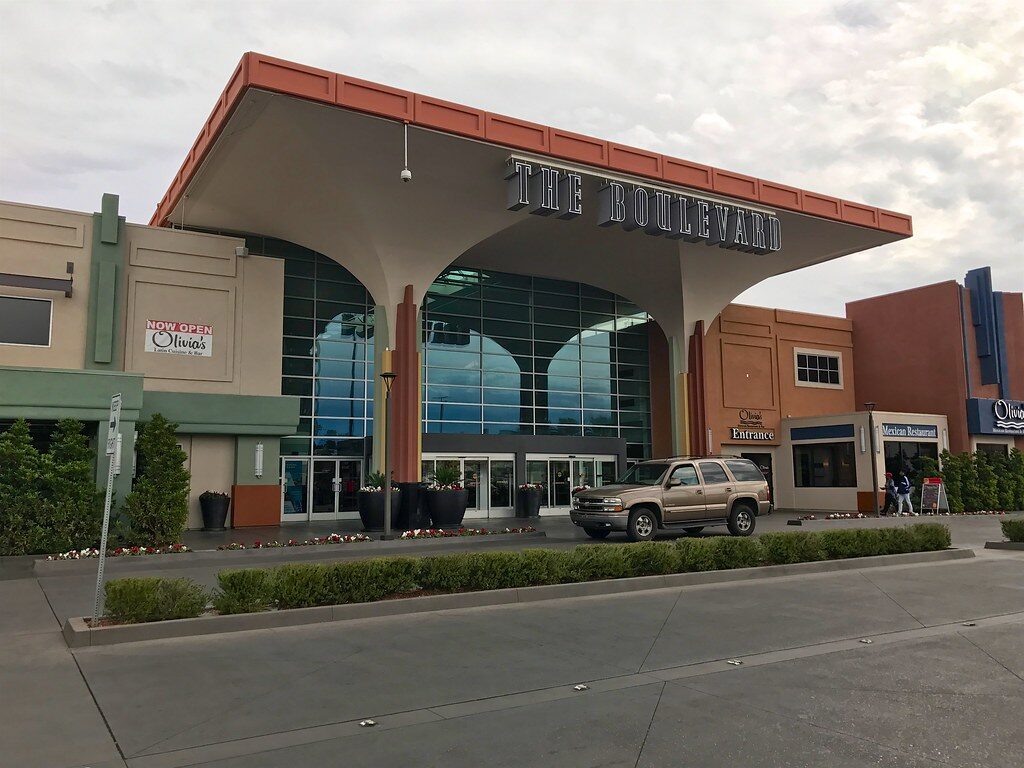
The Department-Store Era and Maryland Parkway's Rise
Residents from Paradise Palms, one of the valley's most prominent mid-century residential communities, came north along Maryland Parkway to shop.
UNLV students, Sunrise Hospital workers, and Convention Center visitors all found the location convenient.
Maryland Parkway was developing into the main commercial corridor east of the Strip, and the mall was its leading anchor.
The property's identity was primarily local and regional, not tourist.
Ronzone's became Diamond's in the early 1970s. Marshalls opened in a separate building south of the main mall in 1983.
A remodel in 1984 updated the interior. Dillard's acquired Diamond's and converted The Boulevard Mall location to the Dillard's name in 1986.
The Broadway became Macy's in 1996. Through all those name changes and chain acquisitions, the mall held its position as the leading regional shopping destination on the east side of the valley.
The 1990 to 1992 Expansion: Food Court, Parking Decks, Peak Scale
Between October 1990 and August 1992, the mall underwent its largest physical transformation.
The project cost $60 million and added 150,000 square feet of retail space, a 24,000-square-foot food court, three multi-tiered parking decks, and a 140-camera surveillance system, supplemented by horseback and bicycle patrols.
Dillard's opened a new two-level store of 208,000 square feet in 1991 as part of the same period.
The property still had multiple department-store anchors, a substantial enclosed concourse, and a wide variety of national retailers.
When the renovation was completed, The Boulevard Mall was the largest shopping center in Las Vegas, a position it held until Fashion Show Mall finished its own major expansion in the early 2000s.
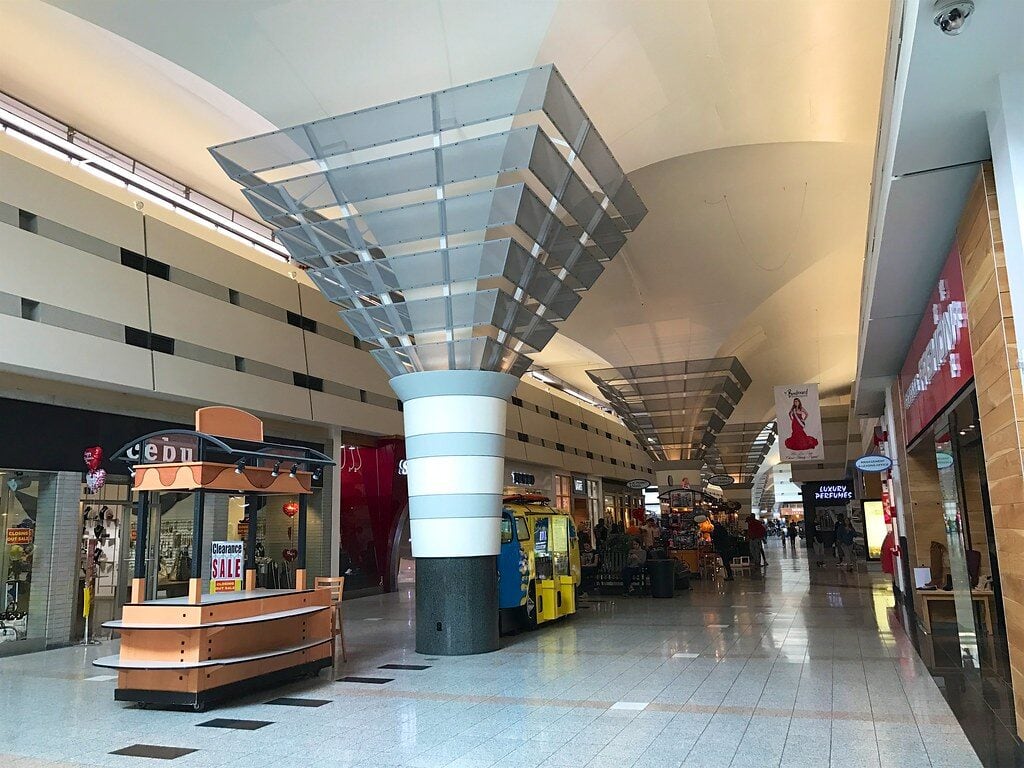
The Years of Anchor Loss and Mounting Pressure
Woolworth closed in 1997, removing the variety-store tenant that had been part of the original lineup since 1968.
In August 2004, a teenager was attacked in the food court by a group of attackers using metal chairs and died from his injuries.
The event brought public attention to security conditions at the property.
Dillard's closed its The Boulevard store in late October 2008, near the start of the financial crisis, leaving the mall's largest anchor space vacant.
In May 2018, the mall was evacuated after police received reports of a person carrying a rifle inside; the weapon was later found to be fake.
In December 2018, four people were injured during a late-night incident connected with Rex Center. Macy's, JCPenney, and Sears all exited between 2017 and 2019.
Sears, the mall's first anchor, closed in 2019, 55 years after its groundbreaking on the same site.
Debt, Foreclosure, and the $54.5 Million Sale
By 2012, the mall carried $168 million in debt, while its market value had fallen far below that figure.
At the end of that year, it was 89 percent leased but only 73 percent occupied, a gap that separated signed leases from active use of space.
That occupancy rate ranked among the lowest in the Rouse Properties portfolio.
In June 2013, Rouse surrendered the property through a deed in lieu of foreclosure to Midland Loan Services, and the mall was placed on the market.
Sansone Companies and Boulevard Ventures purchased the mall on November 21, 2013, for $54.5 million.
The sale covered 56 of the property's 75 acres, including the enclosed mall and parking areas, while some anchor pads remained separately owned.
In March 2014, Clark County approved a major improvement program estimated at $23 million to $25 million: drought-tolerant landscaping, exterior repairs, food court upgrades, Wi-Fi installation, window openings cut into the former Dillard's building to allow office use, and changes to entries and driveway circulation.
Reinvention: Goodwill, Go-Karts, and a 60,000-Square-Foot Pizza Venue
In 2015, Goodwill opened a 28,000-square-foot store in part of the former Dillard's space, placing a thrift-based nonprofit retailer inside what had been a full-service department store.
John's Incredible Pizza opened a 60,000-square-foot family entertainment and restaurant venue in the same building the same year.
99 Ranch Market opened in the former Circuit City space of 33,000 square feet.
SeaQuest opened an interactive aquarium of 31,000 square feet around the turn of 2017. TTEC opened a call center in 2017.
Rex Center added go-karts, mini-golf, laser tag, and climbing walls the same year. Galaxy Theatres opened a luxury-format cinema in April 2019 with a Sony Digital Cinema premium large-format screen.
El Mercado launched in late 2020 as a marketplace for small vendors and local businesses, reaching more than 190 units by 2024.
Education, Community Identity, and a Filipino Town Designation
UEI College occupies part of the former Sears area and provides career training in medical and dental assisting, truck driving, electrical work, automotive technology, and welding.
In December 2024, SeaQuest filed for Chapter 11 bankruptcy.
The mall purchased the Las Vegas operation's assets and animals for $42,500, waived more than $700,000 in unpaid obligations, kept the employees, and reopened the attraction as One World Interactive Aquarium in March 2025.
WYLEES opened on August 4, 2025, in the former Macy's space as a public charter middle school serving grades 6 through 8.
It occupies 46,000 square feet, now housing classrooms, a cafeteria, and collaborative-learning areas.
On October 9, 2025, Clark County held the Filipino Town cultural designation sign unveiling at the mall's main entrance, recognizing the Maryland Parkway corridor between Desert Inn Road and Flamingo Road.
The Filipino American Museum at the mall held a preview that day with art, cultural items, and historical pieces.
What Remains, What Is Gone, and Why People Still Come
By 2024, the mall's vacancy rate was 5 percent.
The property that stood 73 percent occupied in 2012 now holds a tuition-free public middle school, the Filipino American Museum, One World Interactive Aquarium, and El Mercado with more than 190 vendor units.
Galaxy Theatres, the Infinity Museum, and the Jupiter Express Railroad fill the entertainment side.
UEI College, a barber's school, and an Armed Forces Career Center occupy space alongside the standard mall tenants that still serve a daily customer base: Bath & Body Works, Victoria's Secret, Foot Locker, Hot Topic, Applebee's, IHOP, and Primal Steakhouse.
The original department stores are all gone.
What remains is the building itself: enclosed, climate-controlled, centrally located on Maryland Parkway, and large enough to accommodate uses no one planned for when it opened.
The time capsule buried at The Broadway site in 1966 is still somewhere under the mall's transformed footprint, sealed until 2066.
Independent Publisher Notice
BestAttractions is an independent editorial publisher. We are not affiliated with, endorsed by, or acting on behalf of any location, business, property owner, manager, government agency, or organization described in this article. Comments posted on this page are not forwarded to, reviewed by, or acted upon by any entity mentioned in the article. For official inquiries, complaints, applications, bookings, or other requests, please contact the relevant entity directly through its official website or other verified channels.