
How Ocean County Mall Turned Rural Toms River into a Retail Hub
In the 1970s, Toms River was in a strange spot between being mostly woods and becoming a suburb, with more people moving in than there were places to shop.
People who wanted to go to a mall had to drive to Eatontown or Egg Harbor Township, where Monmouth Mall and Shore Mall were already popular.
Local builders saw all the cars and money leaving Ocean County and started to think about building a big indoor mall so people would stay and shop nearby.
Ocean County Mall was set up as a joint venture between the Edward J. DeBartolo Corporation and Corporate Property Investors of New York, companies that knew how to turn empty land into air-conditioned ritual.
The first plan put the mall at Route 37 and the Garden State Parkway.
During planning, the site shifted to Hooper Avenue and Bay Avenue, where it still sits, surrounded now by exactly the kind of development it helped attract.
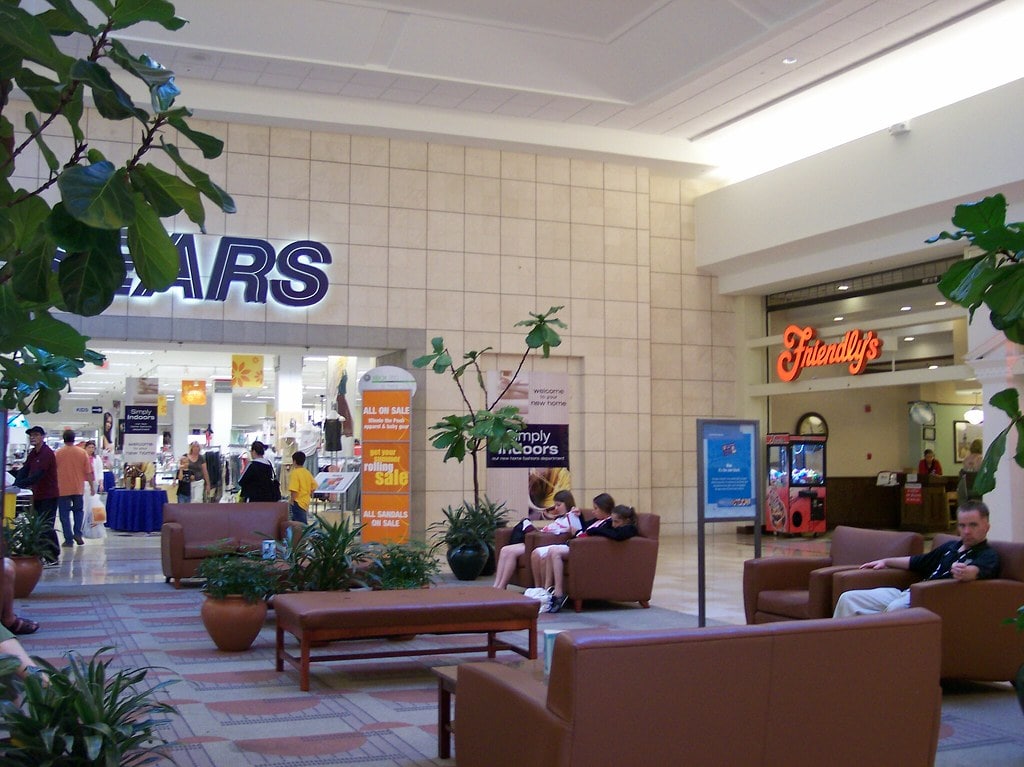
Sears opened first, on July 19, 1976. The mall itself followed on July 20.
It was functional, not finished: 55 of 92 planned stores were open, and only Sears and JCPenney were trading. The third anchor, Bamberger's, did not open until March 10, 1977.
Still, with 791,000 square feet of leasable space, the mall immediately ranked as a super-regional center. What Ocean County lacked in urban history, it now made up for in parking and fluorescent light.
Downtown Fades and Anchors Change Names
When Ocean County Mall opened, things in Toms River changed fast.
There was charm downtown; still, against the mall, it amounted to reduced air-conditioned stores, compressed parking options, and a movie house smaller, older.
The mall became the main shopping spot in town and, over time, the center of the Route 37 and Hooper Avenue area.
As that area was filled with shopping plazas and extra stores, Toms River became one of the biggest towns in New Jersey, and the mall was right at the heart of its economy.
When the mall first opened, it had the usual stores for that time.
Sears sold things like fridges and tools, JCPenney had clothes and furniture, Bamberger's gave shoppers the normal big store experience, and General Cinema was where you could see a movie or go on a date.
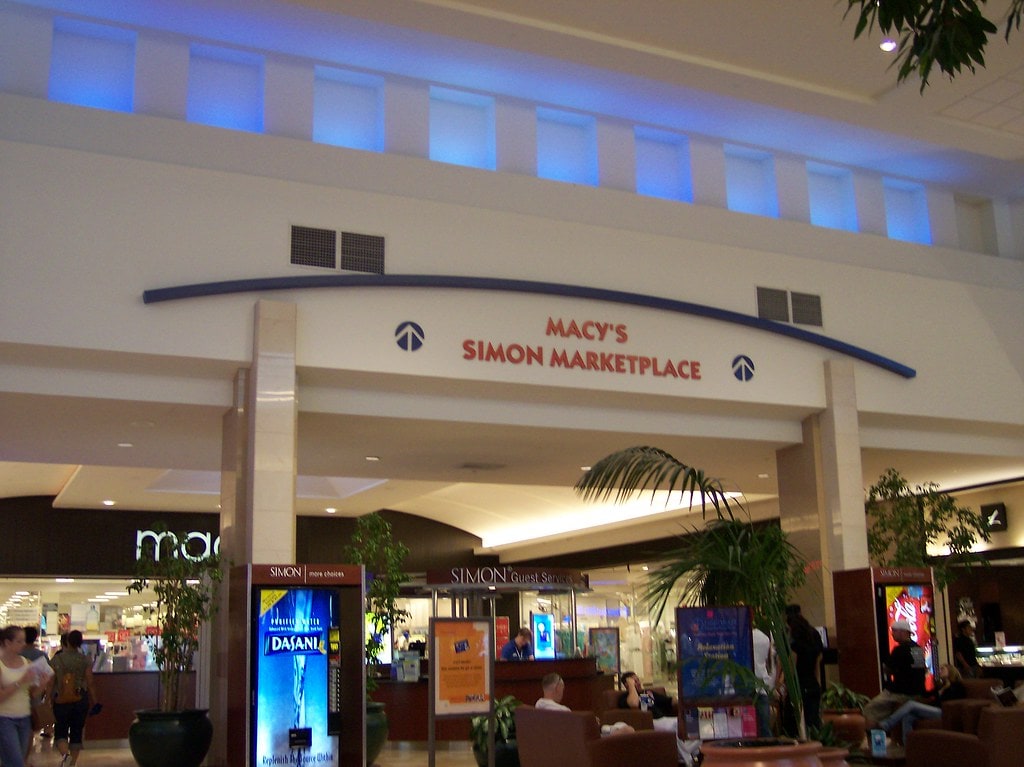
In 1986, as part of a sweeping chain-wide rebranding, the mall's Bamberger's surrendered its old sign and was rechristened Macy's.
Inside, for some time, little seemed altered, except that the sign, bags, and displays were now printed with the Macy's name everywhere.
In 1988, the mall got larger with a new area and a fourth big store, Stern's.
They also added a food court, with plastic trays, bright signs, and a spot for teenagers to hang out and grab a bite. In the late 1980s and 1990s, the mall was very popular.
It attracted people from nearby towns, visitors from the shore, and anyone who wanted to shop in air-сonditioning space.
Meanwhile, things were already starting to change. More stores opened, and the big store names that once seemed like they would last forever started to look less certain.
Renovation, Mall Walkers, and Quiet Success
By the early 2000s, the country hit a brief recession, and online shopping stopped being a novelty and started being a factor.
The mall still worked, but it was aging. Simon Property Group, which had taken over DeBartolo's holdings and the mall around 1998, moved to update the place rather than simply hope for the best.
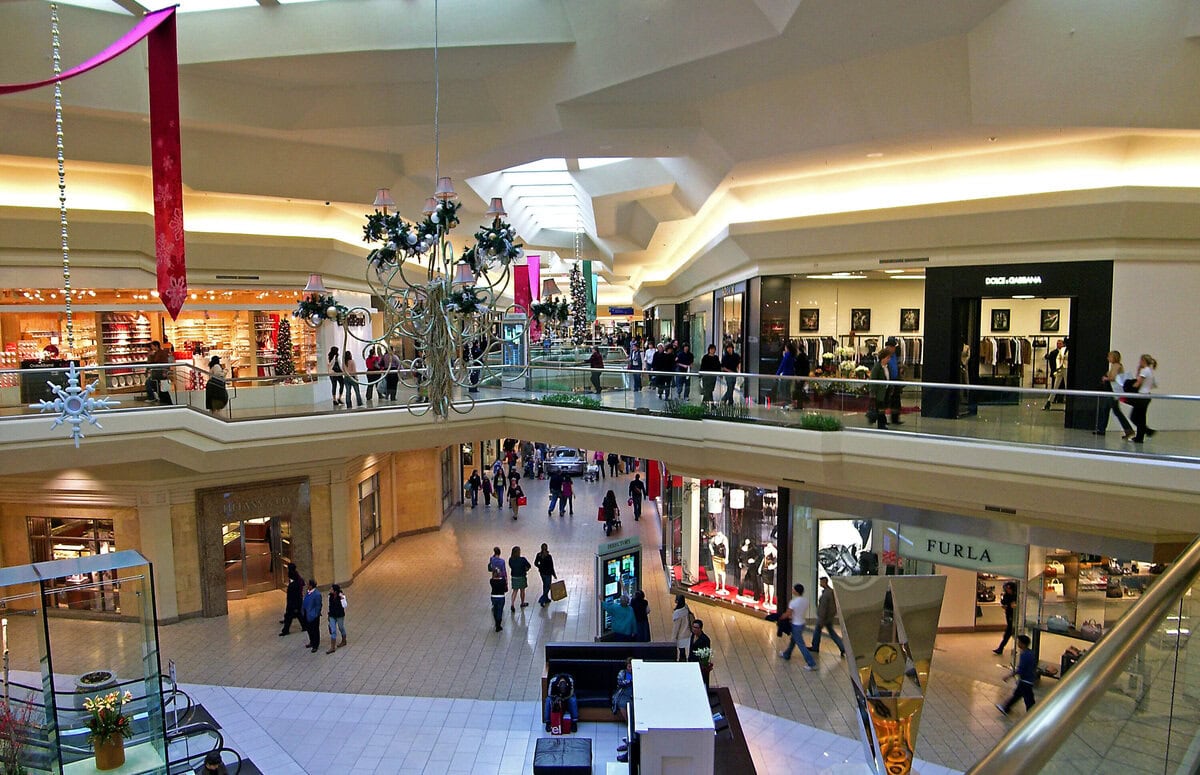
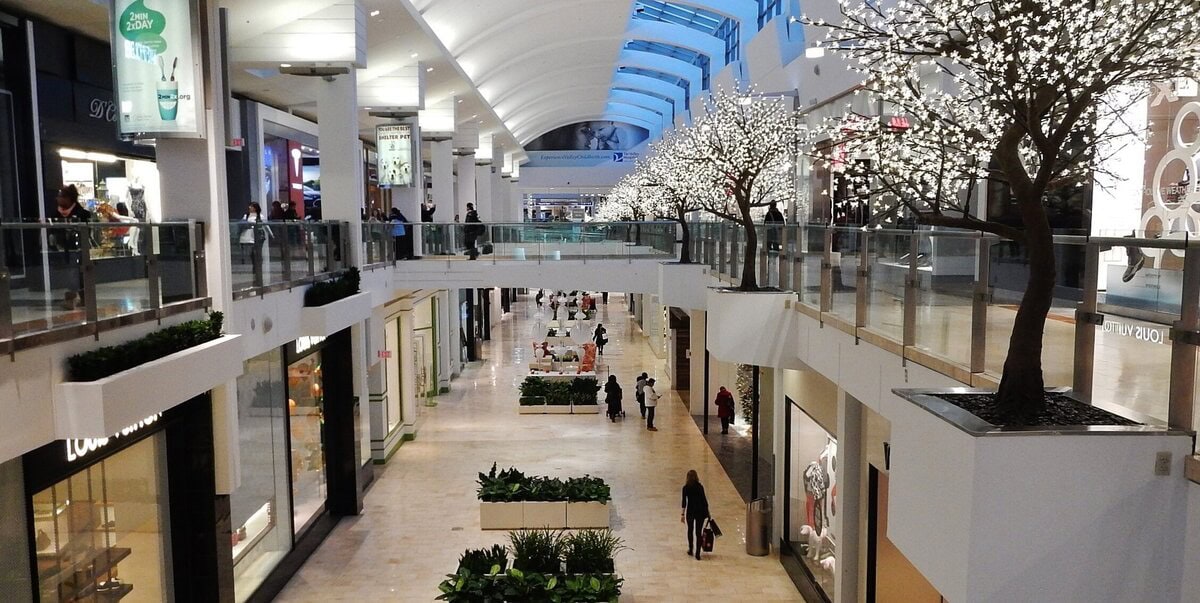
In 2003, Ocean County Mall went through a full renovation. New signage went up, the flooring was replaced, and the lighting was upgraded throughout the concourses.
Extra seating areas appeared, acknowledging that waiting and resting had become part of the visit.
Out in the lots, lighting was improved, making nighttime shopping less of a dim, slightly uneasy walk across acres of asphalt.
One of the most unusual changes came from the Deborah Heart and Lung Center. The medical center donated seating and partnered with the mall to encourage mall walking as a form of exercise.
Discolored tiles with engraved distance markers were set into the floor around the mall's perimeter so walkers could track their mileage.
It was a small intervention, but it effectively turned the mall into a community track that happened to have department stores on the inside.
After that renovation, the mall settled into a long period of stability. From 2003 to roughly 2017, it operated as a solid, unremarkable success story.
No big reinventions, no dramatic collapses. Just steady business as the county's only enclosed mall, bringing in locals and shore visitors season after season.
Sears Closes, Lifestyle Center Rises
The next major break in the story came from an old pillar. On January 4, 2018, Sears announced another round of national closures.
The Ocean County Mall location, an original 1976 anchor, was on the list. The store closed on April 8, 2018, leaving behind a 104,000-square-foot box and a very obvious hole in the mall's profile.
Simon Property Group did not go hunting for another department store. Instead, it proposed a different answer.
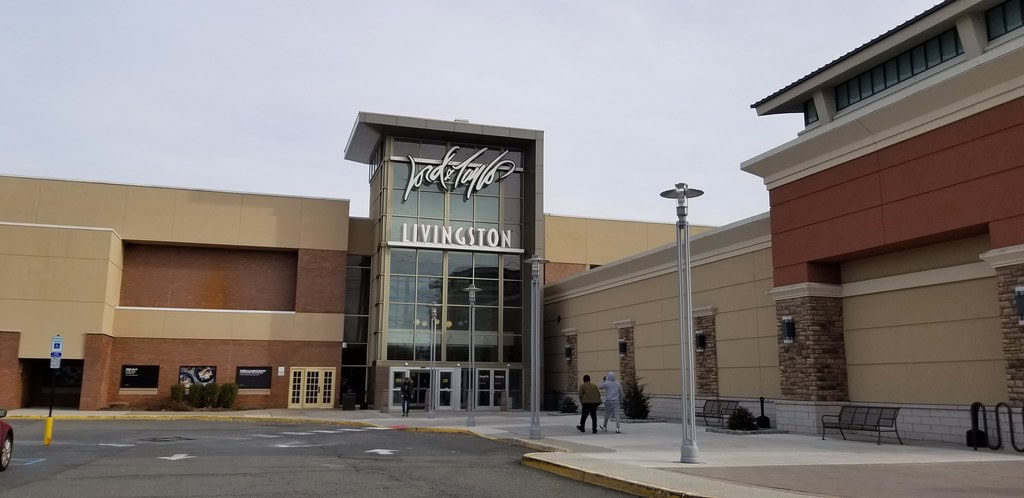
On October 22, 2018, the Toms River Planning Board unanimously approved a plan to demolish the Sears building and replace it with a modern lifestyle center.
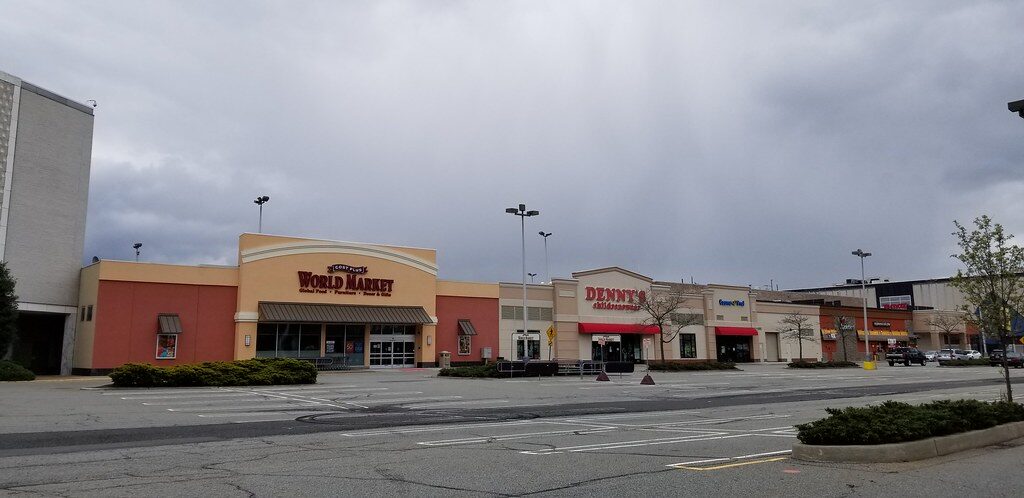
The Sears box would be removed, the site turned partly into a parking field, and three separate buildings totaling 97,700 square feet would rise along the north edge of the property facing Oak Avenue.
The plan emphasized outdoor seating areas and landscaping, including roughly a half-acre of trees and shrubs and a vegetative buffer with fencing along Oak Avenue.
Setbacks were reduced so the buildings would sit closer to the roadway, in line with newer neighbors like Bahama Breeze, BJ's Restaurant & Brewhouse, Olive Garden, and TGI Fridays.
A new 3,500-square-foot entry area would be built where visitors would enter the mall from the lifestyle center, and an existing play area there would be relocated.
At the planning meeting, Simon's representatives talked about strong demand and an 18-month construction schedule once permits were in hand.
Planning Board chair called it a great design and clearly better than a boarded-up anchor and empty parking lot. In 2019, the old Sears building was demolished, and construction on the lifestyle center began.
Lifestyle Center, Meet Lockdown
Simon included Ocean County Mall in an April 2018 announcement highlighting major redevelopments at several properties. New tenants were lined up or in negotiations.
BJ's Restaurant & Brewhouse was one of the first to be publicly tied to the project and was expected to open by summer 2019 near the corner closest to Hooper Avenue.
LA Fitness and HomeSense were also signed as future tenants, slated to open in 2020.
LA Fitness did open in January 2020, in a space carved from the former Sears site. Five Below opened in July 2020, Ulta Beauty followed in September, and HomeSense arrived in December.
Meanwhile, the mall's northern and outer edges continued to fill out with P.F. Chang's, Turning Point, and Applebee's.
Bahama Breeze appeared at the southern end of the property, adding a Caribbean-themed note to the lineup. Rumors floated that a Texas Roadhouse would join the mix, but so far, that remains speculation.
Then the pandemic hit. In March 2020, Governor Phil Murphy ordered indoor malls closed. The Ocean County Mall shut down for more than three months.
Restaurants such as Applebee's, BJ's, Bahama Breeze, and Ichiban turned to curbside pickup and delivery, but the concourses, for once, fell quiet.
When the indoor part of the mall reopened on June 29, 2020, it did so under state rules: 50 percent capacity and a slate of what management billed as new, rigorous safety procedures.
Boscov's and Macy's, with their own outside entrances, were already back in business by then.
JCPenney and many of the interior shops reopened on or around June 29, while a number of smaller tenants eased back more slowly or leaned on curbside pickup.
Still, the Only Mall is Plotting Its Future
By 2023, the lifestyle center and the new group of stores had become part of what made the mall special, instead of just being a construction area.
Management pointed out a group of new and recent stores that opened with the 2019 update, including Ulta Beauty, On The Border Mexican Grill & Cantina, P.F. Chang's, HomeSense, LA Fitness, and others.
A video tour in February 2024 described the mall as still going strong after 48 years, and noted that any quietness on camera probably had more to do with early-morning timing than a collapse in business.
The new entrance near Five Below and BJ's Steakhouse drew particular praise for making the exterior look more current and inviting.
Not everything stayed the same. On The Border, which opened in 2022 as part of the lifestyle center and was the only one like it on the Jersey Shore, closed around February 2025.
Parent company OTB Holdings filed for bankruptcy, blaming higher costs, menu prices rising faster than grocery prices, more people eating at home, and higher minimum wages that the company felt it could not keep up with by raising prices.
The closure stood out, but it was also part of the normal ups and downs of the restaurant business.
Ocean County Mall Today and the Years Ahead
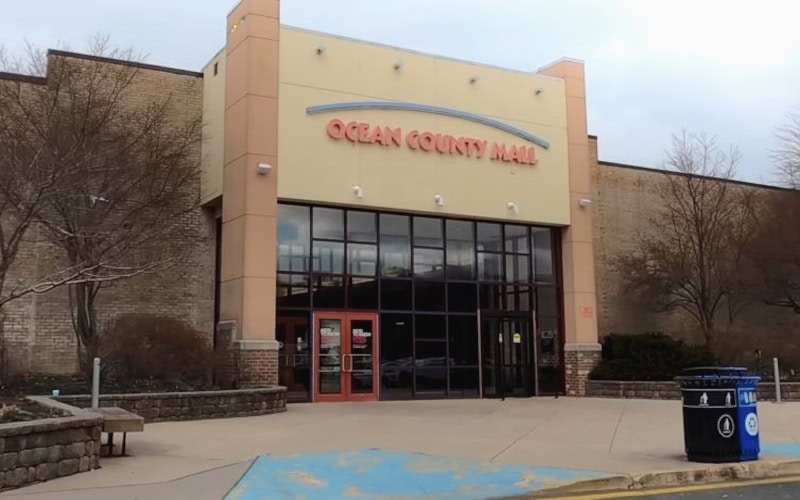
Today, Ocean County Mall is still managed by Simon Property Group as a super-regional center with more than 100 specialty stores and food options.
Its anchors are Boscov's, JCPenney, and Macy's.
Tenants include Five Below, LA Fitness, HomeSense, Ulta Beauty, H&M, Old Navy, Victoria's Secret, Express, Sola Salons, Applebees, Ichiban, P.F. Chang's, honeygrow, BJ's Restaurant & Brewhouse, and many other national and regional brands.
It remains the only enclosed mall in Ocean County, reachable from Exit 82 of the Garden State Parkway via Route 37 East, at 1201 Hooper Avenue in Toms River.
Simon describes its strategy here as strategic redevelopment and restructuring, shifting from a traditional enclosed mall toward a mixed-use lifestyle destination built around shopping, dining, fitness, and entertainment.
Whether that formula holds for the next few decades is an open question.
For now, the parking lots are still filling, the walking tiles are still counting laps, and Ocean County Mall continues doing what it has done since 1976: adjusting just enough to stay in the game.

Independent Publisher Notice
BestAttractions is an independent editorial publisher. We are not affiliated with, endorsed by, or acting on behalf of any location, business, property owner, manager, government agency, or organization described in this article.
Comments posted on this page are not forwarded to, reviewed by, or acted upon by any entity mentioned in the article.
For official inquiries, complaints, applications, bookings, or other requests, please contact the relevant entity directly through its official website or other verified channels.