The city's name belonged to someone else first
Long before survey lines and downtown streets, the name belonged to the Wi-iko, part of the Wichita Nation. Their name also appeared in forms such as Hueco, Huaco, and Weku.
By the eighteenth century, they had a strong presence in Central Texas near the Brazos and the site of modern Waco.
Around 1824, their main village had thirty-three grass houses spread across about forty acres near present-day Seventh Street and Jefferson Avenue, with about one hundred men living there.
The Wi-iko were farmers and hunters who built organized villages with beehive-shaped houses. By the 1830s, disease, conflict, and displacement had emptied the local village.
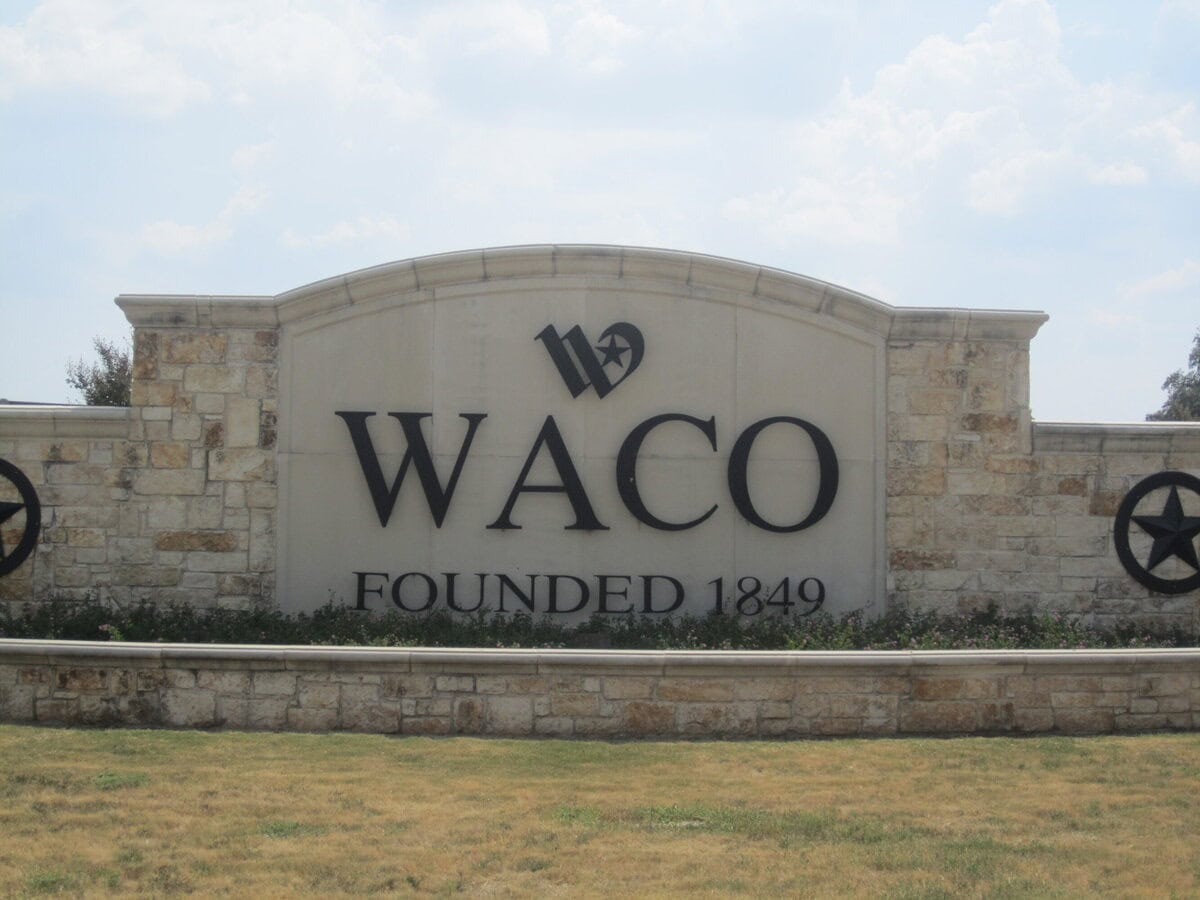
When Texas Ranger George Erath laid out the town's first block in March 1849, he rejected "Lamartine" and pushed for "Waco" instead.
A ravine near the Bosque changed the city's scientific profile
In spring 1978, Paul Barron and Eddie Bufkin were near the Bosque River looking for arrowheads and fossils when they spotted a large bone eroding from a ravine.
They took it to the Strecker Museum at Baylor University, where it was identified as a Columbian mammoth.
That find led to more than thirty years of excavation. Between 1978 and 1990, sixteen Columbian mammoths were discovered.
Between 1990 and 1997, six more were excavated, including a large bull. Crews also uncovered a camel and the tooth of a juvenile saber-toothed cat next to an unidentified animal.
It is the nation's first and only recorded evidence of a nursery herd of Columbian mammoths preserved in place rather than collected from scattered finds.
The site opened to the public in late 2009 and became a national monument in 2015.
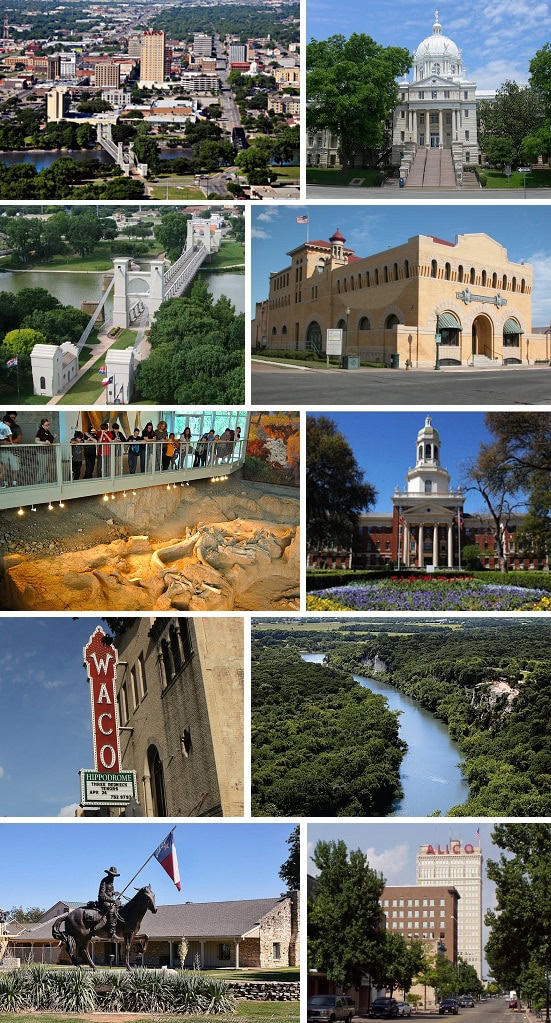
Inside Waco Mammoth National Monument, the bones still sit in the same general deposit where a nursery herd of Columbian mammoths died and was buried.
Waco's mammoth reputation began with one exposed bone.
A bridge turned a river crossing into a cattle highway
The Waco Suspension Bridge runs 475 feet across the Brazos River. Before the bridge existed, people crossed the river at Waco by ferry or by taking wagons and livestock through the water.
Both options became unreliable when the river rose or fell.
In 1866, Joseph Warren Speight pushed the bridge project as a way to strengthen the local economy, and the Waco Bridge Company was formed to move the plan ahead.
Engineer Thomas M. Griffith designed the bridge, and John A. Roebling and Son supplied the suspension technology.
When the bridge opened in 1870, it was the longest single-span suspension bridge west of the Mississippi River.
It became a key crossing for cattle drives, helping millions of longhorns head north and giving Waco a major commercial lift after the Civil War.
One afternoon changed downtown for generations
Just after 4 p.m. on May 11, 1953, a tornado that had touched down north of Lorena moved north-northeast into downtown Waco.
On radar at Texas A&M University, the storm showed a hook-shaped echo, a pattern later tied closely to tornadic supercells.
The tornado was nearly one-third of a mile wide as it crossed the city. It killed 114 people and injured 597.
Around 600 homes and other buildings were destroyed, more than 1,000 more were damaged, and 2,000 vehicles were hit.
Downtown blocks around the old square and Bridge Street took especially heavy damage. The storm remains the deadliest tornado in Texas since 1900.


The tower that stayed standing
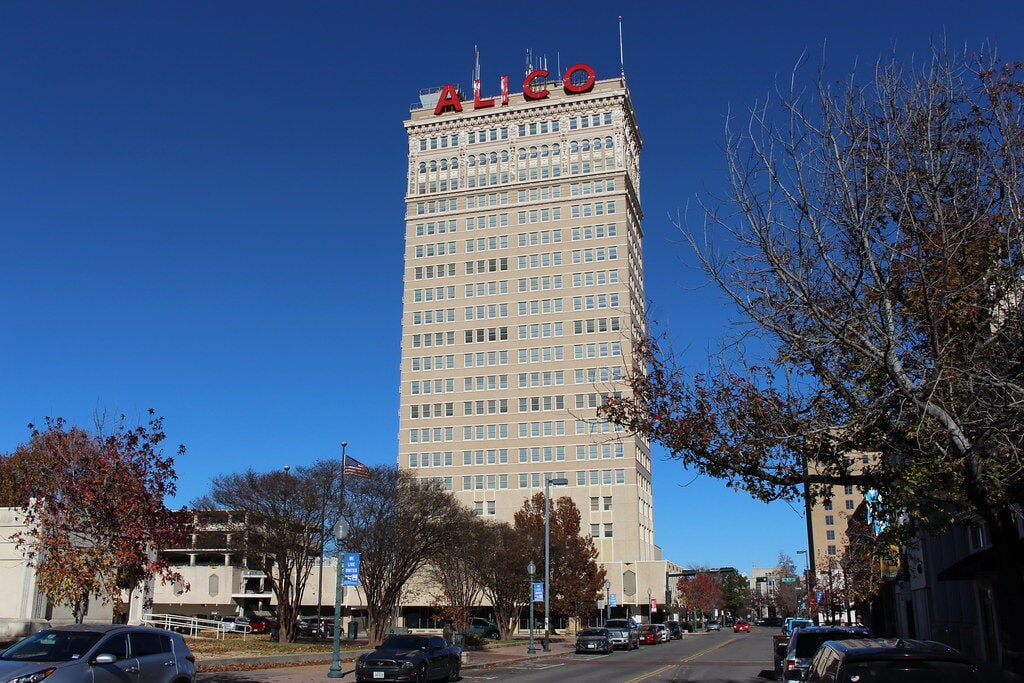
The ALICO Building still stands over downtown Waco. Its history reaches back to one of the city's most ambitious building projects.
It was completed in 1911 as the Amicable Insurance Building. At twenty-two stories, it was built to be the tallest building in Texas at the time.
It also remained the tallest building west of the Mississippi River and south of the Mason-Dixon line until 1929.
Today, the building identifies itself as the oldest skyscraper still standing in Texas.
In 1953, when the tornado tore through downtown Waco, steel-frame buildings such as the ALICO remained standing while nearby blocks were heavily damaged.
In photographs taken after the storm, the tower still rises above the wreckage. It remains one of the clearest features of Waco's skyline.
America's oldest major soft drink began as a Waco experiment
Dr Pepper began in Waco in 1885, when pharmacist Charles Alderton created the drink at Morrison's Old Corner Drug Store.
Its connection to the city continued after that first recipe. As demand increased, Morrison and beverage chemist Robert S. Lazenby formed the Artesian Manufacturing and Bottling Company in 1891.
In 1906, production moved to the Artesian Manufacturing and Bottling Company building in downtown Waco.
It was the first building used specifically to manufacture Dr Pepper. That building now serves as the center of the Dr Pepper Museum.
Waco was the place where the drink started, where it was first produced on a larger scale, and where the brand established its first building made for manufacturing.
A Republic of Texas charter still shapes the city
February 1, 1845, remains an important date in Waco because Baylor University received its charter that day from the Republic of Texas.
The university identifies itself as the oldest continually operating school of higher education in the state. Baylor began in Independence, not Waco, and its first classes were held there in the 1840s.
The connection to Waco began in 1886, when Baylor and Waco University joined to create Baylor University at Waco.
Waco gained a permanent major university that shaped the city's economy, growth, and public identity for generations.
One of the city's central institutions began before Texas became a state in the United States.
Waco helped turn "homecoming" into a national college ritual
Baylor's 1909 homecoming included many of the things people now expect from college homecoming events across the United States.
Former students came back for concerts, receptions, speeches, class reunions, singing, a pep rally, a parade, and a football game.
Baylor identifies the 1909 celebration as the first recognizable collegiate homecoming in the nation, and the tradition later grew into what the university calls the largest collegiate Homecoming celebration in the United States.
Waco was part of it from the start. The first parade began in downtown Waco and moved toward campus behind the Baylor Band.
That path carried the event through city streets instead of keeping it only on campus. One of the country's earliest clear versions of modern homecoming took shape in Waco.
A world-scale literary collection sits in Central Texas
Waco holds one of the most unexpected archives in the country.
The Armstrong Browning Library at Baylor contains the world's largest collection of books, letters, manuscripts, and memorabilia related to Robert Browning and Elizabeth Barrett Browning.
Its holdings include more than 27,000 books and over 11,000 letters and manuscripts, making Waco an international research center for two major Victorian poets.
The building is unusual even before anyone opens a box. Its sixty-two stained-glass windows form the largest collection of secular stained glass in the world, and the imagery comes from Browning's poetry.
The collection grew from A. J. Armstrong's work in the early twentieth century, and by 1925, Baylor's Browning holdings were already the largest single concentration in the world.
The state's Ranger memory is kept in Waco
Fort Fisher Park in Waco houses the Texas Ranger Hall of Fame and Museum, the official state historical center of the Texas Ranger Division of the Texas Department of Public Safety.
In 1964, the Texas Public Safety Commission authorized Waco to build and operate a state historical center for the Rangers.
The museum opened in 1968. The Hall of Fame followed in 1976. In 1997, the legislature designated the site as the official repository for memorabilia, artifacts, and other materials tied to Texas Ranger history.
Fort Fisher Park is named for a short-lived 1837 Texas Ranger outpost. Waco became the place where the Rangers' official public memory was gathered and kept.
One of Texas's oldest museum stories kept unfolding in Waco
Waco's museum tradition reaches back before the city had its modern tourist image.
An 1857 Baylor catalog asked for contributions to a cabinet of "minerals, shells, and petrifactions." After Baylor moved to Waco in 1886, university officials formally established the Baylor University Museum there in 1893.
The collections grew across natural science, botany, zoology, archaeology, and cultural objects from abroad.
John Kern Strecker Jr. became curator in 1903 and guided the museum until 1933. In 1940, it was renamed in his honor.
The holdings eventually reached about 250,000 items, including the world's largest fossil sea turtle, a whale skull, local reptiles and amphibians, and material on Indian and pioneer settlements.
The Mayborn Museum Complex later absorbed the Strecker collection.
Texas chose Waco to stage its sports memory
The Texas Sports Hall of Fame began in 1949 when Beaumont sports editor Thad Johnson conceived the idea, and it was formally organized as a nonprofit in 1951.
That same year, Texas became the first state to honor its athletes with a hall of fame when Tris Speaker became the inaugural inductee.
Waco entered later, after the earlier permanent site in Grand Prairie closed in 1986. The institution went dormant until Waco civic leaders developed a plan in 1990 to bring it to their city.
The Texas Sports Hall of Fame opened in Waco on April 16, 1993, as its permanent home.
The site also includes the Texas Tennis Museum and Hall of Fame and the Texas High School Football Hall of Fame.
A cliff-and-river landscape begins almost downtown
Near downtown Waco, the land changes quickly. Bluffs rise above the rivers. Thick trees fill the area. Trails wind through the park, and there are wide views of the water that feel bigger than the city around them.
Cameron Park covers 416 acres along both the Brazos River and the Bosque River.
It gives Waco a large natural area where city streets meet steep ground and water. The park has scenic overlooks, fishing spots, playgrounds, trails, and the zoo.
Even so, the land itself makes the strongest impression.
This is not a flat park placed inside a city street grid. It is a landscape of cliffs and rivers that starts almost at the edge of downtown.
More than a century ago, the William Cameron family gave the land for public use.
Because of that early decision, Waco still has one of its most striking natural settings, only a short walk from the center of town.
One of the most notorious racial atrocities in Texas happened here
On May 15, 1916, Jesse Washington, a seventeen-year-old Black farmhand, was taken by a White mob in Waco after a brief trial and killed in public.
The killing became known as the "Waco Horror." Among the 492 lynchings recorded in Texas between 1882 and 1930, it became one of the most notorious cases in the state and across the country.
The lynching brought national condemnation and became a major example in the anti-lynching movement of public racial terror.
W. E. B. Du Bois used the case in the July 1916 issue of The Crisis in a photo essay titled "The Waco Horror," and the publication helped increase the magazine's circulation.
This event remains one of the most defining and widely known moments in Waco's history.