El Con Mall opens in a booming Tucson
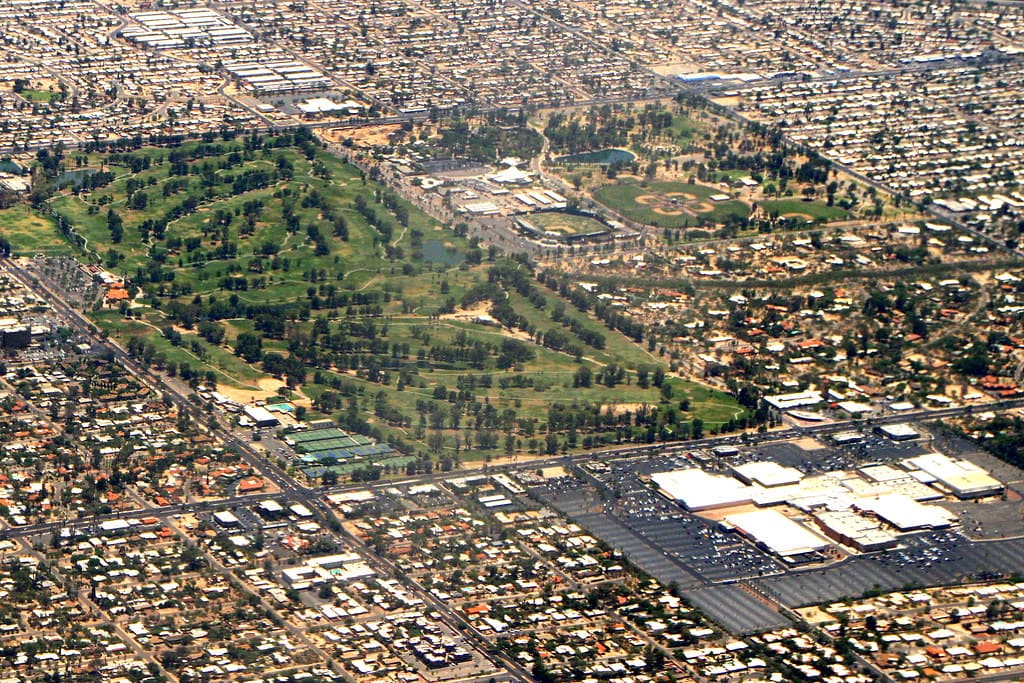
El Con Mall opened on November 16, 1960, about 2.5 miles east of downtown Tucson in midtown. The site sat along East Broadway, with the property bounded by East Broadway and East Fifth Street.
By then, Tucson's population had risen from about 45,000 in 1950 to more than 200,000 in 1960, and new retail space was arriving to match the city's growth.
The land's earlier landmark was the El Conquistador Hotel. In September 1953, brothers Simon and Joseph K. Kivel, along with partners, bought the hotel and its 120-acre property on East Broadway.
The shopping center took its name from the hotel next door, which had long been known as a destination for wealthy travelers from the North and East.
Early plans considered integrating the hotel into the shopping center, but that plan was later abandoned.
The project opened as an outdoor shopping center, laid out as Stores #21-79 with two anchor spaces.
It opened as Tucson's first regional shopping center and would become the oldest mall in the metropolitan area.
The layout fit a city oriented around driving and parking, with visitors moving store to store across a single site.
Levy's, Wards, and the first tenant wave
When El Con opened, Levy's served as the lead anchor. The local Tucson department store opened a second location at El Con Mall, a two-level store of about 62,000 square feet, while keeping its downtown flagship.
Montgomery Ward followed soon after, opening on February 2, 1961, with a two-level store of about 154,000 square feet.
Other early tenants included Skaggs Drug Centers, Kresge's, El Rancho Market, and Woolworth. Store openings continued in clusters through 1961.
On August 24, seven inline stores opened: House of Fabrics, Gallon Camp Shoes, Lerner Shops, Kinney Shoes, El Rancho Market Grocery, F.W. Woolworth, and a 27,000-square-foot S.S. Kresge store.
On November 2, nine additional stores opened, including Baker's Qualicraft Shoes, The College Shop, Daniel's Jewelers, Grunwald & Adams Jewelers, Mills-Touche, Nu-Art Photo Service, and Skaggs Drug Center.
Smaller tenants and services included the El Con Cocktail Lounge, First National Bank of Arizona, Daniel's Credit Jewelers, Sandy's Fashions, and Cele Peterson's.
The shopping center was built with about 3,000 parking spaces. When fully leased, the original configuration was planned to include 42 stores and services.
Hotel falls, West Mall rises, doors close in
The El Conquistador Hotel, which sat next to the shopping center and provided its name, closed in 1964. The hotel was later demolished in 1967-1968, and the cleared land became the site of major expansion.
On September 16, 1969, a new Levy's store opened on the former hotel site. The building measured about 193,000 square feet and had two levels.
In 1975, Levy's expanded again, adding a third level and growing to about 290,000 square feet.
After the expansion, it was described as the largest single retail store in Arizona.
In 1971, Steinfeld's relocated from its longtime downtown address at 35 North Stone Avenue to the shopping center, taking over Levy's former space at the northwest corner of the original portion.
That same year, the enclosed West Mall, a new interior wing added as part of El Con Mall, opened with J.C. Penney as a new anchor.
J.C. Penney opened on August 4, 1971, in a two-level store of about 115,000 square feet. A freestanding Penney's auto center opened on August 23, 1971.
When completed, the West Mall totaled about 480,000 leasable square feet, and the site was operating more like a single connected property than an outdoor strip of separate sections.
The late-70s peak: L-shape and six screens
By the early 1970s, El Con Mall was continuing to fill in the West Mall with new tenants and services.
Floor Shine SHO shoes opened in February 1972 as the first inline store in the West Mall section. First National Bank relocated to the West Mall in May 1974.
Ferrel's ice cream parlor opened in July 1973.
A new Goldwater's store opened on August 14, 1978. The store measured about 120,000 square feet and added another major department store to the property.
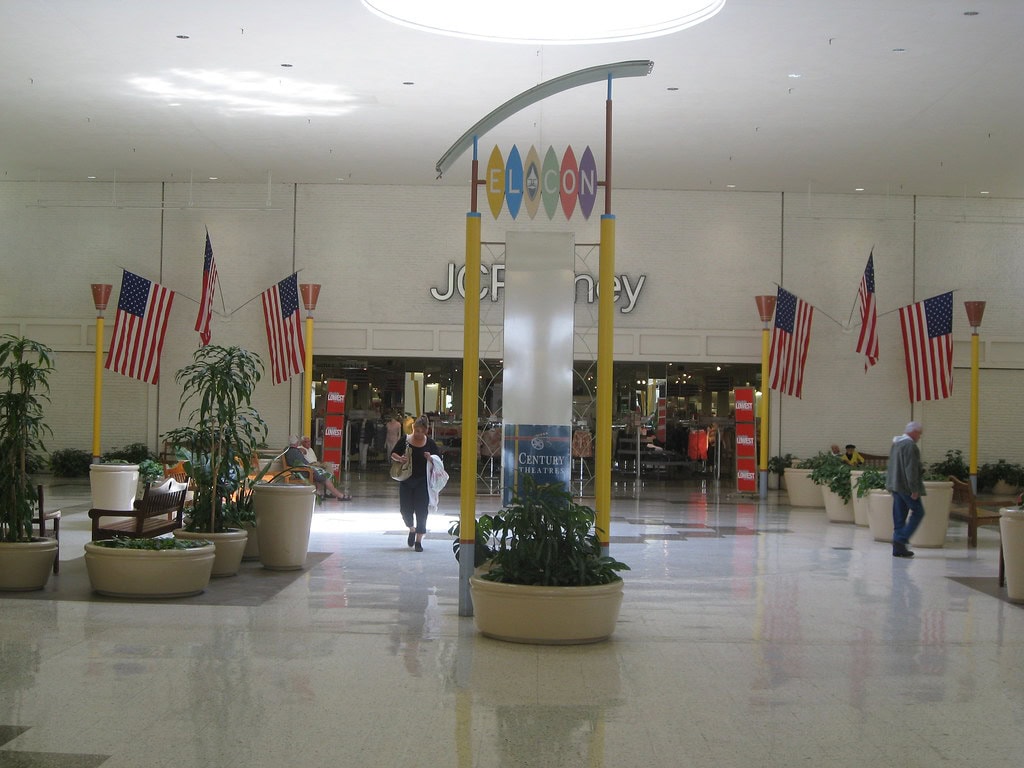
In 1979, the existing East Mall was enclosed and climate-controlled, bringing the older open-air section into the same enclosed format as the West Mall.
With that change, the property operated as an integrated L-shaped complex for the first time at roughly 1 million square feet.
The main expansion phase culminated on January 27, 1979, with the grand opening of the fully enclosed and connected mall.
The expanded complex totaled about 1,023,800 leasable square feet and 124 stores and services.
Tenants in this period included United Jewelers & Distributors, Showcase Cards, Wicks' N Sticks, T-Shirts Etcetera, Musicland, B. Dalton Bookseller, and Morrow's Nut House.
TM Theaters El Con 6 premiered its first features in August 1979. By January 1988, the El Con 6 was being operated by AMC Theatres.
A family mall faces rivals
El Con Mall was developed by Joseph Kivel and the Papanikolas brothers, with Kivel as the primary developer.
In May 1975, Kivel dedicated Park Place Mall at 5870 E. Broadway, creating a direct competitor on the same corridor.
By 1980, Tucson's population had reached about 330,000, and the market was supporting more large retail centers than it had in the 1960s.
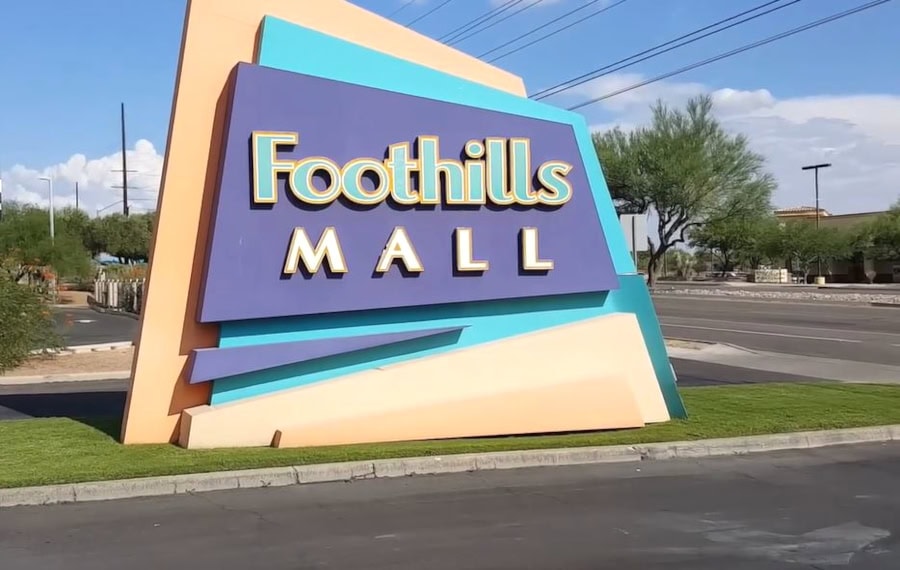
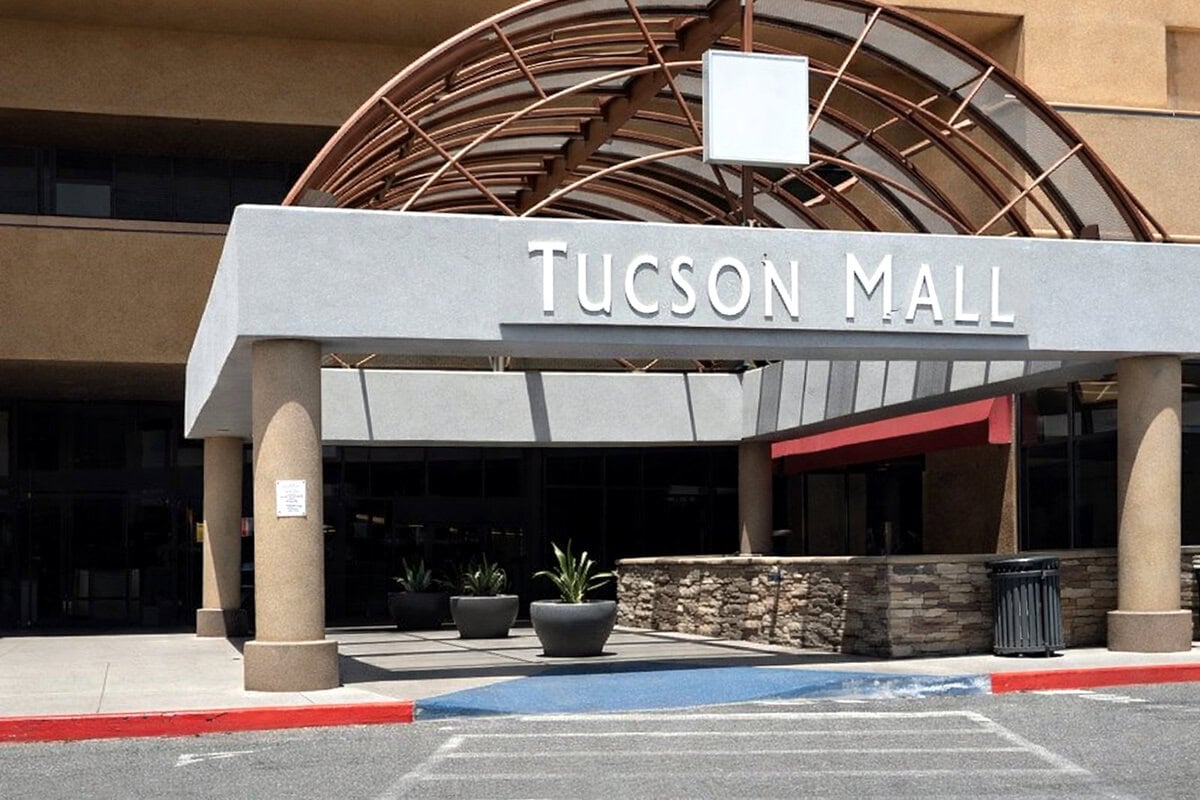
In 1982, two additional regional malls opened and pulled attention away from El Con Mall. Tucson Mall opened in March 1982. Foothills Mall opened in August 1982.
Both were positioned in Tucson's expanding north side. As those properties grew, El Con Mall began losing more tenants than it gained.
The anchor lineup shifted repeatedly during the period. Steinfeld's closed on August 26, 1984, leaving a large vacancy at the northwest corner of the original portion.
The space was later used intermittently as a holiday soup kitchen, and in 1993, it became the Pavilion Food Court.
In 1985, Levy's was rebranded as Sanger-Harris after Federated Department Stores consolidated operations. In 1987, Sanger-Harris was renamed Foley's.
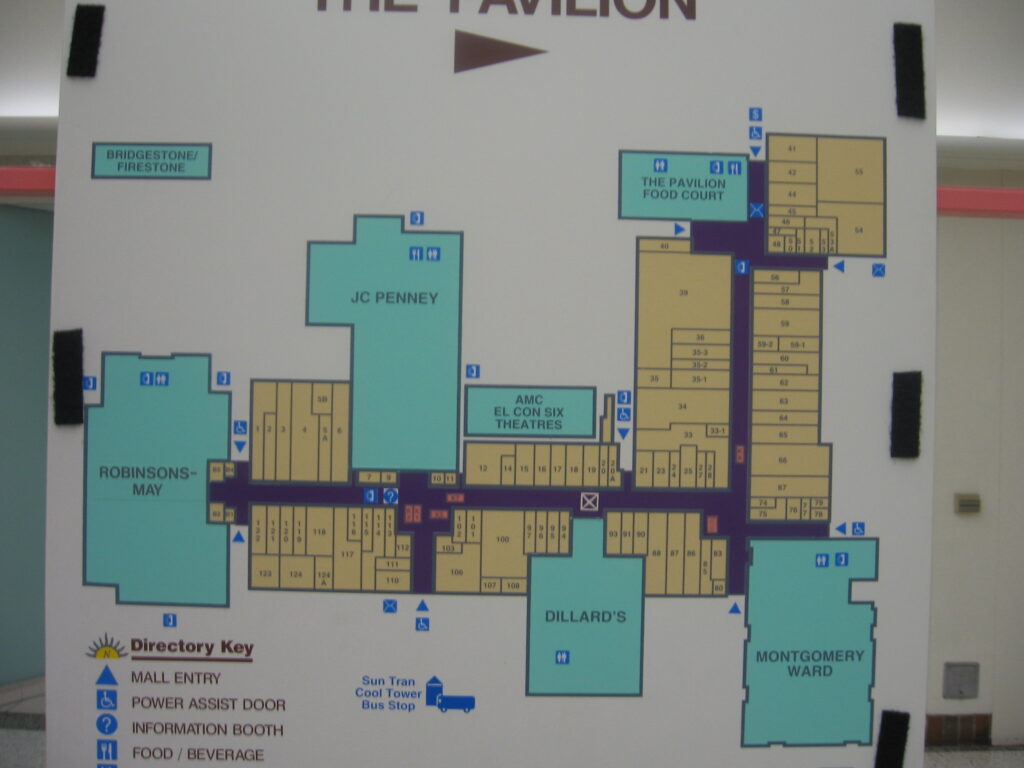
Goldwater's was converted to Dillard's in 1989. On February 2, 1997, Robinson's-May replaced the Foley's location.

Bulldozers and big boxes remake the property
Ownership stayed unusually consistent for a mall.
Until the 2014 sale, El Con remained in the hands of the descendants of its original developers, the Kivel and Papanikolas family heirs, a 54-year family run in a business that rarely keeps the same landlord long enough to learn the tenants' names.
After Joseph Kivel died in 1995 at age 85, his interests passed to his sons, Foster Kivel and Rabbi (retired) Lee Kivel.
In 1996, the family sold Park Place Mall to General Growth Properties. At El Con Mall, mid-1998 became the moment when grief and spreadsheets turned into construction fencing.
After the deaths of the Papanikolas brothers and Kivel's passing, the heirs launched major renovations that cut deep: the entire original wing, except Montgomery Ward, plus mall space between Wards and the original wing, and the AMC El Con 6 Theatres were demolished.
The theater had closed on September 1, 1997.
Osco Drug relocated from Store #54 to Store #123, losing its anchor status in the move.
A Century El Con 20 Theatres complex was built on the former parking north of the eastern theater section, later renamed Cinemark El Con 20 in 2006.
A food court went up on the sites of the former western theaters and Stores #12, #14, and #15, but it never attracted restaurant tenants and sat vacant, a brand-new room with no reason to exist.
Kroenke buys, El Con Center keeps the lights on
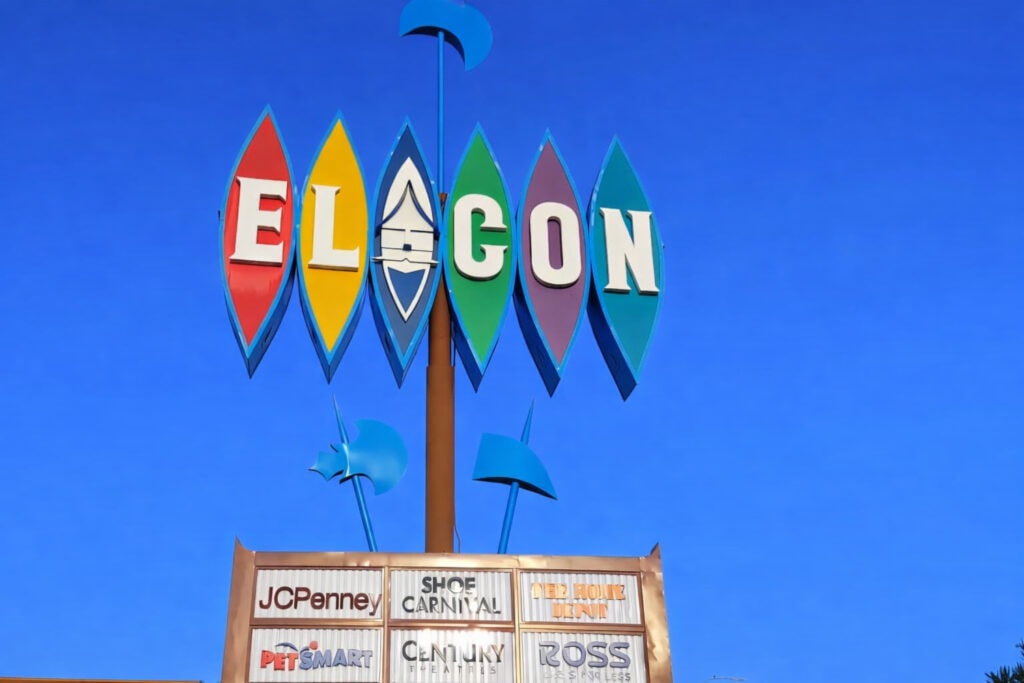
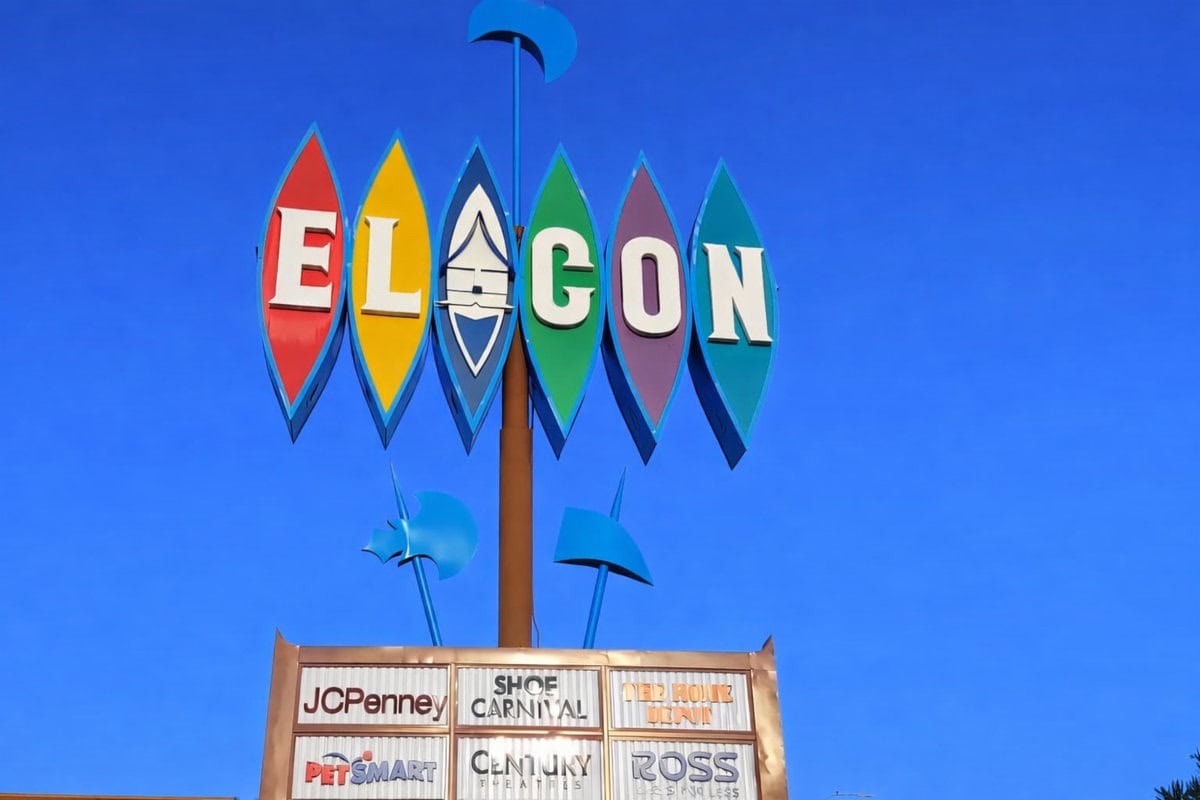
The El Con Mall sign came down in 1999. Closures kept coming, and each one rewrote the map.
Dillard's closed on May 9, 2000, after deciding to consolidate when Park Place's Dillard's received a new building. Montgomery Ward closed on March 18, 2001, as part of the company's bankruptcy.
On the east side, The Home Depot opened in 2001, and Target followed in 2004, built where the Ward location had been, along with some mall space, and chunks of parking.
Neither Target nor The Home Depot was ever directly accessible from inside the mall, a design choice that made the interior feel less like a heart and more like leftover space.
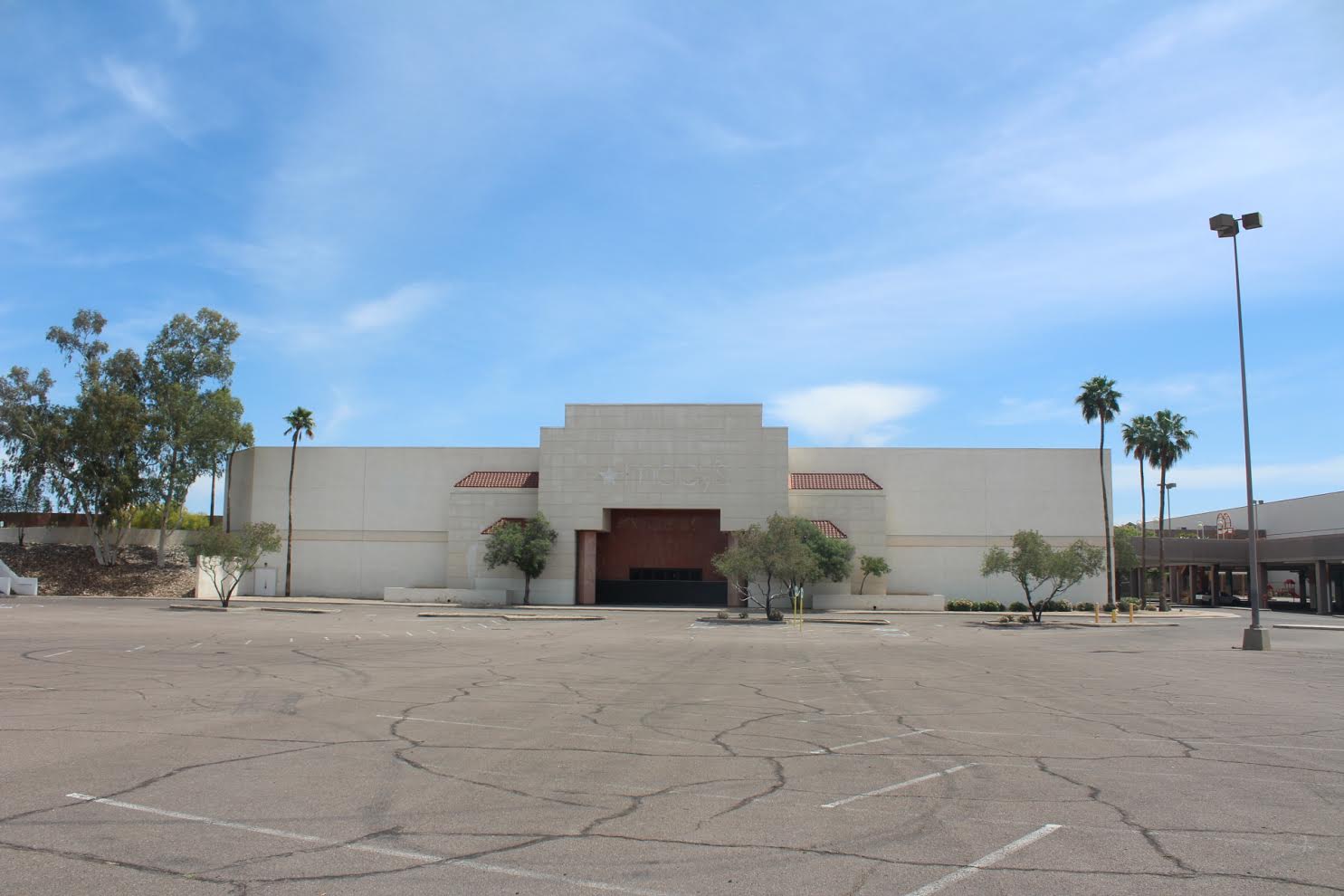
Macy's closed on February 29, 2008, after May Department Stores was acquired by Macy's, Inc. in 2005. The Macy's location was judged unprofitable and liquidated.
Ross Dress for Less, about 30,000 square feet, opened in 2008 at the former site of demolished Stores #110-124A.
In September 2011, the mall space and all inline store spaces, except Stores #1-6, were demolished, with a pathway built for access.
In 2012, the El Con Mall sign was reinstalled, now pointing at a property that no longer had a mall inside it.
Then came the sale. On May 20, 2014, the site sold for $81.7 million to a group fronted by Stanley Kroenke.
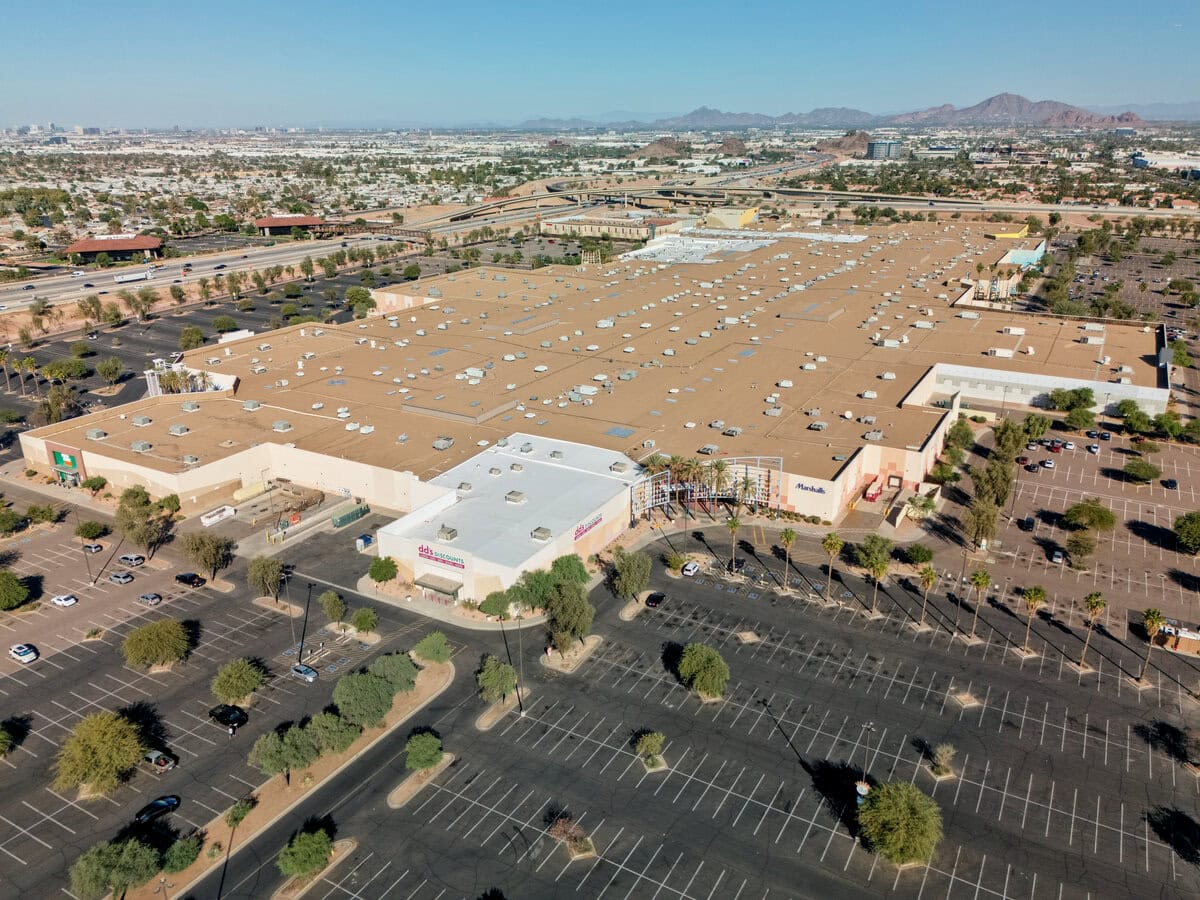
It was renamed El Con Center and kept operating across nearly 93 acres as a power center, even though the old enclosed version was already history.
Events, empty Penney's, and a corridor tool
By the mid-2010s, the former mall property was operating as a power center with big-box anchors and surface parking.
The anchor lineup included Cinemark Theatres, Target, The Home Depot, Walmart Supercenter, Ross Dress for Less, Burlington, and Marshalls.
Burlington announced its opening in November 2009 and opened on March 5, 2010, after renovating the former Dillard's building.
Walmart later built a new store in the footprint of the former Macy's and held its grand opening on September 11, 2013.
The Walmart project drew municipal opposition under big-box ordinance restrictions and moved forward through negotiated planning.
One former anchor remained on the property but did not last. JCPenney announced on June 4, 2020, that it would close as part of a nationwide restructuring that eliminated 154 locations.
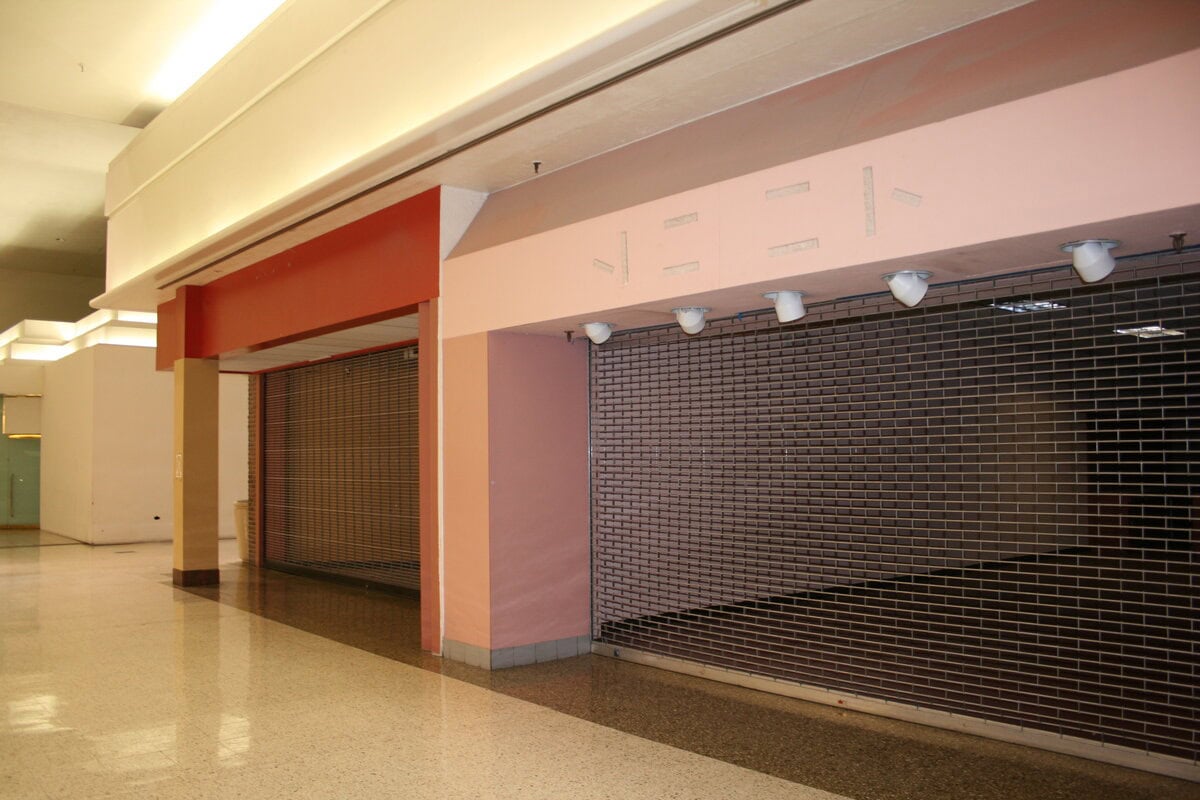
The store closed in October 2020, and the building remained vacant.
The site continued hosting public-facing events. Sun Tran held its annual "Stuff-the-Bus" donation event on September 28, 2024, in the Walmart parking lot.
On December 3, 2025, Milagro en el Barrio planned a toy drop-off event outside near Portillo's.
The Greater Arizona Bicycling Association scheduled its Spring Bike Swap for April 19, 2026, from 7:00 am to 1:00 pm at the northeast corner of the parking lot at 3601 E. Broadway.