
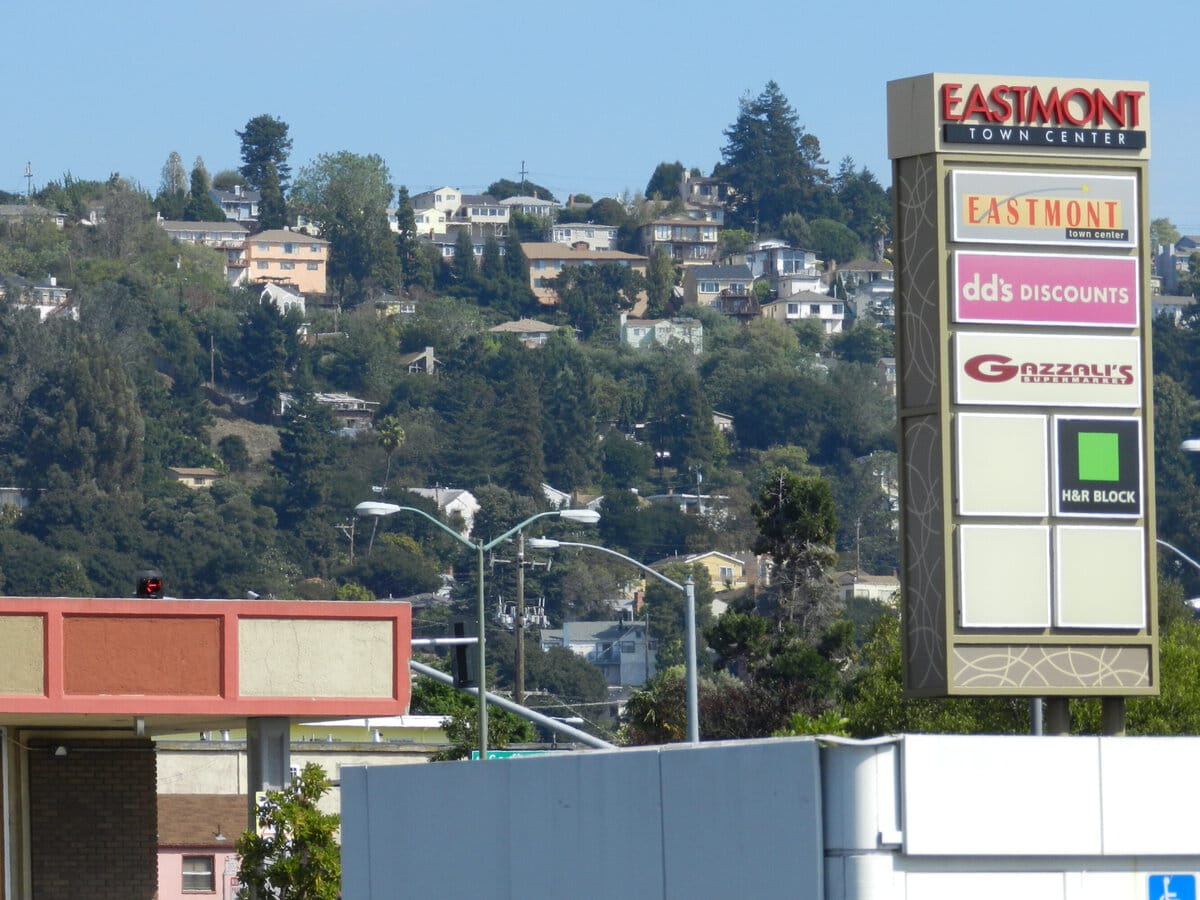
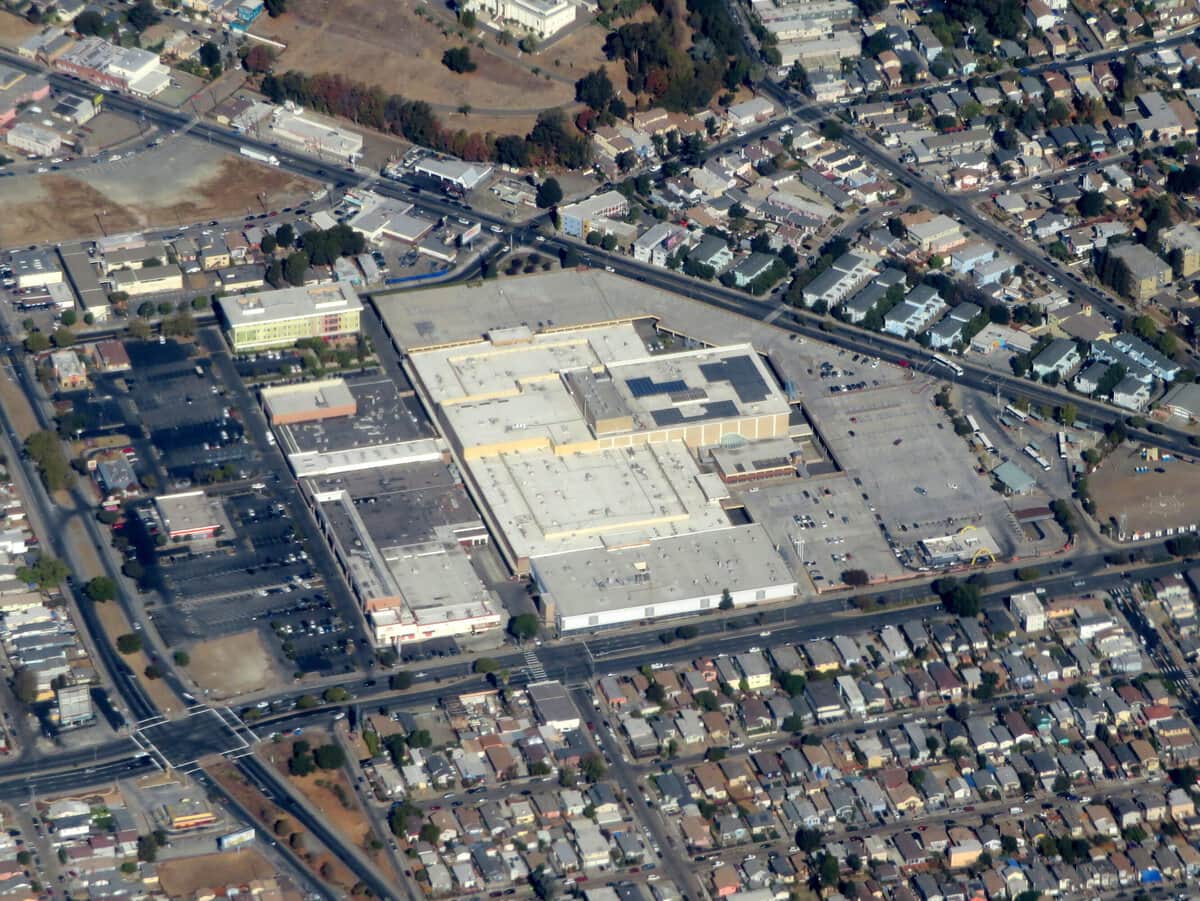
Eastmont Town Center still looks like the large indoor mall it once was.
Parking areas and garages border its broad footprint, old shopping halls connect several entrances, and the complex occupies a major site near 73rd Avenue, Foothill Boulevard, and Bancroft Avenue.
However, the activity inside has changed. Today, the building serves library users, clinic patients, people applying for benefits, office workers, grocery shoppers, and police visitors.
The former Eastmont Mall survived because its buildings remained useful after the original shopping model failed.
Its history reflects three periods in East Oakland: industrial employment, car-based shopping, and the growth of public services inside a privately owned complex.
The factory gave way to the mall, then much of the mall complex stayed in place as its use changed.
An automobile plant before the mall
The site first held a large industrial operation.
Chevrolet began building an Oakland car factory near Foothill Boulevard and 69th Avenue in 1915.
Production started in 1916. The factory made passenger cars and became an important employer in East Oakland.
Nearby suppliers, shops, plant nurseries, and other businesses also benefited from the workers.
During the Second World War, the factory stopped making civilian cars and produced military equipment instead.
Car production began again after the war.
Later, General Motors moved more of its work to a newer factory in Fremont.
The Oakland plant closed in 1963. This removed a major source of jobs and left a large area open for new development.
Eastmont Mall kept the large scale of the factory site, but little visible evidence of the factory remained.
A place built for making products became a place built for buying them.
The factory drew employees to scheduled shifts, while the mall drew shoppers who arrived mainly by car.
Eastmont opens in stages
Eastmont did not open all at once. The first stores opened in May 1966.
They included a Safeway supermarket and several related services.
More stores opened over the next two years.
By late 1970, a larger indoor section, parking garages, and a three-level J.C. Penney had turned Eastmont into a regional mall.
Mervyn's became the second major department store in 1974.
At its largest, Eastmont had more than 100 stores, a four-screen cinema, an office building, and about 2,500 parking spaces.
Its two indoor levels offered clothes, shoes, jewelry, food, household products, and personal services.
Safeway served everyday grocery needs.
J.C. Penney and Mervyn's gave local shoppers access to large department stores closer to home.
The design encouraged people to move through the inside of the mall.
Garages and parking lots surrounded much of the building.
The department stores attracted visitors through the indoor halls.
Terrazzo floors, carpeted stairs, and light wells created the controlled indoor environment common in malls built in the late 1960s.
From the outside, parking areas separated much of the building from the neighborhood.
A practical and social place
Eastmont combined shopping with restaurants, a cinema, music stores, services, and shared indoor space.
Families could buy food, school clothes, shoes, and household goods in one visit.
The cinema, restaurants, music stores, and shared indoor spaces gave people reasons to stay longer.
Retail jobs also replaced some of the work lost when the car factory closed.
The mall opened during a period of major change in East Oakland.
Industrial jobs were disappearing. Shopping activity was moving to other parts of the region.
Race, income, and development policies affected the opportunities available in different neighborhoods.
Eastmont added stores and retail jobs while industrial employment was shrinking.
Retail work differed in scale and structure from the factory employment the area had lost, and unequal regional investment continued.
During the 1980s, Eastmont's parking lots became an early site of Oakland sideshows.
At these gatherings, people gathered around customized cars, music, driving, dancing, and public display.
Parking areas built for shoppers became informal cultural spaces.
Police enforcement later displaced the events from the property.
Early Eastmont gatherings differed in form from the intersection takeovers now commonly associated with the term.
Why the retail model weakened
Crime and security concerns damaged its reputation.
The large enclosed complex needed repairs and upgrades.
Other shopping centers in the East Bay competed for regional shoppers and national stores.
At the same time, the loss of industrial jobs and lower household spending reduced the number of customers around Eastmont.
Drug activity and violence during the crack cocaine period caused further harm.
As stores closed, fewer people visited the businesses that remained.
Eastmont weakened as industrial employment declined, household spending fell, competing East Bay centers attracted regional shoppers, and security problems increased.
J.C. Penney closed in 1991. Mervyn's closed in 1993.
Without these major stores, fewer shoppers walked past the smaller shops.
The cinema and many other stores also closed.
By the middle of the 1990s, only about 30 percent of the mall was occupied.
The empty department stores created another problem.
The large anchor floors were difficult to refill with ordinary retailers.
Their size later suited public agencies that needed waiting areas, service counters, interview rooms, and large office floors.
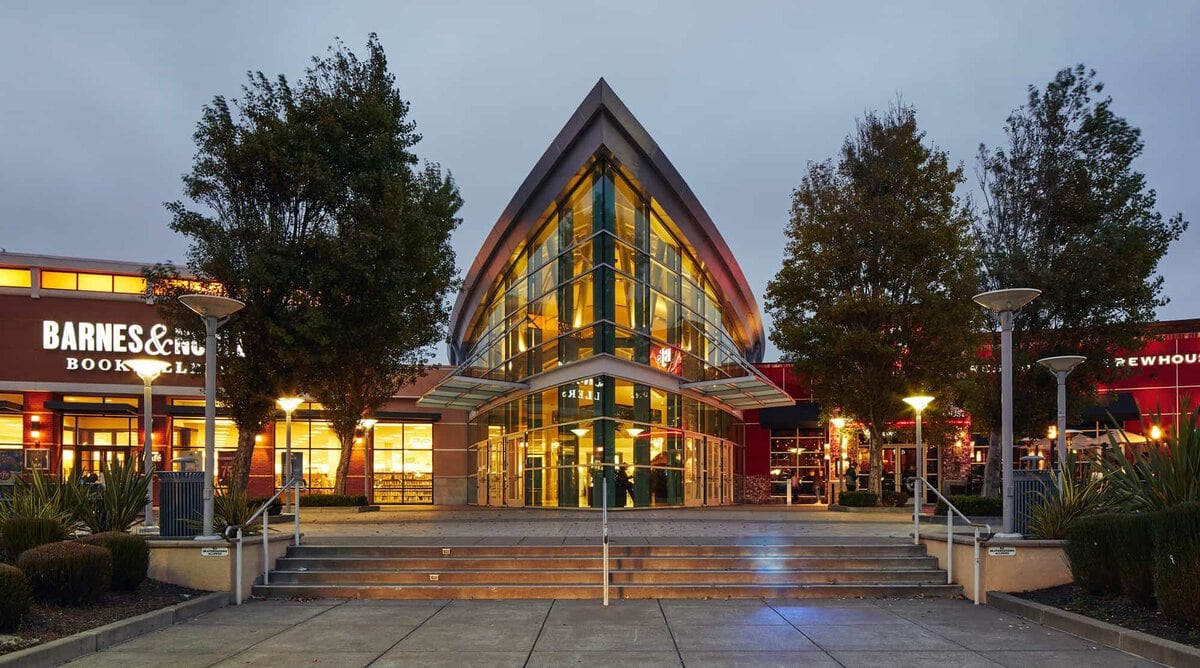
The change to Eastmont Town Center
During the 1990s, the owners began using a different rental strategy.
County departments, city offices, health providers, job programs, and nonprofit groups slowly moved into former shopping areas, while the public library expanded.
The complex adopted the name Eastmont Town Center as public agencies replaced retail tenants.
The former J.C. Penney building was changed into offices for Alameda County health and social services.
Shopping floors became offices, meeting rooms, waiting areas, and benefits service counters.
The former Mervyn's building became the Oakland Police Department's Eastmont Substation.
It opened in 2001. The City of Oakland still lists a public service desk there.
The Oakland Public Library moved its Eastmont branch into the mall in 1983.
It later expanded as more public services moved into the center.
The library remains at 7200 Bancroft Avenue.
It offers computers, printing, scanning, a meeting room, study materials, and books in English and Spanish.
The library allows people to use the building without making a purchase.
Health care, public benefits, mental health programs, and job services brought a regular weekday population back to the property.
A supermarket later returned to the original Safeway area.
Other shops and restaurants continued to use parts of the center, although some spaces remained empty.
The office building also received a new use.
During the 2000s, it became Miley Gardens, an affordable housing community for older adults.
This added homes to the site without removing the larger mall structure.
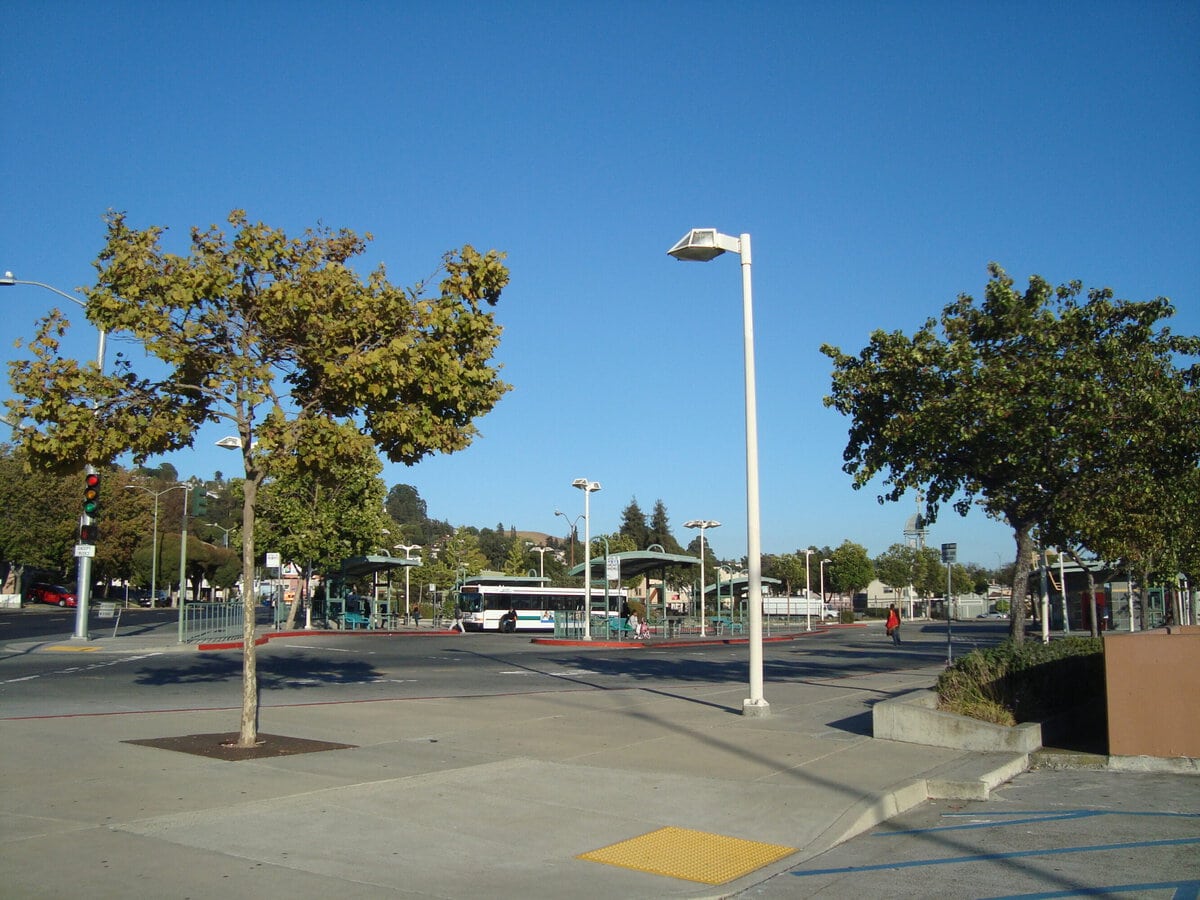
What remains today
The office portion of Eastmont Town Center at 7200 Bancroft Avenue covers 538,700 square feet.
The library, clinics, benefits offices, job programs, supermarket, and police substation bring residents to the complex throughout the week.
The old mall is still easy to recognize because the change kept its main structure, internal routes, and parking garages.
Former shops became offices. Large department store floors became spaces for government and service agencies.
Nearby public transport at 73rd Avenue helps people reach these services.
Free parking also keeps the car-based access that the mall was designed for.
Public agencies occupy leased space inside a privately owned complex whose deep floors, garages, and internal routes were designed for retail use.
Long-term agency leases keep large areas occupied, while the interior no longer carries the continuous retail traffic of Eastmont's peak years.
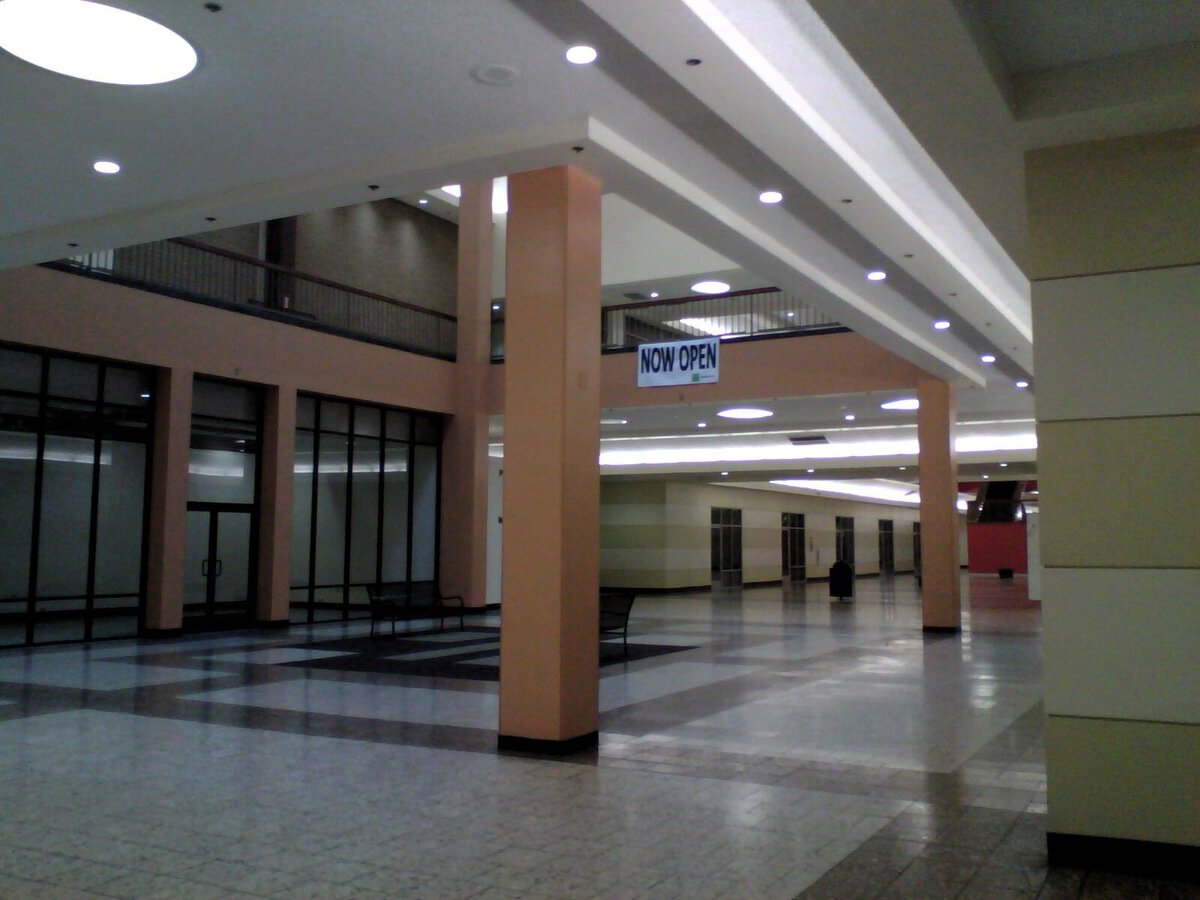
A new project beside Eastmont
Liberation Park is being developed on city-owned property next to Eastmont Town Center at 73rd Avenue and Foothill Boulevard.
City records divide the project into a 119-apartment affordable housing development and the Liberation Park Market Hall.
The housing plan includes homes for people earning between 20 and 60 percent of Alameda County's median income.
It also includes services for residents.
Thirty apartments are reserved for people who have experienced homelessness.
The market hall is a separate part of the project.
Liberation Park has separate ownership and development plans from the main Town Center property.
Construction dates have changed during the financing and approval process.
Eastmont retains its interior halls, anchor-store floors, parking garages, and car-oriented site plan.
Public agencies now occupy much of the space once built for department stores, while the library, supermarket, clinics, and smaller businesses continue to bring people into the former mall.
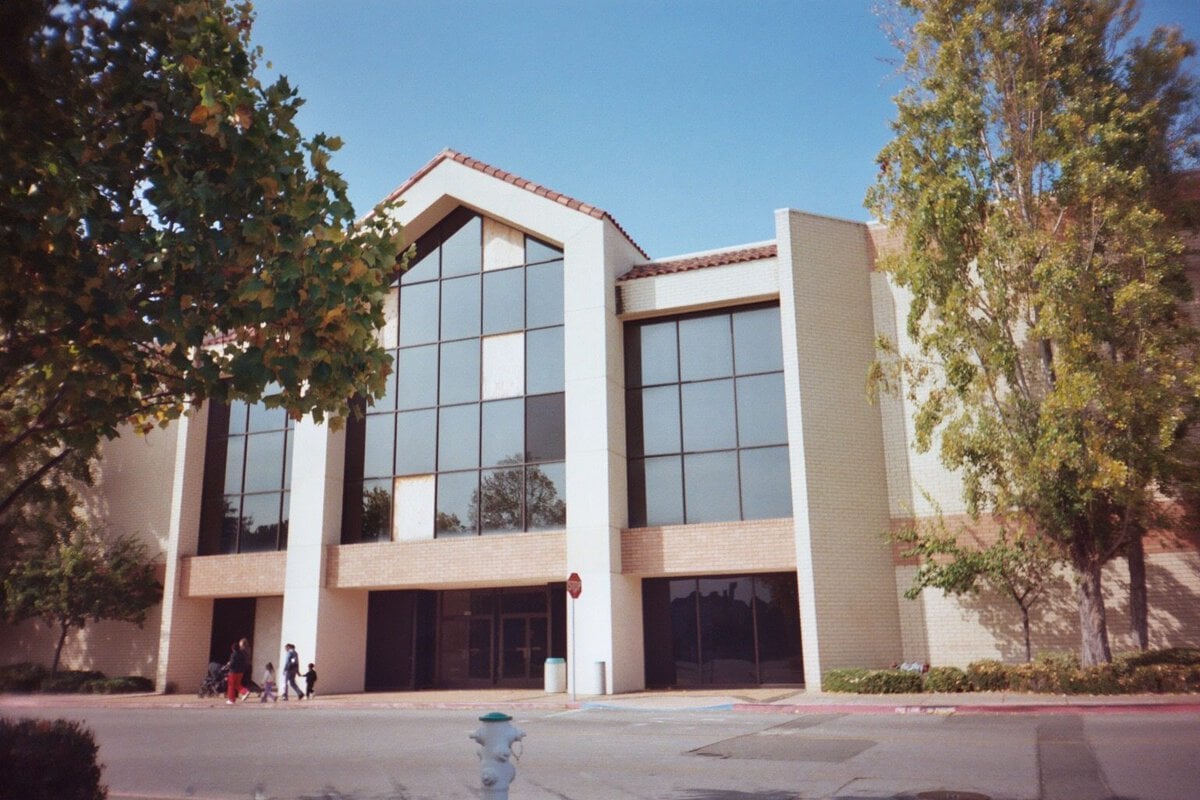
Independent Publisher Notice
BestAttractions is an independent editorial publisher. We are not affiliated with, endorsed by, or acting on behalf of any location, business, property owner, manager, government agency, or organization described in this article. Comments posted on this page are not forwarded to, reviewed by, or acted upon by any entity mentioned in the article. For official inquiries, complaints, applications, bookings, or other requests, please contact the relevant entity directly through its official website or other verified channels.
Eastmont will never be like it was now all it is county offices a few stores outside and I mean 3 stores what’s keeping it open now is the county office IHSS offices and so that’s pretty much it
Eastmont's name still says Town Center, and its daily role is now more practical than retail. People go there for IHSS, county benefits, health care, library services, and police services, while the remaining shops and restaurants play a much smaller role than they did during the mall's peak years.