
A Waterfall, Birds, and the Day Southridge Opened
Thirty feet of falling water greeted the first shoppers at Southridge Mall on September 10, 1970. An aviary near the central court held small birds: miniature parrots, conures, cockatiels, and lovebirds. Octagonal parasols marked the entrances.
Sculptures lined the corridors. The building at 5300 S. 76th Street in Greendale had not been designed merely to hold stores. It was designed to hold people, to give them a reason to stay.
Architect Wah Yee of Southfield, Michigan, gave the mall a two-level layout with wide interior corridors, open courts, and the kind of visual landmarks that defined the best regional malls of the period.
Climate control, seating, and the natural pull between five anchor department stores made long visits feel easy.
For shoppers arriving from Greendale, Greenfield, Franklin, Hales Corners, and Milwaukee's south side, nothing else nearby offered this.
How Southridge Mall Became a South-Side Destination
Southridge was not an accident of real estate. Herb Kohl's family had already built a retail identity in Wisconsin through Kohl's food stores and department stores.
The Taubman organization brought national enclosed-mall expertise.
Together, they planned Southridge as the southern half of a two-mall strategy for metropolitan Milwaukee, with Northridge following in 1972 to serve the north side.
Both malls were tied to the 76th Street corridor.
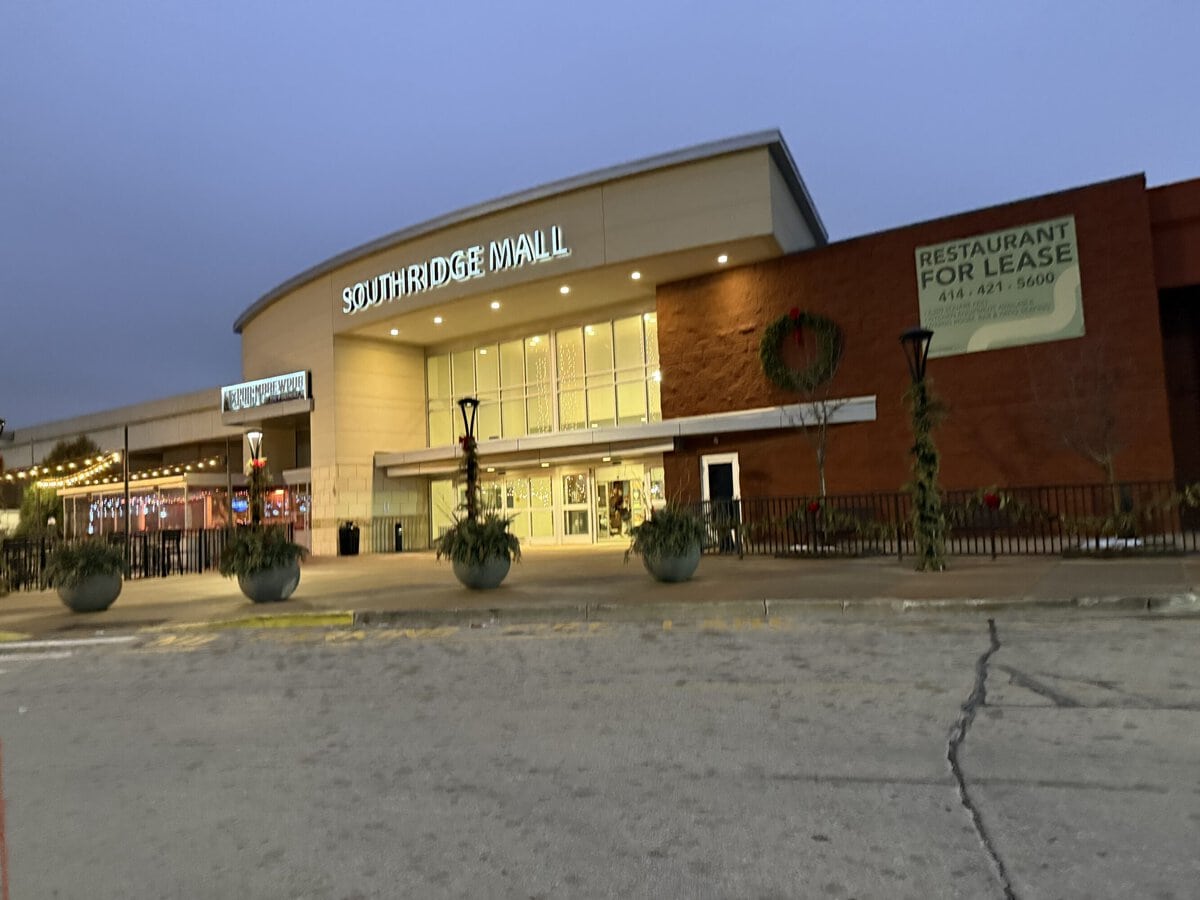
Construction ran through 1969 and into 1970. When Southridge opened, it contained about 1.42 million square feet and five department stores: Sears, JCPenney, Boston Store, Gimbels, and Kohl's.
Sears and JCPenney brought appliance, catalog, and household traffic. Boston Store and Gimbels connected the mall to Milwaukee's department-store traditions.
Kohl's tied it to the local developer's name. About 120 smaller retailers filled the corridors between them.
Southridge Mall Through the 1970s and 1980s
By the late 1970s, Southridge had about 130 stores and drew heavy holiday traffic.
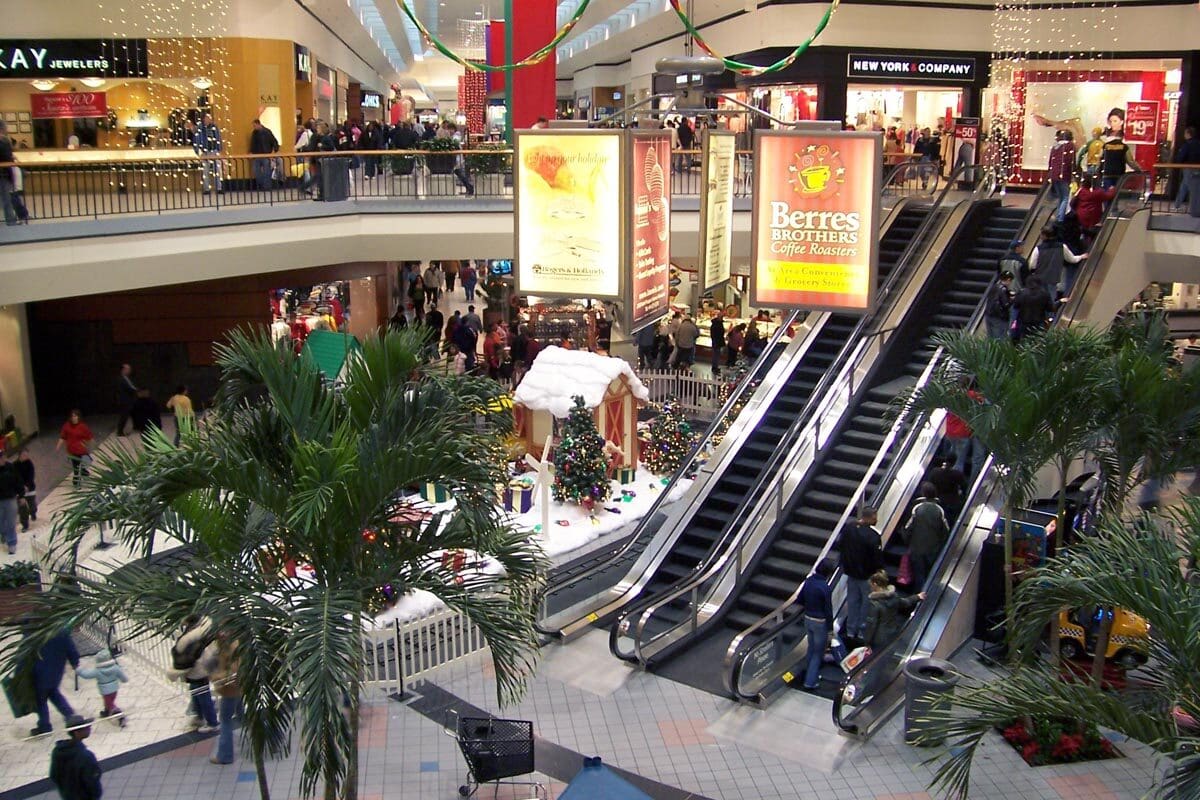
It was where south-side Milwaukee families spent Saturday afternoons, where teenagers moved between stores with no particular destination, where holiday shopping got done in a single long visit.
After Gimbels closed in the 1980s, the space passed through Marshall Field's, H.C. Prange, and Younkers, each name marking another wave of national department-store consolidation.
The waterfall and aviary from opening day were central to the mall's identity through these years. They gave shoppers a fixed landmark and a place to meet.
Ownership Changes and the 2012 Southridge Rebuild
The Kohl family sold its Southridge retail interests in 1988. Western Development Corporation took over, and a renovation in the late 1980s added a new fountain and refreshed the interior.
Around 1990, a food court opened at the north end, centralizing fast-food tenants that had previously been scattered through the building.
The food court became its own gathering space, especially for teenagers and families with young children.
In 2005, exterior-facing retail space was added, including World Market. That change broke the fully inward-facing model that the original design had held.
Some tenants now faced the parking lot rather than the enclosed corridor.
The property passed through The Mills real estate platform and, eventually, a structure involving Simon Property Group and Farallon Capital Management.
In March 2012, Simon acquired Farallon's interest in 26 malls, including Southridge.
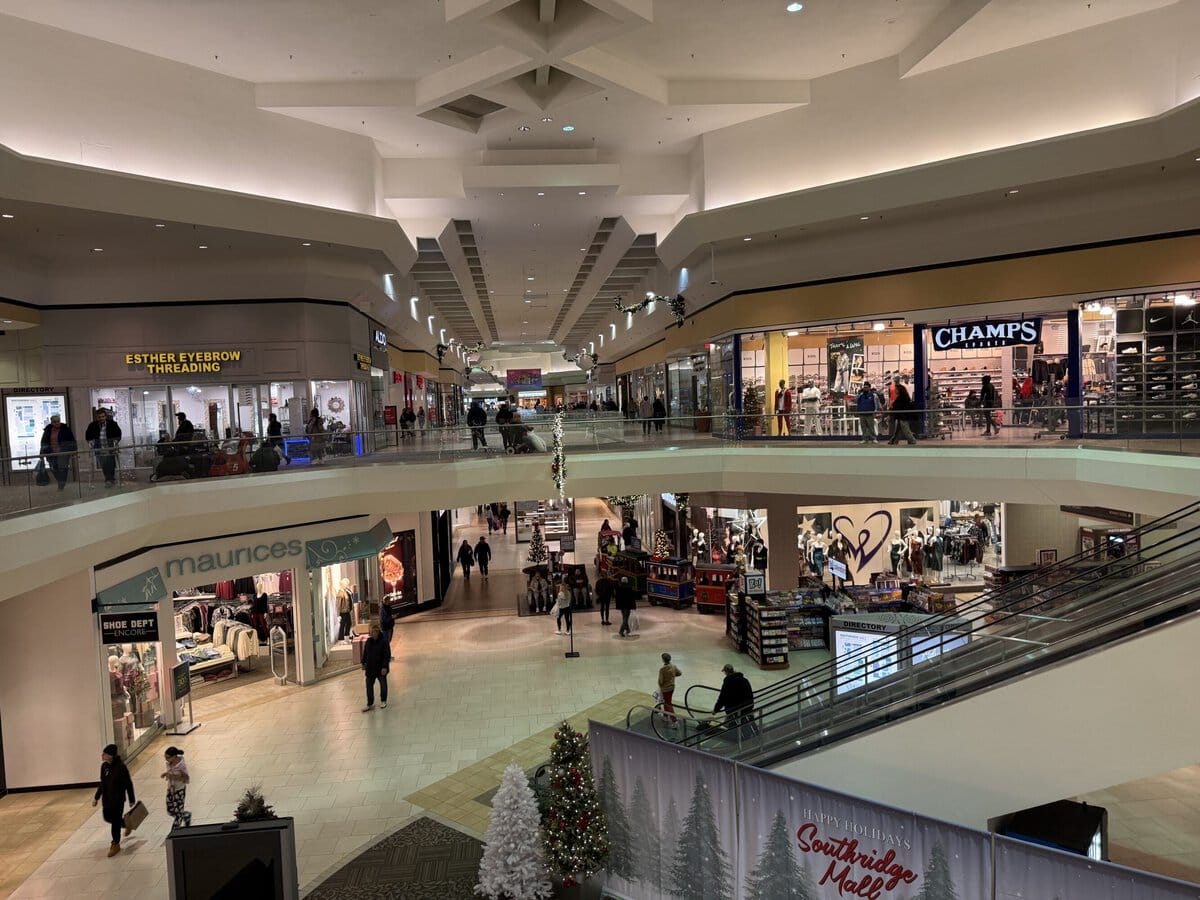
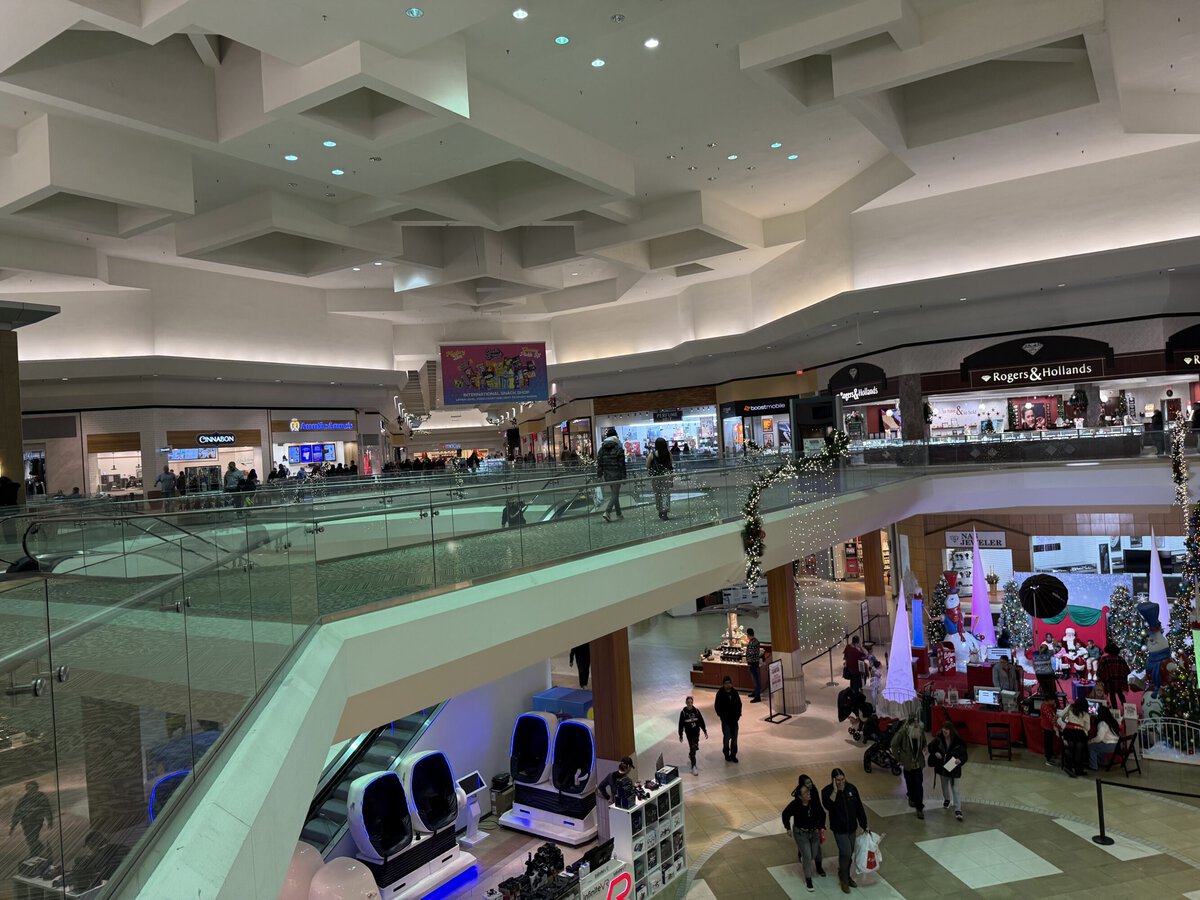
The same period brought the most ambitious modern investment the mall had seen: a roughly $52 million redevelopment that added a new Macy's, redesigned entrances, new skylights, updated common areas, a remodeled food court, and removal of heavy steel structures in the open court.
Boston Store completed a major renovation and grand reopening as part of the same push.
Marcus BistroPlex, a cinema with restaurant seating, opened in 2017 at the north end of the property. Explorium Brewpub followed in 2017.
The escape-room venue, 60 to Escape, later joined the tenant mix.
Sears, Boston Store, Kohl's: Three Anchors Gone in Two Years
Then came 2017 and 2018. Sears closed in 2017, ending a run that had lasted since opening day.
In March 2017, Kohl's announced it would leave the mall and relocate to the 84South development in Greenfield. The Southridge store, a two-level 85,000-square-foot space, would close September 29, 2018.
A smaller one-story 55,000-square-foot replacement store would open in Greenfield the following day. The family name that had co-founded the mall was leaving it.
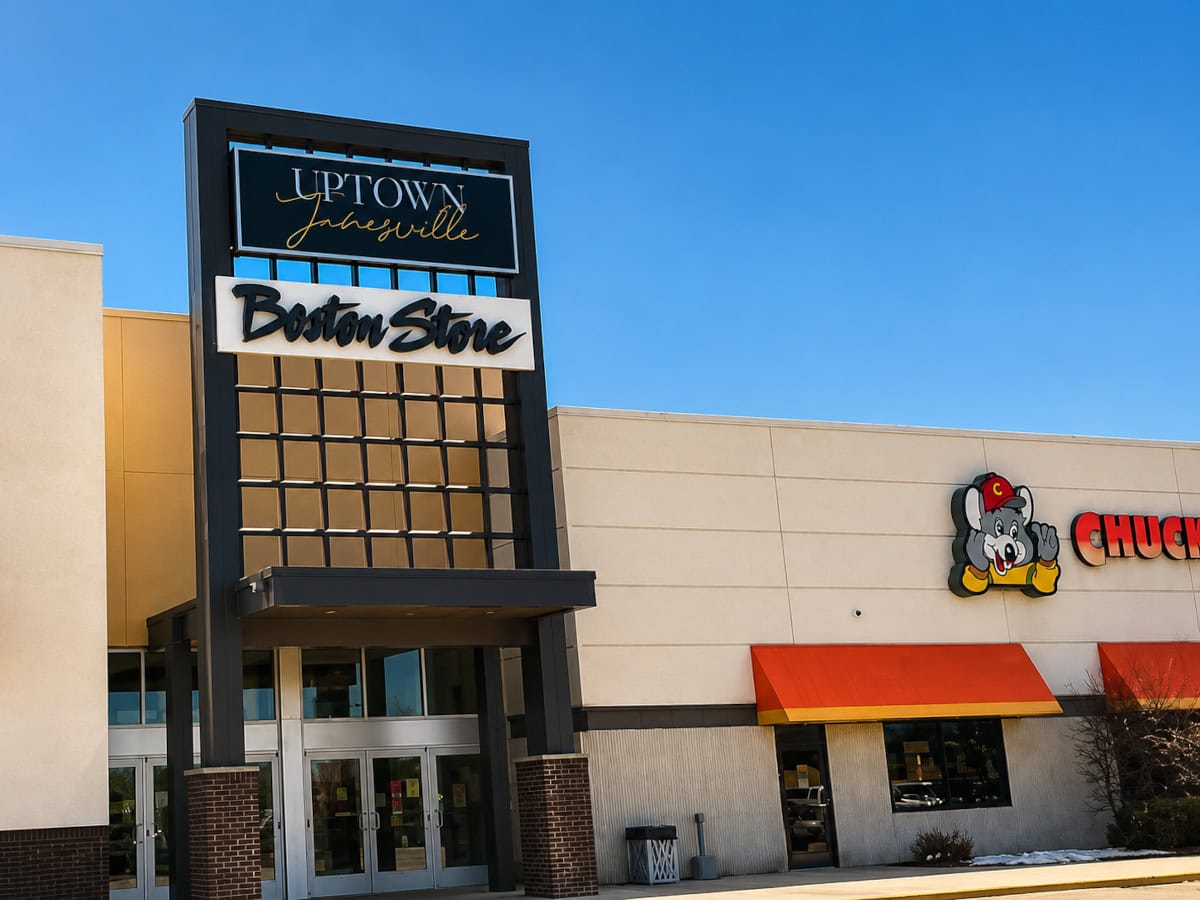
Boston Store's departure was tied to the collapse of Bon-Ton Stores. Bon-Ton filed for Chapter 11 bankruptcy in February 2018.
Southridge's Boston Store had 180 employees on the closure list, with the first separations expected to begin June 5, 2018.
All 212 Bon-Ton locations in 23 states were expected to close by August 31, 2018. Boston Store was gone from Southridge by that summer.
Three of the five original anchors had closed or departed within two years. Macy's and JCPenney remained.
Backfilling the Boxes: What Replaced the Anchors
The former Sears building did not stay empty long. In February 2018, Greendale approved a permit to redevelop it.
Dick's held its grand opening in October 2018, taking about 66,000 square feet on the lower level. Round1 Bowling & Amusement took about 45,000 square feet on the upper level.
T.J. Maxx was a 2019 addition. Golf Galaxy opened as part of the same 2018 redevelopment.
One department-store box became four distinct tenants: sporting goods, entertainment, off-price apparel, and specialty golf retail.
People came to bowl or buy running shoes where they had once bought appliances or dress coats.
The former Boston Store parcel took a different path. The building sat on the exterior wall of the mall and on a property line, which made straightforward redevelopment difficult.
Demolition required resolving utility, building-code, and operating-agreement complications that the original mall design had never anticipated.
Greendale bought the nearly 15-acre parcel for $3.3 million in 2021. The building sat vacant while the village worked through those issues.
Debt, Foreclosure, and the Mall That Stayed Open
The pandemic cut traffic and revenue across the enclosed-mall sector. By December 2021, the mall's owner was in foreclosure proceedings, with debt stated at about $121.3 million.
The process stretched for years: a sale deadline was later extended to December 16, 2024.
A July 2025 appraisal valued the property at $45 million, well below the original debt figure.
A loan of about $40.3 million was classified as a non-performing matured balloon loan in April 2026. Annual occupancy for 2025 was reported at 78.2 percent.
Spinoso Real Estate Group managed and leased the mall through this period as receiver.
Southridge Mall stayed open.
Macy's, JCPenney, T.J. Maxx, Dick's, Golf Galaxy, Round1, the food court, Marcus BistroPlex, 60 to Escape, and Explorium Brewpub all kept operating through the foreclosure and sale-marketing process.
The financial difficulty was about ownership debt and property valuation, not an empty building.
By March 2026, the core property was being marketed for sale, with about 85.8 percent occupancy excluding the dark Boston Store.
Verdell on the Green: What's Being Built Next Door
While the core mall worked through its foreclosure, the former Boston Store parcel had been moving toward a different future since 2021.
Greendale approved an early mixed-use concept that year with as many as 790 apartments and retail space.
By June 2025, the Greendale Plan Commission unanimously approved a revised version: a roughly $100 million project with 739 apartments, about 20,000 square feet of retail, four buildings constructed in phases, new roads, and a central green space about 71 feet wide and 250 feet long.
A new mall entrance was planned behind the first-phase building.
In May 2026, Barrett Lo Visionary Development bought the 14.8-acre parcel from Greendale for $3.3 million. The project is named Verdell on the Green.
Site preparation and utility relocation were estimated at about four to five months, with the first building requiring roughly 14 to 16 months after that.
Greendale also launched the Southridge Area Master Planning Project in 2025, covering nearly 100 acres of mall campus, adjacent parcels, parking lots, and 76th Street corridor land.
In March 2026, the Village Board chose "Emerald Reserve" as the name for the broader planning district.
Southridge Mall Today: What Remains and What's Next
The waterfall is gone. The birds are gone. The parasol entrances have been replaced, and three of the five original anchors have not come back.
What has come back is something different: bowling lanes and racks of discounted athletic wear in former anchor space, along with an escape room, a brewpub, and a cinema with restaurant seating elsewhere on the property.
Southridge still draws roughly the same crowd it always has. More than 465,000 people live within seven miles. The mall remains one of the largest enclosed retail properties in the Milwaukee area.
What it is not, and may never be again, is a place where five full-service department stores compete for the same shopper.
Within a few years, hundreds of residents will live on what was once its parking lot.
That shift, from surface asphalt to apartments with a central green space, may prove to be the most significant physical change at 5300 S. 76th Street in the mall's 55-year history, not because it improves the retail mix, but because it replaces an underused department-store parcel with people who live there.
Independent Publisher Notice
BestAttractions is an independent editorial publisher. We are not affiliated with, endorsed by, or acting on behalf of any location, business, property owner, manager, government agency, or organization described in this article. Comments posted on this page are not forwarded to, reviewed by, or acted upon by any entity mentioned in the article. For official inquiries, complaints, applications, bookings, or other requests, please contact the relevant entity directly through its official website or other verified channels.