Greeley Mall: carpeting, fountains, and 1973
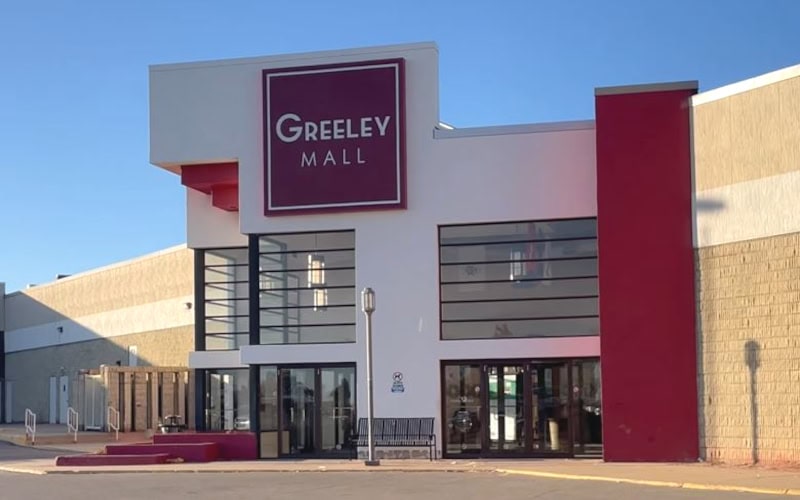
Greeley Mall opened in 1973 at 2050 Greeley Mall, where the U.S. 34 Bypass meets 23rd Avenue, and the prairie begins to look like a place that might benefit from indoor life.
Developed by Denver's Fulenwider Company, the mall was pitched as the premier shopping destination for Greeley and Weld County, and it arrived with the particular confidence of the era.
If you roof enough square footage, you can domesticate almost anything, including time.
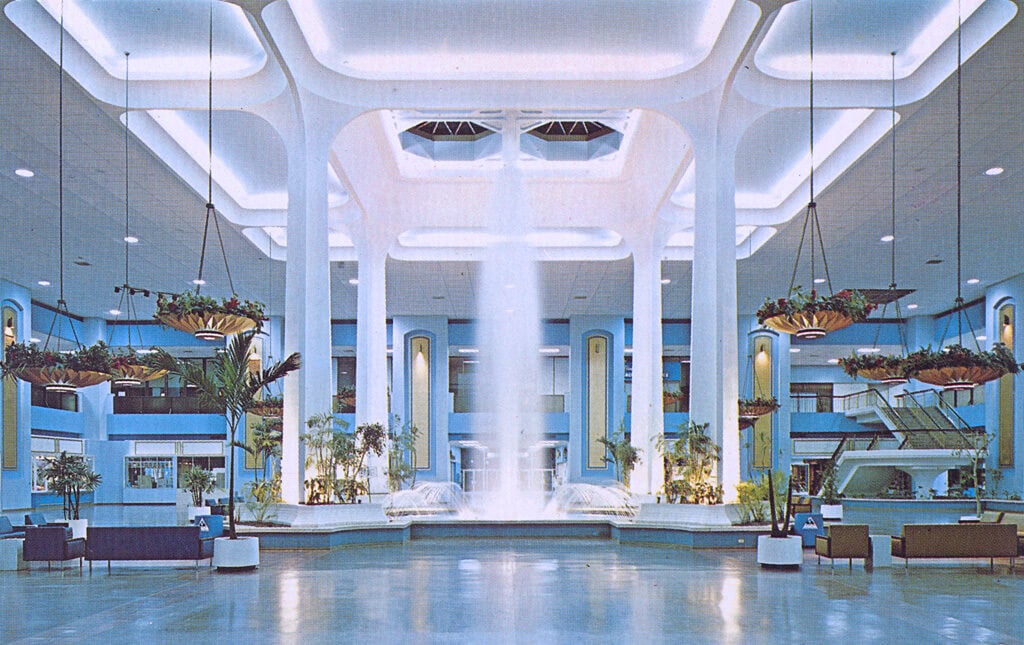
The interior sounded like a seventies mood board that someone accidentally built at full scale. There was dark brown woodwork. There was orange carpeting.
There were fountains - not just one symbolic spout, but multiple decorative fountains, with a large central fountain doing the civic work of making commerce feel like leisure.
At opening, the mall was described as around 500,000 square feet with more than fifty stores, built for more than $12 million, which in 1973 was both money and a statement.
The anchors were department-store America in three dialects. Joslin's brought a Denver pedigree. Montgomery Ward brought the national catalog-to-counter authority.
J.M. McDonald's, a regional department store, rounded it out, proof that Greeley Mall was meant to be local even as it tried to look like everywhere.
1980s expansion and new anchors
In the early eighties, Greeley Mall followed the usual path for successful malls and kept expanding before anyone questioned if there would always be enough shoppers.
In 1981, a new north wing opened, and Sears became the fourth main store. Sears brought a practical, straightforward vibe, the kind of place where you could pick up both dress socks and a lawnmower blade in one trip.
Near Sears, the smaller shops captured the spirit of the decade. Radio Shack offered cords, batteries, and all the little parts you bought, hoping you could fix something on your own.
The toy store called "Three Wishes" brought a gentler touch, with a name that made shopping feel like a small gift.
But the mall soon got a clear sign that growing bigger didn't guarantee it would last.
In 1983, J.M. McDonald's department store closed, leaving a large, empty space that was hard to miss. Still, the decade finished on a positive note.
In 1987, JCPenney moved from downtown Greeley to a new spot on the mall's southwest side, becoming the fifth and final main store.
This shift quietly showed that the city now saw Greeley Mall as the place where people would spend their afternoons.
1998: Dillard's takes over Joslin's (and expands)
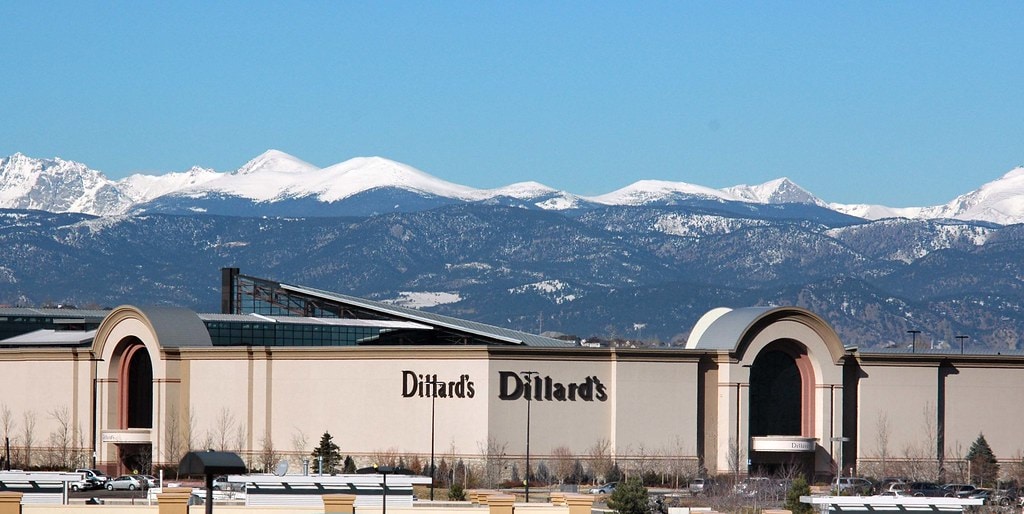
By the nineties, the mall's changes began arriving by merger rather than by bulldozer. In 1998, Dillard's acquired Mercantile Stores, the parent company of Joslin's, and the Joslin's space became a Dillard's.
But Greeley got an unusual arrangement, one that sounds like a retail plot twist: Dillard's operated two locations in Greeley Mall.
The former Joslin's became one, and the long-vacant J.M. McDonald's box became the other, branded as "Dillard's East" and "Dillard's South."
A dual-anchor setup like that is both practical and faintly strange, like discovering your town has two post offices that do not speak to each other.
It kept square footage active and foot traffic moving, and it also revealed what the mall was becoming: a place where identity could be split, re-labeled, and kept alive through signage.
This was also the period when Greeley Mall started to be described as metrics.
One corporate-era snapshot places it at 574,000 gross leasable square feet with seventy stores, anchored by Dillard's (two), JCPenney, Montgomery Ward, and Sears.
From Ward to screens: Greeley Mall's 2004 reset
The 2000s began with a real loss: Montgomery Ward closed in 2001 when the company went out of business.
The building was completely torn down, which is rare for malls. The empty space gave the mall a chance to try something new - entertainment.
In 2004, Cinemark opened a movie theater there, turning the old Ward spot into a place people could visit just for a ticket and maybe a big soda.
In 2004, the mall got a major makeover to update its look and change how people saw it. Skylights were added, and a new main entrance was built near the theater.
The colors switched to white and gray, so the building looked less like it was from 1973 and more like a simple backdrop for whatever came next.
The mall's ads started to highlight the theater as a way to attract more visitors. Cinemark was called Greeley's only theater and promoted as a main attraction with comfortable seats and more food and drink options.
Even then, it was clear the mall was learning to survive by becoming a place to visit, not just a place to shop.
The $6.1M auction and the roof that wouldn't hold
In 2006, the mall was sold together with Holiday Village Mall in a deal that felt like the last sunny day before a long stretch of bad weather.
At that time, people said they were worth more than forty million dollars, a number so high that later prices seem like mistakes.
The next big thing was not another sale but an emptying out: in May 2008, Dillard's closed both of its mall stores at the same time, leaving two big main spaces empty at once.
For a building designed around these main stores, it was like losing the punctuation.
By 2012, after several attempts to sell it at auction and two years when it had no owner, the mall was sold online for about $6.1 million.
The new owner was Moonbeam Capital Investments, a Las Vegas company known for buying malls that are having trouble and holding onto them without doing much.
Locals said Moonbeam's patience just felt like they were never around.
The area around the mall was part of a special tax district, which meant the property was not just a private issue but something the public could help with.
The city talked about hopes for a mix of stores, businesses, offices, and homes. The building itself showed its own problems.
In 2017, a bad storm sent water pouring in from the roof, and pieces of the ceiling fell down. Taking care of the building was no longer just a small expense that could be ignored. It became the main story.
At Home moves in, then moves on again
At Home came to Greeley Mall in the summer of 2015 with the boldness of a big store that could fix everything.
On July 30, the Texas-based home decor chain opened a 95,000-square-foot store at 1840 Greeley Mall, moving into a main spot that had been empty since Dillard's left.
A week later, at 9 a.m. on August 7, the mall held a small grand opening and ribbon-cutting, the kind of event that makes shopping seem as important as roads or bridges, and promised about twenty-five local jobs.
The move made sense: when a regular mall is losing clothing stores and big department stores, it tries to fill the space with things like lamps, throw pillows, and the hope that new furniture can change its future.
But At Home did not become a new long-term center for the building.
By early 2021, it had moved out of the mall, leaving behind the usual problem for modern American malls: a huge, already-built store waiting for its next use.
Pandemic pivot: Colorado language program and ReStore
The national retail downturn completed what local decline had begun. Sears closed in January 2018 as part of closures across the country, and its building was demolished in 2019, leaving the mall even emptier.
JCPenney, which had once moved from downtown with much fanfare, closed in summer of 2020 after filing for Chapter 11.
At that point, the mall no longer had any traditional department store anchors, which simply means the old way of doing things was over.
Instead of new clothing or makeup stores, the mall changed.
In 2020, the Colorado Language Program opened in a 2,400 square-foot space, offering in-person English classes, help with becoming a U.S. citizen, GED classes, testing, and practical help like notary and job support.
They held an open house on a Saturday afternoon, which made it feel like the mall was quietly returning to its old role as a place people could easily reach.
In 2022, Habitat for Humanity ReStore moved into the old JCPenney space, turning the former main store into something new.
The display area covered 10,000 square feet, and some JCPenney shelves and furniture were kept and used again.
This small detail showed the spirit of the times, not so much looking back, but focusing on saving money and reusing what was already there.
The Mall After Retail
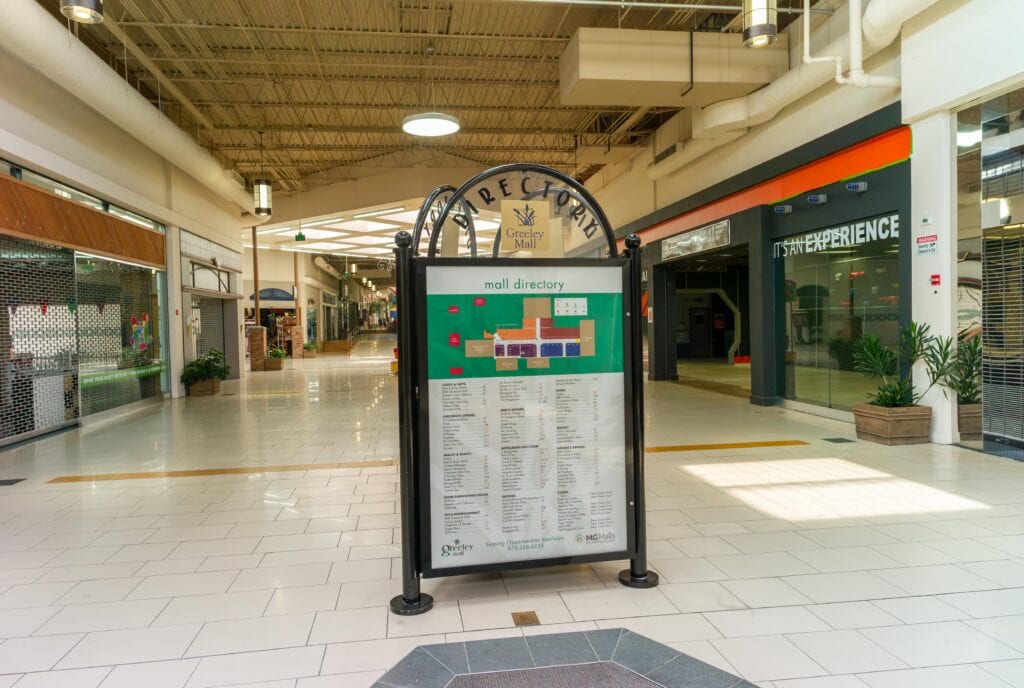
By 2024 and 2025, Greeley Mall was widely described as functionally dead, though it still had living organs. Cinemark remained an entertainment anchor. Habitat ReStore occupied the former JCPenney box.
The vacancy was high, and the tenants skewed toward small local businesses, church groups, and non-retail entities, which is what happens when a mall stops being a mall and starts being cheap, indoor space.
There were attempts at spectacle. Rodz & Bodz, a movie car museum, opened in March 2024 in the former At Home space, a roughly 90,000-plus square-foot box.
By September, the museum abruptly closed its mall location, citing a poor building state: broken HVAC and severe ceiling leaks that the owner said Moonbeam refused to repair.
Meanwhile, the area kept generating planning pressure: a proposed 224-unit apartment complex tied to 1750 Greeley Mall Street, and city action in 2025 connected to potable water infrastructure, including council votes to acquire property at Greeley Mall and council files labeled with hazard letters and potential waterline alignments.
The future, in other words, may arrive as pipes before it arrives as boutiques.
Greeley Mall, still under Moonbeam ownership with no announced major redevelopment plans as of late 2025, remains its own, older question.