A strong Indiana wind still blows across the parking lots along U.S. 31 in Greenwood. In the mid-1960s, shopping here meant going out into that weather between stores.
Atkinson & Company built the Greenwood Shopping Center as an outdoor mall on 87 acres, spending about $25 million to build it.
By 1966, it was fully open. Greenwood was a quiet suburb with just under 10,000 people, but the shopping center was built to help the area grow as people moved south from Indianapolis.
Sears was the main store and became a regular stop for many families, including on Sundays. L.S. Ayres was in the northwest corner as the fancier store. Woolworth added a store that sold many different things.
The center competed with Southern Plaza, which opened in 1961, and Glendale Shopping Center, which opened in 1958.
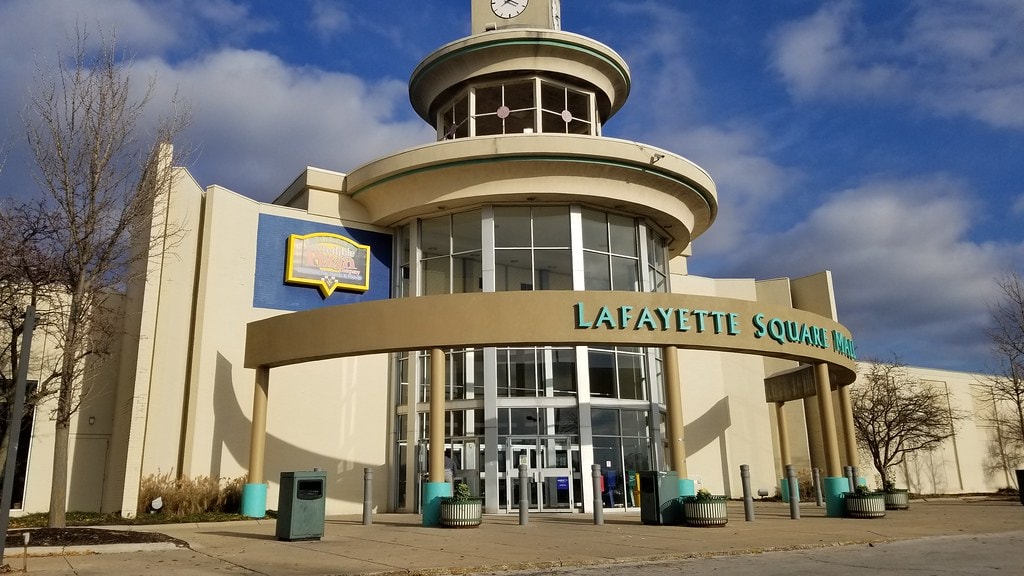
In 1968, Lafayette Square Mall opened as the first indoor shopping center in the Indianapolis area. The roof, heating, and cooling systems there made the outdoor walkways seem outdated quickly.
From Smockton to a growing south suburb
Greenwood's retail story begins with the town's earlier history. Anglo-American settlers arrived around 1824.
The Brewer family and Jacob Smock established a home, and the settlement became known as Smockton. In 1825, the name changed to Greenfield.
It later changed to Greenwood to avoid confusion with another Greenfield in nearby Hancock County.
Railroads helped turn Greenwood into a place where goods moved in and out. The Madison and Indianapolis Railroad made it a shipping point.
In the 1870s, J. T. Polk opened a canning factory. It grew into the largest cannery west of Baltimore and became the town's main employer.
Greenwood was still small in 1864, with about 300 residents. By 1960, it was a 5th-class city with a population of 7,200.
On January 1, 1900, the Indianapolis, Greenwood, and Franklin Railroad began operating as an interurban line. It allowed people to live in Greenwood and commute to jobs in Indianapolis.
Growth accelerated in the 1970s after Unigov formed in 1970, and a court-ordered school desegregation plan brought busing in 1973.
Many families moved from Marion County into Johnson County, and home builders in Greenwood averaged 400 new housing starts per year.
As the area grew, the south side developed as a working-class, parochial district with strong German and Southern roots. The customer base that formed there was large and loyal.
Simon encloses it and names it in 1980
In 1977, Melvin Simon and Associates acquired the property from Atkinson & Company. The purchase price was not made public.
The Simon family was based in Indianapolis and worked in developing and running shopping malls.
From 1977 to 1980, the owners changed the open-air center into a fully enclosed mall.
The purpose was simple: move the walkways indoors and cover them with one roof so people could shop all year without the weather interrupting the trip.
The work connected five department stores with interior corridors and created roughly 1,000,000 square feet of interior walking space.
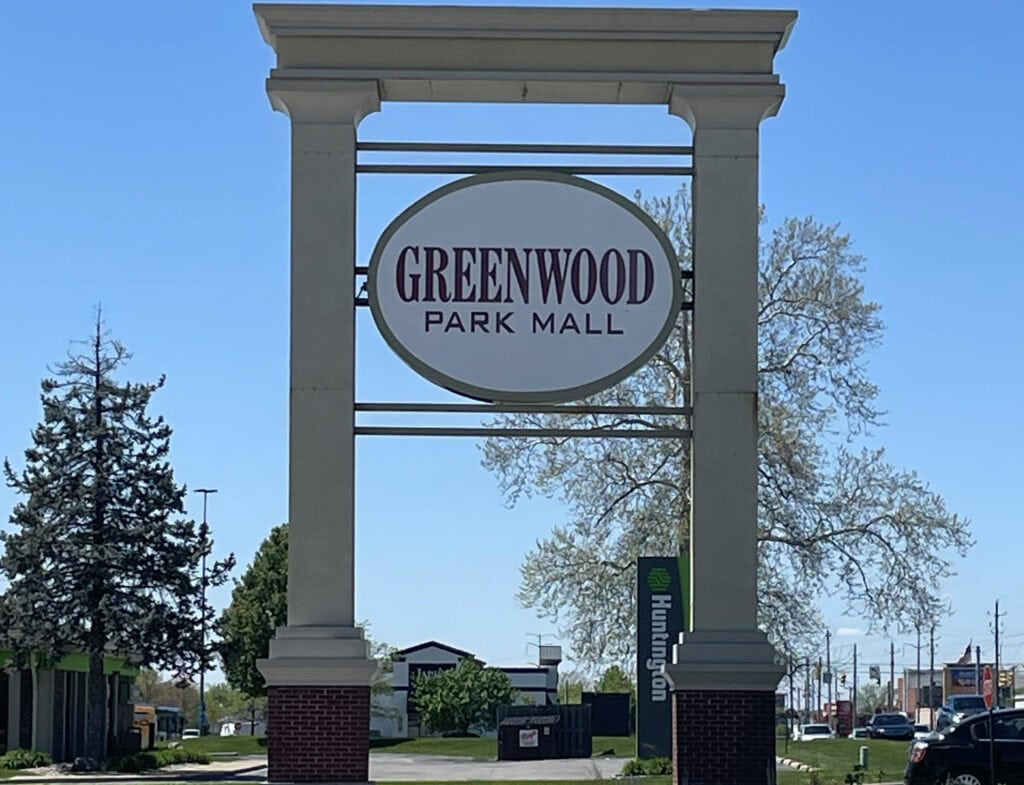
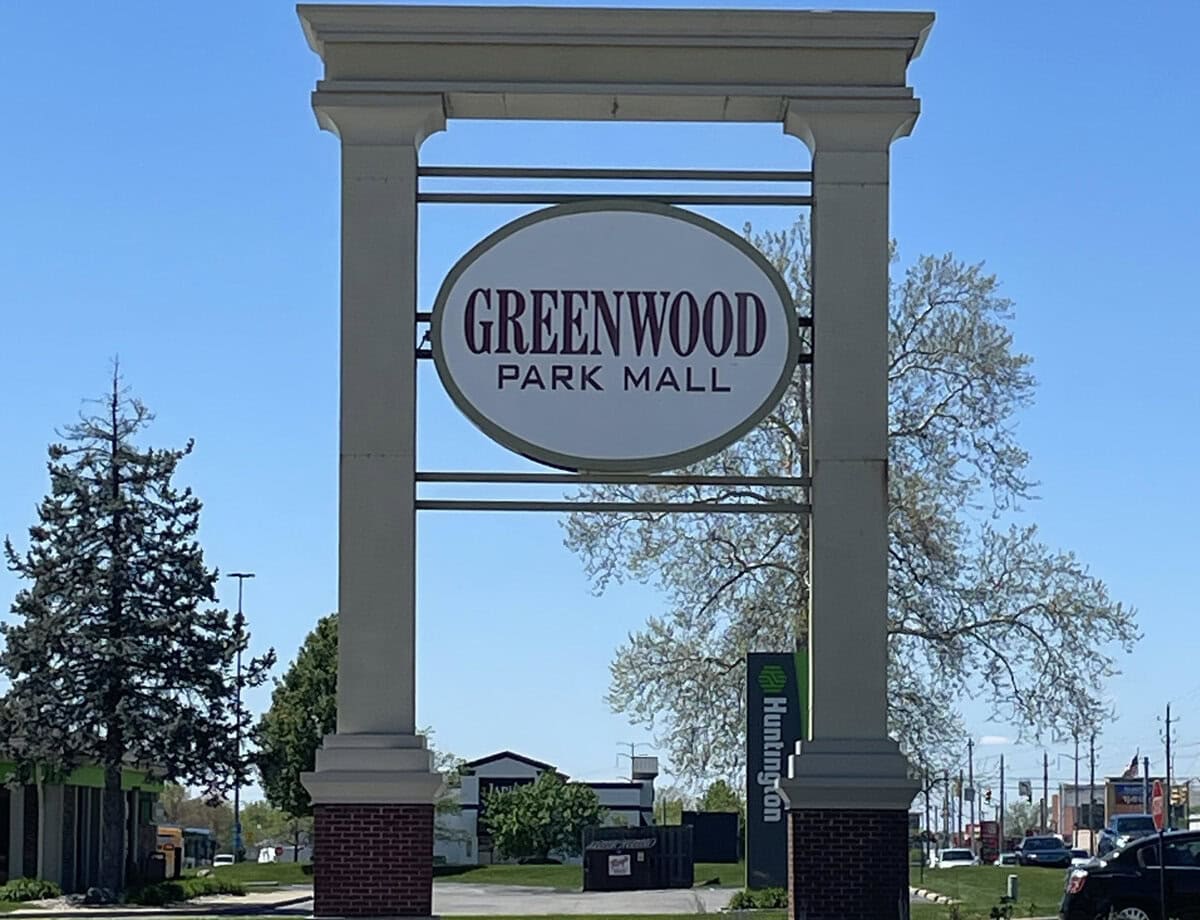
In 1980, the property reopened with its current name, Greenwood Park Mall. The interior used an indoor park look.
Live plants and large indoor trees filled the corridors. Park-style benches provided places to sit. Outdoor-style lampposts ran along the hallways.
The layout and decor were meant to make it feel like a shared indoor place, not only a set of stores.
Anchor turnover from Blocks to the Macy's era
The mall's anchor story tracks the consolidation of American department stores. One anchor space began as the William H. Block Co., often called Blocks.
In 1988, Montgomery Ward purchased several Block's locations in Indianapolis-area malls, including Greenwood Park.
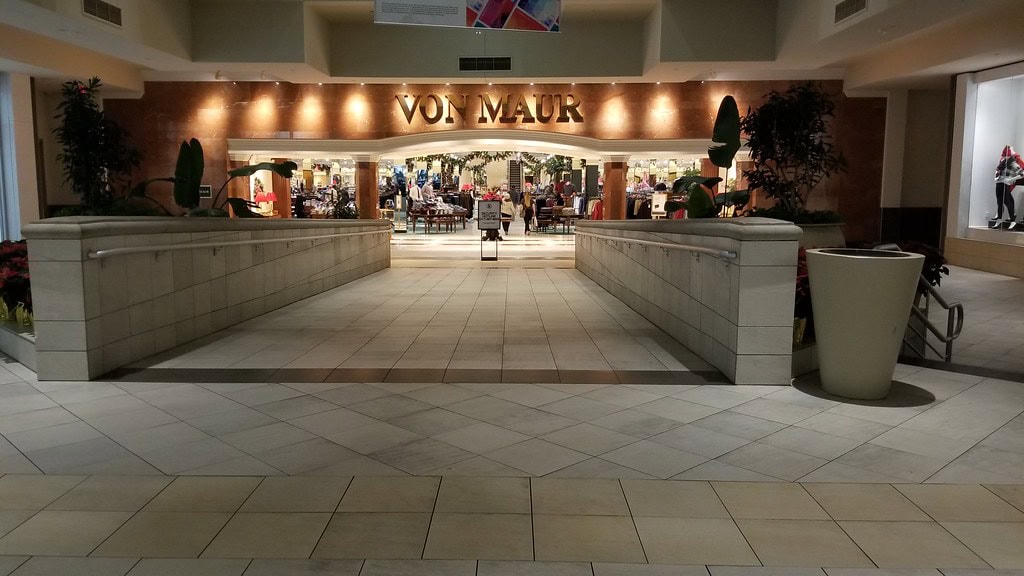
After Montgomery Ward announced it was going out of business in 2000 and closed its remaining stores in 2001, the former anchor space at Greenwood Park Mall was taken over by Von Maur.
The store now known as Macy's originally operated as Lazarus. The parent company that ended up controlling Macy's also controlled the Lazarus and L.S. Ayres brands, forcing a choice between locations.
In 2005, the Lazarus store was rebranded as Macy's, while the L.S. Ayres store was liquidated and closed.
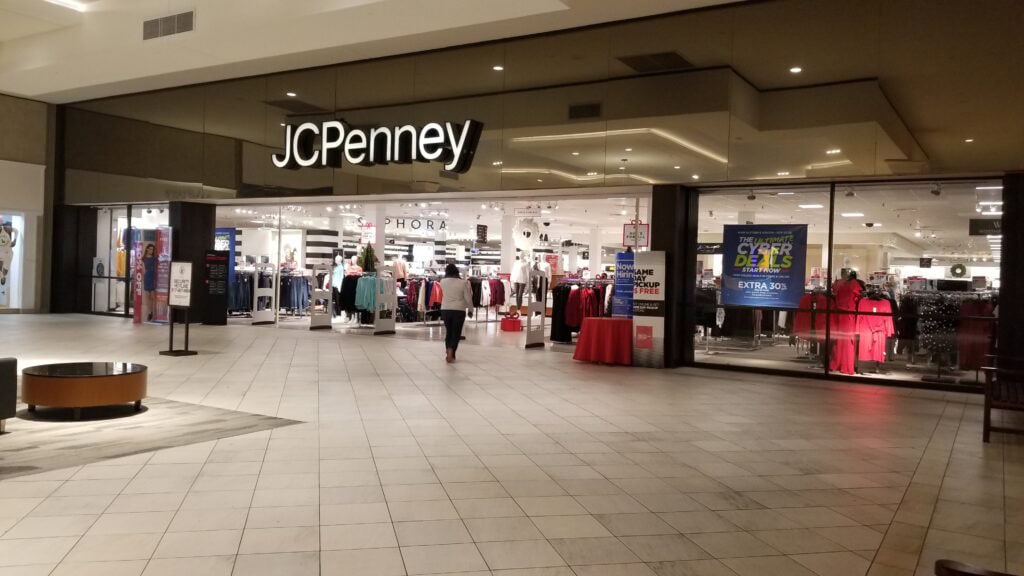
Woolworth began as a variety store and later became the JCPenney Home Store. These shifts kept anchor space in motion while the mall kept its role as the south side's main indoor shopping destination.
2003 remodel brightens halls by spring 2004
By the early 2000s, the interior design from 1980 felt out of date.
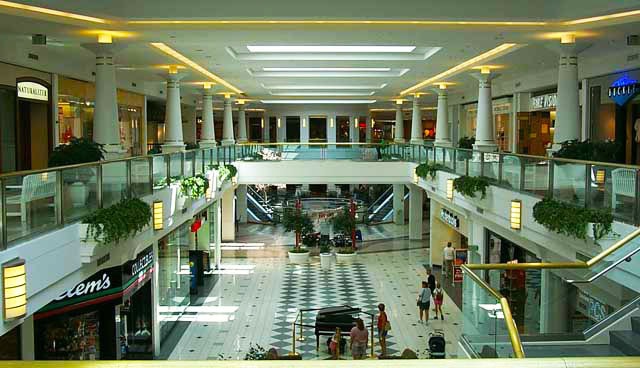
Greenwood Park Mall still had the "Park Theme" look from those years, including dark wood trim, brown rectangular floor tiles, and dense indoor landscaping.
In 2003, Simon Property Group began a major interior remodel meant to keep the mall working well for another twenty years.
Crews stripped out many of the darker finishes and replaced them with a lighter color scheme built around white and pale taupe.
The taupe provided a small amount of contrast against the white and also helped hide dirt and scuffs.
Most of the live plants and the large indoor trees were taken out. The outdoor-style lampposts were removed and replaced with modern lighting designed to spread brightness more evenly through the corridors.
The work was completed in the spring of 2004.
The mall kept the word "Park" in its name, but the interior shifted to a cleaner, more neutral look that matched newer, higher-end shopping centers.
The purpose was a brighter space that felt up-to-date.
Lifestyle center opens after L.S. Ayres falls
After L.S. Ayres closed, Simon Property Group chose not to recruit another department store.
The vacant building was demolished in 2006. In its place, the mall added an expansion that worked differently from the enclosed interior.
A 118,000-square-foot lifestyle center opened on November 8, 2007.
It returned part of the property to open-air space, but with a focus on dining, storefront visibility, and outdoor seating, with entrances facing the parking lot.
The Cheesecake Factory opened and added a high-profile sit-down option that had been missing on the south side.
Barnes & Noble arrived as a large bookstore and a new sub-anchor. BJ's Restaurant added more dining choices.
The wing also attracted brands such as Coach, Sephora, and White House Black Market.
The new area made dinner and browsing part of the trip, not just shopping. It also let the property compete with newer formats without abandoning the enclosed mall core.
Sears' exit from Greenwood Park Mall
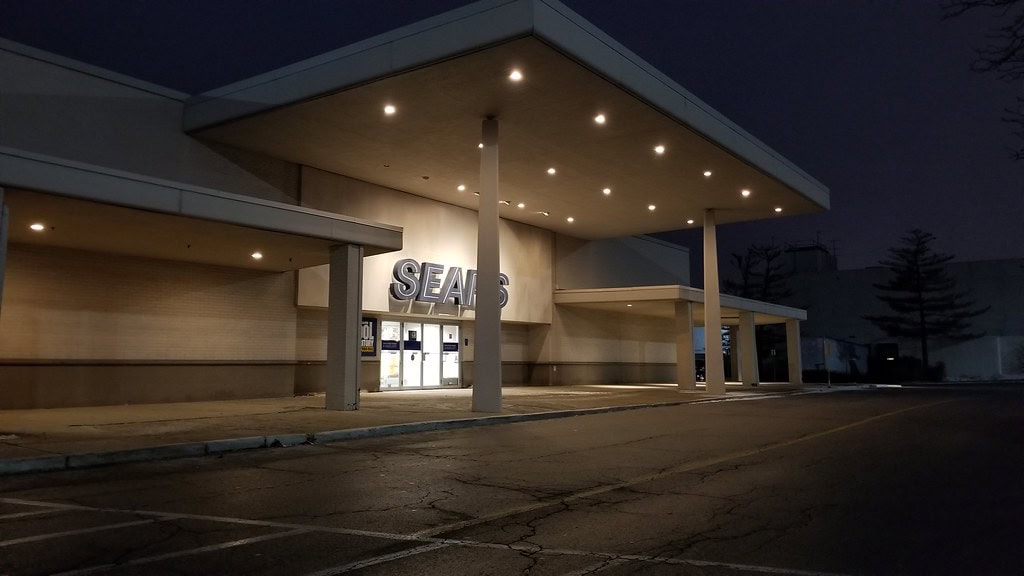
Sears was one of the property's original anchor stores from the open-air shopping center years. It operated here starting in 1965 and remained for more than 50 years.
In 2018, Sears Holdings filed for Chapter 11 bankruptcy protection as it struggled with heavy debt and the growth of online shopping.
On October 15, 2018, the company announced that the Sears at Greenwood Park Mall was one of 142 unprofitable stores scheduled to close across the country.
The closure removed a long-time anchor that many shoppers relied on for everyday purchases.
The mall remained a major draw even after Sears left. It continues to serve as a key retail center on the south side and a major stop along the commercial stretch of U.S. 31.
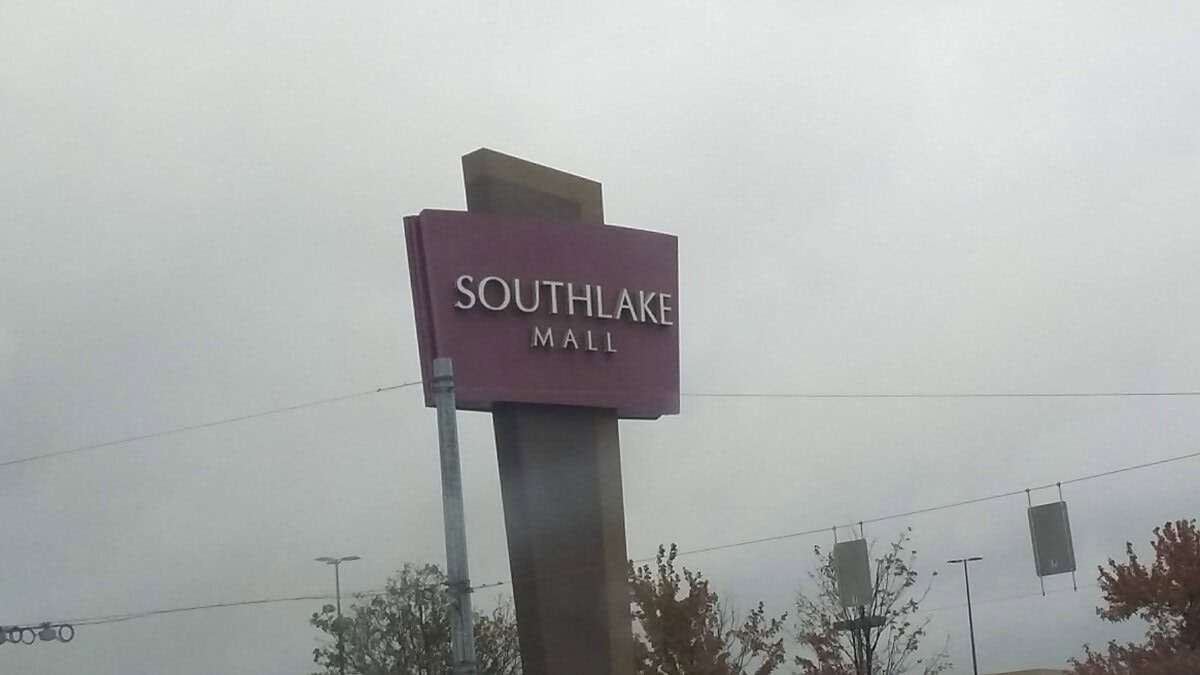
By total size, Greenwood Park Mall ranks as Indiana's third-largest shopping mall at about 1.28 million square feet, behind Castleton Square and Southlake Mall.
It serves a large local customer base, including more than 125,000 residents in Johnson County alone. What to do with the empty Sears space remains the biggest open question for the next redevelopment step.
July 17, 2022: a food court attack in seconds
The mall's darkest day came on Sunday, July 17, 2022. At about 4:54 p.m., Jonathan Douglas Sapirman, 20, entered Greenwood Park Mall through an entrance near the food court.
He lived at the nearby Polo Run Apartments and walked to the mall carrying a bag containing multiple firearms.
He spent one hour and two minutes in a restroom near the food court preparing for the attack.
At 5:56 p.m., he exited the restroom and opened fire. The shooting lasted 15 seconds. Three people were killed, and two others were injured.
A legally armed civilian was shopping and carrying a Glock 19. From about 40 yards away, he fired ten rounds and struck Sapirman eight times. Sapirman was fatally wounded as he attempted to retreat toward the restroom.
The response involved about sixteen police, fire, and EMS agencies. First responding officers arrived within one minute and fifty-eight seconds after dispatch.
Lawsuit, renovations, and a busy 2025 scene
In early 2024, victims and family members sued Simon Property Group and Allied Universal Event Services.
The claims said there were no security guards in the food court. No one checked the restrooms while Sapirman was inside for an hour.
There were not enough staff watching the cameras who could have noticed him walking through the parking lot with a heavy black backpack.
The case went to the Indiana Supreme Court to decide if these kinds of attacks are impossible to predict by law or if property owners can be held responsible.
Renovations finished on September 26, 2024, with a new food court that has more than 400 seats and nine restaurants, improved restrooms, new LED lights, and a fresh coat of paint.
Lovesac and Painting with a Twist opened in fall 2024.
Verde Flavors of Mexico opened in April 2025 and is now operating at the mall, while P.F. Chang's still has no confirmed opening date and is still shown as "Coming Soon."
Visitor feedback from 2026 said the mall is in good shape and busy.
Complaints were about not enough food choices in the food court, not enough places to sit, big crowds, long lines during the holidays, and how Santa visits are handled.
The Sears wing is still the biggest question for Greenwood Park Mall as it goes through the mid-2020s.