
Lynn, Massachusetts, did not earn its reputation from one invention.
It earned it from a sequence of beginnings - colonial leather, mechanized shoes, electric transit, women's firsts, jet propulsion - stacked across three centuries in a compact city north of Boston.
The nickname works because the firsts are connected, each one growing out of the industrial and civic infrastructure the previous generation left behind.
First tannery in the United States: Leather-working began in Lynn in 1629, the same year the settlement was established.
First automatic shoe-lasting machine: Jan Matzeliger patented his device in Lynn in 1883, eliminating the last major bottleneck in factory shoemaking.
Largest labor strike in U.S. history at the time: 20,000 workers from more than 25 towns walked out of Lynn's shoe factories on February 22, 1860.
First electric trolley in Massachusetts: The Highland Circuit route ran in Lynn in 1888.
First airmail delivery in New England: A mail sack dropped from an airplane landed at Lynn Common in 1912.
First U.S. jet airplane engine: Built at Lynn's General Electric plant in 1942.
Lynn's Leather Trade: Where the Firsts Begin
A tannery was operating in Lynn in 1629. By 1775, a line of tanneries ran along Black Marsh Brook down toward the harbor.
Lynn's official seal carries an image of a colonial boot - not a symbolic choice, a documentary one.
Leather work came first, shoemaking followed, and the city's industrial identity formed around both before the Revolution.
Continental Army soldiers wore boots from Lynn. That was not reputation management. It was on a scale: Lynn's shoe industry was already large enough to supply a war.
The city's seal has a colonial boot on it for the same reason Detroit's has a wheel.
Jan Matzeliger and the Machine That Changed Shoemaking Everywhere
By the 1870s, factories had mechanized most of shoemaking.
Lasting - stretching the upper over the mold and attaching it to the sole - remained handwork. A skilled laster made about 50 pairs a day.
Jan Matzeliger arrived in Lynn in 1877 from what is now Suriname, took a job in a shoe factory, and spent his evenings building a machine that could replicate the movements of a hand laster.
Early versions used cigar boxes, elastic, and wire. Patent examiners reportedly needed to watch it operate before they understood it. U.S. Patent No. 274,207 was issued in 1883.
His improved machine produced hundreds of pairs a day - some accounts put the capacity at 700 or more. Shoe prices fell.
Factory output climbed. The machine did not improve local production; it restructured shoemaking worldwide.
Matzeliger died of tuberculosis in 1889 at 37. His invention outlasted him by a century and a half.
The 1860 Strike: When Lynn Became the Largest Labor Action in American History
By the late 1850s, Lynn's shoe workers put in 16-hour days, earned reduced wages after the Panic of 1857, and worked in conditions close enough to tuberculosis that the disease had acquired an occupational nickname.
On February 22, 1860 - Washington's Birthday - about 3,000 Lynn workers walked out.
Within days, the strike spread to more than 25 towns and 20,000 workers. Nothing in American labor history had reached that scale before.
Women joined within days. On March 7, during a snowstorm, women workers marched through Lynn in what became known as the Great Ladies Procession.
Most employers refused to negotiate. The immediate goals went largely unmet.
What the strike produced instead was a demonstration that factory workers - women and men, skilled and unskilled - could organize across an entire industry.
Lynn's labor identity dates to that morning in 1860.
Lynn's First Electric Trolley in Massachusetts: Steep Grades, Sharp Timing
In 1888, the Highland Circuit route of the Lynn & Boston Railroad became the first electric streetcar line in Massachusetts.
The city's geography made it useful: Lynn's hills gave horse-drawn cars serious trouble. Electric traction handled the grades.
The timing connected directly to Lynn's other industrial history - the city already had ties to Thomson-Houston Electric Company, which had grown out of local shoe capital and investor networks before becoming part of General Electric in 1892.
The trolley was not a coincidence. It was the city using its own electrical infrastructure on its own streets.
The First Airmail in New England: A Mail Sack Over Lynn Common
On May 30 or 31, 1912 - accounts give both dates - an airplane flew from the Saugus aviation field, also known as Atwood Park, and dropped a mail sack over Lynn Common.
A postal worker retrieved it and carried it to the Lynn post office. The flight covered only a few miles.
It was still the first airmail delivery in New England. Lynn's role was as the landing point, the receiving city, not the origin.
That is how the record stands: Lynn was where the mail arrived.
GE Lynn and the First American Jet Engine
The General Electric plant in Lynn had been building turbines and aircraft-related components for years before World War II.
In 1942, based on British technology associated with Frank Whittle, the plant produced the GE I-A - the first jet airplane engine built in the United States.
Lynn's connection to GE ran through the same channel as its connection to electric transit: Thomson-Houston, founded with shoe money in the 1880s, merged into GE in 1892.
The jet engine was built in a factory that existed because a previous generation of Lynn investors had bet on electrical manufacturing when the shoe trade was still funding the city.
The cotton patch was gone by then. A jet engine was in its place.
Women, Advertising, and Science: Two Names Lynn Claims
Two women appear in Lynn's "City of Firsts" tradition from different directions.
Maria Mitchell discovered a comet in 1847 and became the first woman elected to the American Academy of Arts and Sciences in 1848.
She later held the astronomy chair at Vassar. Her connection to Lynn is her final chapter: she retired there, where her sister lived, and died there in 1889. Lynn claims the association, and the record supports it.
Lydia Pinkham was born in Lynn in 1819.
Her Vegetable Compound became one of the most widely advertised patent medicines in America, and her face - on the packaging, on the advertisements, on everything - made her one of the first American women to build a mass consumer brand around her own image.
The medical claims are another matter.
The advertising history is genuine: she was doing something with personal branding and direct marketing aimed at women that almost no one else was doing in the 1870s and 1880s.
Other Firsts: The Hiking Club, the Municipal Forest, and the Iron Connection
Lynn Woods Reservation covers 2,200 acres and is widely described as the second-largest municipal park in the United States.
The Trustees of the Free Public Forest established it in 1881. Lynn had restricted cutting in the common woodlots as far back as 1693.
The Lynn Exploring Circle, founded in 1850, is identified as the first hiking club in New England.
Not an industrial first, not a manufacturing first - an outdoor recreation first, in a city whose identity otherwise runs through factories and labor organizing.
Older "City of Firsts" lists sometimes include the Saugus Iron Works, which operated on the Saugus River from 1646 to 1670 as the first sustained integrated iron works in British Colonial America.
Present-day Saugus and Lynn were once part of the same colonial territory. The iron works belonged to that landscape.
Whether the first belongs to Lynn depends on which boundary you draw and which century you're drawing it in.
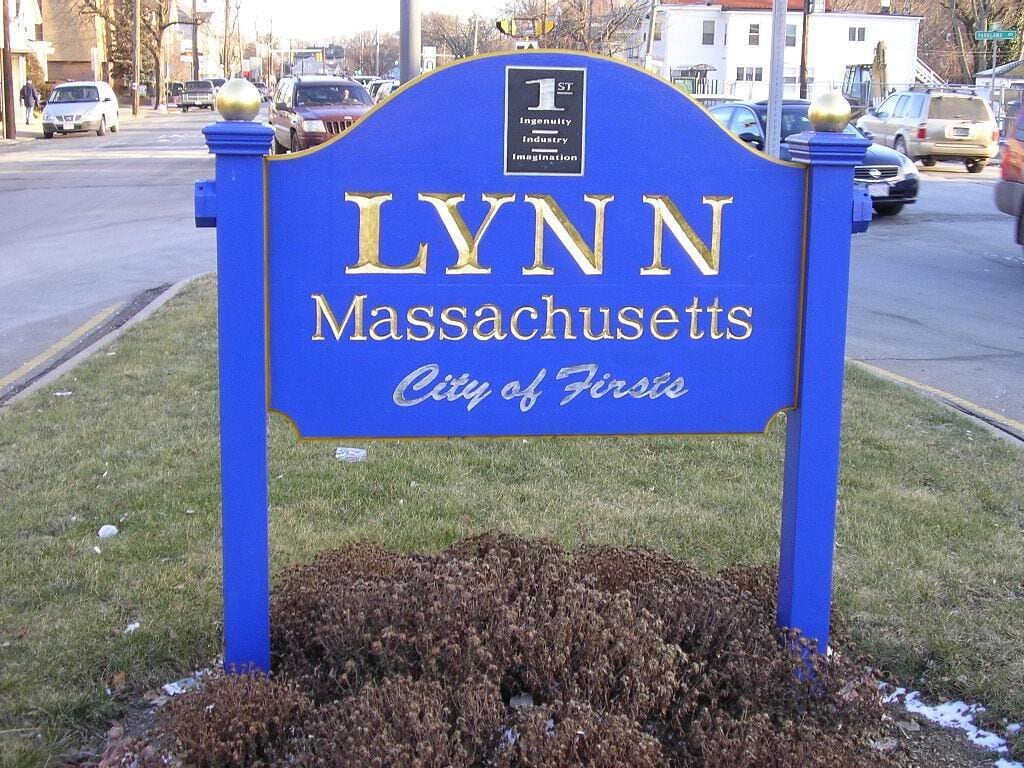
Why "City of Firsts" Outlasted "City of Sin"
Lynn carried the "City of Sin" nickname for decades - a reference to its vice economy, its declining downtown, its reputation for crime.
"City of Firsts" offered a competing account, not a denial. It said: this is a city that made things, built things, invented things, organized things, and kept doing it from 1629 forward.
The two nicknames describe the same city from different angles.
The firsts are real: the tannery, the lasting machine, the strike, the trolley, the airmail, the jet engine, the park, the hiking club.
They are not trivia. They are the record of a compact industrial city that kept appearing at the beginning of larger American stories.
Leather to shoes to factories to mechanization to electrical manufacturing to jet propulsion - each step built on the last one, and Lynn was in the room for most of them.
Independent Publisher Notice
BestAttractions is an independent editorial publisher. We are not affiliated with, endorsed by, or acting on behalf of any location, business, property owner, manager, government agency, or organization described in this article. Comments posted on this page are not forwarded to, reviewed by, or acted upon by any entity mentioned in the article. For official inquiries, complaints, applications, bookings, or other requests, please contact the relevant entity directly through its official website or other verified channels.