Lakeside Mall opens on Hall Road in 1976
Hall Road was already filling in as a retail corridor when more than 100 acres at M-59 and Schoenherr were cleared for a new enclosed mall, setting a big indoor project into the strip in Sterling Heights.
Sterling Heights was incorporated in 1968 and still lacked a central gathering place for the city. Lakeside Mall was built to fill that role, two stories inside, sized to draw shoppers from across the area.
The mall was developed as a joint venture led by A. Alfred Taubman (Taubman Co.), Sears' Homart Development Company, and the Dayton Hudson Corporation (Hudson's parent company).
The finished mall covered roughly 1.5 million square feet of gross leasable area, making it one of Michigan's largest at the time.
Sears began operating in late 1975 while the rest of the mall was still under construction.
Lakeside opened to the public on March 2, 1976. Four department stores anchored the opening lineup: Hudson's, Sears, Crowley's, and JCPenney.
It was the only Metro Detroit mall to include both Hudson's and Crowley's in the same complex.
The debut came the same week as Taubman's Fairlane Town Center opening in Dearborn.
Courts, skylights, and an indoor rink
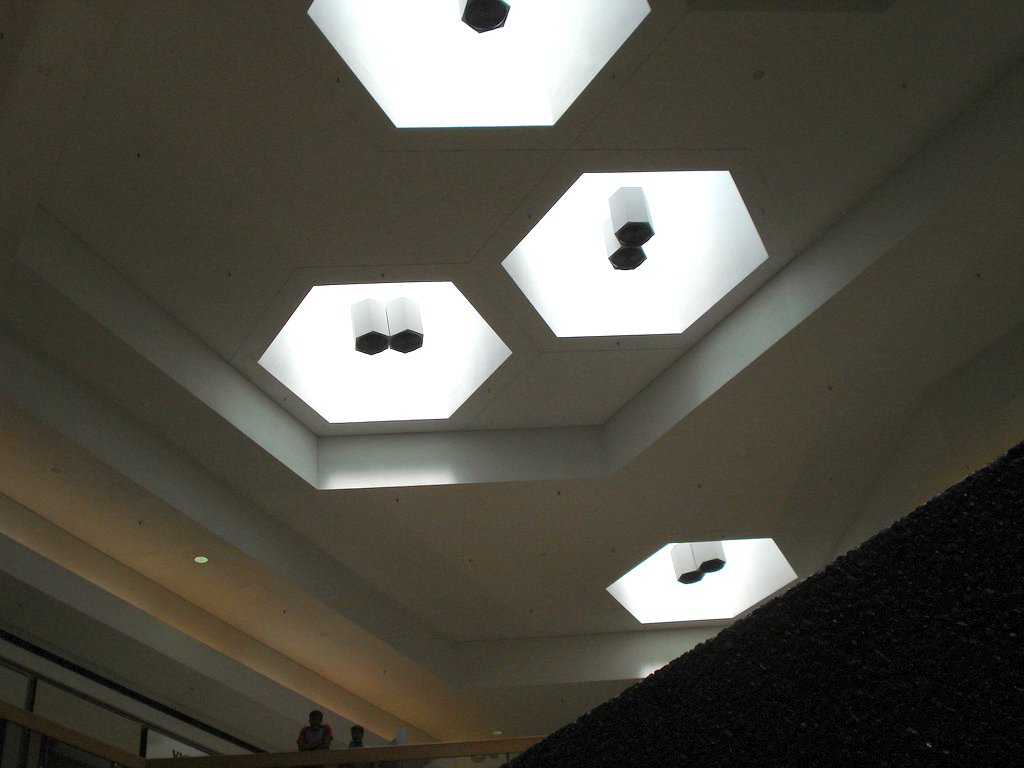
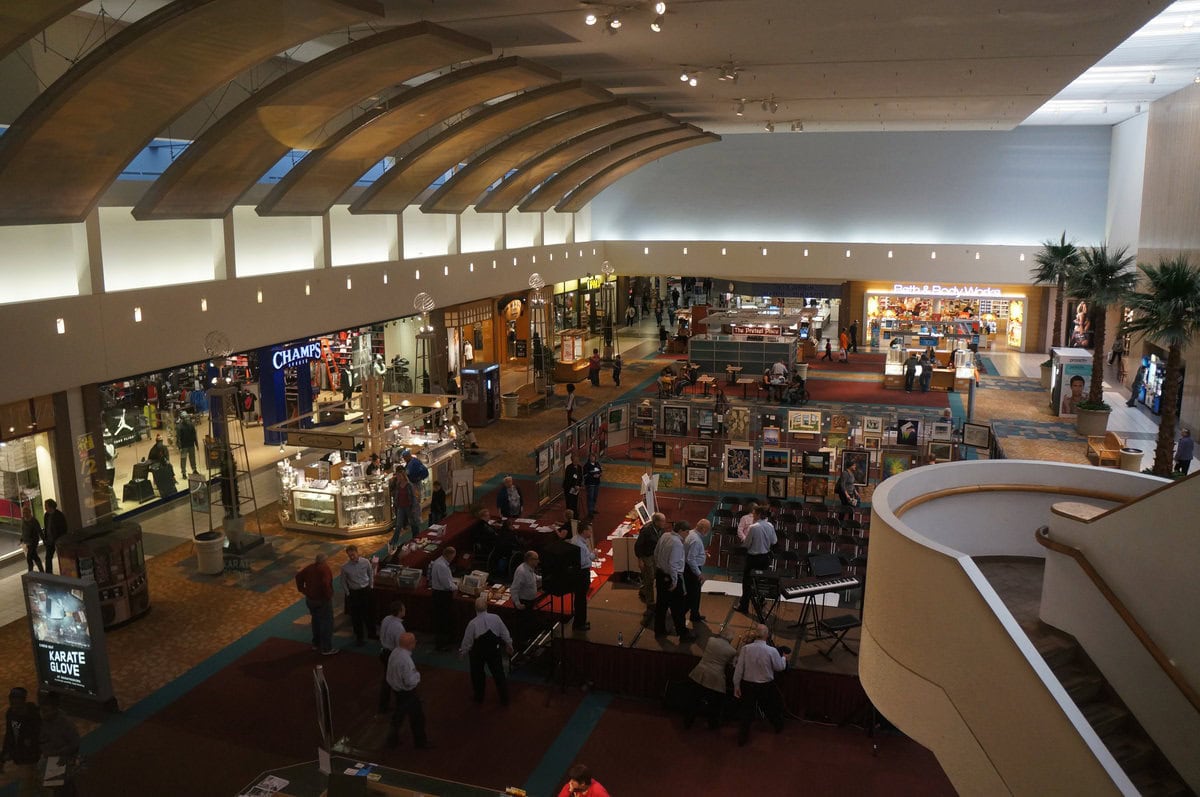
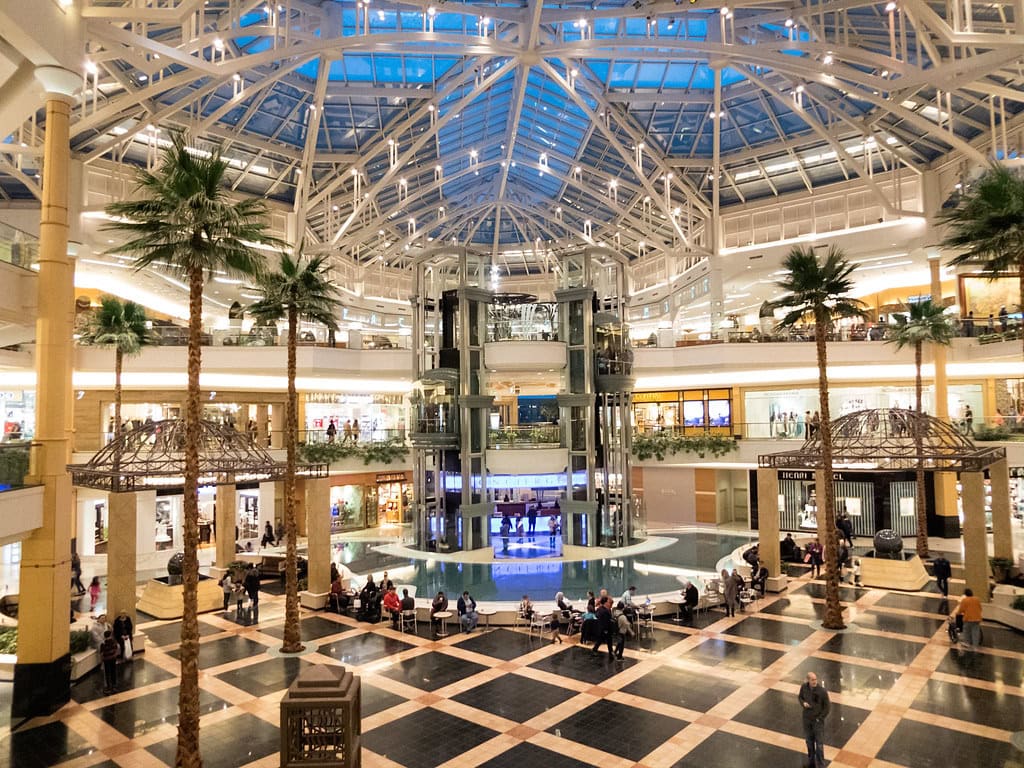
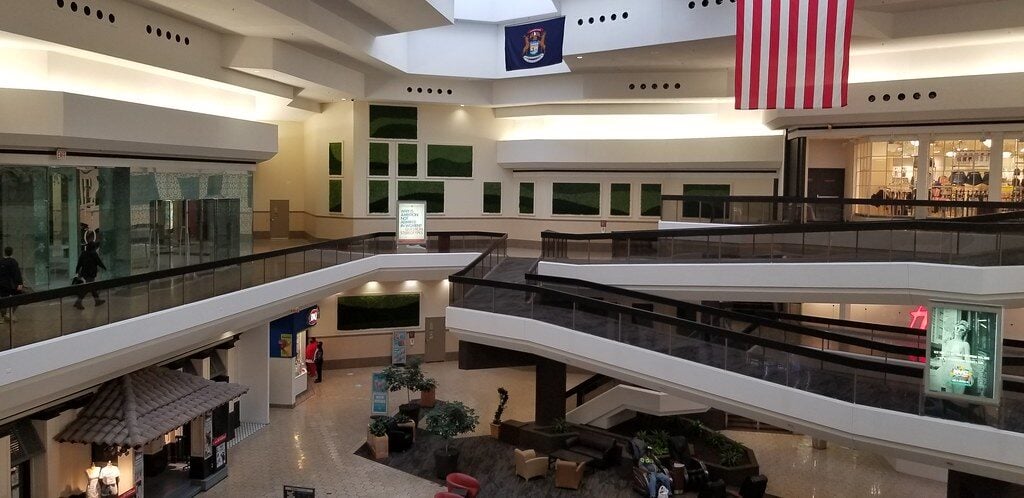
Lakeside Mall's original interior had marble floors, shapes and patterns in its design, and skylights that let sunlight into the hallways.
Indoor trees and planters were placed throughout the shared spaces.
The courts included sunken conversation pits that were built into the seating layout. Two central atriums organized the middle of the mall.
Each atrium had a large fountain, and one also had a stage for shows and seasonal displays. A glass elevator went up through the center court.
Recreation was part of the complex at opening. Lakeside Mall included an indoor ice-skating rink and a movie theater.
The main courts hosted seasonal events, featuring Santa during winter and the Easter Bunny in spring. School groups and fashion shows also made use of the stage.
Three monumental abstract sculptures marked the courts: Bruce Beasley's "Six Tonner," an untitled work by Buky Schwartz, and an untitled steel sculpture by Fletcher Benton.
Lord & Taylor, the Hydrotube, and the food court
Lakeside grew not long after it first opened. In 1978, Lord & Taylor opened on the east side, becoming the mall's fifth main store and completing a group of department stores that stayed the same for years.
In April 1984, Lakeside Mall installed an indoor waterslide attraction called the Hydrotube. The tubular slide ran through a large section of the mall.
Riders climbed a tower, went into the slide, and landed in a small pool. This new feature changed the mood of the building for a while, bringing in more families to an area away from the usual stores.
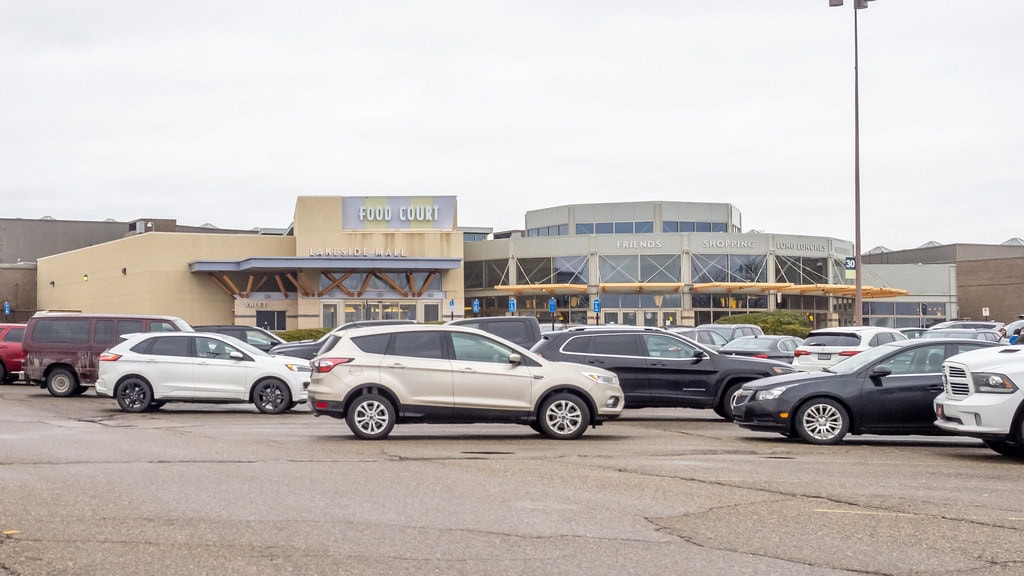
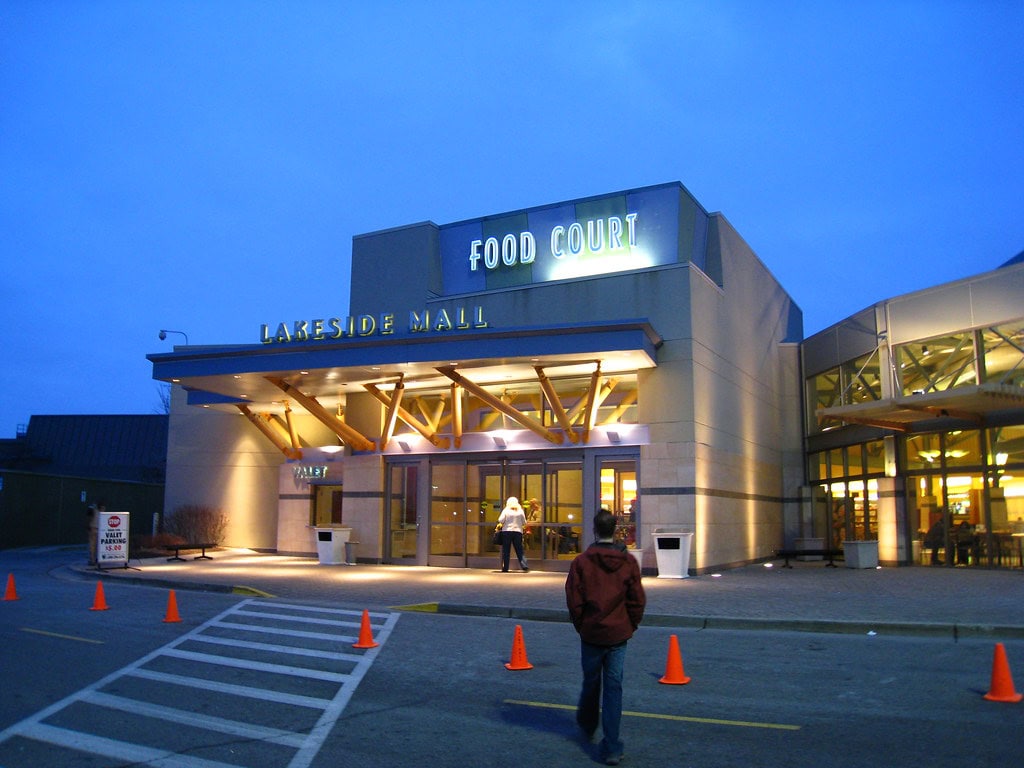
Dining followed. Lakeside Mall opened at a time when a formal food court was not expected, but by the late 1990s, a group of fast food stands was set up on the upper level near Sears.
It went into the area where the ice rink used to be. The new area gave shoppers a place to sit, meet friends, and take a break between shopping.
From Crowley's to Macy's: Lakeside's anchor reshuffles
Lakeside Mall cycled through the kind of retail oddities that only make sense in a big suburban complex.
In the 1970s, a Montgomery Ward Auto Express operated as an attached auto center beside Crowley's. A General Cinema movie theater sat on the property.
The first big anchor change came in 1999. Crowley's closed after the chain's bankruptcy.
Hudson's bought the empty building and converted it into a men's clothing and home goods store, leaving two Hudson's locations on the site.
The corporate reshuffles arrived next. In 2001, Hudson's stores were renamed Marshall Field's.
In September 2006, Marshall Field's became Macy's, and both Lakeside locations switched over. Lord & Taylor rebuilt and expanded its store in 2003.
Steve & Barry's opened a large store around 2001. In June 2006, H&M opened its first Michigan location at Lakeside Mall.
Owners also tried to keep the building looking current.
In 2007, a $3 million renovation was announced, focused on exterior work like signage, entrances, landscaping, and pedestrian access, with construction beginning in late 2008.
Macy's added a Macy's Backstage outlet inside the main store in 2017.
Anchor losses hit harder in the late 2010s. Sears, open since 1975, closed on September 2, 2018. Lord & Taylor followed on September 15, 2019.
JCPenney stayed put through its 2020 bankruptcy, and by the early 2020s, Macy's and JCPenney were the only traditional anchors still operating.
Owners trade stakes, then the debt hits
Lakeside's ownership shifted with the wider mall industry. At opening, Taubman Centers and Sears' Homart Development arm split the property.
In 1988, Sears sold its 50% stake to Rodamco, a Dutch real estate firm, leaving Rodamco and Taubman as equal partners.
In 2000, Rodamco took full ownership through an asset swap that gave Taubman full control of Twelve Oaks Mall in Novi.
In 2002, Lakeside moved again when it was acquired by The Rouse Company as part of Rodamco's North American portfolio breakup.
Two years later, General Growth Properties bought Rouse and took Lakeside Mall into its portfolio.
The mall carried about $144 million in debt during this era, and investment fell behind the building's needs as revenue and occupancy declined, with occupancy slipping below 80%.
Financial stress turned into a reset. In 2016, General Growth defaulted on the loan. By June 2017, it relinquished the property to its lender, sending Lakeside into foreclosure.
Spinoso Real Estate Group was brought in to manage and lease the mall during the interim.
In December 2019, Lionheart Capital's Out of the Box Ventures bought Lakeside Mall for $26.5 million, taking control of the mall and the larger site.
Leasing advisors were brought in during 2020, and interim management shifted again as the mall moved toward closure and redevelopment.
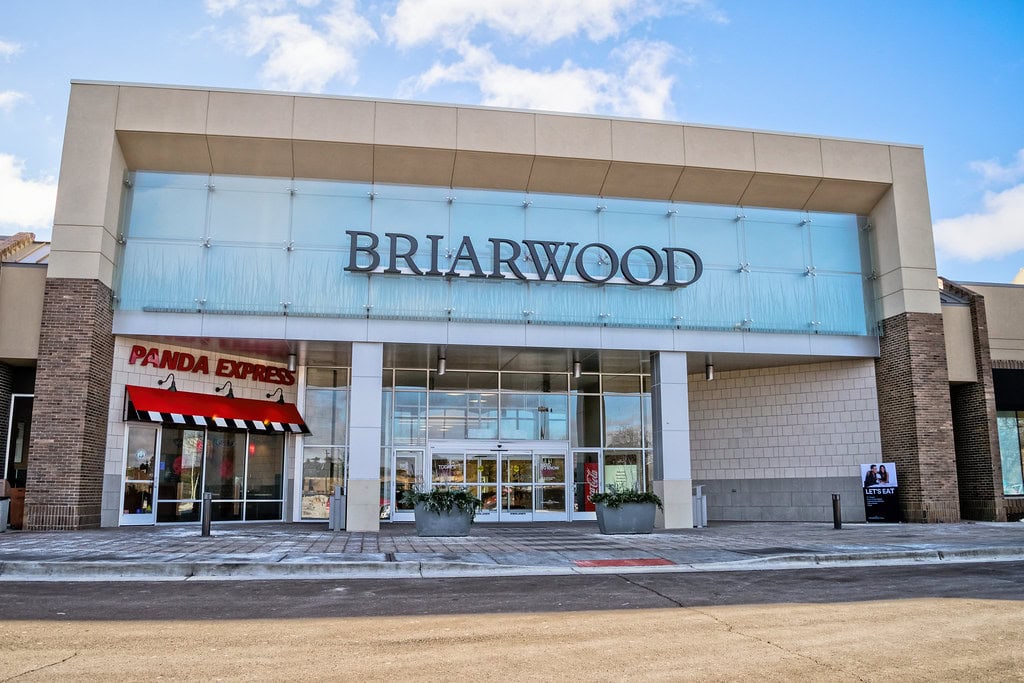
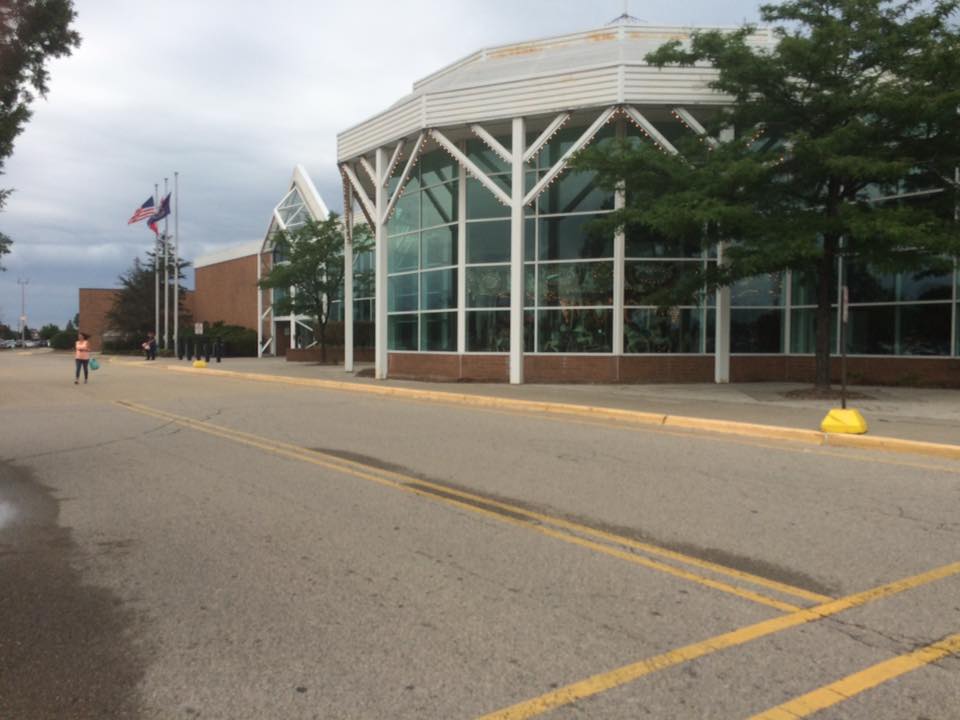
Partridge Creek opens, and Lakeside thins out
Lakeside Mall did not decline because of just one thing. Its troubles grew as its location became less popular, and stores left.
A big change happened in 2007 when The Mall at Partridge Creek opened a few miles east on M-59. It opened as an outdoor shopping center with Nordstrom and a Parisian store that later became Carson's.
Michigan was hit hard by the late-2000s recession, and things did not return to normal after that. Online shopping went from being just one way to shop to being the main way for many people.
Circuit City, just outside Lakeside, closed in 2009. In the early 2010s, a new entertainment area was planned but never built.
The mall made smaller moves instead. In 2014, part of the lower level near the Sears wing was repurposed for an MC Sports store. The chain went bankrupt, and the Lakeside location closed in 2017.
Jeepers! opened in 2016 after relocating from Great Lakes Crossing.
The COVID-19 shutdowns in 2020 led to more stores leaving. During this time, the parking lots were used for drive-through testing and food distribution.
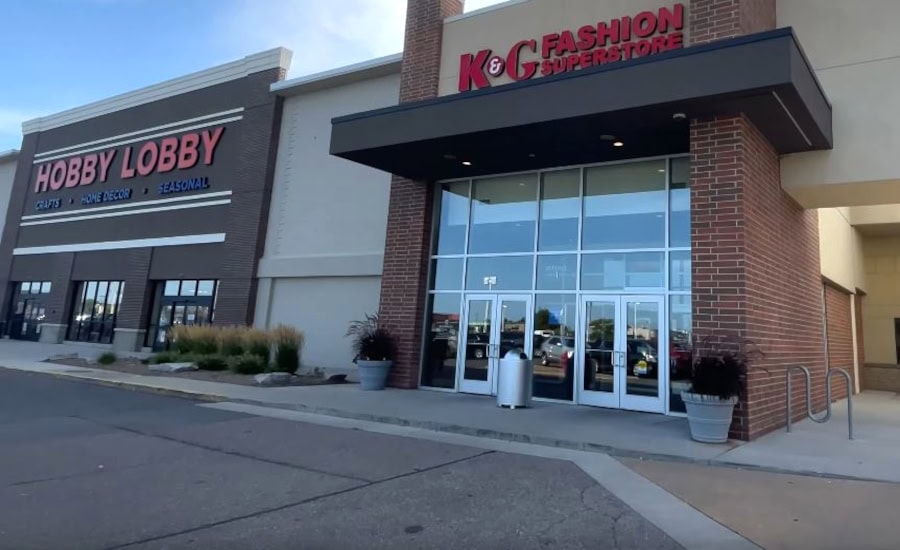
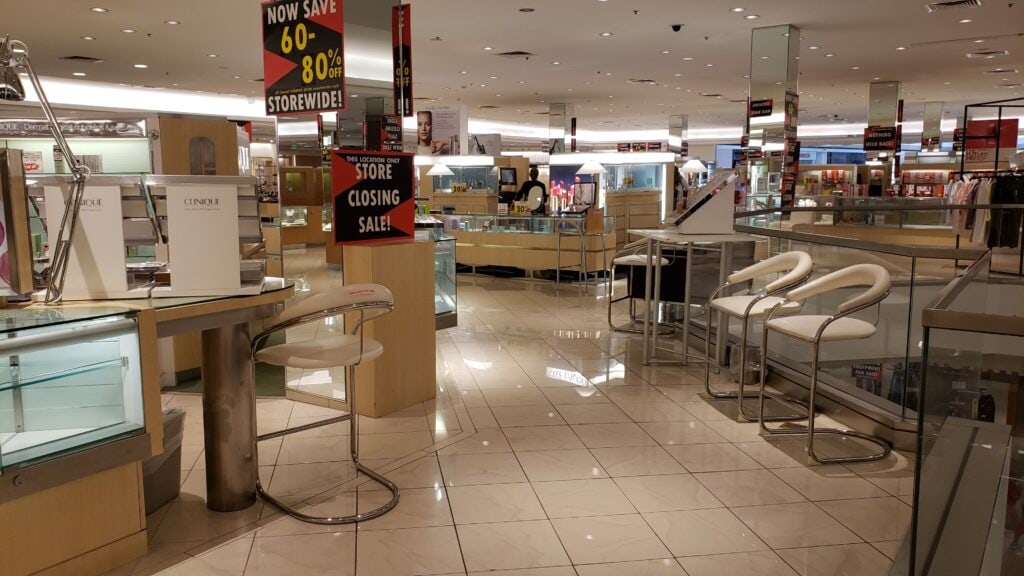
The longer slide showed up in the tenant count: about 180 to 185 inline stores in the 1990s, fewer than 60 by early 2023, and 54 still open in 2024, with some entrances leading into corridors with no open stores.
Overlay zoning and the Lakeside master plan
Sterling Heights began preparing for a future beyond the enclosed mall while Lakeside Mall was still operating.
In 2015, the city developed a Lakeside Sustainability Plan to guide redevelopment of the district and keep the property from becoming a stranded site.
A retail market study conducted in 2016 found that the area could not absorb the amount of enclosed retail space on the property.
In 2019, the city adopted a Lakeside Overlay District in its zoning code.
The overlay allowed mixed use on the mall site, including residential, office, entertainment, parks, and retail, and cleared a path to redevelop the property without relying on the earlier commercial zoning.
Out of the Box Ventures bought Lakeside Mall in December 2019. Early ideas focused on reusing part of the mall, such as adding offices and entertainment to fill empty spaces.
During the pandemic, the plan changed to closing the mall and starting over with a complete rebuild.
In November 2022, the city and the owners signed an agreement to make the main redevelopment plan official. In June 2023, the City Council voted for the Lakeside City Center main plan and special zoning for the project.
The city created a Corridor Improvement Authority to fund about $70 million in infrastructure through future tax growth.
Michigan gave a $3 million grant to help get the site ready and do work on the old Sears and Lord & Taylor parts of the property, which were still owned by others.
Locked doors, lawsuits, and City Center next
On May 1, 2024, the owner announced Lakeside Mall would close on July 1, 2024. The interior mall's last day was June 30, and the enclosed corridors closed after that.
JCPenney and Macy's stayed open for a short time using their exterior entrances.
In January 2025, Macy's confirmed its Lakeside Mall stores were on its closure list.
Both locations closed in March 2025, ending the Hudson's-Marshall Field's-Macy's run at the site. JCPenney remained open into early 2026.
After the shutdown, the mall was cleared out. A public fixture sale removed benches, tables, and decor. The three court sculptures were kept for reuse.
During the wind-down, live plants were taken from interior planters, and police warned they were not free for the taking.
A drive-in movie night was held on the site in summer 2025.
Redevelopment moves forward as Lakeside City Center, a phased project expected to take 10 to 20 years.
The plan includes about 2,800 residential units, about 150,000 square feet of retail and restaurants, office space, a 120-room hotel, a community center, and about 30 acres of parks and green space, including the 1.5-mile "Lyrical Loop" and trail connections.
In February 2025, an owner tied to the former Sears space filed to stop demolition, then dropped the case after reaching an agreement, with the dismissal occurring in mid-February.