
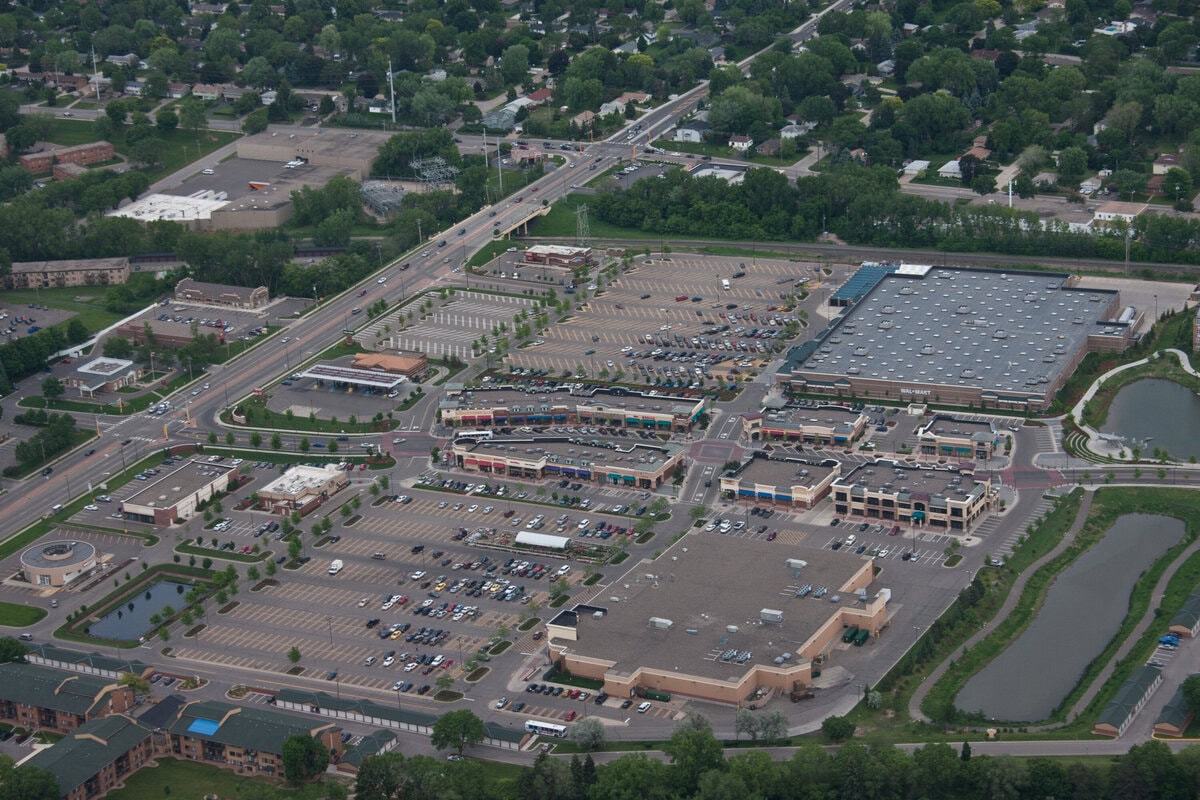
Silver Lake Village is a group of shops, offices, apartments, and parkland on Silver Lake Road in St. Anthony, Minnesota. It is the second thing built on this ground, and the first one lasted 43 years.
That was Apache Plaza, which opened in October 1961 as Minnesota's second enclosed shopping mall. There was a post office in it and a bowling alley on the lower level.
By the early 2000s the mall was more than 95 percent empty, so the city approved a redevelopment plan for the site. Apache Plaza closed in January 2004. It came down that spring.
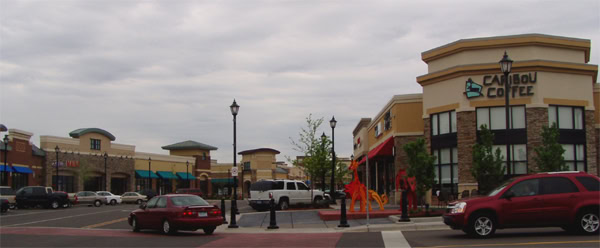
Cub Foods still trades at the north end, the way it did when the mall was standing. Around it now are street-facing shops, offices, several hundred apartments, and a park.
Apache Plaza opens on a pig farm
The hill went first. Before construction, the site was a pig farm.
On April 18, 1960, three local beauty queens triggered the blast that cleared the hill. Minnesota's second enclosed shopping mall rose there.
St. Anthony had just annexed about 600 acres of the old township in Ramsey County, and this was a piece of it.
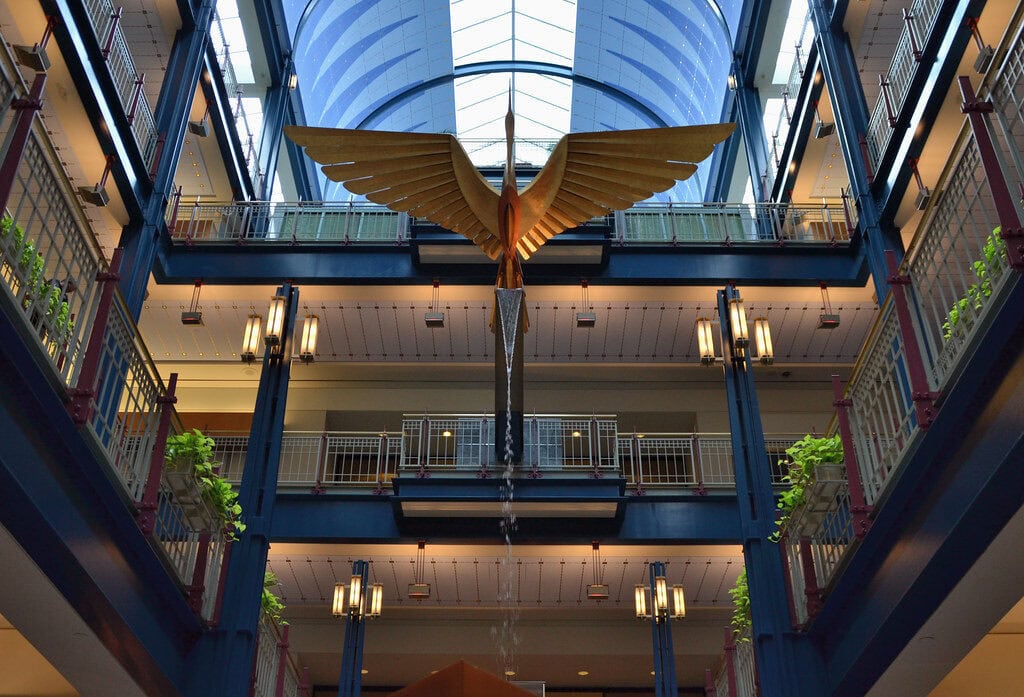
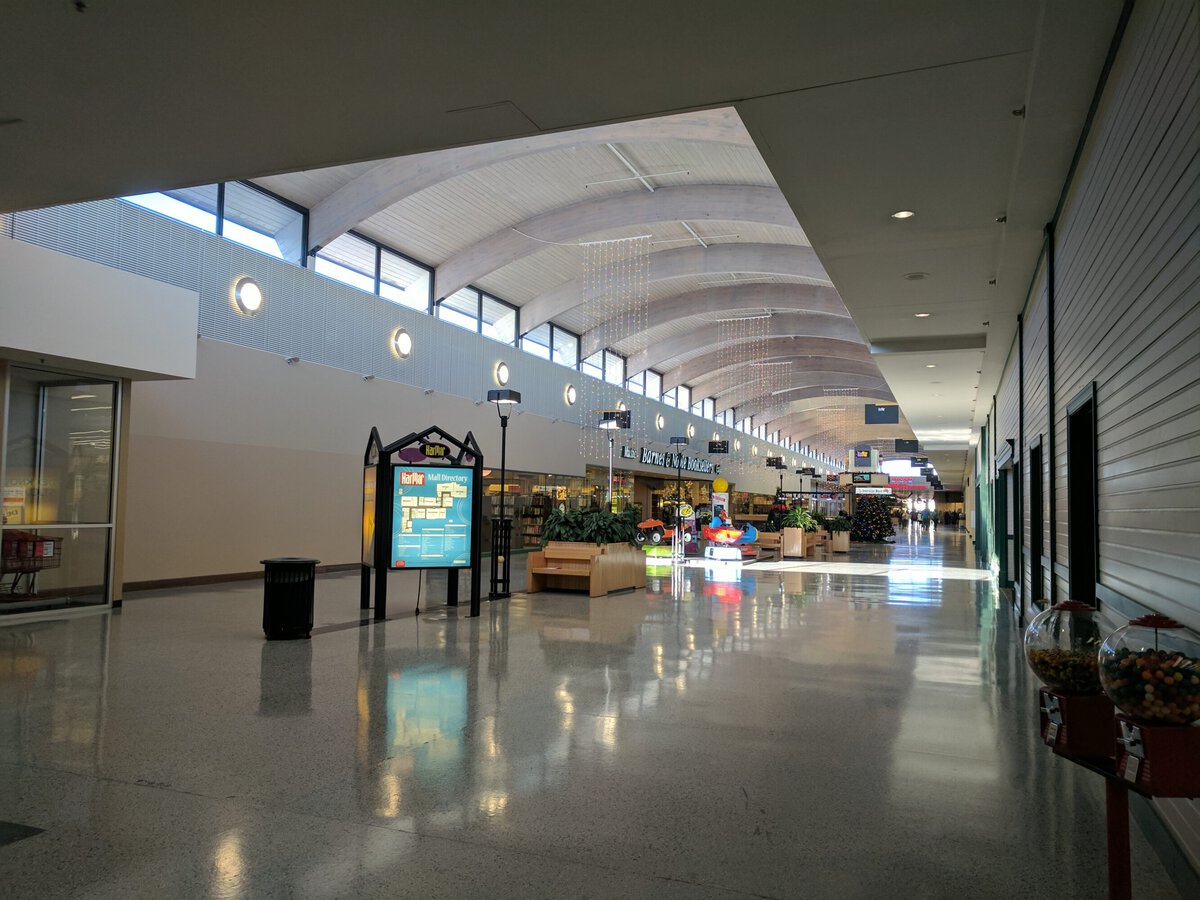
Willard Thorsen of Thorsen and Thorshov gave the mall a center court 150 feet across, 350 feet long and roughly three stories high.
Multicolored clerestory glass ringed its upper edge.
Above it were ten poured-concrete roof shells, each about 65 by 71 feet and roughly three inches thick.
Under it were terrazzo floors, a sunken garden and a large fountain, and outside there was free parking for about 2,700 cars.
The $11 million center opened in October 1961 with about 60 stores and services.
At the dedication on October 19, the governor arrived by helicopter. Shopping was only part of what the building did.
Downstairs, Kiddyland rides and a 150-seat community room shared space with a bowling alley, a shoe repair, and a piano and organ dealer.
There was a post office and an information center too, so mail and public meetings happened inside a shopping mall.
Rosedale opens, then an F3 tornado
Rosedale Center opened in Roseville in 1969, close to the highways. Young-Quinlan closed at Apache Plaza in 1972.
Montgomery Ward held on until 1979, then gave up its expanded store at the south end along with the freestanding auto center and snack bar, and the former store was cut into smaller pieces instead of going to another anchor.
By 1979 the owners were working out whether to close the mall. They decided to keep it and spend on it.
Work on the exterior began in 1983, stripping away much of the 1960s look.
Then, with the renovation almost done, an F3 tornado crossed St. Anthony on April 26, 1984.
The south end lost roof and windows. Three days later a heavy snow covered the exposed mall, then melted into the damage.
The doors did not open again until November 15, almost seven months later.
The repairs ran about $6 million; Apache Plaza itself had cost about $11 million to build.
The old colored clerestory did not come back. Clear glass went in above the court instead.
Woolworth and J.C. Penney leave Apache Plaza
Herberger's opened at Apache Plaza on July 30, 1987, in the space Young-Quinlan had left.
It became the strongest department store the mall had in its last 17 years, but the regional trade never came back.
By the middle of the 1990s, Woolworth and J.C. Penney, both there when Apache Plaza opened in 1961, were gone.
Large stretches of the north end stood empty. The owners had also defaulted on a loan on the property in the early 1990s.
In February 1993, Cub Foods and Knox Lumber were proposed for that end of the property.
Putting them there meant rebuilding commercial space and parking across more than 53 acres.
A fight over the runoff, decided 4-1
Everything that fell on Apache Plaza's parking lot ran toward Silver Lake, which sits immediately north and east of the property.
The Silver Lake Homeowners Association fought the grocery plan on exactly that.
The developer put the mall's share of the lake's nutrient load at about 14 percent. A county estimate put it at 25 percent or more.
The plan went to the Rice Creek Watershed District in 1993 and came back revised again and again through the next year.
Then, in September 1994, the district adopted a 2.5-inch ponding standard that the plan didn't meet.
On November 30, the district approved the permit 4-1, under the older rules, with a revised drainage plan attached: an upgraded north pond, two grass swales along Silver Lake Road, oil skimmers, and monthly sweeping of the lot.
The approval covered current construction only; Cub and Knox still needed later watershed permits.
The north section of the mall came off after that, and a freestanding Cub Foods went up on the cleared ground, open by 1997.
The drainage system would be reworked again when the rest of Apache Plaza was redeveloped.
Cub stayed, and turned out to be the only large store of the Apache Plaza era that would survive what came next.
Apache Plaza to Silver Lake Village
By the early 2000s, the enclosed mall was more than 95 percent empty. Herberger's was still open.
So was Apache Beauty Center, which had opened with the mall in 1961, and a few others. People still walked laps inside it.
St. Anthony adopted the Northwest Quadrant Redevelopment Area Plan in 2001, and that was the end of trying to refill the building.
Apache Plaza closed on January 31, 2004. The city marked the end with the Bulldozer Bash on March 20.
Demolition followed in April, and little of the mall remained by May. The fountain and the ten roof shells went with it.
What replaced it is Silver Lake Village, an open-air district of shops, offices, housing, and parkland on the same ground in St. Anthony, Minnesota.
The city's early version was a walkable town center of small shops.
To get it financed, St. Anthony took a large discount anchor into the plan. By 2006 the project was about half built.
Its master plan called for 321,200 square feet of commercial and office space and 700 housing units across 60 acres, on ground that had been a mall and its parking lot.
From an empty Walmart to 254 apartments
Walmart opened at the south end on March 23, 2005, one level and about 144,000 square feet, and it came in with a limit.
Its grocery department could not exceed 10,000 square feet, which kept it from taking the grocery trade off Cub Foods at the other end of the site.
Nine years later that limit had a consequence.
Walmart built a 152,000-square-foot Supercenter with a full grocery 2.8 miles away in Roseville and closed the St. Anthony store on April 8, 2014, hours before the new one opened.
The building sat.
For the next five years, it was one of the largest empty big boxes in the Twin Cities, on a 20-year lease with no replacement tenant.
Doran Companies proposed taking it down for apartments in 2019, the city amended the district to allow housing on that parcel, and demolition started in 2020.
The first residents moved into The Ruby on October 1, 2022.
That first phase put 254 apartments on ground that had held one store; a second phase meant to bring the total to about 490 was still unbuilt in September 2025.
Cub Foods still anchors the north side at 3930 Silver Lake Road, open from 6 a.m. to midnight, in a retail center that is now nine separate buildings and 168,800 square feet: a clinic, Caribou Coffee, Great Clips, Wells Fargo, and the liquor store the city owns and runs.
The northern piece of the lot at 3800 Silver Lake Road is still empty, with nothing approved for it.
On summer Thursdays, concerts run at the Salo Park amphitheater from 7 to 8 p.m., on ground shaped into a stormwater-and-park amenity during the Silver Lake Village redevelopment.
Independent Publisher Notice
BestAttractions is an independent editorial publisher. We are not affiliated with, endorsed by, or acting on behalf of any location, business, property owner, manager, government agency, or organization described in this article. Comments posted on this page are not forwarded to, reviewed by, or acted upon by any entity mentioned in the article. For official inquiries, complaints, applications, bookings, or other requests, please contact the relevant entity directly through its official website or other verified channels.