
Plymouth offers many of the things people deliberately move to the suburbs to get: room between destinations, access to lakes and trails, a large supply of everyday services, and a routine that does not depend on going into Minneapolis for every need.
The trade is that those advantages are spread out.
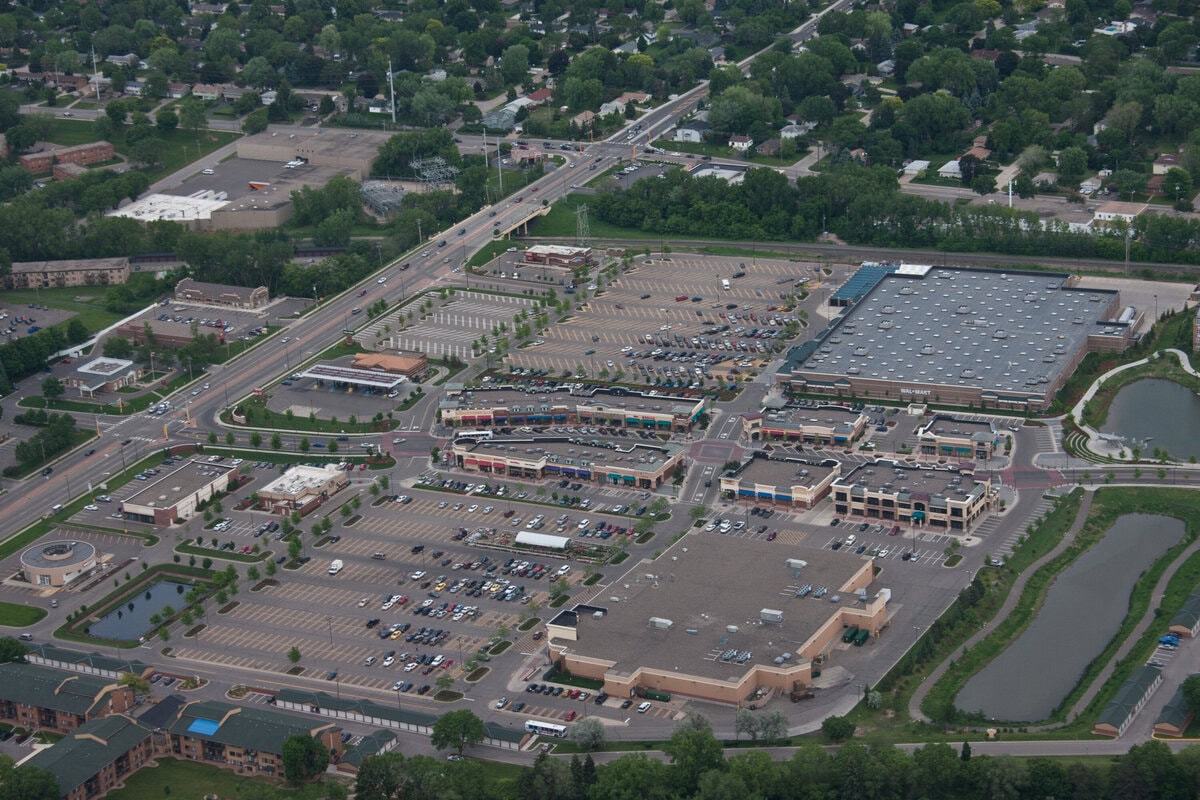
Plymouth has a City Center, but it does not yet function like a traditional downtown where you can arrive once and let dinner, errands, a walk, and an unplanned stop unfold on foot.
The city is now trying to make that area more walkable and pedestrian-friendly.
The basic choice remains: do you want a spacious suburban week with nature close at hand, or more of your social life concentrated into one compact center?
The trade shows up at 5:30 p.m., not on a Saturday afternoon
Plymouth is easy to like when you have a destination in mind.
Drive to a park. Meet someone for dinner. Pick up groceries. Go for a walk near a lake.
The city has enough retail and services that ordinary errands do not automatically require Minneapolis.
Census Bureau data recorded about $1.29 billion in retail sales and $182.5 million in accommodation and food services sales in Plymouth in 2022.
Those numbers are not a measure of nightlife or walkability.
They make a different point: Plymouth's issue is not a lack of commercial activity. It is how that activity is arranged.
The difference becomes clear after work. In a compact downtown, dinner can turn into another stop simply because it is nearby.
In Plymouth, more of those decisions begin with choosing a destination and getting there. Repeated across a week, that becomes the lifestyle trade.
City Center is a center, but it is still becoming a downtown
Plymouth's own planning direction recognizes the gap.
City Center was not built as a traditional downtown, and current redevelopment efforts are intended to make it more comfortable for walking, gathering, and moving between uses.
A center becomes useful through connections, not simply because several destinations share a ZIP code.
The Environmental Protection Agency's National Walkability Index reflects the same idea: its methodology uses street intersection density, land-use mix, and proximity to transit because walking depends on how routes and destinations fit together.
So the right question about City Center is not "Does Plymouth have a downtown?"
It is "Can I do several ordinary things there without restarting the car between them?"
For now, the answer depends heavily on the exact trip.
The redevelopment could improve that calculation, especially for people who live near City Center or already use it repeatedly.
It will matter less to someone whose usual destinations sit elsewhere in Plymouth.
Medicine Lake, Parkers Lake and the trail network are the other side of the bargain
The reason many people accept Plymouth's dispersed pattern is that the space is not empty.
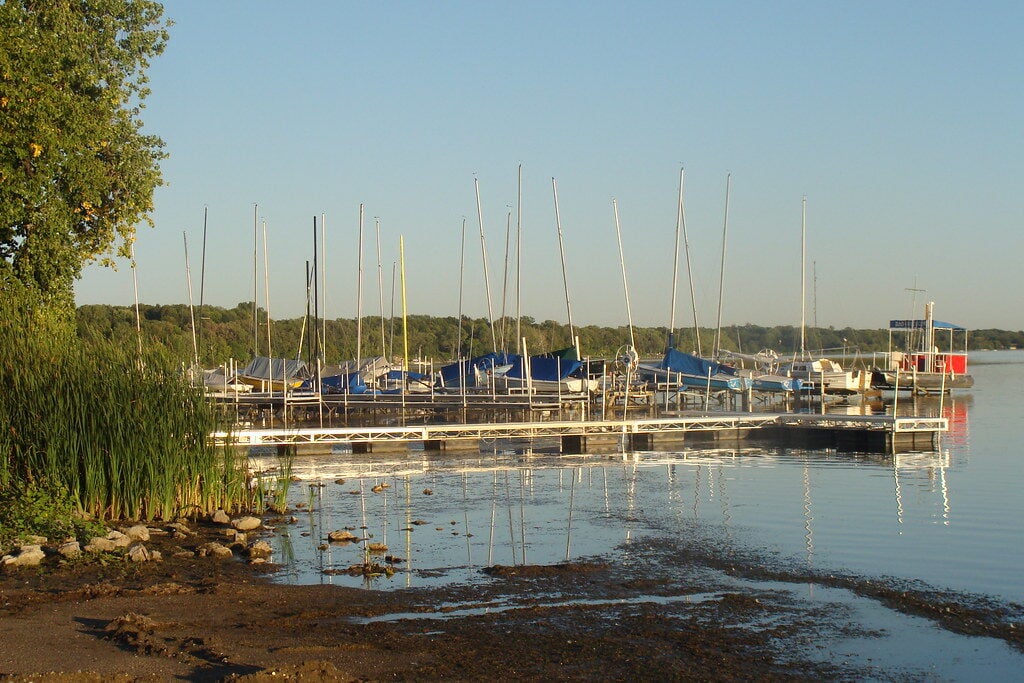
Medicine Lake, Parkers Lake and the city's trail network give outdoor time a place in a normal week.
A walk, run, bike ride, or hour near the water can be an after-work activity rather than a special weekend trip.
That changes the meaning of "convenience." In a more urban-feeling suburb, it may mean walking between dinner, coffee, and errands.
In Plymouth, it may mean reaching a lake, trail, park, grocery store, or workplace without going into Minneapolis.
The two models save different kinds of effort.
A household that spends four evenings a week walking, biking, attending youth activities, or using parks may value Plymouth's geography more than someone whose ideal evening is to step outside and find several social options within a few blocks.
Plymouth feels spread out because it is spread out
Citywide averages can flatten this difference, but the scale is useful evidence.
Plymouth has 32.71 square miles of land and had a 2020 population density of 2,477 people per square mile.
St. Louis Park has 10.63 square miles of land and had a density of 4,705.5 people per square mile.
Hopkins has only 4.06 square miles of land and had 4,696.9 people per square mile.
Plymouth is therefore a little more than three times the land area of St. Louis Park and about eight times the land area of Hopkins, while its population density is roughly half that of either city.
Density does not tell you whether a particular street feels pleasant or walkable.
It does help explain why community life is harder to compress into one center.
Two Plymouth residents can share a city name while using different parks, restaurants, schools, and commuting routes.
What you may still leave Plymouth for
Plymouth can cover a large share of functional life. That does not mean it reproduces every reason people choose a more urban suburb.
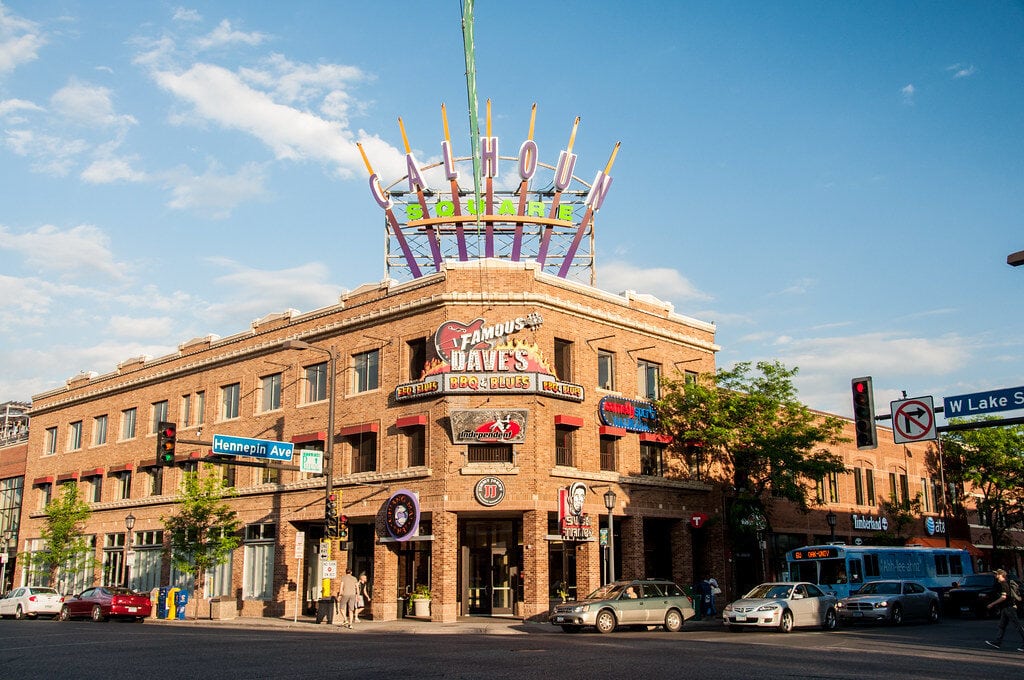
You may still drive to a neighboring downtown when you want an evening built around a compact main street rather than a single planned destination.
Hopkins is a useful contrast: it has only 4.06 square miles of land, and its population density is almost twice Plymouth's.
The point is not that every Hopkins address is walkable or every Plymouth address is not.
The smaller, denser form makes concentrated activity easier to create.
Minneapolis matters when your social life depends on major cultural venues, denser restaurant districts, or friends closer to the core.
The useful question is not how many places are "nearby," but how many separate trips they create.
A better test is to list the three weeknight activities you do most often.
If they usually happen at home, outdoors, at a gym, at a child's activity, or at one chosen restaurant, Plymouth's structure may barely bother you.
If you value wandering between places without planning each stop, you will notice the difference.
City Center redevelopment matters most to a specific kind of resident
The current effort to make City Center more pedestrian-friendly can change how the area functions, but the effect will be uneven.
The biggest beneficiaries are likely to be people who can make City Center part of a repeated routine: nearby residents, workers already there during the day, and households that can combine several trips in the area.
Someone living across Plymouth may still experience the improved center as a place they drive to, not as an extension of home.
Plymouth's size puts a ceiling on what one redevelopment area can change.
A better center can give the city a stronger social focal point. It cannot make 32.71 square miles behave like four square miles.
Decide which kind of spontaneity you actually use
Before choosing Plymouth, run a seven-day test on your current life.
Count the moments when you value unplanned urban activity: walking to dinner, adding a stop because it is nearby, or meeting friends without coordinating another drive.
Then count the moments when you value suburban freedom: getting outside quickly, using trails or lakes, having residential space, or going directly to one chosen destination.
The totals tell you more than a generic "best suburb" ranking.
Plymouth works best when its dispersion feels like breathing room rather than friction.
The lakes, trails, residential space, and broad service base give the city a comfortable suburban routine.
The cost is that social life is less likely to assemble itself around you.
City Center may narrow that gap over time. It does not need to turn Plymouth into Minneapolis, Hopkins, or St. Louis Park to matter.
It only needs to make more daily activities connect once you arrive.
The real question is whether that is enough for the week you want to live.

Sources and further reading
- U.S. Census Bureau QuickFacts: Plymouth city, Minnesota
- U.S. Census Bureau QuickFacts: St. Louis Park city, Minnesota
- U.S. Census Bureau QuickFacts: Hopkins city, Minnesota
- U.S. Environmental Protection Agency: National Walkability Index User Guide and Methodology
Independent Publisher Notice
BestAttractions is an independent editorial publisher. We are not affiliated with, endorsed by, or acting on behalf of any location, business, property owner, manager, government agency, or organization described in this article.
Comments posted on this page are not forwarded to, reviewed by, or acted upon by any entity mentioned in the article.
For official inquiries, complaints, applications, bookings, or other requests, please contact the relevant entity directly through its official website or other verified channels.