
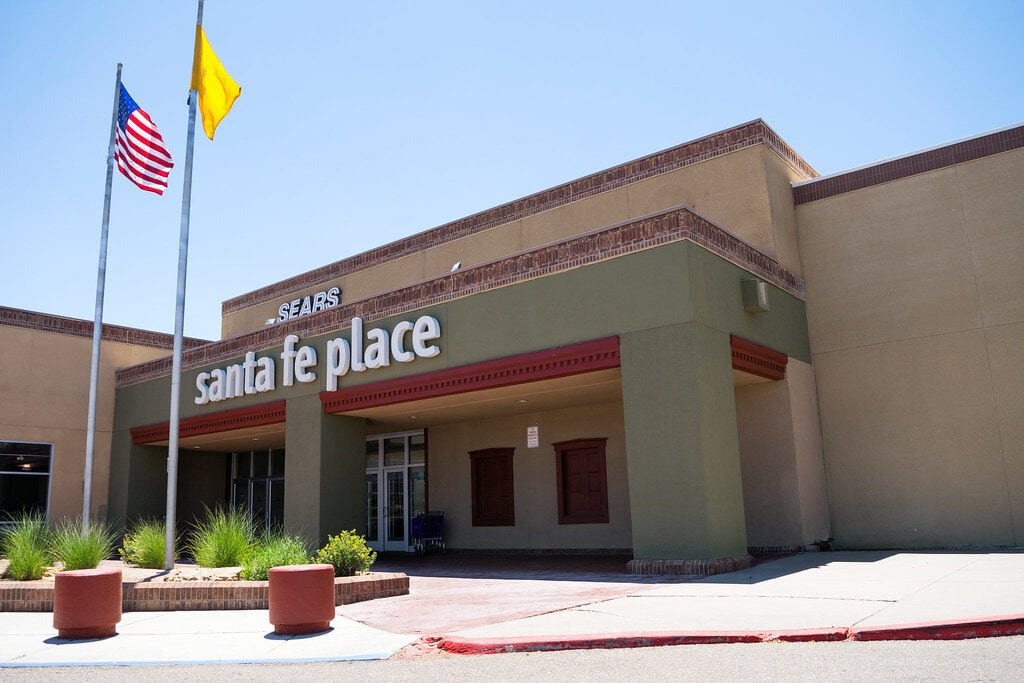
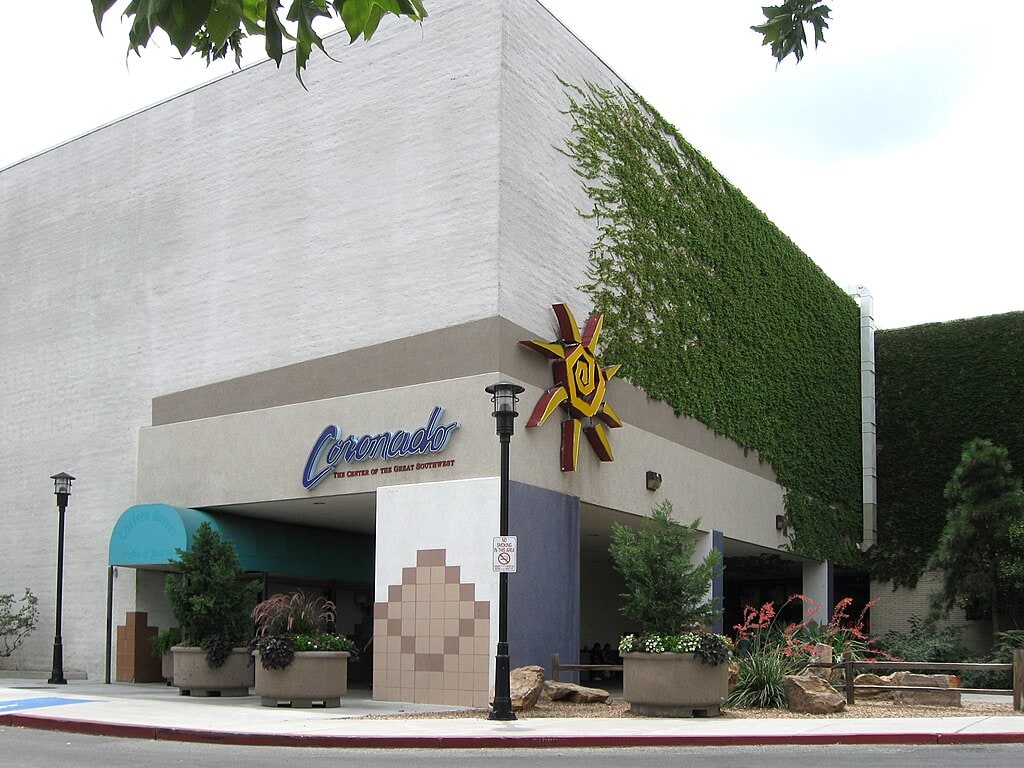
Santa Fe Place is Santa Fe's only regional enclosed shopping mall, operating at 4250 Cerrillos Road since 1985. It opened as Villa Linda Mall with a southwestern architectural design, a food court called El Mercado, and department-store anchors that included Dillard's, JCPenney, Sears, and Mervyn's.
What makes it unusual is less its scale, 57 acres on the city's south side, than its record. Within four months of opening, a food-court tenant filed a fraud lawsuit over misrepresented traffic and sales projections.
The New Mexico Supreme Court eventually ruled in the tenant's favor. Two of the original department stores have never left.
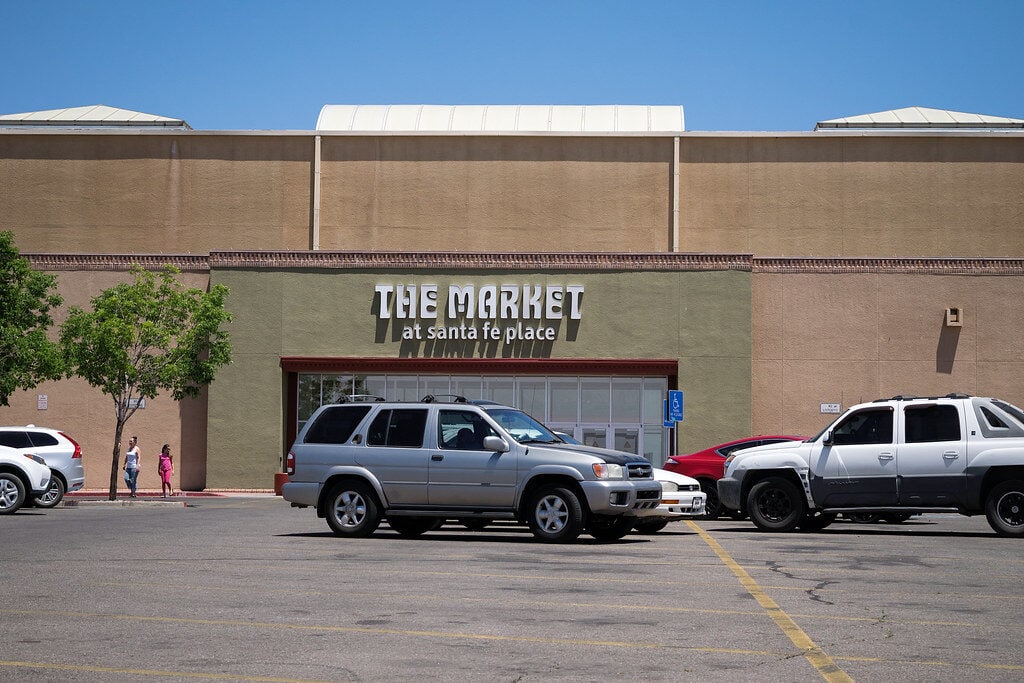
The mall has since been renamed, sold multiple times, and reanchored as its original tenants closed or went bankrupt. The former Sears box is now a Hobby Lobby. A ropes course runs through what was the food-court and arcade area.
Villa Linda Opens on Santa Fe's South Side
On July 31, 1985, a new mall opened on Cerrillos Road with vigas overhead, earth-tone walls, and a food court called El Mercado.
The building was southwestern in character, fortress-like from the outside, and large enough to fill a site of 57 acres near the intersection of Cerrillos Road and Rodeo Road.
Surface parking surrounded the structure, built to hold more than 3,200 cars. It was called Villa Linda Mall, and Santa Fe had not seen anything like it.
The city had DeVargas Center on the north side, a smaller enclosed shopping complex that had served as the city's main mall-like shopping center for more than a decade.
Villa Linda was bigger, set farther south, and built for the automobile-oriented growth happening along Cerrillos Road.
Its leasable area ran to more than 570,000 square feet, and it came to market during the decade when Cerrillos Road was becoming Santa Fe's main commercial corridor.
Villa Linda Mall Reshapes Santa Fe's Retail Map
Herring Marathon Group developed Villa Linda to function as a regional shopping center for Santa Fe and northern New Mexico.
The anchor lineup came to include Dillard's, JCPenney, Sears, Mervyn's, and Bealls, along with specialty shops, a theater, and the El Mercado food court.
El Mercado was designed as a major gathering area with restaurants and an arcade.
The food court was also expected to draw from the mall's theater traffic, a connection that would become central to Villa Linda's first major legal dispute.
JCPenney's move from DeVargas Center to Villa Linda in July 1986 helped establish Villa Linda as Santa Fe's leading regional mall.
It shifted a significant share of chain department-store retail to the Cerrillos Road corridor. The move left a gap in DeVargas large enough to divide for other tenants.
United Artists opened a new theater at the property in 1991, extending the mall's draw past shopping hours.
The Golden Cone Case and Villa Linda's First Reckoning
In October 1985, three months after opening day, a food-court tenant called Golden Cone Concepts, operating as Pam's Ice Cream, signed a ten-year lease for an ice-cream business in El Mercado.
The tenant operated for four months, then walked away and sued.
The claims centered on representations made during leasing: projected first-year gross sales, expected mall traffic, the planned food-court tenant mix, the relationship between theater traffic and food-court business, and assurances about exclusivity and operating hours.
The New Mexico Supreme Court affirmed findings against Villa Linda Mall interests and Herring Marathon Group in 1991.
The trial court had rescinded the lease, awarded $105,700 in restitutionary damages, $22,000 in attorney fees, $1,190 in costs, and $50,000 in punitive damages based on findings of fraud, negligent misrepresentation, and constructive fraud.
The case documented, through six years of litigation, that the food court's performance had fallen well short of what the developer's leasing team had represented in the months before the mall opened.
Golden Cone was not the only food-court tenant to walk away and sue.
David and Elizabeth Montoya, doing business as Papas Fritas, had occupied their space in July 1985 and vacated in June 1986, then prevailed on negligent misrepresentation and constructive fraud claims involving similar representations about projected occupancy and promotional commitments.
The New Mexico Supreme Court resolved the attorney-fees portion of that case in 1990.
Two food-court tenants from the mall's opening months thus secured judgments against the developer for misrepresenting what El Mercado would be.
The Anchor Era and Santa Fe's Main Regional Draw
The mall drew shoppers from across northern New Mexico, communities that lacked a regional shopping center of their own.
Dillard's and JCPenney anchored the ends and stayed. Sears held its space for more than two decades. Mervyn's kept its location until late 2008.
The food court remained an active gathering area, its carousel turning in the food-court space throughout those years.
It was the largest conventional shopping mall in Santa Fe and the main enclosed mall for much of the region. Bealls closed in 1989, and theater-related use came to occupy part of that box.
The overall mix of department stores, specialty shops, food-court activity, and entertainment held together well into the 2000s.
The mall also served as a south-side event site, hosting Zozofest activities connected to the annual Zozobra tradition and Fourth of July events at its large parking areas and adjacent exterior space.
Renamed Santa Fe Place and Renovated for $10 Million
The Villa Linda name had carried the property for two decades by the time Greenfield interests took control in the mid-2000s.
Around 2005, the mall was renamed Santa Fe Place, and $10 million went into improvements: new tile, new carpet, updated lighting, a children's play area, and a new roof.
The rebranding was meant to move the property past its aging 1980s identity.
Babcock & Brown became involved in 2007.
By 2010, Trademark Property Company was promoting a more ambitious plan, projected at $30 million to $40 million, that included new exterior-facing storefronts, upgraded entrances, a redesigned food court, more natural light, sit-down restaurants, and possibly a new name.
City planning officials had not yet received a formal application when the plan was being discussed, which meant the concept remained a proposal rather than a commitment to build.
None of the full project materialized.
After 2008, the Vacancies Grow and El Mercado Fades
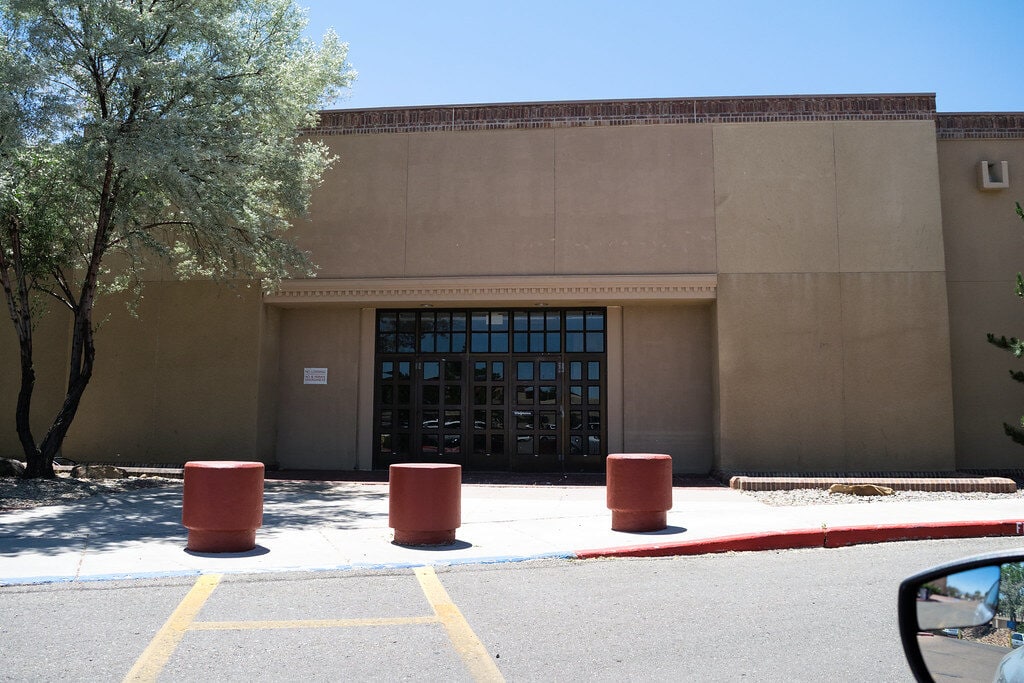
Mervyn's closed in December 2008 during its chain-wide liquidation, leaving the mall with one of its largest vacancies.
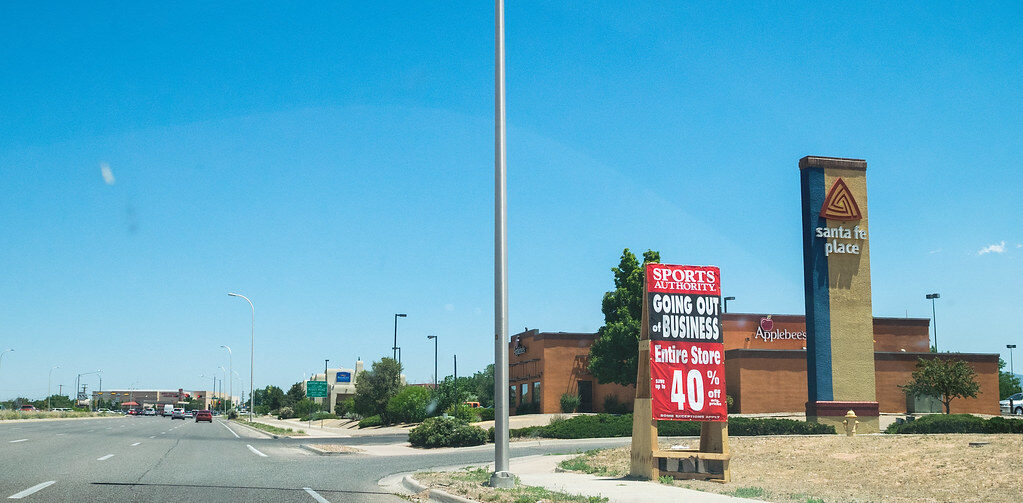
A temporary Toys "R" Us opened in the former Anchor Blue space for the 2010 holiday season. Sports Authority moved into the former Mervyn's area and held that space for several years.
By spring 2014, Santa Fe Place had the look of a struggling regional mall: two department-store anchors at the ends, a surviving cluster of national chains in between, and long runs of empty storefronts through the middle.
The food court, once the active center of El Mercado, had only a small number of open restaurants.
Sports Authority closed in 2016 during its chain bankruptcy. The carousel was removed from the food-court area that same year.
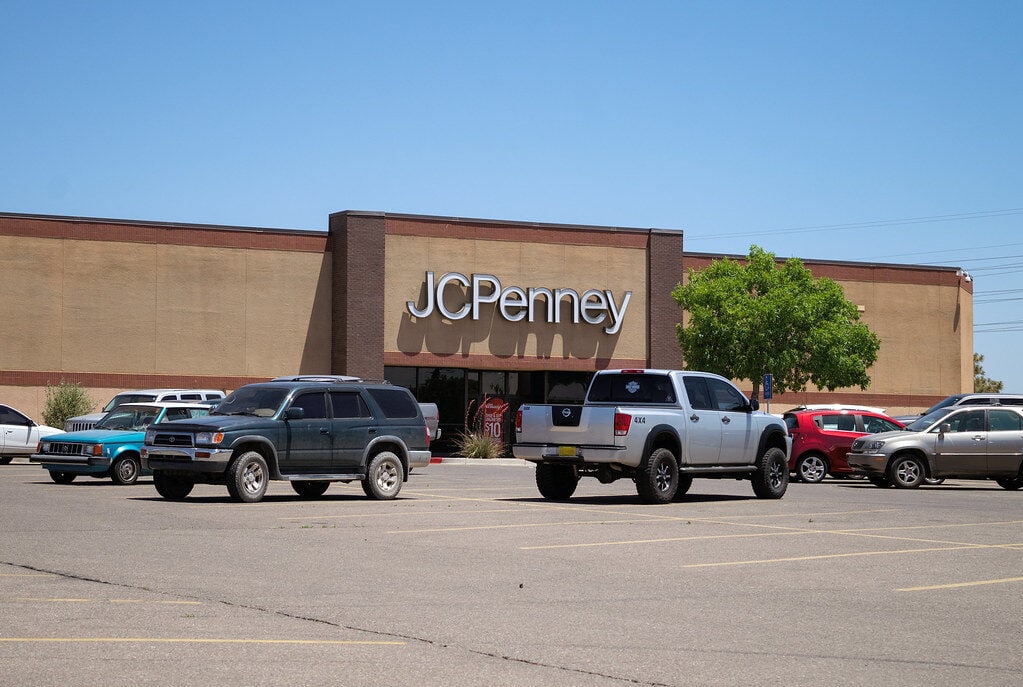
Dillard's and JCPenney stayed open through all of it, the longest-running constants in a property that had changed almost everything else.
Spinoso's Plan to Fill the Dark Boxes and Change the Mix
Spinoso Real Estate Group started as the mall's leasing agent in 2012, became its manager in September 2013, and acquired the property in November 2014.
The strategy was direct: fill the dark spaces, diversify the uses, and unlock value from excess land.
Former theater space, 45,000 square feet, became Bed Bath & Beyond and Cost Plus World Market in 2016. Sears closed in 2017; Hobby Lobby relocated into that box in 2019.
H&M, Boot Barn, Hibbett Sports, Skechers, and Forever 21 Red arrived. Regal Cinemas moved in after closing its DeVargas Center location, making Santa Fe Place the city's primary Regal theater.
The old El Mercado food court became The Market, with new flooring, furniture, lighting, and food-service infrastructure.
LiggettVille Adventure Center opened January 8, 2021, in the former carousel area.
It brought a Sky Trail ropes course, zip-rail elements, a children's course, and Clip 'n Climb climbing walls. The official grand opening was June 4, 2021.
RAD Retrocade occupied the former arcade and food-court space beside it.
Common-area changes through this period added soft seating, a working fireplace in the center court, LED lighting, repainted surfaces, and new signage.
Planning actions in 2019 replatted the site into multiple lots and reduced required parking based on a parking study. These steps made portions of the parking field available for later residential and hotel development.
Kohan Buys the Mall and the Anchor Churn Continues
Kohan Retail Investment Group, based in New York, acquired Santa Fe Place from Spinoso in late 2022. The transition brought continuity in operations but not in the tenant lineup.
Conn's HomePlus had arrived in 2022 to occupy a large-format space; it filed for bankruptcy in July 2024 and closed.
Bed Bath & Beyond, part of the Spinoso reanchoring, closed in 2023 during the chain's nationwide shutdown.
Barnes & Noble was planned for the former Bed Bath & Beyond space in February 2024 and was operating by 2026.
Dunham's Sports took the former Conn's area, 58,950 square feet in two combined units, on a lease running through January 2036.
A building permit for the tenant improvements was recorded on September 18, 2025, with a listed valuation of $709,000.
Dunham's held its grand opening on October 24, 2025, the chain's first New Mexico store, bringing up to 50 full- and part-time jobs.
A fair-value assessment, recorded September 30, 2025, placed the property at $33.1 million.
Santa Fe Place in 2026 and What Stayed and Changed
Dillard's and JCPenney still anchor the ends, as they have since the 1980s. Hobby Lobby fills the Sears box.
Barnes & Noble has the former Bed Bath & Beyond space. Dunham's Sports occupies the old Conn's area. Regal shows films where a long-vacant cinema space once sat.
LiggettVille holds the former carousel area.
H&M, Victoria's Secret, Bath & Body Works, Foot Locker, Hot Topic, Spencer's, Hibbett Sports, Skechers, and several dozen other national and local tenants fill the corridors.
Fusion Tacos, Dairy Queen, Capeesh Pizza, and Boba Tea serve the food-hall area alongside the entertainment uses.
Apartment and hotel proposals, including a 141-unit residential building planned for 3.3 acres of the parking field and a 127-room Residence Inn on a 2.4-acre parcel within the site, appear in city planning documents.
Whether they get built determines whether the mall becomes a broader south-side mixed-use property or stays primarily as the large retail center it has been since 1985.
What El Mercado was and what LiggettVille is now are not the same thing, but they occupy the same geography.
Villa Linda Mall lost its name, its original anchors, its carousel, its food court, and most of the department stores that made it matter in 1985.
What survived was the property itself: 57 acres on Cerrillos Road, large enough to keep absorbing the next round of replacements.
Independent Publisher Notice
BestAttractions is an independent editorial publisher. We are not affiliated with, endorsed by, or acting on behalf of any location, business, property owner, manager, government agency, or organization described in this article. Comments posted on this page are not forwarded to, reviewed by, or acted upon by any entity mentioned in the article. For official inquiries, complaints, applications, bookings, or other requests, please contact the relevant entity directly through its official website or other verified channels.