Southdale Center rebuilds around its 1956 mall
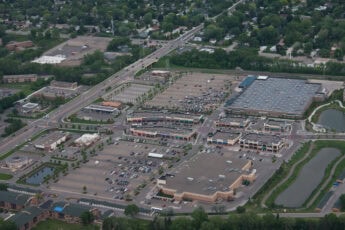
On October 8, 1956, Southdale Center opened in Edina, Minnesota. No shopping mall in the United States had been fully enclosed and climate-controlled before it.
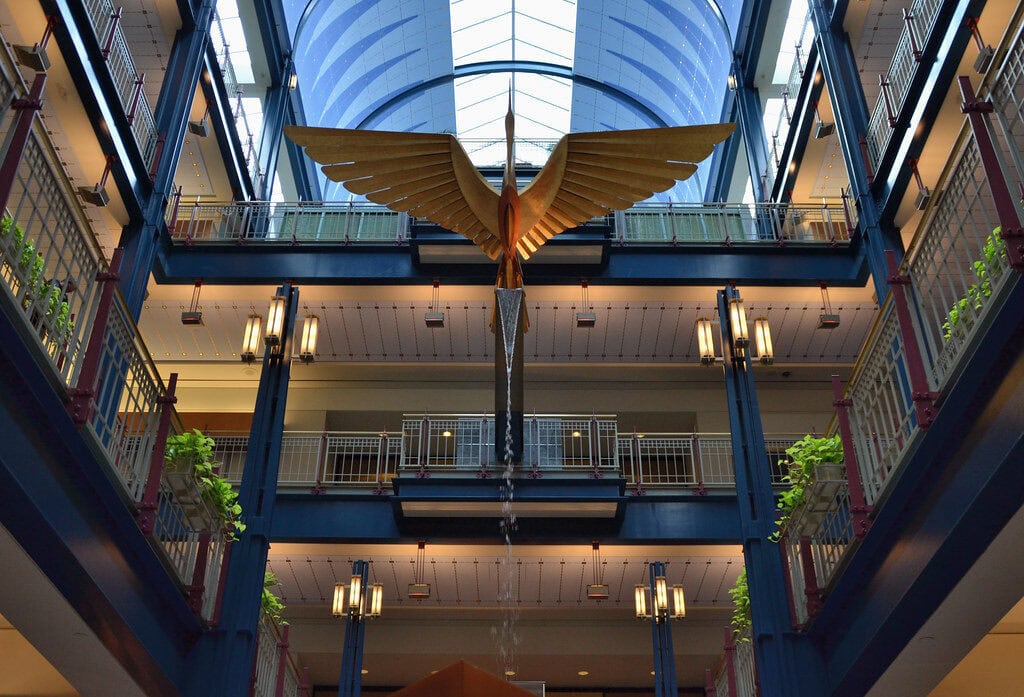
The Dayton family had hired the architect Victor Gruen, and his plan set two levels of stores around a garden court under a large skylight, with Dayton's anchoring one end and Donaldson's the opposite one.
There were 72 stores inside and about 5,000 free parking spaces outside, the sections marked with animal symbols to help drivers find their cars. The court was the center of the design.
Fountains, a fishpond, planted beds, and cafe tables filled it, and a small zoo and a skating rink kept people there longer.
A shopper could stop at Walgreens, Woolworth, and a Red Owl grocery, then mail a letter at the post office or get a haircut at the barber without stepping outside.
Gruen had pictured much more around the mall: housing, offices, a school, and parkland.
Most of that district was never built as he planned it.
The enclosed mall itself spread across the country as developers copied the format, and eventually the competition arrived next door.
The Galleria went up across 69th Street, and in 1992 the far larger Mall of America opened roughly six miles off.
Southdale's original anchors and many of its smaller tenants left or changed names.
The owner answered by building around the mall's edges. Southdale cost about $20 million to build.
Between 2012 and 2026 Simon Property Group spent about $400 million on changes that brought a hotel, apartments, county services, a fitness complex, a grocery, and entertainment to the property.
In spring 2026 Tiffany & Co. opened, completing a new luxury wing.
Inside, the enclosed mall still runs as a mall, with Apple, Sephora, and an AMC cinema among its tenants.

Har Mar Mall waits on a plan to remove much of it
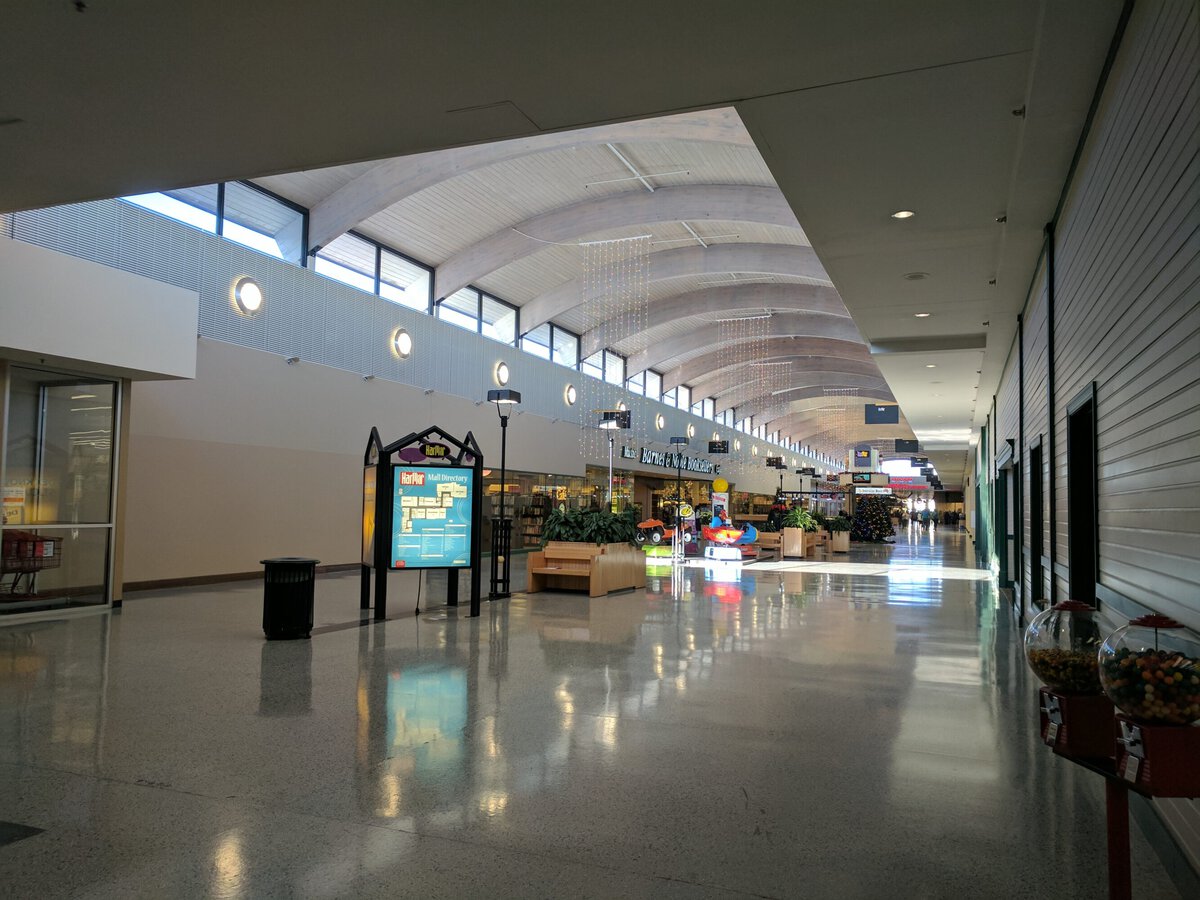
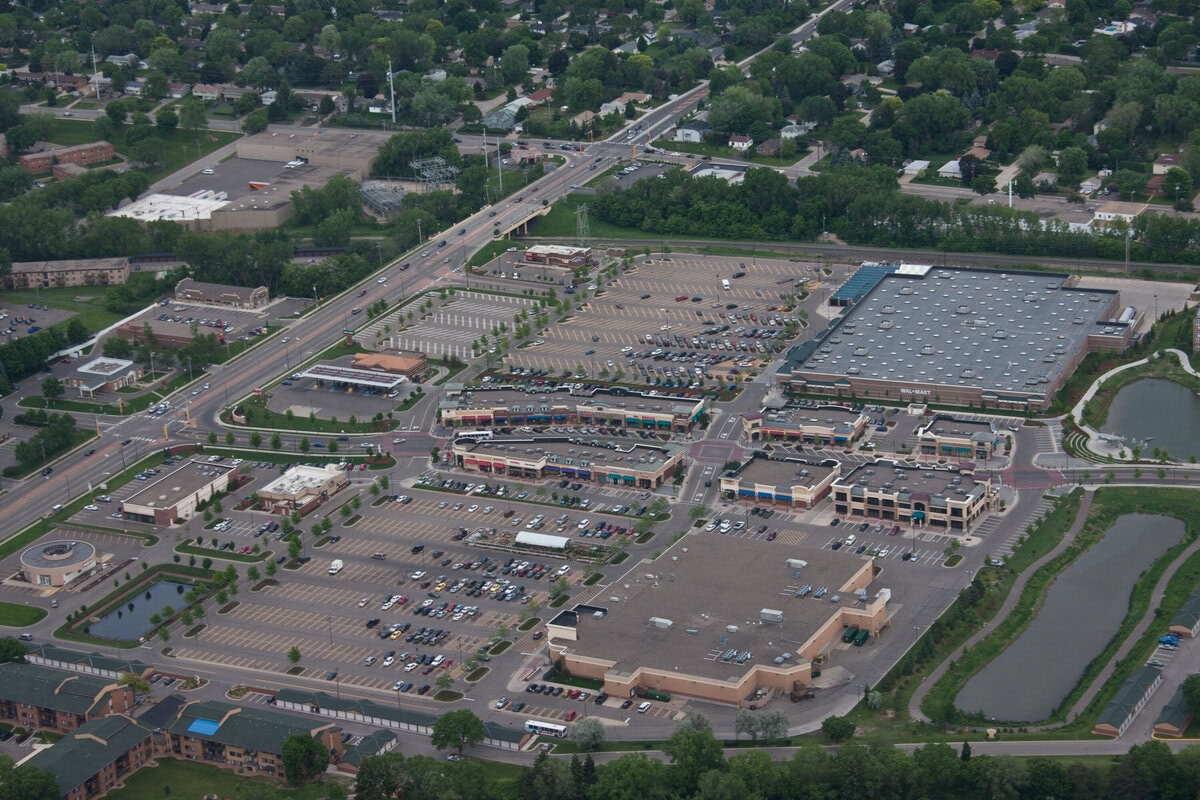
Har Mar Mall opened in Roseville, Minnesota, in August 1963. The mall took its name from its developers, Harold and Marie Slawik.
The one-level enclosed center stood on a 50-acre site along the Snelling Avenue retail corridor, with room planned for about 3,000 cars.
It was a $12 million development, and a hot-air balloon marked the opening.
In its stronger decades the mall gave people reasons to come besides shopping.
The cinema brought moviegoers, while school events, art fairs, and antique and flower shows took over the common areas.
The building kept changing around those uses.
Expansion came in 1971 and again with new anchors in 1988 and 1995; the 1981 tornado brought repairs, and a 2007 redevelopment replaced the facade.
By then little of the mall's original 1960s character remained.
The cinema closed in December 2006, and over the following years the shows and fairs faded out too.
Fidelis Realty Partners bought Har Mar in 2022 for $50 million and began looking at redevelopment.
By June 2026 more than two-thirds of the mall's storefronts and four of its ten anchor spaces stood vacant.
Cub Foods, Barnes & Noble, Michaels, and K&G Fashion Superstore were among the large stores still trading.
Earlier concepts showed parts of the mall removed, the big boxes split up or reused, and new freestanding buildings on the site.
Har Mar is open, with its large stores still selling.
Demolishing much of the enclosed mall is under discussion, but Fidelis still describes redevelopment as under consideration.
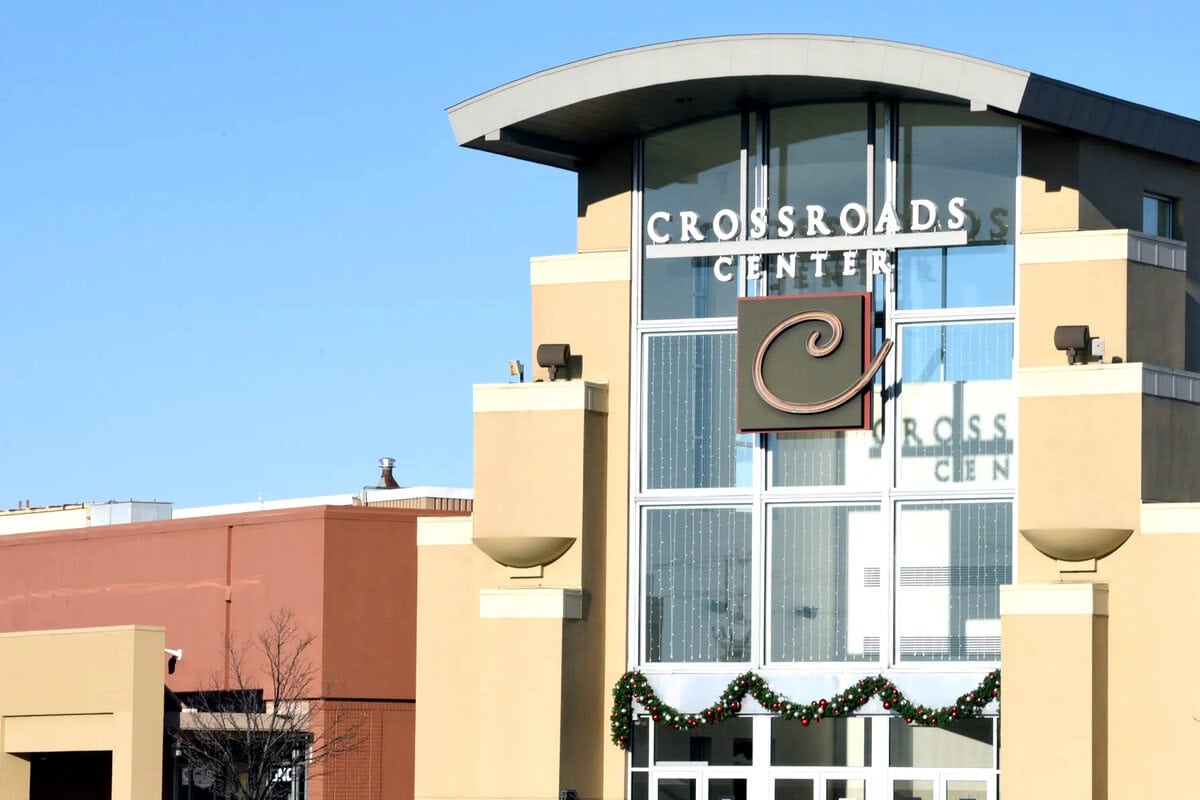
Crossroads Center changes hands and loses Macy's
Crossroads Center in St. Cloud, Minnesota, opened in stages.
Sears and a movie theater were open on the site by the end of 1965, JCPenney followed early in 1966, and the single-level enclosed mall held its grand opening in April 1966 with about two dozen stores.
Their arrival was part of major retail's move out of downtown St. Cloud, and that one-floor layout stayed recognizable through every addition that followed.
The mall grew by adding on rather than starting over.
A 1976 expansion of about 200,000 square feet brought Dayton's and more specialty shops.
By the late 1990s there was a food court and a carousel.
A 2004 program costing about $33 million paid for a new Scheels, a new 4,300-square-foot food court, a Target remodel, new parking, and skylights.
Holding the department stores proved harder. Sears, on the site since 1965, closed in 2018.
The Dayton's store from 1976, after a run of name changes, had become Macy's.
After its owner defaulted on the mortgage, the mall was put in receivership, and in January 2024 a court approved its sale.
The deal closed that May, when Contrarian Crossroads LLC bought Crossroads for nearly $80 million. The mall stayed open through all of it.
The newest loss came soon after. In January 2026 Macy's announced it would close its St. Cloud store.
Crossroads is open, and JCPenney, Target, and Scheels are its anchors.
The mall that started with about two dozen stores now covers more than 900,000 square feet. The Macy's building at one end stands empty.
Rosedale Center trades its east anchor for a plaza
Rosedale Center opened in Roseville, Minnesota, with a grand opening from August 15 to 17, 1969, called Roseburst and decorated with more than 150,000 fresh roses.
It came six years after Har Mar and went up less than a mile north of it on the same Snelling Avenue corridor.
Rosedale was the third of the Dayton-linked "dale" centers, and it was bigger: two levels, completely enclosed, and kept at 72 degrees all year.
Dayton's held the west end and Donaldson's the east, with about 80 other shops between them.
On the first level the Garden Court had benches, trees, bushes, and flowering plants, and six rustic bridges crossed it at the second level.
In smaller courts outside the two department stores, fountains sprayed up toward decorative chandeliers over floors of terrazzo and brick.
The tenants included seven restaurants, a hobby shop, a pet shop, and a saddle shop.
A community room with a stage and a kitchen was part of the plan, and animal figures on tall signs helped drivers find their cars among 3,476 spaces.
The east end changed the most.
Other department-store names followed Donaldson's there, and in the mid-2000s the old east anchor came down to make room for an open-air Plaza addition.
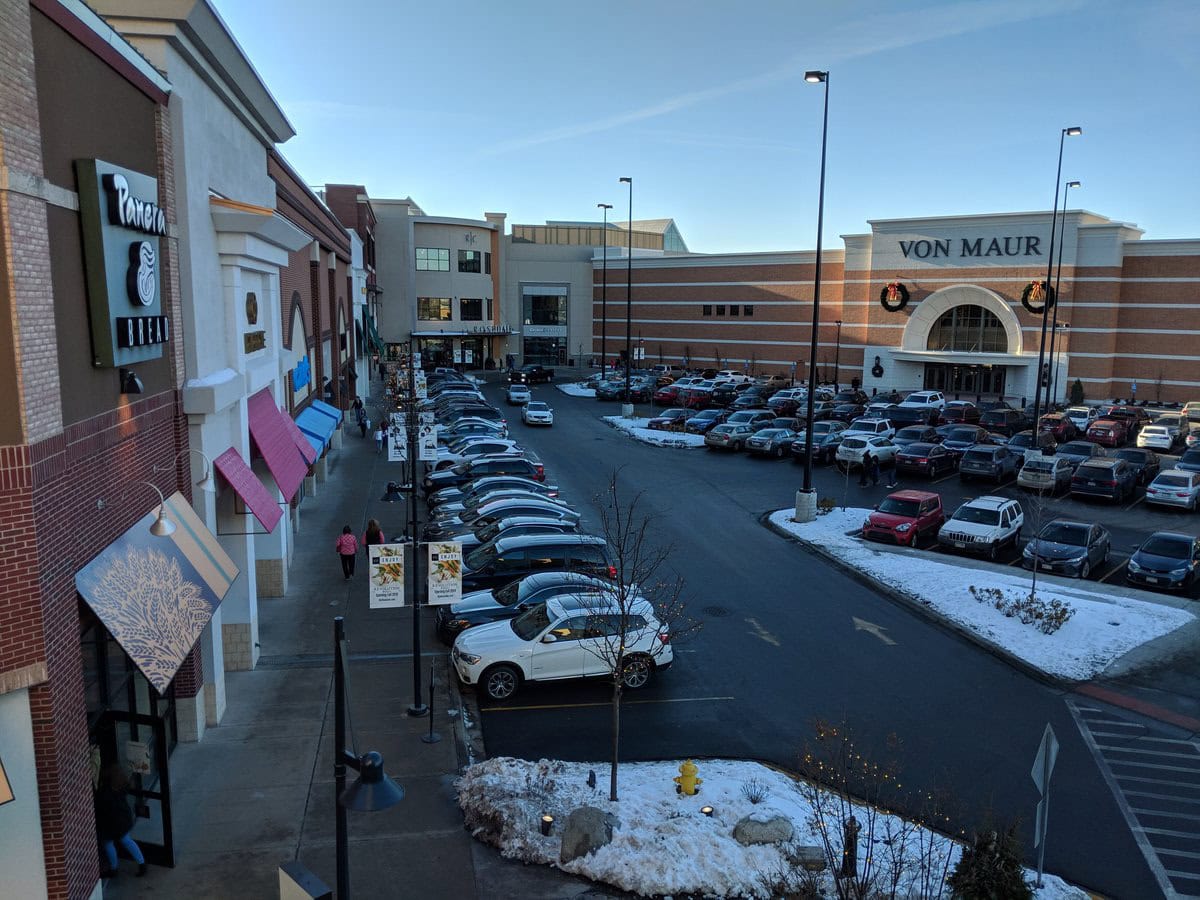
A later renovation reworked much of the interior with new skylights, water features, entrances, and signs, and with a two-level connection to Von Maur.
Rosedale is a large working mall, covering about 1.1 million square feet.
More than 150 retailers trade there, among them Dick's Sporting Goods, AMC Theatres, JCPenney, Macy's, and Von Maur.
In mid-October 2026 Potluck, the mall's local food hall, closed. The rest of the mall's restaurants and stores remain open.
Apache Mall fills its old Sears and Herberger's
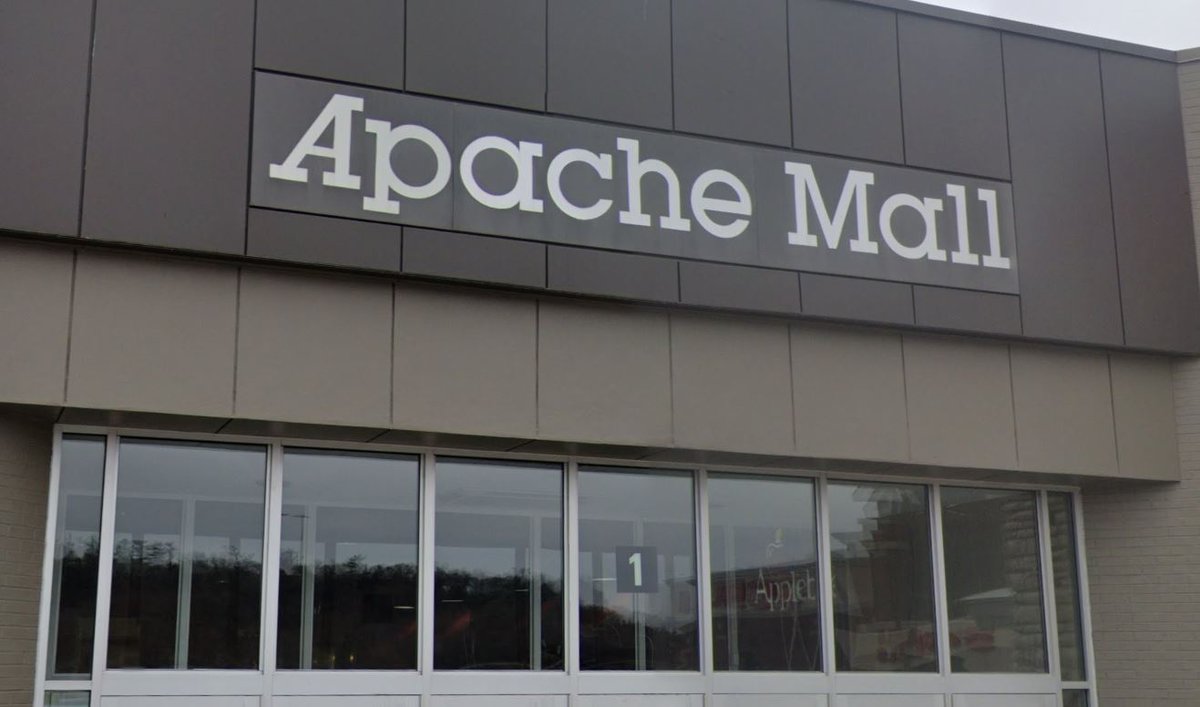
Apache Mall opened in Rochester, Minnesota, on October 16, 1969, two months after Rosedale.
Until then Rochester had no enclosed mall with its shops indoors.
Over the next three decades Apache grew by adding anchors and seats.
Dayton's left downtown Rochester for a new store at the mall in 1972, linking Apache to the department-store family that had opened Southdale.
Sears joined the mall in the early 1990s, and a food court with 300 seats arrived in the same period.
By 2002 Barnes & Noble had opened in 25,100 square feet, while the food court had grown past 600 seats.
By then Rochester's first enclosed mall had become a regional center.
The department stores turned over after that and left the mall with large spaces to fill, above all once Sears and Herberger's were gone.
Apache kept its enclosed layout and broke up or handed over those spaces instead.
Scheels took the former Sears space in 2015, putting sporting goods where the department store had been.
In 2026 the work reached the old Herberger's.
Sky Zone was planned for about 48,000 square feet of it, and by late October 2026 it had opened on the first floor while parts of the project were still being built.
Entertainment and smaller shops were moving into other empty spaces, and other parts of the mall were being readied for more new tenants.
Apache Mall is open, with its stores, its restaurants, and its large food court.
The space added for Sears in 1992 now sells sporting goods, and part of the old Herberger's has become a place to play.
Independent Publisher Notice
BestAttractions is an independent editorial publisher. We are not affiliated with, endorsed by, or acting on behalf of any location, business, property owner, manager, government agency, or organization described in this article. Comments posted on this page are not forwarded to, reviewed by, or acted upon by any entity mentioned in the article. For official inquiries, complaints, applications, bookings, or other requests, please contact the relevant entity directly through its official website or other verified channels.