
Many American enclosed malls built in the early 1980s have either been demolished, gutted for warehouses, or converted into something unrecognizable. Barton Creek Square, which opened in southwest Austin in 1981, is not one of those malls.
It is still doing what it was built to do, at nearly full occupancy, with a department-store anchor on every corner. There is no simple answer to what kept Barton Creek Square alive while comparable malls collapsed.
The tenants changed, the anchors changed, a theater was demolished and rebuilt, fountains and tropical plantings gave way to charging stations and fire pits. The place that exists now looks nothing like the place that opened.
What remained constant was the function: a covered space large enough to wander, air-conditioned, free to enter, useful to almost anyone. That sounds like a low bar. For an enclosed mall in 2026, it turns out to be a high one.
Barton Creek Square Opens on a Southwest Austin Hilltop
85,000 people showed up the first day. That was August 19, 1981, and the mall had 77 stores open and a parking lot for nearly 6,000 cars.
The full center was not yet finished. Sears and JCPenney had opened eighteen days earlier, on August 1, while construction continued elsewhere.
When the rest opened, Austin had its largest shopping center, and southwest Austin had a destination it had never had before.
The site sat at the junction of MoPac and Loop 360, on a prominent hilltop visible from the highway.
Six department stores anchored the center: Sears, JCPenney, Montgomery Ward, Foley's, Joske's, and Scarbrough's, the last of these a homegrown Austin name.
Six anchors made it one of the largest malls in Texas.
The interior matched the ambitions of the building: broad walkways, large planted areas, fountains, skylit courts, and enough enclosed climate-controlled space to wander for an hour without covering the same ground twice.
Three months after the grand opening, Barton Creek Square became the first mall in Texas to install Braille and bold-print signage throughout the center.
It was a notable gesture for 1981, and it gave the mall a distinction beyond retail square footage.
Barton Creek Square Was Years in the Making
The announcement came in June 1977.
Melvin Simon & Associates, the Indianapolis-based developer behind dozens of enclosed regional malls, had acquired a 104-acre tract along Loop 360 in southwest Austin.
The plan called for more than 1 million square feet of retail space and parking for nearly 6,000 cars.
Land clearing and grading had started by late October 1977, but the project moved slowly.
The MoPac highway extension to the mall site had not been finalized, and that uncertainty stalled the schedule and complicated negotiations with national tenants who needed to know how customers would arrive.
Design work was finalized in 1978. Gordon Sibeck, who had previously designed Windsor Park Mall in San Antonio, was chosen as the mall's architect.
The design followed the standard large enclosed regional mall model of the period: a fully climate-controlled interior, multiple anchors around interior concourses, and highway access engineered to pull shoppers from across a broad area.
Construction brought scrutiny that foreshadowed years of public debate.
The mall sits in the Barton Creek watershed, and by 1980 city inspectors were conducting daily surveillance of the site.
The City of Austin's Environmental Board found the construction in violation of city standards, and erosion-control measures were approved before work continued.
The mall had barely been built, and it was already entangled in the Barton Springs water-quality dispute that would define Austin environmental politics for decades.
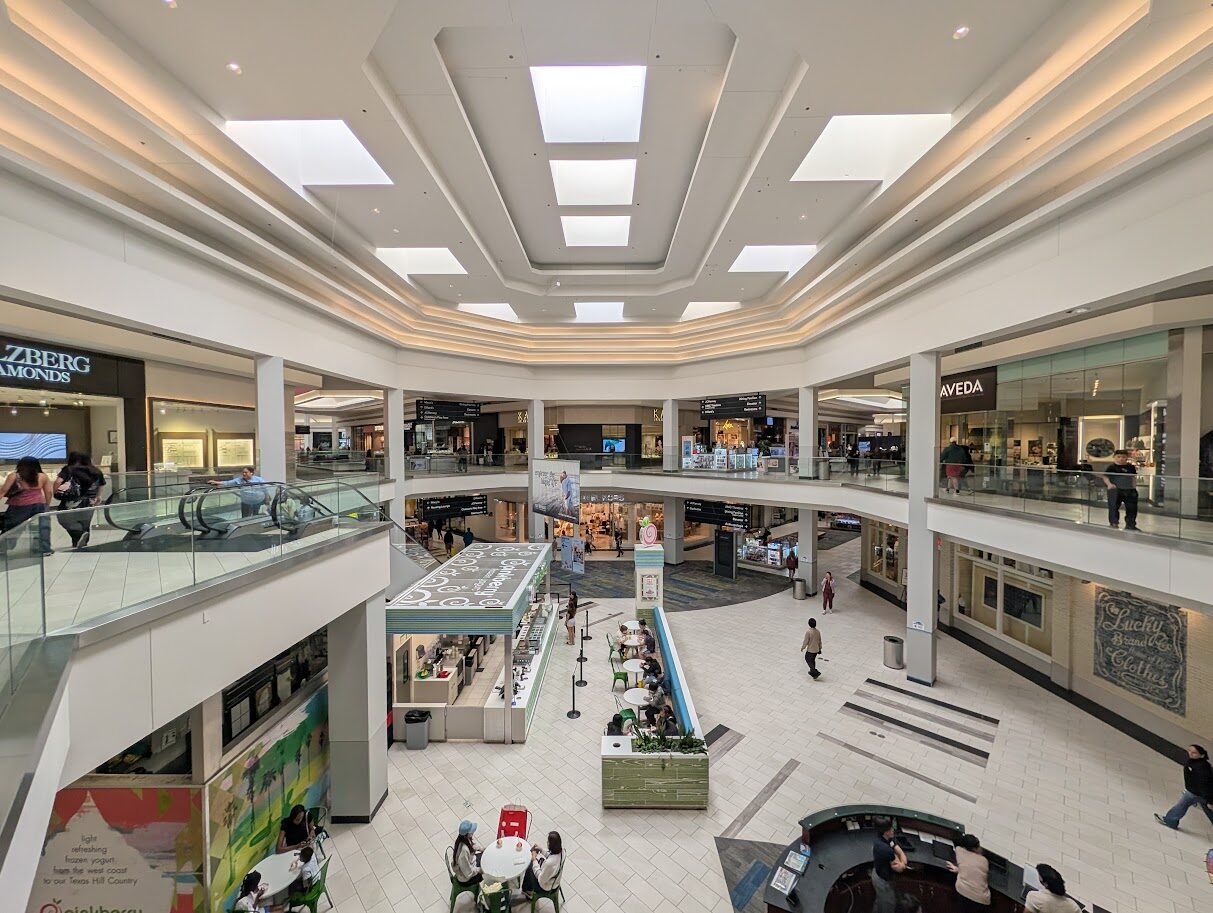
Fountains, Plants, and the Teenage Years of the Mall
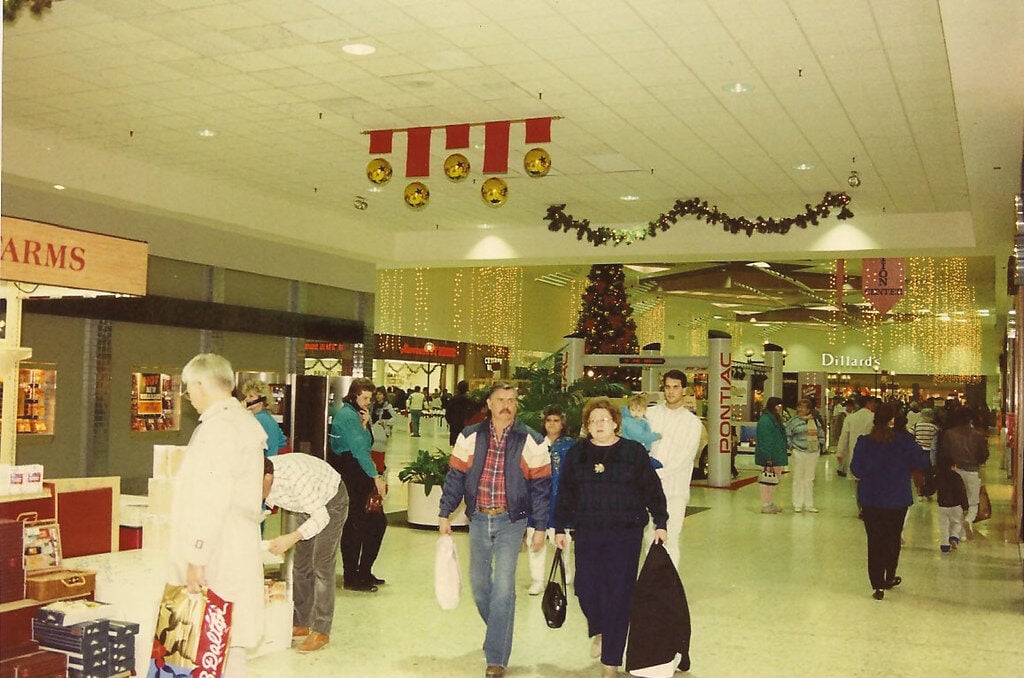
Through the 1980s and 1990s, Barton Creek Square was one of the central gathering places in southwest Austin, and not only for shopping.
The wide interior concourses held large plants, fountains, and natural light from skylit courts.
The layout made it easy to wander through the place itself rather than just between stores.
Teenagers met there on weekends because it was air-conditioned, it was free to enter, and there was enough space to feel like you were going somewhere without quite leaving.
Food-court operators fed crowds of high schoolers who could afford lunch but not much else. Camelot Music, Gadzooks, and KB Toys filled the specialty-shop space between the big anchors.
The five-screen Barton Creek Cinema opened in the mall's outer parking area on January 16, 1987, operated by General Cinema.
A theater on the property made the mall a full evening destination rather than just an afternoon one.
The theater structure had problems. Structural issues led to its condemnation and closure in March 1993, and the building was demolished.
General Cinema replaced it with a 14-screen theater at a different location on the mall property in 1999.
AMC took over that theater in 2002. The original cinema is gone, but the habit of coming to Barton Creek Square to see a movie outlasted the building.
Montgomery Ward Leaves and Nordstrom Arrives
Montgomery Ward had been part of the original anchor lineup since 1981.
The national chain liquidated completely in 2001 after a second bankruptcy, and its departure left a large vacant anchor box.
Simon's answer changed the character of the mall.
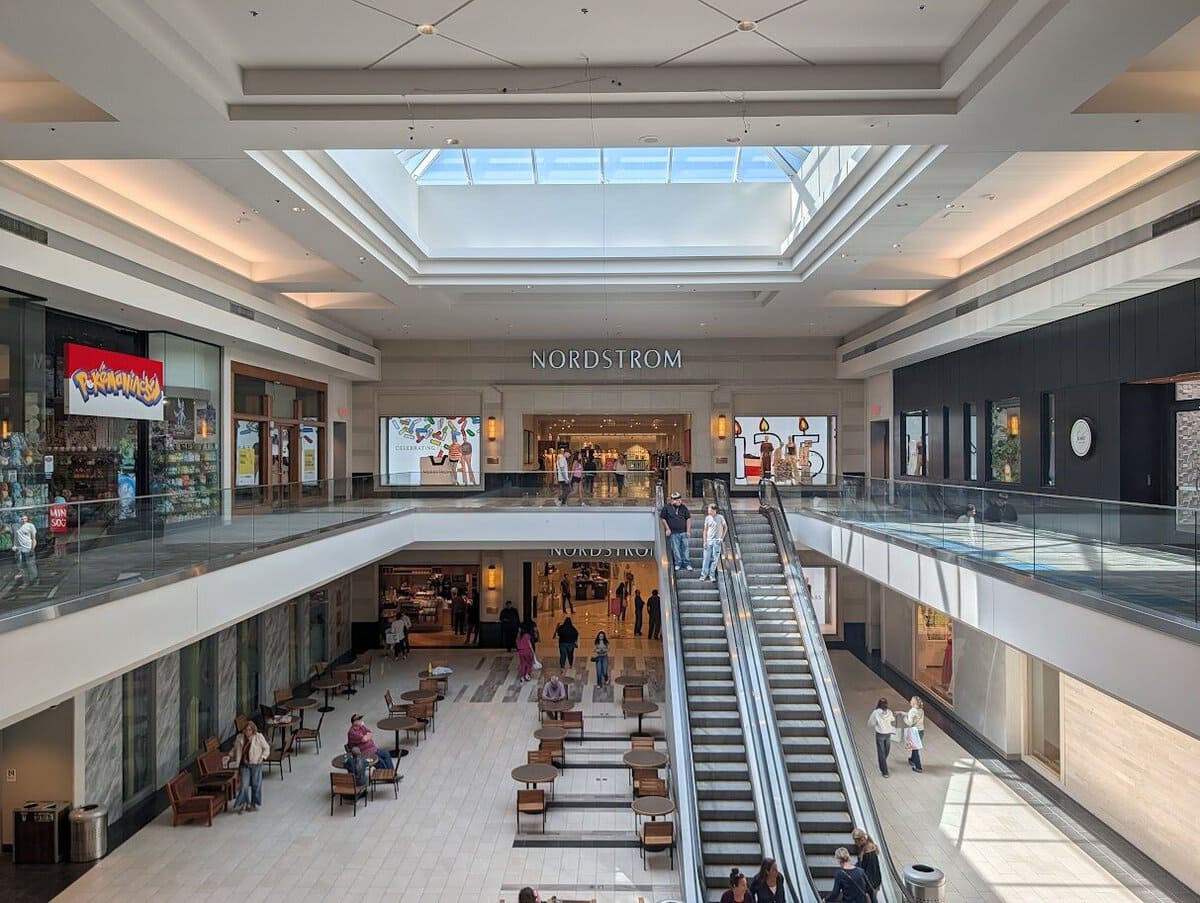
Nordstrom opened in the former Ward space on August 15, 2003. It was Nordstrom's 90th full-line store and its first in Austin, measuring about 144,000 square feet across two levels.
Simon also completed a broader expansion and renovation project that year, adding about 40,000 square feet of gross leasable area at an estimated cost of $28 million.
The Nordstrom arrival shifted the mall's identity upward. Apple, Lululemon, and Lego replaced the earlier generation of mall staples.
The Cheesecake Factory opened in August 2015 near the theater and outdoor area.
The Foley's-to-Macy's conversion completed the department-store modernization.
Federated Department Stores had acquired May Department Stores in 2005, and the conversion of Foley's locations to Macy's took effect nationally on September 9, 2006.
Joske's had been absorbed by Dillard's in 1987, and Dillard's remained as a continuing anchor.
By the mid-2000s the lineup of Nordstrom, Macy's, Dillard's, JCPenney, and Sears was a reasonable summary of where American department-store retailing had settled, and Barton Creek Square had all five.
Sears Closes and Leaves a Long Empty Box
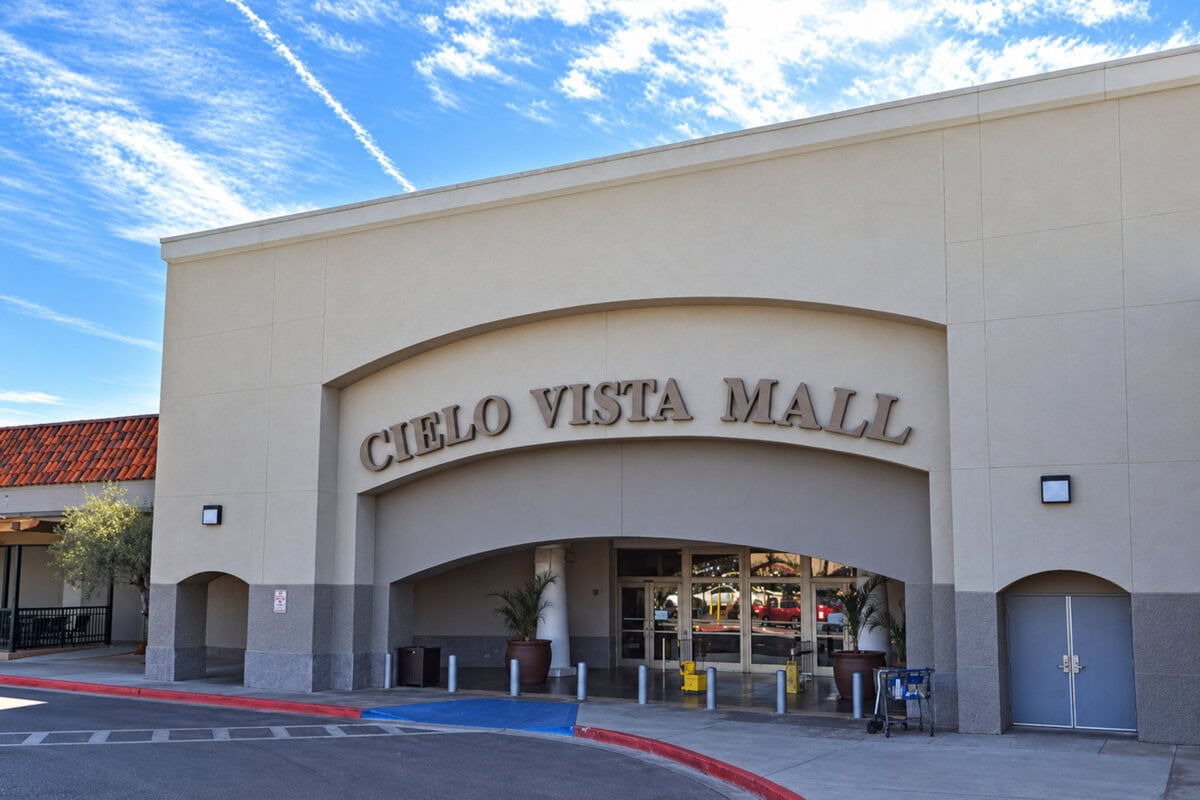
Sears had been at Barton Creek Square since August 1, 1981.
The company filed for Chapter 11 bankruptcy protection on October 15, 2018, and identified Barton Creek Square as one of the Austin locations to close.
The Barton Creek store had been one of the last two Sears locations in Austin; Hancock Center was the other. Both closed.
The vacancy was large and visible. The former Sears space was walled off inside the mall and stayed that way through the mid-2020s.
One end of the mall, anchor retail for nearly four decades, became a blank expanse of temporary wall.
In 2015, Sears Holdings had spun off many of its real-estate holdings, including the Barton Creek Square store, into Seritage Growth Properties.
That transfer separated the building from the retail operator before the retail operator collapsed.
Dick's Sporting Goods announced at a retail conference on April 8, 2026, that its House of Sport chain had reached deals for locations including Barton Creek Square.
Dick's House of Sport combines retail with activities - indoor tracks, batting cages, putting greens - intended to draw customers who might not come simply to buy merchandise.
The company had 35 House of Sport stores as of January 31, 2026, and planned approximately 14 more in 2026. The former Sears anchor had found its next use.
The 2019 Renovation and the End of the Fountain Era
By the time Simon started a major update of Barton Creek Square in 2019, most of the plants and fountains that had shaped the mall's interior in the 1980s and 1990s were already gone.
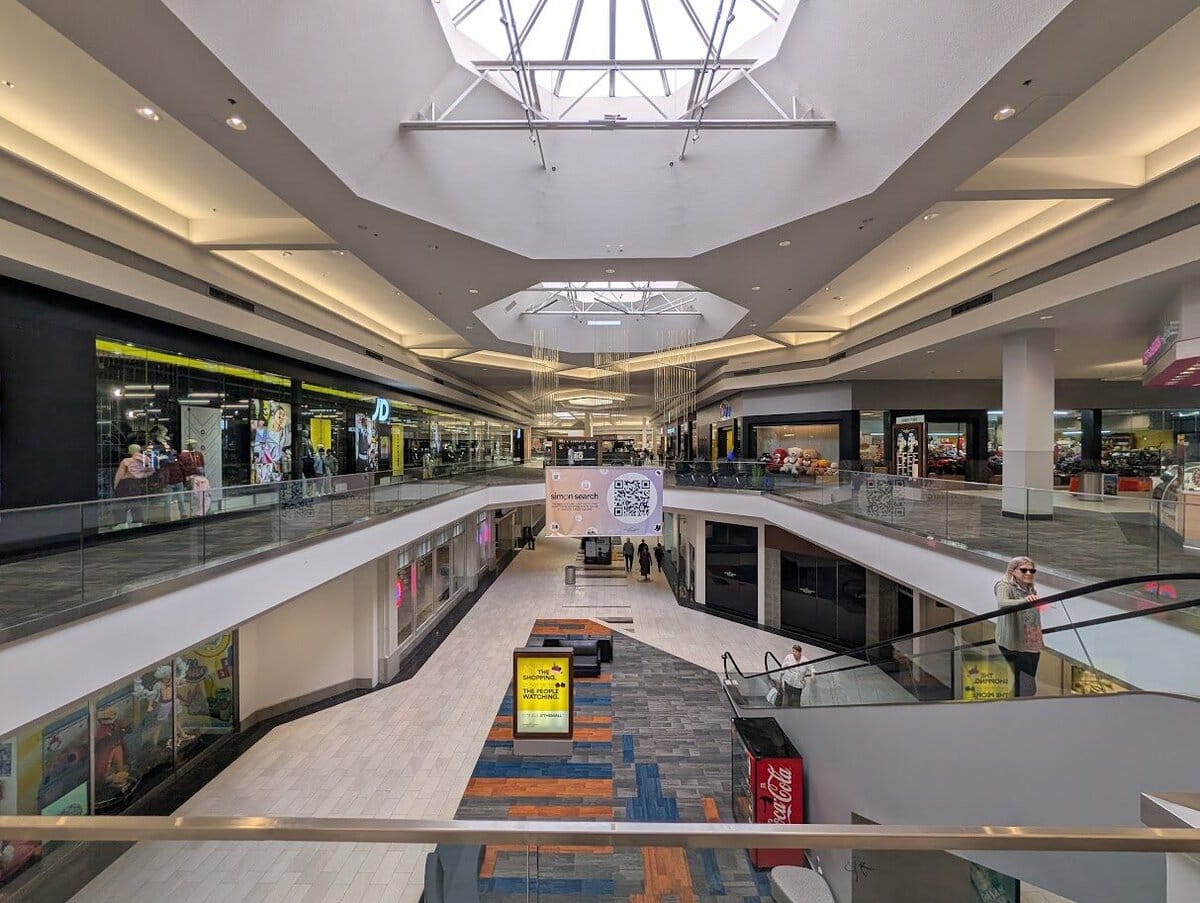
The renovation brought in new flooring, fresh paint, LED lighting, glass handrails, updated signs to help visitors find their way, a new family restroom with a nursing area, and the first DWELL Space in Simon's portfolio.
The DWELL Space was a shared lounge near Nordstrom with seating, workspaces, televisions, and places to charge devices.
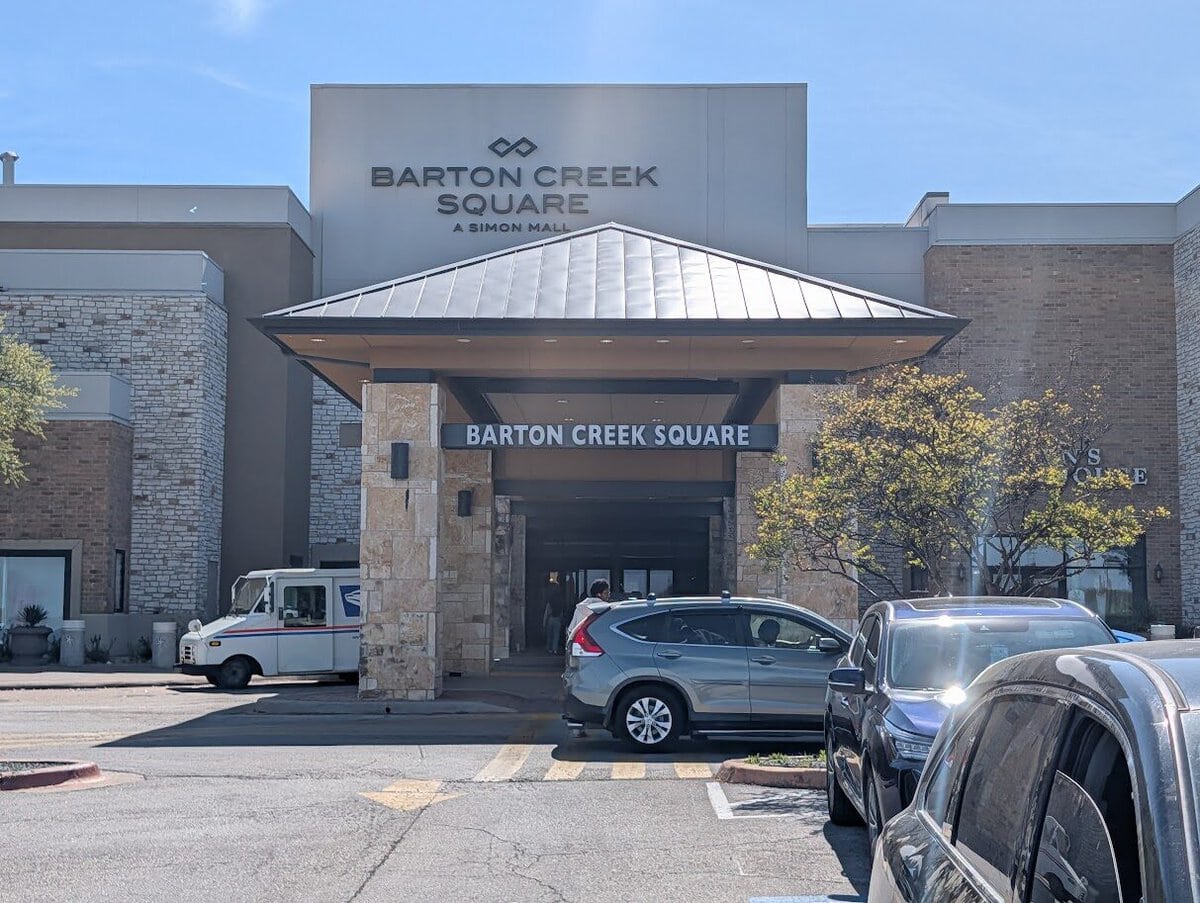
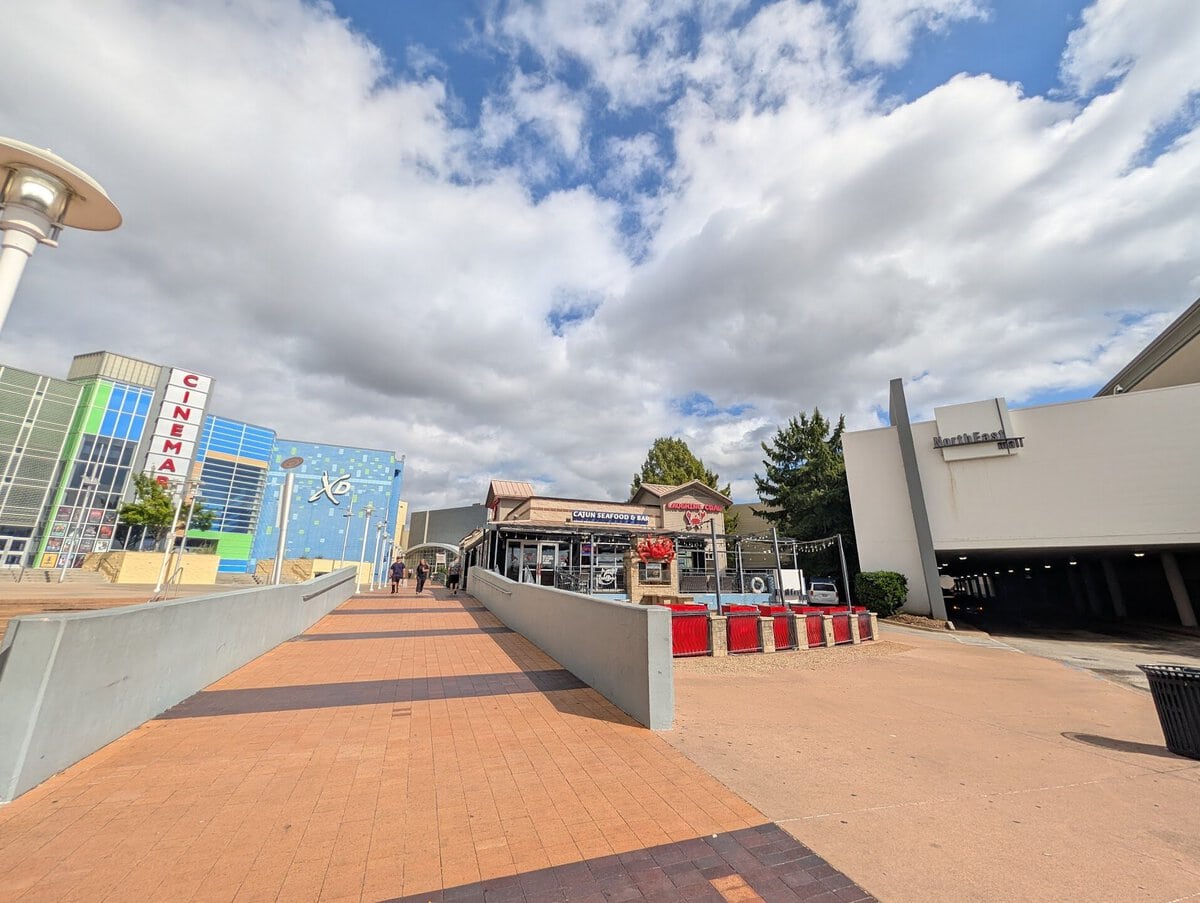
The outside of the mall changed too. Simon redesigned the entrances, added new canopies, put in turf areas, and created an outdoor fire-pit gathering space between AMC Theatres and The Cheesecake Factory.
The fire pits gave that corner of the mall a new purpose as a place to sit and spend time. Before that, the outdoor areas were mostly paved and used for coming and going.
The renovation did not bring back the original indoor garden-like design.
The wide concourses of the 1980s and 1990s, with their large tropical plants and reflecting pools, were replaced by a brighter space with kiosks, charging points, and lounge seating.
People who came back after many years away would still recognize the mall's layout, but not its feel. The basic structure stayed. The original decorative interior did not.
The Creek Below the Parking Lot
The mall sits on a hilltop, but the drainage runs into Barton Creek, and that fact has governed more of the mall's history than most visitors knew while walking through the food court.
The Barton Creek Interceptor, the wastewater line serving the area, was built in the 1960s along the creek itself.
The line runs about 11,100 linear feet; roughly 98 percent lies in the 100-year floodplain, about 90 percent in the Critical Water Quality Zone, and about 45 percent in the Erosion Hazard Zone.
In 2002, most of the interceptor was reduced in capacity by installing smaller pipes inside the existing larger ones and grouting them in place.
The intent was to limit growth in the watershed. Any large new development in the area - including residential uses on the mall's surface parking lots - could exceed the interceptor's reduced capacity.
Austin City Council adopted a resolution on May 30, 2024, directing city staff to evaluate moving the wastewater infrastructure away from the creek.
Austin Water's November 2024 staff report identified a MoPac Interceptor concept as the most practical option: a new line running about 13,900 linear feet along MoPac, with an estimated construction cost of about $60 million and a 10-year implementation timeline.
Until that infrastructure is in place, mixed-use redevelopment of Barton Creek Square's excess parking land remains constrained by pipe capacity buried under a floodplain.
What Barton Creek Square Looks Like in 2026
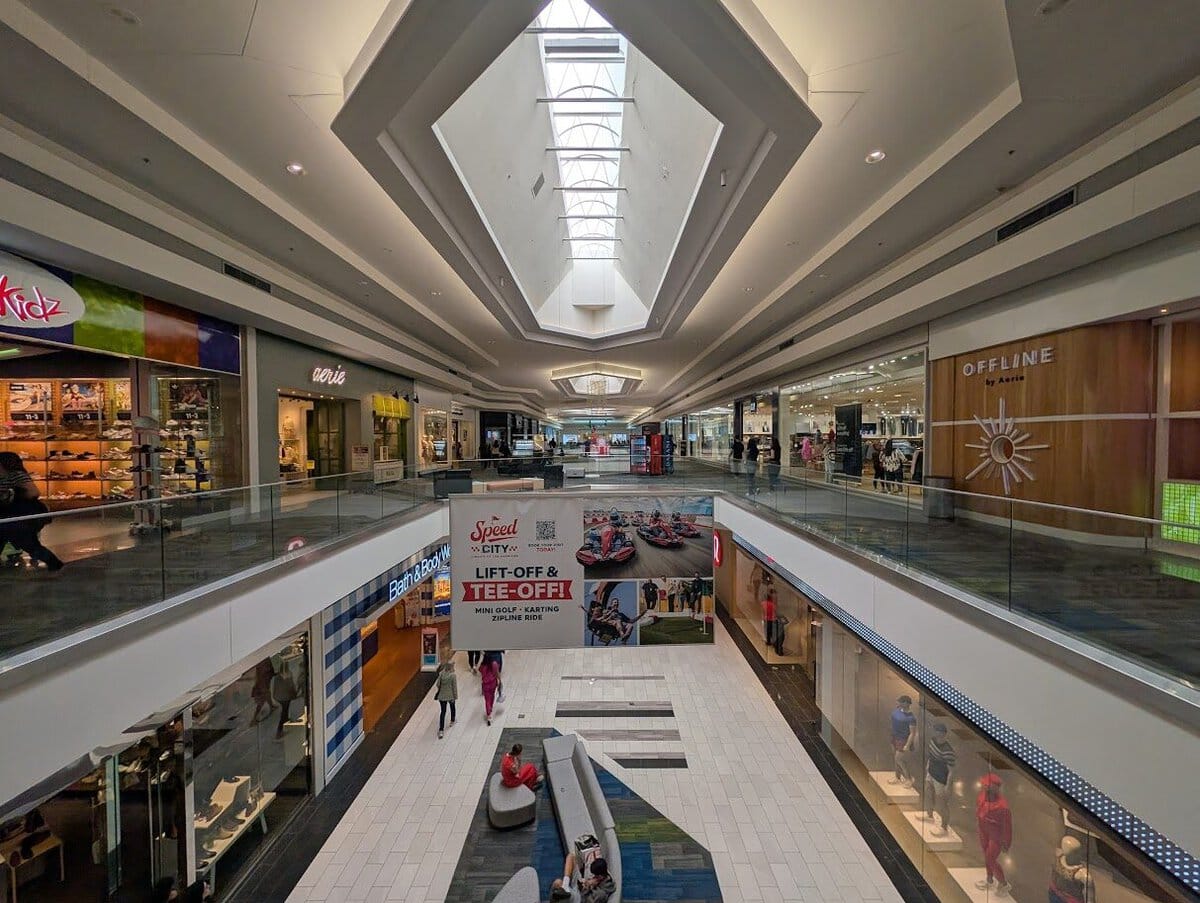
In early 2026, Barton Creek Square is still the largest indoor mall in Austin.
In 2025, it was 98.9 percent occupied across about 1.4 million square feet. Its main anchors are Nordstrom, Macy's, Dillard's, JCPenney, and AMC Theatres.
More than 150 smaller stores and places to eat fill the rest of the mall.
The Care Bears Play Area opened near JCPenney Court 2 in January 2026. It was made for toddlers through children age six.
Uniqlo is working on a 18,000-square-foot store, with a listed completion date in September 2026.
Chubby Cattle, a Japanese-inspired all-you-can-eat barbecue restaurant, was announced as a future tenant.
Starbucks opened across from Foot Locker in January 2025.
The fountains are no longer there. The big tropical plants are gone, too. The old Sears space is blocked off while it waits for Dick's House of Sport.
Scarbrough's, the Austin name that once gave the original group of anchor stores a local feel, disappeared years ago.
The mall that replaced those older features is cleaner, brighter, and built for 2026 instead of 1981. The food court still gets busy at lunch.
Teenagers still walk the concourses on weekends with nowhere special to go. The same building that brought in 85,000 people on a single August day in 1981 is still bringing in crowds.
It just looks very different from the mall those first visitors saw.
Independent Publisher Notice
BestAttractions is an independent editorial publisher. We are not affiliated with, endorsed by, or acting on behalf of any location, business, property owner, manager, government agency, or organization described in this article. Comments posted on this page are not forwarded to, reviewed by, or acted upon by any entity mentioned in the article. For official inquiries, complaints, applications, bookings, or other requests, please contact the relevant entity directly through its official website or other verified channels.