
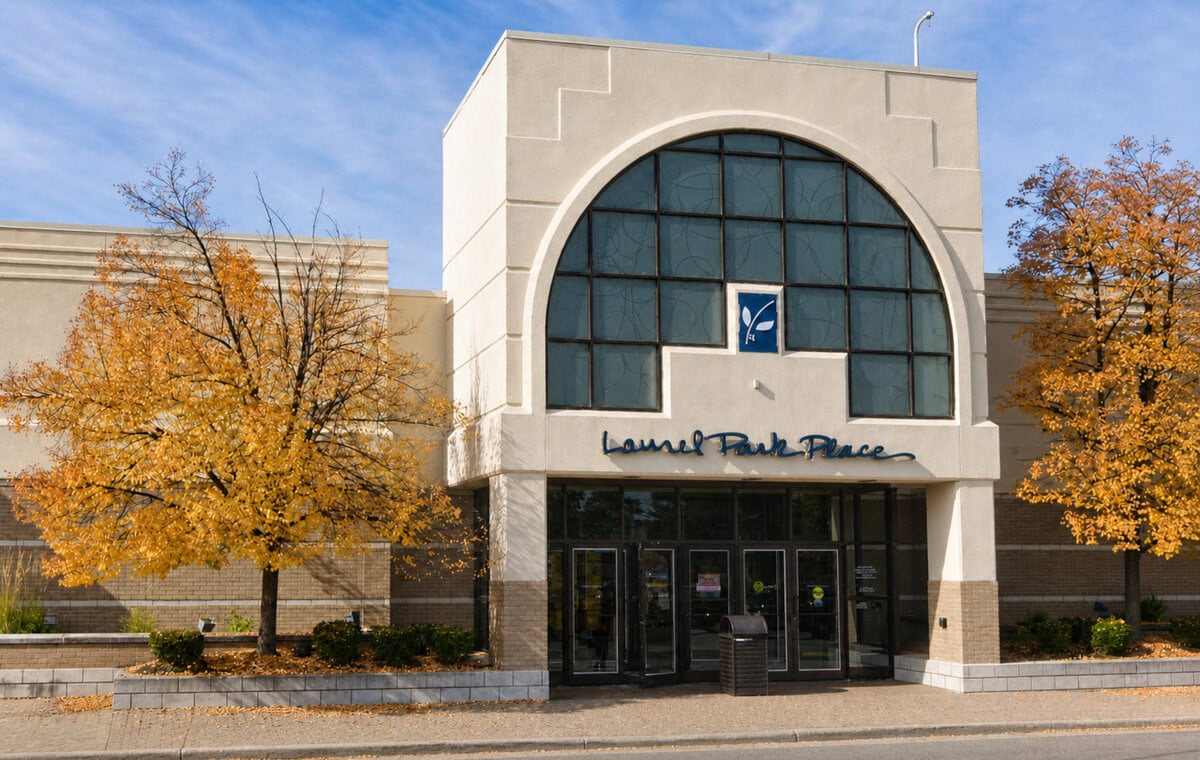
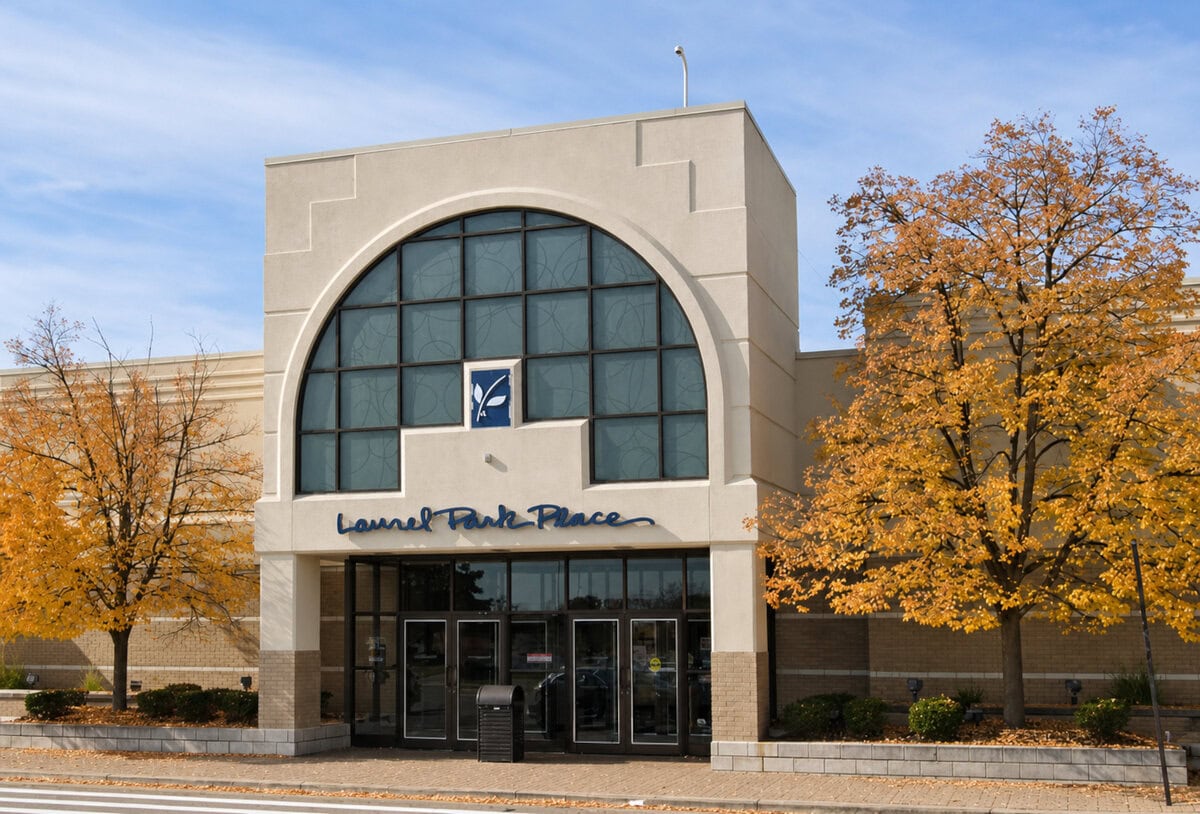
Laurel Park Place is a single-level enclosed mall in Livonia, Michigan, at Six Mile and Newburgh near I-275, open since August 3, 1989.
CBL owns it now.
People walking in expecting a big two-level regional mall found something smaller and more upscale: a compact shopping floor wired into a hotel, an office park, and a theater.
Jacobson's was the original anchor and the largest in the chain.
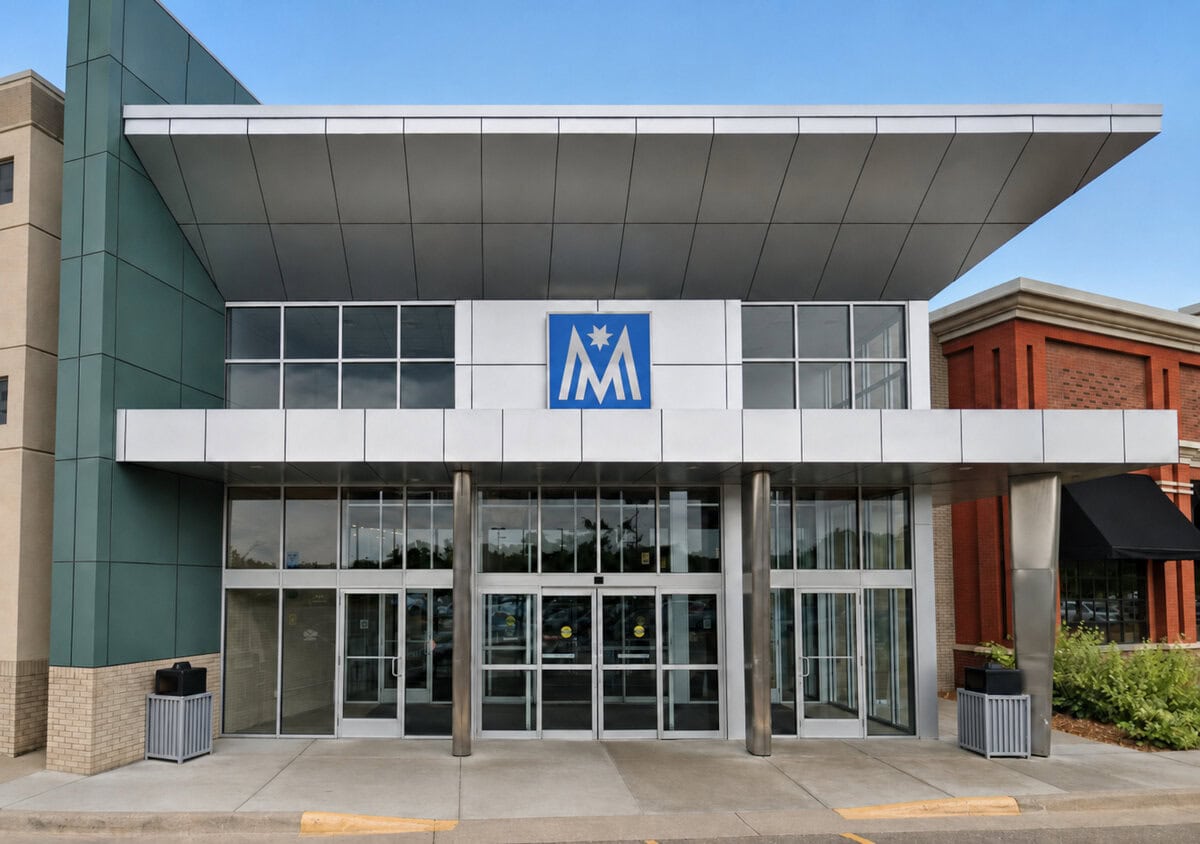
Von Maur replaced it in 2003 and is still there.
The north anchor had a rougher run. Parisian opened in a 1994 expansion, turned into Carson's, then closed in 2018.
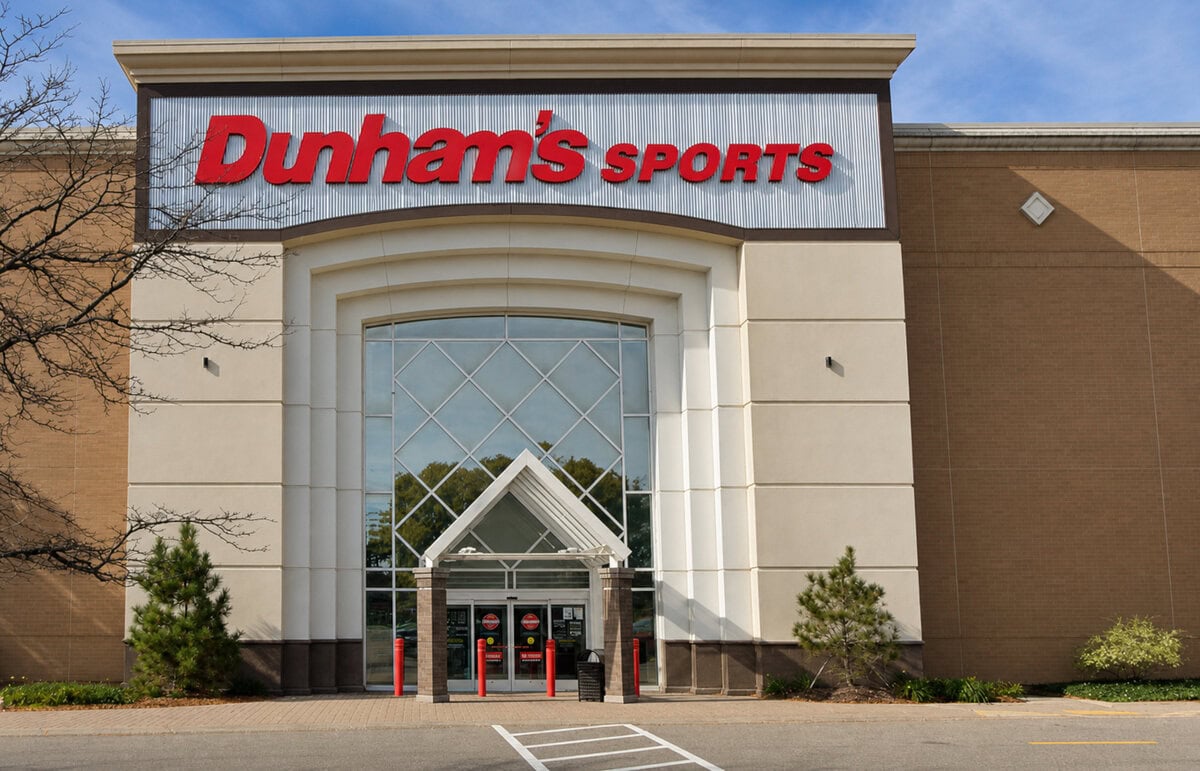
Dunham's Sports filled about a third of the empty box.
Today, the mall lists about 35 stores in its current directory and logs about 2.4 million visits a year.
Around it, Livonia approved a Holiday Inn-area redevelopment plan, the Comerica Bank site got approval for façade and parking work, and a linked office center was reported to be in receivership in 2025.
When Jacobson's went big in Livonia, a whole complex got built around it
The land at Six Mile and Newburgh in western Livonia wasn't supposed to hold just a mall.
By early 1989, Schostak Brothers & Company had drawn up a single project that stacked retail, a hotel, three office buildings, restaurants, a theater, and a parking deck onto one site near the I-275 interchange.
The shopping mall was the front of it. Everything else was built to feed it.
At the center sat a department store.
Jacobson's, the Jackson-based chain known for upscale clothing, had planned a high-end Livonia branch before the mall opened, and the building got skylights, glass walls, marble, pale stucco, and aqua trim.
The store cost $12 million. When it opened, it was the largest Jacobson's in the chain.
A mall built to share customers with an office park
Schostak's pitch had a second customer in mind besides the weekend shopper.
The three office buildings were expected to hold 1,000 to 1,500 workers, and the plan treated those workers as a weekday crowd for the mall.
So the design wired everything together.
Covered parking. A covered walkway straight into the mall.
Internal access to the attached Marriott hotel.
An office worker could park under cover, walk to a meeting, and reach a store or a hotel lobby without stepping outside.
The restaurants came in for the same reason.
In March 1989, Livonia's Planning Commission worked through proposals for Max & Erma's, approved for up to 271 people, and D. Dennison's, approved for up to 312 seats with a patio.
The debate ran long over liquor-license spacing, parking, signs, and how many licenses the area could hold near the mall entrance.
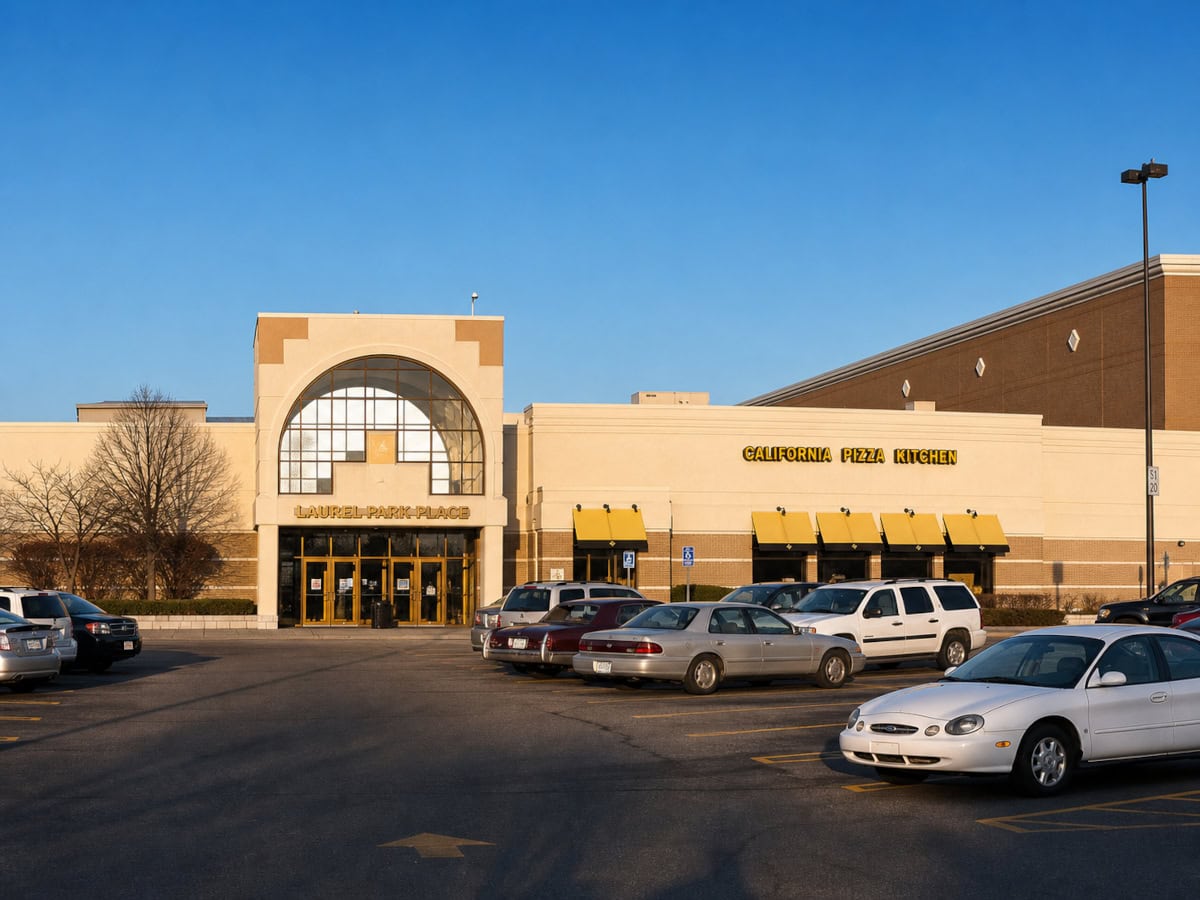
Opening day, and a layout that felt smaller than expected
Laurel Park Place opened on August 3, 1989.
One enclosed retail level, tied to the larger complex around it.
A regional-mall label could make Laurel Park Place sound bigger than it felt.
This was a compact upscale mall bolted to office and hotel uses, drawing on Jacobson's, specialty shops, the restaurants, the hotel, the offices, the parking structure, and a theater rather than on sheer size.
The theater followed that fall.
AMC Laurel Park 10 opened on October 27, 1989, on the Laurel Park Drive side, giving the property a night-and-weekend draw beside the daytime office traffic.
The 10-screen cinema would outlast AMC's run there.
Twelve Oaks down the road, and a smaller answer to it
The mall landed in a crowded retail corridor in western Wayne County.
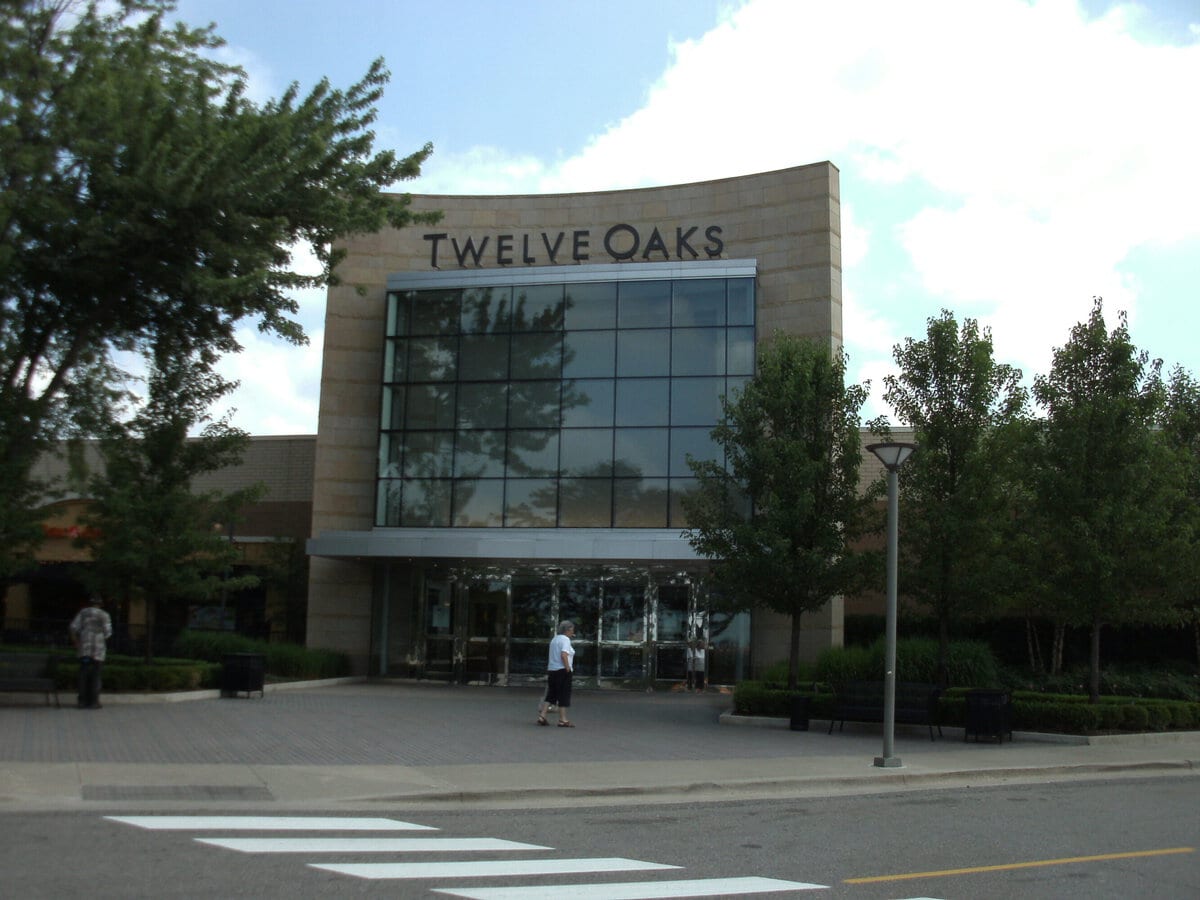
Its big regional competitor was Twelve Oaks Mall in Novi, a much larger multi-anchor center, and the I-275 and Haggerty corridor around it kept filling with big-box stores, grocers, hotels, and restaurants.
Laurel Park Place played a different hand.
Smaller floor, upscale department-store base, direct ties to offices and a hotel.
As late as 2016, it still ran on that formula: Von Maur and Carson's, more than 500,000 sq ft of leasable space, and access roads less jammed than the ones around Twelve Oaks.
Its five-mile trade area held 210,000 people, with per capita income of $40,000.
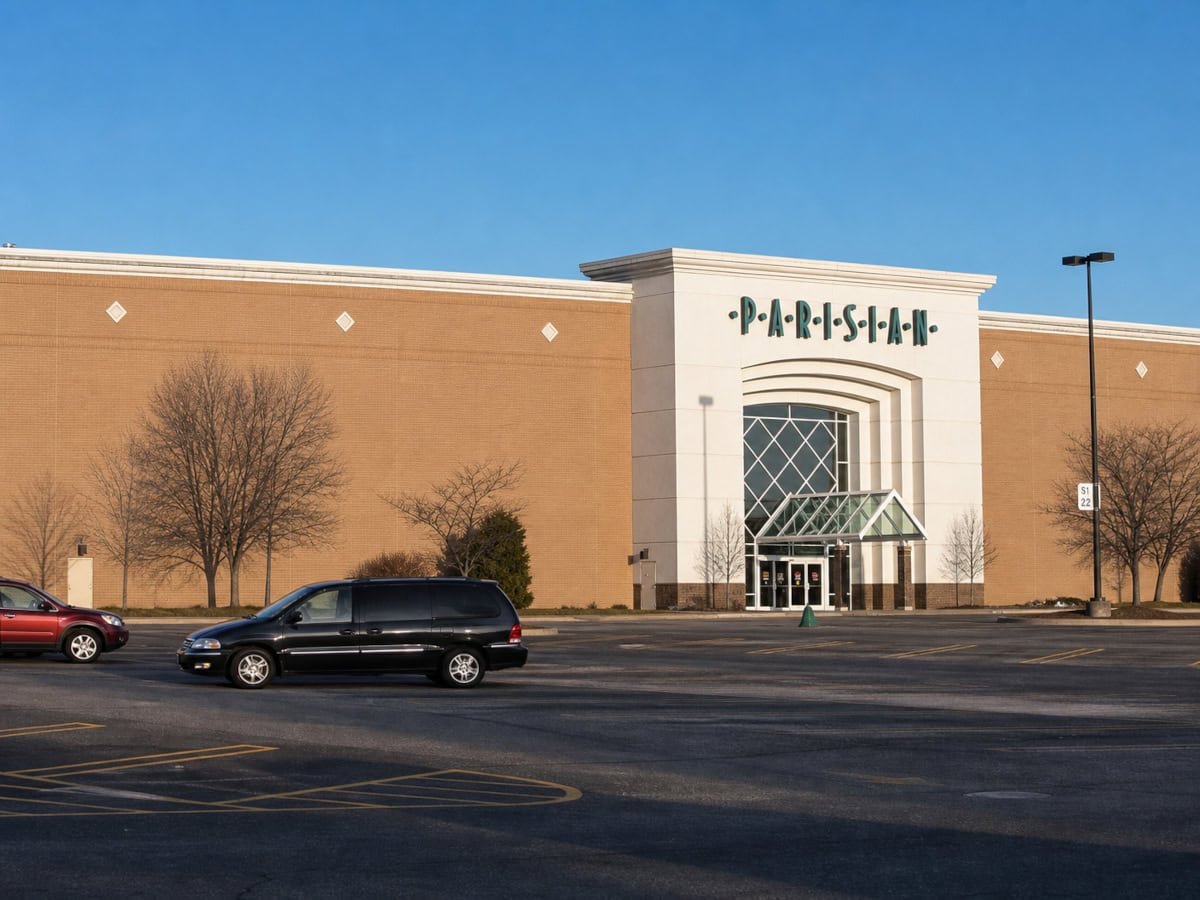
A second anchor, and the mall got bigger
In August 1994, the mall added its largest piece of new retail.
Parisian, a Birmingham, Alabama chain, opened its first Michigan store at the north end as part of a 150,000 sq ft expansion.
That move took the property from one department store to two and pushed it toward a more conventional regional-mall shape.
It was still smaller than the giants nearby.
But it now had a north anchor and a south anchor, with the mall stretched between them.
What $409 a square foot looked like
In 2004, this was a strong mall by the measure that counts inside a store: sales.
Laurel Park Place did $409 per sq ft.
That number showed why the property could draw a bigger owner.
A mall moving that much merchandise per foot is a mall people actually shop, and it set up the ownership change that came the next year.
CBL buys in, then buys the rest
On June 1, 2005, CBL & Associates Properties acquired a 70% stake in the mall from Schostak in a deal recorded at $80.3 million.
The structure was the usual mix: a little cash, the assumption of $50.7 million in existing debt due in December 2012, and a batch of special units worth $26.9 million.
The 2005 deal also handed CBL the right to buy the rest. It did.
In December 2012, CBL issued $14 million in units and picked up the remaining 30%, taking full ownership of the mall.
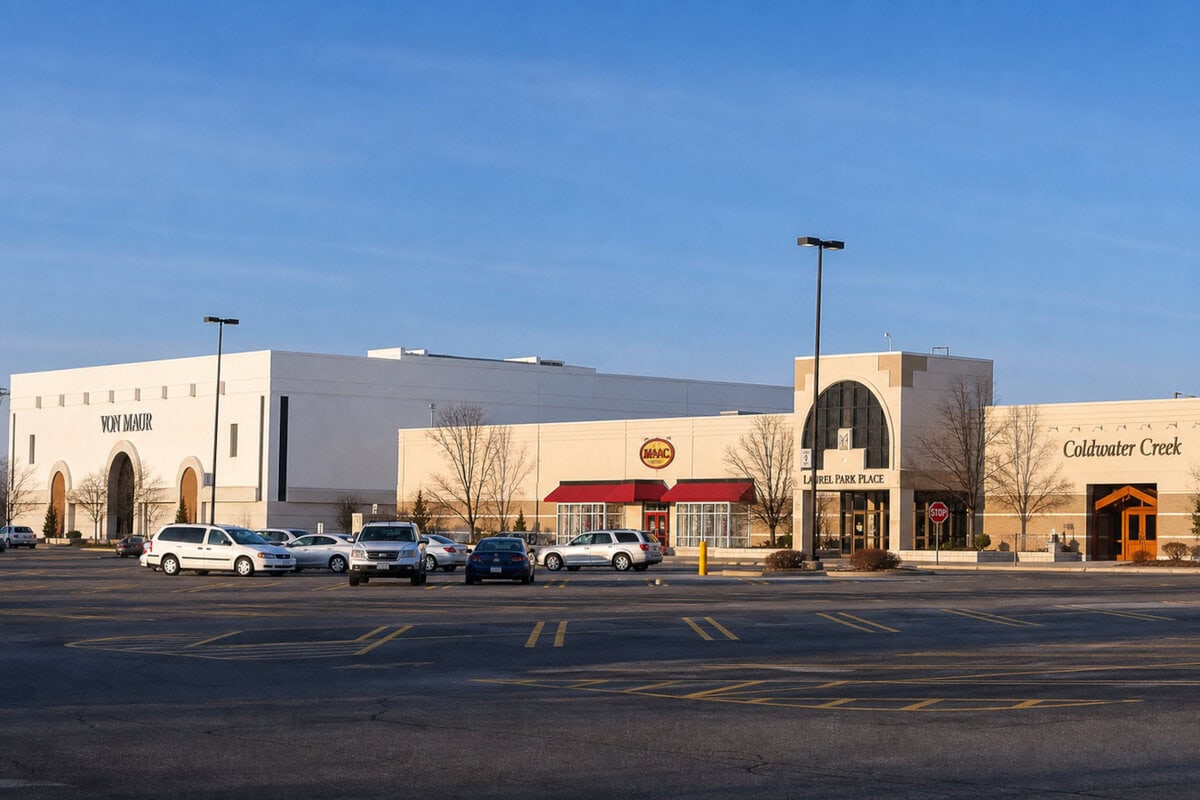
The store that defined the place goes bankrupt
Jacobson's struggled through the 1990s as competition closed in and other metro Detroit stores in the chain shut down.
The chain entered bankruptcy in 2002 and liquidated everything that year, including the Livonia store that the whole complex had been built around.
The replacement came fast.
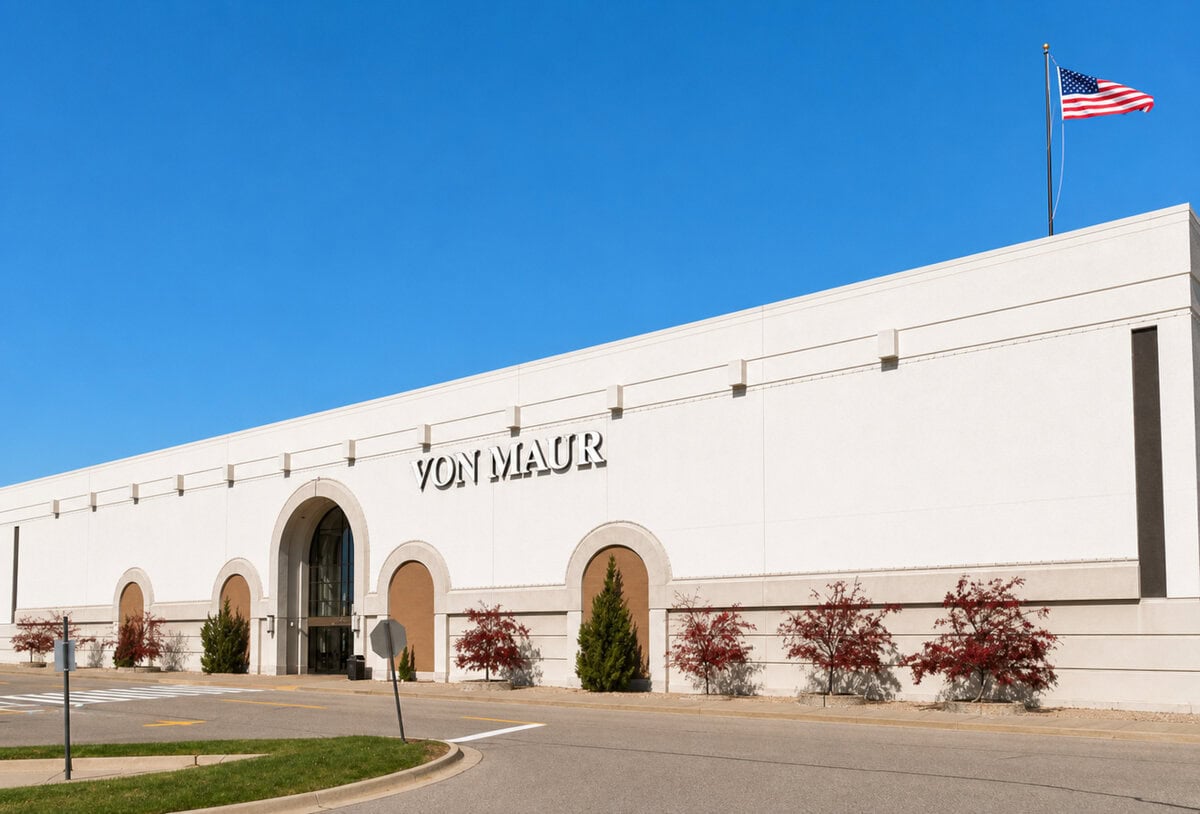
Von Maur, an Iowa-based department store, took over the former Jacobson's locations at Laurel Park Place and Briarwood and used them to enter Michigan.
The Livonia Von Maur opened in the old Jacobson's space in October 2003.
More than two decades later, it's still one of the mall's two anchors.
A name change at the north end, then an empty box
The north anchor went through its own slow churn.
The Livonia Parisian got pulled into Bon-Ton's group of stores through a chain of corporate deals, and in January 2013 it started operating as Carson's.
Then Bon-Ton collapsed, and the liquidation was approved on April 18, 2018.
Bon-Ton announced going-out-of-business sales the next day, and the Carson's store closed that August 29.
It left behind about 130,000 sq ft of empty department store, roughly 65,000 of it on the lower level, sitting dark at one end of the mall.
The theater handoff that fell apart
While the stores changed, the theater fought its own long battle.
AMC's lease was set to end in October 2009, and the landlord lined up a new 15-year tenant, Adlabs Films USA, signing the deal in March 2008.
It fell apart. Court records say Adlabs was supposed to get the space once AMC left.
After possession did not arrive by January 1, 2009, Adlabs sent termination letters that February and said its financial position had changed.
Newburgh offered AMC $500,000 to leave early.
That deal never closed once Adlabs walked, and the landlord ended up in federal court, where it won summary judgment against Adlabs in 2010 and saw it affirmed in 2012.
Phoenix Theatres stepped in and reopened the cinema in December 2009.
Phoenix converted it to digital in November 2012 with Christie projection and Dolby 7.1 sound, then renovated every auditorium in December 2014 with electric reclining seats and new carpet.
The screens that AMC opened in 1989 are still running, under a different name.
On the books, a $9.8 million mall
The numbers behind the mall got worse even as the doors stayed open.
After Carson's left and the broader mall market sagged, CBL took a $14.3 million write-down on Laurel Park Place in September 2021 and marked it at a fair value of $9.8 million.
The same company had recorded the purchase of 70% of it at $80.3 million 16 years earlier.
The accounting reflected weaker rent and lost tenants, run through a long-term valuation that assumed a sale years down the road.
CBL itself had gone through a Chapter 11 restructuring at the corporate level, filing in November 2020 and finishing exactly a year later.
That cut the company's debt and never closed the Livonia mall.
The mall stayed open while the buildings around it shifted
Around the mall, money kept moving.
In 2024, Livonia approved a plan on Laurel Park Drive that kept the 141-room Holiday Inn but added a five-story Home2 Suites by Hilton, a Cooper's Hawk, and a Capital Grille.
The Comerica Bank building nearby got approved facade and parking work in 2025.
Separate Laurel Park Office Center, an office complex linked to the mall, was in receivership in 2025 and 52% occupied, an event tied to the office side rather than CBL's stores.
By early 2026, CBL's guidance materials listed "Laurel Park Mall" among non-core/lender assets excluded from its same-center pool.
CBL describes that category broadly: properties under major redevelopment, properties being considered for repositioning, or properties tied to debt negotiations or a possible lender return.
None of that was a sale, a closure, or an approved redevelopment.
It was a label that signals pressure.
What's still open at Six Mile and Newburgh
Walk in today, and Laurel Park Place is an operating mall.
Von Maur holds the south end, Dunham's holds part of the north, and roughly 35 stores and eateries fill the single level between them: H&M, Chico's, Talbots, White House Black Market, Bath & Body Works, LensCrafters, a children's play area, and a row of local boutiques, jewelry counters, and craft shops.
The food runs from Panera and Auntie Anne's to Olga's Kitchen, Archie's Tavern, Ah Ha Noodles, Dhaba Indian Kitchen, and a candy shop called I Want Candy.
Phoenix Theatres still sells tickets down the walkway.
The mall logged an estimated 2.4 million visits in 2025, drawing on a trade area of about 514,000 people.
Once a year, part of the mall fills up for a different reason.
Bookstock, a used-book and media sale that funds literacy programs, came back in April 2025 with nearly 400,000 books, records, and discs, and returned again in April 2026.
Over two decades, it has handed out more than $3.2 million.
Independent Publisher Notice
BestAttractions is an independent editorial publisher. We are not affiliated with, endorsed by, or acting on behalf of any location, business, property owner, manager, government agency, or organization described in this article. Comments posted on this page are not forwarded to, reviewed by, or acted upon by any entity mentioned in the article. For official inquiries, complaints, applications, bookings, or other requests, please contact the relevant entity directly through its official website or other verified channels.