
Wonderland of the Americas was designed around the department store and the automobile. Neither is what keeps it open now, and neither has been for some time.
The mall on Fredericksburg Road in Balcones Heights, Texas, opened in 1961 with a full department store and a grocery anchor near the junction of two expressways. That was the model.
The lower level today is primarily a medical corridor: VA clinics, pediatric urgent care, dental offices, and eye care. The former cinema space houses a local theater company. A horror museum opened on the first floor in 2025.
A monthly pop-culture event series draws as many as 5,000 people per show. The place survived. What that survival required, and what it cost, is a stranger account than most retail histories.
Wonderland Shopping City: San Antonio's Largest Air-Conditioned Mall of 1961
The opening ceremony used a ribbon long enough to go around the entire building. Not draped across a doorway.
Stretched all the way around the outside of a two-story, fully enclosed shopping center. Organizers called it the world's largest ribbon-cutting.
Inside, a woman in an Alice costume stood at the central kiosk and helped shoppers find their way around.
Wonderland Shopping City opened on September 14, 1961, on Fredericksburg Road near Loop 410 and Interstate 10, and it was the largest shopping center in San Antonio.
The whole place was air-conditioned. Two levels. Montgomery Ward anchored one end: about 150,000 square feet across two floors, the first Ward store in San Antonio.
Handy Andy held the other end at about 66,000 square feet.
Between them: Woolworth's, Winn's, Sommers Drugs, Satel's, restaurants, professional offices, and a Sinclair service station.
The project cost about $7 million.
What the Highway Intersection Made Possible
Handy Andy had been operating a large split-level grocery store on the site since May 1959. That store was the seed.
Charles Lee Becker, whose grocery chain owned it, put together Community Realty to develop a full shopping center around it, with design by Dallas architect Jim Collier and the Los Angeles firm Chaix & Johnson across more than 60 acres near the junction of two major highways.
San Antonio was pushing hard toward the northwest, and the expressway grid made large automobile-oriented retail viable far from downtown.
Wonderland was built for cars: big parking fields, expressway-facing signs, and covered grocery loading. That was not a distinctive strategy in 1961. It was the only strategy anyone was using.
The Cinemoppet, the Fallout Shelter, and the Separate Fountains
Parents could drop their children off at the Cinemoppet, a small theater inside the mall where kids watched cartoons under supervision while their parents shopped.
The mall also had Town Hall, a dedicated community meeting room, plus storage lockers for shoppers.
One month after opening, in October 1961, a couple moved into a fallout shelter display on the property and lived there for two weeks.
Shoppers walked by and watched.
The water fountains were segregated. The restrooms, too, were marked separately for white and Black customers.
The Alice guide stood at her kiosk inside a building where that was the arrangement. That was public accommodations in San Antonio in 1961.
Rhodes, Piccadilly, and What the 1960s Felt Like
A Rhodes department store addition started going up in 1963, opened in 1964 on the expressway side of the property, multi-level, with parking integrated below part of the structure.
Tandy businesses settled into the lower level, including Tandy Leather. Piccadilly Cafeteria and Mr. Checkers drew the lunch crowd.
The soda fountain at Sommers Drugs and the lunch counter at Woolworth's gave people somewhere to sit and eat cheaply.
On November 23, 1966, the Wonder Theater opened as an outparcel venue. Teen events, fashion shows, animal appearances, and contests.
If you lived on the northwest side in the late 1960s and early 1970s, Wonderland was the mall, and it had everything it needed to be that.
Crossroads of San Antonio: The $28 Million Gamble
Becker sold the property in 1977 to affiliates of the Lehndorff Group of West Germany. The new owners spent about $6.6 million to $7 million modernizing the aging interior and exterior around 1980.
The former Rhodes space had by then been rebranded as Liberty House-Rhodes, and around 1980, it converted to Frost Bros., a fashion-oriented department store meant to give the property a newer anchor.
In 1986, a much larger project began.
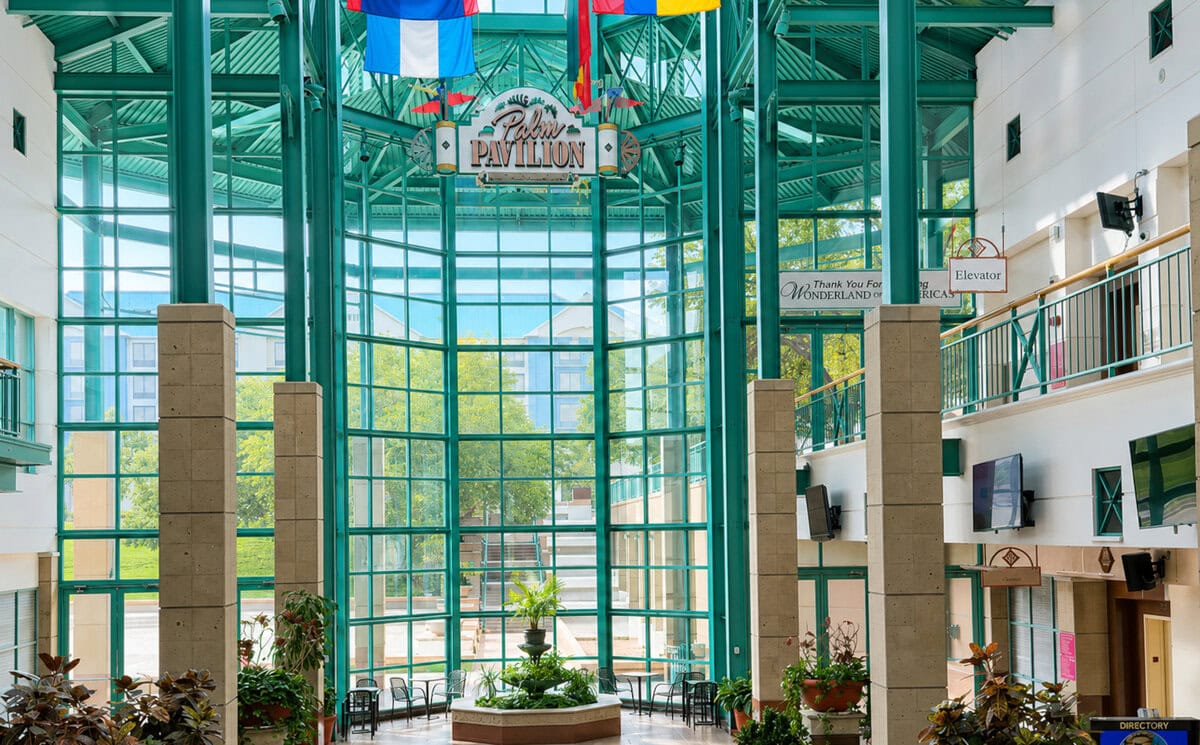
In 1987, the mall reopened as Crossroads of San Antonio after a $28 million renovation. A Palm Pavilion lined with tall palms under skylights.
An outdoor fountain and amphitheater, a food court, a six-screen cinema, Stein Mart, new lighting, and finishes throughout.
Frost Bros. at one end. For a moment, it was the kind of mall you would drive across town for.
Frost Bros. declared bankruptcy in 1988. The Crossroads store closed in 1989. By 1990, nearly half of the mall was empty.
The bank holding the renovation loan threatened foreclosure in the mid-1990s and eventually took control.
In 1997, Red Oak Realty interests bought the property. The Palm Pavilion was still standing. The amphitheater was still standing.
In 1994, the Balcones Heights Jazz Festival had come to that outdoor stage for the first time, and it kept coming back every year, through the foreclosure, through the ownership transfer, through everything that came next.
Montgomery Ward Falls and the Discounters Move In
Burlington took the former Frost Bros. anchor space in 1991 and kept the vacancy from swallowing the mall.
Phar-Mor moved into an expanded former Handy Andy area in the early 1990s, then closed. Hobby Lobby took that space in 1994.
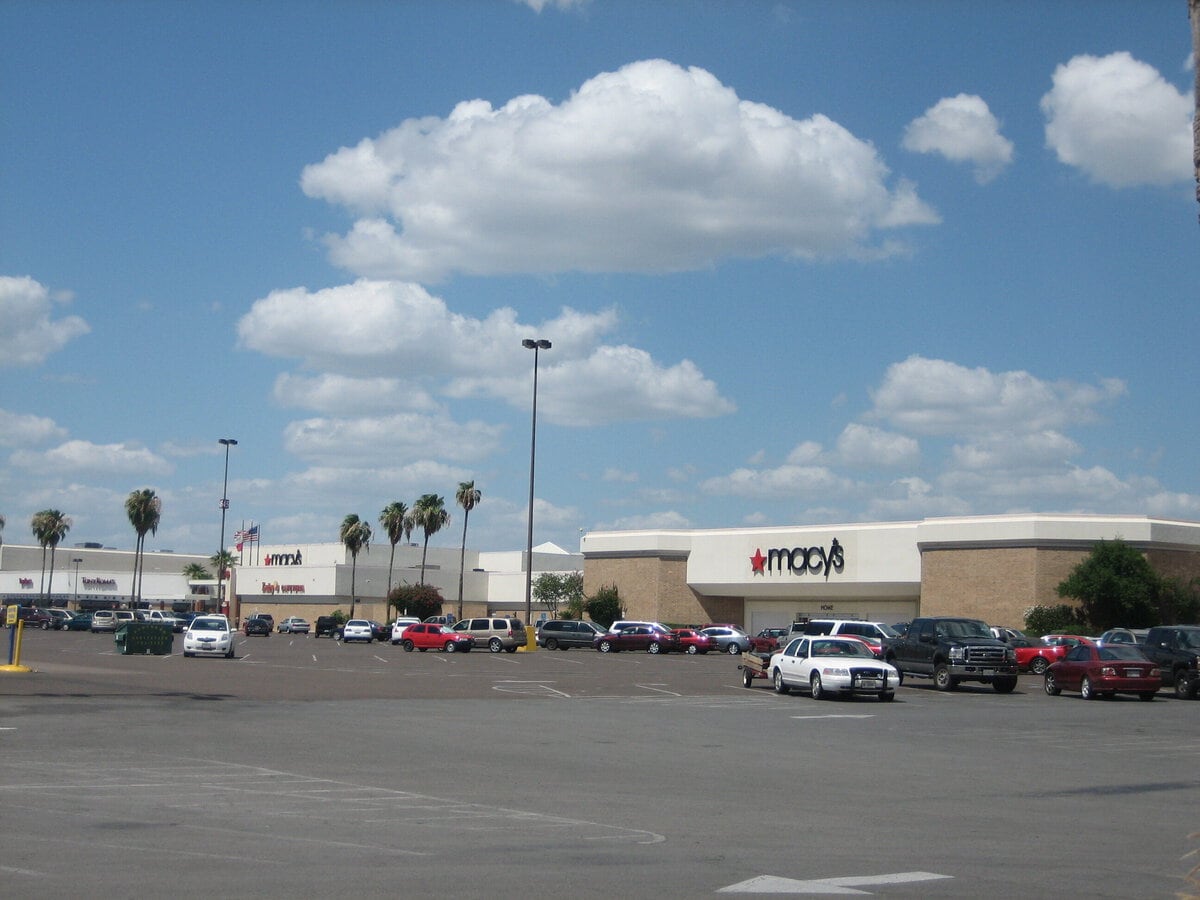
Montgomery Ward closed in 2001. Part of the building was demolished in 2002: about 75,000 square feet cut out of the two-level anchor that had stood since the opening ribbon.
Super Target opened on the footprint on March 9, 2003. Norris Conference Centers opened in the remaining lower-level space in 2004. Trammell Crow Company acquired the mall that year.
The former Crossroads cinema reopened as Santikos' Bijou at Crossroads on July 25, 2003, so a screen stayed in the building for another two decades.
But the original enclosed mall had been broken open and remade: two department-store anchors demolished or converted, the footprint now holding a big-box store and a conference facility.
Renamed Wonderland in 2010, Rebuilt Around Medicine
Crossroads Mall Partners bought the struggling property in 2009.
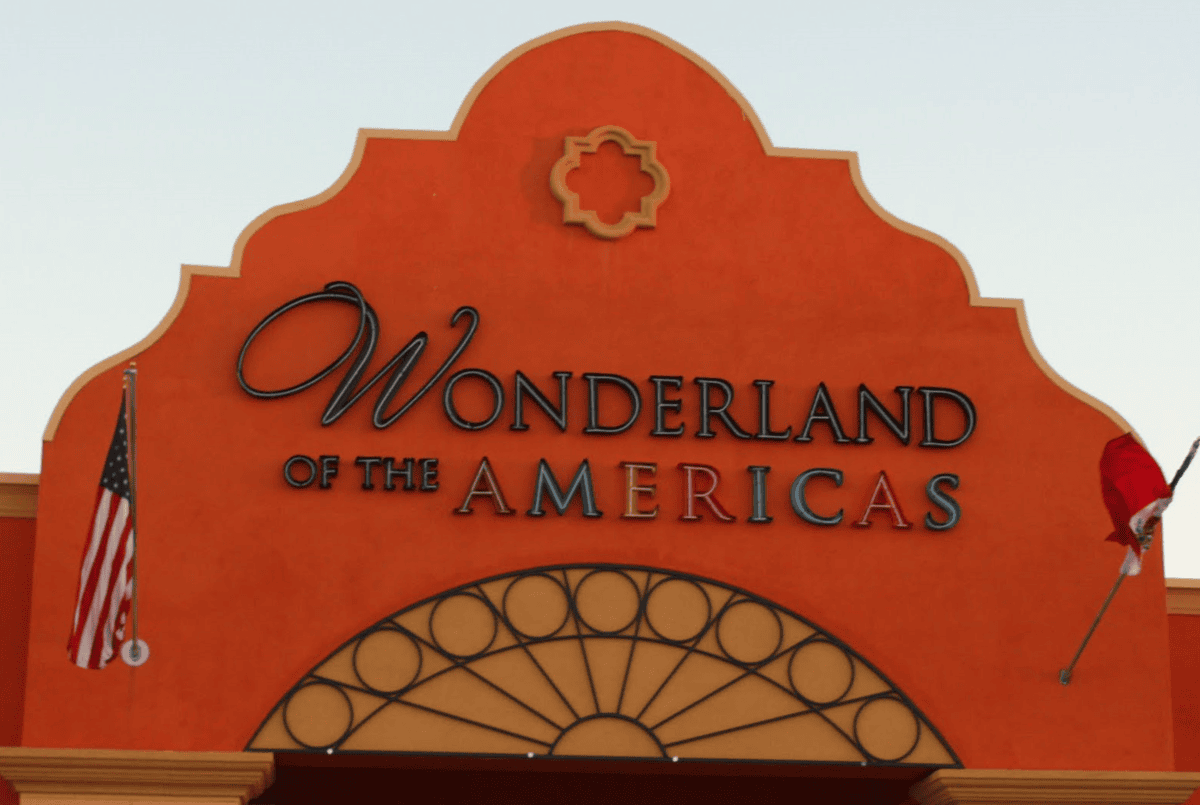
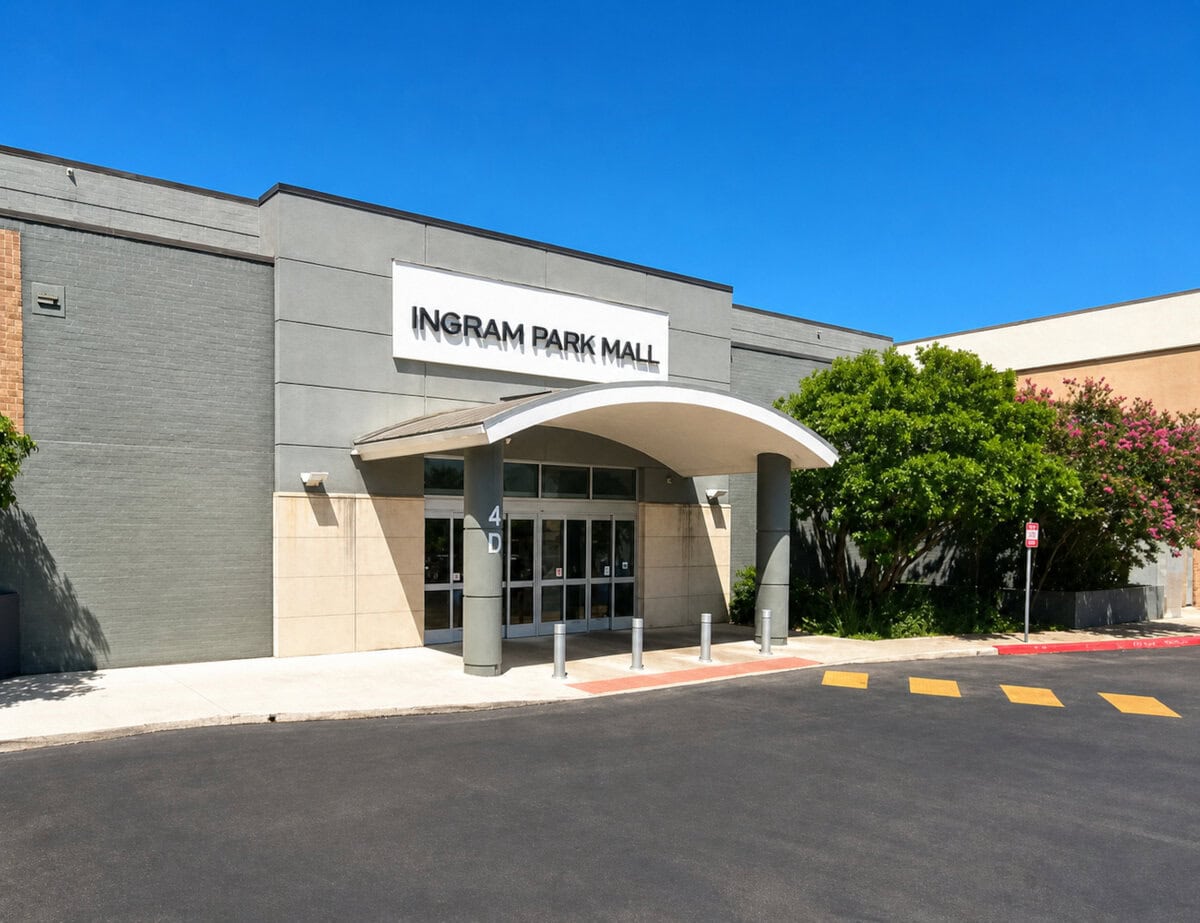
On January 14, 2010, it was renamed Wonderland of the Americas, the original word returning to a building that had carried a different name for twenty-three years.
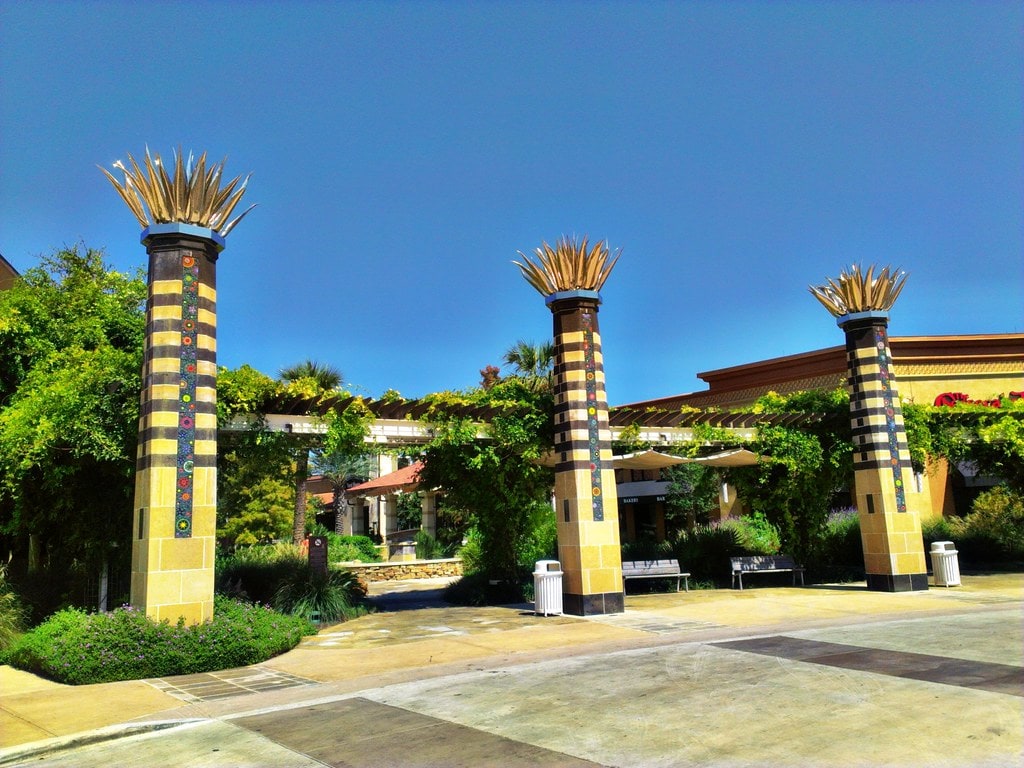
A renovation added Alamo-themed entrance elements, updated finishes, soft seating, children's play areas, a Mercado-style small-shop marketplace, and new video displays.
In January 2011, Career Point College's nursing division moved in. Later that year, two VA primary-care clinics opened.
Career Point leased about 41,000 square feet on the lower level and enrolled hundreds of nursing students.
In October 2016, the college abruptly closed after financial problems and the loss of federal student-aid access.
Students were left mid-program, with unresolved credits and accumulating loan debt, and no clear path to finish their training elsewhere.
The VA clinics stayed. Medical offices, pediatric urgent care, dental providers, and internal medicine practices gradually filled more of the lower level, while eye care joined the tenant mix elsewhere in the building.
On weekday mornings, the building drew people with appointments, not people browsing. Ross Dress for Less, WSS, and Five Below settled in on the upper level alongside Burlington and Hobby Lobby.
The property had a working tenant mix, a medical base that generated traffic, and no resemblance to what Wonderland Shopping City had been.
Balcones Heights Buys In, Then Reconsiders
In November 2021, the Balcones Heights Economic Development Corporation paid about $5.4 million for a 46 percent ownership stake in the property, financed through a 20-year bank loan.
Balcones Heights is a one-square-mile city surrounded entirely by San Antonio, and Wonderland had been central to its tax base and civic identity for sixty years.
The city planned to occupy about 15,000 square feet on the second floor for municipal offices, a court, and community space.
The larger goal was apartments, restaurants, and a more walkable mixed-use district around the mall site.
Earlier in 2021, before the ownership transferred, University Health had been running mass COVID-19 vaccinations out of the building: adult vaccinations, youth vaccinations, and booster distribution.
The large indoor space, the parking, and the VIA transit connections made it workable, and for months, the mall's busiest activity was a public health operation.
By 2024, expected distributions from the property hadn't reached projected levels. Elevators, escalators, and HVAC systems were aging.
By 2025, a section of the parking garage was closed pending structural review. A lawsuit over elevator service had been reinstated after settlement negotiations stalled.
Multifamily development plans were on hold. City officials were weighing whether to sell the ownership stake and what terms would be acceptable.
What Wonderland of the Americas Looks Like Now
On July 11, 2025, the Texas Horror Museum opened on the first floor.
The owner had relocated his horror prop and effects operation into the mall, and the debut exhibit was "Leyendas," an immersive show on South American folklore creatures, with a horror prop shop and planned makeup-effects classes occupying the same space.
Seven days later, on July 18, the 32nd annual Balcones Heights Jazz Festival came back to the outdoor amphitheater. A free show drew hundreds of people to the same stage the festival had been using since 1994.
In January 2026, a "Stranger Things" fan event drew thousands. In February, a "Gilmore Girls" event brought Scott Patterson and Sean Gunn for autographs and meet-and-greets.
Kings of Horror's monthly pop-culture event series runs three or four large shows annually, drawing as many as 5,000 people each.
Santikos closed the Bijou cinema in March 2022. Wonder Theatre renovated the former cinema space and opened its first season there in March 2024.
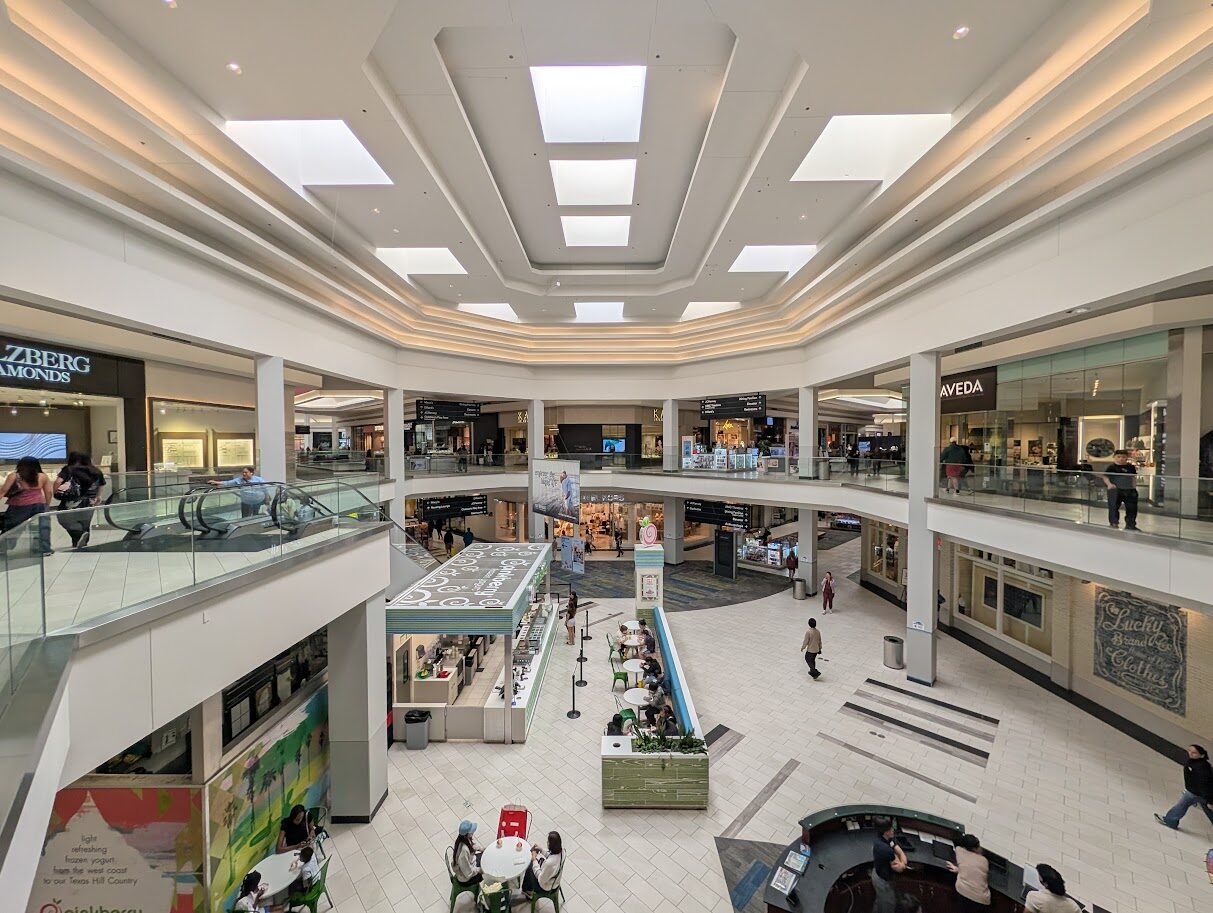
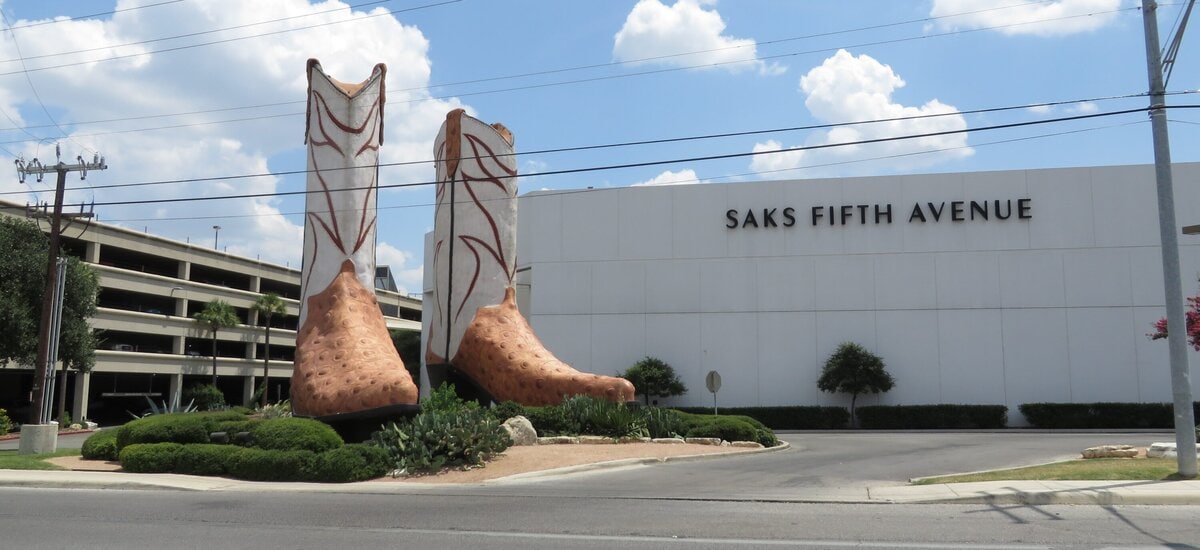
Burlington, Hobby Lobby, Ross, WSS, Five Below, Cowtown Boots, and AR's Entertainment Hub are on the upper level.
VA clinics, pediatric urgent care, dental offices, food vendors, and local specialty shops fill the lower. Target sits on the former Ward footprint.
The Cinemoppet is gone. The Alice guide is gone. The segregated fountains are gone. The Frost Bros.
fashion floor, the six-screen Bijou, the fallout shelter couple who spent two weeks in the building in 1961: all of it gone.
What opened with the world's longest ribbon is now a horror museum, a VA clinic, a jazz festival stage, and a theater in a room where a multiplex used to run.
The word on the building is the original one.
Independent Publisher Notice
BestAttractions is an independent editorial publisher. We are not affiliated with, endorsed by, or acting on behalf of any location, business, property owner, manager, government agency, or organization described in this article.
Comments posted on this page are not forwarded to, reviewed by, or acted upon by any entity mentioned in the article.
For official inquiries, complaints, applications, bookings, or other requests, please contact the relevant entity directly through its official website or other verified channels.