
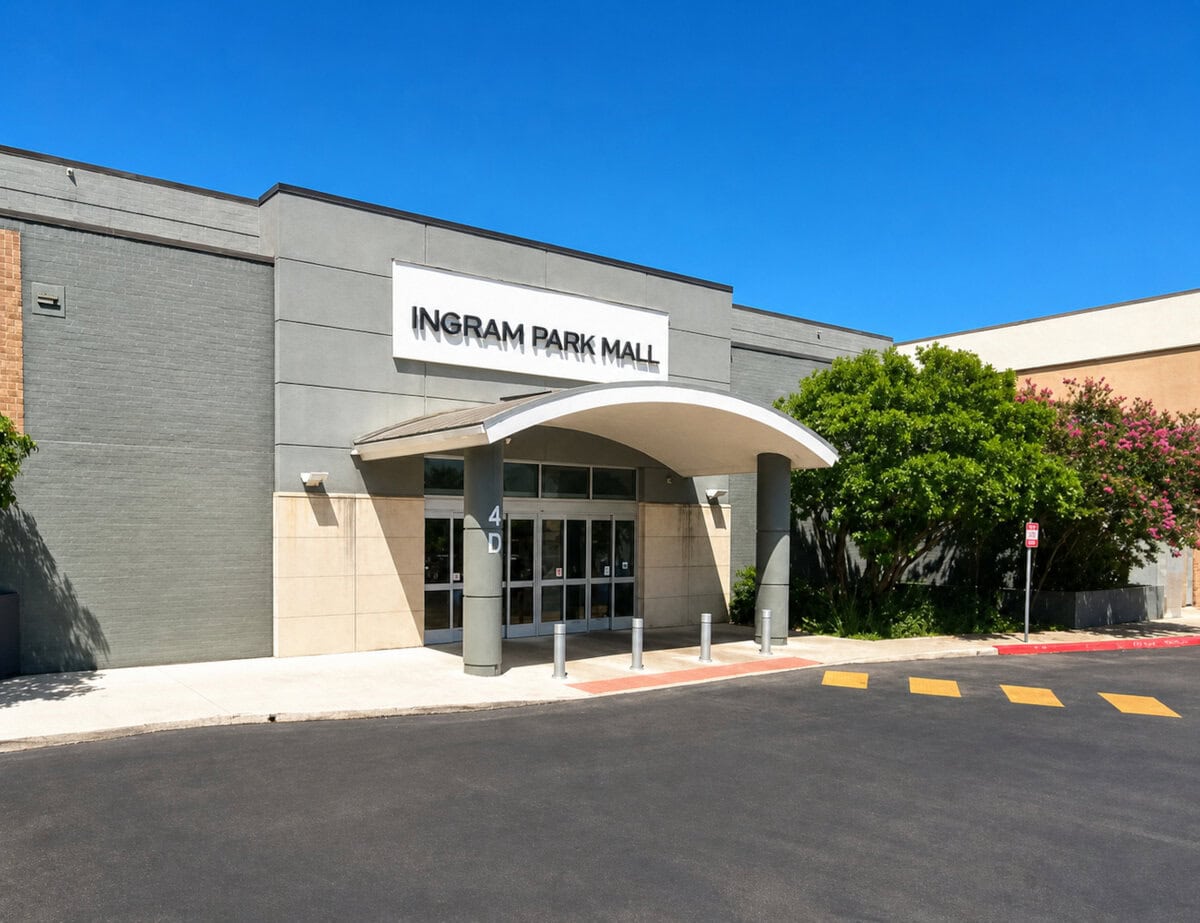
Most enclosed malls that entered foreclosure after the pandemic never came back as malls. The ones that stayed open mostly did so by turning into something different: apartments, warehouses, medical centers, or outdoor shopping areas built over the old structures. Ingram Park Mall did not.
It is a 1970s-era enclosed regional mall on San Antonio's northwest side, the kind of property that real estate analysts have spent fifteen years declaring obsolete. It went to foreclosure auction in 2021 and sold for $100.7 million.
The buyer did not tear it down. The anchors did not all leave. A bowling alley opened in the old Sears space, a pop-up art installation opened on the second floor, and the smaller stores kept signing leases.
The model Ingram Park was built on has been straining for fifteen years. It is still holding here.
The Mall That Grew Out of a Gravel Lot
In 1976, Melvin Simon bought a stretch of empty ground where Loop 410 crossed Ingram Road on San Antonio's northwest edge.
The land had been a gravel tract. Within three years, it would hold one of the largest enclosed retail centers in South Texas.
Simon was building enclosed, climate-controlled malls anchored by department stores across the country. San Antonio fit his expansion model.
The city's northwest side was pushing outward, new residential streets were spreading past the older commercial core, and Loop 410 cut through the middle of it.
Simon acquired the site from Quincy Lee and started construction on what had been nothing but crushed stone and open sky.
The mall that opened on March 1, 1979, had four department stores at launch: JCPenney, Dillard's, Joske's, and Sears.
Sears had already opened on the property in 1978. Joske's was a San Antonio department store whose name carried weight that JCPenney and Sears couldn't claim locally.
San Antonio's other enclosed malls at the time included North Star Mall, Wonderland Mall, South Park Mall, and Windsor Park Mall; Rolling Oaks and Rivercenter wouldn't open until 1988.
The mall's address, 6301 NW Loop 410, put it directly on the commercial artery that would define northwest San Antonio retail for the next four decades.
Crowds, Closures, and Other Incidents
In 1984, a bomb threat hit the First Federal Savings branch inside the mall, forcing it to close temporarily.
On October 25, 1988, the Latin pop group Menudo showed up for an autograph session on the mall's lower level. Around 1,500 fans arrived. The crowd rushed the stage area.
Police broke up the event. Eight people were injured, three were taken to hospitals, two were kept overnight, and a teenage girl was arrested.
The early mall also had its own movie theater. Ingram Mall 6 was a six-screen cinema inside the mall. It closed sometime in the 1990s after a newer nearby cinema drew its audience away.
The closure left the first large interior gap in the original program, years before anchor loss became the industry's defining problem.
In February 2026, a bomb threat forced a full evacuation around 5 p.m. Police searched the building, found nothing, and the mall reopened the same evening.
When Joske's Disappeared, and the Anchors Began to Shift
Joske's did not survive the 1980s consolidation wave. Dillard's acquired the chain in 1987, ending the Joske's name across San Antonio retail.
Dillard's already operated its own anchor at Ingram Park. Rather than close the second location, Dillard's converted it into a home-store format.
By the early 2000s, it was operating as the Dillard's Home Center, occupying roughly 80,000 square feet across two stories.
It closed in 2016, and the space was subsequently marketed as available.
The Foley's anchor passed through its own ownership chain in 2005. Federated Department Stores completed its acquisition of May Department Stores on August 30 of that year.
Federated also owned Macy's and planned to consolidate all acquired nameplates under one national brand.
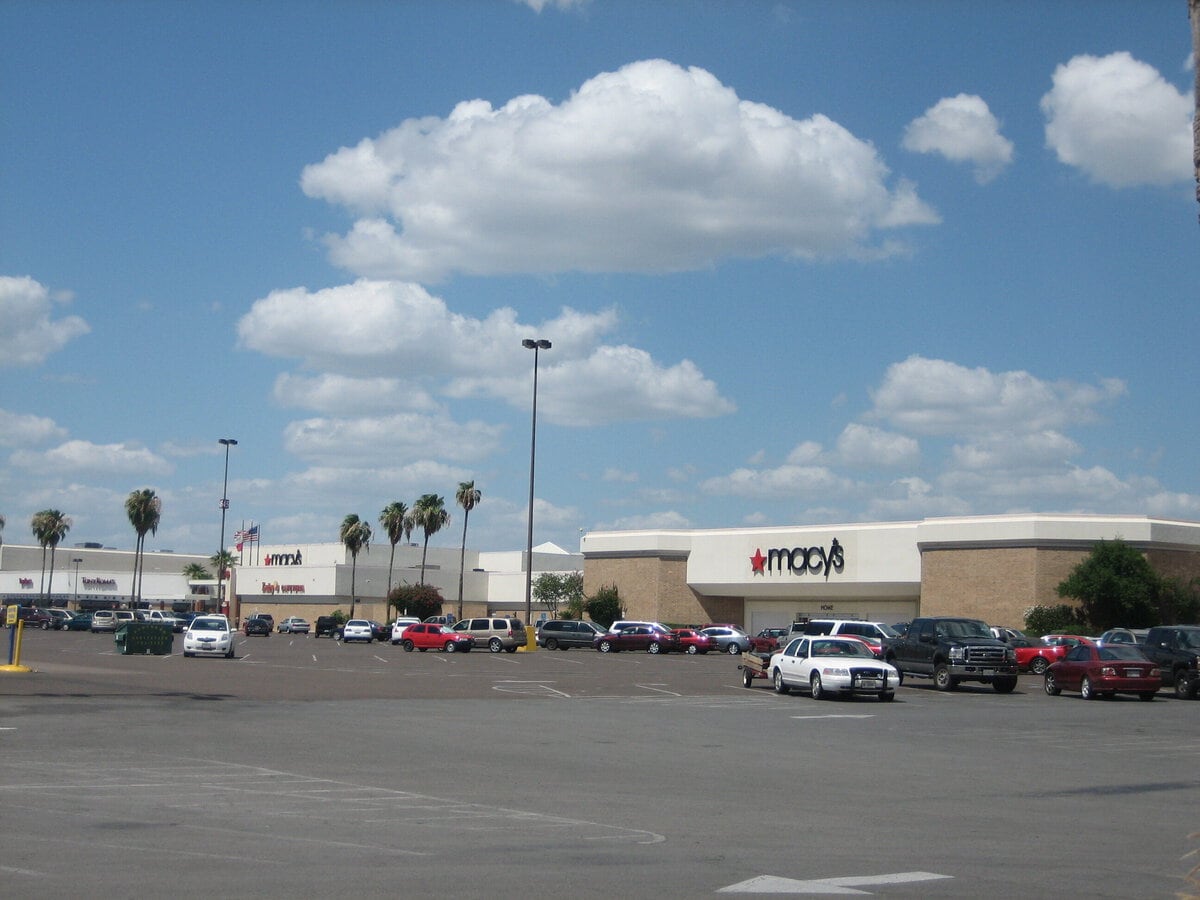
In September 2006, Foley's was rebranded as Macy's along with most other former May Company stores.
Macy's added its Backstage off-price format inside the Ingram Park store in 2016.
Backstage ran as a store-within-a-store, selling discounted merchandise alongside regular Macy's departments on the first floor.
The Ingram Park location was part of Macy's 2016 Backstage rollout, as the company tested the concept across its portfolio.
By 2016, the mall was carrying a large-format vacancy from the Dillard's Home Center closure alongside Sears's deepening company-wide problems.
Simon's Debt Problem and the Sears Closure
In 2008, Ingram Park Mall covered 1,125,700 square feet, with occupancy at 94.9 percent and major stores including Dillard's, Dillard's Home Store, Macy's, JCPenney, Sears, and Bealls.
By 2018, the property carried a 5.4 percent fixed-rate loan with about $128.1 million in debt and a maturity date of June 1, 2021.
Sears Holdings filed for bankruptcy in 2018. On October 15 of that year, the company announced it would close 142 Sears and Kmart stores; Ingram Park was on the list.
The store had operated on the property since 1978. After closure, the former Sears box went dark.
Bealls had been operating at the mall since at least 1999 and would remain until 2020, when its parent company, Stage Stores, filed for bankruptcy and liquidated.
By 2021, the combined vacancies from the Dillard's Home Center and Sears represented about 248,500 square feet of empty anchor space.
The pandemic hit before Simon could resolve the debt structure. Mall traffic fell in 2020. Tenant payments became harder to collect.
The property's assessed value dropped from nearly $84 million in 2020 to about $62.5 million in 2021.
The loan matured on June 1, 2021, and Simon did not retain the property. On July 6, 2021, the mall went to a foreclosure auction.
A Morgan Stanley-affiliated entity, MSCI 2011-C2 Ingram Park Mall LLC, made the winning bid at $100.7 million.
Occupancy at the end of 2020 was still 91.7 percent.
The Patchwork of Ownership
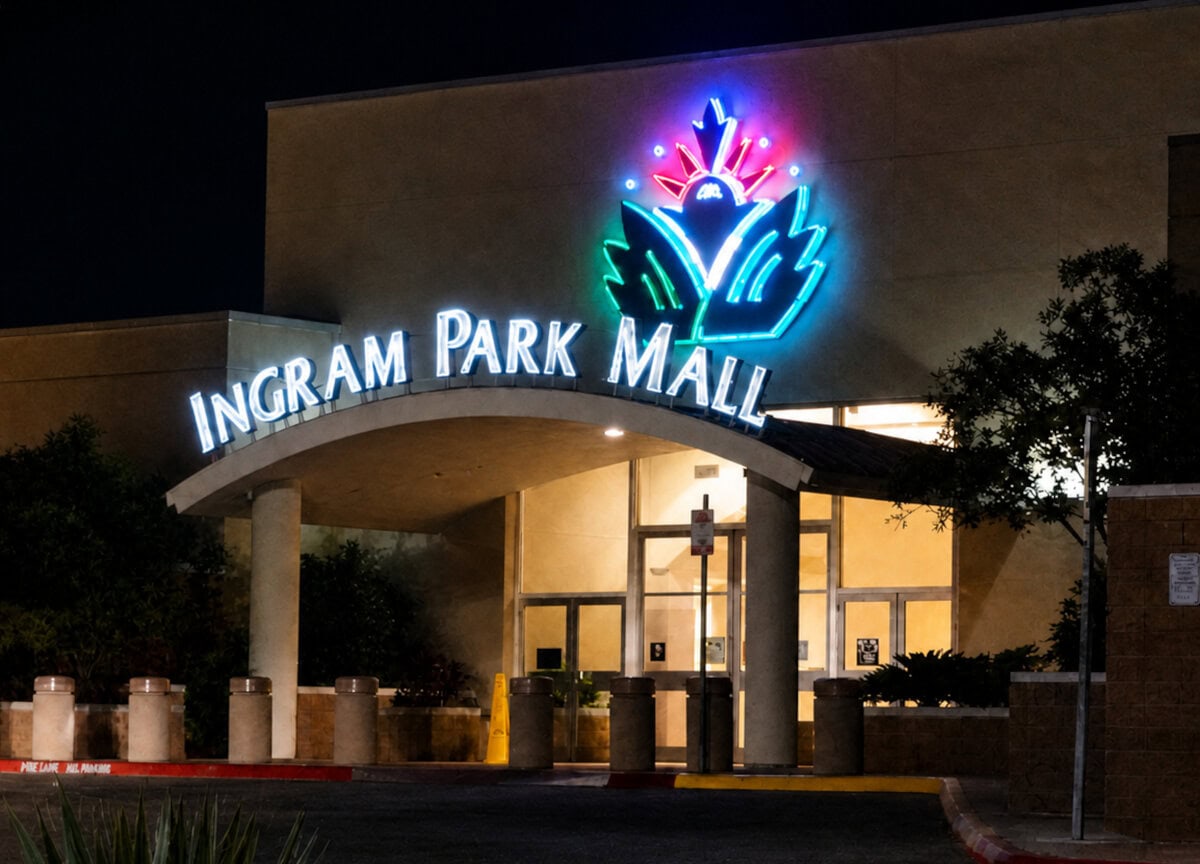
The foreclosure did not hand over a single unified property. Ingram Park Mall had never been one parcel with one owner.
Dillard's, JCPenney, Macy's, and the Sears-related space were all separately owned and excluded from the collateral.
What MSCI 2011-C2 acquired was the enclosed mall shell, the in-line tenant corridors, the common areas, and related portions of the site.
The Sears property had its own separate path. In 2015, Sears Holdings transferred many store properties into Seritage Growth Properties, a real estate investment trust set up to monetize Sears's real estate.
The Ingram Park store was part of that structure. After the store closed in 2018, Seritage held the vacant building for several years.
In March 2023, an affiliate tied to Kreative Real Estate Group of Texas and Mega Furniture co-founder Karim Kanjiyani acquired the former Sears property, covering about 11.6 acres with a Bexar County appraised value of about $7.2 million and a loan of about $4.9 million.
Spinoso Real Estate Group took over management and leasing of the enclosed mall portion after the 2021 ownership change.
MSCI 2011-C2 Ingram Park LLC remained the owner as of 2025.
Rush Maxx and the Old Sears Box Comes Back to Life
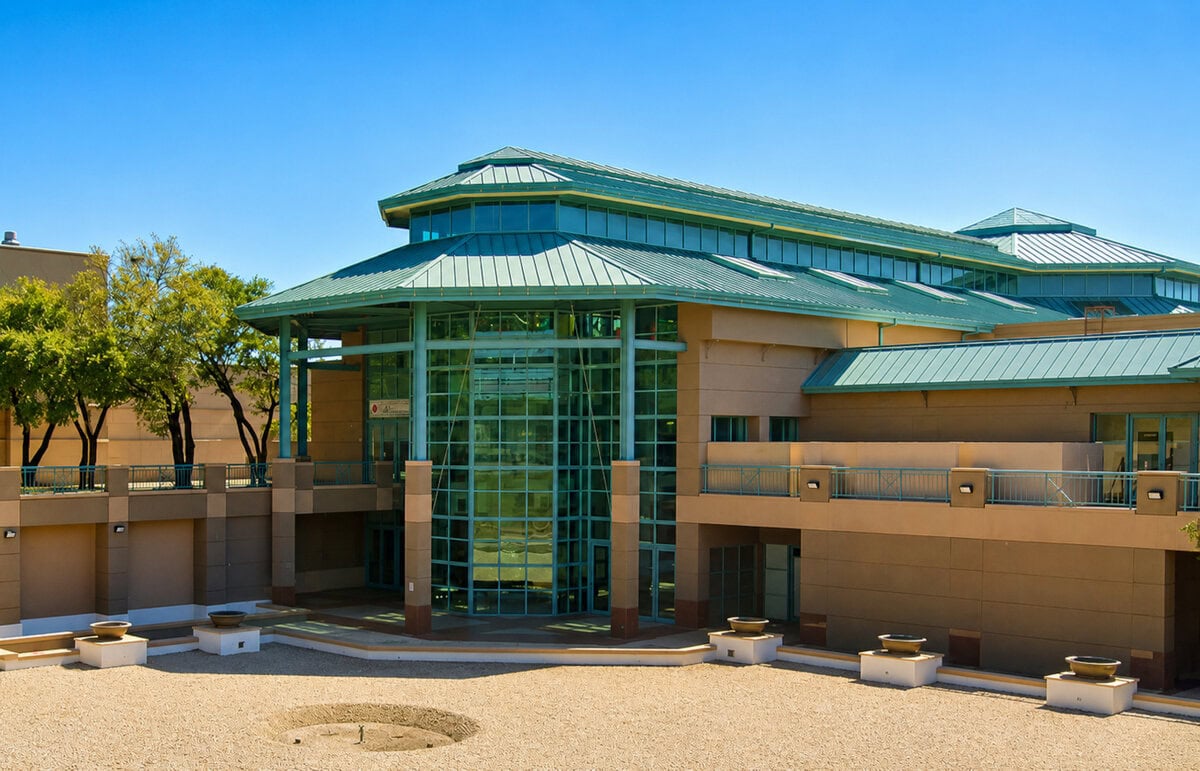
The Sears at Ingram Park had been there since 1978, before the mall itself opened. It closed in October 2018, and then the building just sat.
For about five years, that corner of the mall was a dead end: roughly 169,000 square feet on 11.6 acres, dark.
After the March 2023 acquisition, Mega Furniture took the larger share of the old box, around 96,000 square feet. The remaining 73,000 square feet went to Rush Maxx.
On January 8, 2024, a permit was pulled for the remodel: bowling lanes, go-karts, laser tag, arcade games, a sports court, soft-play areas, and a multilevel activity structure carved out of what had been a department store floor.
Rush Maxx opened and is now operating. A building that had sold hardware and appliances and lawn mowers for four decades is now where kids line up for bumper cars.
The 2024 Sale Listing
In September 2024, the Morgan Stanley-affiliated owner placed two parcels of Ingram Park Mall on the market.
The offering covered 22.9 acres of the mall's 83.5-acre footprint and included about 375,000 square feet, with an appraised value of about $70.9 million.
The listed space was 88.8 percent occupied.
More than 60 tenants had generated about $4.9 million in revenue over the nine months prior to the listing.
Capital improvements at the property exceeded $21 million.
The listing identified a vacant fifth anchor box, food-and-beverage improvements, and the possible acquisition of the separately owned Macy's space as potential opportunities.
Ingram Park remained a multi-owner, multi-parcel property after the foreclosure.
The enclosed mall operated under one entity, while Dillard's, JCPenney, and Macy's each controlled their own buildings.
The 22.9-acre offering covered less than one-third of the full mall complex by acreage, and the anchor boxes were not part of the deal.
Ingram Park Mall Today: Open, Active, and Still Changing
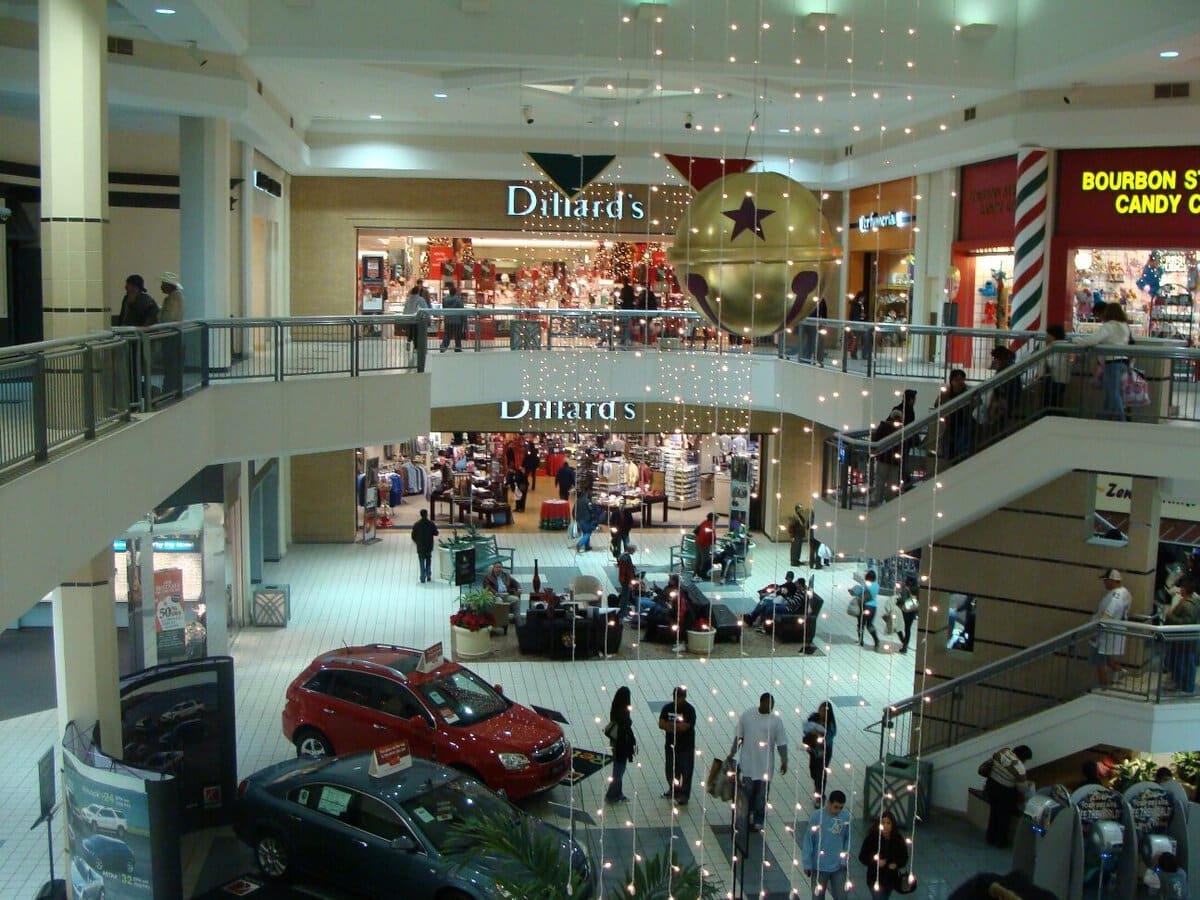
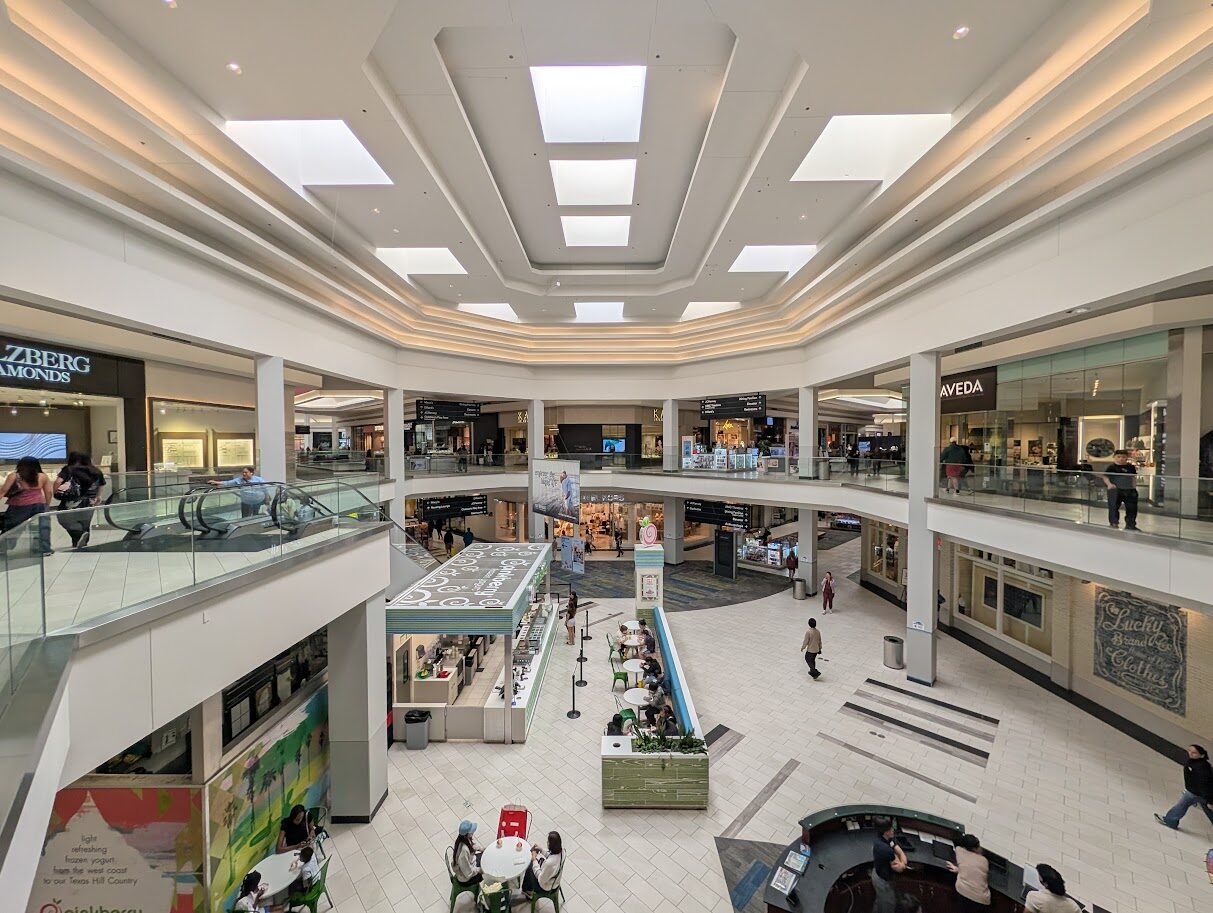
As of May 2026, the mall is open. Dillard's, JCPenney, and Macy's are operating. Macy's Backstage runs on the first floor of the Macy's store. Mega Furniture and Rush Maxx occupy the former Sears box.
H&M, American Eagle, Victoria's Secret, Bath & Body Works, Kay Jewelers, Helzberg Diamonds, Shoe Palace, Rack Room Shoes, G by Guess, Crocs, Spectrum, Miniso, and dozens of other in-line tenants are part of the current mix.
Loop 410 carries more than 236,000 vehicles per day past the property. The three-mile population around the mall exceeds 114,000.
VIA Metropolitan Transit routes connect the Ingram Transit Center directly to the mall.
No demolition plans or city-approved mixed-use replacement project has been filed. In-line retail investment continued through at least late 2025.
The 2024 sale listing covered only 22.9 acres of the mall complex's 83.5-acre footprint, and the enclosed mall kept operating throughout.
The department-store box that spent four decades selling hardware and lawn mowers now hosts kids on bumper cars.
Dillard's and JCPenney, which opened here in 1979, when this address sat on the outer edge of a still-expanding city, remain open in 2026.
Independent Publisher Notice
BestAttractions is an independent editorial publisher. We are not affiliated with, endorsed by, or acting on behalf of any location, business, property owner, manager, government agency, or organization described in this article. Comments posted on this page are not forwarded to, reviewed by, or acted upon by any entity mentioned in the article. For official inquiries, complaints, applications, bookings, or other requests, please contact the relevant entity directly through its official website or other verified channels.
This was a fascinating historical look at Ingram Park Mall, one of San Antonio’s most iconic shopping centers. Despite facing real challenges and changing hands multiple times, the mall hasn’t just survived—it’s clearly found a way to thrive. Hoping it keeps that momentum going and continues to grow for many years to come.
Thank you for reading. Reusing the former Sears building for Mega Furniture and Rush Maxx was an important step, and the mall still has its original Dillard's and JCPenney anchors. That mix of longtime stores and new uses has given it a better chance than many enclosed malls.