Bayshore's 1954 Debut in Glendale
Plans for Bayshore began in 1951 for a new shopping center on Milwaukee's north side, serving the growing households in Glendale and nearby suburbs. Construction began in 1953.
Bayshore Shopping Center opened on March 31, 1954 as an outdoor center built around the postwar pattern of driving, parking, and walking a short run of stores. The original center opened with 38 stores. It was laid out as an open-air shopping center with three buildings for stores and offices.
Parking was provided for about 4,000 vehicles. The site was on Port Washington Road about one block (roughly 500 feet) north of Silver Spring Drive.
At opening, Bayshore was one of the largest shopping centers in the United States.
It was described as the largest shopping center in Wisconsin and one of the 10 largest in the country. The opening came less than four years after Glendale incorporated as a city.
Sears arrives, then Boston Store, then Chapman
The center added major tenants soon after opening. Sears opened in October 1954. Boston Store opened in 1958 as the second anchor.
T. A. Chapman Co. opened in 1967 as the third anchor, giving the property three department stores that defined its early years.
Bayshore served the north side suburbs of Milwaukee, including Glendale and nearby communities such as Whitefish Bay, Fox Point, River Hills, and Brown Deer.
It was built as an automobile-oriented shopping center, with access and layout designed around driving and parking.
The original shopping center was built on about 36 acres along the east side of Port Washington Road, one block north of Silver Spring Drive.
The wider 52-acre site also included other uses along Silver Spring Drive.
These included a Kohl's department store, a grocery store, a post office, an auto repair shop, an electrical substation, three office buildings, and a greenhouse.
Bayshore Encloses in the Mid-1970s
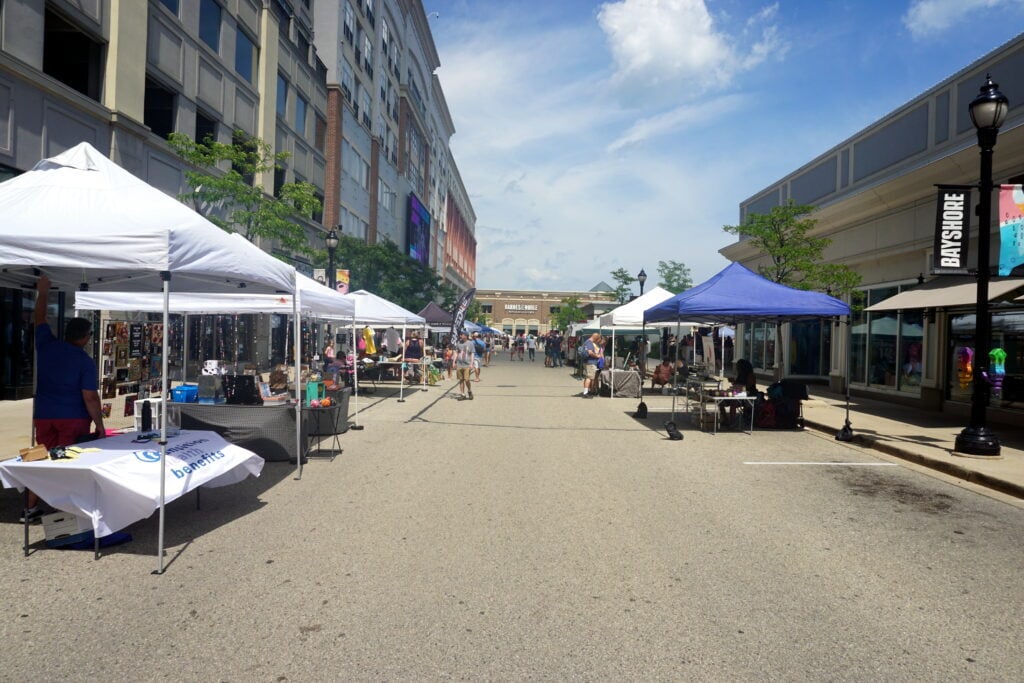
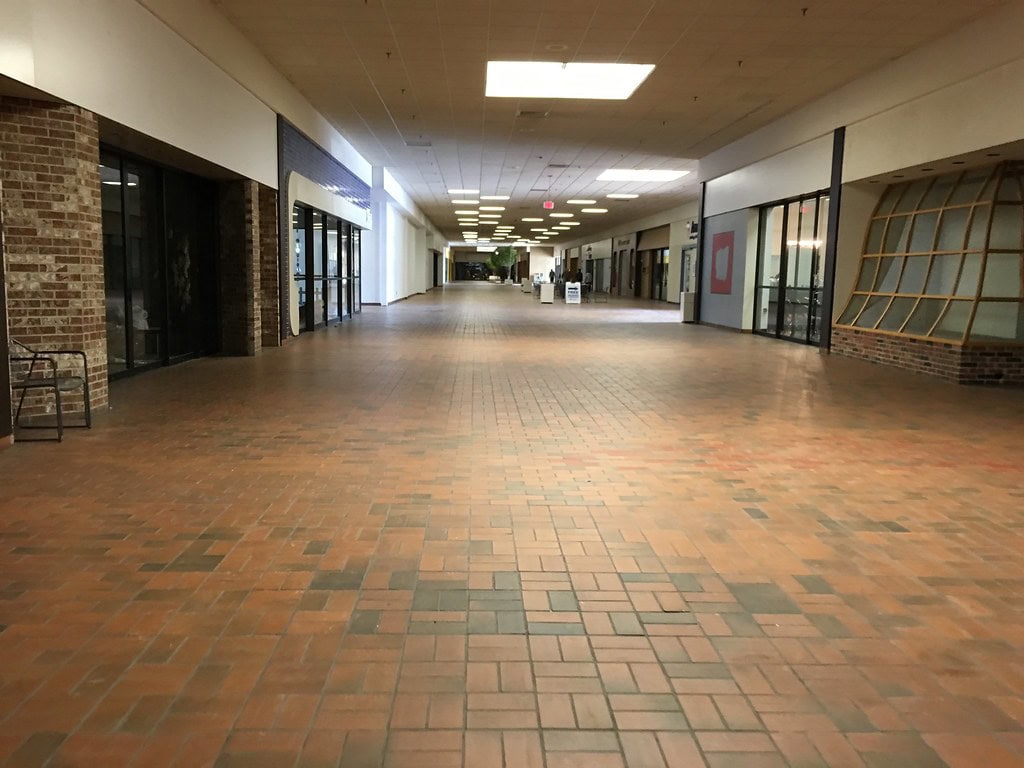
In the 1970s, Bayshore started to change from an outdoor shopping center to an enclosed mall with indoor hallways and climate control all year round.
In 1975, the owners announced plans to convert the center to an enclosed format. The property was added onto and enclosed in the mid-1970s, and the mall reached approximately 600,000 square feet.
Stores that once faced outdoor walkways were now connected under a single roof. Parking remained outside, near the entrances. Kohl's operated at Bayshore as a department store and anchor during this period.
The new indoor design replaced outdoor walking with a long hallway that went all the way around. Shoppers walked through these long hallways instead of going outside, so visits were not affected by the weather.
In the enclosed era, Bayshore sat on a larger, roughly 52-acre property, and the enclosed building became the center of activity.
Drafts in drawers, and Northridge's warning
In the 1980s, Bayshore's owners saw that the enclosed mall was aging while newer retail centers around Milwaukee were being updated to match current shopping trends.
During that decade, redevelopment and expansion scenarios were drafted. The proposals did not move forward.
The building remained in place, and the interior continued to age as other malls added newer features and attractions.
The owners also kept an eye on the retail area to the north. They worried that a new shopping center opening along Interstate 43 might draw customers away from Bayshore.
They did not want the property to lose traffic and tenants the way other regional malls had.
The decline of Northridge Mall in Brown Deer (closed by 2003) became a nearby example of what could happen when a large mall slipped past recovery.
Changes in anchor tenants continued in this period.
In 1989, the last T. A. Chapman Co. store in Milwaukee closed, ending its run as part of the Bayshore lineup and leaving the center with one fewer long-term draw.
By the early 2000s, the focus had shifted to what kind of redevelopment could keep the property competitive, and whether the site could be remade without leaving its location.
Steiner bets on streets, not corridors
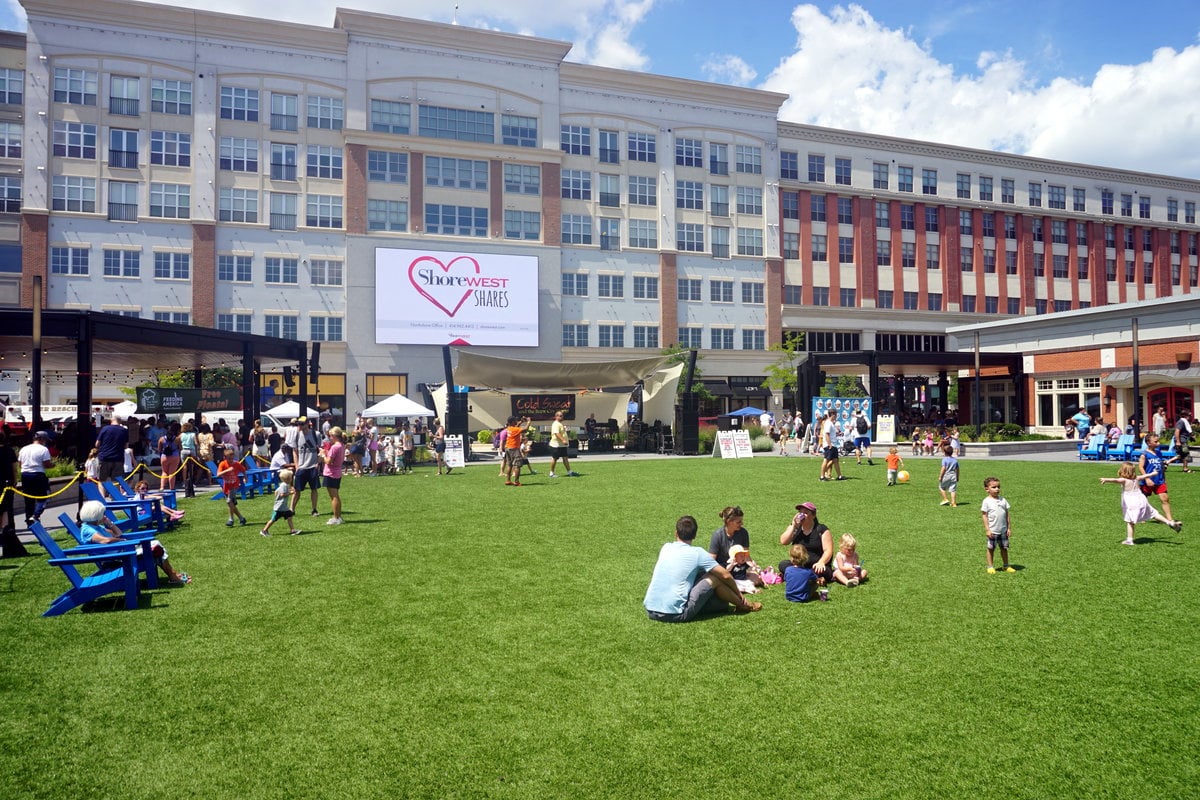
In 2002, redevelopment discussions began with Steiner + Associates. The concept was to redevelop Bayshore as a town center with streets, storefronts, and public space instead of a single enclosed corridor system.
Early planning focused on the site size and the proportions of the existing mall.
The core retail footprint was about 36 acres, and it was treated as tight for a full town center layout and for the tenant sizes expected at the time.
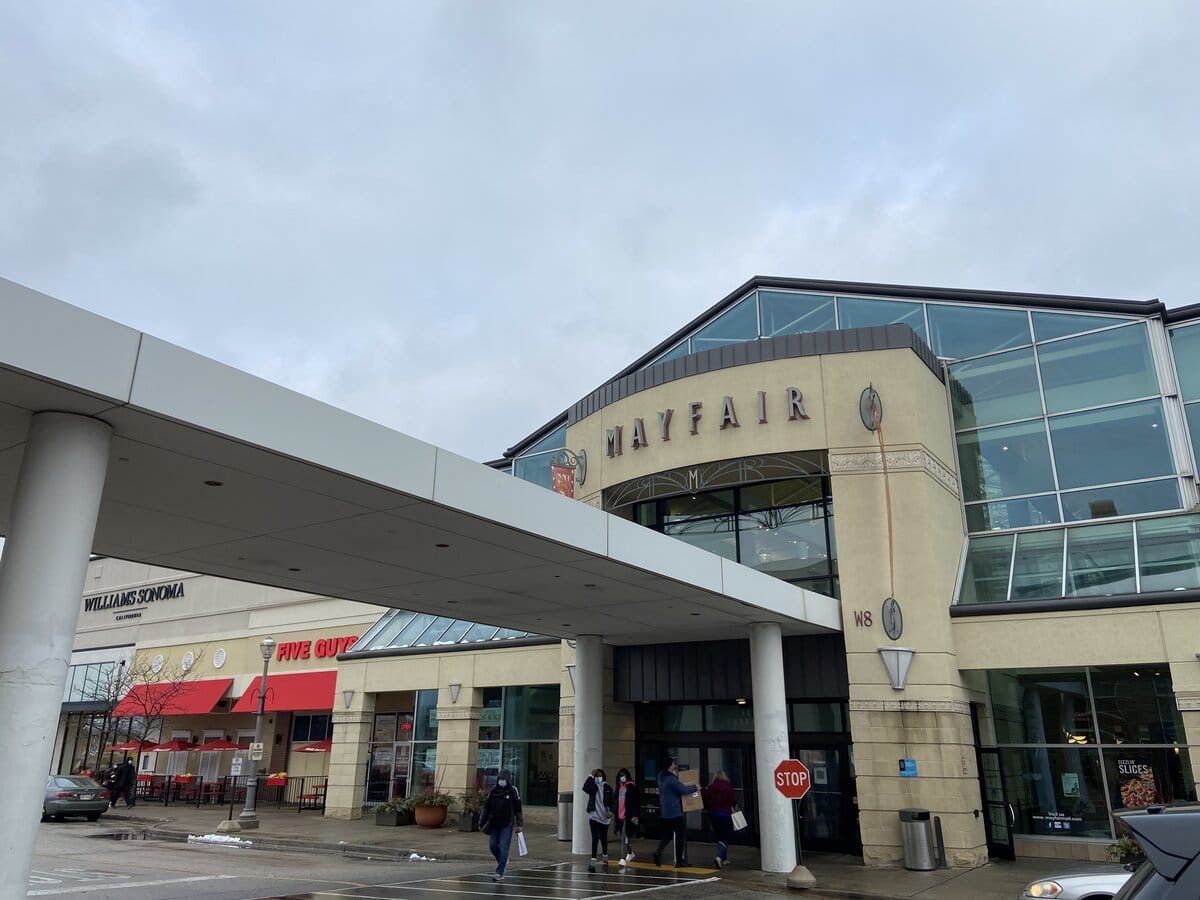
Market analysis pointed to retail demand on Milwaukee's north side. Bayshore was averaging about $300 per square foot in sales, while Mayfair Mall in Wauwatosa was about $500.
The north side suburbs were described as underserved, and the city agreed to help assemble blighted parcels to the south to support a larger redevelopment plan.
The redevelopment work began in 2004 as a project described in the $300 to $400 million range.
The plan introduced a grid of streets, 13 new buildings, a central public square, and an indoor central rotunda with space intended for entertainment uses.
The redevelopment retained Sears, Boston Store, and Kohl's, and added newer tenants and restaurants, including J.Crew, Brooks Brothers, Vera Bradley, California Pizza Kitchen, The Cheesecake Factory, Devon Seafood + Steak, Trader Joe's, an Apple store, and LA Fitness.
The property shifted from interior corridors to an open-air town center layout.
Landfill ghosts, and the money to clean them
Before Bayshore was developed for retail, the site had been used for gravel mining and as a landfill.
During excavation and site preparation for the town center redevelopment, antique Schlitz bottles were unearthed from the old gravel pits where the brewery had disposed of barrels and bottles.
The redevelopment required cleanup and remediation work. Pollutants addressed in the project included oil, gas, polychlorinated biphenyls (PCBs), and methane.
In total, 89 tons of soil were removed. The remediation cost was about $3 million, and the Wisconsin Department of Natural Resources signed off on the cleanup.
Public financing supported the redevelopment. The project used $45 million in tax incremental financing and an $18 million special assessment, for about $63 million in public participation.
A nearby interchange was rebuilt with the help of a $4.4 million federal grant.
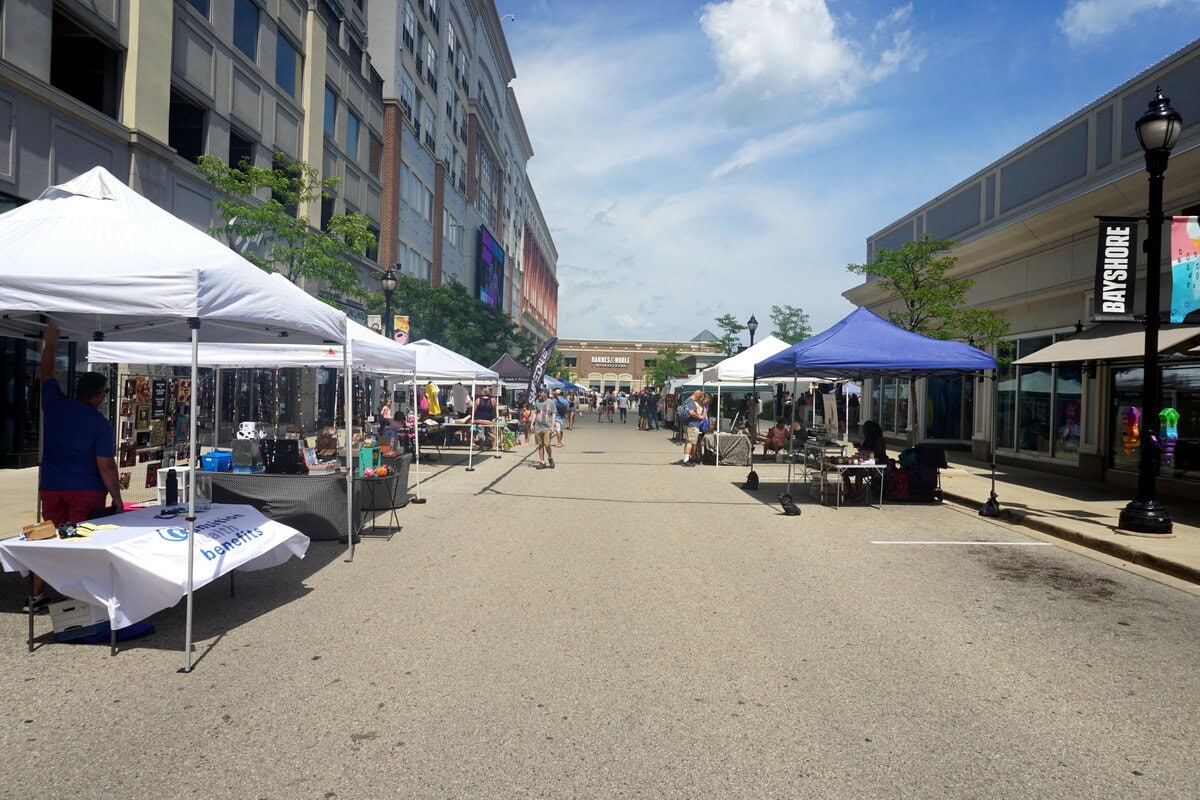
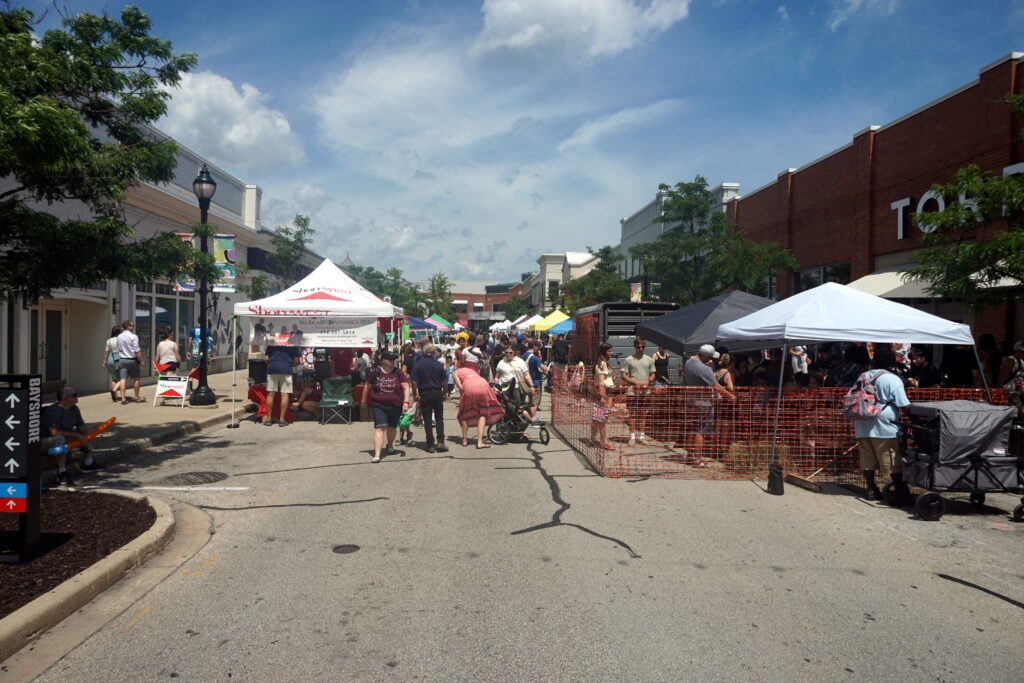
The rebuilt town center was designed as a walkable street setting. Building exteriors used a mix of materials. Storefronts followed design guidelines, with extensive windows and consistent awnings.
Sidewalks were typically about 11 feet wide and lined with decorative lampposts, bollards, benches, kiosks, trees, and landscaping.
Some streetlamps included hidden speakers that provided low-level ambient music.
A big opening, then a second-phase stall
Bayshore Town Center held its grand opening in November 2006. The redevelopment was described as completed in May 2007.
The rebuilt 52-acre property carried over 1.2 million square feet of mixed-use space and included 113 apartments.
As of September 2009, occupancy was about 85% for retail, 75% for office, and 97% for apartments. Sales were reported as rising from about $300 per square foot to about $400, with market share increasing from 8% to 20%.
Rents were reported at about 20% above competitors. The property's value was reported as increasing from $78 million to $350 million, with annual taxes rising from about $2.4 million to about $8 million.
Annual sales were reported at roughly $310 million.
A second phase was part of the plan. It was meant to add more residential and retail space along the northern portion of the property and along North Lydell Avenue, including replacing the Sears building.
The Great Recession in late 2007 halted that phase, and the additional work did not move forward.
Bayshore remained in its new town center layout, but the next round of expansion paused. After that, ownership changed, and the center entered a period when store departures became more common.
Recession freeze, then the Olshan slide
In 2010, management shifted from Steiner to the majority owner, Mall Properties (later Olshan Properties).
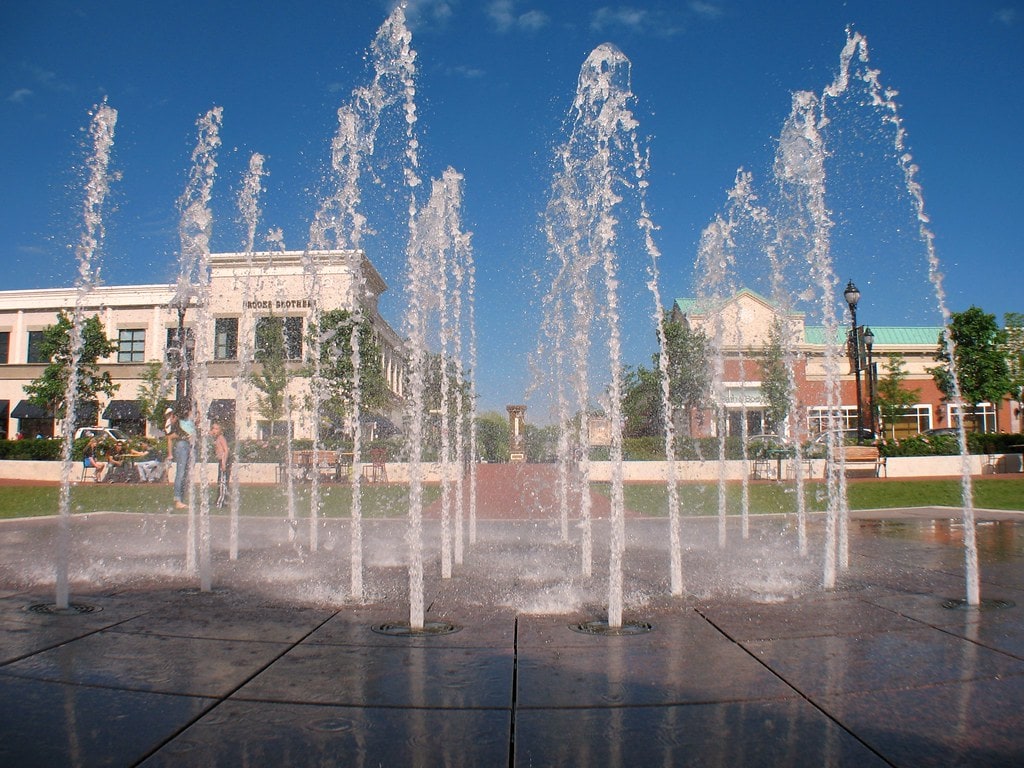
In the years that followed, upkeep declined, and tenant turnover increased. As leases expired, the central water feature and parts of the outdoor space fell into disrepair.
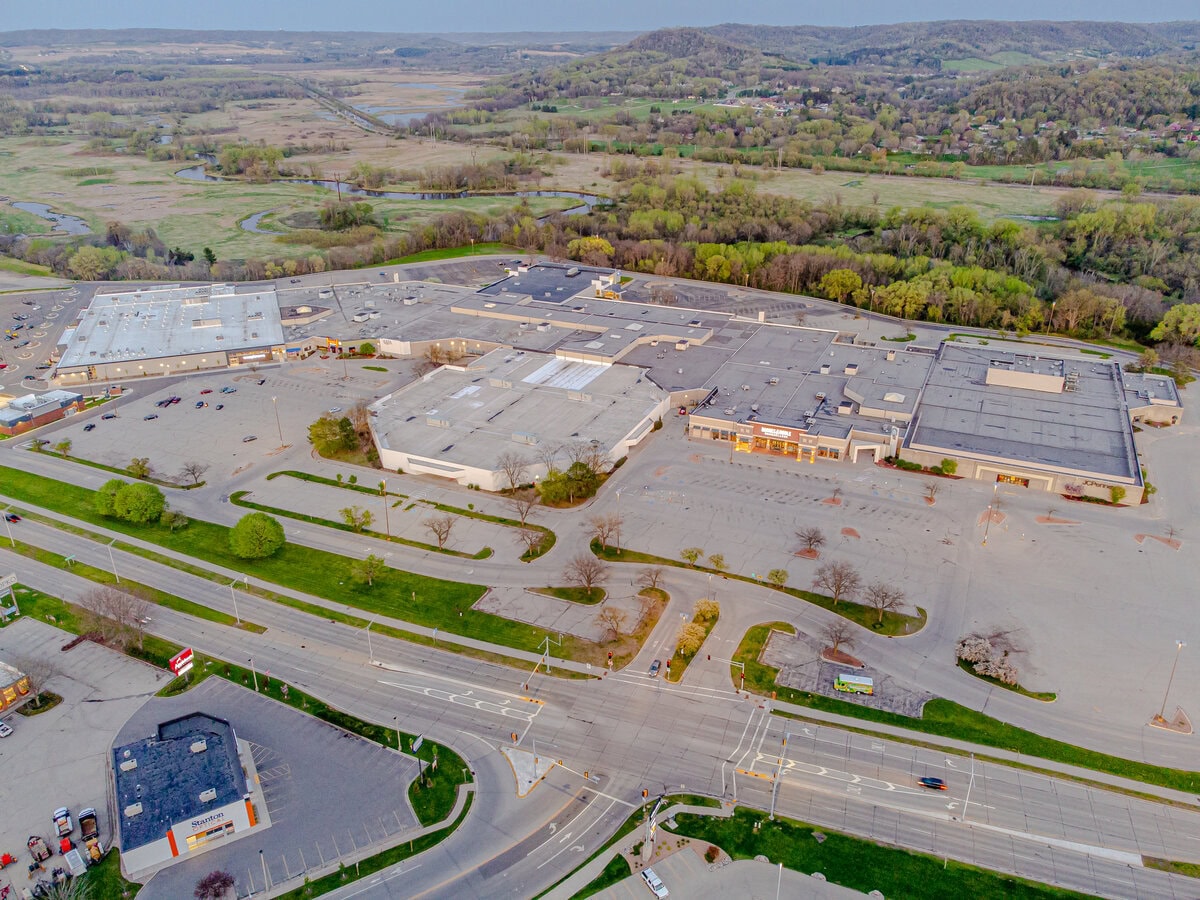
Empty storefronts increased across the site, and the center developed a reputation for higher vacancy and safety concerns.
Anchor losses built up through the decade. Sports Authority opened in 2011. Sears closed in 2014, and the building was later torn down.
Sports Authority closed in 2016. Nordstrom Rack was announced as a replacement for the former Sears space, but the plans were later canceled.
iPic Theaters closed in March 2018. Boston Store closed in August 2018 during the Bon-Ton liquidation.
Other store and restaurant closures followed in the same period.
These included Teavana, American Eagle, Shaw's Jewelers, Charlotte Russe, Payless ShoeSource, Gymboree, Hom Wood Fired Grill, Sprecher's Restaurant & Pub, J.Crew, and Vera Bradley.
Vacancies exceeded 30 commercial spaces. The assessed valuation was described as dropping to $65 million after being set far higher the year before.
Kohl's remained open, though its building was under separate ownership while still tied to the larger development.
AIG reshapes the plan, and walls come down
In 2017, AIG Global Real Estate Services took control of Bayshore via a deed-in-lieu-of-foreclosure.
A redevelopment plan followed in the $55 to $75 million range. The plan focused on reducing the retail footprint and adding more uses beyond stores.
The plan cut retail space from 828,000 square feet to 522,000. It converted portions of the indoor space into offices or co-working, increasing office space from 213,000 square feet to 248,000.
It added apartments, independent senior living, a select-service hotel, a medical facility, restaurants, and more office space.
The plan raised the central public square from its lower grade to connect more directly with surrounding streets.
The city restructured tax increment financing through 2033. AIG paid off about $56.6 million in outstanding tax financing debt.
The redevelopment included up to $36.7 million in public subsidy tied to performance. The center dropped "Town Center" from its name.
In 2018, management proposed replacing the indoor mall with offices, a hotel, and apartments.
In September 2019, the next redevelopment phase began. The indoor portion of the mall closed and was demolished, and apartment construction started.
An LED screen was put up on one of the buildings, a small but clear sign that the new Bayshore would show more energy.
Snow, tenant churn, and Bayshore in 2026
Total Wine & More opened in 2020 in the former Sports Authority space. Target opened in 2021 in the former Boston Store space.
In February 2023, a west-end parking garage partially collapsed under a heavy pile of snow.
No one was hurt, but cars stayed inside for about 2 weeks. Crews used a crane to remove the remaining vehicles, and the garage reopened in July.
Entertainment changed again after the iPic era. An ACX Entertainment Center opened in November 2023 in the former iPic space.
It had six screens, an 11-lane bowling alley, and an arcade with 40 games. The ACX cinema operation closed permanently in October 2025 after payment issues and lease terms ended the run.
In 2026, Bayshore operates as an open-air mixed-use center at 5800 N. Bayshore Drive.
The site has more than 4,500 parking spaces and Milwaukee County Transit System access. Cypress Equities owns and manages the property.
The main names on the property are the familiar ones. Target, Kohl's, Barnes & Noble, and Trader Joe's anchor traffic.
Apple operates on-site. Dining includes The Cheesecake Factory, California Pizza Kitchen, Chipotle, Culver's, Five Guys, and Crumbl Cookies.