Montgomery Mall meets a city that balks
Montgomery Mall began in 1963 as a bold, simple plan: W.L. Holcomb and Associates from Gulfport, Mississippi, wanted to build a $7.5 million shopping center on forty acres east of Woodley Road.
The plan seemed to expect that the future was wide open and ready for anything.
Montgomery answered like a city that still cared where its money already lived. In August 1963, the City Commission rejected the commercial zoning that the original site needed.
Downtown merchants leaned hard against the plan, and local residents added their own objections, less about commerce than about what commerce drags in behind it: traffic, noise, and the suspicion that once a road widens, it never narrows again.
The pushback was not a footnote. It was the first real event in the mall's history, because it made clear what the project actually was: not a building, but a relocation scheme.
Even before it opened, Montgomery Mall forced Montgomery to picture a different center of town, and then decide whether it wanted to live there.
When the money quit, and lawyers moved in
By 1965, the project had a prize commitment. Montgomery Fair, the major local department store, signed on and announced it would leave its downtown Court Street location.
A move like that is supposed to settle the argument. Instead, it exposed the weakest part of the dream: the financing.
Holcomb ran out of money. Daniel Construction, the main contractor, sued for $2.9 million. The mall, once described in glowing terms, was now just numbers read in court.
In 1966, a federal judge ordered the property sold at public auction to pay off debts.
Daniel Construction won the court-ordered auction with a $2.5 million bid for the site's long-term lease and effectively took over the project.
It was both dramatic and practical: if the developer couldn't finish, the builder would.
In October 1966, they finally got permission to change the land use, and construction started again. The opening, first planned for 1965, then for 1968, was finally delayed to 1970.
This was a slow lesson in how big American shopping centers often begin: with hope, then money troubles, then a fresh start with new leaders, like a play that keeps its name but swaps out the actors.

April 1970: opening day, half the keys
When Montgomery Mall formally opened in April 1970, it arrived as a single-level enclosed mall of roughly 700,000 square feet, the first of its kind in the region.
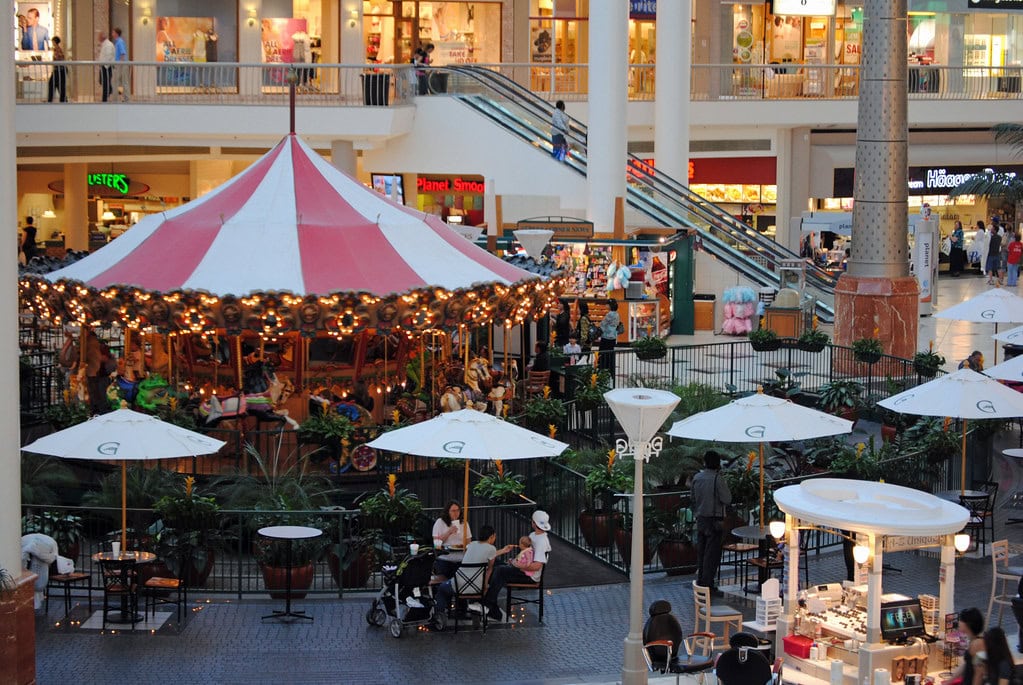
"Enclosed" was the selling point. It meant air-conditioning and a controlled interior world, where the weather stayed outside like a rumor.
The opening was more like a first step than a big finish. Only sixteen out of fifty stores were ready when the mall opened, so some areas probably looked unfinished or not quite ready.
The main stores held the place together: Montgomery Fair at one end and JCPenney at the other.
Soon after, Montgomery Fair changed its name to Gayfers, showing that local pride and company names can be in the same place but do not always feel the same.
Even so, the mall felt like a big statement. Montgomery had made its own indoor main street, with long views and the hope that all the empty stores would soon have businesses in them.
The project, which had once been stopped and almost failed, was now open for everyone, which is often how tough city decisions are finally settled: by letting people experience them.
Cafeteria trays, shoes, and UltraVision
The early tenant list sketched a very specific kind of middle-class afternoon. Morrison's Cafeteria offered the calm order of a tray line.
Lerner Shops brought a taste of department-store fashion without the department-store commitment.
Singer Sewing Center and V. J. Elmore Variety Store made usefulness feel like entertainment. There were shoes in abundance: Hardy Shoes, Butler Shoes, Edison Brothers Shoes.
Schwobilt Clothes handled the menswear, the kind bought for work, church, and the occasional wedding where someone says, "No, really, you can keep the jacket."
Outside the main structure sat another piece of the experience: the Montgomery Mall UltraVision theatre.
The theatre, listed at 2949 E. South Boulevard was described as having single screen (twinned in 1977) and 800 seats, and a photo caption ties its grand opening exterior shot to August 13, 1970.
It reinforced the mall's real mission, which was not simply to sell things but to keep people there long enough to buy an extra thing.

Parisian wing, Eastdale shadow, 1988 shine
For a while, Montgomery Mall had the advantage of being first. Then Eastdale Mall opened in 1977, and suddenly the city had options, which is always bad news for the older option.
Montgomery Mall had to do what malls do when they sense attention drifting: expand.
The expansion started in 1987 and finished in 1988, adding a third section with Parisian, a department store from Birmingham, as the main store.
The new section was built to keep up with the competition, but it was also meant to make the mall feel exciting again.
A new main store changes how people see a mall. It gives them a new reason to visit, a new excuse to look around, and a new path to walk through.
This was also the time when store names changed as companies joined together and changed their brands.
Montgomery Fair had already become Gayfers, and later Dillard's bought the Gayfers stores, adding another company name to a place that used to have a clearly local main store.
The irony is that an expansion can feel like confidence and desperation at the same time.
It says, "We're growing." It also says, quietly, "Please don't leave." In the late eighties, Montgomery Mall still had enough energy to make the first message believable.

Seventy million confidence, then the hollowing
In 1998, Glimcher Realty Trust bought Montgomery Mall for $70 million. At the time, the property was 95% occupied, which is the statistic you cite when you want a deal to sound inevitable.
The mall was still doing what it had been built to do: gather shoppers, fill storefronts, keep the corridors moving.
Then the early 2000s arrived and rewrote the rules. Online shopping rose. A new retail magnet emerged at The Shoppes at Eastchase.
The surrounding area developed a reputation for rising crime, and locals recalled a shooting in the food court.
None of this is abstract when your business depends on people choosing to spend unstructured time in a public interior.
The closures came in a wave that felt both personal and predictable. Piccadilly Cafeteria closed in 2004.
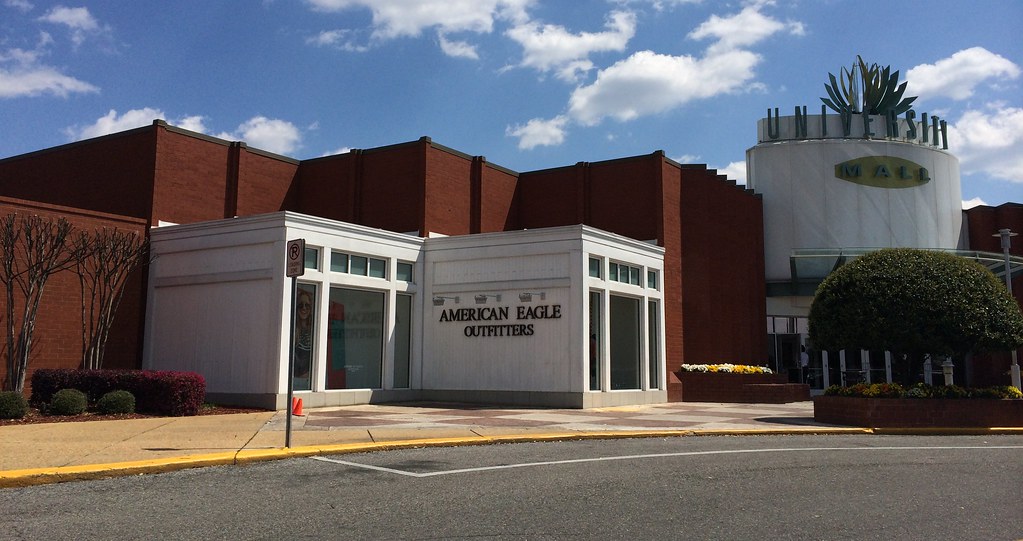
Stores that once made a mall feel current started disappearing: Gap, Eddie Bauer, Ruby Tuesday, and American Eagle Outfitters.
In 2005, JCPenney closed and relocated to Eastdale Mall. That same year, Dillard's closed and moved to The Shoppes at Eastchase.
Steve & Barry's University Sportswear opened in the former Dillard's space, trying to keep an anchor where an anchor had been.
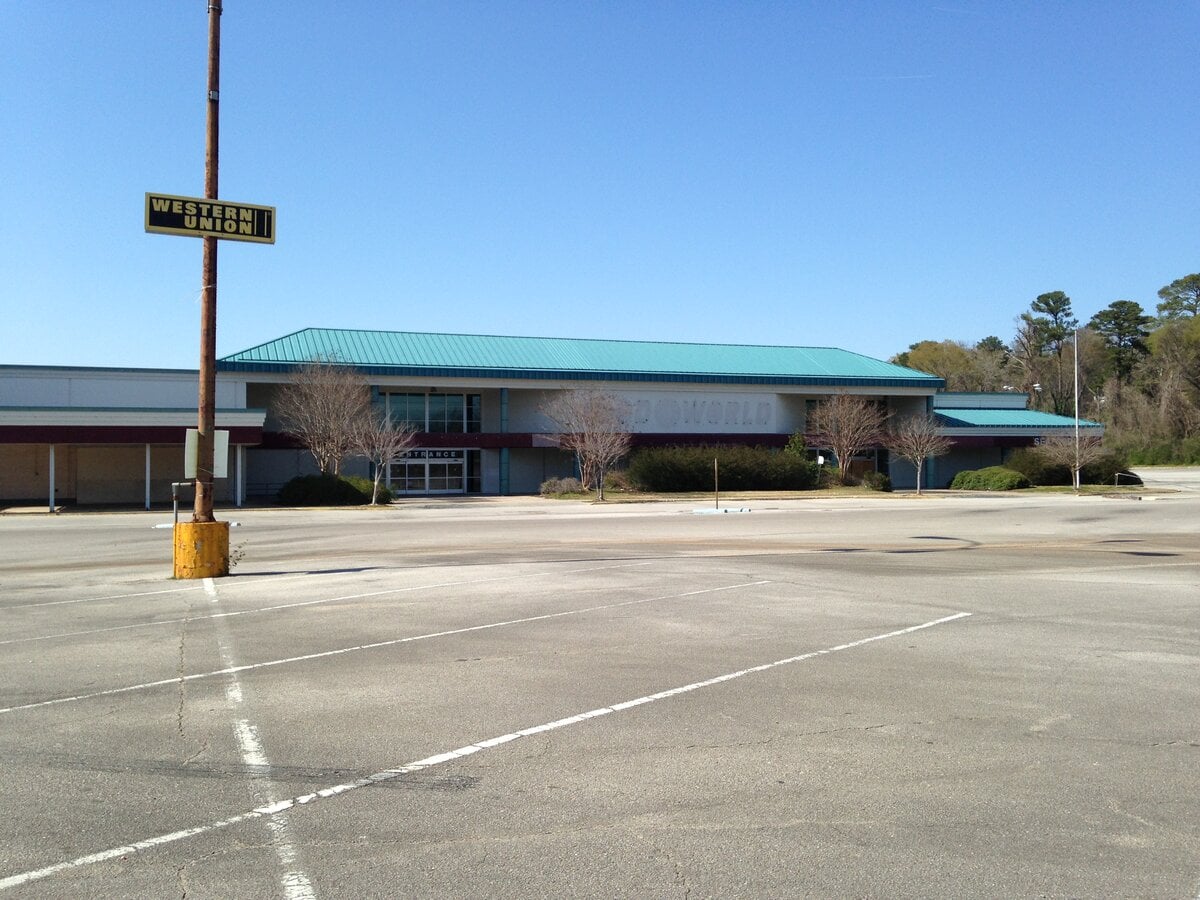
Parisian closed in 2006 anyway. By then, the mall was less a place you went than a place you remembered going, which is the stage right before a building becomes a symbol.
The last anchor, 2008, and the long quiet
In 2007, Glimcher sold the mall for $4.4 million, which was a huge drop from the $70 million it was bought for nine years before.
Mayor Bobby Bright spoke out against the previous owners for not taking care of the property.
He said he thought the owner had taken a 'tax write-off' on the mall, a phrase that makes the place sound like a paperwork problem instead of a city problem.
The buyer was Dothan Acquisitions, LLC, and there was some hope with the sale.
The group had helped bring Porter Square Mall in Dothan back to life, even moving Movie Gallery's main offices into one of the old big stores there.
This showed that a closed mall could become useful again, even if it was not guaranteed.
Stores, however, could not be saved. Montgomery Mall closed for good in 2008. Steve & Barry's was the last big store left, and it stayed open until September 2008, when the company filed bankruptcy.
Its Montgomery location closed on Monday, September 22, 2008, at 7:00 PM, a strangely exact time for a place that had once promised endless afternoons.
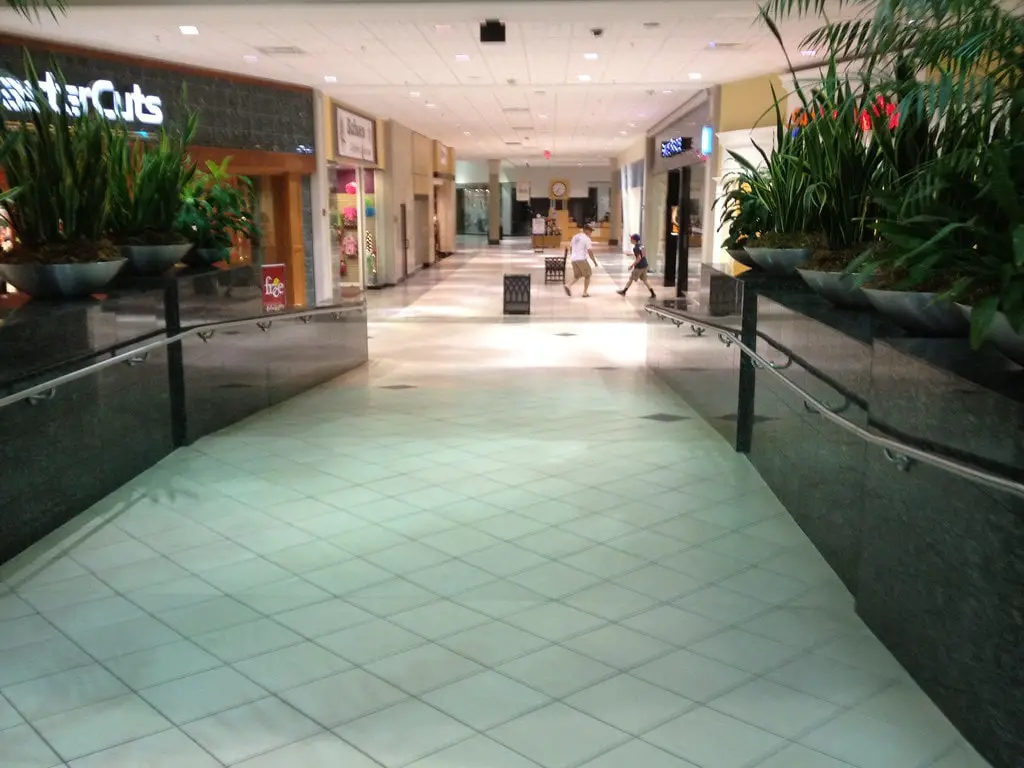
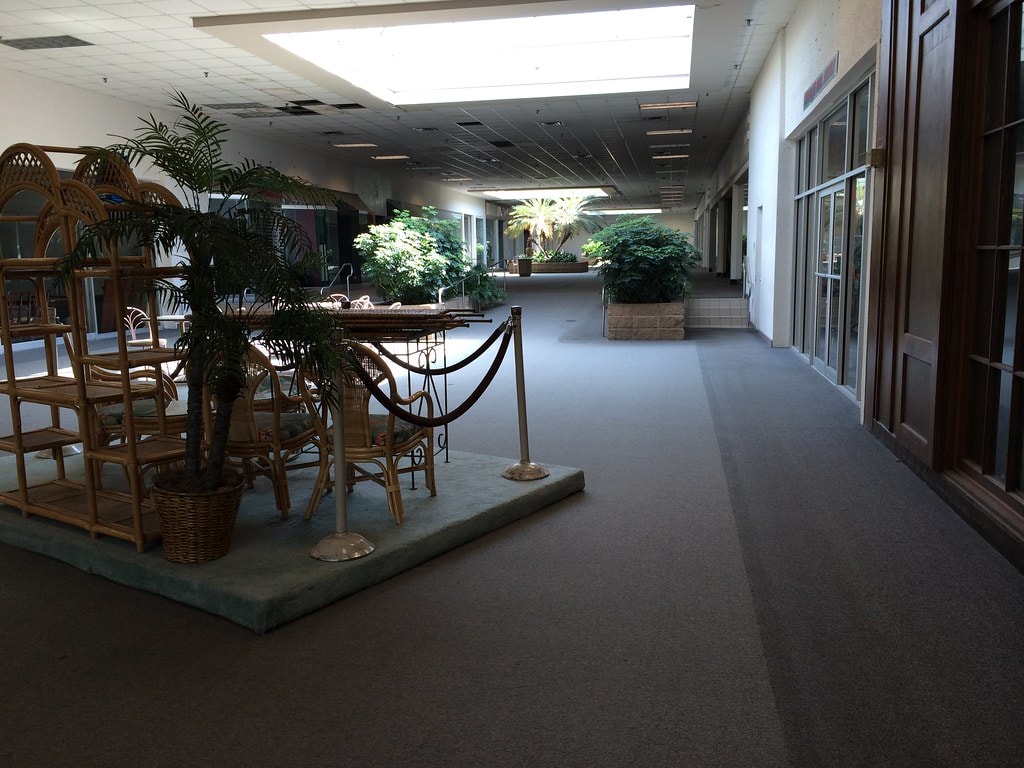
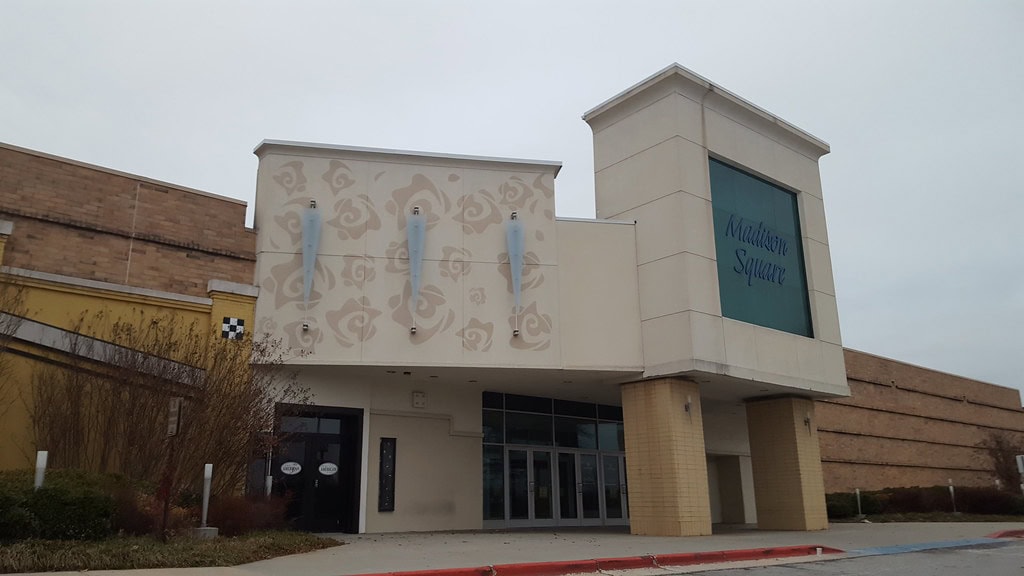
After that, the building was mostly empty for years, a big, unused space that became a symbol of empty stores in South Montgomery.
The building did not disappear. People just stopped using it for shopping.

One Center: schools, sirens, a civic future
In May 2011, plans surfaced to buy about 440,000 square feet of the old mall and convert it into medical/health offices and other non-retail uses, an acknowledgment that stores weren't likely to return.
A deal was made with one of the owners, and by March 2015, work to change the space had started.
The project got a new name: One Center, a name that sounded simple on purpose, like a choice made after realizing big dreams can be expensive.
The changes focused on public services and were bold in their own way. The city spent $3.8 million to build a police station and a fire station on the property.
There were also plans to put a fire station on the property, use the old JCPenney for education/admin uses (including career-tech/job training), and turn the old Parisian into LAMP's new campus.
In 2014, the Montgomery County Board of Education agreed to buy the old JCPenney building for $750,000, saying it already owned the Parisian building.
The district talked about moving LAMP and the Montgomery Technical Education Center into 160,000 square feet, planning for a project that would cost about $20 million and hoping to open in 2016.
Like many plans, this timeline turned out to be more hopeful than realistic.
LAMP finally moved in 2017 and is now located at 3440 McGehee Rd. Another group, MPACT, offers job training nearby at 2901 East South Blvd.
By late 2025, the old hallways that once had small stores are mostly empty or used for storage and offices, while most activity happens in the main buildings.
Some of these main spaces are still empty, but the area is busy, just in a different way.
A local once suggested, back when the mall was still failing, that it should become "a place for peace and teaching... a trade school, a YMCA..."
The phrasing was earnest, maybe a little naive. It also ended up being close to the truth.
The old Montgomery Mall site seems finished chasing shoppers. It has settled into the steadier work of holding a city together.