
Paradise Valley Mall was a regional enclosed shopping center in north Phoenix, Arizona, in Maricopa County. It stood at the northwest corner of Tatum Boulevard and Cactus Road, in the Paradise Valley corridor.
Its location placed it at the intersection of two major roads in north Phoenix. That gave it direct access to shoppers from Scottsdale and northeast Phoenix without relying on a freeway.
For more than 40 years, it served as the main enclosed shopping destination for residents of north Phoenix, Paradise Valley, and Scottsdale. At its peak, the mall was anchored by Dillard's, JCPenney, Macy's, Robinson-May, Sears, and Harkins Theater.
The mall opened in late 1978 and closed in March 2021. The site is now being redeveloped by RED Development into PV, a mixed-use district that will include dining, retail, housing, and office space, all organized around a central park at 4568 East Cactus Road.
Paradise Village Mall Opens in North Phoenix
Before Thanksgiving 1978, drivers turning off Tatum Boulevard onto Cactus Road in north Phoenix encountered something that had not existed there the week before: a shopping center unlike anything else in the city.
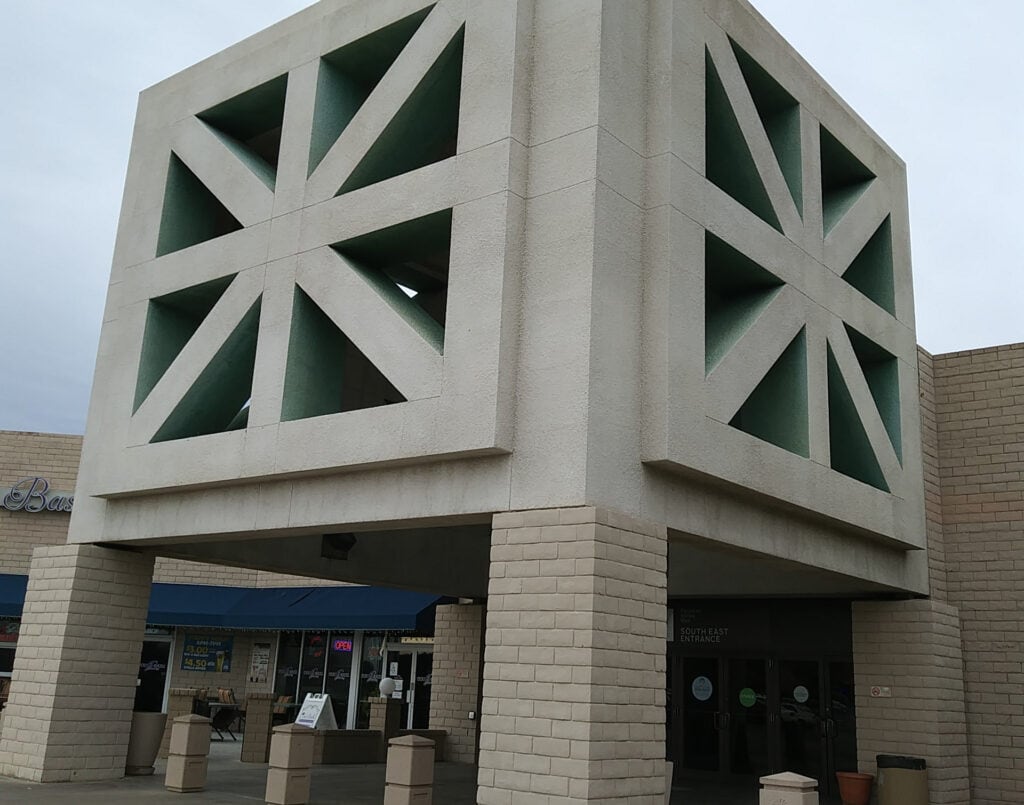
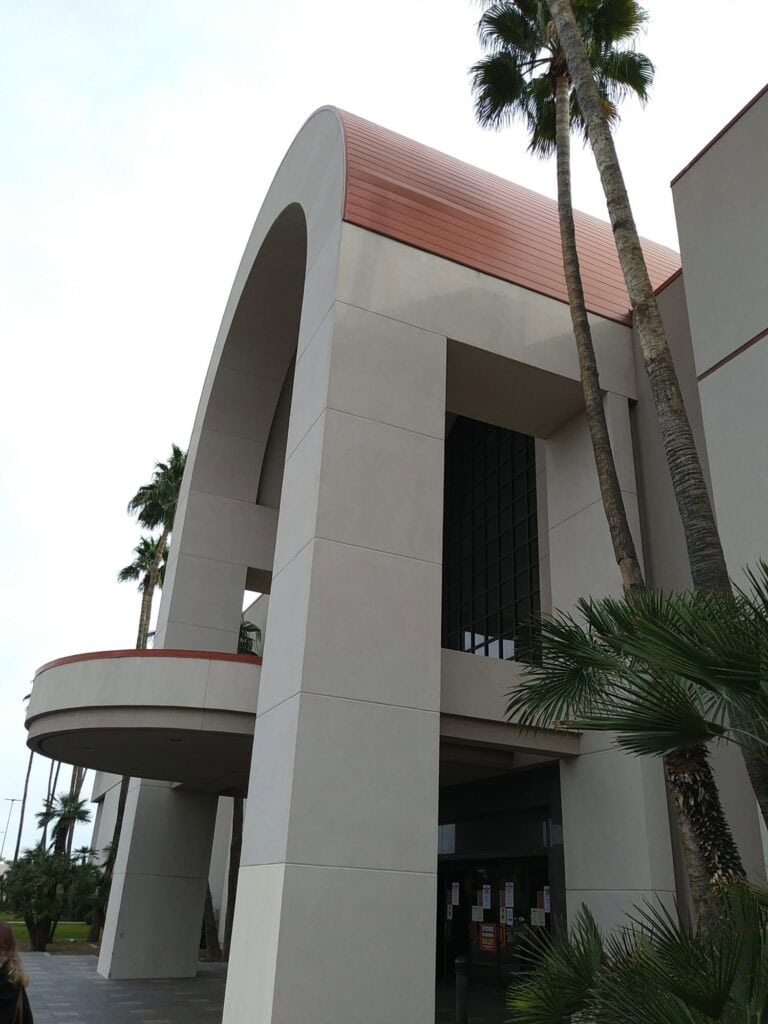
The entrances were topped with cubes. The columns inside stepped upward in forms that echoed Thunderbird imagery.
The floor patterns were drawn from Navajo rug designs. The terrazzo tile underfoot had come all the way from Guadalajara, Mexico.
The man responsible for all of it was 27 years old.
Rafique Islam had been chosen by Westcor founder Rusty Lyon to design what was then called Paradise Village Mall, and Lyon had given him an unusual brief: make it feel like Phoenix, not like every other enclosed mall in America.
He spent 1977 working out what that meant in architectural terms. The design was completed by May of that year and approved by mid-June.
Construction ran through 1978, and shoppers were walking through those cube-topped doors before the end of November.
The formal grand opening party came in February 1979, which is why later property records listed it as a 1979 property - a discrepancy between the lived opening and the official one that shows up in later records.
Paradise Valley Mall Grows Into a Regional Force
The expansion in 1990 made the mall a larger regional shopping center.
By the time Macerich moved to buy Westcor in 2002, the property had 1,222,000 square feet of total leasable space. Of that, 392,000 square feet did not include department stores.
The mall was 96 percent occupied, and smaller shop sales averaged $384 per square foot.
The anchor stores reflected the biggest names in American retail at the time. Dillard's, JCPenney, Macy's, Robinson-May, Sears, and Harkins Theater all operated at the center.
This kind of lineup showed the strength of regional malls at the start of the 2000s.
Macerich announced its purchase of Westcor in May 2002, and Paradise Valley Mall became part of its portfolio that same year.
Over the next fifteen years, the mall remained one of the stronger regional centers in the Phoenix metro area.
It drew shoppers from across the north side of the city and kept steady foot traffic, enough to support multiple department stores and a movie theater.
The property was designed in a single year, with Southwestern-style tile and Navajo-inspired floor patterns, and had grown into the kind of major suburban retail hub that defined American shopping for a generation.
By November 2020, Thirty Stores Sat Vacant
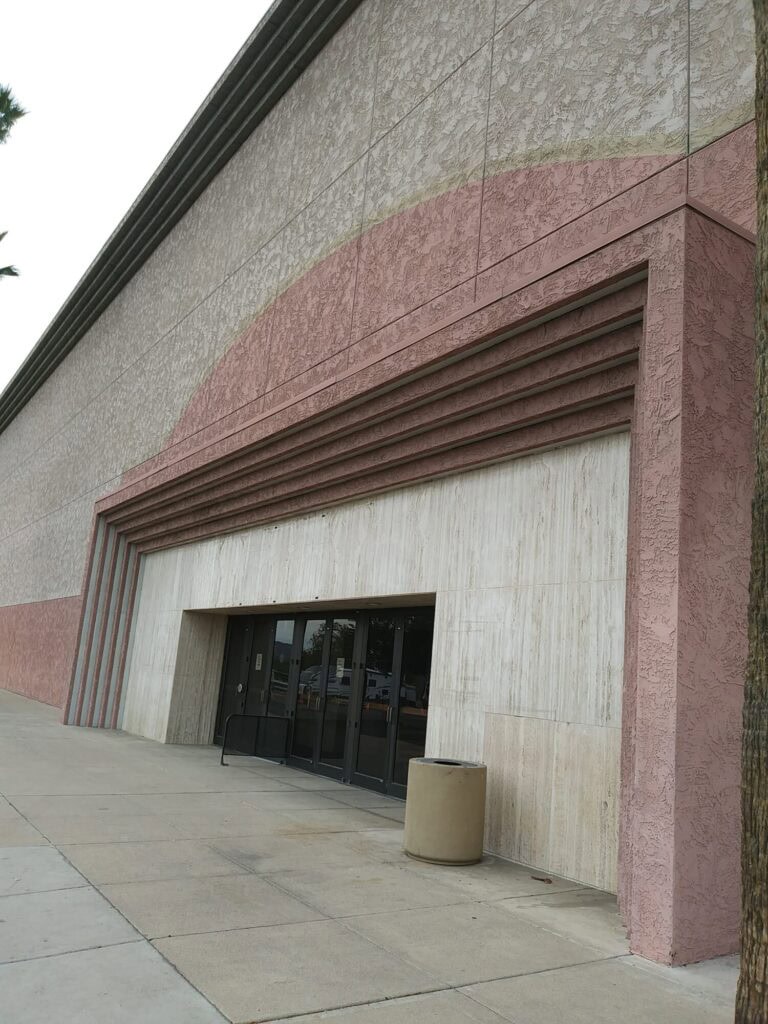
Sears closed its Paradise Valley Mall store in 2019. It was the first anchor tenant to leave, and more signs of decline followed.
By November 2020, Councilwoman Debra Stark counted 30 empty stores inside the mall. Dillard's planned to shut down by the end of that year.
A center that had reached 97.3 percent occupancy in 2002 was now clearly losing tenants and sitting partly empty.
That same month, Macerich and Phoenix-based RED Development presented an early redevelopment plan to city officials.
The proposal called for replacing the enclosed mall with a mixed-use project across about 75 acres.
It would include retail, office space, and multifamily housing. Officials said Costco, Macy's, and JCPenney were expected to remain.
New buildings could reach up to 120 feet, or about 8 to 10 stories.
In December 2020, Macerich filed a rezoning request covering 77 acres, with early plans showing multilevel residential buildings, a pool, a 45,000-square-foot grocery store, and another 7,000 square feet of retail space.
Costco, the parking structure, and most of the mall were planned for later phases. JCPenney owned its building outright, which placed it outside the initial redevelopment area.
A $100 Million Sale and the Start of Demolition
Phoenix approved the original development agreement with PV Land SPE, LLC on February 17, 2021.
On March 29, Macerich sold the former mall for $100 million to a newly formed joint venture and kept a 5 percent interest in it.
By March 30, most stores were already closed, Puppies 'N Love was wrapping up on April 1, and Dillard's would hold on until sometime in June.
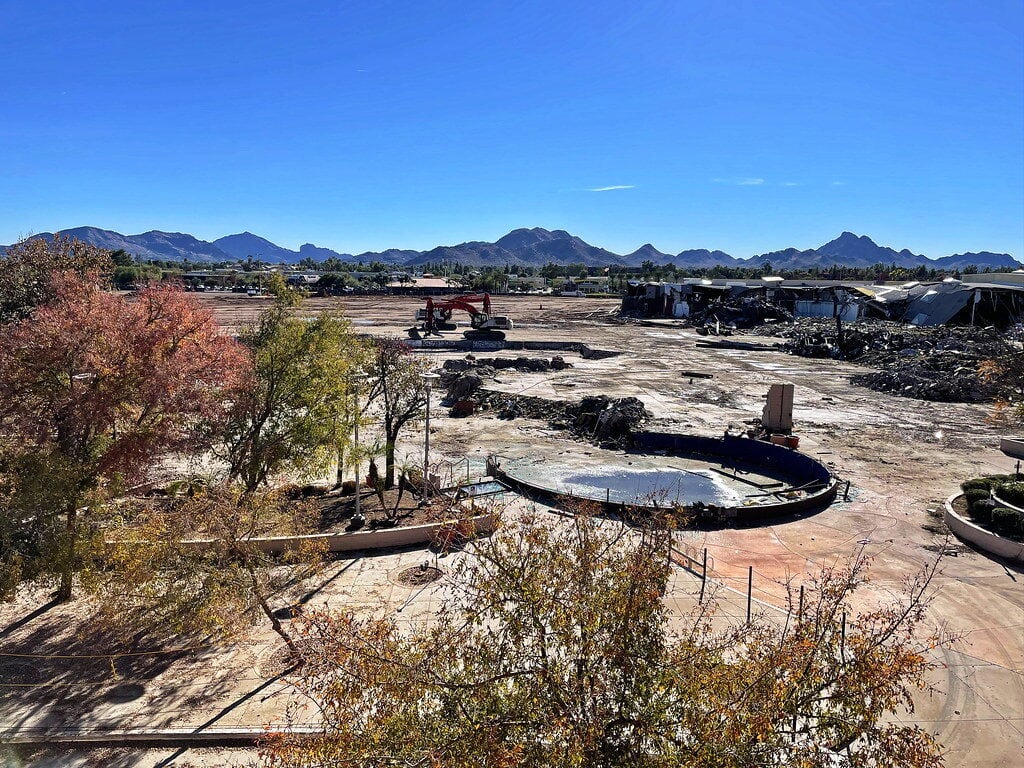
Demolition crews arrived on July 7, 2021, and started with the former Sears and Macy's structures. The plan called for the work to continue through the rest of the year.
Costco, the parking garage, and the Phoenix public library branch on the property were all slated to stay.
The new program called for as many as 2,500 apartments, restaurants, retail, a grocery store, offices, and self-storage spread across the site.
Construction on the redevelopment's first phase began in summer 2021, just weeks after the wrecking crews moved in.
The 1978 building, which had been filled with Guadalajara tilework and Thunderbird columns, was coming down in sections, starting from the anchors that had already gone dark, working inward toward what had once been the busiest corridors in north Phoenix.
The PUD Rules That Shape What Gets Built
The 2022 Planned Unit Development establishes the main rules for what can be built. Height limits step up across the site.
Buildings along Tatum Boulevard and Cactus Road are limited to 30 feet. Near Paradise Village Parkway, they can reach 85 feet.
Inside the loop road, the maximum height is 120 feet. The Phase I southeast corner is excluded because it already had separate approvals, and construction was underway.
The PUD permits up to 3,200 dwelling units within 79.98 acres. Lot coverage is capped at 50 percent. Features such as balconies, garages, overhangs, and projections are not included in that calculation.
Different acreage numbers appear because the project is measured in different ways. Early reports in 2020 described 75 to 77 acres.
The 2022 PUD defines 79.98 acres and excludes Phase I. RED's marketing describes the full redevelopment as more than 100 acres by including areas outside the PUD boundary.
The development agreement approved in February 2021 between Phoenix and PV Land SPE, LLC did not include reimbursement for infrastructure work along Cactus Road and Paradise Village Parkway.
That changed in 2024, when an amendment added those costs.
Tenants Arrive as Construction Continues
The first phase began opening in September 2024. By April 2025, RED announced a new round of signed tenants: Cala, Velvet Taco, Harry and Izzy's, Too Sweet Cakes, Face Foundrie, and Zara Nail Bar.
Blanco Reserva Cocina + Cantina, Flower Child, Whole Foods, and Trevor's Liquor were already serving customers. Life Time was still under construction.
Wren House Brewing Co. opened its PV taproom on June 19, 2025, the brewery's third location in the Valley, with a cask-ale focus.
In October 2025, Life Time and RED broke ground on Life Time Living Paradise Valley, an 11-story, 327-unit residential building connected to the 92,000-square-foot Life Time athletic country club next door by a pedestrian bridge.
Life Time put the club's opening in the first half of 2026.
Mission BBQ opened on March 18, 2026. Velvet Taco followed later that month.
By April 2, 2026, 11 restaurants and shops were already operating at PV, with Cala, Harry and Izzy's, Too Sweet Cakes, and The Vig still expected to open later in the year.
The Park, the Club, and What Comes Next
PV's official events calendar listed an April 11, 2026, "Life Time | Barre and Bubbles" preopening event, placing the athletic club still in its final preparations as spring began.
Federal Pizza, Frost Gelato Shoppe, and Wren House were open.
Sephora, Hawaiian Bros Island Grill, Distinctive Salon Aveda, European Wax Center, and AVE Paradise Valley - the 400-residence community anchoring the first residential phase - were all running.
The Park at PV had been hosting live programming since at least early April. RED describes the finished project as an over-$2 billion redevelopment spanning more than 100 acres.
A 2024 amendment to the original city development agreement added reimbursement for public infrastructure improvements, including transit and street work along Cactus Road and Paradise Village Parkway.
Life Time's October 2025 announcement put the residential completion date for the 327-unit Life Time Living tower at 2027.
Independent Publisher Notice
BestAttractions is an independent editorial publisher. We are not affiliated with, endorsed by, or acting on behalf of any location, business, property owner, manager, government agency, or organization described in this article. Comments posted on this page are not forwarded to, reviewed by, or acted upon by any entity mentioned in the article. For official inquiries, complaints, applications, bookings, or other requests, please contact the relevant entity directly through its official website or other verified channels.