Bella Terra starts as Huntington Center
Cars turned off Edinger Avenue into wide parking lanes, and the air changed as soon as the doors shut behind you.
Huntington Center opened in November 1966 as Orange County's first enclosed, all-weather mall, built as a small indoor town, a ten-minute drive from the beach.
Planning began in 1962 as a joint venture between the Huntington Beach Company and Gordon L. McDonald Corp.
The mall rose on 58 acres with 843,000 square feet of retail and parking for 3,700 cars. A wave motif ran through the property, a coastal note inside a building meant to keep the weather out.
The opening rolled out in stages. The Broadway opened first on November 15, 1965, as a three-level department store of about 160,000 square feet.
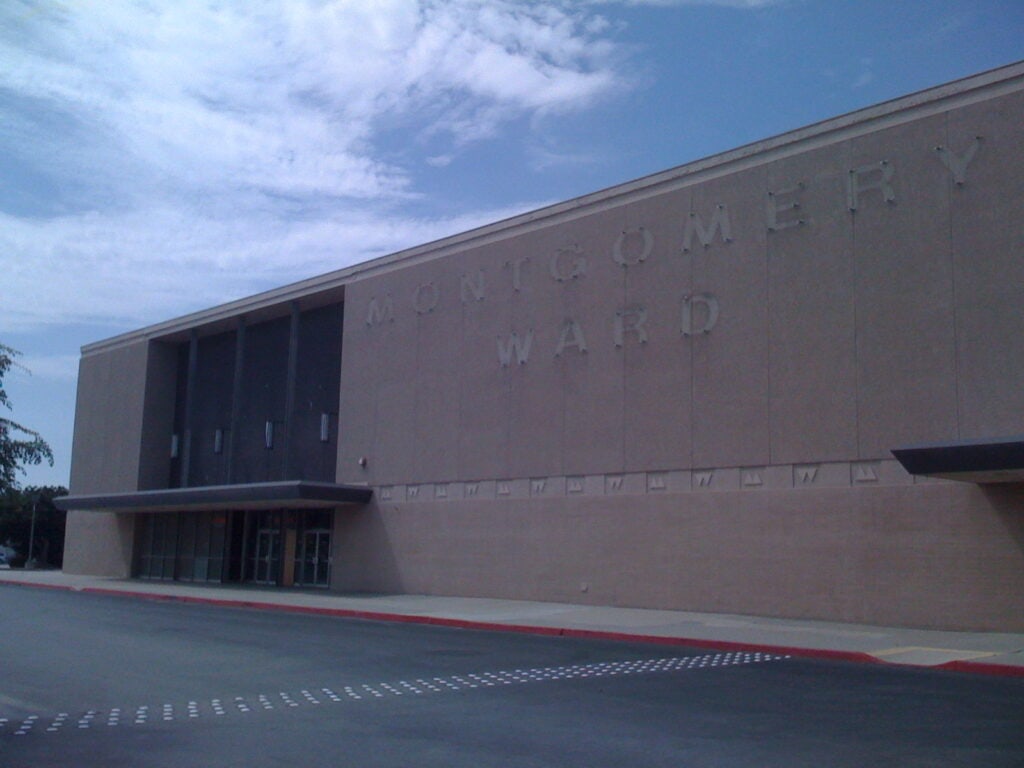
Montgomery Ward followed on October 26, 1966, with a two-level store of about 175,000 square feet.
J.C. Penney opened at the mall-wide grand public opening on November 17, 1966, with a two-level store of 206,000 square feet plus an auto center.
Across the parking lot, Barker Brothers operated as a furniture anchor in its own building.
Opening day: band music and center court
The grand opening was set up to keep people in the mall for a while. The Huntington Beach High School Oiler Band played. Danish gas lamps were installed along the walkways.
In the center court, an eight-ton statue from Budapest sat in the middle of the retail loop where shoppers passed it on each circuit.
Promotions ran alongside the opening, including a children's "Turkey Shoot," which kept families circulating instead of heading back to the car.
The first group of stores made it easy for shoppers to run errands and browse at the same time.
Food Fair opened as a supermarket. Thrifty Drug Stores opened as the drugstore stop. Security First National Bank and Crocker-Citizens National Bank opened branches inside the mall.
The soft-goods lineup included Gude's-Barnett Shoes, Mode O'Day Frock Shop, Bond Clothes, Harris & Frank, Lerner's, Judy's, Kinney Shoes, and Thom McAn.
The 1986 wing, food court, and rebrand
For nearly twenty years, the mall kept its enclosed design and made few changes to its layout. In the mid-1980s, it got a new look, but the way the inside worked stayed the same.
In March 1986, a $9 million expansion began, designed by Millard Archuleta. The project added a northwest wing and built it around a new Mervyn's anchor, a two-level store with 82,000 square feet.
The expansion also brought in a beach-themed food court, using local identity as an indoor feature that fit the decade.
The new wing opened on November 22, 1986. A Teflon tent roof covered the new section, letting in softer light and making it stand out from the older parts of the mall.
The work pushed the property's gross leasable area past 1 million square feet.
It also added a new round of in-line retail that matched the period's mall mix, including Deck The Walls, Intrigue Jewelers, and Cinnamon Roll Fair.
By 1991, the property was using the name Huntington Beach Mall.
The building remained an enclosed mall, but the new name worked as a rebrand meant to keep pace as newer retail centers kept opening in the county and older ones had to keep up.
Mid-90s anchor losses and sealed corridors
In the mid-1990s, the mall started to decline faster as more competition moved in and the main stores began to leave.
South Coast Plaza sat about 7.5 miles to the southeast. Westminster Mall was about 1.7 miles to the northwest.
With other centers nearby, Huntington Beach Mall started losing the stores that kept the interior busy and the corridors connected.
J.C. Penney closed in November 1993 and relocated to Westminster Mall.
Burlington Coat Factory took over the old Penney store in spring 1995, keeping the space filled but changing the type of main store it was.
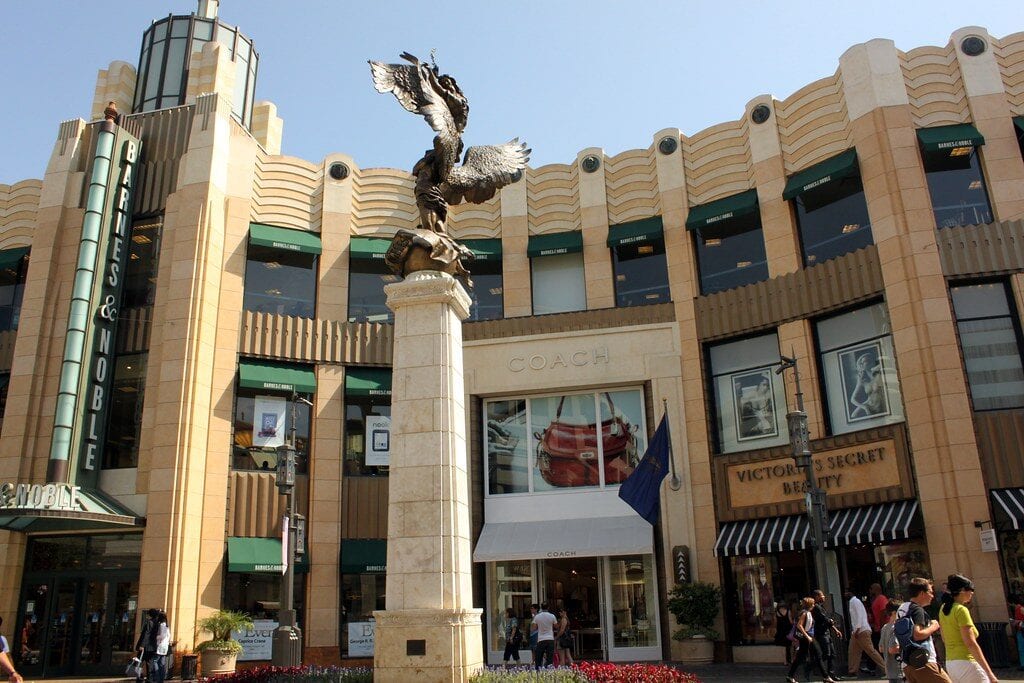
In October 1995, Barnes & Noble opened in the old Barker Brothers building across the parking lot, turning the former furniture store into a bookstore.
The Broadway, the first anchor to open, closed in August 1996 after Macy's acquired the chain and liquidated it. The vacancy was large and hard to ignore.
Soon after, the hallway between the closed Broadway store and Burlington was blocked off, making the inside walkway shorter and making the mall feel smaller.
The remaining sections stayed open, but the walk no longer ran as a complete circuit.
From lawsuits to the 2003 mall shutdown
Vacancies spread through the interior, and the place started getting discussed more as a project than as a mall.
Macerich acquired the property in December 1996 and announced plans to replace the vacant Broadway building with a 20-screen cinema, an attempt to create a new reason to visit.
The site was hard to rework quickly.
Different owners controlled the anchor spaces, and long-term leases made it hard to rebuild the mall as a single, unified project.
The money slid with the tenant list. Annual sales tax tied to the property fell from about $2 million to about $900,000 by the late 1990s. The nickname "The Mall to Fall" followed it.
Burlington Coat Factory wanted to stay as plans for redevelopment grew. In 2000, Burlington sued the developer/owners to protect its long-term lease and stay on-site.
A judge denied its request for a temporary restraining order, but Burlington was later expected to be part of the redevelopment.
Another anchor dropped out in March 2001 when Montgomery Ward closed during the chain's national liquidation. By 2003, the enclosed mall was largely closed.
Mervyn's, Burlington, and a few other stores on the edge of the property stayed open while the inside hallways became empty, and everyone waited to see what big change would happen next.
Demolition and the 2006 Bella Terra debut
Demolition set the reset in motion.
Ezralow Retail Properties, which acquired the property in 1999, moved ahead with a redevelopment partnership that included the Huntington Beach Redevelopment Agency and J.H. Snyder Company.
In late 2003, the wrecking-ball phase began, and most of the enclosed mall structure started coming down.
Key anchor buildings and the Convenience Center stayed in place for integration, while the interior mall itself was removed.
One anchor changed over before the new center opened. Kohl's opened on March 7, 2003, in the renovated former Broadway building, using the original three-story shell and keeping the third level closed to the public.
Ground broke in April 2004 on a $170 million open-air redevelopment.
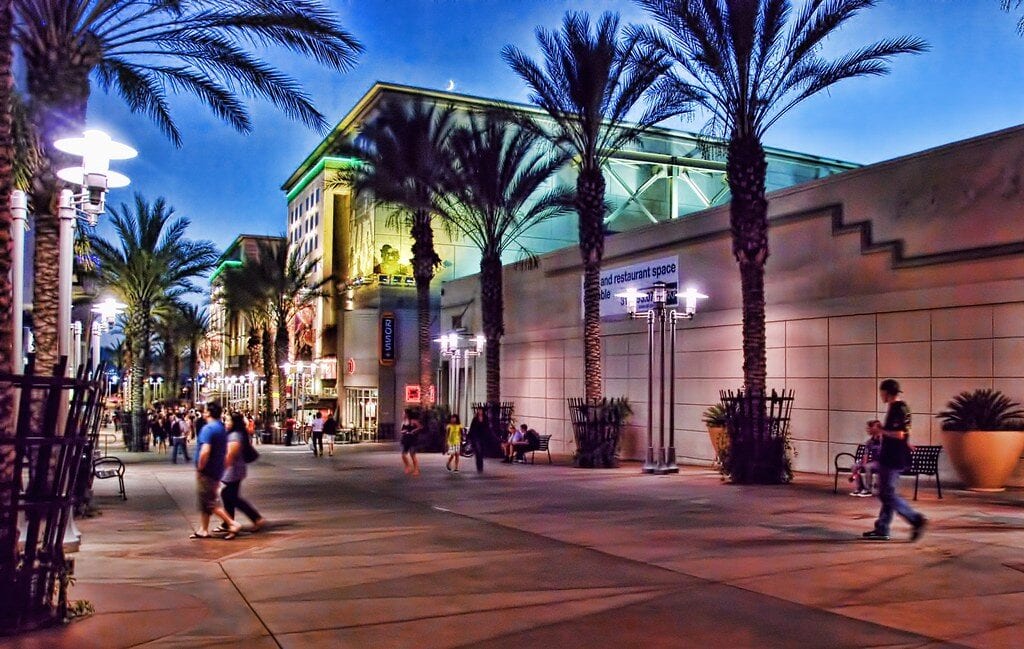
In September 2005, DJM Capital Partners acquired the redevelopment project and continued it under the already-established "Bella Terra" branding and the previously planned open-air, Italian/Tuscan-village concept - outdoor streets, courtyards, and plazas replacing the former indoor corridors.
The design language followed the theme. Curving walkways ran between storefronts. Handmade mosaic tile, decorative stone, and metalwork appeared across the site.
A monarch butterfly logo was built into the identity, including names like Via Farfalla.
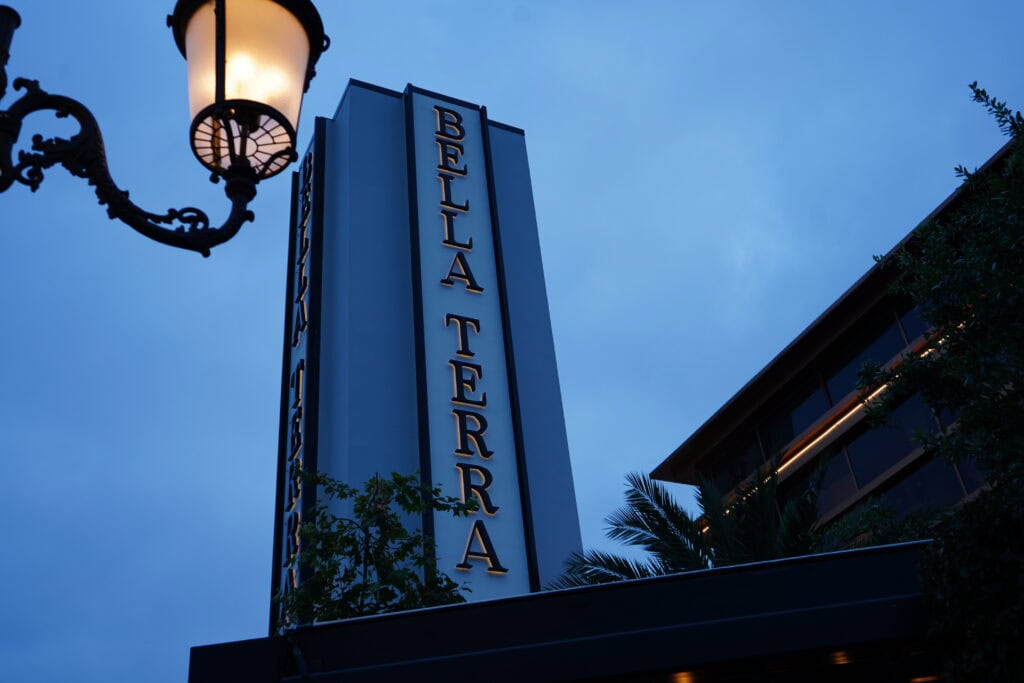
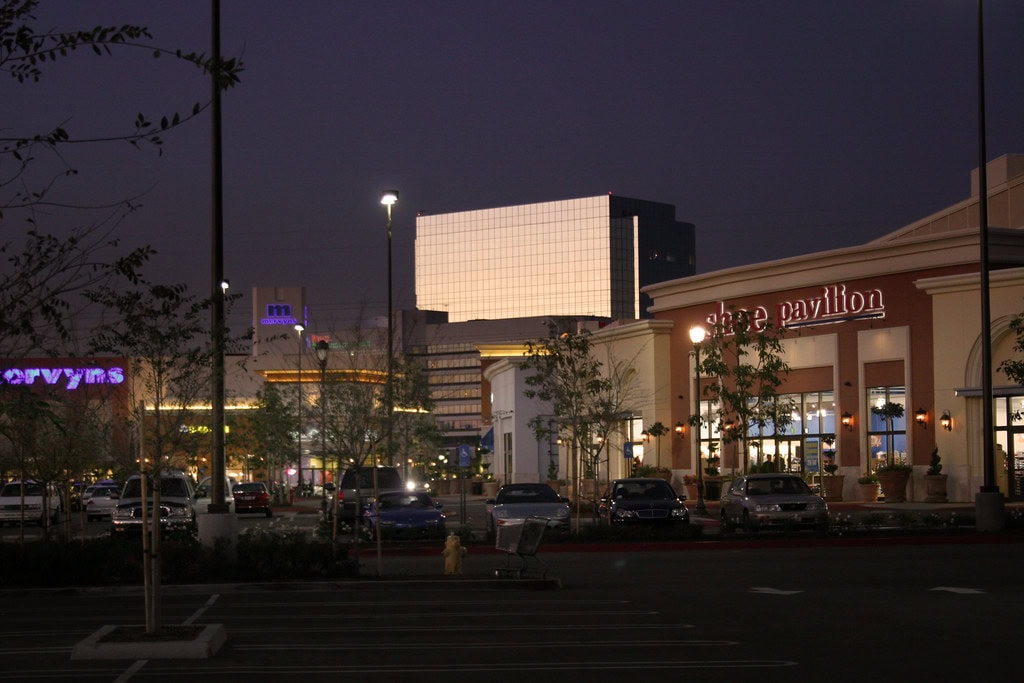
A 110-foot-plus tower went up as a marker visible from the freeway. A 20-plex Century Theatres opened on November 18, 2005.
Bella Terra held its grand opening on September 8, 2006, with about 777,000 leasable square feet and roughly 70 stores and services.
Whole Foods, Costco, and apartments arrive
Bella Terra opened into a retail market that kept knocking out big-box tenants.
In November 2008, Mervyn's closed during liquidation. Circuit City closed a few months later due to bankruptcy.
These two closures left empty space in a center that had just been updated. The next step was to find tenants who could bring in steady, year-round visitors.
Whole Foods Market remodeled the former Circuit City space and opened on October 13, 2010.
During the same period, the last major pieces of the old anchor layout came down. The vacant Montgomery Ward and Mervyn's sites were demolished in 2010 and 2011.
Costco opened next on May 2, 2012, with a large 154,000-square-foot store, making the property a useful place for people to visit every week.
Housing arrived next on the former Ward site. The Residences at Bella Terra were dedicated in April 2013, adding 467 apartment units, about 30,000 square feet of retail, and a five-level parking structure.
DJM added 13.5 acres for these expansions.
Phase 3 housing and 2026 view
The late 2010s and early 2020s focused on adjustments, ownership shifts, and another round of infill. A 2015 recapitalization involved Prudential.
In 2019, the property was reworked again with more green space and a public beer garden, keeping the outdoor areas central to how the center was used.
By 2022, net operating income had risen 53%, from $13.6 million in 2006 to $22.5 million, with a tenant mix that brought the property to about 70 stores and services.
The next major move centered on housing.
In November 2022, the city approved a plan to replace the Burlington Coat Factory building and adjacent inline retail with a seven-story mixed-use project with 300 apartments, with 15% set aside as affordable, and about 25,000 square feet of ground-floor retail and restaurants.
Burlington closed in early 2025 to clear the site.
Ownership changed in 2025. On January 17, DJM sold its ownership interest, leaving PGIM Real Estate as the sole owner.
Centennial took over management and leasing effective in late January.
In 2026, Bella Terra operates with anchors including Kohl's, Barnes & Noble, Cinemark, Whole Foods, and Costco, while new tenants continue to line up, including early December 2025 plans filed by gelato brand Bacio di Latte.