On a summer morning in August 1999, the first shoppers arriving at the north entrance in Buford saw a 150-foot tower topped by a 12-foot statue of Button Gwinnett.
Gwinnett County takes its name from him, and he was one of Georgia's three signers of the Declaration of Independence.
Inside the mall, five themed sections - Coastal, Plains, Piedmont, and Mountains among them - were meant to take visitors through different parts of Georgia.
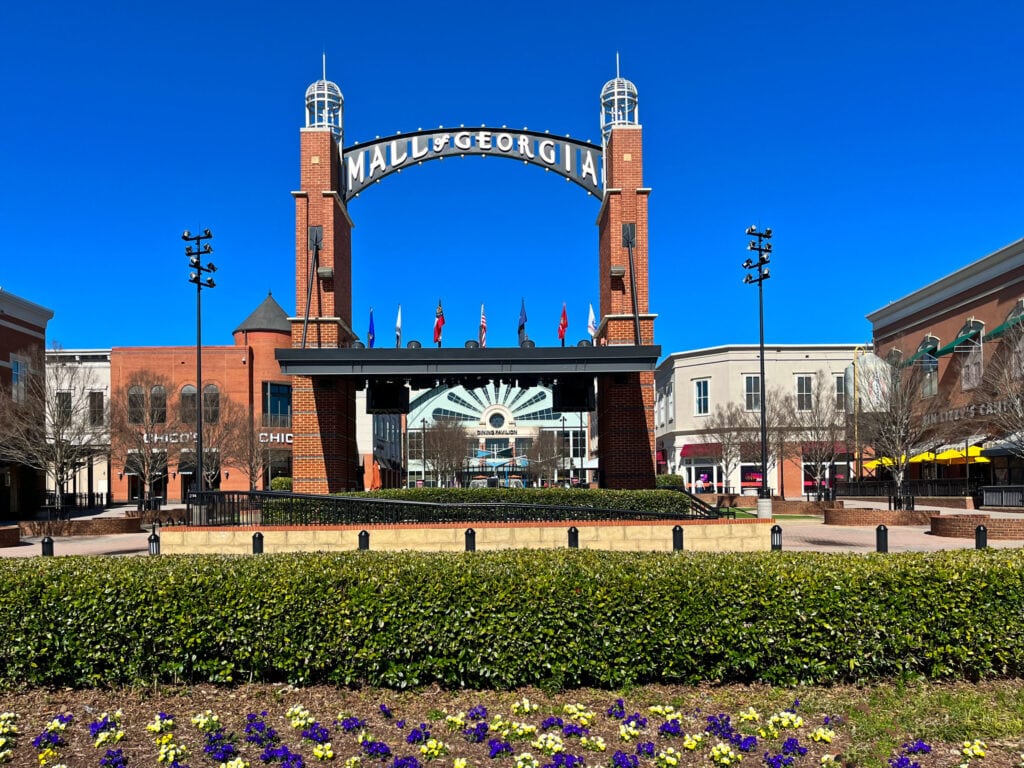
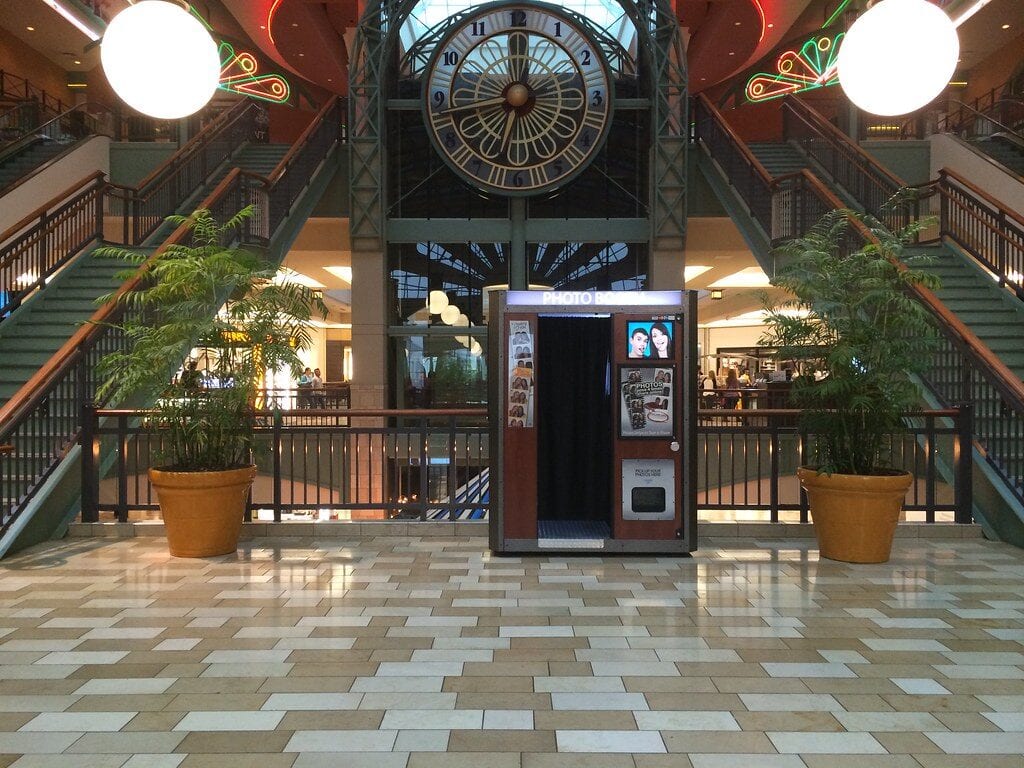
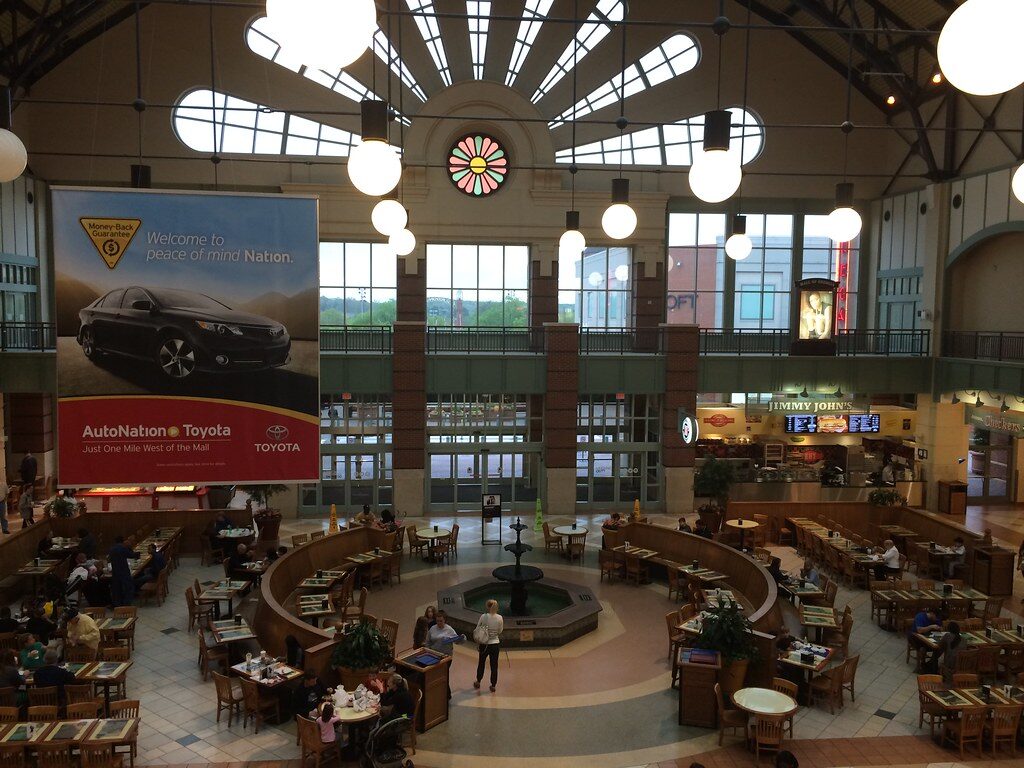
The food court looked like Atlanta's old Union Station. The outdoor village looked like a small Georgia town from the early 1900s.
Most regional malls do not open with a monument tied to local history and a network of nature trails. But in the late 1990s, Gwinnett County was one of the fastest-growing counties in the United States.
Four developers - Ben Carter Properties, Scott Hudgens Properties, Corporate Property Investors, and Simon DeBartolo Group - chose to build something larger and more ambitious than a typical shopping center near a highway interchange.
The total cost of the development was about $246 million. Another $38 million went to a neighboring community shopping center called Mall of Georgia Crossing.
The architectural firm TVS led the planning and design work.
In 1998, Gwinnett County created a special planning overlay for the project that covered landscaping, signage, and building design. That system later became a model for other development corridors in the county.
Mall of Georgia Opens to the Public
Three-day grand opening celebrations started on August 13, 1999, and Simon came in with the full spectacle: free concerts, prize giveaways, and fireworks across the weekend.
Friday morning brought a ribbon-cutting, then workers released 4,000 monarch butterflies into the nature park next to the building before the doors opened to shoppers at 10 am.
Not all the anchors were ready at once. Dillard's and JCPenney opened around the grand opening date, but Nordstrom was not finished in time and did not open its Mall of Georgia location until 2000.
Lord & Taylor was on the original anchor roster alongside them, and the tenant list also included Barnes & Noble, Galyan's, Haverty's, and Bed Bath & Beyond.
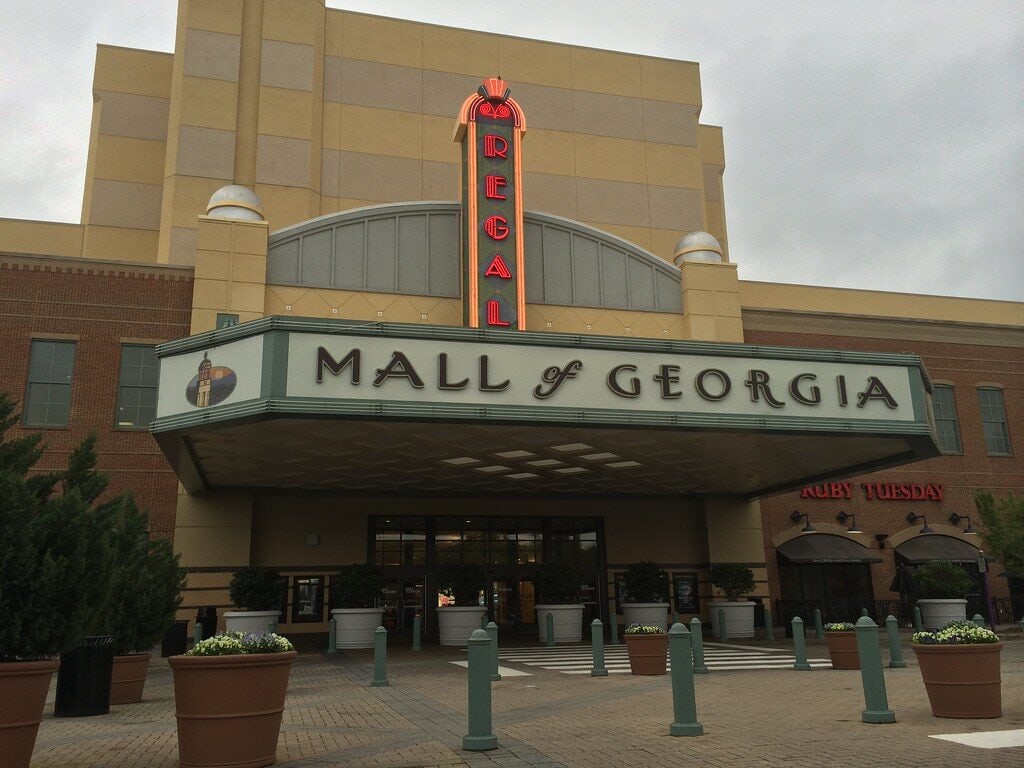
The entertainment side got plenty of attention too: a Regal cinema, an IMAX 3-D screen, and the 700-seat food court were all in from day one.
The building covered around 1.7 million square feet on a 500-acre site, and the Ben Carter-developed power center next door brought another stretch of retail to the district from the beginning.
What the developers built was never just a mall in the conventional sense.
It was a district, with a wetlands preserve alongside it and an outdoor village between the building and the water, designed as its own destination rather than a parking-lot afterthought.
Buses Pull In, and the Numbers Add Up
A year after opening, the mall had already logged about 11 million visits - and that count did not include the outdoor village.
The store count had grown from around 100 specialty tenants at opening to nearly 200 within twelve months.
Buses of shoppers were coming in from well beyond the Atlanta metro, and Rich's was set to open between Dillard's and JCPenney in November 2000, filling in the last planned anchor slot.
The effects on Gwinnett County were immediate and measurable. Tourism spending climbed from an estimated $1.2 billion in 1998 to $1.6 billion in 1999.
State sales-tax revenue returned to the county jumped from $51.2 million for the November 1998 through April 1999 period to $59.2 million for the same stretch ending in 2000.
The mall's main parcel was already paying $1.7 million in property taxes for the year, and commercial development was spreading outward along Buford Drive in every direction.
Sales per square foot were sitting just above the national mall average of $323, and occupancy was around 85 percent - slightly short of the industry's roughly 90 percent benchmark for malls open a year or more. The center was still filling in, but the trajectory was hard to argue with.
Department Store Doors Open and Close
Simon moved toward full ownership of the property in stages. In 2004, it purchased the remaining half of Mall of Georgia Crossing, which it did not already own, for about $26.3 million, including assumed debt.
Then, in November 2006, it bought out its partner's remaining 50 percent stake in the mall itself for $252.6 million, also including debt, and from that point owned both properties outright.
The department-store roster shuffled more than once along the way.
Rich's had been part of the anchor mix since late 2000, but by 2003, it was already running under a combined Rich's-Macy's banner as part of a company-wide consolidation in metro Atlanta.
In March 2005, Federated converted all its regional department-store names to Macy's across the board, and the Rich's at the Mall of Georgia became a Macy's in that same move.
Lord & Taylor was still on the tenant list in 2001, but a new Belk store - 100,000 square feet - opened at the mall on April 5, 2006, taking its place.
The adjacent Mall of Georgia Crossing also evolved during this period. It was already about 441,000 square feet, with Best Buy, Target, Nordstrom Rack, and Staples among its main draws.
When Nordstrom Left and Von Maur Moved In
Nordstrom had been part of the mall since 2000. Then, in October 2014, the company announced it was leaving.
The store stayed open through February 28, 2015, and about 174 non-seasonal employees were affected when it closed.
For a mall that had aimed from the beginning to be a more upscale destination, losing Nordstrom mattered.
Von Maur took the space next. On September 17, 2016, the Iowa-based chain opened a 165,000-square-foot store at Mall of Georgia, its third location in the state.
Von Maur sits in the middle of the market, selling upscale brands at prices that are not completely out of reach, and it fit the mall's existing mix reasonably well.
Once Von Maur opened, the mall's six major anchors settled into the form it still has today: Belk, Dillard's, JCPenney, Macy's, Dick's Sporting Goods, and Von Maur.
Having that many department-store anchors occupied and stable for nearly a decade is uncommon for an enclosed mall in 2026, and it shows how the property has been run since Simon took full control.
Twenty-Five Years and Still the Biggest in Georgia
The most significant physical overhaul since opening came in 2018, when Mall of Georgia completed renovations to the Dining Pavilion and The Village.
Inside, the Dining Pavilion - which seats around 750 people and was originally built with large vaulted ceilings meant to suggest a train station - got a new color scheme, bar-height seating, banquettes, communal tables, new tile floors, and updated LED lighting throughout.
The family and men's restrooms nearby were redone as well.
Out in The Village, the changes were meant to make the space feel more inviting. A fireplace was added. Large Adirondack chairs were set up around the grassy area.
The amphitheater got artificial grass, the fountain got lights that people can interact with, the sound system was updated, and a children's play area called "The Park" was added.
Six sit-down restaurants in the area added outdoor seating where visitors can walk around with a drink from any of the participating places.
In October 2024, Mall of Georgia celebrated its twenty-fifth anniversary with live music, vendors, family programming, and a ribbon-cutting.
Occupancy stands at 98.2 percent today, with leasable space at roughly 1.85 million square feet.
The tenant list runs about 200 stores and includes The Cheesecake Factory, P.F. Chang's, Seasons 52, Regal Cinema 20 and IMAX, a carousel, and Billy Beez.
More than two decades on, it is still the largest mall in Georgia.