
Valdosta Mall becomes the region's indoor crossroads
By the early 1980s, Valdosta's center of gravity had begun to slide toward the interstate, away from the brick facades of downtown toward the new language of American retail: asphalt, exit numbers, and air-conditioned promise.
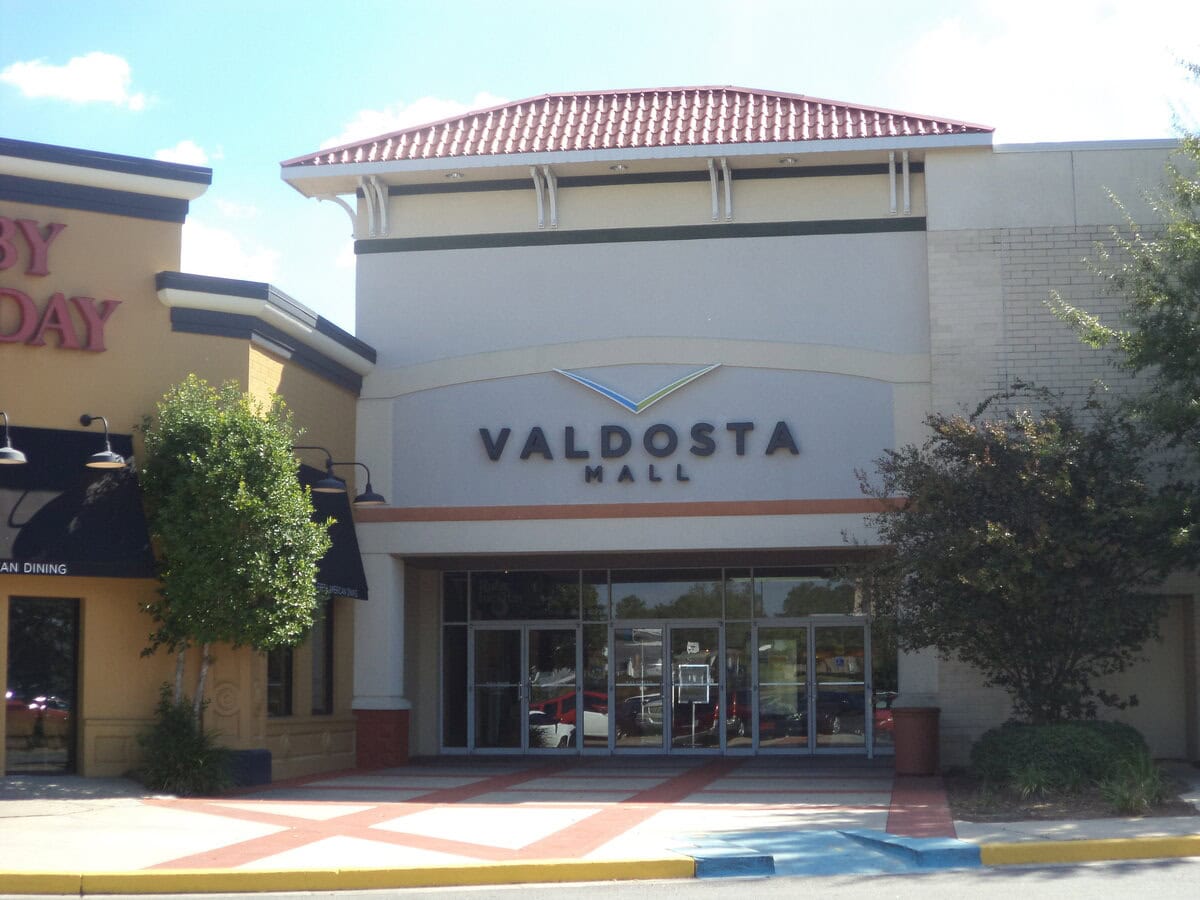
On February 16, 1983, at 1700 Norman Drive, the city acquired its own enclosed declaration of modernity.
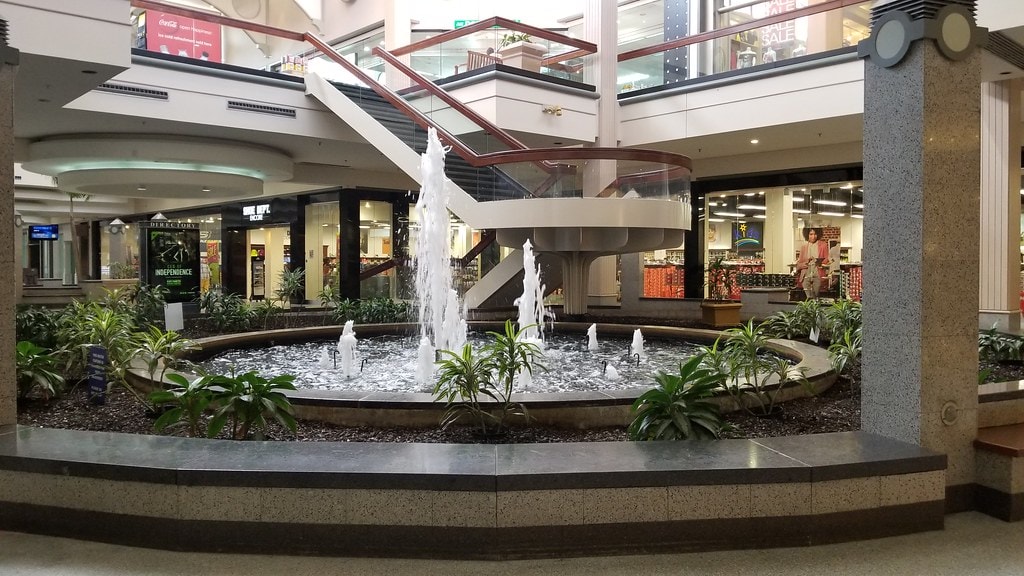
Valdosta Mall stretched to 560,000 square feet and opened with Sears and Belk-Hudson as its departmental anchors, plus some seventy specialty stores arranged along one long, carpeted promenade.
It sat on dozens of acres with thousands of parking spaces, a weatherproof village just off I-75.
It sounded easy enough: put up a mall near Valdosta State University, Moody Air Force Base, and South Georgia Medical Center, and bank on the highway to import visitors there.
Within a five-mile radius lived some 65,000 people; within ten miles, around 100,000.
The mall was conceived as their retail commons, but also as the hub for nine counties in south Georgia and north Florida, a place where an entire region could trade its dollars for brands, air conditioning, and weekends indoors.
Publix picket line and Valdosta's parade ordinance
In the early 1990s, Valdosta Mall got pulled into an argument that had nothing to do with what was on sale. On December 3, 1992, grocery workers from UFCW Local 442 picketed outside the Publix at the mall.
They were doing what picketers do: standing where customers would notice them, trying to apply a little pressure.
It did not take long for the police to step in and draw a line. The mall, they said, was private property. However public it felt, the workers were trespassing if they stayed.
So the picketers shifted to public areas near the entrances. That move only triggered another problem.
Officers pointed to a city ordinance that required permits for demonstrations and put strict limits on when public "parading" could happen.
The point came through: continue, and an arrest was on the table. The picket line promptly broke up.
The dispute did not end there. It went to federal court, and in 1994, a judge struck down those time restrictions as unconstitutional.
The mall went back to being a mall, but the episode stuck: people used it like a shared public place, and the law kept reminding them it was something else.
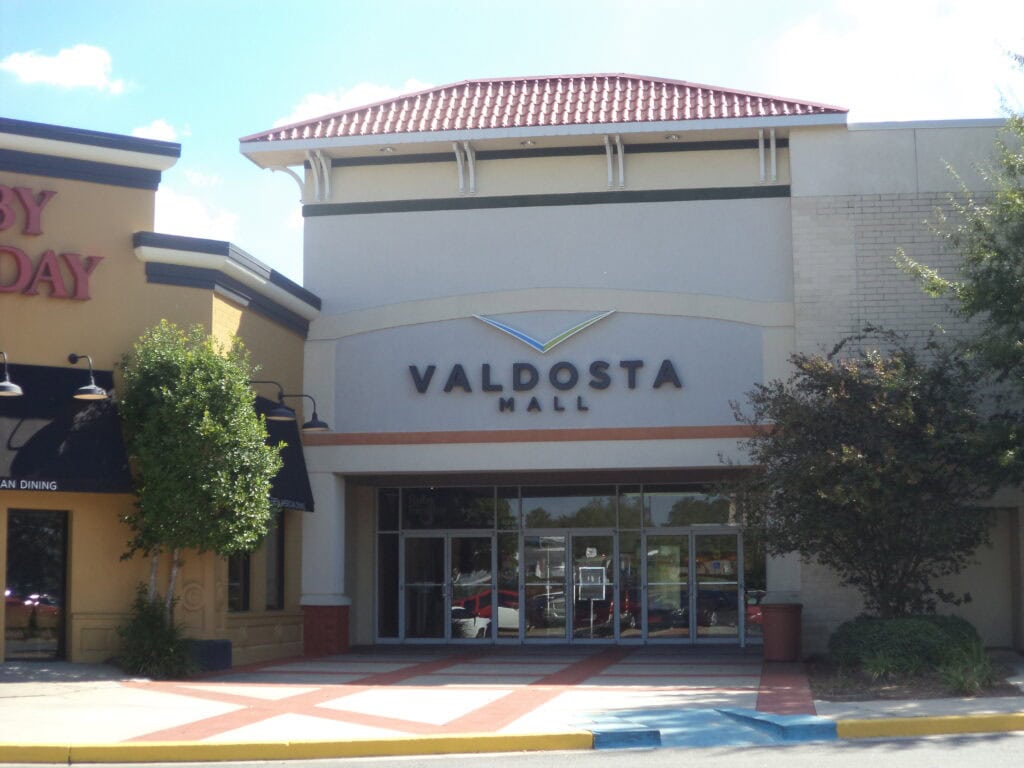
Colonial ambitions and a super-regional glow
Even while the lawyers argued, the mall kept growing.
In 1985, just two years after opening, it added a new section with JCPenney as the main store, as part of a six-and-a-half-million-dollar upgrade that showed its big plans.
The additional corridor pulled shoppers deeper into the building and confirmed the mall's status as the area's primary enclosed destination.
During the 1990s and early 2000s, the mall was called Colonial Mall Valdosta, was part of a larger group of properties owned by Colonial Properties Trust, and attracted shoppers from fifteen nearby counties, where people spent over a billion dollars on shopping.
The real leap came in the mid-2000s.
Ground broke in 2005 on an expansion that local boosters said would push the complex into the ranks of super-regional malls, with nearly 600,000 square feet of retail space and up to twenty new stores and restaurants.
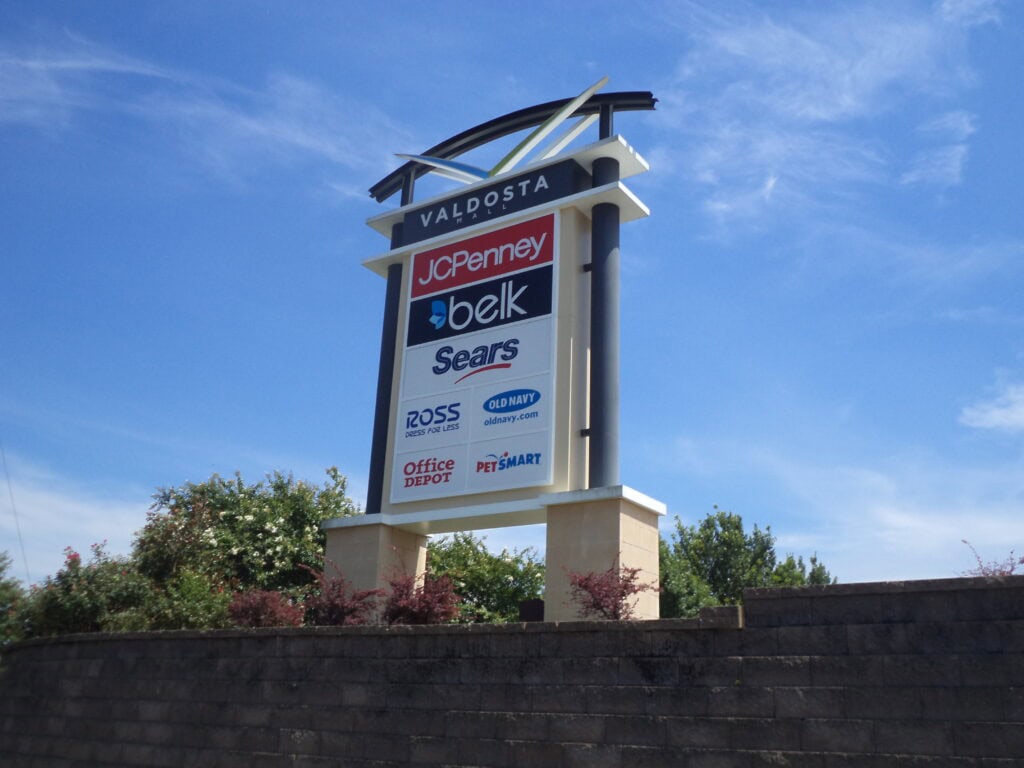
In 2006, a lifestyle-style outdoor concourse was stitched onto the front of the enclosed center, bringing in junior anchors Old Navy, PetSmart, Office Depot, Ross Dress for Less, and other national brands like Talbots and The Children's Place.
The original mall was closed off from the outside, but the new section opened up part of the front, following the trend of open-air shopping streets while still keeping the air conditioning.
Ownership mazes, managers, and mall identity
Malls can be as complex as corporations when it comes to paperwork.
In 2005, Colonial Properties Trust sold the Valdosta property to Gregory Greenfield and Associates. This sale brought in more acronyms and limited liability companies.
GF Valdosta Mall LLC emerged as the ownership vehicle, tied to Chicago-based GEM Realty Capital.
Various management contracts cycled through Jones Lang LaSalle and CBL & Associates, entities that specialized in coaxing life out of aging retail boxes.
On the ground, most of this was invisible to shoppers drifting between Victoria's Secret and Bath & Body Works.
What shoppers did notice was the mall's effort to feel more connected to the community.
A public art project called "Words Matter" transformed a long wall into a huge canvas, where visitors wrote hundreds of thousands of messages over the years.
The mall also held seasonal events and embraced its place as a major enclosed shopping center in the region, serving as a gathering spot for people from south Georgia and north Florida who wanted a place to walk indoors during the hot summer.
Closures, Crunch Fitness, and shifting retail
The 2010s brought a slow, steady change in which stores were in the mall. In 2015, Office Depot in the outdoor area was replaced by Bed Bath & Beyond, which at first seemed like a similar swap between big stores.
Two years later, the news was harder to make sound positive.
On November 2, 2017, Sears was put on a national list of stores closing; by Fabruary 2018, the original main store that had helped start the mall was empty, and its huge space became a problem.
The empty space did not stay that way.
Crunch Fitness eventually moved into a large section of the former Sears, transforming about thirty-three thousand square feet into a gym filled with treadmills, weight racks, and early-morning workouts.
FYE, the music and media store that used to sell CDs to teenagers hanging out before movies, closed after one last sale with big discounts and shut its doors on January 22, 2019.
Bed Bath & Beyond, which had replaced Office Depot and sold home goods and gift registry items, closed in 2023 before the company went bankrupt.
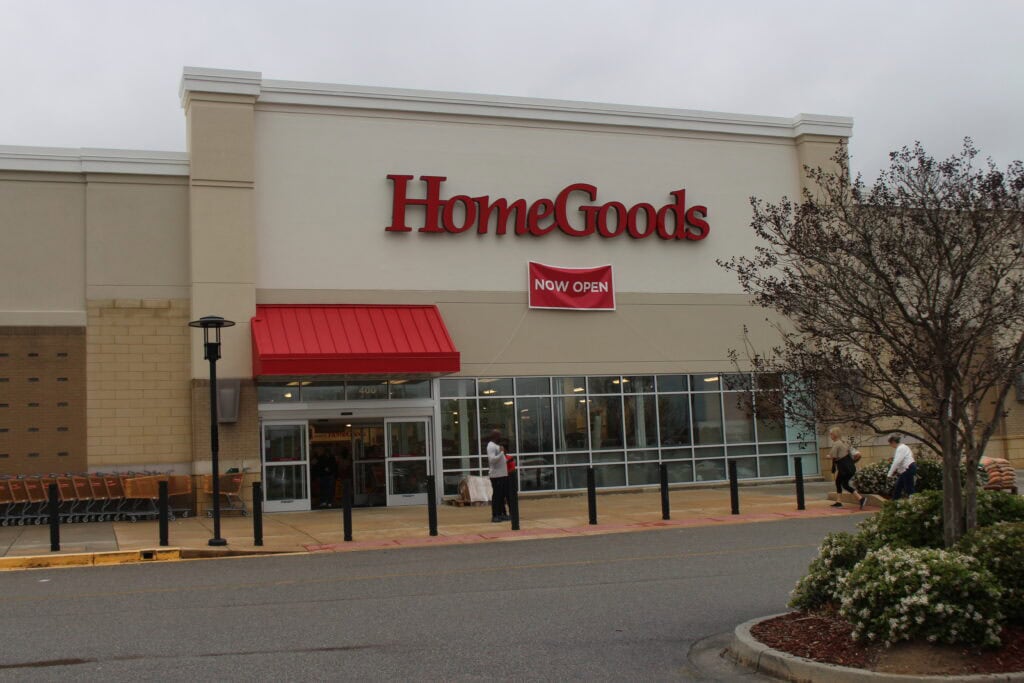
Belk and JCPenney stayed as the main department stores; Ross, Old Navy, PetSmart, Ulta Beauty, HomeGoods, Five Below, and later Crunch made up a new mix of stores, offering discount clothes, pet supplies, beauty products, home decor, and affordable places to work out.

False alarm and real gunfire
During the 2020s, events outside malls were just as important as those inside.
In August 2025, reports of a shooter at Valdosta Mall caused shoppers to flee and drew a large police response. Social media quickly spread dramatic stories about chaos in the mall.
However, after a thorough search, police found no shooter, no injuries, and no evidence of gunfire. This was one of several incidents in American malls where fear and rumors led to most of the panic.
That same year, the restaurant Fin & Feathers, operating on mall property, became the backdrop for less ambiguous scenes.
In late November, an argument in the parking lot produced a gunshot fired into the air.
In early December, back-to-back nights in the same weekend brought two separate shootings outside the restaurant, each sending a man to the hospital, one with a leg wound, another in critical but stable condition after being struck in the torso.
The restaurant responded with a public statement disavowing the violence, a stricter dress code with zero exceptions, and new midnight closing times on Fridays and Saturdays.
It was an attempt to redraw the line between festive and unsafe in a landscape of concrete, parking-lot lights, and idling cars under the mall's sign.

Only mall for miles, and what comes next
Yet the numbers tell a stubborn story of survival. A 2008 leasing brochure boasted seventy-two stores, more than 2,800 parking spaces, and a trade area of nearly a quarter-million people.
Today, about sixty tenants still operate across roughly half a million square feet.
Recent years have brought a 7 percent bump in foot traffic, a twenty-thousand-square-foot national retailer in the former Bed Bath & Beyond, and Five Below in the space once held by The Children's Place, with another ten-thousand-square-foot tenant already lined up.
Valdosta Mall sits amid a thicket of national chains - Walmart, Target, Lowe's, Home Depot, Sam's Club, Starbucks, McDonald's - but remains the only enclosed mall for many miles.
It draws university students, military families, and tourists bound for Wild Adventures, all of them surrendering to the old ritual of walking laps past Subway, Buffalo Wild Wings, El Toreo Mexican Restaurant, American Deli, Pei Wei Asian Express, and a carousel of jewelry and fashion chains.
Management, now under Spinoso Real Estate Group with investment partners including GEM Realty Capital and Hackney Real Estate Partners, talks about the property as a "vibrant mixed-use lifestyle center."
A MINISO location, introduced with a cash-only soft opening and a ribbon cutting on the calendar, offers one more aisle of inexpensive goods.
For now, Valdosta Mall endures as a kind of regional barometer. Its future, like its parking lot on a Saturday afternoon, may not be full, but it is far from empty.
need to add a store like Dillard's, and Burlington.
The trick is making sure the rest of the tenant mix supports it.