Mall of the Bluffs and the empty interchange
In May 1972, the Madison Avenue interchange off I-80 looked like somewhere you drove past on the way to someplace else.
The land around it was almost all open and undeveloped, with one filling station sitting out by itself. It was years before Bucky's took over that corner.
The idea for a mall was already old by then. In the late 1960s, the Gendler brothers controlled about 65 acres at the site and pushed plans for a future "Madison Mall".
Although plans were publicly outlined and a construction start was projected, the development didn't proceed on schedule and was repeatedly delayed.
Council Bluffs had a retail problem sitting behind the planning. In the mid-1960s, about seventy-five percent of retail purchases made by residents of southwest Iowa were being made in Omaha, across the Missouri River.
People tended to avoid crossing bridges for everyday shopping, but they crossed anyway because the selection on the Iowa side did not hold them.
Building a big mall near the highway exit seemed like an obvious way to bring shoppers back. But it also created issues, since money was already being spent to improve downtown.
The land by the exit stayed empty as the city kept debating where shopping should be located.
Downtown renewal and a mall that waited
The downtown bet came first. Federal and local urban renewal money went into Midlands Mall, an enclosed project intended to anchor the central business district.
The project carried a $40 million price tag.
When it opened in 1976, it landed as part of the larger downtown renewal effort, with the city's main shopping activity expected to stay in the core.
This made the idea of a suburban mall controversial. Plans for another mall near the Interstate 80 interchange were not seen as a minor addition to the existing shopping options.
The suburban plan aimed at the same shoppers from the area and tried to get the same stores. One local leader warned that if the suburban project was built too soon, the millions spent downtown would be "wasted money".
From the late 1970s into the early 1980s, the idea for the suburban mall stayed stuck in that argument, while downtown was still the main focus.
The site by the interstate had an exit and a development plan, but the city stayed focused on the mall it had already funded, built, and opened.
General Growth buys in and starts digging
In 1984, the Gendler brothers sold the Madison Avenue site to a partnership made up of General Growth Properties and General Growth Management.
The change mattered because the project stopped being a local long-range idea and became a mall development with the money and leasing operation to carry it through.
General Growth Properties had started in Iowa. The company was founded in 1954 in Cedar Rapids by the Bucksbaum brothers - Martin and Matthew - and its early work included the Town & Country Shopping Center.
By the time it moved into Council Bluffs, it was growing into one of the country's largest shopping center management firms.
The city still had a downtown mall to protect. Midlands Mall was already operating, and another enclosed mall by the interstate read as a head-to-head competitor.
Dick Ward, a regional vice-president for General Growth at the time, took the position that the new project was not meant to damage Midlands.
He also pushed the idea that Council Bluffs could support both a downtown mall and a suburban facility as a regional shopping center.
The project took a new name, Mall of the Bluffs. Construction started in 1985, roughly fifteen years after the Madison Avenue mall idea first surfaced.
October 1986: balloons, ribbon, and noise
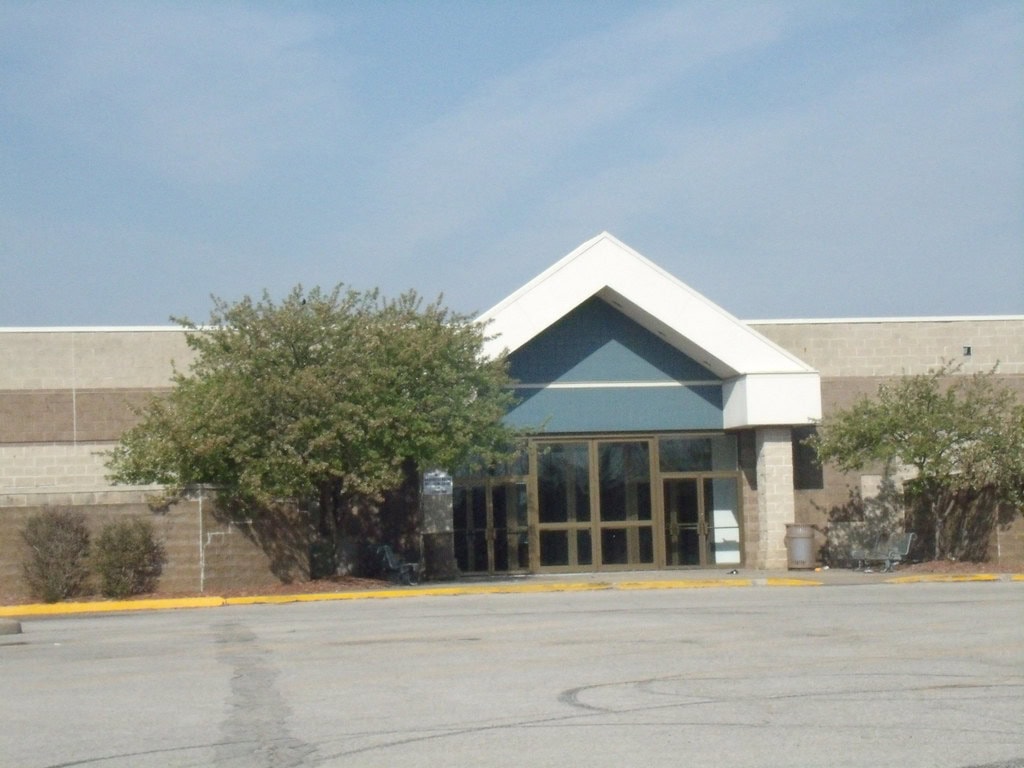
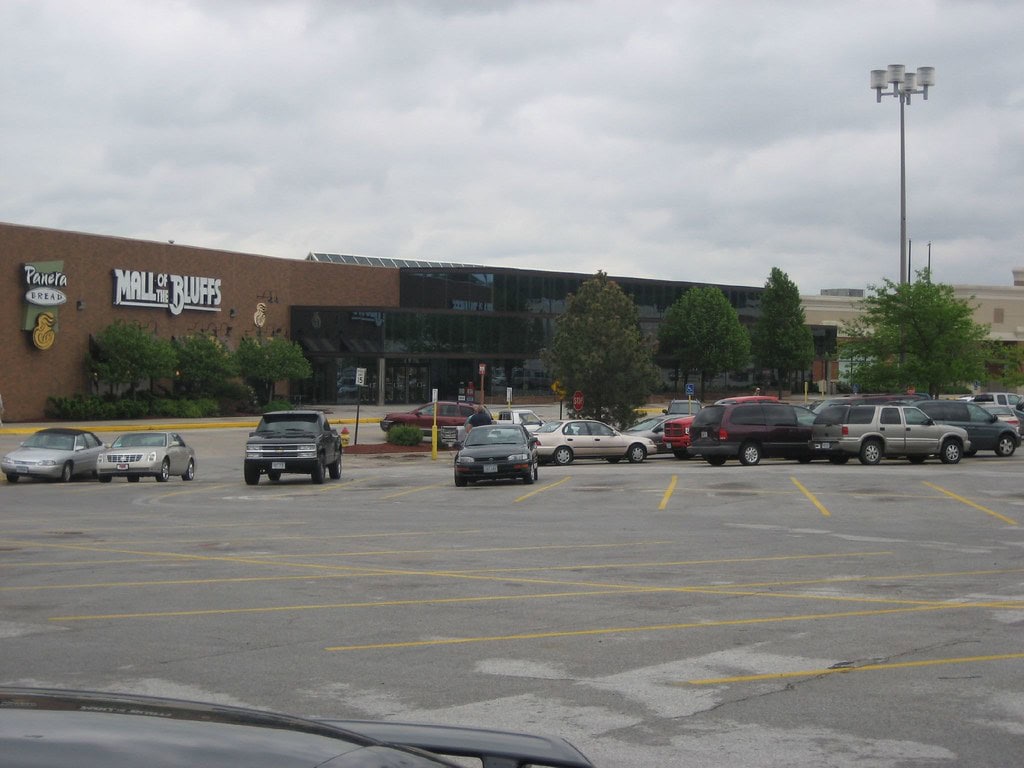
The Mall of the Bluffs opened on October 8, 1986, at 1751 Madison Avenue. The shopping center covered about 450,000 square feet.
The project aimed to keep more southwest Iowa shopping on its side of the Missouri River instead of sending it into Omaha.
The opening day ran like a community event, and the ceremony was built around spectacle. Balloon artist Treb Heining handled the effects, including the release of thousands of balloons as crowds gathered outside.
Governor Terry Branstad attended the ribbon cutting and called the center a "springboard for opportunities and development".
The first 100 people through the doors received pairs of scissors and joined the ribbon-cutting. The US Armed Forces Color Guard took part, and the Iowa Lottery brought its jackpot wheel to the site.
The mall opened with 75 stores and plans for 20 more in the following months. J.C. Penney and Target served as the original anchors. The site included a 3,000-space parking lot and a five-screen movie theater.
Food court regulars and the first expansions
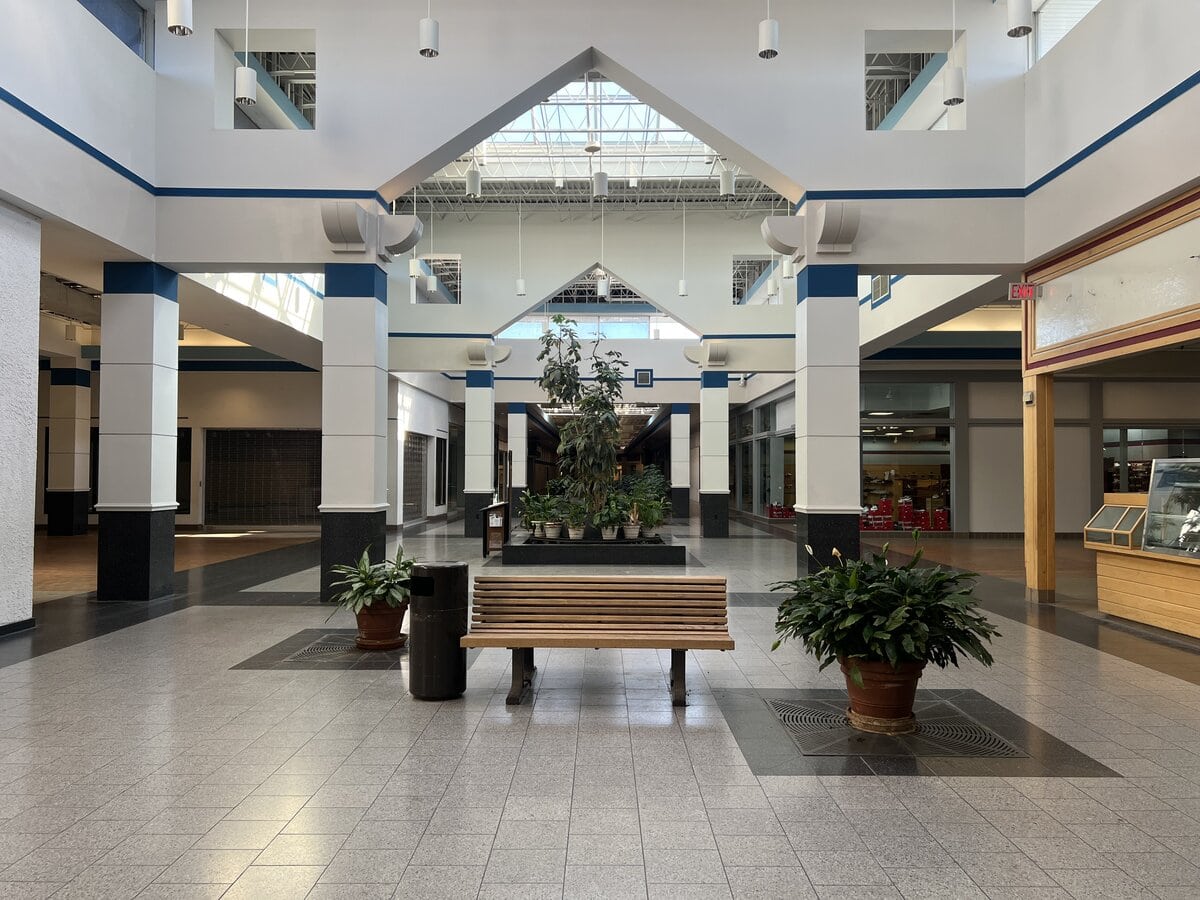
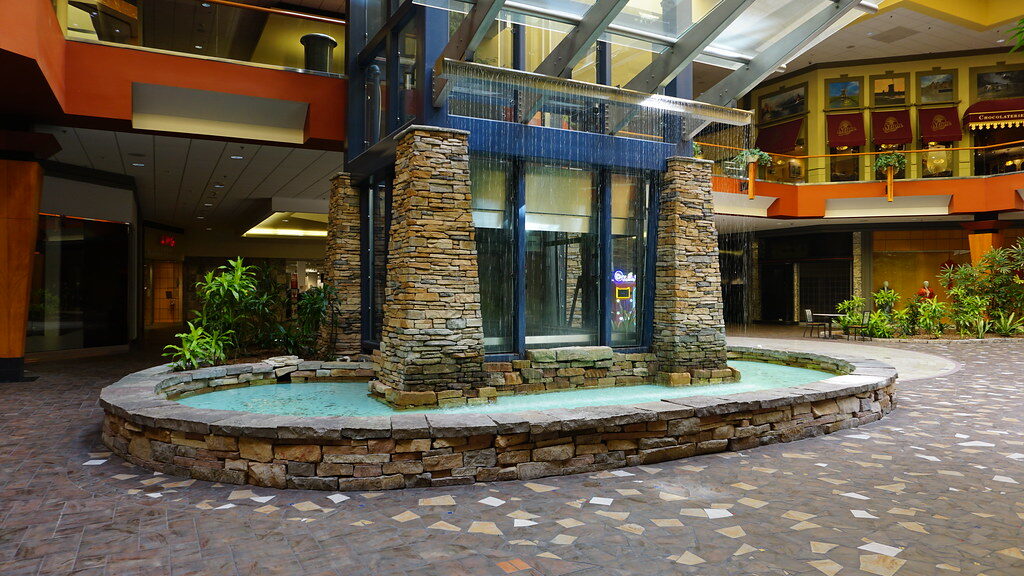
The Mall of the Bluffs sold itself as more than errands. Its center court was built for lingering, and the 350-seat food court was the place that made the pitch believable.
Early tenants included Sbarro, Dairy Sweet, Nut Hut, Runza, Little King, Mediterranean Sweets Frozen Yogurt, The Corn Dog, Hot Dogs and More, and El Patio Cafe.
Elsewhere in the corridors, other snack and meal stops filled in the gaps, including Munchville, Mom's Cinnamon Rolls, Original Cookie Company, and Nick's Steak House.
The concentration of food kept people inside longer than they meant to, which was the point.
Expansion came quickly. In 1988, Dillard's joined as a third anchor, aimed at capturing a more upscale department store customer who had been driving into Omaha.
The same year showed what that meant for downtown. Midlands Mall was sold to Dhallwal Enterprises and renamed Centre Point Mall in 1988.
The rebrand did not stop tenant losses to the newer suburban site. Centre Point closed in 1992.
A later attempt to convert the building into a community college campus failed, and the property was eventually repurposed as the Omni Centre Business Park.
In 1998, Sears arrived as the fourth anchor, completing the corners with JCPenney, Target, and Dillard's.
Power centers rise, and anchors start leaving
By the 2000s, shopping areas around the Mall of the Bluffs started to change to open-air shopping centers.
These new places cost less to maintain, let people park right in front of stores, and had bigger, newer store spaces.
In Council Bluffs, Metro Crossing and Lake Manawa Power Centre brought this kind of shopping to the area.
By 2006, retail market summaries flagged the Mall of the Bluffs as being under substantial threat. The enclosed building did not fit the newer prototypes, and the site limited what could be changed.
The property was landlocked, with the interstate right-of-way on one side and difficult topography on the other.
Expansion or major rebuilding for larger modern versions of key anchors was not practical.
Anchor departures followed. JCPenney relocated to The Marketplace at 24th Street in 2008. Target moved to Metro Crossing in March 2009, leaving an anchor corner vacant and weakening the mall's day-to-day draw.
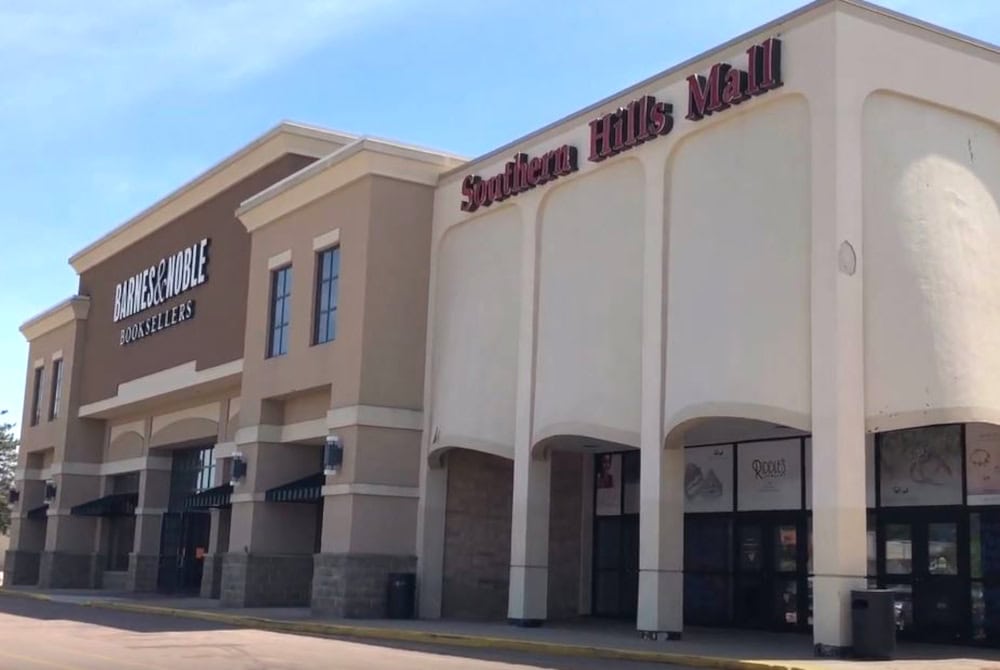
Barnes & Noble closed in 2011 after serving as a major tenant on an internal corridor. Sears announced its closure on February 24, 2012.
Dillard's remained as the last operating anchor and had shifted into a Clearance Center or outlet store.
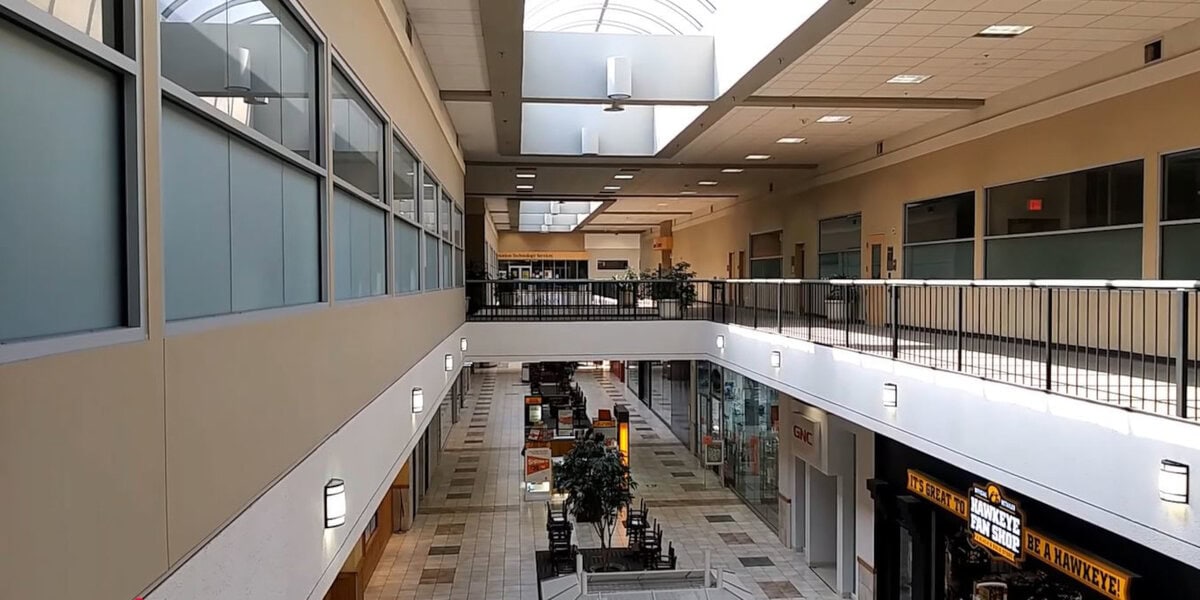
As the big stores closed, rules in smaller store leases let those tenants pay less rent or move out, and more and more stores left during the 2010s.
Namdar's thin years and odd new uses
In March 2013, General Growth sold the Mall of the Bluffs to Namdar Realty Group for $8.5 million.
Namdar operated out of Great Neck, New York, and focused on acquiring distressed retail properties. At the time of the sale, the mall was nearly 25 percent vacant.
The enclosed layout had been built for heavy foot traffic, and by then that traffic was no longer there.
The tenant list shifted toward uses that could function with less walk-in retail demand.
Planet Fitness moved into the former Barnes & Noble space, replacing a corridor draw with a membership tenant. In 2015, the mall went to auction.
The auction listing put occupancy at 35.2 percent as of May 1, 2015. The Dillard's building and certain outlying lots were excluded because Dillard's owned its structure.
Another large space changed hands in 2018. The former JCPenney building became an overstock store called "It's $5," built around a pricing model that dropped prices each day of the week.
Schools move in, then the closure hits
As inline retail thinned, the largest buildings on the site stayed in use. In 2018, the Council Bluffs Community School District bought the former Target building.
The space measured about 90,000 square feet and became a temporary location for Gerald W. Kirn Middle School and Woodrow Wilson Middle School while their home buildings underwent renovations.
The site was ready for the school year in August 2019. The former Sears building also shifted to a temporary public role as a post office.
By 2021, the district was weighing the former Target space as a permanent administrative office.
The enclosed mall itself closed in late 2019. Menards bought the property that year with plans to demolish the mall and replace it with a new oversized store.
Eviction notices went out to the remaining tenants in November 2019.
The Mall of the Bluffs closed to the public on December 30, 2019. Demolition started in 2020.
By mid-2021, most of the mall had been removed, leaving the school district's portion and the post office building as the main remnants.
Menards Drive rebuild and 2026 directory
In 2021 Madison Campus building (former Target) was sold to Certified Transmission for $3 millon.
In April 2022, the Zoning Board of Adjustment approved a conditional use permit for Certified Transmission on Lot 2. The permit covered a 17,000-square-foot light manufacturing facility for torque converter rebuilding.
The area looked run-down for more than ten years before work to improve it started. Bennett Avenue now leads straight into the new stores.
Menards opened on the old mall site in 2023, on what people now call "Menards Drive." The plan for the area says all buildings must have brick or textured block on the outside.
The $1.5 billion Council Bluffs Interstate System Improvement Program was substantially complete near the highway crossing in November 2025.
In 2026, the site's businesses include Menards, Planet Fitness, United States Postal Service, and MADOPTICAL.