
On March 2, 1976, Fairlane Town Center opened with about 50 stores inside a building measuring 1.28 million square feet.
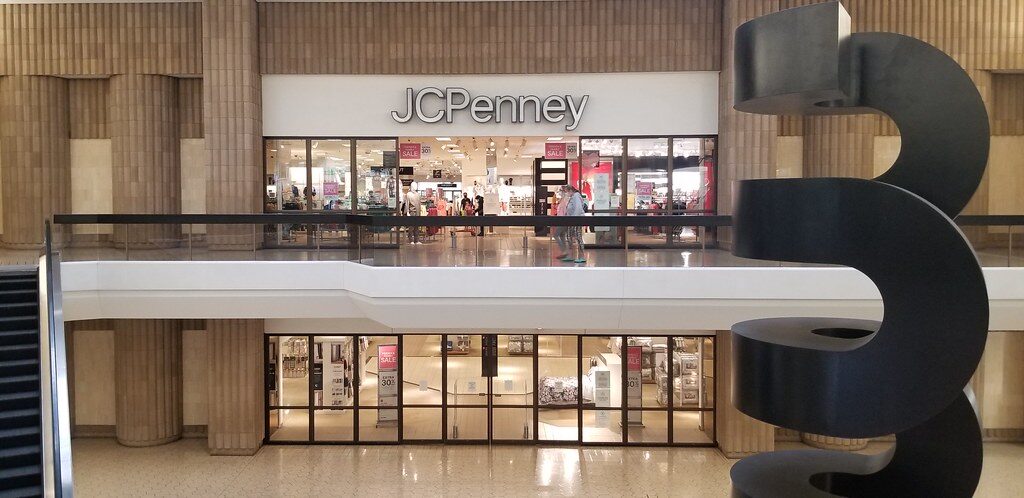
Sears held 244,000 square feet at one end. JCPenney occupied 200,000 at the other. Hudson's, the third anchor, was still months away and would not open until July, when it brought another 240,000 square feet.
The ice arena followed on March 3, one day after the grand opening. A five-screen movie theater opened on March 31.
Dearborn had never had a mall before Fairlane Town Center. With stores, an ice rink, and a movie theater all in one enclosed building, it became both a shopping center and a popular public hangout.
When Hudson's opened in July 1976, the mall was already bringing in shoppers from all over southeastern Michigan.
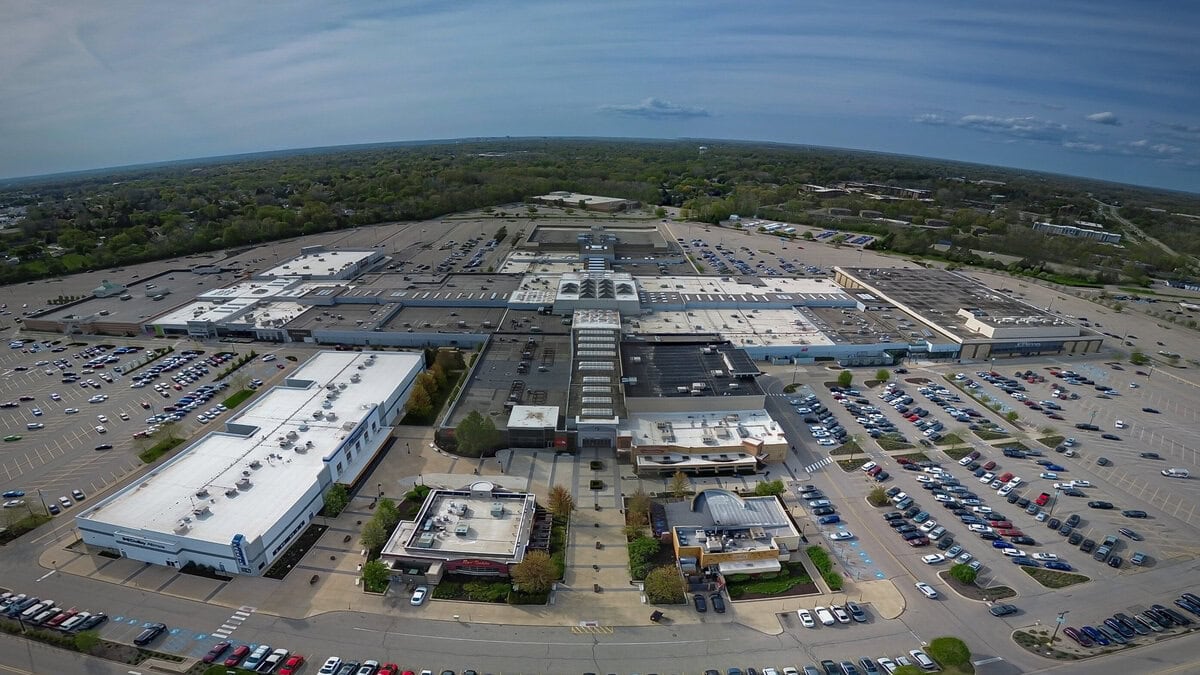
Its address at 18900 Michigan Avenue put it directly beside Ford Motor Company's world headquarters, which was not accidental.
Ford had been shaping the land around its campus for years before the first store opened.
When it was finished, Fairlane had about 185 stores and services, making it the main place to shop in Dearborn and one of the biggest malls in the Detroit area.
The Vision Behind Fairlane Town Center
Ford Land began in 1970 to develop 2,360 acres around Ford's world headquarters in Dearborn. Six years later, Fairlane Town Center became the main commercial part of that plan.
It was built as the central retail piece of a larger planned district around Ford's headquarters, one that also included offices, hotels, other commercial space, and recreation.
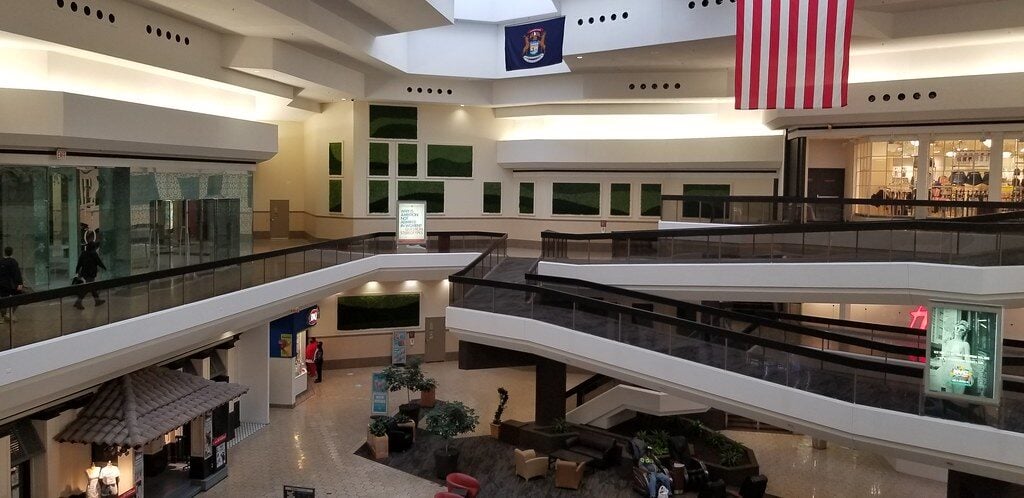
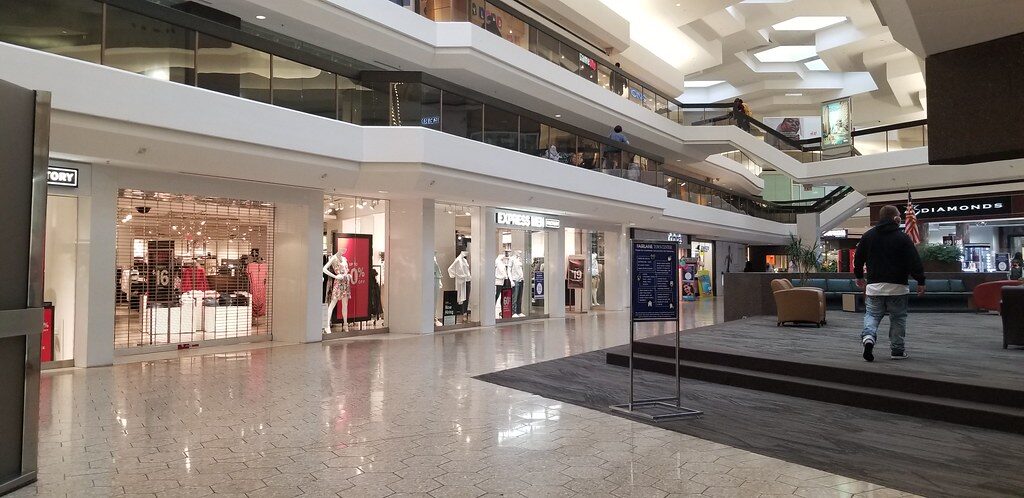
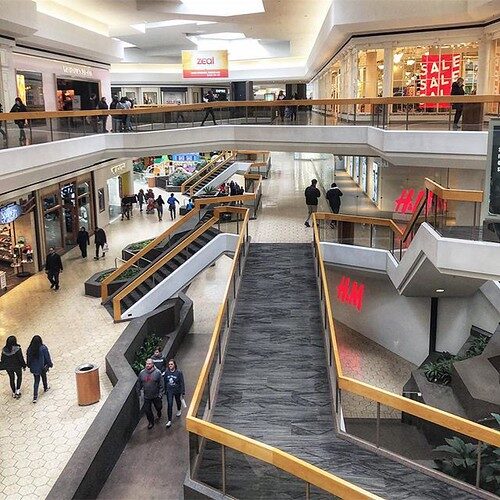
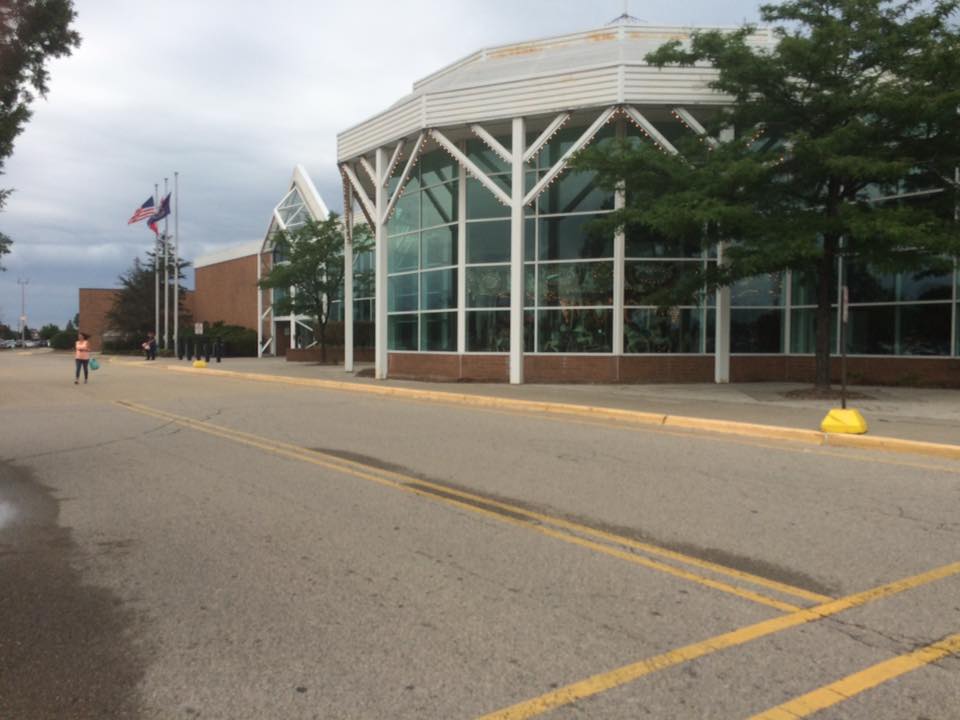
Most of the mall had two shopping levels. In the middle, the main courts rose to a partial third floor, opening views across balconies and up to geometric skylights overhead.
Stairs, ramps, escalators, and bridges linked the different levels. These central courts were designed to work like indoor public squares, not just hallways leading from one store to another.
Permanent sculptures by Richard Lippold, David Barr, Arman, and Chris Byers were part of the original interior from the beginning.
In suburban Michigan in 1976, no other shopping center offered anything quite like a permanent public art collection inside the mall.
The Monorail Between the Mall and the Hyatt
A federal transportation study from 1975 laid out the shuttle's design before it opened. It was a 2,600-foot automated guideway with two stations and small driverless vehicles.
Each vehicle carried 10 seated passengers and 14 standing passengers. The vehicles were designed to make up to 18 round-trip per hour, and rides were free.
Ridership estimates reached as high as 3 million passengers a year.
The study treated the shuttle as the first part of a larger Fairlane New Town transit system that would eventually link several places across the district.
When Fairlane Town Center opened in March 1976, the shuttle began carrying passengers between the mall and the Hyatt Regency Dearborn.
The hotel was part of the same Ford Land development. The plan was straightforward: a guest arriving at the Hyatt would take the shuttle instead of driving.
By the late 1980s, the shuttle had stopped operating, and it was demolished around 1989 or 1990.
The parking lot that the system had been meant to make less necessary stayed in place. The larger transit network never expanded beyond that first piece.
What remained was a large mall next to a large hotel, with a surface parking lot between them.
From Three Anchors to Five by 1980
Saks Fifth Avenue opened at Fairlane Town Center on February 22, 1980. The store covered 90,000 square feet. Lord & Taylor had opened two years earlier, in March 1978, with 122,000 square feet.
With those two stores added, Fairlane grew from its original three anchors - Sears, JCPenney, and Hudson's - to five, and its total leasable space reached about 1.49 million square feet.
In 1980, Saks operated in only a limited number of markets, mostly in major city flagship locations and wealthy suburbs.
Bringing Saks to Fairlane moved the mall further into the upper end of the Detroit area's retail market.
By the early 1980s, about 150 shopping options lined the mall's corridors, stretching from Sears tools and hardware at one end to Saks Fifth Avenue at the other.
No other mall in southeastern Michigan offered that kind of range in one enclosed building.
Shoppers who came for Sears and shoppers who came for Saks moved through the same central courts. That combination helped keep customer traffic moving through the entire mall.
On weekends, the parking lots were filled with cars from Dearborn, Detroit, the western suburbs, and other communities.
How Fairlane's Anchor Stores Changed and Closed
Hudson's had opened in July 1976 as the mall's third anchor. By 2001, the former Hudson's had been renamed Marshall Field's.
In 2006, it became Macy's. It was the same roughly 240,000-square-foot store, just under three different nameplates across 30 years.
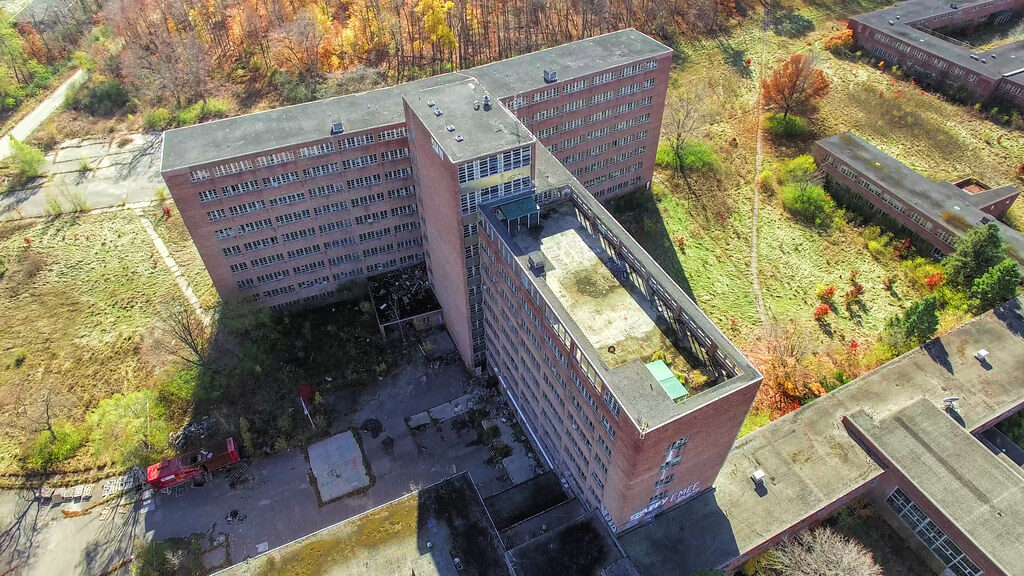
Lord & Taylor closed around 2006. Saks Fifth Avenue moved from full-line luxury to its off-price Saks Off 5th format before eventually closing that operation too.
Sears, the original anchor from opening day with 244,000 square feet, shut in September 2018, forty-two years after the opening.
The ice arena, meanwhile, was converted in 1982 into five additional movie auditoriums, bringing the in-mall United Artists complex to 10 screens.
That theater closed June 5, 1997. A newer Star Fairlane theater opened outside the original structure on May 18, 2000, later becoming AMC Fairlane 21. AMC closed it permanently on November 13, 2022.
The former Saks space was redeveloped into a restaurant section with Bravo and P.F. Chang's, with both openings reported in late 2008.
In 2017, Macy's Backstage opened on most of the Macy's third floor - promoted as the first Michigan location of that off-price format, using existing space that would otherwise have sat empty.
Taubman, Starwood, Centennial, Kohan: Four Owners
Taubman's sale of seven malls closed on October 17, 2014. Fairlane Town Center was part of that $1.4 billion package, which Taubman had announced in June, and the sale transferred the mall to Starwood Capital Group.
The deal ended nearly 40 years of Taubman management.
Three years later, in 2017, Ford moved about 1,800 engineering and purchasing employees into 240,000 square feet of the former Lord & Taylor store and nearby retail space.
The project turned a vacant anchor store into a corporate office. Ford built the redesign around wellness, collaboration, and sustainability. The space became Ford Town Center Offices.
Fairlane entered receivership in 2020 after Starwood had defaulted on the portfolio loan. Dallas-based Centennial bought Fairlane out of receivership in May 2022.
City data showed the mall was 83 percent occupied in February 2022. Centennial openly discussed turning parts of the oversized parking lot into housing or medical space with Dearborn.
That discussion did not lead to a deal. In April 2023, Centennial sold Fairlane Town Center to Kohan Retail Investment Group for about $53 million.
Unpaid Taxes, a Lender Lawsuit, and Receivership
Peachtree-affiliated lenders sued Fairlane's ownership company in late 2024, saying it had not repaid the $28 million loan tied to Kohan's April 2023 purchase of the mall.
A Wayne County judge turned down a request to quickly put someone in charge of the property on January 8 but allowed the lender to try again after February 17.
In May 2024, DTE Energy put up a notice that power and gas could be shut off because the bills had not been paid, and county records showed over $2 million in overdue property taxes on four parts of the property.
If the power had been cut, the fire marshal would have had to get involved. The electric and gas bill was eventually paid.
By early 2026, the unpaid property taxes had reached nearly $4 million, and about $27.6 million was still owed on the loan.
A judge ordered a second takeover of the property because more than $1.4 million in 2023 property taxes had not been paid.
In June 2025, the city added Fairlane to its main plan for land use as one of five important areas to develop, with goals for fewer paved areas, more green space, and new homes.
Notable Milestones
March 2, 1976 - Fairlane Town Center opened at 18900 Michigan Avenue as Dearborn's first shopping mall.
March 3, 1976 - The mall's central ice arena opened.
March 31, 1976 - A five-screen cinema opened at the mall.
July 1976 - Hudson's opened with 240,000 square feet, completing the mall's original three-anchor lineup with Sears and JCPenney.
March 1978 - Lord & Taylor opened, giving Fairlane a fourth anchor store.
February 22, 1980 - Saks Fifth Avenue opened, bringing the mall to five anchor stores.
1982 - The original ice arena was converted into additional theater space, expanding the cinema complex.
Late 1980s - The automated people mover linking the mall and the Hyatt Regency Dearborn stopped operating.
1997 - The original in-mall theater closed.
May 18, 2000 - A new Star Fairlane theater opened.
2001 - The Hudson's store became Marshall Field's.
2005-2006 - Lord & Taylor closed.
2006 - Marshall Field's became Macy's.
Late 2008 - The former Saks area was redeveloped for restaurants, including Bravo and P.F. Chang's.
2014 - Fairlane left Taubman's ownership and was sold as part of a portfolio transaction to Starwood Capital Group.
2017 - Ford opened its Town Center Office in a former mall space, converting about 240,000 square feet for office use.
2017 - Macy's Backstage opened at Fairlane as the first Michigan location of that format.
September 2018 - Sears closed.
May 2022 - Centennial acquired the mall.
November 13, 2022 - AMC Fairlane 21 closed permanently.
April 2023 - Kohan Retail Investment Group bought the mall.
March 18, 2025 - Dearborn City Council approved emergency snow removal and salting work for the mall parking lot.
June 2025 - Dearborn included Fairlane redevelopment in its Master Land Use Plan public engagement process.
February 2026 - Fairlane entered court-appointed receivership again amid tax and loan problems.
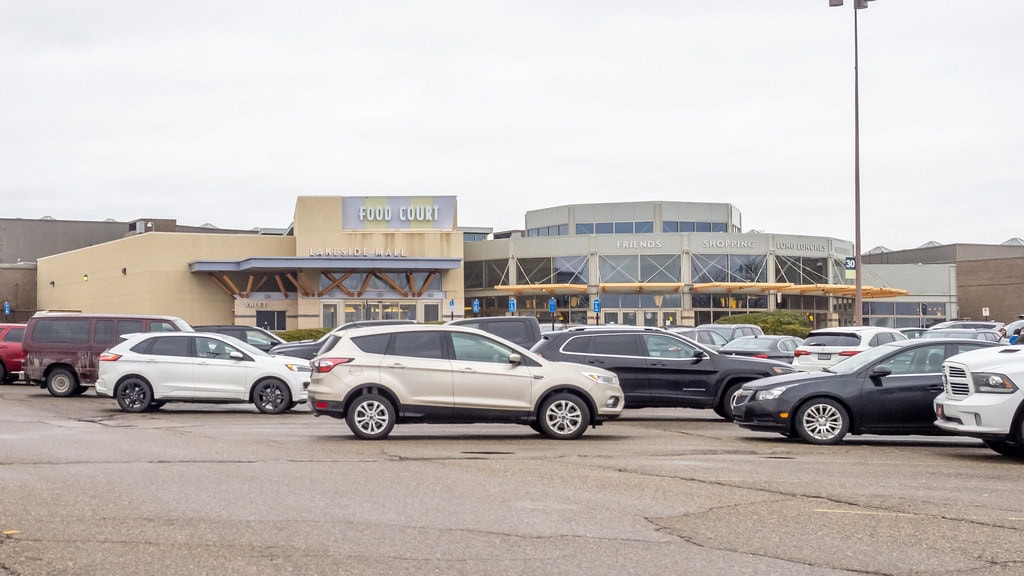
Fairlane Town Center
Shopping mall in Dearborn, MI
Address: 18900 Michigan Ave, Dearborn, MI 48126
Opened: March 1, 1976
Developer: Taubman Centers, Homart, and Ford Motor Land Development
Owner: Kohan Retail Investment Group
Floor area: 1,400,000 sq ftClosest cities:
Detroit, MI
Livonia, MI
Taylor, MI
Westland, MI
Canton, MI
Dearborn Heights, MI
The last time I went to Fairlane town center was in 1991. Took my family to the movies, and two groups of teens were screaming at each other, and then someone pulled out a gun and shot five shots into the ceiling. I haven't been back since.
It is extremely unfortunate that you had such a distressing experience at Fairlane Town Center in 1991. Over the past three decades, mall management has likely taken various steps to improve safety and security measures. Enhanced surveillance, collaboration with local law enforcement, and the presence of security personnel all contribute to fostering a secure environment.