
On August 3, 1977, traffic on Interstate 35W ground to a halt between County Road 42 and Highway 13 on the south side of the Twin Cities. There was no accident - just thousands of people heading for the same new building at the same time.
By the end of the afternoon, roughly 29,000 people had walked into Burnsville Center, and workers had counted about 10,800 cars in the parking lot.
The grand opening felt like a real community event. Pat Paulsen, Miss USA, and Miss Minnesota were all on hand. Ninety-five stores were open on day one, with room for 165 once the mall filled out.
Sears, Dayton's, and Powers Dry Goods anchored the building, and the corridors were lined with familiar names - The Gap, Foot Locker, RadioShack, Waldenbooks, and an Aladdin's Castle arcade among them.
Burnsville had only gotten its first shopping center, Valley Ridge Center, back in 1963. Now the city had something that pulled shoppers from across southern Minnesota and as far away as northern Iowa.
The 1977 opening was a turning point: the moment Burnsville became a destination rather than simply a fast-growing suburb on the edge of the metro.
That first day made clear that something genuinely new had arrived.
How Burnsville Center Came to Be Built
The story of Burnsville Center starts six years before its doors opened.
In May 1971, Sears and Powers acquired a 114-acre tract at the southwest corner of Interstate 35W and County Road 42, with plans to build a full regional shopping center there.
It was one of the most visible intersections in Burnsville, and the project was always meant to be large.
In June 1973, Homart Development Company - Sears' mall-building arm - announced a $30 million project and set an expected opening of late 1975 or early 1976.
The site received plat approval in December 1973, with Homart named as the developer.
For a period, the project was called "Burnhaven Shopping Center," though that name was later dropped before construction finished.
The schedule kept slipping beyond every early target. By early 1974, Homart was projecting a late-1976 opening.
The project went through repeated amendments as surrounding parcels and site details changed during construction.
The mall finally opened in the summer of 1977 - later than any of its announced timelines, but ready for a metro area that was still expanding steadily into the southern suburbs and needed exactly what Burnsville Center was about to offer.
The 1989 Renovation and a Decade of Growth
In the years after it opened, Burnsville Center kept growing. JCPenney joined as an anchor early in the mall's run, making it a four-anchor property and filling out the building's retail lineup.
By the late 1980s, the total store count had reached about 160 - nearly double the number the mall had opened with a decade before.
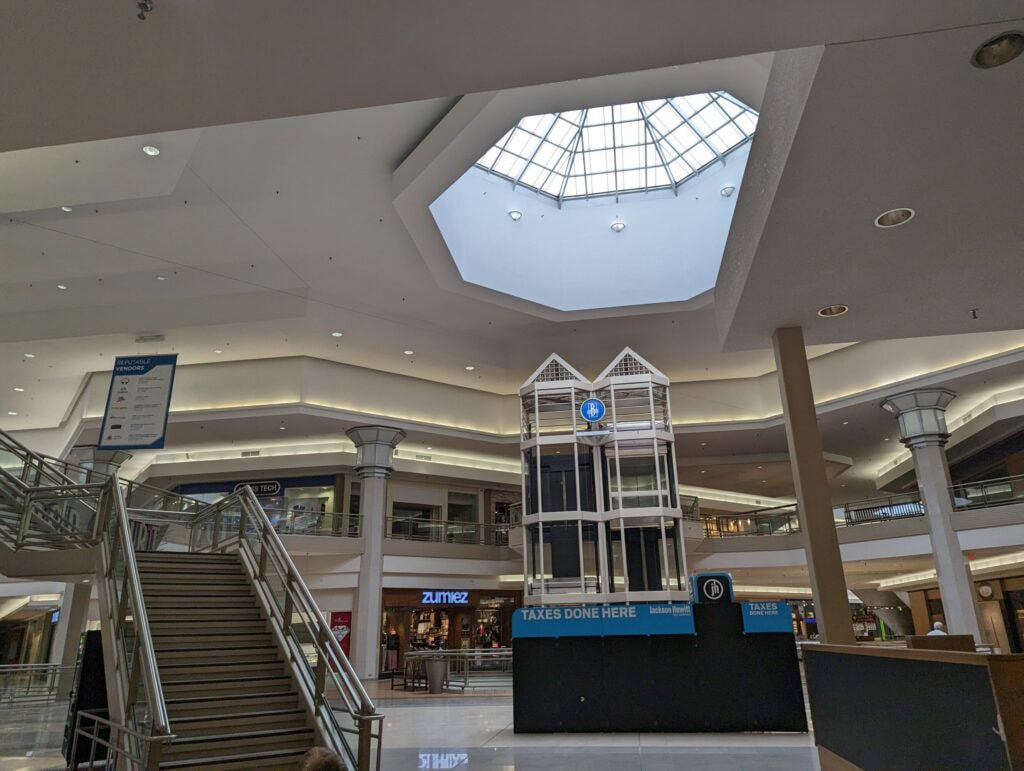
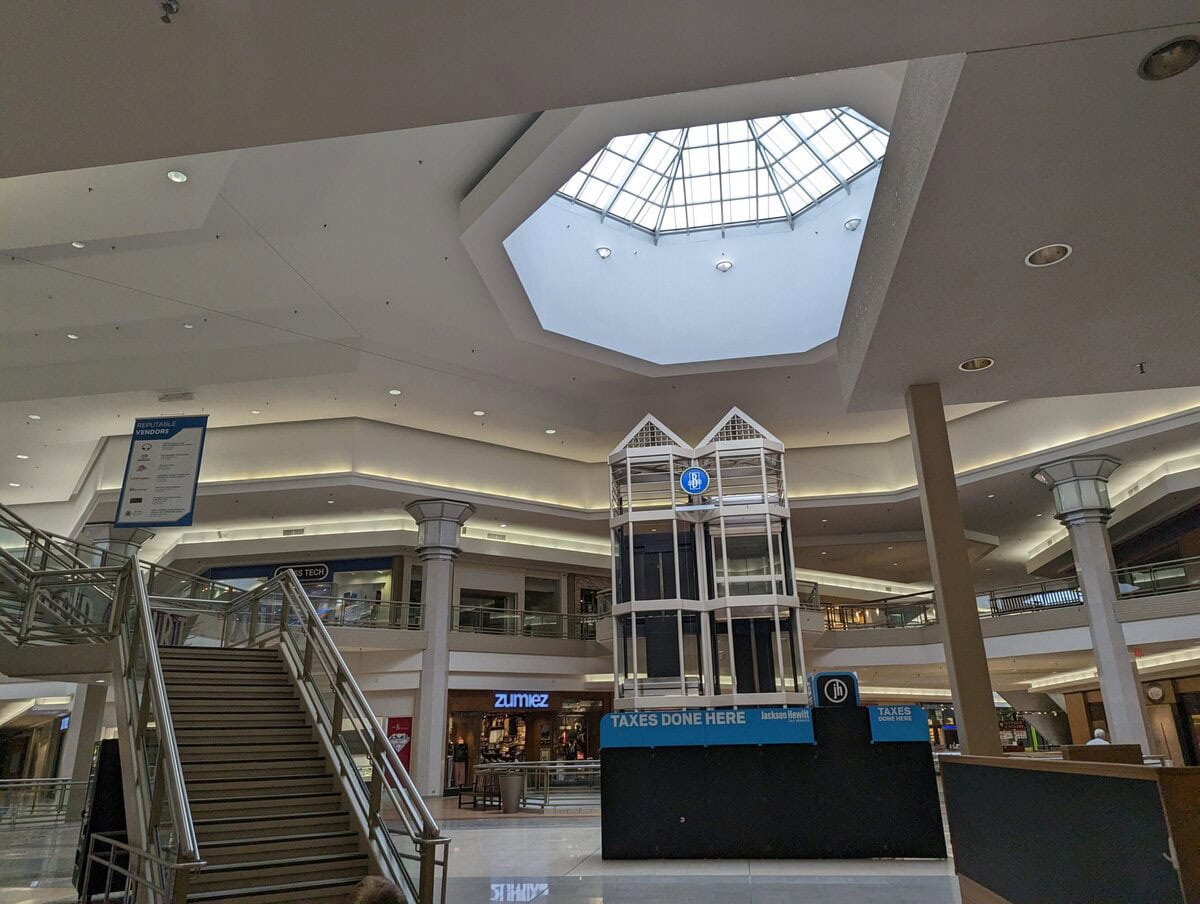
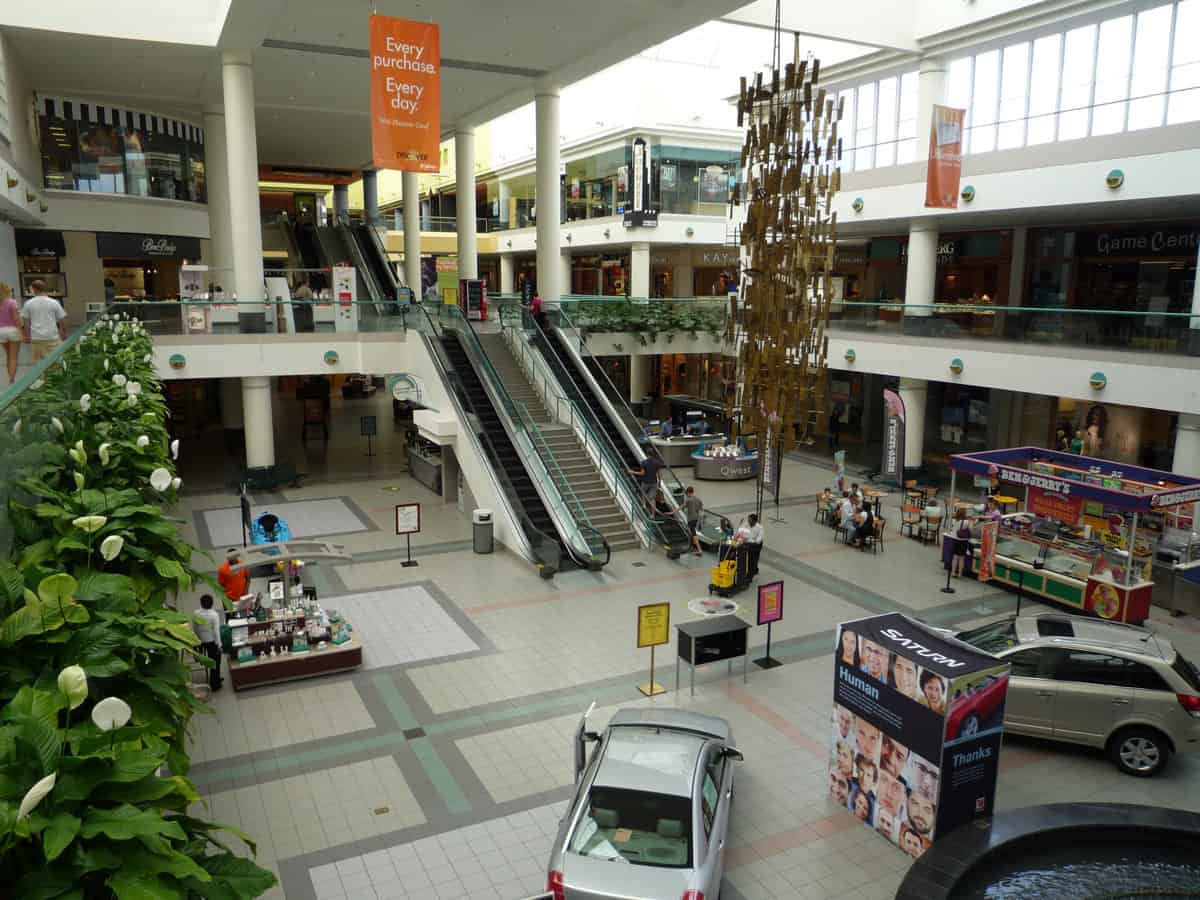
In 1989, the mall went through a major renovation. The project added a glass elevator capped by a clock tower, replaced older flooring with granite, and installed a fountain.
These improvements were unusually upscale for a suburban mall of that period, and they gave the interior a noticeably more finished look than it had before.
The renovation came at a time when the south metro was still growing, and Burnsville Center was already well-established as the region's main shopping draw.
It was the largest shopping center in the area and drew customers from a wide trade area stretching across much of southern Minnesota.
A freshly renovated building with four major anchors and around 160 stores put the mall in a strong position heading into the 1990s - competitive, polished, and popular enough to hold its ground no matter what came next.
Holding Ground as the Region's Malls Changed
When the Mall of America opened in Bloomington in 1992 - just a short drive north on Interstate 35W - Burnsville Center took a direct approach to the comparison.
In 1995, the mall ran a billboard campaign with the slogan: "The mall (that Takes Up Very Little) of America."
The message was clear: shopping at Burnsville Center was quicker and simpler than spending a day navigating the sprawling new arrival up the road.
The anchor lineup changed considerably over the years that followed.
The original Powers space cycled through several tenants - Donaldson's in 1985, Carson Pirie Scott in 1987, Mervyn's in 1995 - before being redeveloped in 2006 into Steve & Barry's and Dick's Sporting Goods.
Gordmans later took over the former Steve & Barry's space in 2011. Dayton's became Marshall Field's in 2001, then Macy's in 2006.
On the ownership side, CBL Properties acquired the mall from Corporate Property Investors on January 30, 1998, with a gross leasable area of about 1,082,500 square feet, and put the property through another renovation in 2001.
Through all of that change, the mall kept its footing.
By 2006, occupancy stood at 99% - a strong number that showed Burnsville Center was still performing well more than a decade after the Mall of America had opened.
The mall had not just survived the competition; it had stayed nearly full.
A Chain Reaction Leads to Foreclosure
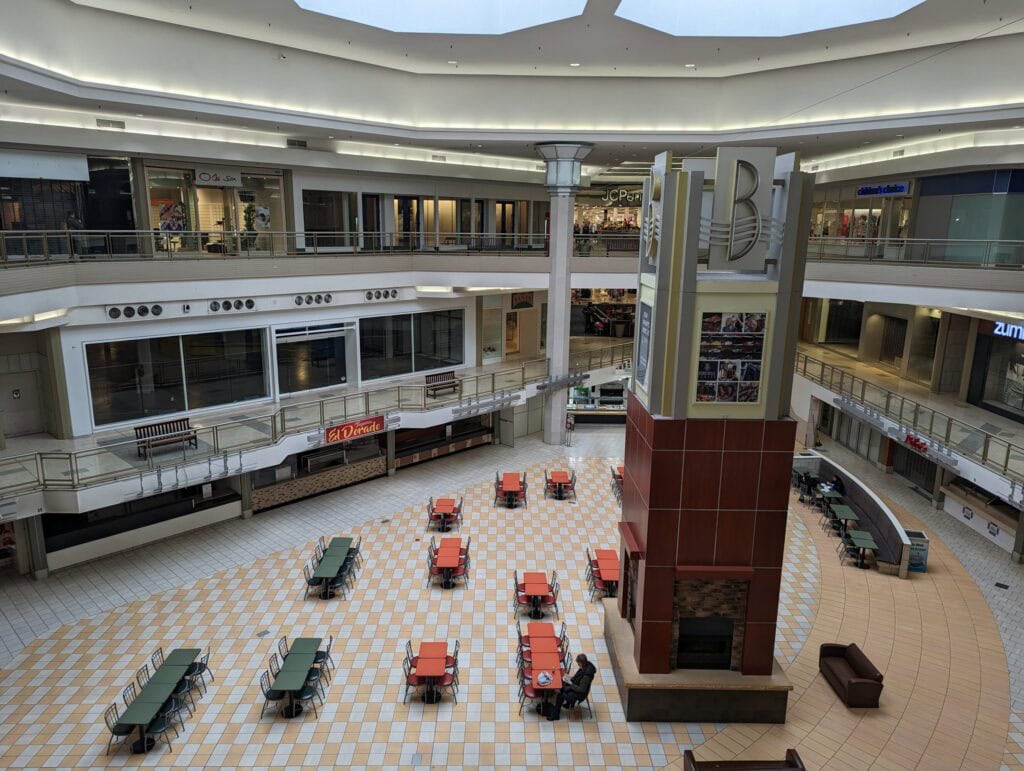
Burnsville Center's problems built up step by step, not in one sudden collapse. By 2017, occupancy had fallen to 80%, down from 99% eleven years earlier.
That same year, Sears closed its Burnsville store. One of the mall's original anchor stores was gone, and it left behind a large empty space with no immediate new tenant.
Another loss followed in 2020 when Gordmans closed after its parent company went through bankruptcy. At the same time, the pandemic put more pressure on the property.
In the three months ending June 30, 2020, the mall's income dropped about 32% as stores closed and rent reductions reduced the money still coming in.
By August 2020, Burnsville Center had entered foreclosure proceedings, with CBL carrying $64.5 million in loans on the property.
The foreclosure sale happened later in 2020. Kohan Retail Investment Group bought the debt and most of the mall for about $17 million.
The sale did not include the separately owned anchor parcels. That meant the main mall building and the big-box spaces around it ended up under different ownership.
From that point on, any effort to redevelop the property in a coordinated way became harder to manage.
New Owners Take a Chance on the Property
After Kohan took control, Burnsville city officials openly criticized the group for failing to maintain the property.
By May 2023, the city had declared the former Sears building a hazardous structure, noting that the fire sprinklers and alarm systems had stopped working and that only a metal gate separated the empty space from the parts of the mall still in use.
A shift came in 2022, when Pacific Square Burnsville and related partners bought a section of the mall for $10.6 million.
That portion included Dick's Sporting Goods, Kirkland's Home, Panera Bread, Noodles & Company, and the closed Gordmans space.
Plans called for transforming the area into Pacifica of Burnsville, built around a 50,000-square-foot Enson Market Asian grocery store and a 13,000-square-foot food hall called Ate Ate Ate.
Burnsville committed $1.1 million in county-backed funding to the project in May 2023.
In September 2023, a separate group - including Wyn Group, Windfall Group, and Afro Deli owner - purchased the rest of the interior mall and about 28 acres of parking.
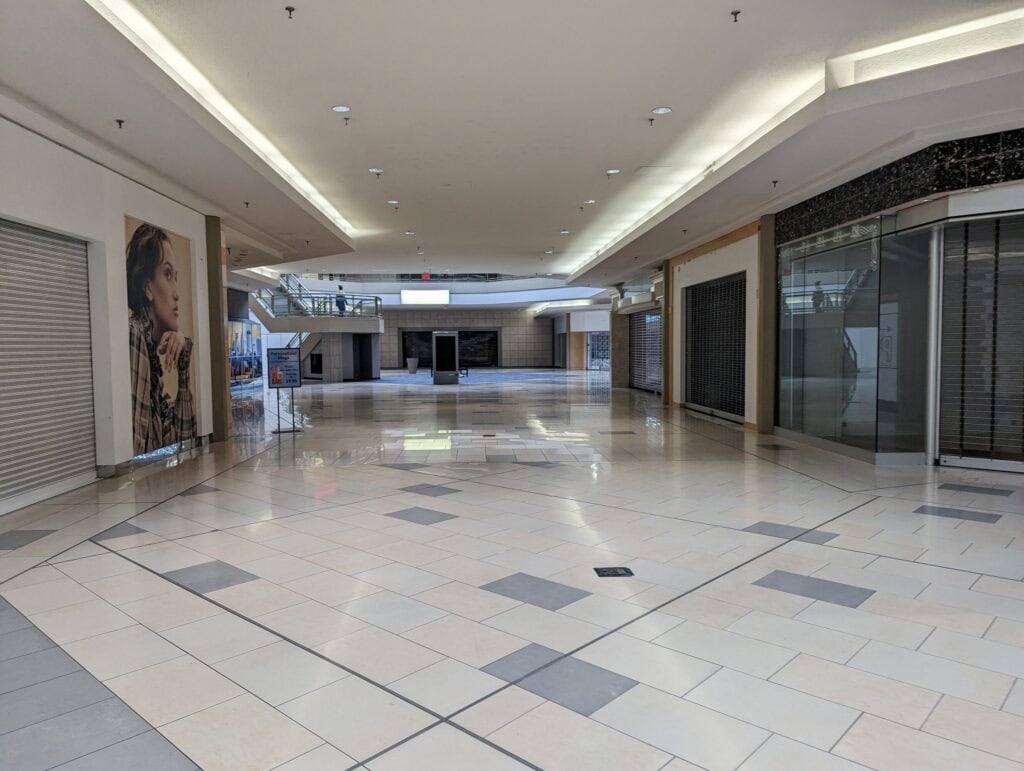
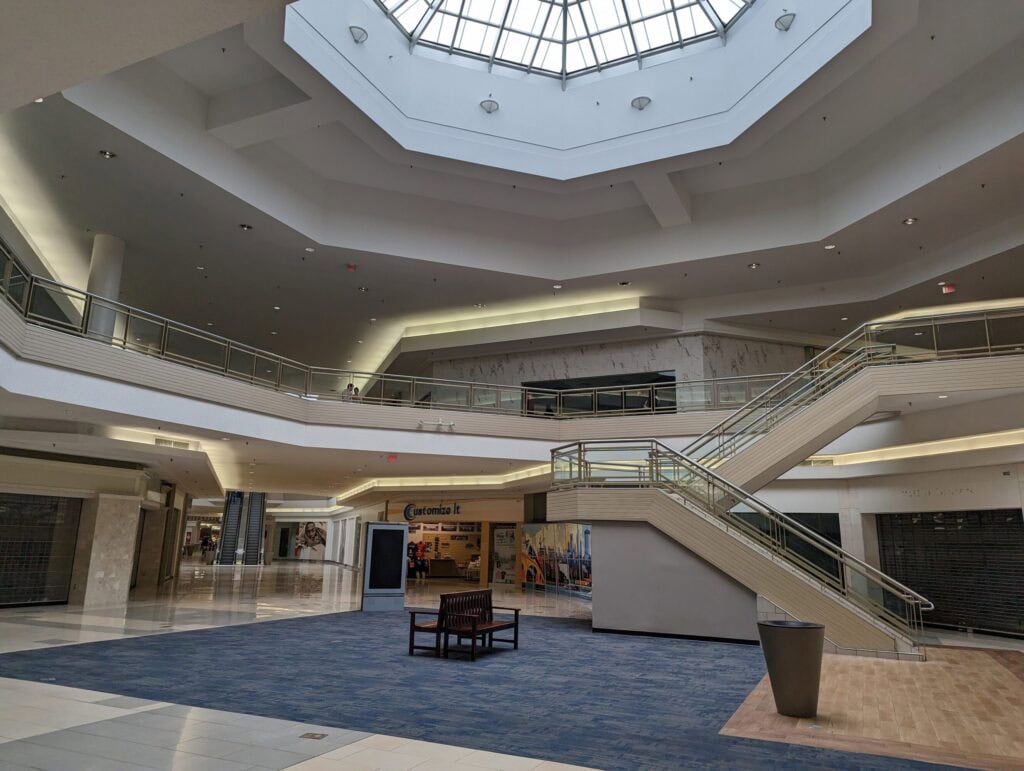
Vacancy stood at around 65% when they arrived. Over the following months, they brought in roughly 40 new tenants, replaced old carpet with bright white tile, repaired the roof, and filled much of the food court.
The city also approved Sustainable Safari, an indoor petting zoo concept, for the former Old Navy space.
The Road Ahead for Burnsville Center Area
Burnsville has seen the mall area as a chance for the whole community to improve, not just a problem for businesses.
In 2019, the city finished a plan for the Burnsville Center Village, which covers 426 acres and 77 pieces of land.
Ideas for the area include up to 1,600 apartments, 200 hotel rooms, about 1.1 million square feet for businesses, and around 705,000 square feet for other uses.
To pay for the public parts of this plan, Burnsville got special permission to use future tax money and set aside up to $31 million for things like roads and walkways.
This includes extending Aldrich Avenue, building a bridge or tunnel for people to cross County Road 42, and adding a new southbound exit from Interstate 35W.
By 2023, the exit had money for construction and was almost ready to start.
The Aldrich extension was designed to be easy for people walking or biking, and could help make room for new homes and businesses on the east side of the mall.
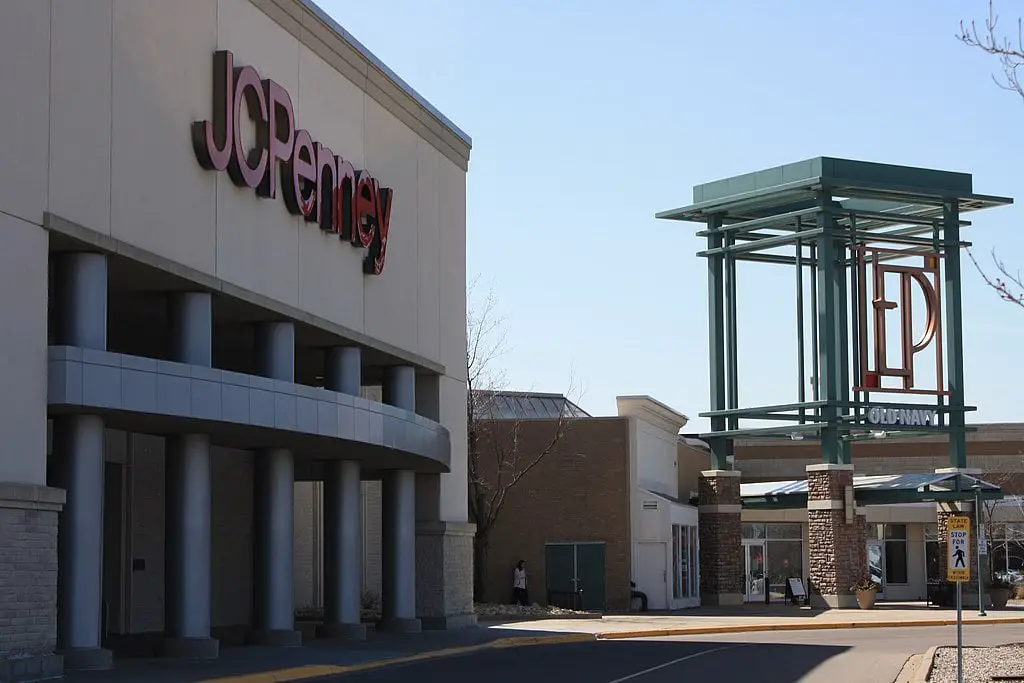
As of early 2026, Burnsville Center is still open. JCPenney and Dick's Sporting Goods are the main big stores.
Macy's closed its Burnsville location in 2025 and is no longer listed in the company's Minnesota stores. The Enson Market grocery store and Ate Ate Ate food hall have faced repeated delays.
As of January 2026, there was still no set opening date, even though vendor equipment was already there.
The larger plan, which is to build a mix of homes, shops, and other spaces around and eventually beyond what is left of the mall, is still being developed.
At this point it just needs to be bulldozed down and move forward with whatever the new direction will be.
Change can be tough, but sometimes it's exactly what’s needed. Thank you for your comment!Change can be tough, but sometimes it's exactly what’s needed. Thank you for your comment!