On August 4, 1969, people from around Eugene drove to see what had been built on the old Gillespie farm.
They found something Oregon had not had before: a fully enclosed shopping mall with over 660,000 square feet of space on a flat 80-acre site just northwest of downtown.
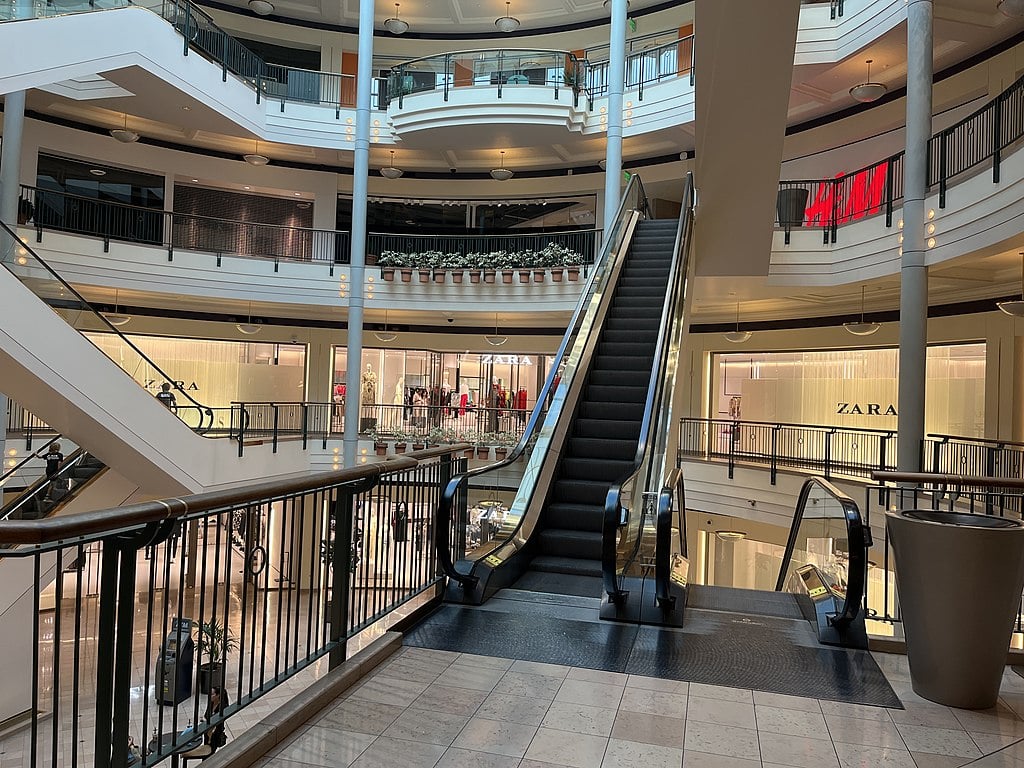
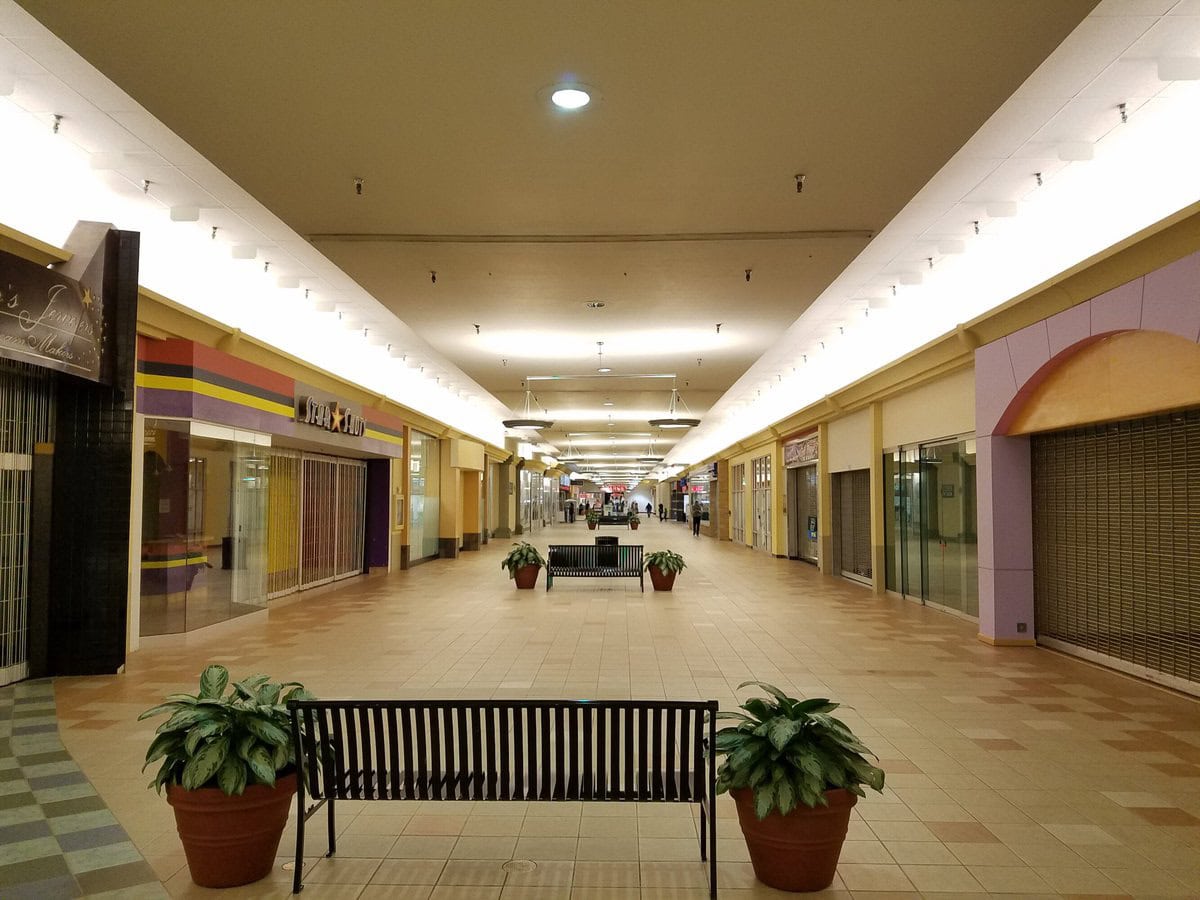
The Willamette River ran along one side, and a large new parking lot covered the other side. Inside the mall, the walkways had columns decorated with polished rocks, and large wooden beams crossed the ceilings.
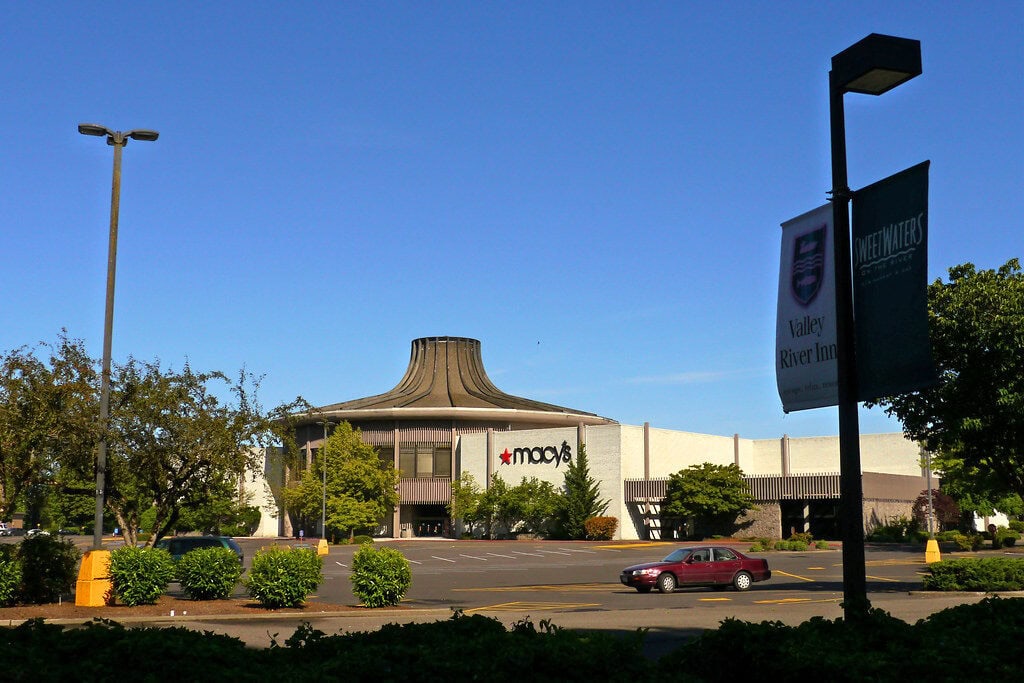
The building used earth-tone colors throughout. In the center of the Meier & Frank anchor store, a round rotunda extended above the roof.
A motorized sculpture slowly turned overhead above the shoppers. There was also a second-floor restaurant with a view over the area below.
The project cost $16 million. It was Oregon's first fully enclosed regional shopping mall. When it opened, it was also the largest mall of that type in the state.
By the middle of 1970, 60 stores and service businesses were operating there, including Anita Shops, Hardy Shoes, Kaufman Brothers, and the Junction House Restaurant.
Roos-Atkins, based in San Francisco, took 33,500 square feet for men's clothing near the main corridor. For Eugene, this was a new kind of place: people could spend the whole day there without going outside.
Planning a New Mall for Greater Eugene
The plan for a new mall in the Eugene area started several years before construction began. In June 1964, developers made public plans for a regional shopping mall in greater Eugene.
They chose the former farm of Jacob Gillespie, about 0.9 miles northwest of the city center.
The location was close enough to attract downtown shoppers and large enough to build a major project.
Construction did not begin for four more years. During that time, the project continued through the planning process while local shopping patterns were changing.
By late 1967, Oakway Mall had already opened its first stores.
Oakway was a smaller community shopping and office development about 1.3 miles east of the future Valley River site.
Construction finally started on June 24, 1968. John Graham, Junior, a Seattle architect, designed the main store section.
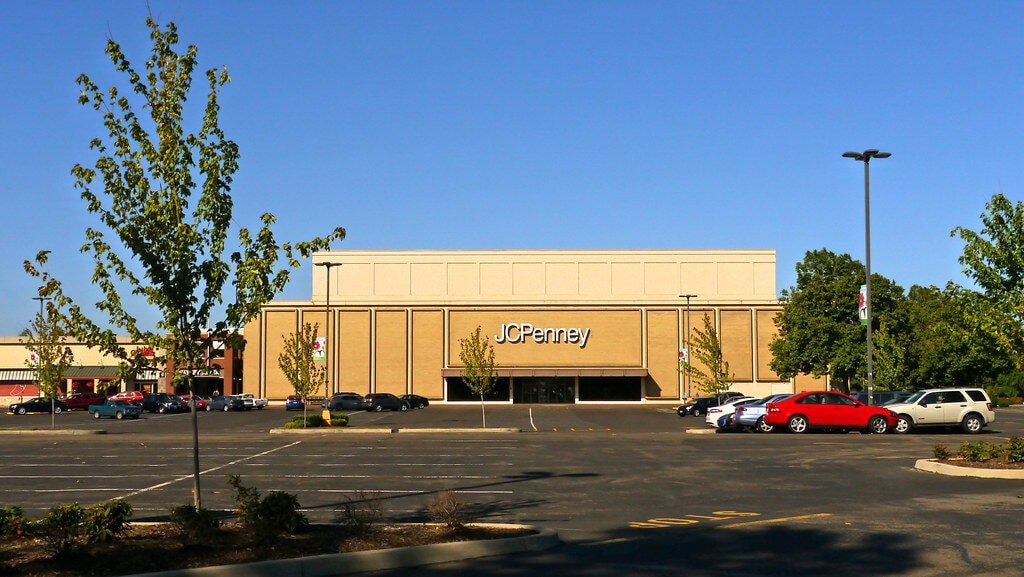
Bear, McNeil & Bloodworth of Portland designed the Meier & Frank anchor building. Williams & Ehmann Architects designed the JCPenney building.
A joint venture led the project, with investors from Eugene, Portland, and Seattle.
The mall's official dedication took place on August 4, 1969. Meier & Frank opened the same day.
JCPenney opened later, on January 7, 1970, which completed the original group of anchor stores.
How the 1970s Reshaped the Mall's Layout
Oregon's biggest indoor mall - the title Valley River Center had claimed at opening - did not belong to Eugene for long.
In February 1974, Washington Square opened in Tigard with more than one million square feet of space, and just like that, Valley River Center was second.
The response was a $7 million West Wing expansion.
The project rolled out in three phases. Twelve new inline stores opened in November 1974. A one-level, 106,000-square-foot Montgomery Ward followed on March 12, 1975.
Then, on August 4, 1975 - exactly six years after the mall's original opening - a two-level, 52,000-square-foot Lipmans came in on the east side.
The three phases together pushed the mall's total leasable space to roughly 869,000 square feet.
From that point forward, tenants cycled in and out steadily. Roos-Atkins closed by 1975, with part of its old space becoming Troutman's Emporium. This local shop eventually grew to 45,000 square feet by 1984.
The Lipmans space went through a string of name changes - Frederick & Nelson in 1979, The Crescent in August 1987, Lamonts in July 1988 - before the location finally went dark in March 1996.
Stores came and went. The mall kept growing around them.
Hollywood Visits and a 1980s Renovation
In 1979, a film crew came to Valley River Center to shoot a movie. The movie was "How to Beat the High Cost of Living," and Valley River Center shows up in many scenes.
The plot centers on three women who decide to rob the mall, and a large plastic ball in the center court becomes a key part of the scheme.
The film came out in 1980. It was not a big success, but for a time it drew extra local attention because Eugene residents recognized the mall on screen.
Soon after that, the mall got a major update. A $6 million renovation was completed in November 1986.
The project changed the interior spaces and updated the outside of the building.
By that time, more than 100 stores and services were operating in the mall, and the building needed a larger-scale refresh.
During these same years, downtown Eugene was still dealing with the effects of urban renewal in the early 1970s, when many older buildings in the city center were torn down.
The larger department stores had already moved to suburban locations, and Valley River Center had taken in much of that business.
By then, the mall was not just one more place to shop outside downtown. It had become the primary shopping center for much of the region.
Competition Sparks a Major 1990 Addition
Gateway Mall opened in Springfield in March 1990, and Valley River Center suddenly had a serious competitor 2.8 miles away.
Gateway opened with three anchor stores and space for more. Valley River Center's ownership responded quickly.
The mall added a new Northwest Wing. The addition was anchored by The Bon Marche, a Seattle-based department store with two levels and 124,000 square feet.
The project also added twelve new inline stores next to it. The new wing opened on August 1, 1990.
After the addition was finished, the mall had about 921,000 leasable square feet and 102 stores. That made it one of the largest shopping centers between Portland and Sacramento.
The expansion also strengthened one of Valley River Center's biggest advantages as a place to spend time. The Willamette River ran along the property.
Bike paths and walking routes connected the mall to Eugene's larger trail network, and people came from across the Eugene-Springfield area on foot, by bike, and by car.
It was a regional mall in the most direct sense: a place used by the whole region, not only by people who lived nearby. The Northwest Wing made that even more clear.
Changing Anchors in the Early 2000s
Montgomery Ward, which had anchored the West Wing since 1975, closed in March 2001. The building stood empty for four years before it was torn down in 2005.
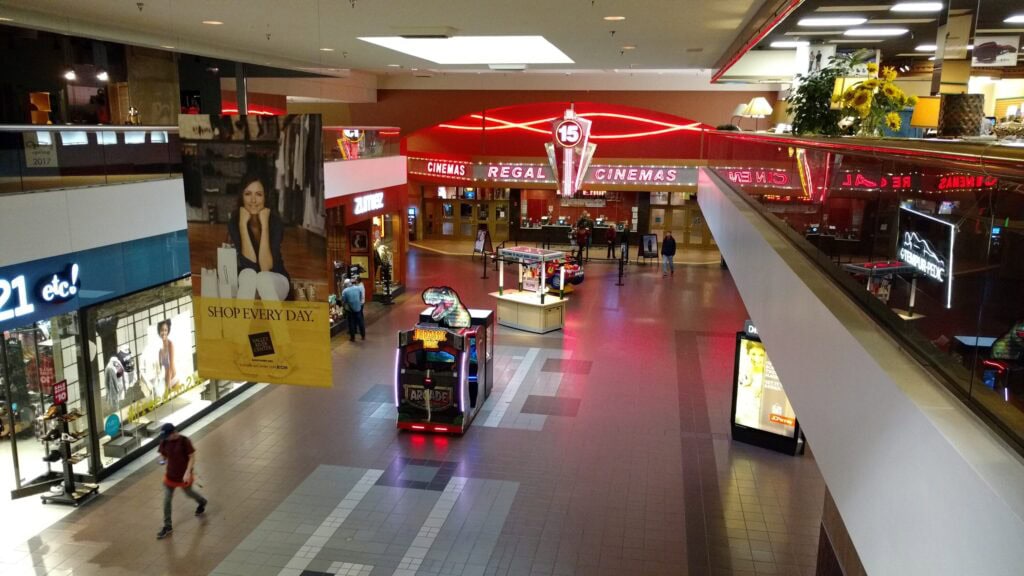
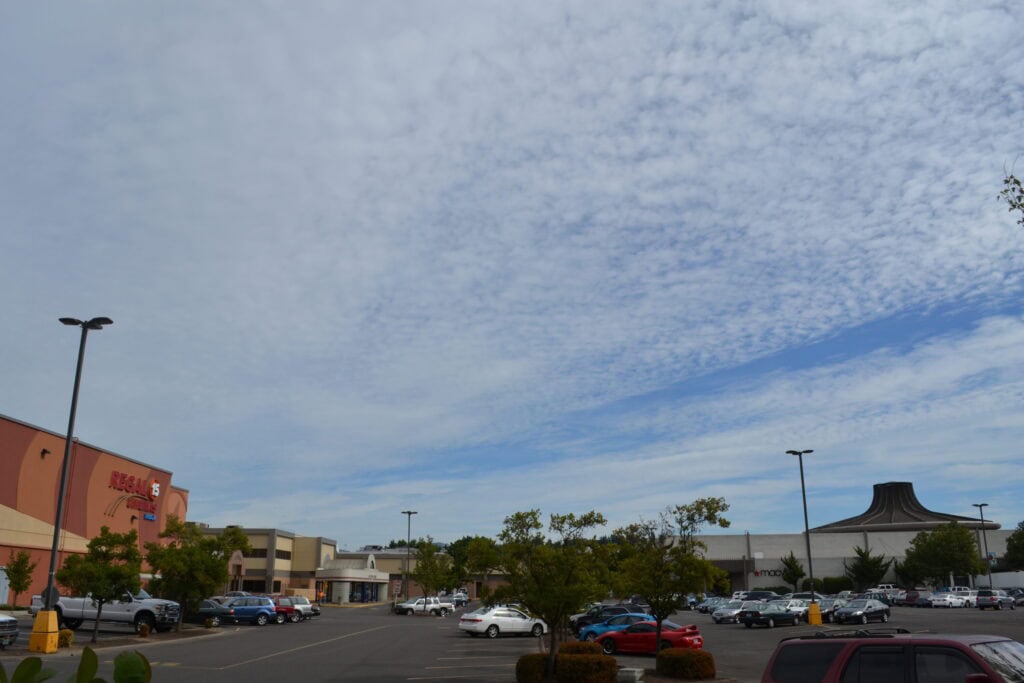
Its replacement took longer to arrive. When it did, it brought something the mall had never had before: Regal Valley River Center Stadium 15, a movie theater complex.
The theater officially opened on March 9, 2007. An IMAX digital screen was installed there in 2011, and it’s the only IMAX theater in the Eugene area.
Meanwhile, the rest of the anchor lineup was in motion. The Bon Marche started operating as Bon-Macy's on August 1, 2003, and completed its conversion to the full Macy's name on March 6, 2005.
Then in May 2006, Macy's moved within the mall itself - closing the former Bon Marche building on May 6 and reopening three days later in the much larger Meier & Frank space, a building that Macy's owns outright.
Gottschalks moved into the vacated space and opened on September 5, 2006.
Ownership of the property shifted around this same time. The British firm Grosvenor Group had brought in Macerich to manage the mall in February 2005, then sold it to them outright a year later for $187.5 million.
The company that would carry Valley River Center into its next chapter had arrived.
Retail Struggles Bring New Thinking to the Mall
Gottschalks closed in July 2009, leaving another large anchor space vacant. Sports Authority, which occupied a different former anchor location, closed in July 2016.
With two major closures in about ten years, the mall could no longer rely on the old method of replacing one big-box tenant with another under a long lease.
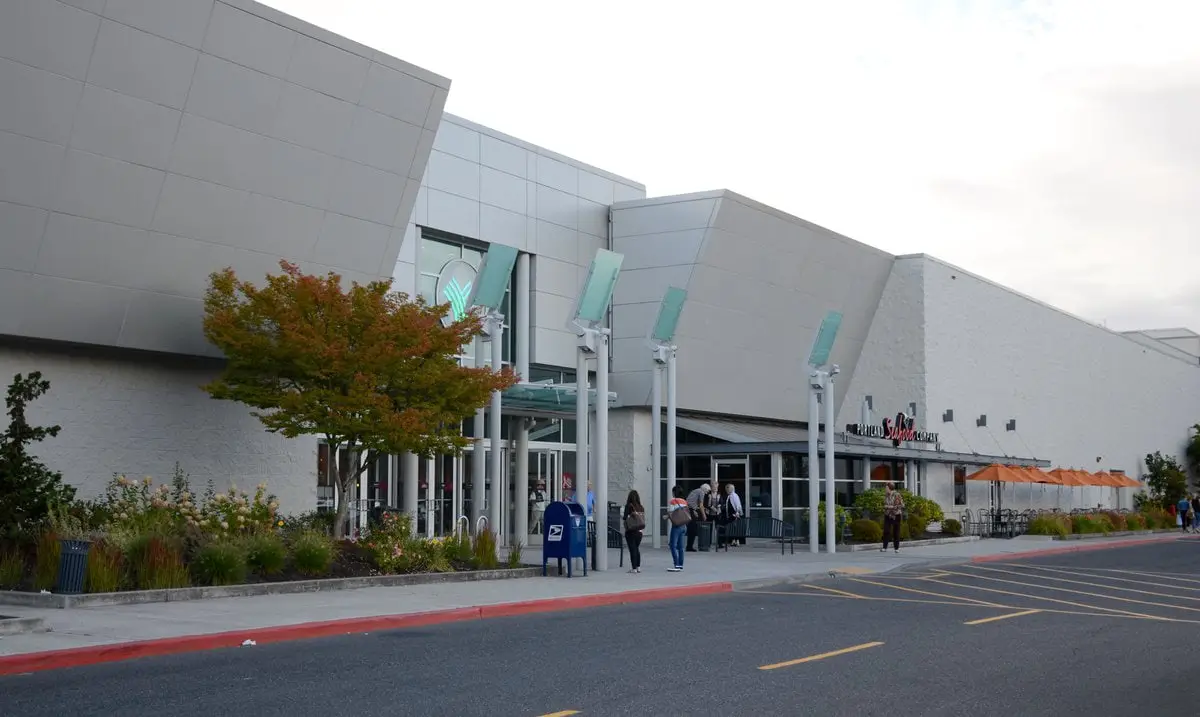
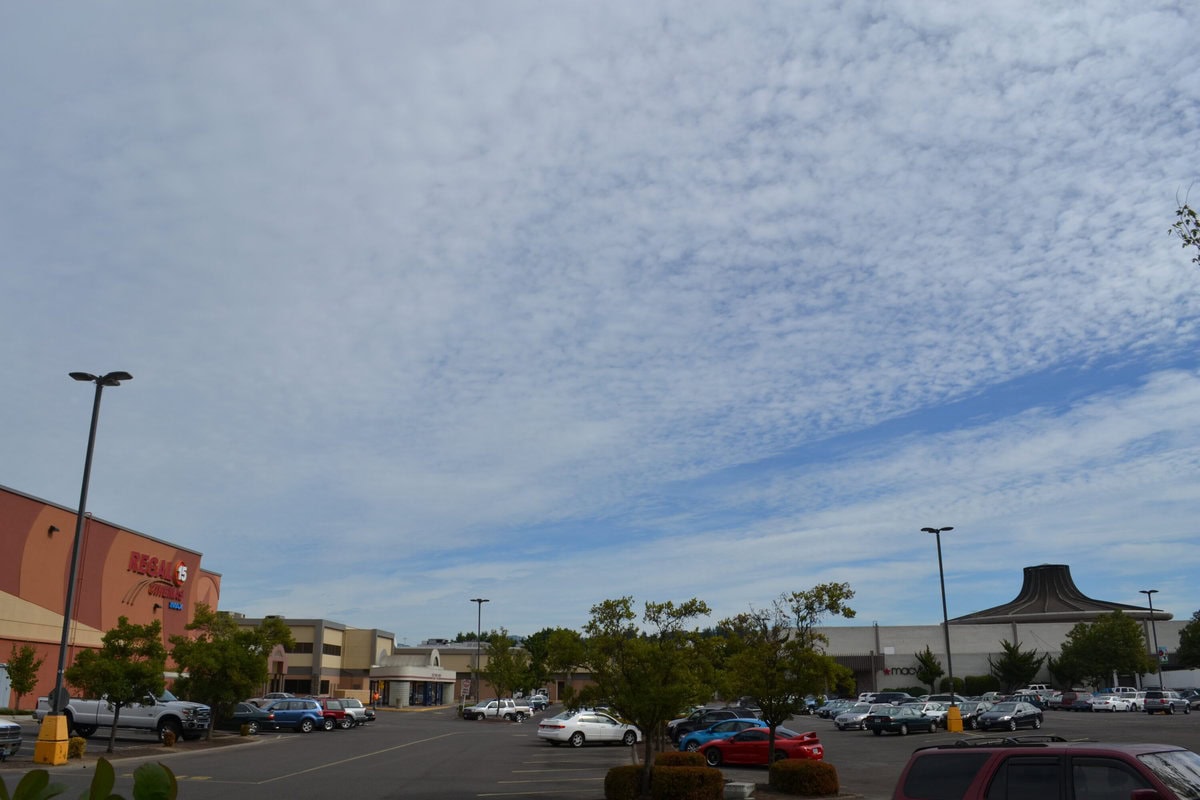
The mall demolished the Sports Authority building. In early April 2018, construction began on a new front entrance and an outdoor plaza.
By 2020, the site included two smaller pad buildings totaling about 12,000 to 14,000 square feet, along with seating, plantings, and an event space.
The mall now had a main entrance built to serve as a gathering area, not only an access point.
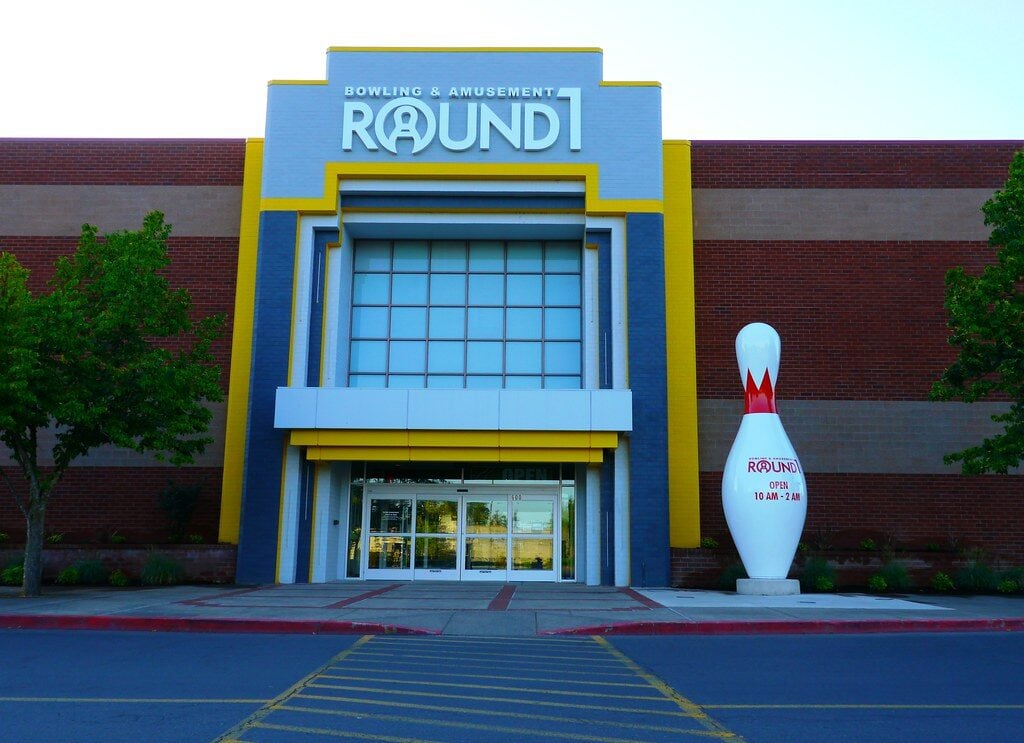
The former Gottschalks building was reused in February 2020, when Round One Entertainment opened its first Oregon location there.
It added bowling lanes, arcade games, and other amusement attractions.
The plaza project and Round One reflected a new direction for the mall. It could keep operating by giving people a place to spend time, not only a place to shop.
Valley River Center Looks to the Future Amid Challenges
Valley River Center continues to draw customers in 2026.
The mall has more than 90 stores and restaurants, an IMAX theater, a bowling and amusement center, and a car show that has taken place every year since 1969.
About 121,000 people live within three miles of the property, and major nearby employers, including the University of Oregon and PeaceHealth, support the local economy.
The property is also under financial pressure. Macerich posted $91 million in losses in the first half of 2025.
The mall's estimated value is well below the $187.5 million paid in 2006, with recent estimates between $66 million and $94 million.
In September 2025, Macerich listed about 11 acres of undeveloped land and a parking area next to the mall for $14 million.
Blue Fern Development proposed 125 condo townhome units on that land, facing the river and Delta Ponds.
A separate possible project would add a Dick's House of Sport near the main entrance. This larger Dick's format includes rock climbing, sports simulators, and other activity-based attractions.
It would be the first location of its kind in Oregon. No formal application had been filed by late 2025.
Valley River Center has changed many times over the past fifty-plus years, and the next phase is still taking shape.