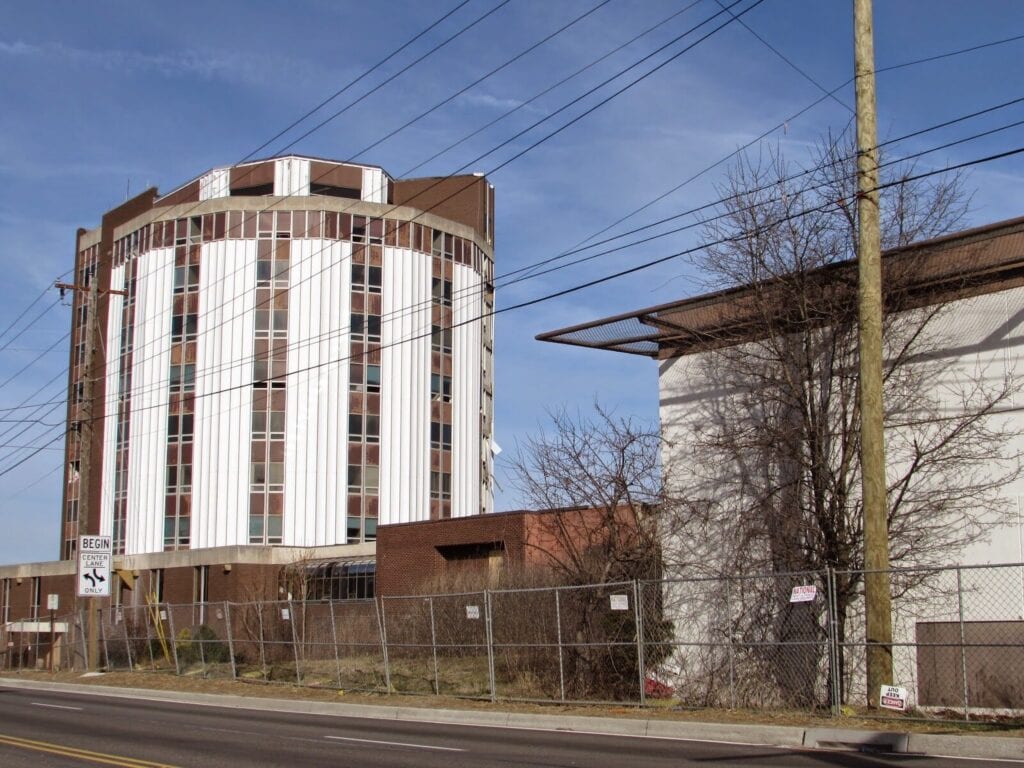
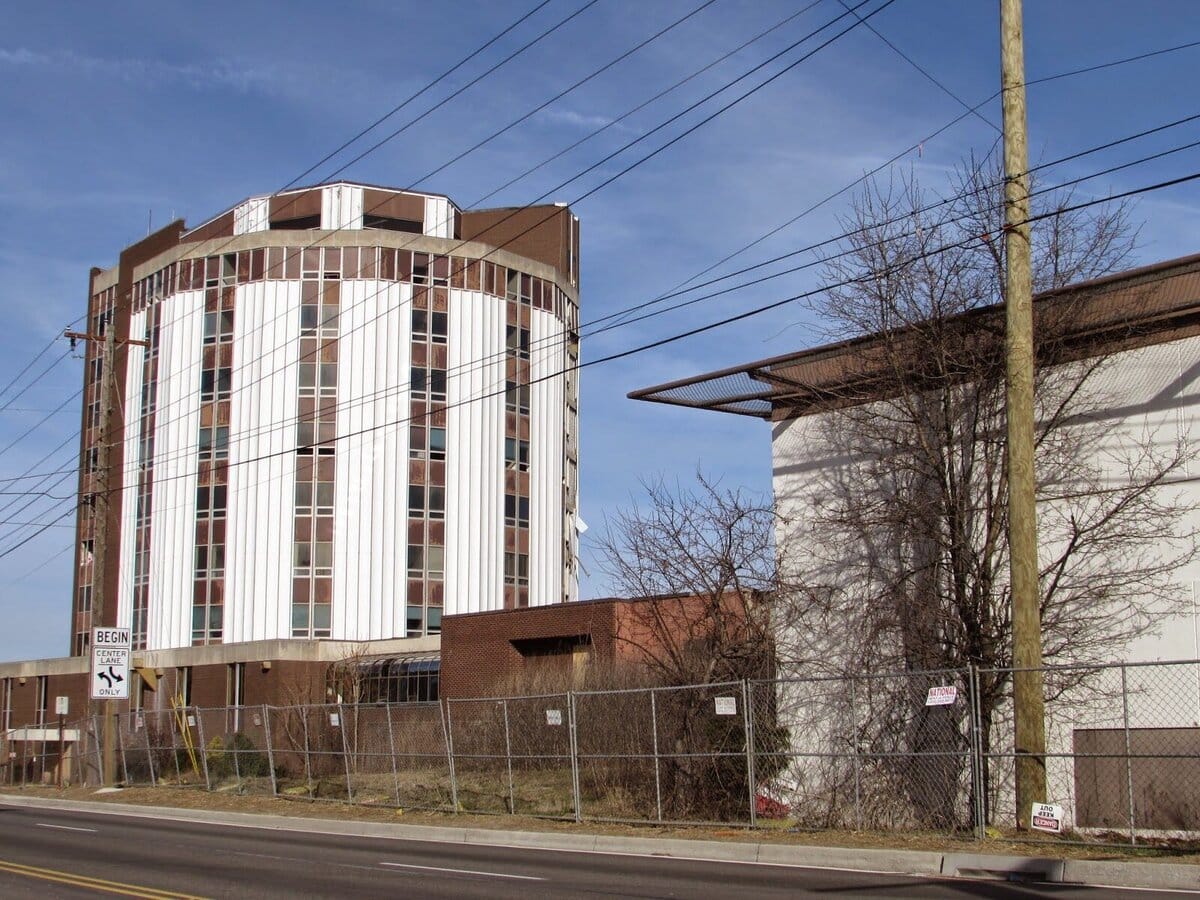
Route 30 comes into Jeannette, Pennsylvania, from the west, and for more than three decades, a cylindrical tower rose above the rooftops near the city's entrance.
It was hard to ignore - tall, round, and out of place against the flat line of businesses. People knew it as "the Monsour tower," and even those who had never been inside recognized it immediately.
Children grew up with it in view. Workers drove by it every morning. Over time, it became part of the town's identity without any formal decision.
On March 2, 2016, the tower was gone. At roughly 2:30 in the afternoon, it and the original hospital building collapsed into an excavated trench on the 6.7-acre lot at 70 Lincoln Way East.
Demolition crews had spent more than a week cutting through the steel support columns, each one reinforced with eight to ten welded bars.
Because no blueprints survived, demolition officials ruled out the use of explosives.
The collapse itself took only moments. The process that led to it - construction, decline, and burial - had taken sixty-four years.
Monsour Medical Center's Founding
In 1952, a stone house in Jeannette dating to the 1700s was converted into a seven-bed clinic.
Dr. Howard Monsour began seeing patients there alongside his brothers Roy and Robert, sons of Syrian immigrants Michael and Eva Monsour.
William, the fourth brother, joined later. All four were physicians. On January 1, 1958, the family opened a full hospital built for $1.5 million.
Eva Monsour and her four sons owned it together and operated it as Monsour Hospital and Clinic, Inc., a for-profit corporation. The tower arrived in the early 1970s.
With it came a new name: Monsour Medical Center. The cylindrical form sat at Jeannette's Route 30 gateway and stayed there for the next thirty-five years.
1975 Nonprofit Conversion That Added a $7.5 Million Installment Note
In 1966, five members of the Monsour family - Robert, Roy, William, their mother Eva, and their cousin Dr. Omar Ayoub - created the Monsour Medical Foundation as a Pennsylvania nonprofit.
They intended to move the hospital under the foundation's control. That shift happened on May 17, 1975. It also left the hospital with a major debt burden that lasted for years.
At the time, the family owned all of the hospital's stock. They sold a small portion, 3.5 percent, to the foundation for $500,000. They also gave another 46.7 percent, valued at $7,065,000.
That left 49.8 percent. The hospital took that portion back by issuing a 15-year installment note for $7.5 million, backed by a second mortgage on its real estate.
Valuations varied. In 1974, the hospital's total assets were appraised at $18 million.
A 1977 appraisal put the real estate alone at $6,420,000 as of May 1975. For Medicare depreciation, the hospital later used a value of $8.2 million.
The cost of the deal was high from the start. Annual payments on the note exceeded $644,000 in the first five years. Then interest rates rose in the late 1970s. Monthly interest costs doubled, and at times even tripled.
Bankruptcy, Fraud, and Repeated Chapter 11 Filings
Monsour had held a Medicare provider agreement since 1966 and a Blue Cross reimbursement contract that ran through June 30, 1980.
Blue Cross overpaid the hospital $397,000 for fiscal year 1978 and $77,300 for fiscal year 1979. Monsour consented in August 1979 to adjustments, and Blue Cross began recouping that October.
On February 22, 1980, Monsour filed a voluntary Chapter 11 reorganization petition.
A federal district court held in 1981 that Blue Cross and the Department of Health and Human Services could reduce current payments to recover prior overpayments.
The hospital remained under Chapter 11 protection until 1989.
On September 2, 1980 - seven months after the bankruptcy filing - Dr. William Monsour was sentenced after pleading guilty to a federal charge tied to documents obtained during a grand-jury investigation into the 1975 nonprofit conversion.
He had been indicted for Medicare and Medicaid fraud and resolved the case through a plea bargain.
The 1980 filing was not the last. Monsour filed again in late 2004 and sought to withdraw from that case in March 2005 during a dispute over unpaid pension contributions.
When the hospital closed in 2006, it still owed significant pension-related liabilities to employees. The total number of bankruptcies reached four.
25 Percent Occupancy and the Licensing Crisis Before Closure
In 2003-2004, Monsour had 149 licensed beds, 1,762 admissions, and 13,625 patient days. Its occupancy rate was 25 percent.
A year later, admissions dropped to 1,395 and patient days to 11,000. Occupancy fell to 20 percent, while the bed total stayed at 149.
In the nearly two years before it closed, the hospital operated under provisional licenses tied to quality-of-care violations.
The state offered a new provisional license with restrictions. The board refused.
The hospital then failed a series of inspections and did not correct the cited issues. Monsour Medical Center at 70 Lincoln Way East closed on March 22, 2006.
Medical Files, Mold, and Open Doors
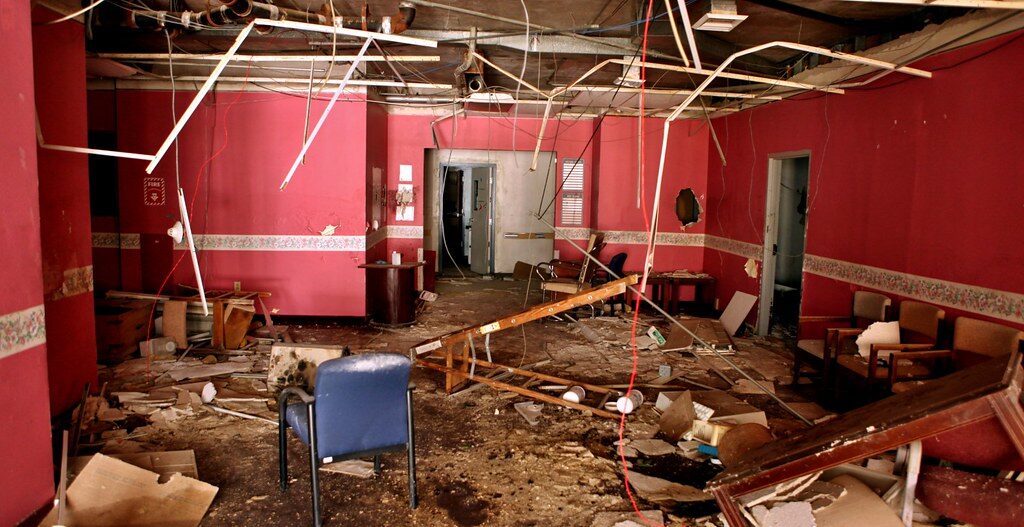
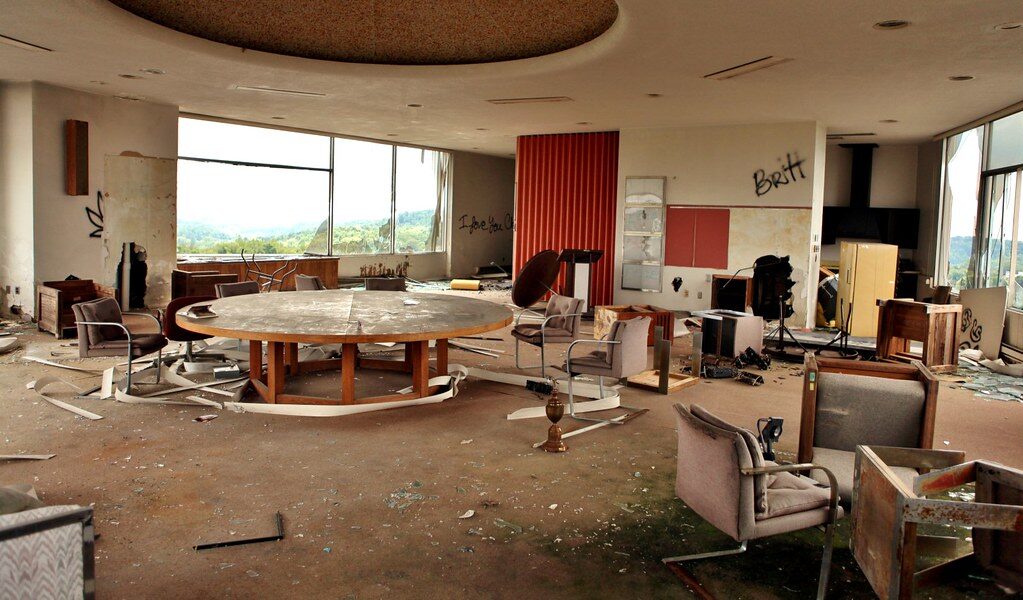
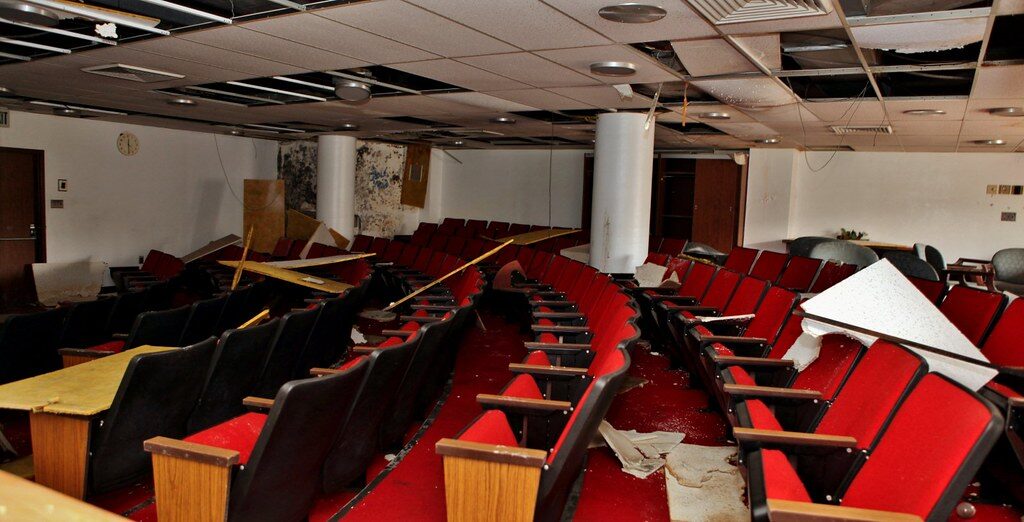
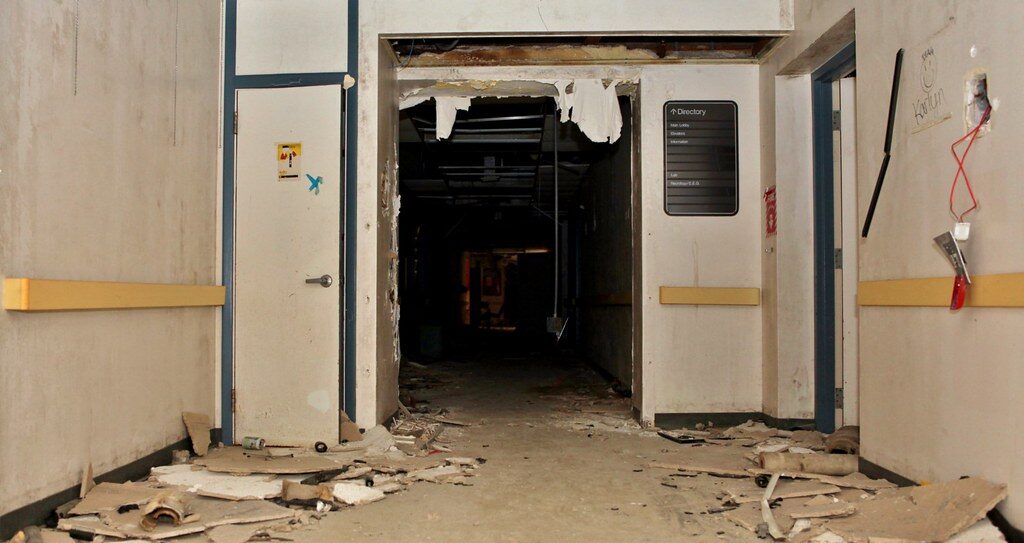
By 2010, the vacant building had serious problems. Mayor Robert Carter pointed to biohazardous waste, black mold, and ceilings that were starting to fall.
The Pennsylvania DEP said it would send inspectors after learning about the situation.
City officials could not easily enforce code violations because the property was tied up in foreclosure.
In September 2011, a news crew walked inside and found medical waste and empty pill bottles throughout the building. Doors were standing open across the facility.
City officials said they had boarded it up again and again and believed it might take years before the main building went to a sheriff sale.
A former CEO confirmed that the Monsour family no longer owned it.
In November 2012, officials made the most serious discovery. The Jeannette authorities entered with a search warrant and found thousands of unsecured medical files along with blood and skin slides.
The files listed names, addresses, diagnoses, detailed treatment plans, insurance information, dates of birth, and Social Security numbers.
Later that month, DEP crews returned to remove the biological waste.
The Land Bank Purchase and Demolition
Jeannette challenged the property's tax-exempt status in 2010, setting up a path to judicial sale. The Westmoreland County Land Bank purchased the former hospital on October 24, 2014.
The county estimated $2 million would be needed for site clearance and committed $500,000 toward it.
Peripheral demolition had already begun. In January 2014, crews tore down the building that had housed Dr. William Monsour's practice.
Senator Brown's Mansion - a stone house built in 1783 that had at one time been home to Dr. Robert Monsour - was also torn down because of fire damage and structural danger to the roadway.
The main complex followed in 2016. Demolition began in February. On March 2, the original hospital building and the tower collapsed at approximately 2:30 p.m.
into an excavated trench. Each steel support column contained eight to ten welded reinforcing bars, which slowed the work considerably.
By 2017, the Westmoreland County Industrial Development Corporation had finished the full $2 million project, including environmental remediation.
Redevelopment at the Former Monsour Site
The sale was completed two years later than expected. In August 2019, Colony Holding bought the vacant 6.4-acre property through a $2.1 million deal that had been approved in 2017.
During the delay, the land bank worked with the Pension Benefit Guaranty Corporation and the Internal Revenue Service to remove $8 million in liens.
After that, the site remained empty. Developer Don Tarosky Jr. pointed to zoning disputes and the pandemic as the reasons.
A grocery store that had planned to build there withdrew from the deal. By 2023, he was promoting a multitenant strip mall project called Glass City Galleria.
By July 2025, the project had changed form and taken on a new name. The commercial section along Route 30 became Jayhawk Commons, and the residential section behind it became Jayhawk Landing.
Jeannette's zoning hearing board approved the variances required for both parts.
Plans for the commercial space included a national coffee chain and another service business, though neither business was publicly identified.
The housing plan called for more than 30 townhomes built in two phases - 16 units first, followed by 16 to 21 more - with starting prices in the mid-$200,000s.
In August 2025, a neighboring property owner filed a land-use appeal, saying she had not received written notice of the July hearing.
Crews were already removing trees and brush from the site, and the developer said the appeal would not stop construction.
By November 2025, the Jeannette Planning Commission recorded only minimal activity at the site.