
In Springfield, the number of southbound trips on your calendar determines how much Nashville shapes daily life.
Springfield is the Robertson County seat, and the Census Bureau estimated its population at 20,090 in 2025. The city has its own retail, health-care, food-service, civic, recreation, and community activity.
Nashville remains close enough to matter, especially for employment: the Nashville-Davidson-Murfreesboro-Franklin metro area had roughly 1.2 million nonfarm jobs in July 2026.
For some residents, Nashville means a concert, airport trip, specialist appointment, or occasional workday. For others, the job, dinner plans, friends, and weekend entertainment all point south.
Those schedules produce two very different versions of living in Springfield.
Springfield works best as an independent small city when most recurring needs stay local and Nashville is a selected destination.
Frequent Nashville work and social trips put regional travel into nearly every weekday.
Trip frequency changes the week
A drive that feels manageable once can become a large time commitment when it repeats throughout the week.
Springfield's Census mean travel time to work was 28.7 minutes for workers age 16 and older in the 2020-2024 period.
That figure covers all commutes by Springfield residents.
It shows that travel time already takes a meaningful share of the workday for many local workers.
The Nashville metro's job count explains why the regional connection matters.
Its large employment market gives Springfield residents access to many more workplaces than a city of about 20,000 could contain on its own.
The personal impact depends on where your recurring destinations are.
A Springfield job can keep work, errands, exercise, and casual social time in the same city.
A Nashville office can add five southbound work trips before concerts, restaurants, appointments, or visits with friends enter the schedule.
Springfield can carry a real local week
Census economic data gives a useful measure of how much everyday activity already happens inside the city.
Springfield recorded about $687.5 million in retail sales in 2022.
Health care and social assistance accounted for about $226.9 million in receipts or revenue, while accommodation and food services recorded about $67.3 million in sales.
The figures support a broad conclusion: Springfield has meaningful retail and service activity of its own.
Availability still varies by the exact store, provider, medical specialty, or service a household needs.
That local capacity changes an ordinary Tuesday.
Grocery runs, pharmacy stops, basic shopping, coffee, routine services, parks, recreation, civic business, and many health-care needs can remain part of the Springfield week.
A particular specialist, employer, restaurant, major event, or airport trip may send you south.
The practical dividing line is frequency. Occasional regional trips leave most of the week local.
Repeated trips for work or social life make Nashville part of the routine.
Downtown and Memorial Boulevard do different jobs
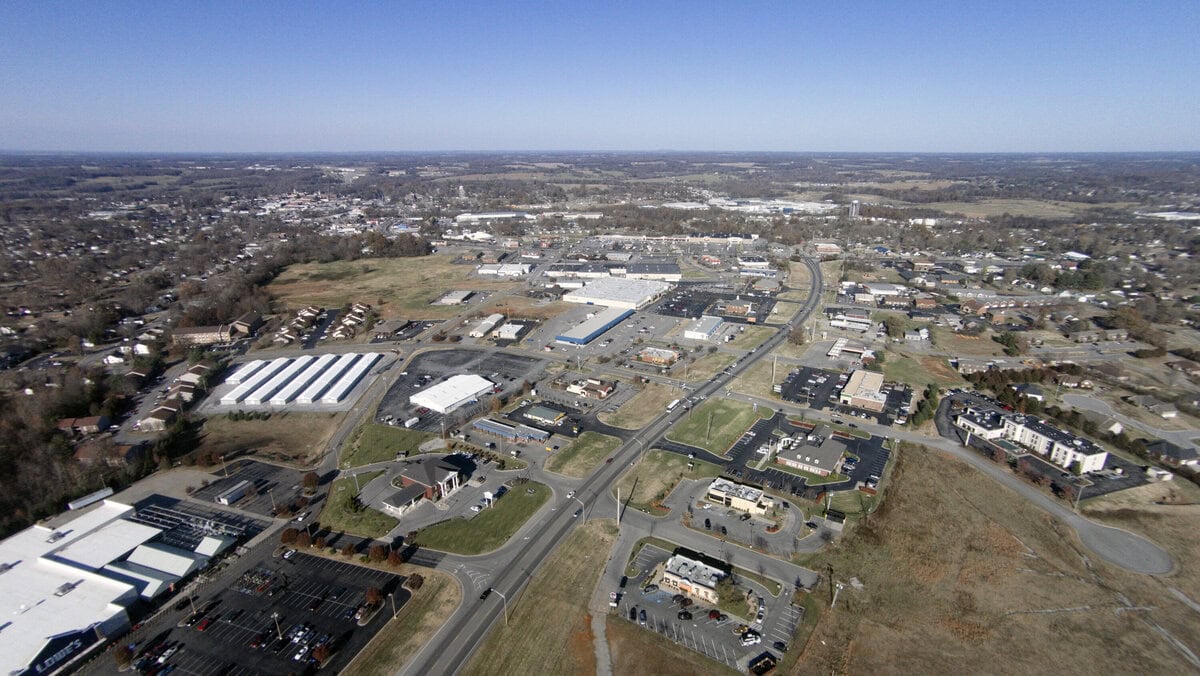
For weekly planning, Springfield is easiest to read as two local nodes with different jobs.
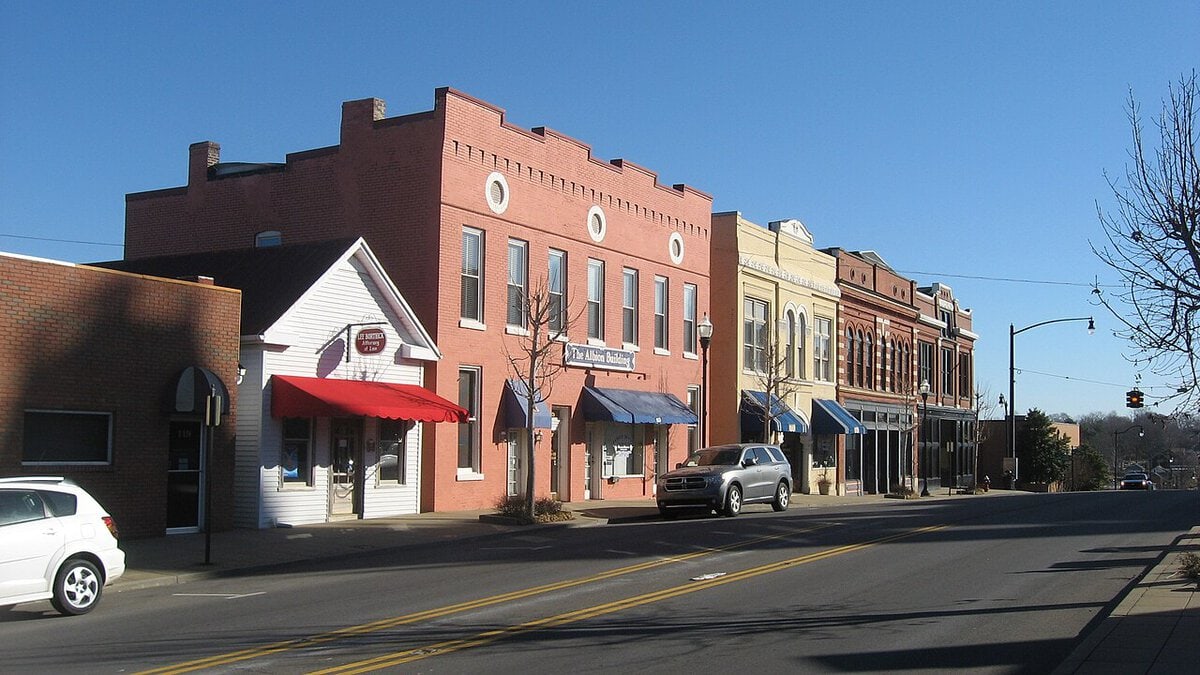
Downtown covers the civic and community side of the week.
Springfield's county-seat role gives this part of town a public-life function, while coffee, meals, community events, and other local stops can fit around it.
Memorial Boulevard covers more car-oriented routine errands.
The useful habit is to combine practical stops there so several ordinary needs stay inside Springfield.
These areas explain two different kinds of local convenience.
Downtown provides a civic and social focus; Memorial Boulevard handles routine car trips.
Local worker, hybrid worker, or Nashville commuter?
Work location usually creates the biggest difference.
| Weekly pattern | What Springfield feels like | Nashville's role |
|---|---|---|
| Work in Springfield or nearby | A small city that can carry most weekdays | Selected destination for specific needs and entertainment |
| Hybrid work with 1-2 Nashville days | Local home city with regular regional work trips | Important on certain days |
| Nashville office 4-5 days a week | Home city attached to a repeated commute | Major weekday destination |
| Nashville job plus Nashville-centered social life | A place to live between frequent trips south | Main location for work and leisure |
The last two patterns add travel to several parts of the week. A Nashville commute already fixes departure times around a regional trip.
Dinner, a gym, friends, or an evening event in the same area can extend the amount of time spent away from Springfield.
Local and hybrid workers get a different benefit from Springfield's size.
When work, errands, exercise, and ordinary social contact happen nearby, Nashville can remain a deliberate outing with fewer required trips.
What WeGo Route 89 can change
WeGo Route 89 Springfield/Joelton continues to operate on weekdays in 2026, giving Springfield a direct commuter-transit connection toward Nashville.
A commuter route solves a narrow but useful problem when work location and work hours fit the service pattern.
It can replace selected driving trips and turn part of the commute into non-driving time.
Schedule fit is the limiting factor.
Irregular shifts, several after-work stops, evening plans, or flexible departure times require another travel option.
Even a well-matched rider still needs another mode for trips such as groceries, school pickups, medical appointments, spontaneous dinners, or weekend plans.
Route 89 can therefore remove some recurring work drives from the week.
A household still needs a plan for every trip that falls outside that commuter pattern.
Weekdays and weekends can point in different directions
A Springfield-centered weekday can include work or remote work, routine errands, parks, coffee, family obligations, local meals, and community activities.
Weekends depend more heavily on what you like to do and where your friends spend their time.
Local parks, youth sports, casual meals, community events, home projects, and nearby friends can keep a weekend centered in Springfield.
Major concerts, broad nightlife choices, professional sports, a large restaurant rotation, or a Nashville-based friend group add more southbound trips.
This is why two neighbors can describe Springfield very differently.
One may spend nearly the entire week in town and choose Nashville for specific outings.
Another may leave Springfield repeatedly for both work and leisure.
Use a one-week Nashville-dependence test
Before judging daily life in Springfield, write down one realistic week.
List where you would go for work, groceries and household errands, routine health care, exercise or parks, coffee or casual meals, and recurring social plans.
Count only the trips that truly require Nashville or another destination south of Springfield.
These bands are editorial heuristics; no official statistical cutoff is implied:
- 0-2 required southbound trips a week: Springfield will probably feel largely self-contained.
- About 3 trips: expect a mixed local-regional week in which trip timing matters.
- 4-5 or more trips, especially for work: regional travel will probably shape most weekdays.
- Work plus frequent Nashville evenings: Springfield may be where you live while much of the active week happens elsewhere.
Run the same count for a typical weekend.
Someone with a local job can still have a Nashville-centered social life, while a Nashville commuter may spend almost every weekend in Springfield.
When Springfield stays at the center of the week
Springfield suits a routine that is mostly local, with Nashville used for selected workdays, specialty needs, and big-city outings.
Once work and social plans both require frequent southbound travel, the commute becomes a recurring cost in time and flexibility.
Count those required trips before judging the city by mileage.
The answer shows whether Nashville appears on your calendar occasionally or takes up a large share of the week.


Sources and further resources
- U.S. Census Bureau QuickFacts: Springfield city, Tennessee - Population, local economic activity, and mean travel time to work.
- U.S. Census Bureau Profile: Springfield city, Tennessee - Census and American Community Survey profile data.
- Nashville-Davidson-Murfreesboro-Franklin, TN Economy at a Glance - Bureau of Labor Statistics labor-force and payroll employment data.
- Metropolitan Area Employment and Unemployment, July 2026 - Current BLS metropolitan labor-market release.
Independent Publisher Notice
BestAttractions is an independent editorial publisher. We are not affiliated with, endorsed by, or acting on behalf of any location, business, property owner, manager, government agency, or organization described in this article. Comments posted on this page are not forwarded to, reviewed by, or acted upon by any entity mentioned in the article. For official inquiries, complaints, applications, bookings, or other requests, please contact the relevant entity directly through its official website or other verified channels.