

Spotsylvania Mall at Fredericksburg's Gate
Spotsylvania Mall did not tiptoe into the Fredericksburg area. It arrived in August 1980 as a bold first indoor mall for the region, showing right away that it wanted to lead local shopping.
More than a million square feet of enclosed retail on a single level, planted just off Virginia Route 3, less than a mile from Interstate 95, and pointed squarely at the stream of cars racing between Washington and Richmond.
Cafaro, the Ohio-based developer that built it and still owns it, understood the geometry of attention. You took the exit, climbed the ramp, and there it was - a super-regional mall where there had recently been not much at all.
The grand opening drew crowds into a climate-controlled universe anchored by four department stores, Leggett, JCPenney, Sears, and Montgomery Ward, with an F.W. Woolworth dime store as a junior anchor.
More than 125 smaller tenants filled in around them. It was the first indoor mall in the region, and it behaved accordingly.
Teenagers lapped the concourses, families treated it as a weather-proof Main Street, and within a few years the stretch of Route 3 west of I-95 hardened into a retail corridor.
Later, across the road, the open-air behemoth of Central Park would rise with millions of square feet of big-box power retail, but the enclosed mass of Spotsylvania Mall remained the psychic center of the junction.
How the Anchors Kept Changing at Spotsylvania Mall
For a place made of steel, concrete, and drywall, Spotsylvania Mall has had a strangely changeable identity, shown mostly by the signs attached above its doors.
In 1993, a Hecht's store joined the lineup, bringing another department-store flag to the façade.
That same year, Woolworth shut its doors, surrendering its junior-anchor position after a decade of selling sundries to America.
The empty spot didn't fill overnight. For a few years, the former Woolworth box sat quiet, until JCPenney eventually grew into the space, opening an additional store next to its main one.
At Spotsylvania Mall, the pattern wasn't instant turnover, but sooner or later, a new name usually found its way onto every empty façade.
Three years later, the Leggett name disappeared as the chain was folded into Belk. Local shoppers walked into the same building, but their charge slips suddenly bore a different corporate signature.
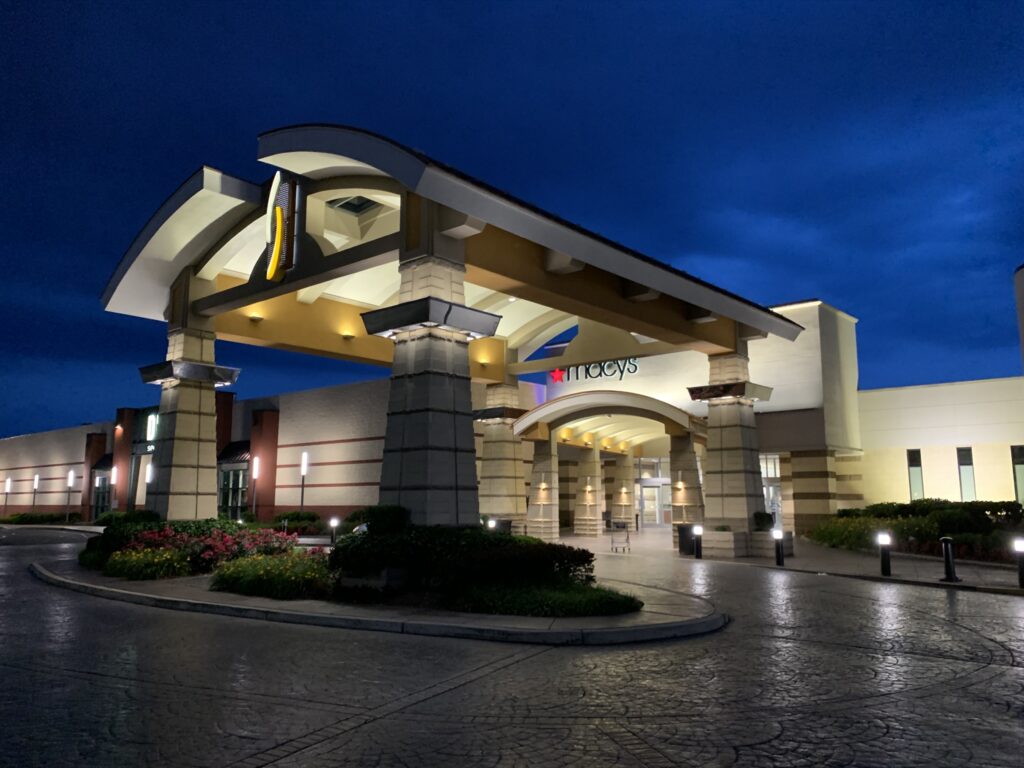
In 2006, Hecht's met the same fate, rebadged as Macy's in a national wave of consolidation that made red stars as common in American malls as skylights.
At first, these changes might seem small, just new logos over the doors and different names on the charge slips. Over time, though, they shifted how the place felt.
The familiar entrances gradually led into a different cast of brands, even while the mall itself remained recognizably the same place to walk into.
Power Centers, Costco, and Battle for the Corridor
The mall's most violent transformation of the early 2000s involved a wrecking crew.
Montgomery Ward, one of the original anchors, joined the wider corporate collapse of the chain in 2001. At some centers, dead Wards stores lingered like abandoned stage sets.
Spotsylvania Mall took a different route: the building came down, and in its place rose a Costco.
By 2002, the corner that once had a regular department store was turned into a warehouse club with bare concrete floors, open ceilings, and stacks of bulk items.
Where shoppers once looked at vacuum cleaners under gentle lights, they now pushed big carts filled with forty-eight packs of water.
That same year, Dick's Sporting Goods opened as another big store, pushing the mall to become a mix of a traditional mall and a shopping center with large stores.
Meanwhile, across Route 3, developers were building Central Park into a sprawling, unenclosed complex that would eventually claim more than two million square feet of storefronts and outparcels.
By some rankings, it became the largest power center on the East Coast. The obvious fear was that this might render Spotsylvania Mall obsolete.
Instead, the two places became a pair of shopping hubs: Central Park with its rows of large stores on one side, Spotsylvania with its indoor comfort on the other, bringing shoppers back and forth for errands and quick shopping trips.
From Enclosed Mall to Towne Centre
By the late 2000s, though, the problem was not competition from across the road so much as competition from time.
The fashion in retail development had shifted decisively toward "lifestyle centers" - open-air streetscapes with landscaping, fireplaces, and the sort of architecture that suggested a town that had never quite existed.
Cafaro's answer was not to abandon Spotsylvania Mall but to expand and rename it.
A 12-million-dollar renovation reworked the interior finishes and exterior façades and supplied a new moniker: Spotsylvania Towne Centre, with an extra "e" and an implied upgrade in status.
More important than the rebranding was the new construction bolted onto the southeast side of the existing building, between Sears and Macy's, and overlooking I-95.
This was The Village at Towne Centre, a lifestyle district initially planned at around 200,000 square feet and later marketed closer to 370,000.
Five separate buildings framed an outdoor streetscape of shops, restaurants, patios, fountains, and fire pits.
The architecture leaned into a colonial vocabulary - brick, traditional trim, a hint of Fredericksburg's older core - rather than the glassy futurism common elsewhere.
With the Village open and the interior renovation complete around 2009, the combined footprint of the mall and its new appendage neared 1.7 million square feet and more than 150 stores, now joined by a hotel and a thickening ring of surrounding development.
Bowling, Books, and Civic Life at Spotsylvania Towne Centre
The Village was not just about walking past shop windows in the fresh air.
Its centerpiece was supposed to be a Muviville Entertainment Complex, a bundle of theater screens, bowling lanes, restaurant space, and electronic gaming.
Then the operator behind the concept stumbled under a heavy debt load, and the future of the entertainment hub became uncertain.
What finally opened behind the mall was Hooky Entertainment Fredericksburg, a large place that brought together a 12-screen Paragon Village 12 movie theater, a 16-lane Splitsville bowling alley, and other nightlife and gaming options all in one building.
The names have multiplied since - Penny Lanes, BLLRDS - but the effect is the same: a steady pulse of people who come to watch a movie or bowl a frame and then drift out into the Village's restaurants.
In a different register, the mall also began taking on civic functions. A sheriff's substation and a U.S. Post Office set up shop within the complex.
In 2018, the Central Rappahannock Regional Library opened a Towne Centre branch inside the mall. This calm, bright space won national design awards.
Nearby, tenants such as a small science and visual arts museum, kids' play areas, and escape rooms made the property feel less like a shopping center and more like a unique, indoor town square, with activities like story time and traffic court.
Goodbye Sears, Hello Attain
For nearly forty years, Sears had been the fixed point in all this evolution, its blue script a familiar landmark since the 1980 opening.
By 2019, the chain's long national unraveling finally reached Spotsylvania Mall. The parent company announced another wave of closures, and the Towne Centre location was on the list.
The store closed in early February 2020. By October, the building was gone, leaving behind a big, empty space near the center of the property.
County planning documents saw this as part of a bigger trend of shrinking retail.
Local officials, looking on the bright side, called it a blank slate.
In 2022, that slate acquired the lines of a site plan and the marketing gloss of a website. Ground broke for Attain at Towne Centre, a 271-unit luxury apartment complex that would sit on and beside the old Sears pad.
The offer was familiar: one-, two-, and three-bedroom apartments with high-end finishes, a fancy pool with tanning areas, a gym, dog park, clubhouse, and shared parking with the mall next door.
But what it stood for was just as important as the features.
A once-dominant department store box was giving way to permanent residents, who would step out of their lobbies and find Costco, Belk, the library, and a bowling alley within a short walk.
The dream of "live, work, play," much invoked in planning jargon, was finally being poured into concrete on a former sales floor.
Surviving the Retail Apocalypse in Virginia
Four decades on, Spotsylvania Mall lives in the uneasy present tense of American retail. On paper, it looks remarkably healthy.
The combined mall and Village complex accounts for roughly 1.6 to 1.7 million square feet of shopping, dining, entertainment, and now residential space.
Major anchors include Macy's, Belk, JCPenney, Costco, Dick's Sporting Goods, and Guitar Center, with Hooky Entertainment keeping the back side busy.
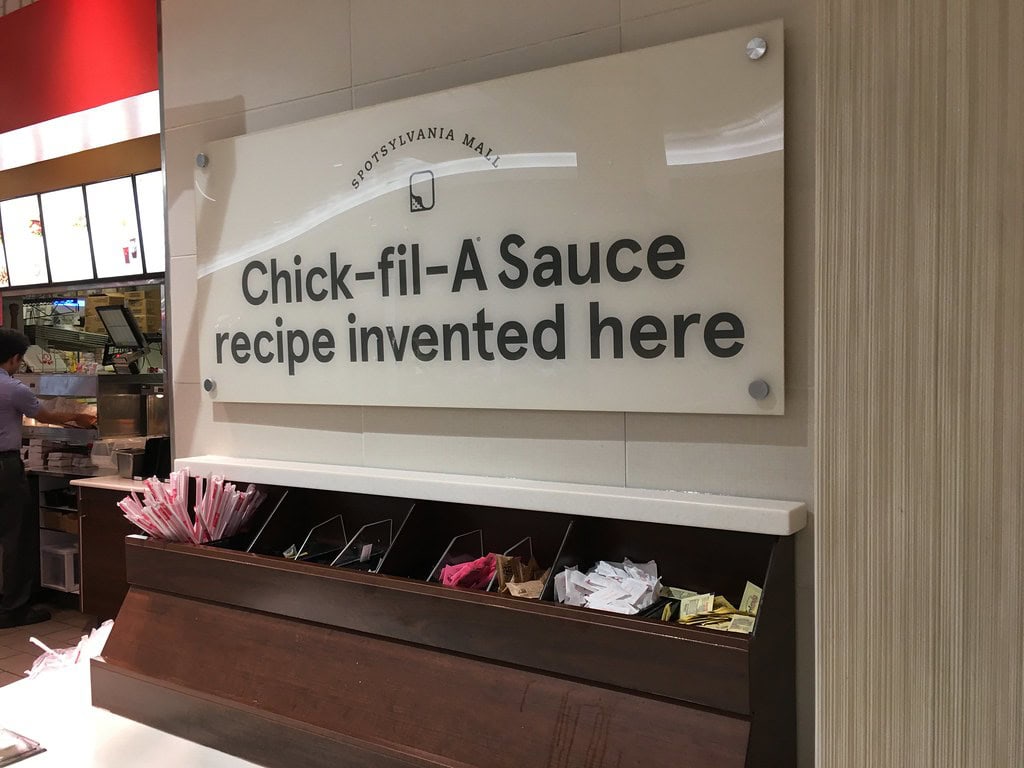
The tenant directory stretches well past 150 names: fast-fashion chains, mid-market apparel brands, shoe stores, jewellers, sit-down restaurants, snack kiosks, salons, optical shops, wireless carriers, and one very busy Chick-fil-A.
County planners point to high occupancy and a five-year net absorption rate in local shopping centers that hovers in the mid-nineties.
They describe Spotsylvania Towne Centre as one of the country's more successful malls, not a dead one.
Cafaro's own materials lean on traffic counts - around 145,000 vehicles a day on I-95, some 80,000 on Route 3 - and on a trade area with six-figure average household incomes and a population projected to keep growing, helped along by the region's data-center and cloud-computing boom.
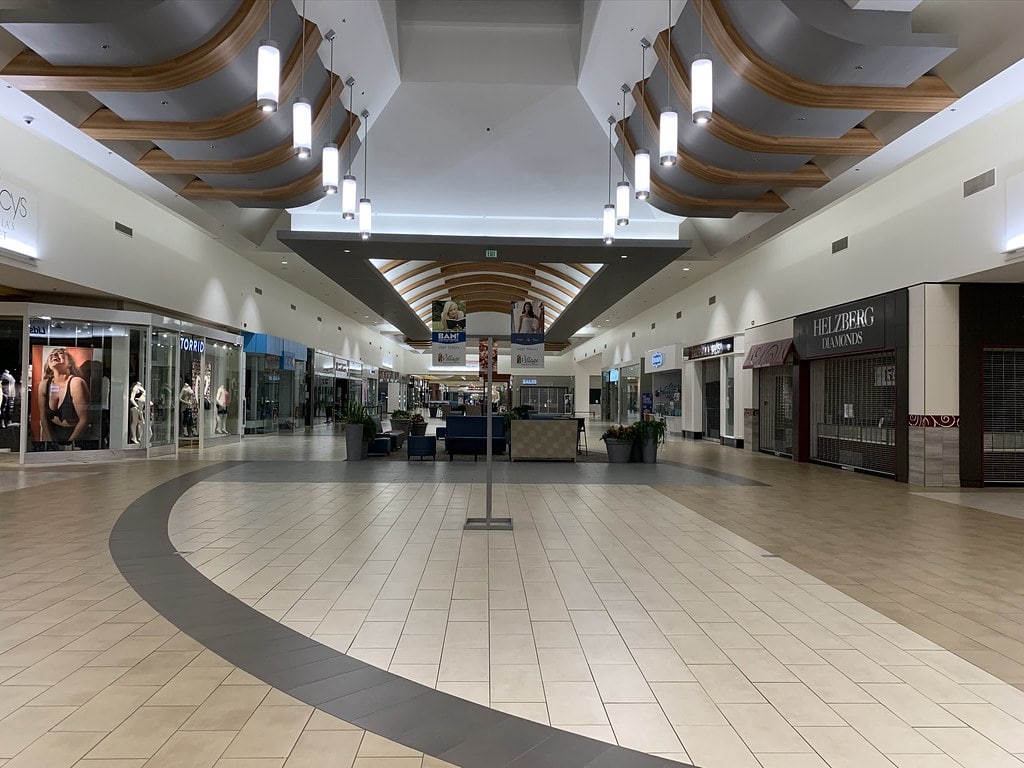
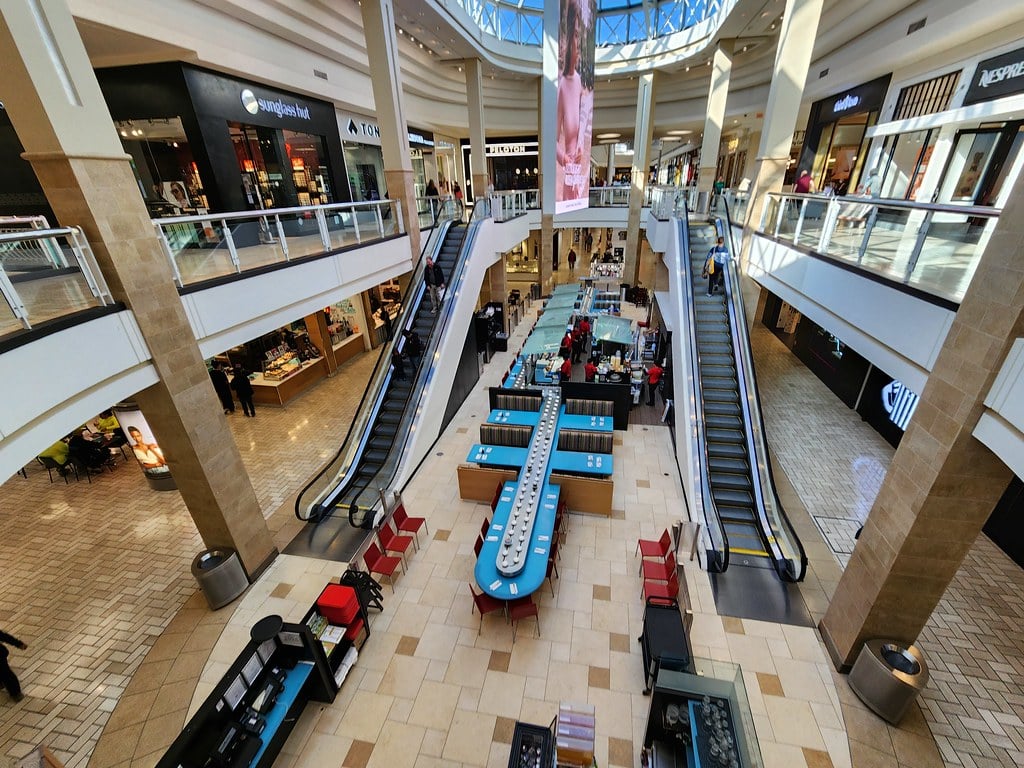
Day to day, it feels less like a theory. On a random Monday evening, the main walkway, with its sharp-angled ceiling that looks a bit like a grounded spaceship, is busy but not crowded.
There are some empty stores, but not many.
The center still keeps regular mall hours, staying open later during the holidays, when Black Friday sales make it open as early as 6 a.m., with free gift bags for the first few hundred shoppers, a DJ and dance contests in the hallways, high-school bands wrapping gifts to raise money for new uniforms, and Santa's helpers walking around like holiday brand ambassadors.
In a decade when many other malls have been split up, changed to other uses, or left empty with overgrown parking lots, Spotsylvania Mall has done something rare: it has mostly stayed the same, while quietly becoming something new.
Independent Publisher Notice
BestAttractions is an independent editorial publisher. We are not affiliated with, endorsed by, or acting on behalf of any location, business, property owner, manager, government agency, or organization described in this article.
Comments posted on this page are not forwarded to, reviewed by, or acted upon by any entity mentioned in the article.
For official inquiries, complaints, applications, bookings, or other requests, please contact the relevant entity directly through its official website or other verified channels.
A remarkably interesting, comprehensive and well written history. Much appreciated.
That means a lot - thank you!
Spotsylvania Mall was a nice place to shop but it is so expensive. The stores are not exactly what is needed. The prices are high and people don't have that much money to shop. I have not been in that mall in 5 years because there is nothing there that I need and want. I shop on line where the prices are better.
Five years is a long time, and it says a lot. When someone stops going for that long, it is rarely about one bad visit - it is more that the mall stopped offering enough to justify the visit.