
University Mall opens under the skylight
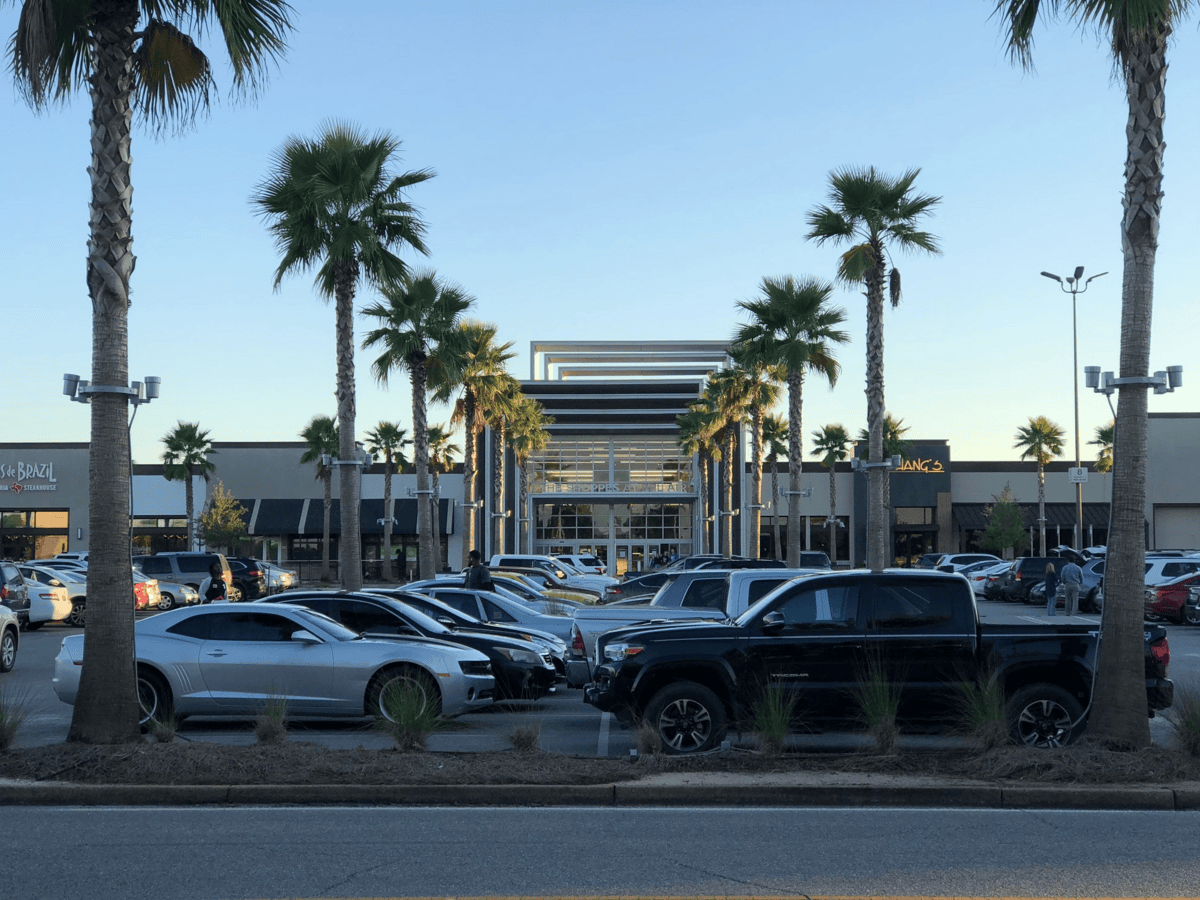
Walk in from the deep red brick exterior, and the space opens quickly. A vaulted skylight drops natural light into the center court. The court includes a sunken garden with a large fountain at its center.
Tropical plants sit under the skylight. Large planters and seating areas are set in brick holders. Modern art sculptures appear in the small courts in front of the anchor wings.
University Mall opened on August 20, 1980. At opening, it had four anchor tenants - J.C. Penney, Sears, Pizitz, and Parisian - and 86 inline tenants.
The plan was essentially a plus shape, with the four anchors on equidistant wings off the center court. A smaller entrance wing facing west created a fifth leg. That west wing later became the food court area.
The mall used a different approach to food service than the typical walk-up counters around a shared seating area.
The eateries were located in full storefronts with sit-down areas inside. One of the larger sit-down spaces was a Sbarro.
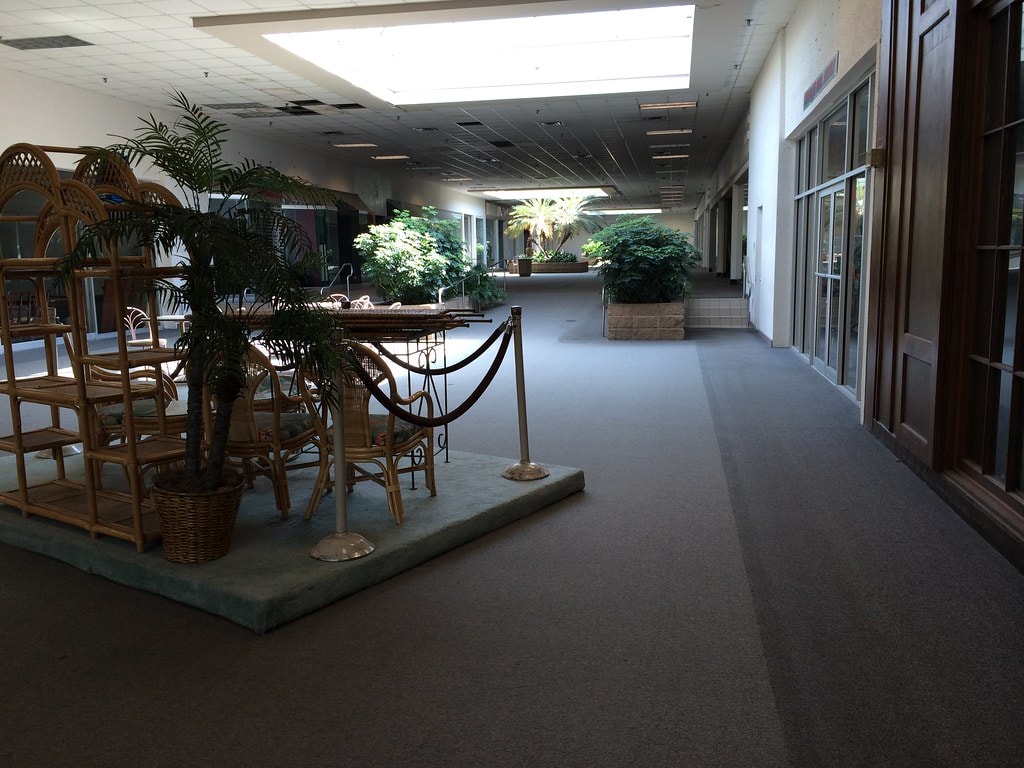
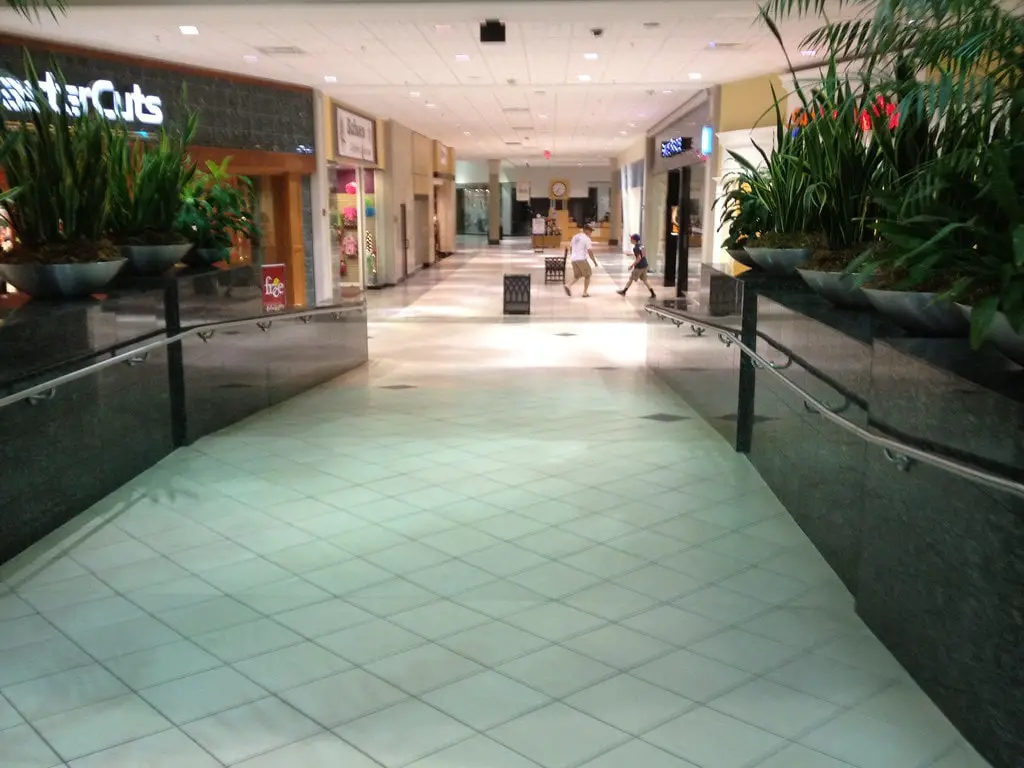
The interior design emphasized contrast between light and dark. Skylights brightened the corridors and courts. Dark faux brick linoleum tiles covered the floors.
From Army hospital wards to demolition
The site that later became University Mall was occupied by the Northington General Army Hospital from 1943 to 1946.
The facility was built as a semi-permanent military hospital complex.
After it was decommissioned, the property was partly reused for years, while many of the former hospital buildings remained in place and grew increasingly derelict over time.
The Tuscaloosa City Board of Education used portions of the former hospital complex for years and remained there until relocating in 2000.
On June 16, 1977, Aaron Aronov Realty of Montgomery announced it had secured a lease on 72 acres of the former hospital property to develop a regional shopping center.
The agreement was a 60-year lease. Under its terms, Aronov would pay the Alabama Department of Mental Health 20 percent of its net profits gained in operating the mall.
Demolition of the hospital complex began on April 7, 1978. The work was carried out by the T.M. Burgin Company of Birmingham.
During production of the 1978 Burt Reynolds film "Hooper," the ruins of the hospital were used for the climactic scene and were ultimately destroyed as part of the filming.
Anchors sign on, and construction accelerates
Plans for the shopping center were defined in 1977 with a projected cost of $17 million to $22 million.
The plan called for about 75 stores and about 600,000 square feet of leaseable space. After the former hospital complex was demolished, site preparation began in February 1979.
The work was carried out by S.T. Bunn of Cottondale and focused on preparing the ground for construction.
In May 1979, the first three anchor tenants were announced: J.C. Penney, Pizitz, and Sears. Their leases specified that they would be open by October 1, 1980.
By October 1979, Aronov estimated the mall would draw customers from across west Alabama and eastern Mississippi.
Aronov also projected employment of about 1,000 to 1,500 people.
Physical construction of the mall structure began in July 1980. The work was handled by West Point Construction Company of Georgia.
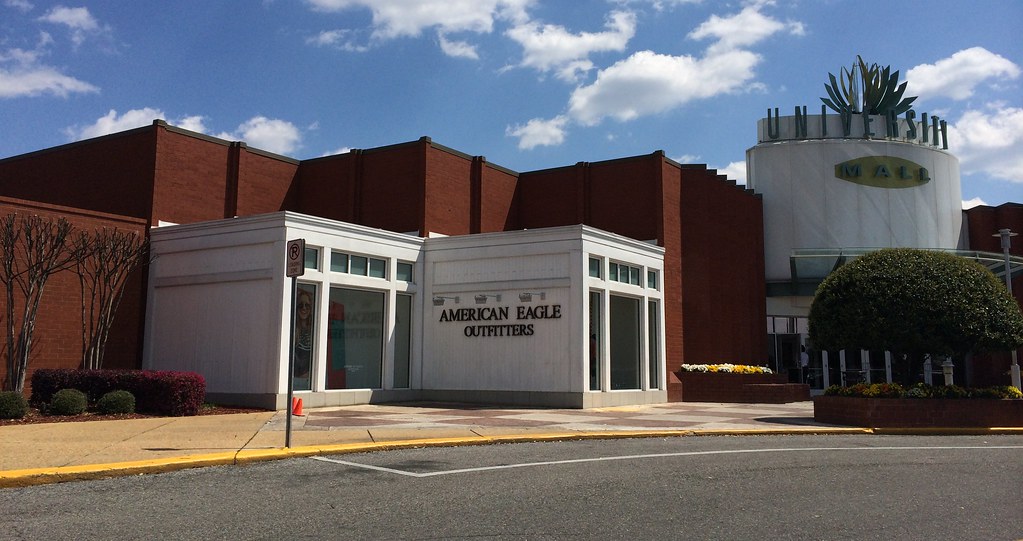
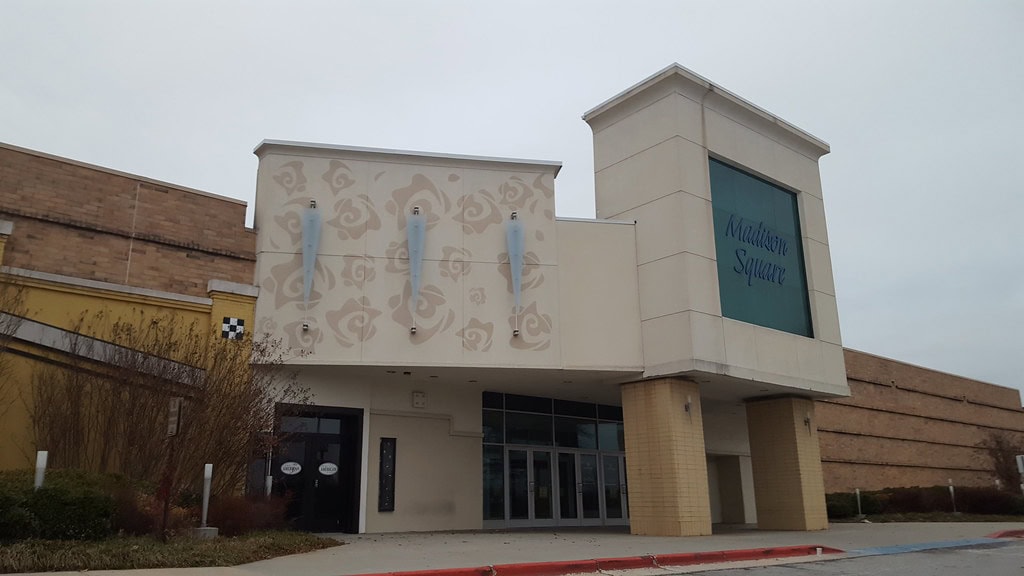
The exterior was built in deep red brick, similar in color to Century Plaza in Birmingham.
The entrances used brownish-black tones. One rear entrance retained its original appearance decades later.
An 86-tenant lineup reshapes Tuscaloosa
University Mall opened on August 20, 1980, with four anchors and 86 inline tenants, and it quickly became the city's primary retail destination.
It displaced McFarland Mall, which had opened on February 19, 1969, as Tuscaloosa's premier shopping center. University Mall did not include space for a fifth anchor.
It did not lure away Gayfer's, McFarland's major tenant, which helped the older mall remain viable for years after losing its top position.
The shift was felt downtown. Sears and J.C. Penney closed their downtown Tuscaloosa stores after opening at University Mall.
The independent Pizitz Tuscaloosa chain also faded, with its last location, inside McFarland Mall, closing in 1981.
At University Mall, the anchor lineup combined Parisian and the Birmingham-branded Pizitz with Sears and J.C. Penney.
The inline tenant list mixed national chains and local fixtures.
Stores included Lorch's Diamond Center, Spencer Gifts, Radio Shack, Foot Locker, Musicland, Bookland, McCrory's, Hibbett's, and Harco Drugs, along with banks and South Central Bell.
Dining options included Morrison's Cafeteria, Taco Casa, Chick-fil-A, Ruby Tuesday, Bon Appetit, Korn Dog, Swiss Pretzel, Peanut Shack, and Your Fathers Mustache.
Barrel of Fun operated as an arcade and entertainment spot inside the mall.
Anchor swaps: Pizitz, McRae's, Belk split
The anchor lineup at University Mall changed names over time, even as the stores stayed in the same corners of the building.
Pizitz operated at the mall from its opening until January 1987. It was the Birmingham Pizitz brand, distinct from the local Pizitz Tuscaloosa chain that later faded.
In 1987, the Pizitz store converted to McRae's. McRae's was renovated in 1998 and remained in that location until July 2005.
Parisian opened with the mall in 1980 as the northwest anchor. In 2005, Parisian was expanded to include additional merchandise categories after McRae's was sold to Belk.
In 2006, Belk acquired Parisian, placing both former anchor brands under the same ownership at University Mall.
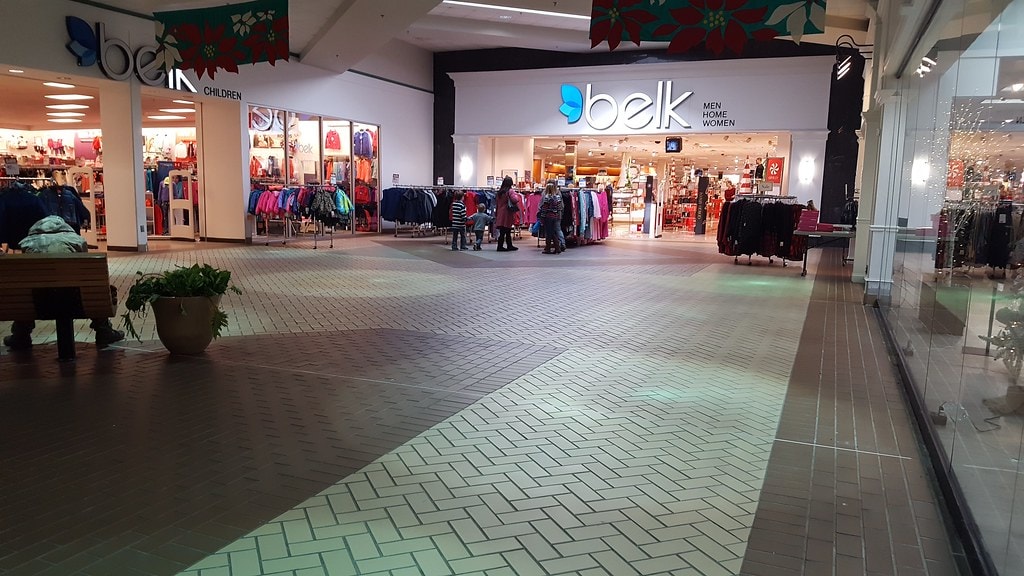
After the consolidation, the former Parisian space became Belk Women, occupying about 82,000 square feet. The former Pizitz-McRae's space became Belk Men, Home & Kids, occupying about 90,000 square feet.
JCPenney remained in its original location as an opening-day anchor. Its store size was about 99,500 square feet.
1998-1999 renovation keeps the bones
After eighteen years of operation, University Mall went through its first major renovation in 1998-1999.
The work updated surfaces and the central gathering space without changing the basic layout. Crews replaced more than 5,200 ceiling tiles and about 45,000 floor tiles.
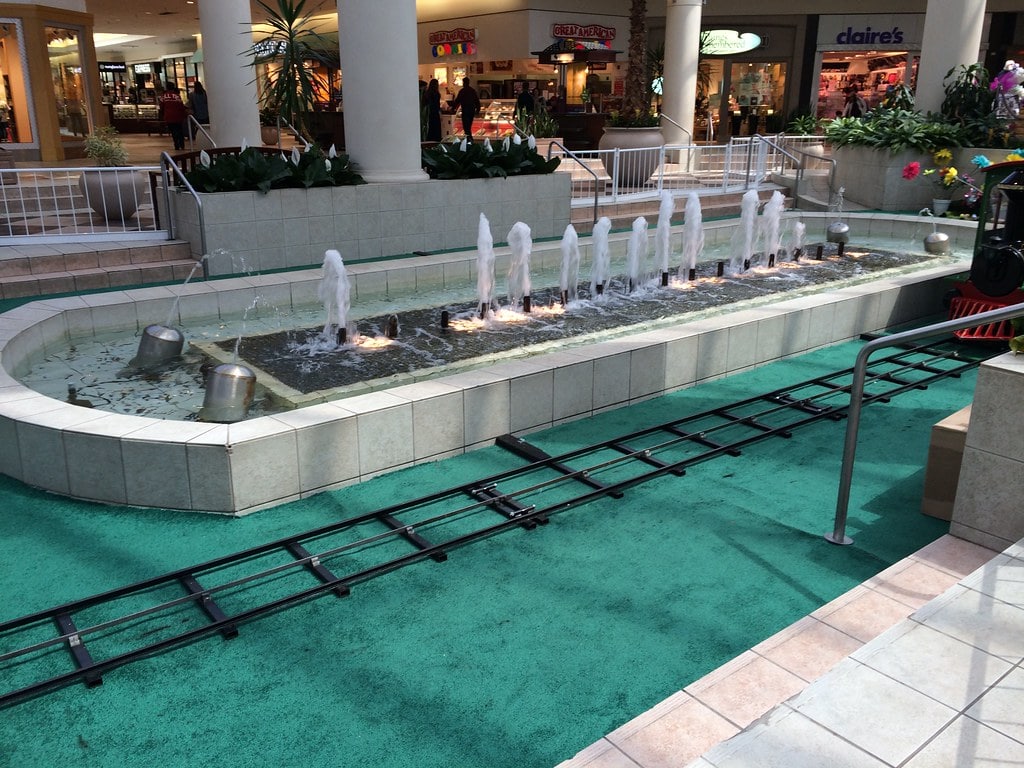
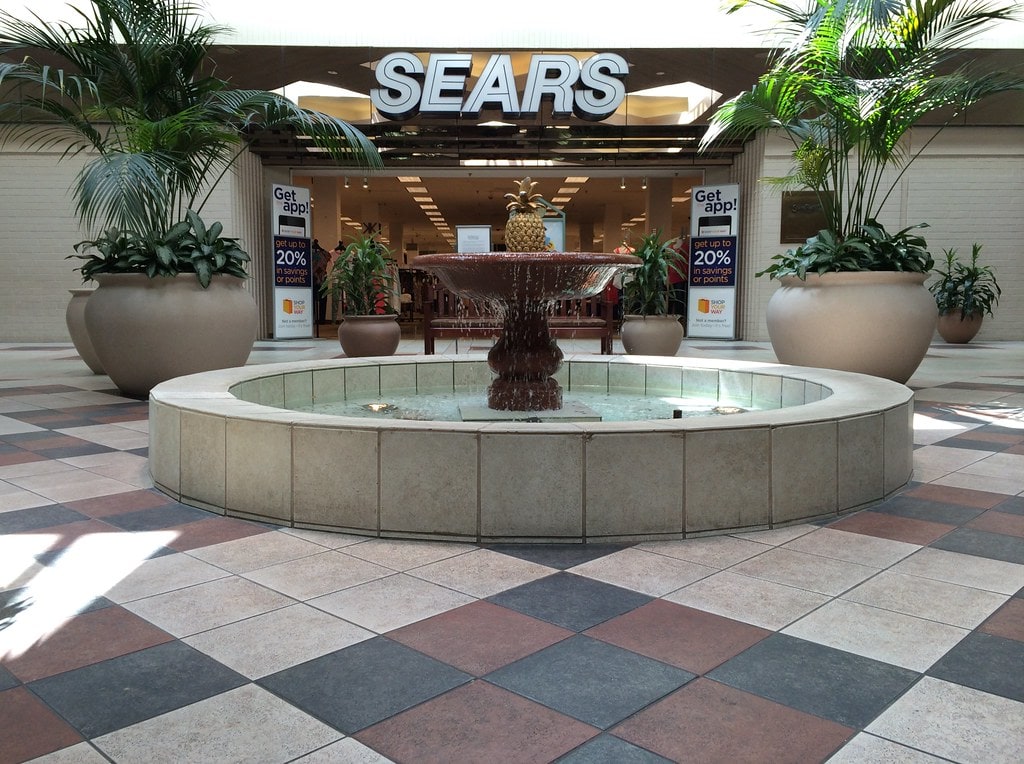
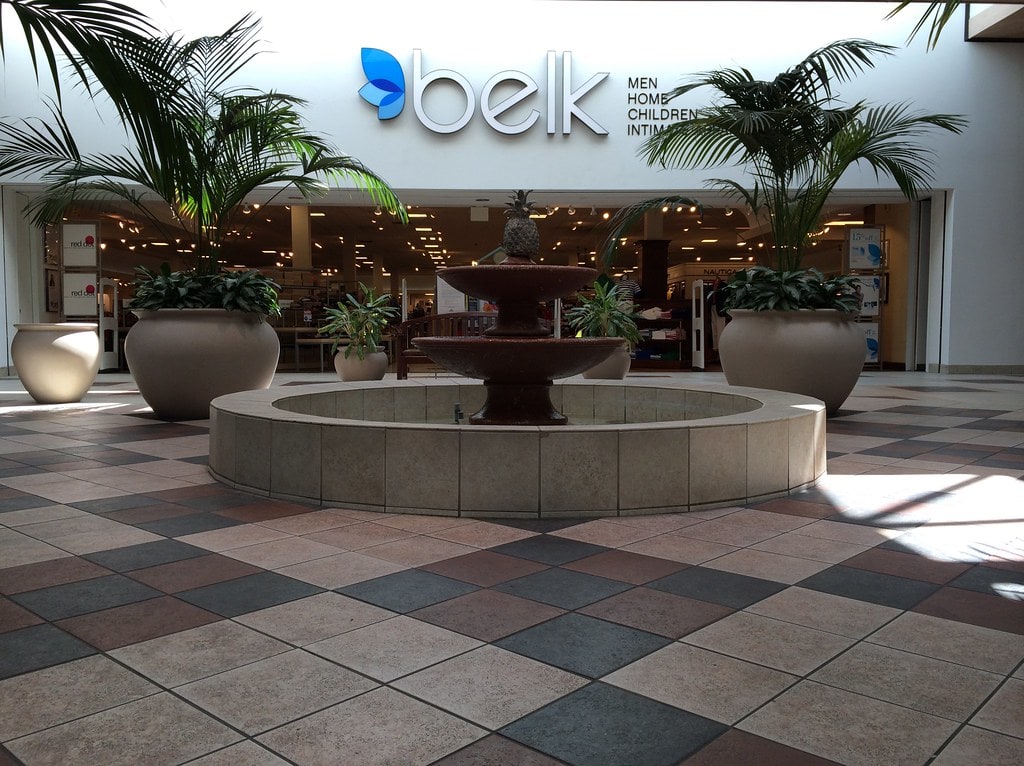
In the center court, a fountain, stage, and seating area were added, turning the space into a defined stop instead of a pass-through between wings.
Changes spread out from the middle. Fountains were placed in front of all anchor entrances. The main entrance was upgraded.
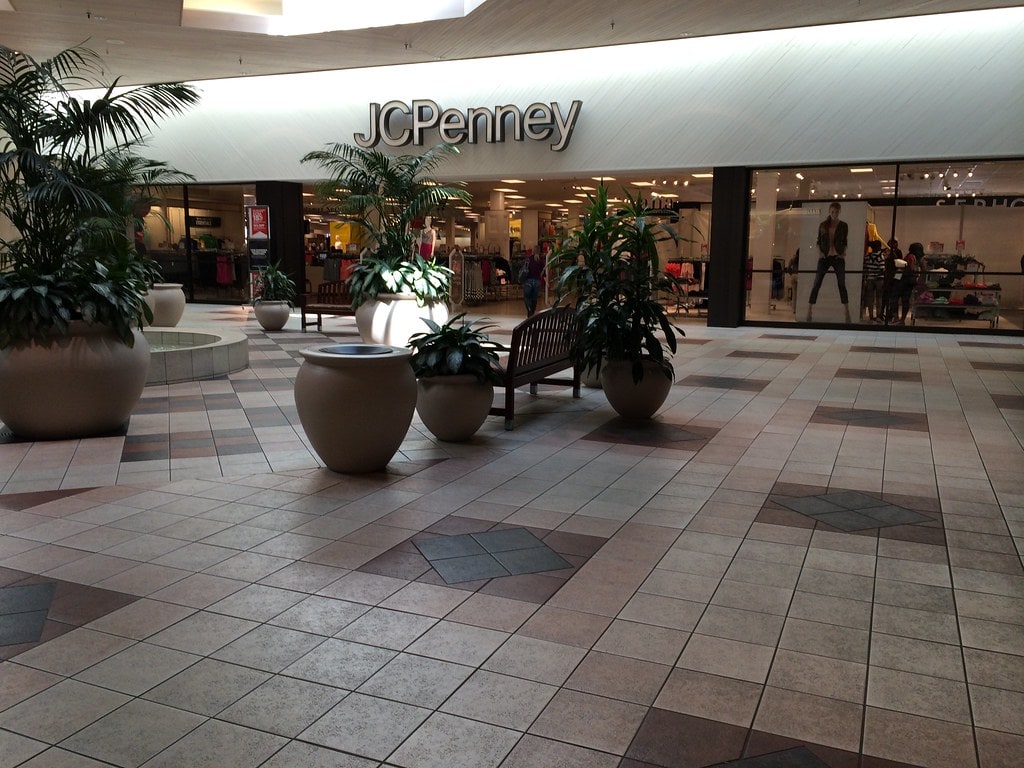
The courts in front of the department stores were rebuilt, replacing the earlier, blockier courts with a more subdued arrangement using potted planters and small fountains.
The mall still read the way it did at opening, with skylights providing bright overhead light and darker flooring carrying through the corridors, and landscaping treated as part of the interior design.
Food service changed just before the renovation. Morrison's Cafeteria converted to Piccadilly in 1998.
It stayed in the same sit-down location between the Parisian and JCPenney wings, with outside windows forming a nook along the mall interior.
The property remained under Aaron Aronov Realty. The company was founded in 1952 and entered shopping centers in 1954 with the Normandale Shopping Center in Montgomery.
Aaron Aronov was a founding member of the International Council of Shopping Centers, served on its early board, and later became its president.
The company later developed more than 200 centers in more than 85 Southern communities.
Lifestyle rival across the street arrives
By the 2000s, University Mall was in a period of routine tenant turnover and chain consolidation. Bon Appetit, the crepe restaurant from the opening lineup, closed.
Ruby Tuesday converted to Applebee's. Harco Drugs was absorbed into Rite Aid, and Rite Aid later left the mall entirely.
Lerner was purchased by Limited and became New York and Company. McCrory's disappeared along with other five-and-dime chains.
Other tenants held their places. Lorch's Diamond Center continued operating in the exact spot where it opened. Taco Casa continued business in its original location.
A new competitor arrived nearby in 2007. A lifestyle center Midtown Village opened directly across the street from University Mall.
It had been promoted with the idea that it would lure Dillard's away from McFarland Mall, but it did not bring that anchor.
The open-air development still competed for retailers and customers and changed the local retail balance, with the newer center drawing some upscale attention that had traditionally gone to the enclosed mall.
University Mall continued to draw from outside Tuscaloosa. The University of Alabama remained a steady driver of traffic.
Regional industrial growth increased the area's customer base, including the Mercedes plant that opened in the late 1990s.
The city's location also made it a draw for shoppers from Mississippi who wanted Birmingham-level retail options without driving to Hoover.

Tornado near-miss, then Sears goes dark
On April 27, 2011, an EF4 tornado struck Tuscaloosa and caused about $2.45 billion in property damage.
Sixty-four people were killed, including six University of Alabama students. The tornado's path ran 80.68 miles through Greene, Tuscaloosa, and Jefferson counties.
In the area around 15th Street and McFarland Boulevard, near University Mall, businesses and restaurants were flattened and vehicles were tossed or destroyed at low-end EF4 strength.
The tornado track passed south of Bryant Denny Stadium and just north of University Mall, and the mall avoided catastrophic destruction.
University Mall sustained moderate roof damage. It reopened for business within days after the storm.
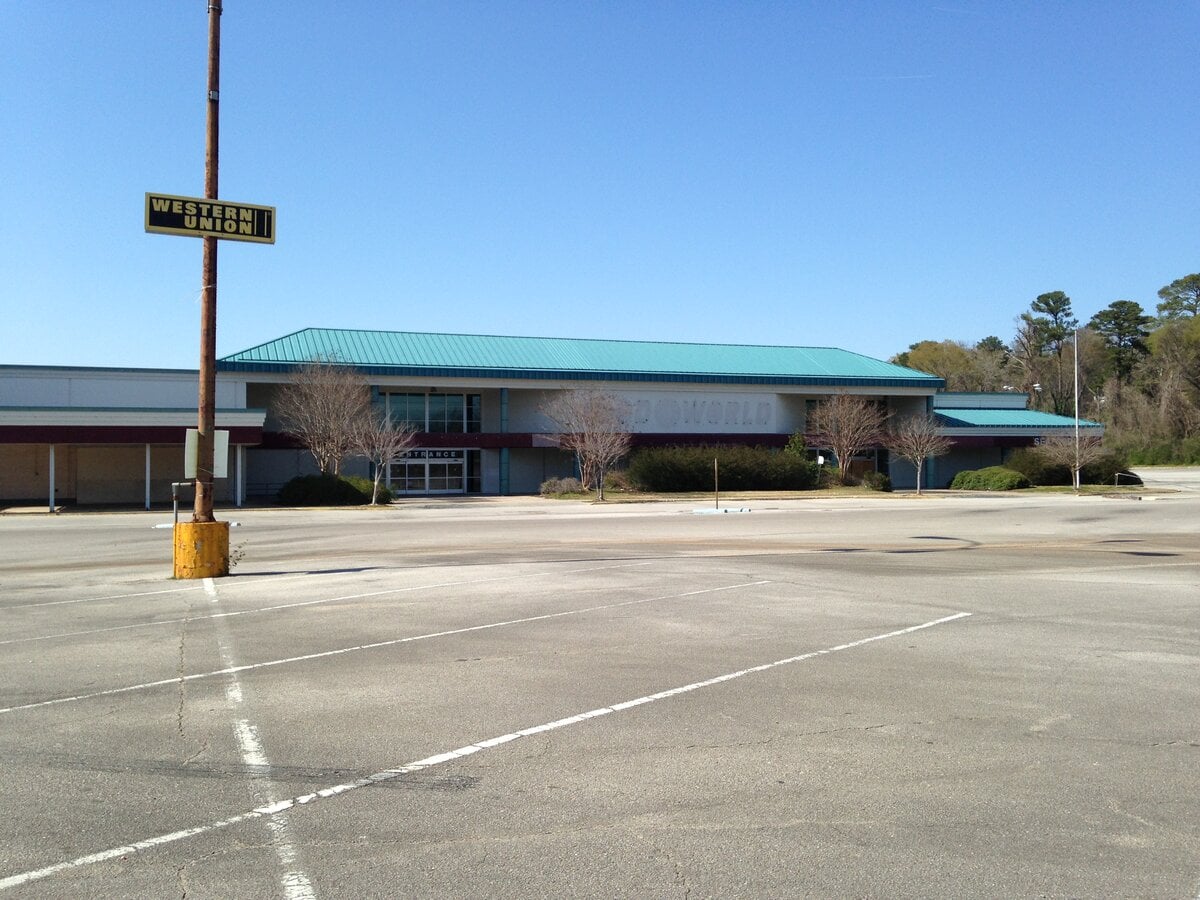
In later years, the mall's largest vacancy came through retail consolidation. On November 2, 2017, Sears announced it would close 63 stores nationwide, including the University Mall location.
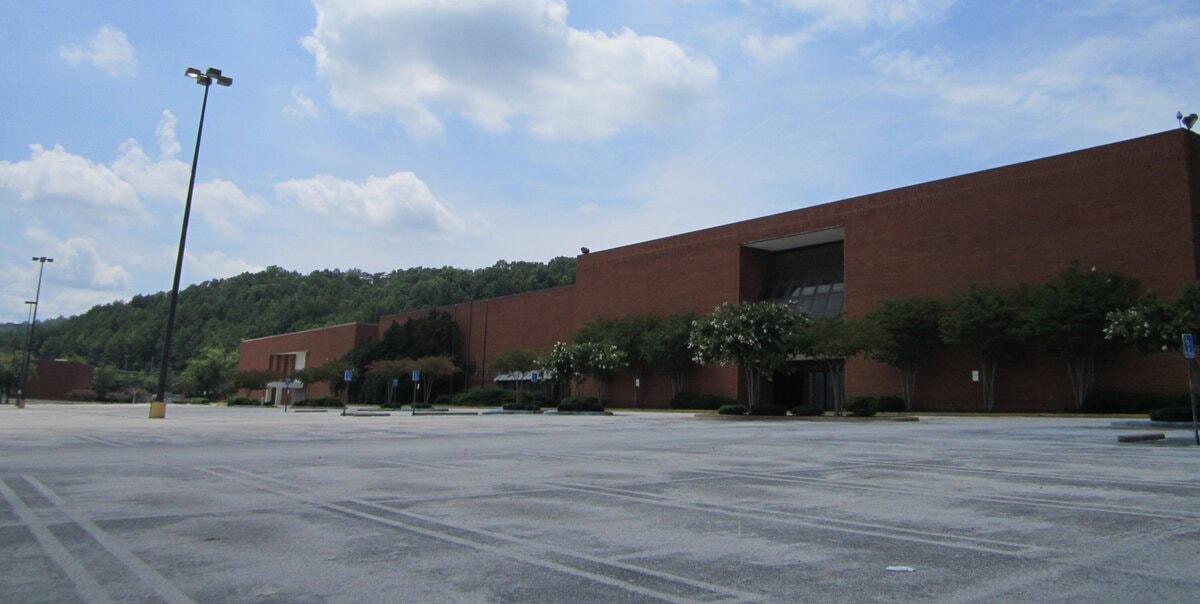
Sears closed in January 2018 after operating at the mall since its opening, ending nearly 38 years as an anchor. The closure left about 105,000 square feet vacant.
In the 2020s, Spirit Halloween temporarily operated in the former Sears space. The seasonal use provided short-term occupancy for the anchor box while the space remained otherwise unfilled.
2026 snapshot: anchors, closures, vacancies
As of January 2026, University Mall is still operating as the largest enclosed mall in western Alabama.
It has roughly 733,000 square feet of retail space and about 60 stores and services at 1701 East McFarland Blvd at Veterans' Memorial Parkway, about a mile southeast of the University of Alabama campus.
The anchors are JCPenney, Belk Women, and Belk Men, Home & Kids, and the former Sears space remains vacant.
Vacancy pressure has been visible in the tenant churn. Maurices closed permanently on December 21, 2024, reported at the time as having no plans to relocate elsewhere in the Tuscaloosa area.
Rue 21 closed its brick-and-mortar locations nationwide in May 2024, including the University Mall store.
Earthbound Trading Company, in the mall since 2006, selling craft goods, minerals, and home decor, announced it would close permanently on August 31, 2025.
Around that same period, more than 20 retail spaces were vacant and available for lease inside the mall.
The mall is kept up in the basic ways. The common areas are clean, the lights work, and the inside stays cool and comfortable, so walking around is easy.
Empty shops line parts of the building, and there are fewer stores than you would expect, with not enough food places to fill the space like a busy mall would have.
Overall, the mall is open, running, and looked after, but it is clearly missing a lot of stores.
Who owns the mall property and building now?
The owner is Aronov.