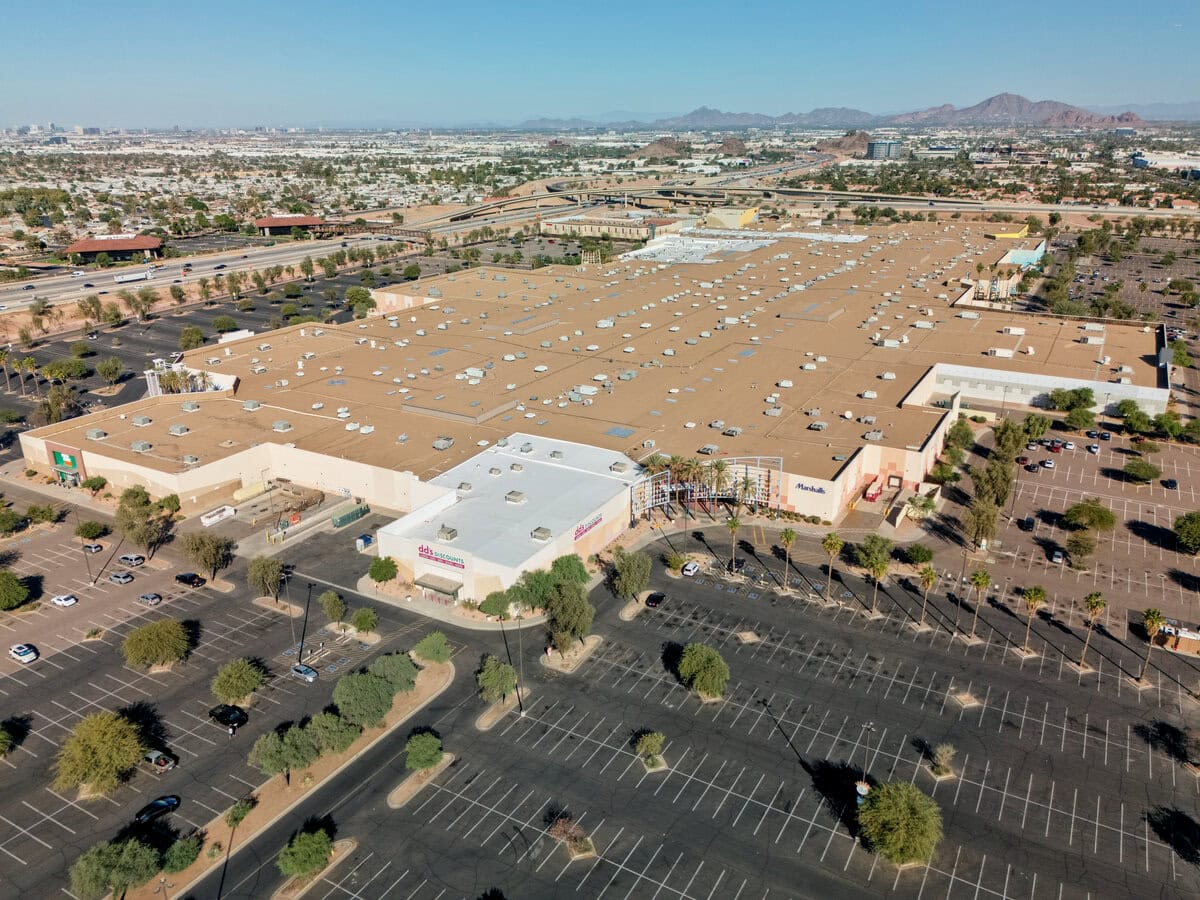
From Sears Park to Park Place Mall
In the days preceding the mall, its branding and logo, Broadway and Wilmot met there as a grudging, simple compromise, a patched edge between quiet houses and advancing retail now.
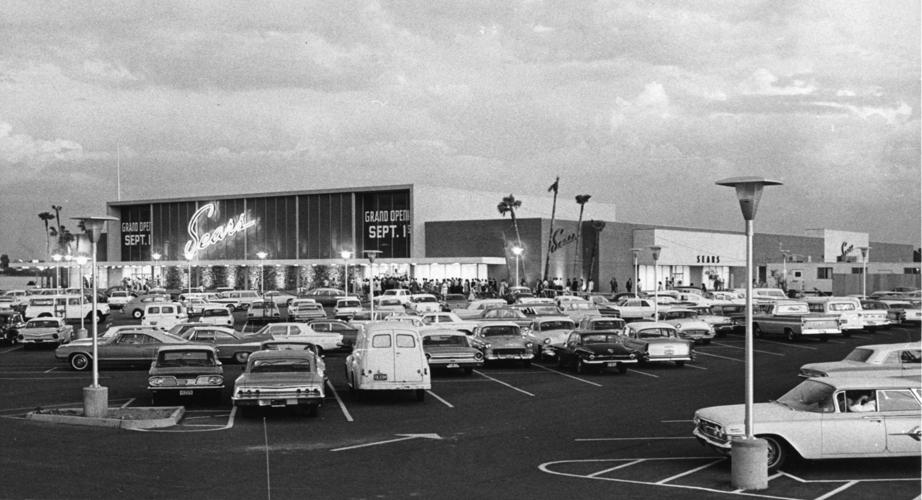
In 1965, Tucson got a brand-new Sears department store, opening on September 1 with the kind of optimism only mid-century retail could muster.
The neighbors south of the site, living in quiet residential streets, were less enthused about a commercial beachhead creeping toward their cul-de-sacs.
The solution was something called Sears Park - a linear strip of landscaped green, a buffer meant to prove that progress could arrive with a polite handshake instead of a bulldozer.
Alongside the store and the park sat an electric substation, installed about a decade earlier.
It would eventually end up with the wonderfully literal name Sears Substation, the kind of branding you get when no one expects the infrastructure to become a landmark.
In the early 1970s, Tucson developer Joseph Kivel saw more than a green strip and a department store.
Having already tangled with El Con Mall across town, he assembled the land and plans that would, by May 1975, become Park Mall - an 850,000 square foot, fully enclosed, climate-controlled monument to American shopping.
Sears became the anchor of anchors, joined by The Broadway, Diamond's, Furr's Cafeteria, and Mann Theatres, wrapped in a ring of 51 other stores and framed by 5,200 parking spaces shimmering in the desert heat.
When Park Mall Came to Life, 1970s–1980s
If you were a Tucson teenager in the late 1970s or 1980s, Park Mall was less a building than a climate-controlled ecosystem.
Books were available at B. Dalton or Waldenbooks. Records and cassettes spun out of Disc Records and Wide World of Music.
Jewelry glittered at Zales, Helzberg, Rosenzweig, and Daniel's. Shoes multiplied: Thom McAn, Hanover, Florsheim, Kinney, Buster Brown, Naturalizer, Hirsch's, Butler's.
Women's fashion lined the concourses in a dense strip of signs - Foxmoor Casuals, Casual Corner, 5-7-9, Petrie's, Frederick's of Hollywood, Susie's Casuals, a flurry of "women's shops" that blurred together in the neon.
There were specialty stops for nearly every pre-Internet whim: Spencer Gifts, GNC, Gingiss Formalwear, Toys by Roy, Sunset House.
If suburban aspiration needed a set, Park Mall supplied the backdrop.
Locals, stubbornly loyal to precedent, often called it Sears Park anyway, as if the mall were a particularly elaborate annex of the original department store.
In 1986, Diamond's quietly became Dillard's. Around the mid-1990s, The Broadway gave way to Macy's.
Ownership remained with Kivel until he died in 1996, when his family sold Park Mall and El Con to General Growth Properties.
Somewhere under the tile, a time capsule was laid into the floor, scheduled to be opened in 2040 - a literal bet that the mall, and perhaps malls in general, would still be around to watch.

From Park Mall to Park Place: The Makeover Years
By the late 1990s, the 1975 mall was feeling its age.
The bones of the place functioned, but they belonged to a prior era, when department stores were unquestioned royalty, and the rest of the mall arranged itself around them.
General Growth Properties, now in control, opted for a full-body makeover.
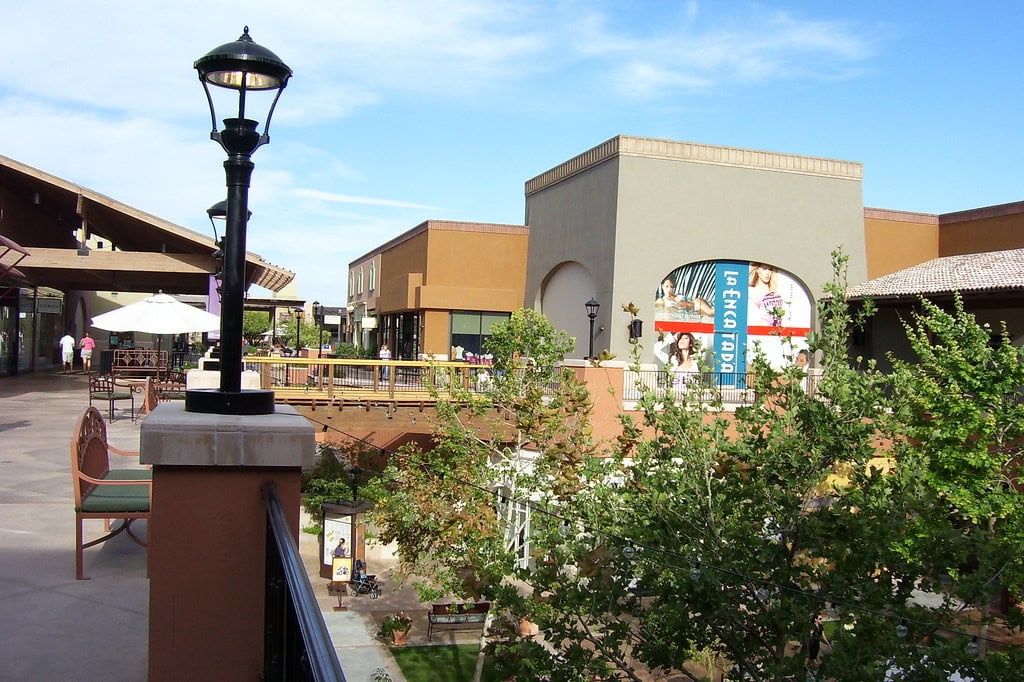
The renovation kicked off in 1998 and was not subtle. Concrete was ripped out, skylines were rethought, façades were smoothed and brightened.
In 1999, the property rebranded from Park Mall to Park Place - the sort of name that's supposed to sound both upscale and vaguely Monopoly-adjacent.
By 2001, more than $100 million had been poured into a 1.1-million-square-foot overhaul.
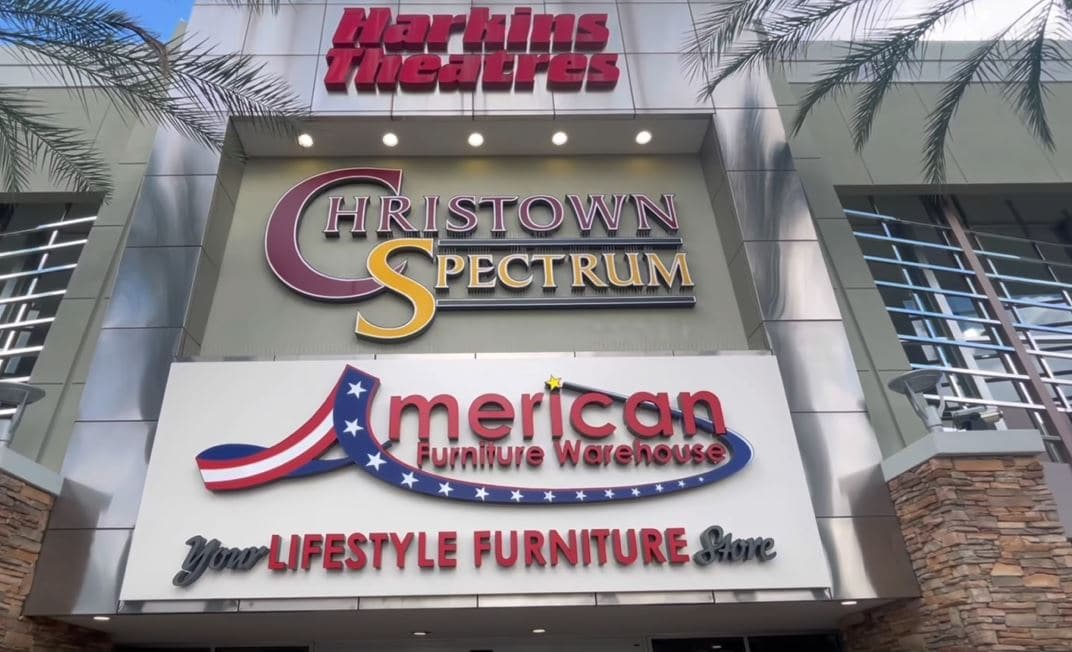
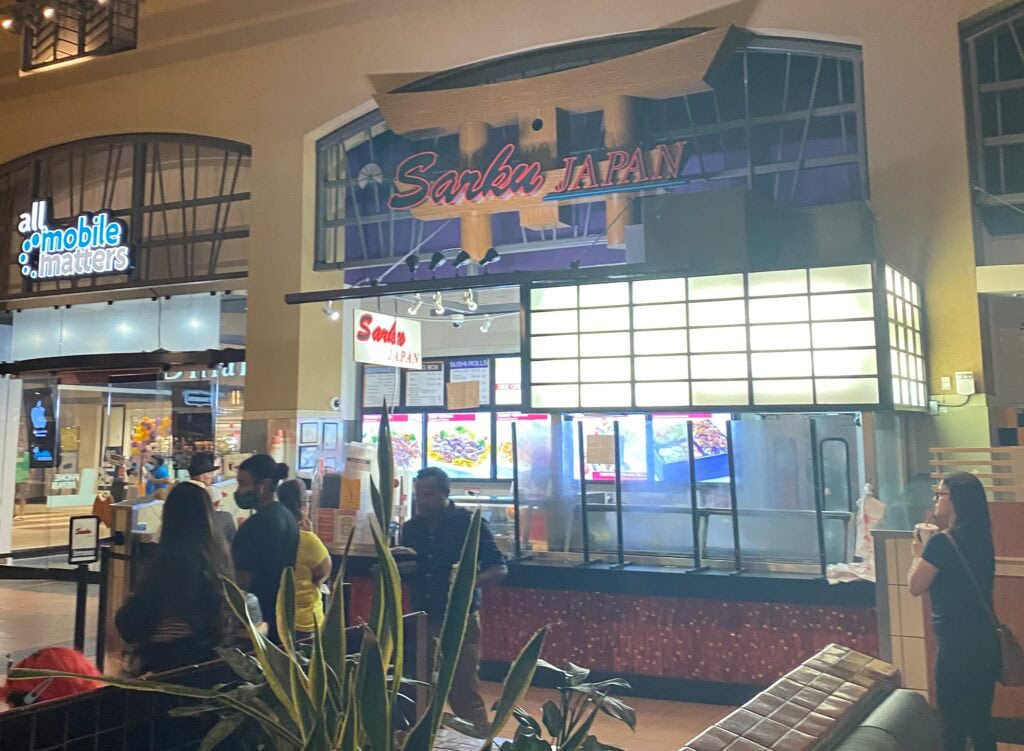
The updated mall came with a movie theater with 20 screens, a larger and brighter food court, and a Southwest-themed play area for kids that used desert designs to make it fun for families.
New tenants announced that the mall intended to remain relevant: Old Navy, Borders, and Abercrombie & Fitch.
Tucson Weekly's readers even voted the fresh, stuccoed Park Place the city's Best Contemporary Architecture in 2001, which says as much about the mall as it does about Tucson's architectural ego at the time.
For a moment, Park Place seemed to have done something most malls rarely do: instead of just getting older, it completely changed.

Reinventing Park Place as a spectacle
The era that followed was less about architecture and more about survival math.
General Growth would eventually be absorbed by Brookfield Corporation in 2018, but the crucial tremor for Park Place came earlier, in 2015, when Sears Holdings realized it owned more valuable real estate than retail relevance.
That year, Sears spun off 235 properties, including its Park Place box, into a separate real estate trust, Seritage Growth Properties.
The store limped along for a few more years, its escalators still running under bright lights, until July 2018, when it finally closed as part of company-wide cuts.
The first big store in the whole complex, the one that had given the place its first name and its substation, shut down.
Taking its place was Round 1 Entertainment, a Japanese mix of bowling alley, arcade, karaoke bar, and lots of lights and sounds.
In October 2019, it opened in about 50,550 square feet of the old Sears building, turning a store once filled with appliances and tools into a place full of claw machines and prize tickets.
Then came 2020.
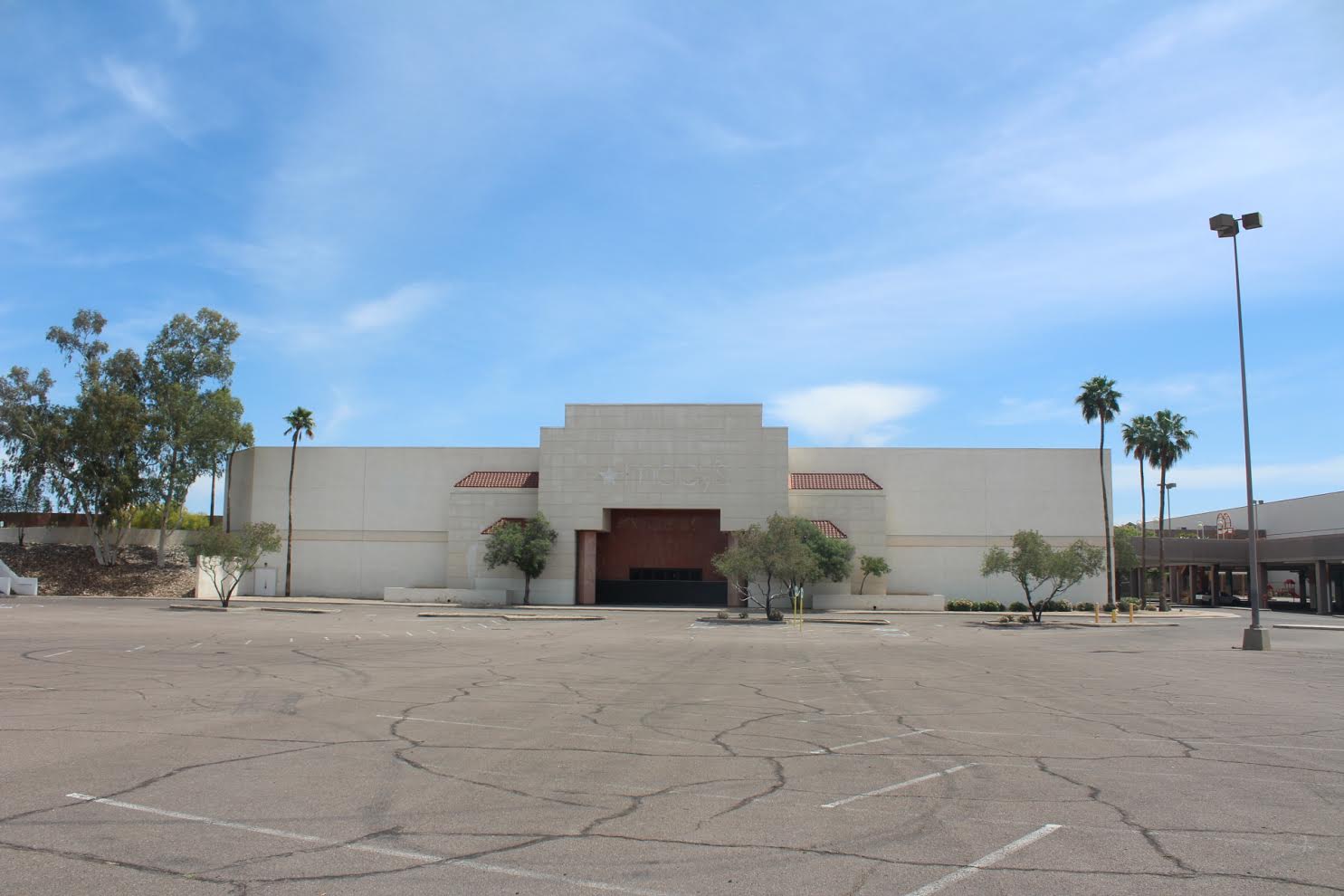
After a spring of pandemic closures – and a May 19 reopening with reduced hours and new safety rituals – Macy's announced on May 28 that it would close later that year, leaving Dillard's as the last traditional department store left standing.
Debt, foreclosure, and the Pacific rescue
Behind the storefronts, the spreadsheets told a more anxious story.
When Brookfield acquired General Growth in 2018, it also inherited 456,000 square feet of Park Place and a hefty commercial mortgage-backed security tied to the property.
The loan, originally about $200 million, had been chopped, tranched, and distributed through a GS Mortgage Securities conduit, with Deutsche Bank National Trust Company in the trustee mix - a perfectly 21st-century fate for a 20th-century mall.
By 2023, the numbers no longer worked. The debt had gone delinquent, with roughly $154 million outstanding.
The appraised value had dropped to $87 million. On September 6, 2023, the property went back to the people who held the loan, which was basically a foreclosure, even if it was not called that.
Enter Pacific Retail Capital Partners, a Los Angeles firm that specializes in coaxing aging malls into something like a second act.
In the summer of 2023, Pacific Retail acquired Park Place for $87 million, taking over management and leasing.
It was the company's first Arizona property, adding to a portfolio of 24 centers and more than 20 million square feet of retail across the country.
They acquired a 1,063,000-square-foot complex, with 657,000 square feet in anchor stores, about 95 percent occupancy, and still surrounded by 5,200 parking spaces.
From the outside, the mall looked healthy, but its finances were much more complex.
Broadway at Park Place: Reinventing the Sears Box
While the owners were figuring things out, something else was happening on the east side of the property. On July 28, 2022, the old Sears land, which is 19.7 acres with 218,800 square feet of buildings, was quietly sold.
Seritage SRC Finance sold it to Park Place Partners for $12.25 million, or about $56 a square foot.
The deal came with two buildings: a roughly 204,800-square-foot main box and a 14,000-square-foot auto pad. Round 1 remained, holding its 50,550-square-foot slice.
The new owners named the project Broadway at Park Place, which sounds like both an idea and a promise.
They plan to turn the old Sears building into more of a small neighborhood than just one store, with a group of restaurants and shops along Broadway.
The back of the building is already being used for public storage.
The outside of the building is being redesigned in a style from the middle of the last century, as a way to honor the original Park Mall days.
There will be a new patio for the main restaurant at the end of the building, bigger signs, and features for people walking to help the huge parking lot feel more welcoming.
In March 2025, Evergreen confirmed that part of the Broadway frontage would go to a Cold Beers & Cheeseburgers restaurant and more retail.
A month later, the brand announced its second Tucson location and twentieth overall: a 6,000-square-foot interior, a 2,600-square-foot patio, a gaming area, and what is billed as its largest indoor-outdoor bar, with over 300 seats.
Besides burgers and beer, the plan also includes different types of spaces. Apartments are planned for the spot where the old Sears tire center was, next to self-storage.
This kind of practical mix is common now that big department stores are gone.
Street art festival at Park Place, Día de los Muertos edition
On November 2, 2024, Park Place put on a Dia de los Muertos street art festival, covering the concourses in chalk work and marigolds during a five-hour event.
SAACA and the All Souls Procession crowd brought in the ritual architecture: a community ofrenda thick with photos, candles, and paper flowers, set up in the middle of a place better known for seasonal sales.
Ten mural and chalk artists drew skulls, saints, wings, dancers, and desert skies on concrete and temporary panels.
Mariachi music played through the food court and past the perfume counters. Kids sat on the ground, adding their own colorful drawings next to large 3D pictures.
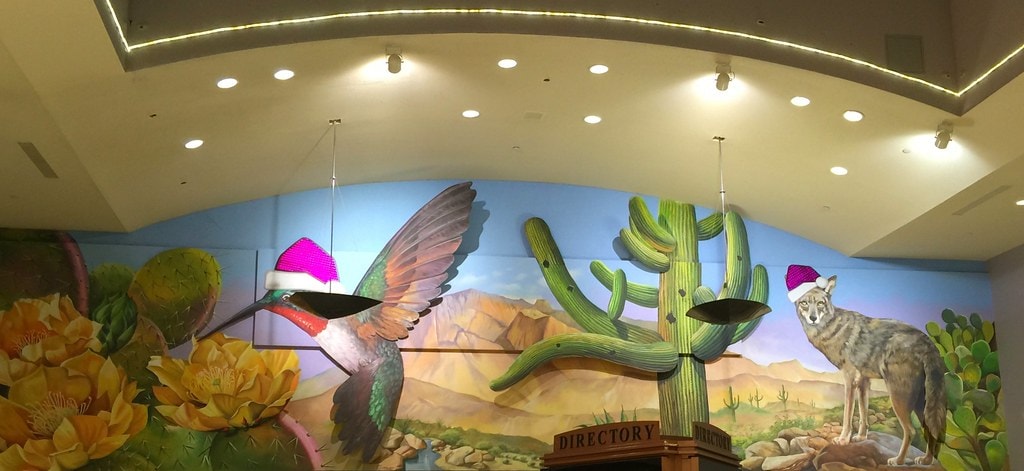
In the afternoon, the mall unveiled a 26,000-square-foot mural, "Sonoran Skylines," by Jessica Gonzales, announced as the largest in Arizona.
By the next morning, some of the chalk was already fading under light rain, but the permanent walls stayed loud, a reminder that, at least for a day, Park Place had behaved less like a mall and more like a neighborhood plaza that happened to have climate control.
Park Place Mall as a 2025 east-side hub
By 2025, Park Place Mall is less a fading relic than a complicated work in progress. Construction continues at the former Sears site, with new tenants expected to open in 2026.
Inside the existing shell, the mall operates as a full-fledged east-side hub at 5870 East Broadway Boulevard, within ten miles of the airport, the University of Arizona, Davis-Monthan Air Force Base, and even Saguaro National Park.
The numbers around it are quietly impressive. Within five miles are 259,800 residents in 118,400 households, with an average household income of around $65,000. Broadway carries roughly 52,750 vehicles a day.
Recent tallies show more than 7.1 million visits in a twelve-month stretch, a reminder that whatever people say about the death of the malls, someone is still circling for a parking spot.
The anchor list now reflects retail's new hierarchy: a 20-screen Century Theatres complex with reclining seats, Dillard's, Round 1 Entertainment, Total Wine & More, Ulta Beauty, Old Navy, and one stubbornly vacant former Macy's.
Around them, more than a hundred retailers and restaurants, including Victoria's Secret, Sephora, Guess, Chicos, Pandora, Banana Republic, H&M, Forever 21, Creations, Tucson Tea Co., Yard House, Applebee's, Arts Express Theatre, Chipotle, Red Lobster, Bath & Body Works, Foot Locker, and assorted local names.
Park Place Mall is, admittedly, still a mall in a country that has spent a decade predicting the end of malls.
But its history - from Sears Park buffer zone to CMBS collateral to halfway-house for experiential tenants and mixed-use plans - reads less like a slow obituary than like a running argument with inevitability.
The time capsule in the floor is scheduled to be opened in 2040.
If Tucson continues to support the mall, there's a good chance that when someone finally lifts that tile, they'll find a place that has changed once again, but is still clearly Park Place.