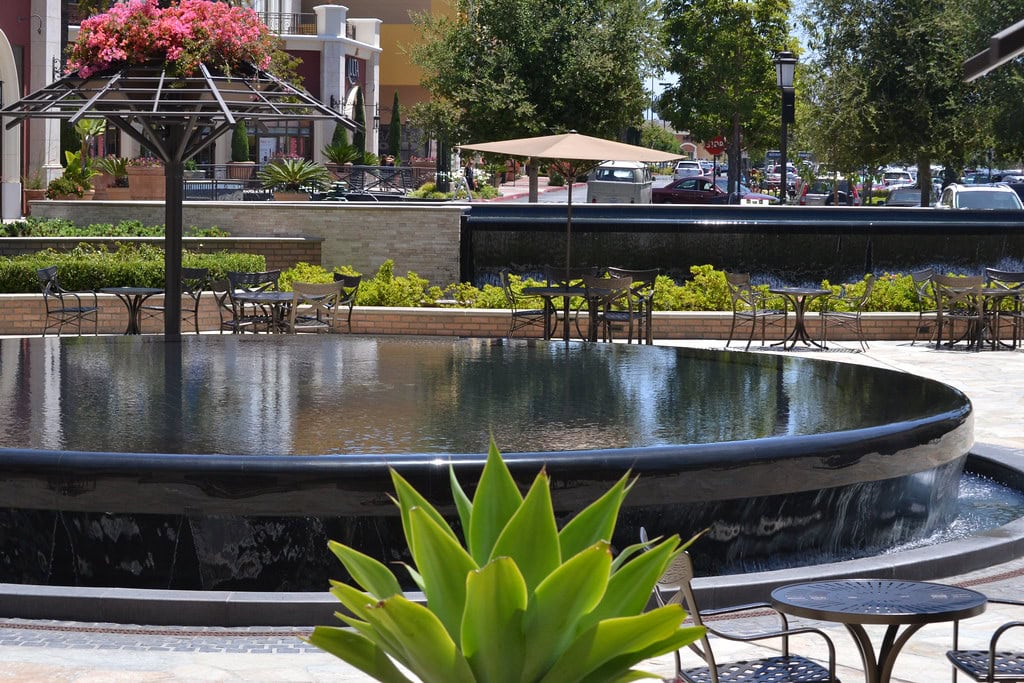
La Cumbre Plaza: from fields to suburban mall
The corner of State Street and Hope Avenue did not begin its life dreaming of handbags and chain restaurants.
For years, it was a working patch of ground: a 16-acre lemon grove owned by William Lasarzig on the corner, and, just to the south, Tony Prevedello's 30-acre dairy, with cows grazing where sun-baked parking lots would eventually spread out.
In 1965, Ernest W. Hahn Inc. showed up with a very different plan. The company signed a 65-year lease for the Lasarzig grove and a 63-year lease for the Prevedello dairy.
These two small farms would soon become the site of a regional shopping center. Neighbors were not thrilled.
They worried about more traffic on Upper State Street, losing farmland, and feeling like suburbia was moving in too quickly.
Still, at that time, people generally preferred malls to orchards.
Construction started in 1967. The lemon trees went out; the grading crews came in. The dairy's livestock disappeared, replaced by foundations and steel.
By that summer, La Cumbre Plaza opened as Santa Barbara's first true suburban mall, an open-air center of about 491,000 square feet spread over 31 acres.
It was also the Hahn Company's first major project, the beginning of a portfolio that would grow to 45 malls in 18 states and turn Ernest Hahn into the dominant mall developer in the western United States.
In a short span, a working landscape was recast as a long-term retail experiment.
Robinson's, Sears, and Santa Barbara's suburban turn
La Cumbre Plaza made a bold entrance. At the north end, J.W. Robinson's opened in July 1967, offering 155,000 square feet of department-store style.
At the south, Sears held down the practical end of the spectrum with tools, tires, and appliances.
Together, they staged the aspirational script of American suburbia: buy the sofa, buy the suit, then buy the wrench to fix what breaks.
Robinson's arrived with a serious architectural pedigree.
The building was designed by Gin Dan Wong and Max Reder Horwitz of William Pereira & Associates, the same office that turned out futuristic shapes like the Transamerica Pyramid in San Francisco and the Disneyland Hotel in Anaheim.
Pereira had his face on the cover of Time Magazine by then, but at La Cumbre Plaza, the architecture had to answer to the brand before the architect.
On the outside, this meant a style that was made more appealing for a department store: tall columns, a Spanish-tiled roof, and a simple, elegant shape that looked modern for 1967 but not so unusual that it would make Robinson's shoppers uncomfortable.
Inside, the designers could be more creative.
The store showed off eye-catching modern art, and a fancy cafe had tables inside and outside, making shopping feel like a small social gathering.
Sears, on the other hand, did what it always did: it sold the things people needed to keep their homes going. Between them, the two anchors told Santa Barbara that it had officially joined the suburban age.
Macerich's makeover, luxury, and recession
Ownership of the mall changed more often than its architecture. In 1980, the Hahn Company sold its shopping center interests to Calgary-based Trizec, which later styled itself TrizecHahn.
Eventually, Macerich bought La Cumbre Plaza in 2004 and started running it under a long lease that lasts until 2077.
The company is in charge of the 31-acre mall but does not own the land under it, which would matter later when people started talking about rebuilding.
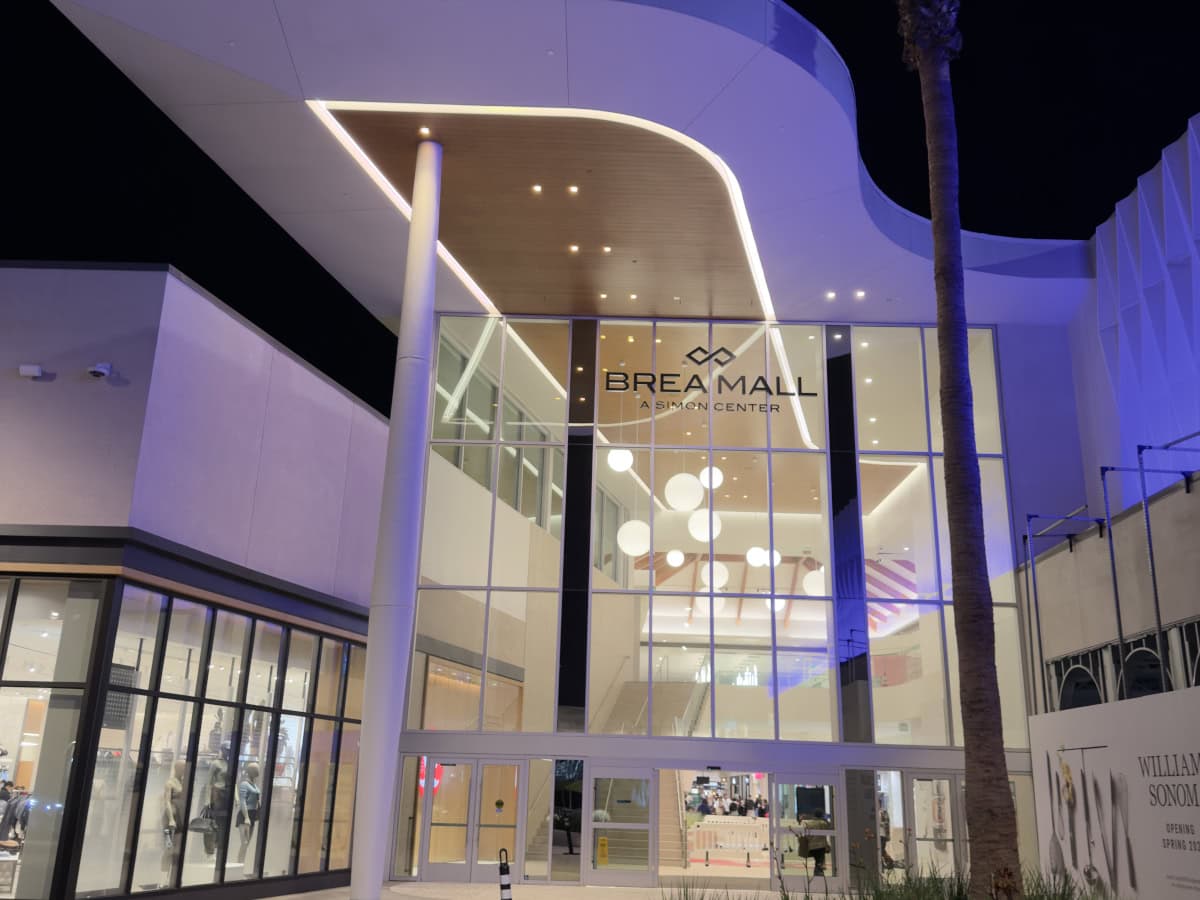
In the mid-2000s, Macerich did what mall owners all over the country were doing: it tried to upgrade its way out of trouble.
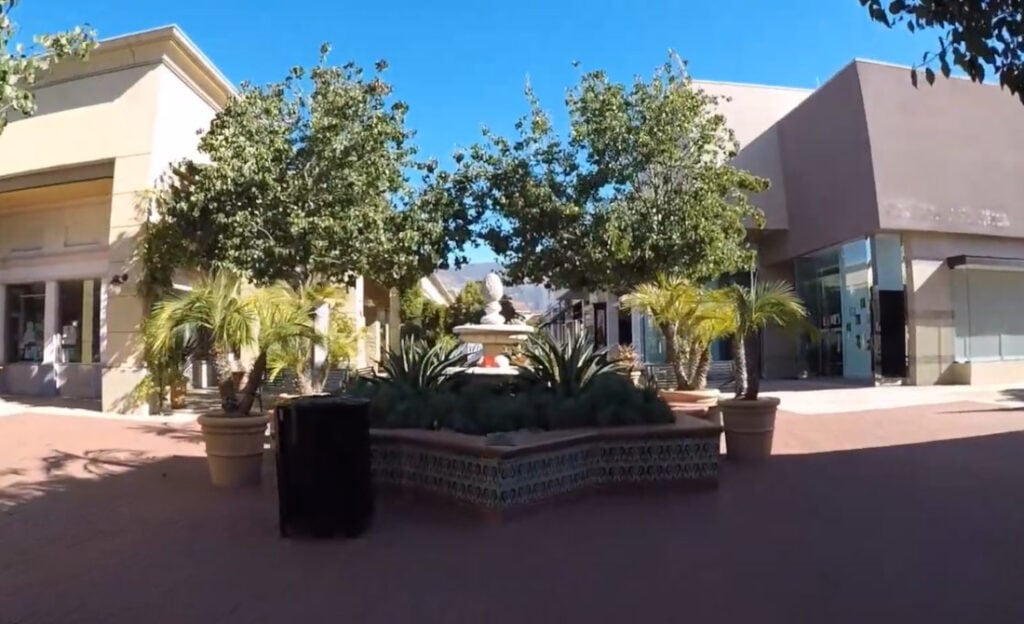
A major remodel refreshed facades and landscaping and brought in a more expensive roster of tenants.
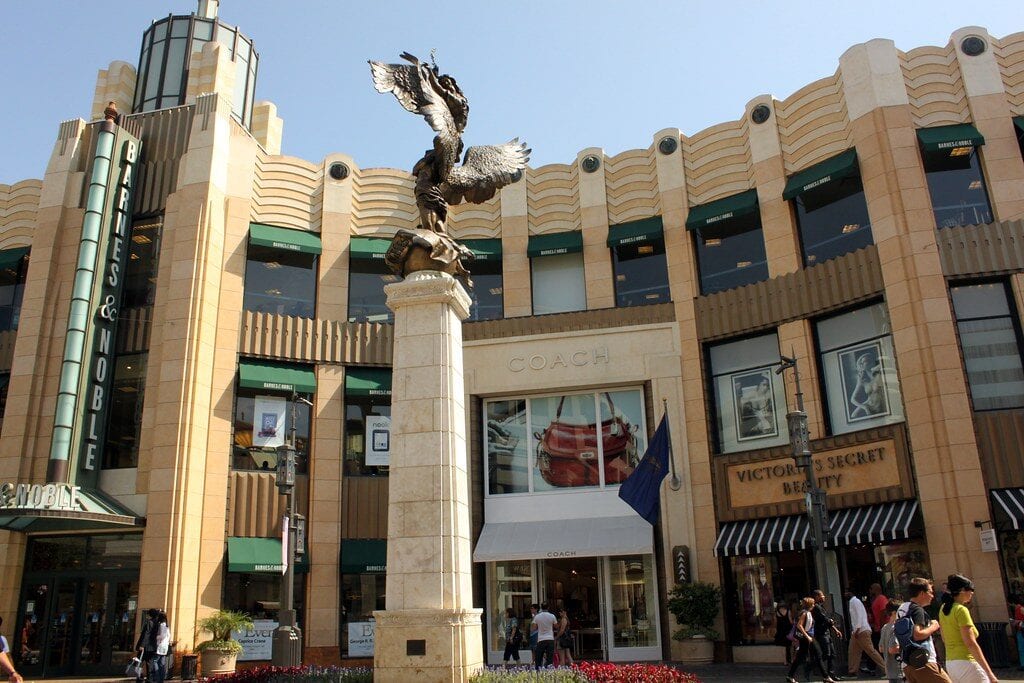
Williams Sonoma and Pottery Barn appeared for the aspirational kitchen and living room. Tiffany & Co. and Louis Vuitton added jewelry counters and monogrammed leather.
Ruth's Chris Steak House planted white tablecloths on the property.
The open-air design, which was once just a practical choice for California, was now called a lifestyle experience.
The timing was bad. The remodel happened just as the Great Recession made people cut back on extra spending.
Several of the new high-end tenants closed after a relatively short run, their glossy interiors briefly illuminated and then dark.
Others, including Pottery Barn, dug in and remained.
La Cumbre Plaza, suspended in an in-between state of part luxury and part everyday errands, waited as the larger questions about the future of malls hovered overhead there.
Empty anchors, small experiments, ordinary days
The questions became harder to ignore in November 2018, when it was announced that Sears would close its La Cumbre Plaza location as part of a plan to shutter 40 stores nationwide.
In February 2019, after 52 years at the south end of the plaza, Sears turned out the lights for the last time.
The mall was left with a 147,000-square-foot problem: a hulking anchor box and a sea of asphalt, built for a kind of retail that no longer knew what to stock its shelves with.
The solution, such as it was, arrived in pieces. In February 2022, Mattress Mike Furniture Gallery signed a ten-year lease for roughly 70,000 square feet on the first floor of the old Sears.
The store opened that April, selling sofas and beds, where washers, dryers, and Craftsman tools used to line the aisles.
A consignment shop, Moving Miss Daisy, took a portion of the remaining space. The rest of the building sat in limbo, waiting for a more comprehensive answer.
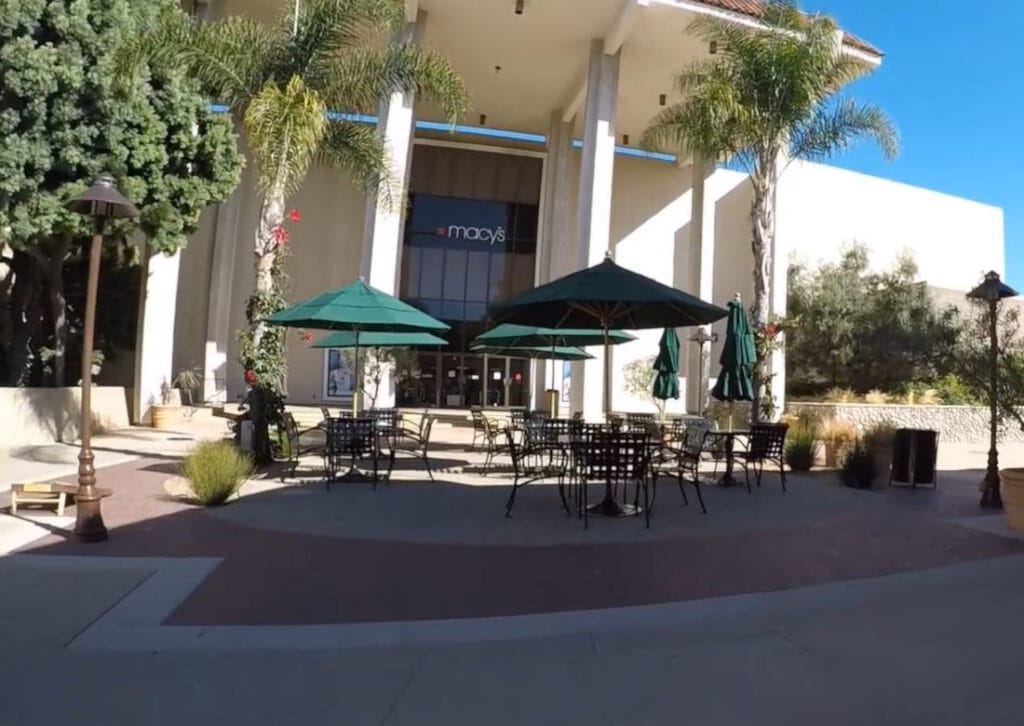
Yet La Cumbre Plaza did not exactly feel abandoned. Macy's, which had taken over the Robinson's building in 2006 by way of Robinsons-May and a department-store merger chain reaction, remained in place.
Its lease runs through 2028, and the Santa Barbara store notably escaped Macy's statewide closure list in 2024.
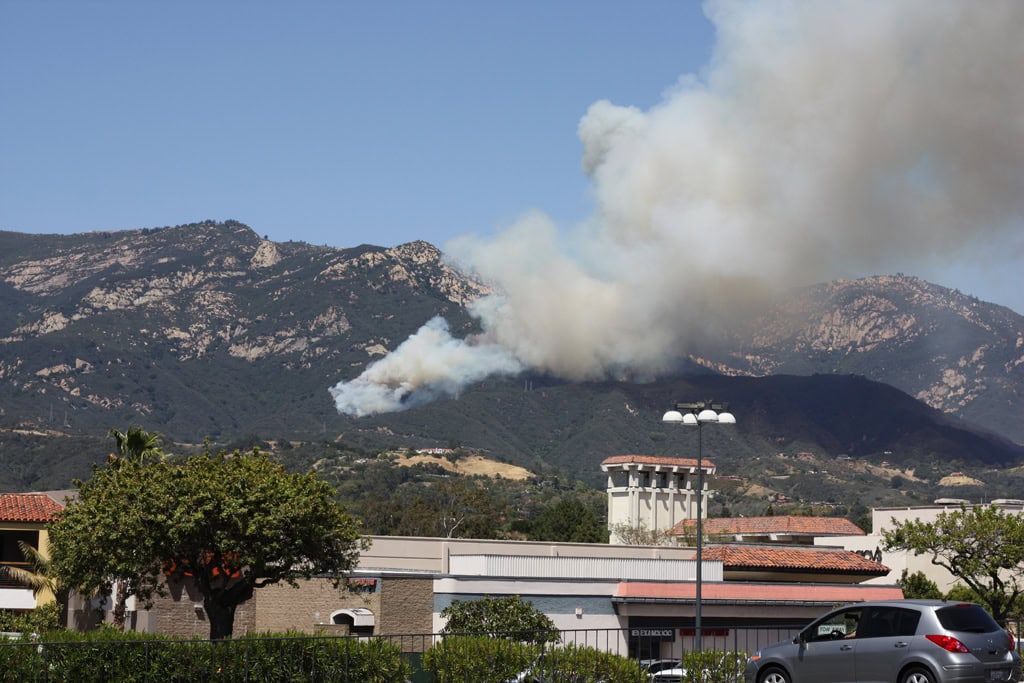
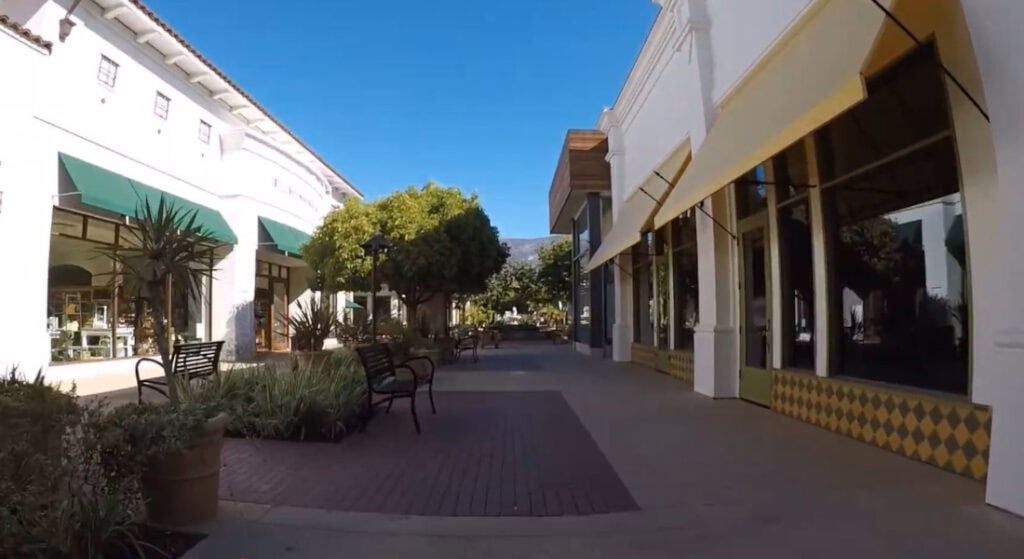
Around it, the center still markets itself as Santa Barbara's premier outdoor shopping, dining, and entertainment destination, wedged between the Santa Ynez Mountains and the Pacific.
Bristol Farms, Pottery Barn, Williams Sonoma, J. Jill, Lure Fish House, Islands, Panda Express, Chipotle, and other tenants keep the storefronts active, even as recent departures like Chico's and Talbots join the list of closed stores.
Live music on Saturdays, seasonal movie nights, cars-and-coffee gatherings, and the Gelato Festival of America fill the courtyards.
Free parking and open-air walkways still compare favorably with downtown State Street and Paseo Nuevo, even as everyone senses that the place is in transition.
Macy's fate and The Neighborhood debate
If the Macy's building ever had a chance of being saved on sentiment, that hope dimmed in January 2025.
The city ordered a report to see if the three-story building, built in 1967 for Robinson's and now Macy's, should be protected.
At first glance, it seemed possible: it was designed by well-known architects, showed a style called New Formalism from after World War II, and was part of Santa Barbara's first suburban mall.
The report was blunt. New Formalism, it said, was common across Southern California.
The La Cumbre Plaza building lacked the distinctive ornament or materials that might set it apart. It was not closely associated with any prominent figures.
It was not the first or last of its kind.
Members of the Historic Landmarks Commission noted that many people recognized the building and remembered it. However, officially, the building was not considered historic.
Adding housing there could help, since rents in the city are now too high for people earning 120 to 160 percent of the average income.
By unanimous agreement, the commissioners cleared the way for demolition once the Macy's lease expires.
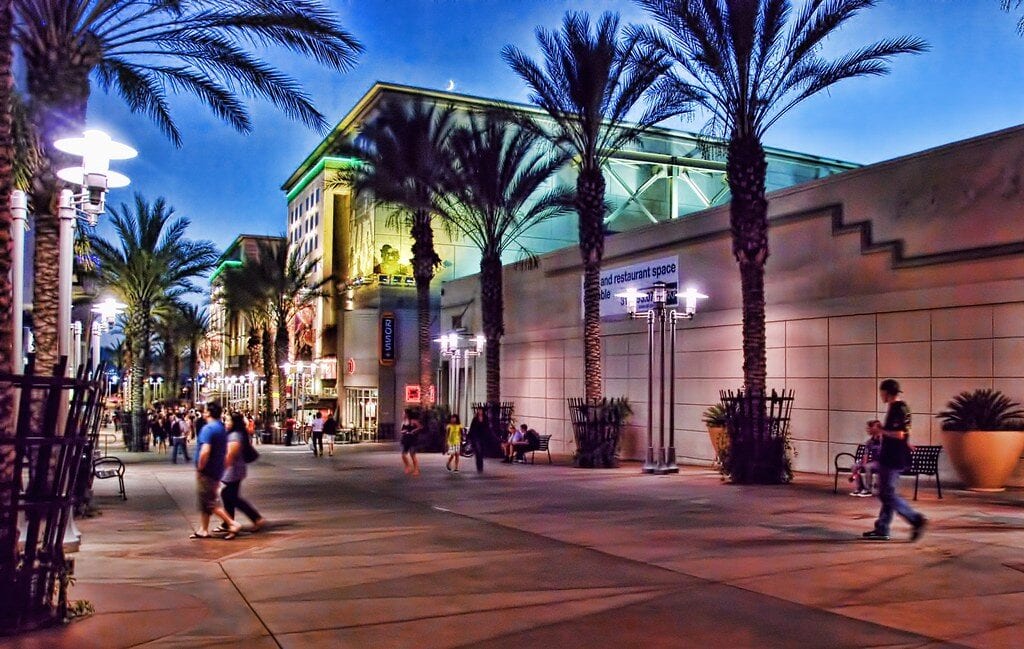
That aligned neatly with the plans of Jim and Matthew Taylor, local developers who had purchased the Macy's parcel and roughly 8.7 surrounding acres in December 2021 for about 63 million dollars.
Their project, called The Neighborhood at State and Hope, would scrape the department store and its parking fields and replace them with a dense mixed-use complex: hundreds of rental apartments in six buildings ranging from two to six stories, taller than Santa Barbara's usual 60-foot cap, sitting on two levels of subterranean residential parking and ground-level garages for commercial use.
Current versions of the plan hover in the mid-600-unit range, with a mix of studios, one-bedrooms, two-bedrooms, and a smaller number of three-bedrooms.
A slice of the homes - roughly ten percent - would be reserved for very low-income and moderate-income residents, with city staff and council members pushing to deepen the affordability and add community benefits such as contributions to the Local Housing Trust Fund, a park, or even a new library branch.
The buildout will cost in the hundreds of millions. Construction is not expected to begin before 2028; completion is optimistically framed around 2030.
La Cumbre South Homes and the fight over design
The south end of the property is also mounting its own sequel.
In December 2024, the international real estate firm Kennedy Wilson submitted a preliminary housing application for the former Sears building and auto center.
The proposal, named La Cumbre South Homes, would demolish the old store and replace it with a 443-unit rental development in two four-story buildings on about 9.5 acres.
Plans call for a mix of studio, one-, two-, and three-bedroom apartments, about 10,000 square feet of common amenity space, more than 460 parking spaces, and a multi-use path along Arroyo Burro Creek.
Around ten percent of the units would be set aside for moderate-income households.
If the numbers mostly pleased housing advocates, the design landed with a thud at the city's Architectural Board of Review.
The project came in for pre-application review in March 2025 and returned, revised, on November 10.
Board members called the architecture decidedly vertical and compared it, not fondly, to an Orange County hotel or a 1970s institutional complex.
They disliked the cold color palette and the long, uninterrupted building lengths, which they said produced an oppressive feel.
They asked for punched-in windows instead of the proposed vertical recesses with tile, and for more varied colors and materials, including stone or convincing imitations.
The lack of a paseo - a public passage through the site, which Santa Barbara treats almost as a civic birthright - drew particular criticism.
Developers cited resident safety and security; the board was unconvinced and insisted on revised plans and story poles to show the project's true mass and height.
Housing politics and La Cumbre Plaza's future
There is a bigger debate behind these design complaints.
People who support both La Cumbre Plaza projects think they are needed to help with a housing shortage that the city admitted to in its general plan in 2009 and highlighted again in its 2023–2031 Housing Element, which points to La Cumbre Plaza as a main place for new housing.
State law, especially SB 330, has narrowed the space for cities to trim or stall compliant housing proposals.
Opponents worry about traffic on Upper State Street, pressure on schools and infrastructure, and what they see as weak affordability commitments on large pieces of land.
They also bristle at buildings they feel do not genuinely reflect Santa Barbara's Spanish Colonial Revival and Mediterranean image.
As of December 2025, none of the plans have been built yet. La Cumbre Plaza is still an outdoor mall with Macy's as its main store.
Shoppers visit the farmers market at Bristol Farms, families move between chain restaurants, and there is live music in the courtyards on weekends.