Picture the morning of September 4, 1980. The parking lots at the junction of Interstate 580 and Interstate 680 are filling fast. Pleasanton is about to walk into something it has never had before.
Stoneridge Shopping Center opens for the first time, and people drive in from all over the East Bay.
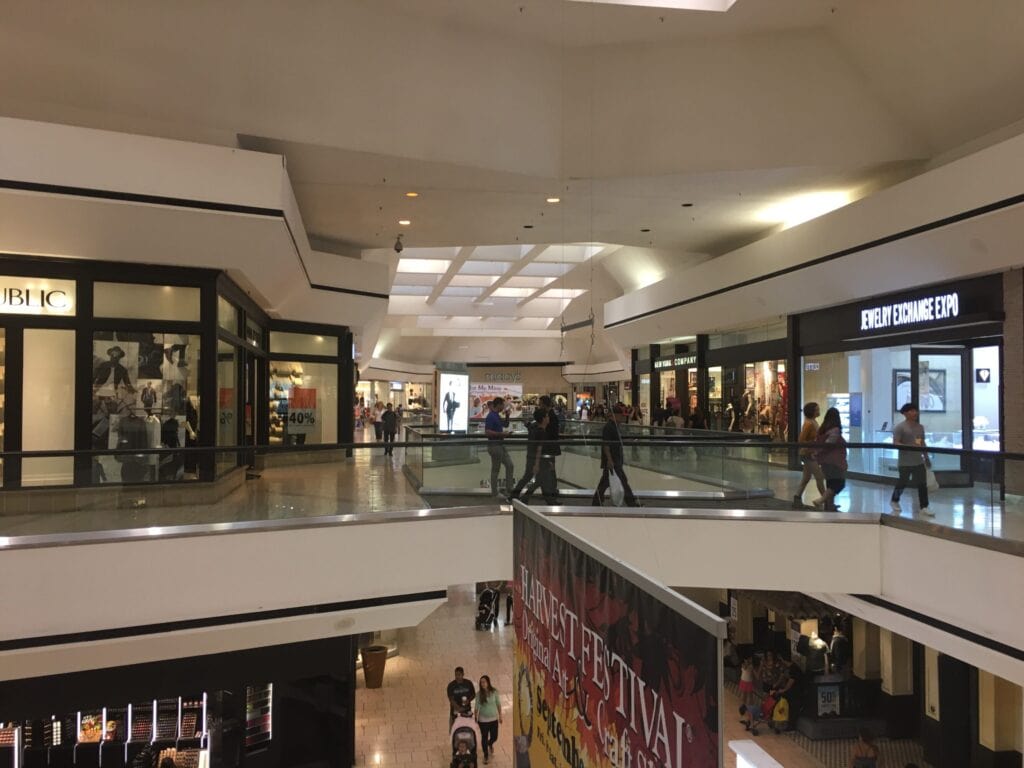
Three department stores anchor the building - JCPenney, Macy's, and Emporium-Capwell - with more than 127 specialty shops, restaurants, and service counters spread across two levels.
The whole project took two years and more than 15,000 workers to finish on roughly 75 acres. It is one of the largest new shopping centers in the East Bay.
For Pleasanton, still growing hard through the early 1980s, this is bigger than retail.
Within a generation, Stoneridge will be producing about $4.5 million a year in property and sales taxes for the city - roughly 6% of the entire General Fund.
City planners will keep referencing it as the dominant retail opportunity in northeast Pleasanton for decades after that first day.
But none of that is on anyone's mind yet. On September 4, 1980, Pleasanton just got a mall.
How Stoneridge Shopping Center Beat Out the Competition
Stoneridge Shopping Center was planned during a period of fast growth in Pleasanton in the late 1970s.
Developers saw the same opportunity: the I-580/I-680 interchange carried heavy regional traffic, and there was no major mall nearby.
Two projects competed for city approval. Stoneson Development Corp., the company behind Stonestown Galleria in San Francisco, proposed the project that became Stoneridge.
Sears, Roebuck proposed a competing shopping center near I-580 and Hopyard Road.
The City Council approved the Stoneson project. After the mall was built, the Taubman group managed it. Taubman already operated other Bay Area malls, including Eastridge, Hilltop, and Sunvalley.
The timing mattered. City planning documents later connected the mall's opening to that wave of growth.
Along with nearby job centers such as the Hacienda Business Park, Stoneridge helped attract more residents and businesses to the Tri-Valley during the 1980s.
The same interchange that drew developers to the site in 1980 is still the route people use to reach the mall today.
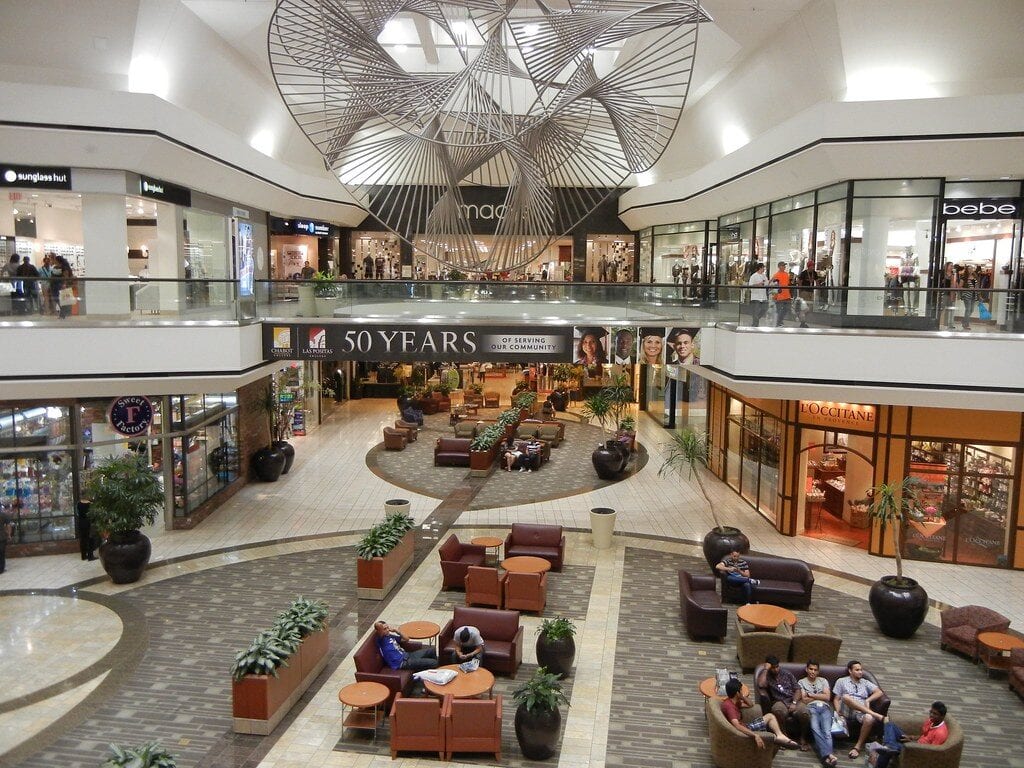
Nordstrom, Sears, and the Five-Anchor Years
The mall that opened in 1980 with three anchors eventually grew to five. Nordstrom was the first addition, opening in March 1990 as the chain's 22nd full-line California store.
For East Bay shoppers who had been driving to Walnut Creek or the Peninsula to reach a Nordstrom, having one in the Tri-Valley was a real convenience.
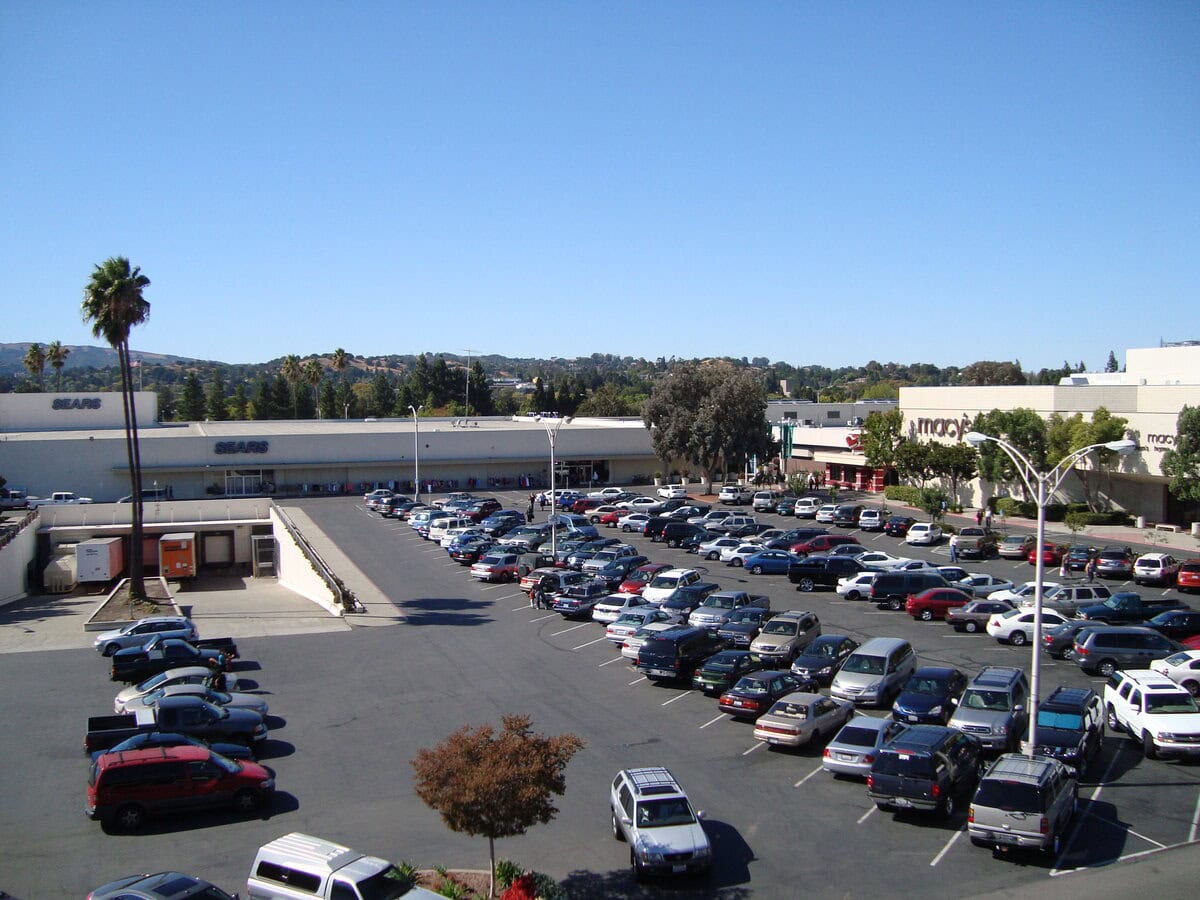
Then, the mid-1990s brought two changes at once. Sears arrived and opened at the mall.
At the same time, Macy's had acquired Emporium-Capwell and converted the former Emporium space into a second Macy's location, this one aimed at men's clothing and home goods, while the original stayed focused on its traditional mix. Two Macy's signs, same mall.
For roughly two decades, that was Stoneridge: JCPenney, two Macy's stores, Nordstrom, and Sears spread across about 1.3 million square feet.
Smaller tenants turned over regularly, but the five-anchor structure held. By 2010, the mall counted about 165 stores and was recognized as one of the largest centers in the East Bay and Northern California.
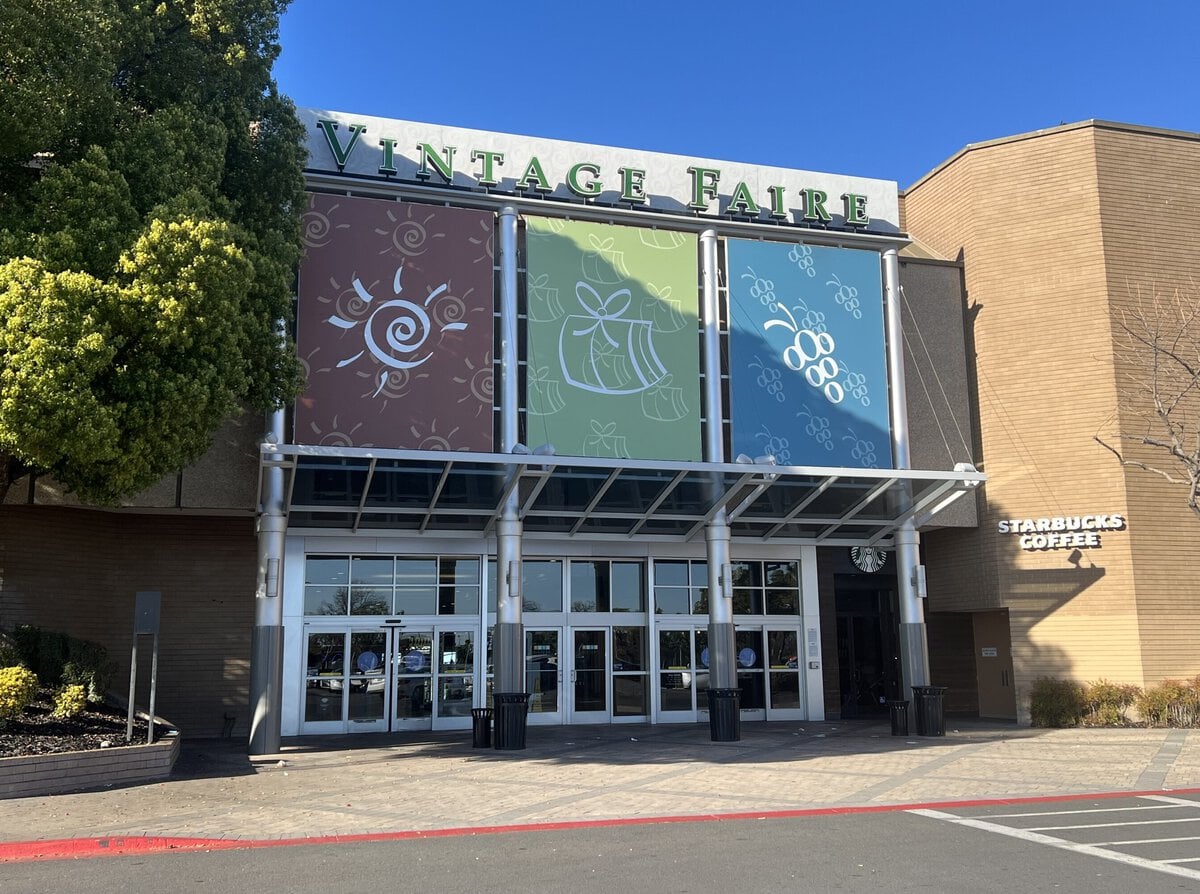
An Expansion That Only Partly Happened
Stoneridge's ownership had been shifting.
In 2004, The Mills Corporation acquired a 50% stake through a deal involving properties held by General Motors Asset Management Corp.
Mills had ambitious plans for the mall - a rebuilt two-level Nordstrom, new specialty retail, possibly a cinema - but financial problems at the company began cutting into those ambitions before much got built.
What actually opened were two restaurants on the mall's outparcels.
The Cheesecake Factory began serving customers in November 2006, with about 9,600 square feet and 270 seats. P.F. Chang's China Bistro followed in December 2006.
Both were part of the planned expansion. The Nordstrom rebuild, and a new parking structure that had been part of the same push, never happened.
In 2007, Simon Property Group and Farallon Capital Management acquired The Mills Corporation, and Stoneridge came along with it.
Simon brought its own style to the center, adding family programming, Kidgits Club events, and trackless shopper shuttle trams.
By the end of 2025, Simon held a 49.9% fee interest in the roughly 1.3-million-square-foot property and still operated Stoneridge as one of its regional mall assets.

Three Anchors Gone in Under Eight Years
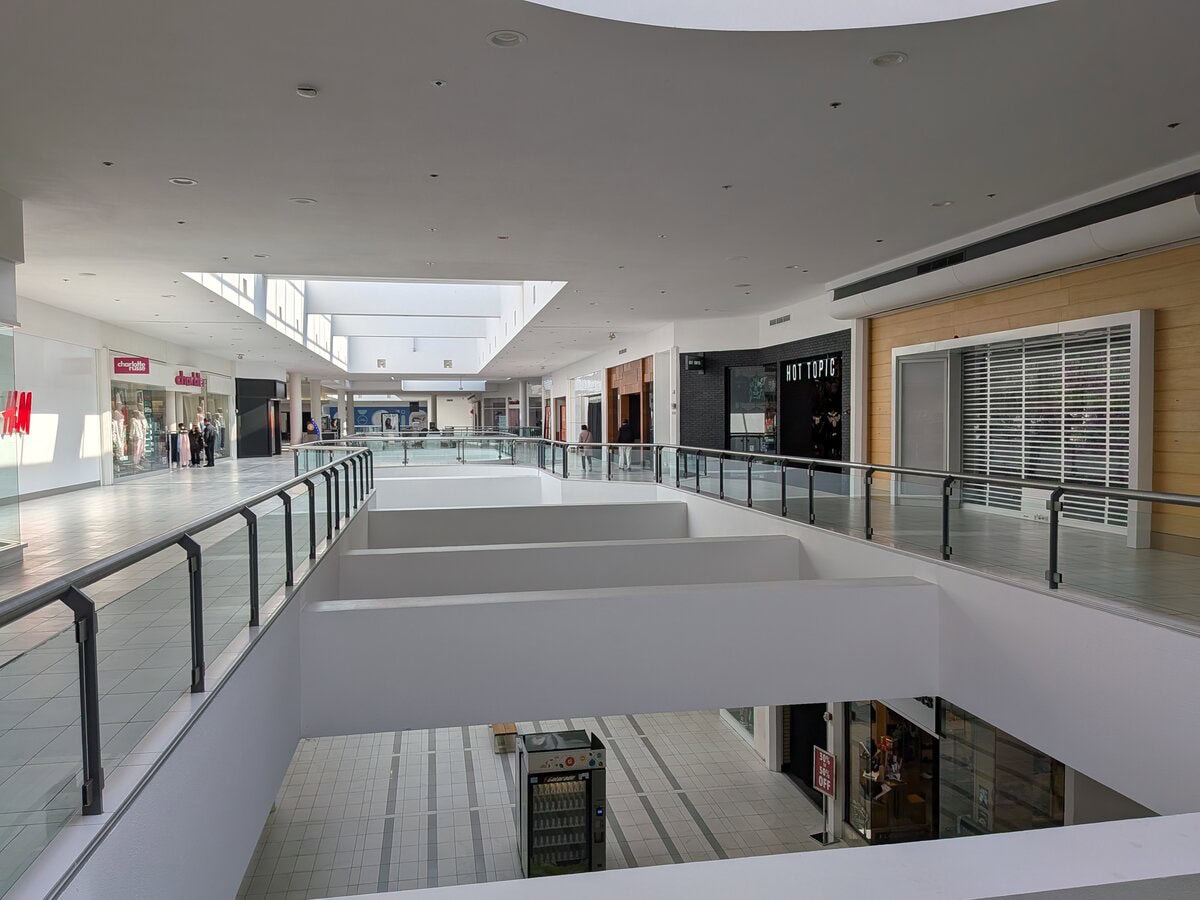
The decline started with Sears. In October 2018, Sears Holdings filed for Chapter 11 bankruptcy and named 142 stores for closure nationwide - the Pleasanton store was among them.
It went dark in January 2019.
Simon came back to the city with a redevelopment plan for the end of the mall: tear down the roughly 176,000-square-foot former Sears building and its 1,189-stall garage and replace them with about 256,000 square feet of new uses - a grocery store, a theater, a fitness facility, and restaurant space.
The city approved it, but most of it was never built.
Nordstrom came next. In May 2020, with the pandemic shuttering stores across the country, the company permanently closed 16 full-line locations.
The Stoneridge store was on that list. It never reopened. The Sears and Nordstrom closures together took about 340,000 square feet of the mall space out of circulation by late 2022.
The last to go was JCPenney, one of the original three from opening day.
In December 2025, the company could not continue the Pleasanton lease and had no suitable replacement location in the market.
The store's final day was February 22, 2026. With that, Macy's became the only traditional department store still running at Stoneridge.


What the Mall's Future May Look Like
In 2026, Stoneridge Shopping Center is still in business. The first Pop Mart storefront in the Tri-Valley opened there in June 2025.
The bigger issue is the future of the full 75-acre site. Four owners now share the property. Simon Property Group controls about 45 acres. Macy's owns about 12 acres.
300 Venture Group, a Danville company that bought the former JCPenney building for around $16 million in 2022, controls about 10 acres. SHPR Investment controls about 8 acres.
The main difficulty has been getting those four owners to agree on the rules that would apply across the site.
That includes parking, pedestrian paths, and the kinds of buildings that could be built later. In early 2026, that work was still not finished.
Even so, the overall direction is already set. In January 2023, Pleasanton created a plan for the property that included up to 1,170 new homes.
In March 2023, the city approved a 360-unit apartment project on the southeast corner of the site, including 58 units that will cost less than the usual market price.
That was the first housing project on the property to get city approval.
In early 2026, the city brought in Architects Orange to create design guidelines and continue refining the plan so that larger projects could move ahead.
The retail side of Stoneridge is still there. But the property is being planned less as a stand-alone mall and more as a place that could eventually function as part shopping center, part neighborhood.